




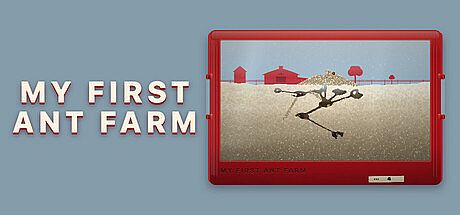


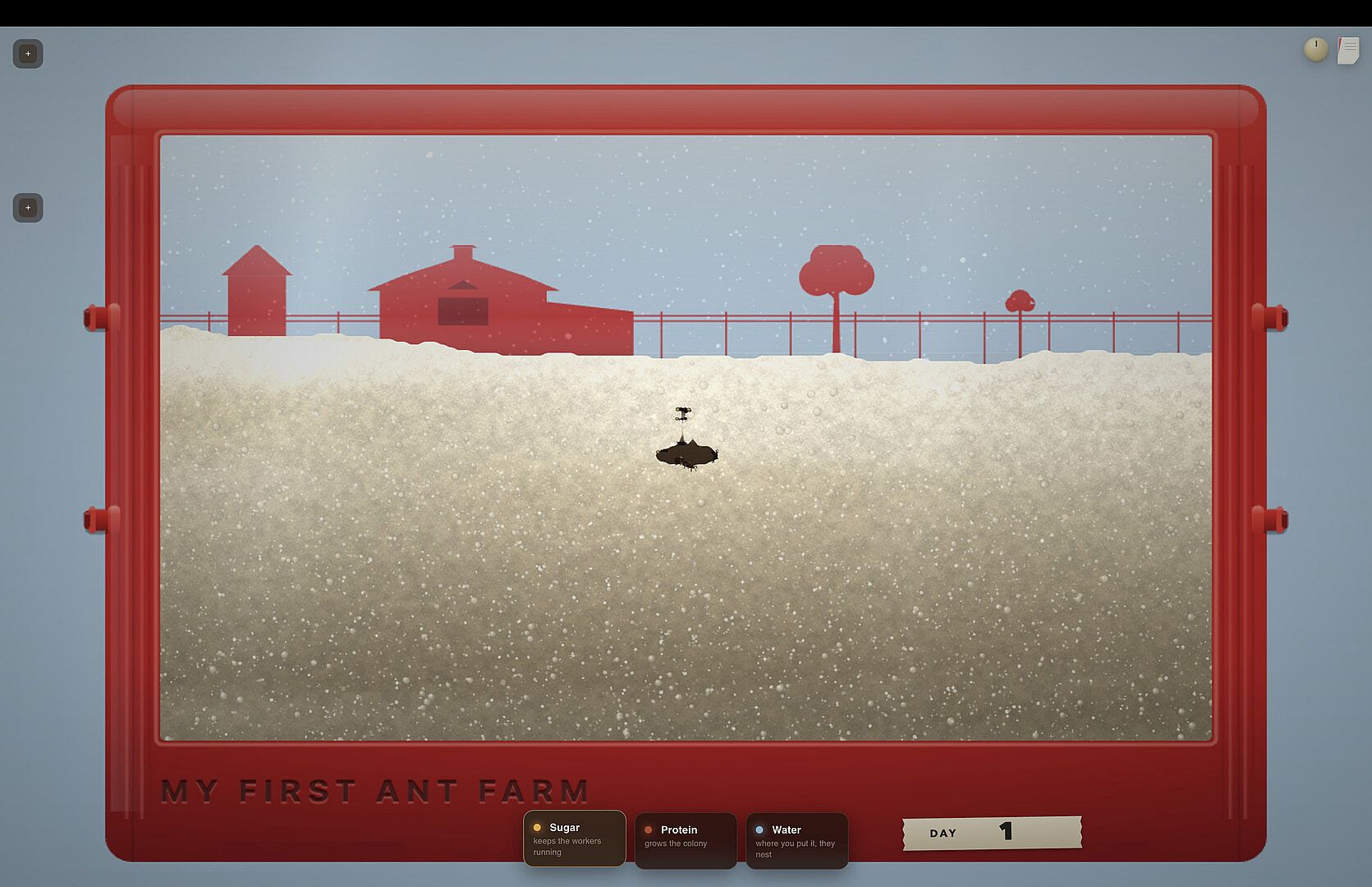
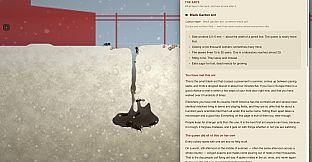
My First Ant Farm is a casual simulation game for PC that lets players observe and support a colony of black garden ants in a desktop tank. The experience centers on a single queen and her growing workers as they expand their nest over time, with no objectives to complete or scores to chase.
Gameplay
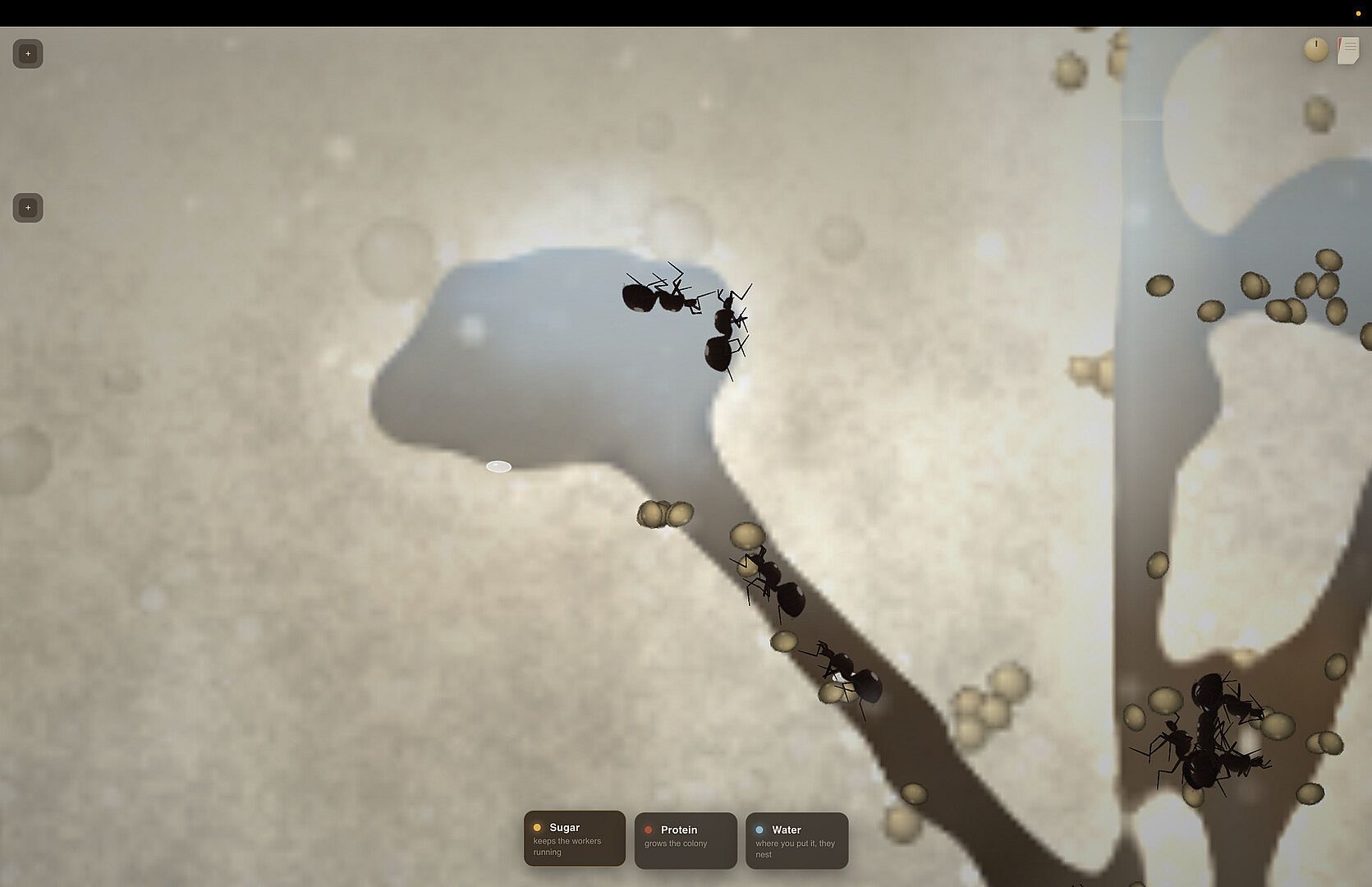
The core loop involves managing a small set of resources while the ants handle all construction and daily activities. Players supply sugar to keep workers active, protein to support colony expansion, and water that influences where the ants choose to nest and raise their brood. These three options form the entire set of interactions, allowing the colony to follow its own pace and decisions.
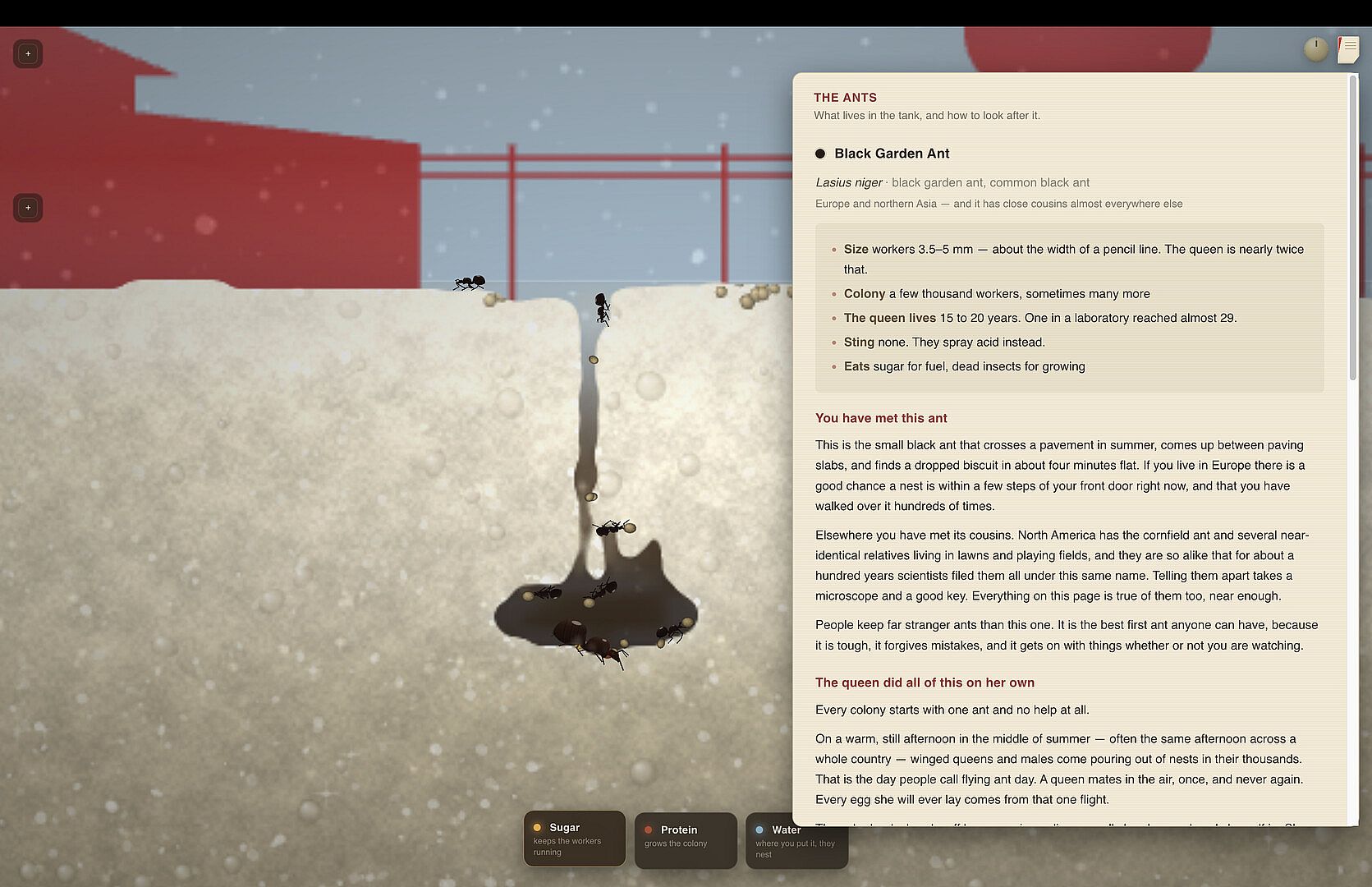
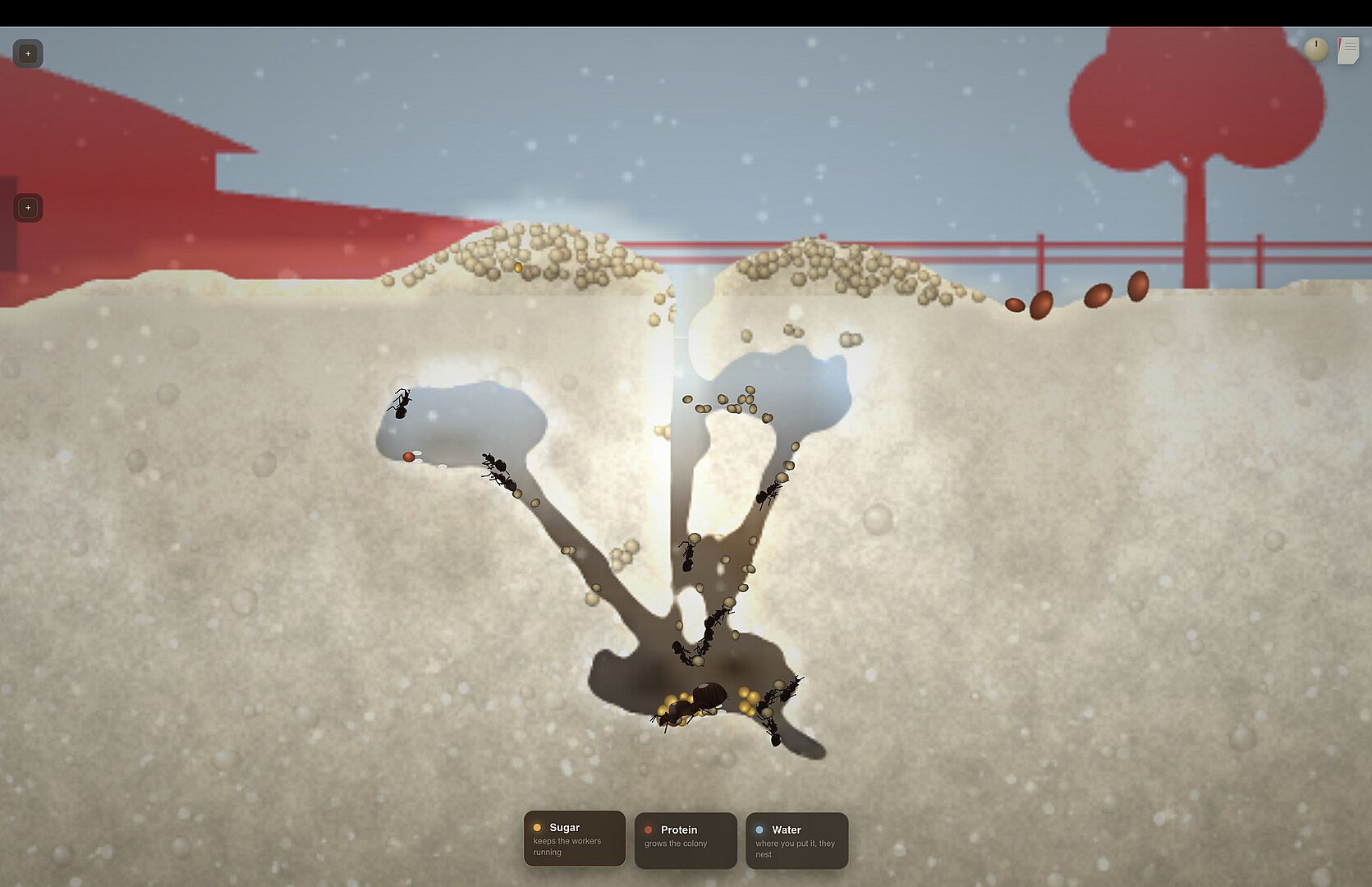
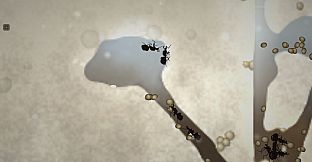
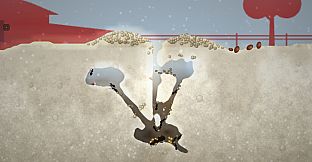
The nest begins as a sealed chamber and expands naturally as workers excavate rooms in a specific sequence. Early spaces include a staging area near the entrance, dedicated nurseries for eggs, larvae, and cocoons, a storage area for food, a royal chamber, and a midden for waste. Sand removed during digging piles up outside the entrance, conserving every grain. The layout remains unique to each playthrough because the colony follows its own founding plan rather than a fixed template.
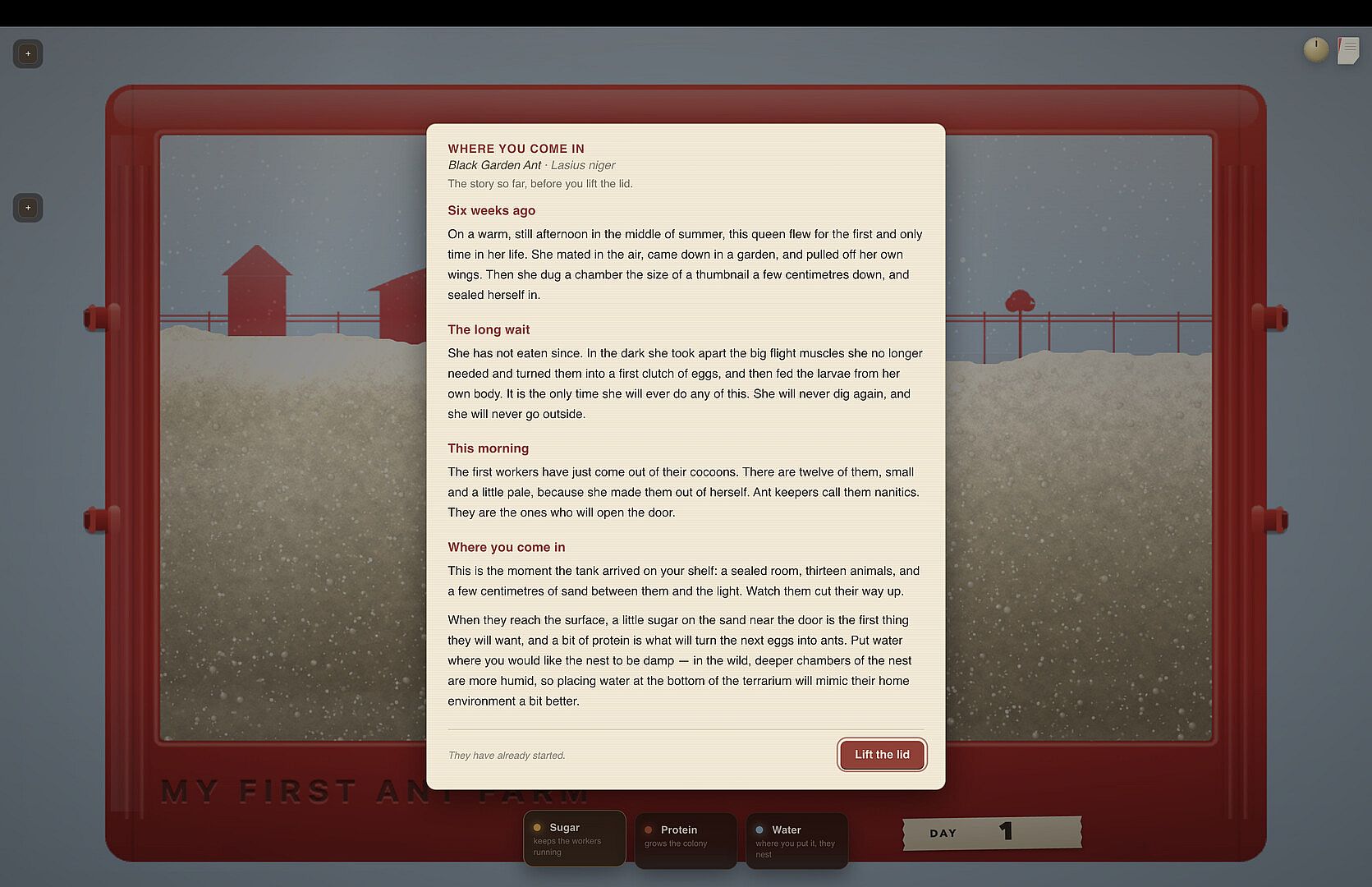
Ant behavior reflects real black garden ants of the species Lasius niger. The queen starts by feeding her first brood from her own reserves, producing smaller initial workers. Later generations include standard workers and callows. Eggs and larvae stay in damper sections of the nursery while cocoons rest in drier spots. Workers move at realistic speeds, interact by touching antennae, and adjust brood placement as water levels change. A care booklet in the tank provides explanations of observed behaviors and notes any adjustments made for gameplay.
Game Modes
The game offers a single continuous simulation experience rather than separate modes or levels. Players start with a founding queen and early workers, then support the colony as it develops over real time. The tank persists independently, advancing when the game is closed and resuming activity upon return. Extended absences may slow activity without ending the colony entirely.
Progress comes from sustained observation and resource management across one ongoing session. The nest continues to honeycomb the sand as long as players keep the colony supplied, revealing more of the ants' lifecycle without resets or competitive elements.
Key Features and Mechanics
Water placement directly affects nesting choices, with droplets beading on the surface before soaking in and draining. The colony responds by relocating brood to suitable moisture levels. Sand conservation ensures the external heap grows visibly as digging proceeds. The care booklet updates with the colony's history and includes an encyclopedia section for upcoming species details.
Only one species appears in the current version, featuring the full caste range from queen through early small workers to mature workers and callows. All activity stays within the tank boundaries, creating a self-contained desktop environment that runs alongside other tasks.
Is It Worth Playing?
This simulation suits players who enjoy relaxed, observational experiences with living systems rather than fast-paced action or structured goals. The persistent nature means the colony develops during breaks from play, rewarding regular check-ins with visible nest growth and lifecycle stages. Those interested in ant biology will appreciate the accurate behaviors and the option to learn through the in-game booklet.
Because the game emphasizes calm watching over challenges, it appeals most to fans of cozy simulations and nature-themed titles. The limited tools keep focus on the ants themselves instead of complex management layers. With its upcoming release and single-player focus, it provides a straightforward way to maintain a virtual ant colony on the desktop without additional commitments.