







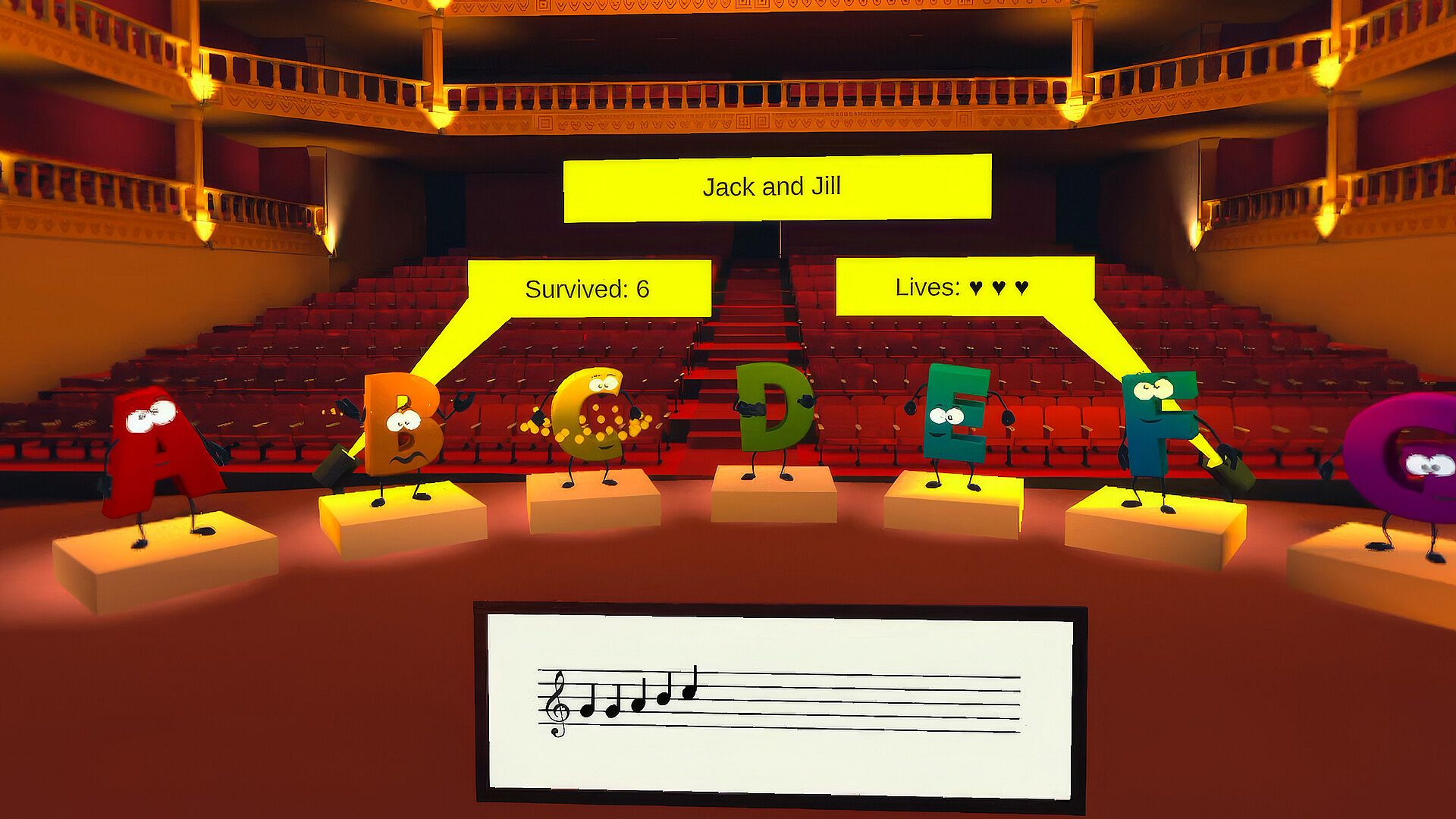
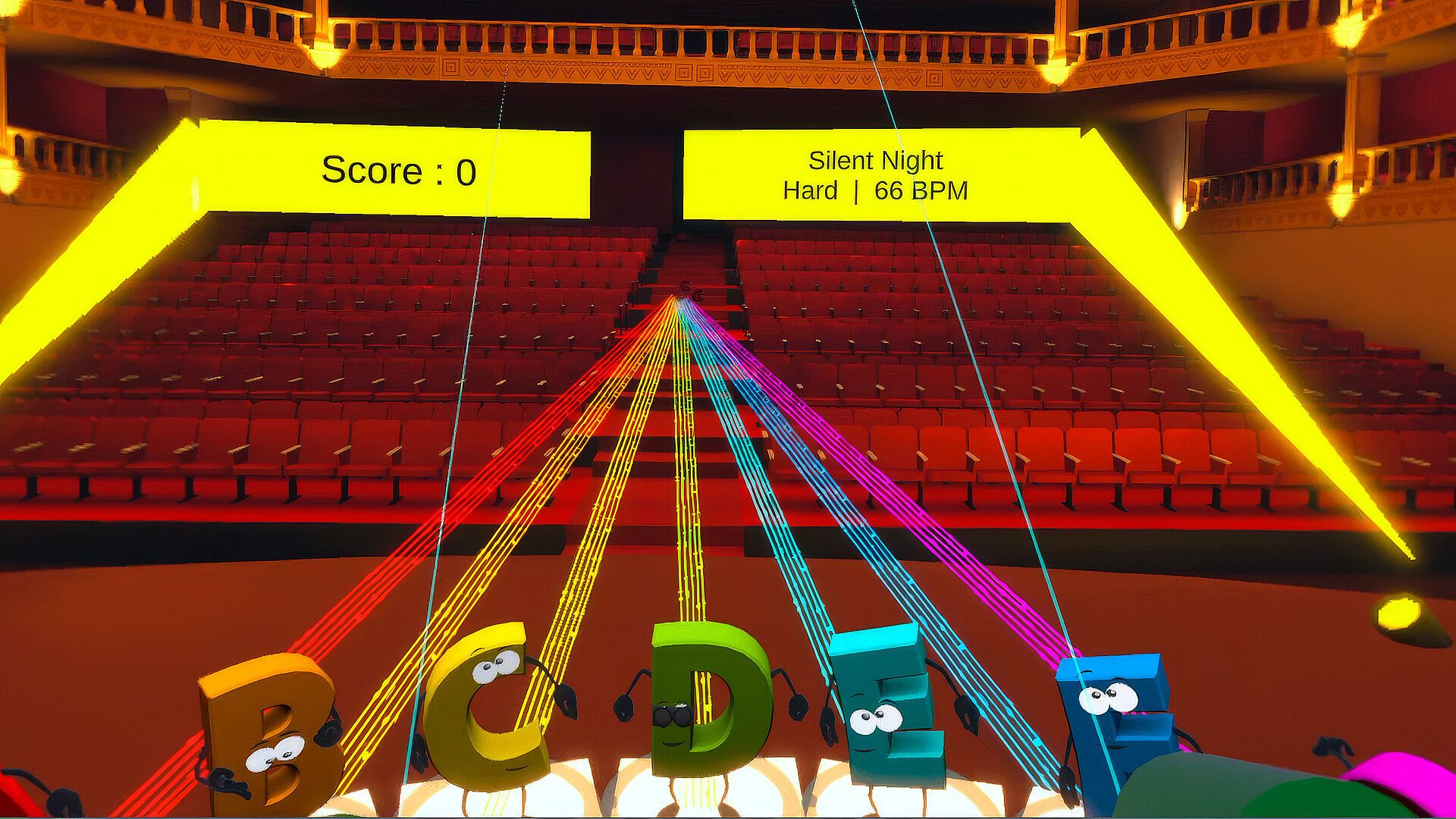
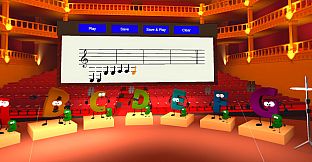
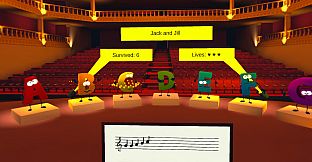
Music and Melody - Numbers and Letters is a free to play casual simulation game that blends music education with rhythm gameplay in a virtual reality setting on PC. Players enter a virtual concert hall environment where animated letter characters guide interactive lessons on notes, melodies, and sheet music reading. The experience emphasizes practical skills through listening, identifying, and performing music rather than abstract theory alone.
Gameplay
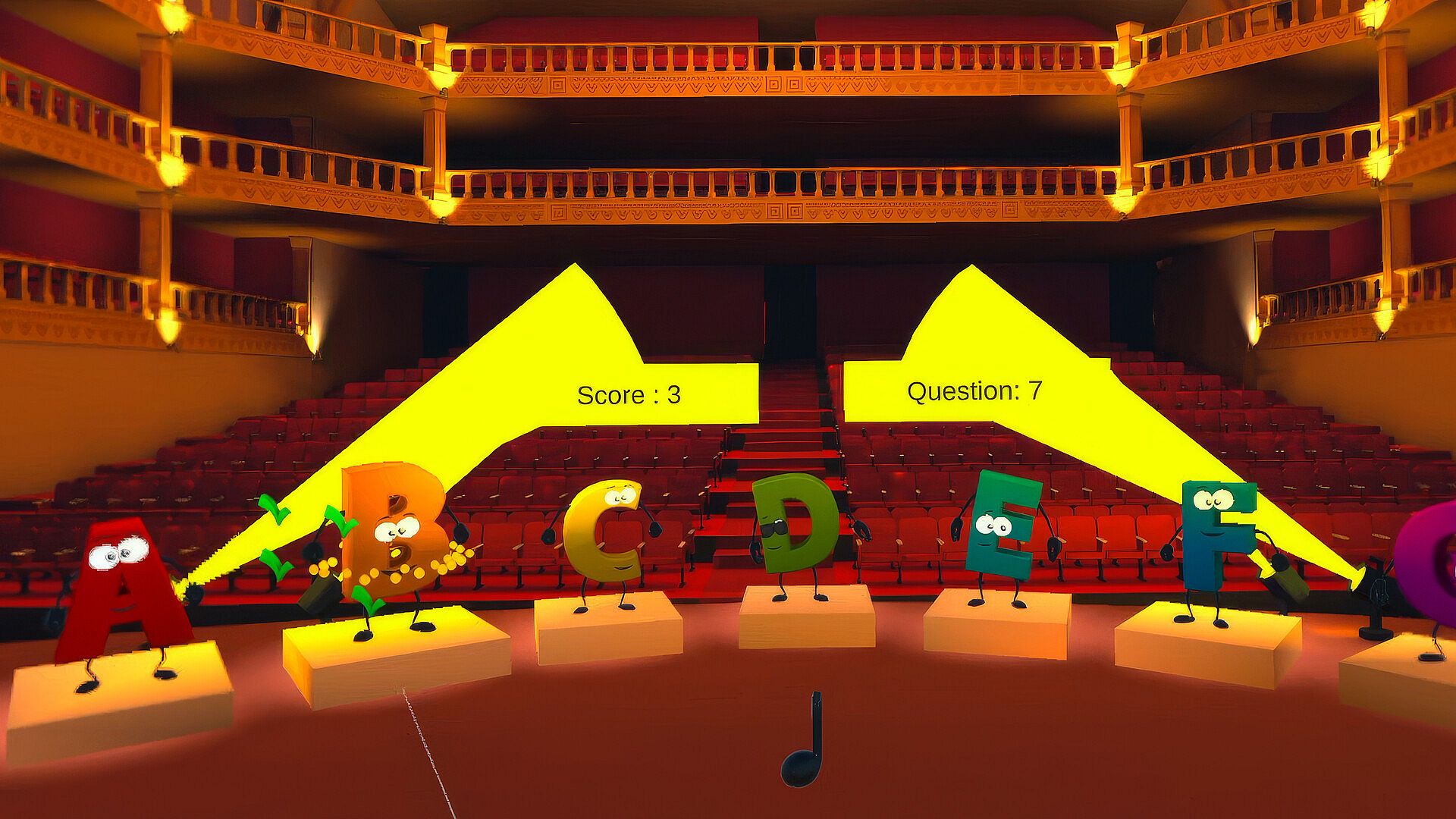
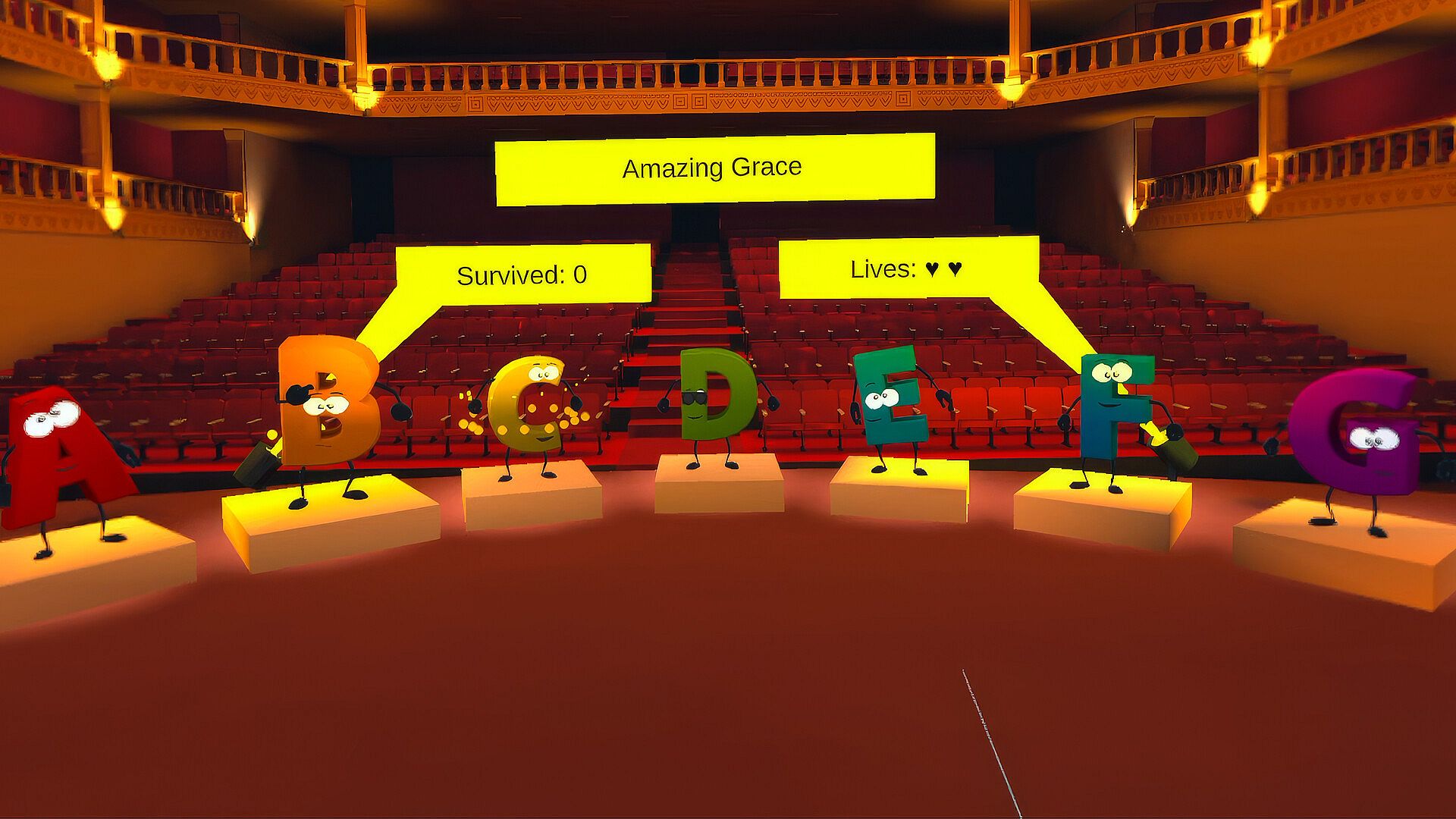
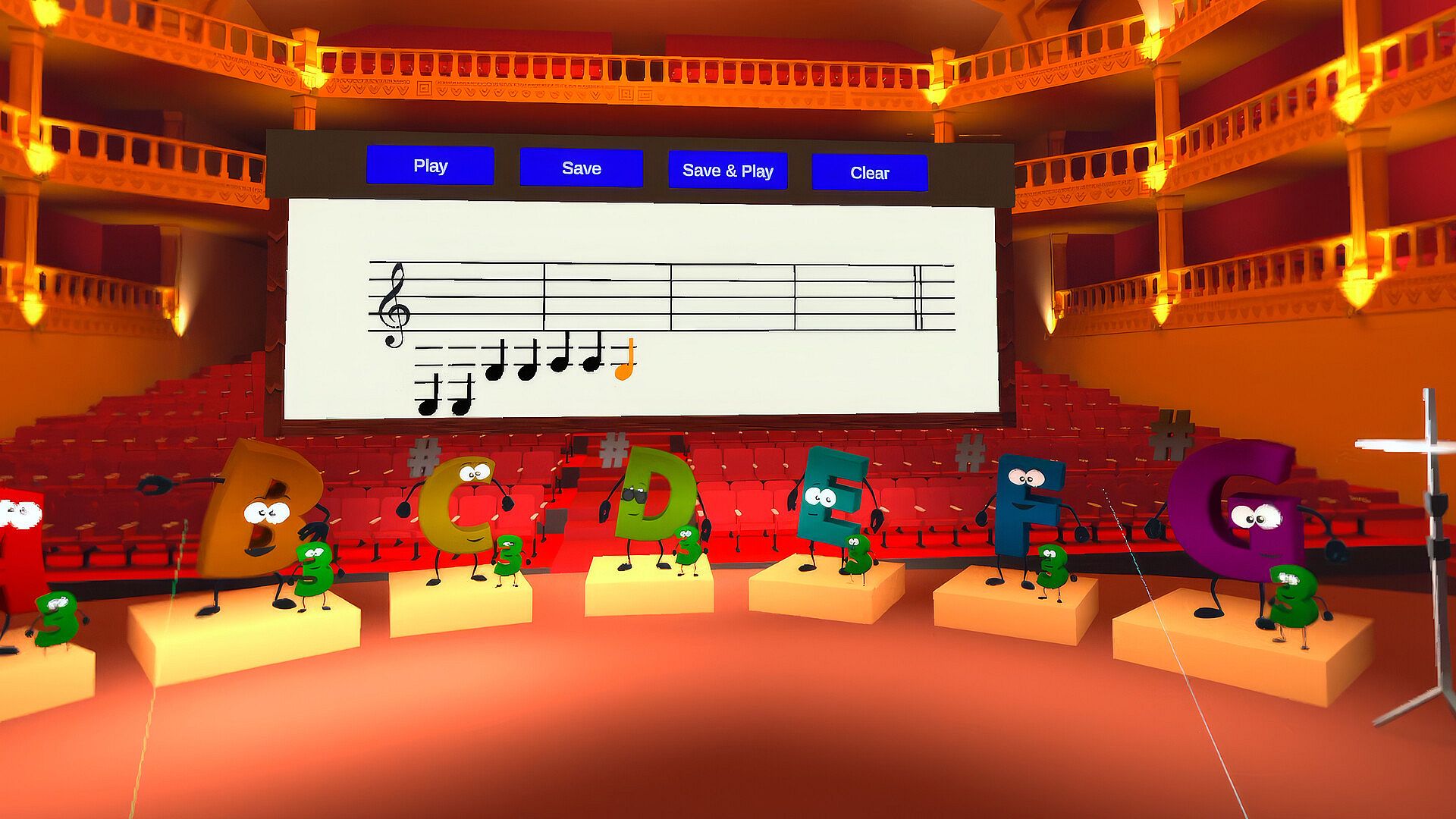
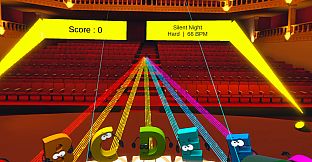
The core loop centers on progressive music skill building within a VR theater stage. Users listen to notes and match them using visual cues from animated letter friends. This approach reinforces ear training while keeping sessions engaging through direct interaction with virtual instruments and staff displays. Composition elements allow exploration of a library exceeding 200 songs, where players learn and replicate melodies at their own pace. Rhythm challenges involve striking notes that travel along tracks, creating an arcade-style flow that rewards timing and focus. Sheet music practice occurs on a large virtual staff, linking visual notation directly to audible results for improved sight-reading ability.
Controls rely on standard VR controllers for precise mallet strikes and selections. Sessions support sitting or standing positions with room scale movement available for those who prefer more physical engagement. The simulation prioritizes accessibility for beginners while offering depth for users refining their musical recognition skills.
Game Modes
Ear Training Mode focuses on note identification through repeated listening exercises paired with animated guidance. Players hear isolated notes and select the correct match to build auditory accuracy over time.
Melody and Composition provides access to an extensive song library for learning and performance practice. Users progress through tracks by following visual and auditory prompts to master sequences.
VR Rhythm Mode delivers fast-paced challenges where notes descend along tracks for timed strikes, or freeform jamming sessions that emphasize beat alignment without strict scoring pressure.
Master Sheet Music introduces notation fundamentals on an oversized virtual staff. Players connect written notes to their corresponding sounds through interactive recognition and playback tasks.
Core Mechanics and Features
Animated letter characters serve as consistent guides across all activities, offering visual and contextual support during exercises. The system bridges multiple learning pathways by combining sound identification, rhythmic timing, and notation reading into unified sessions. A library of more than 200 songs supplies varied content for repeated practice without repetition fatigue. The free to play structure allows unrestricted access to core modes, supporting casual drop-in play or longer focused sessions.
Mechanics remain singleplayer throughout, with emphasis on personal skill development rather than competitive elements. Version updates have maintained the initial feature set since the September 2026 release, preserving a stable educational rhythm experience.
Who the Game Suits
This title appeals to individuals seeking an educational yet entertaining introduction to music fundamentals. Beginners benefit from the guided ear training and notation tools, while intermediate players can use the rhythm challenges and song library for targeted practice. The casual simulation format suits short daily sessions or extended exploration without requiring prior musical background.
Is It Worth Playing?
The game delivers a focused educational rhythm experience through its verified modes and song library. As a recent release with limited review volume available, player reception remains early stage. It suits users interested in VR-based music learning who value interactive ear training and sheet music practice over high-score competition. Availability as free to play removes financial barriers, making it a low-risk option for those exploring music education tools in simulation format. Individuals drawn to rhythm mechanics combined with practical theory application will find consistent value in the core loop.
