




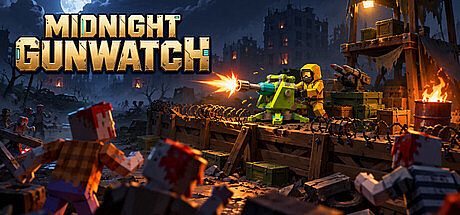


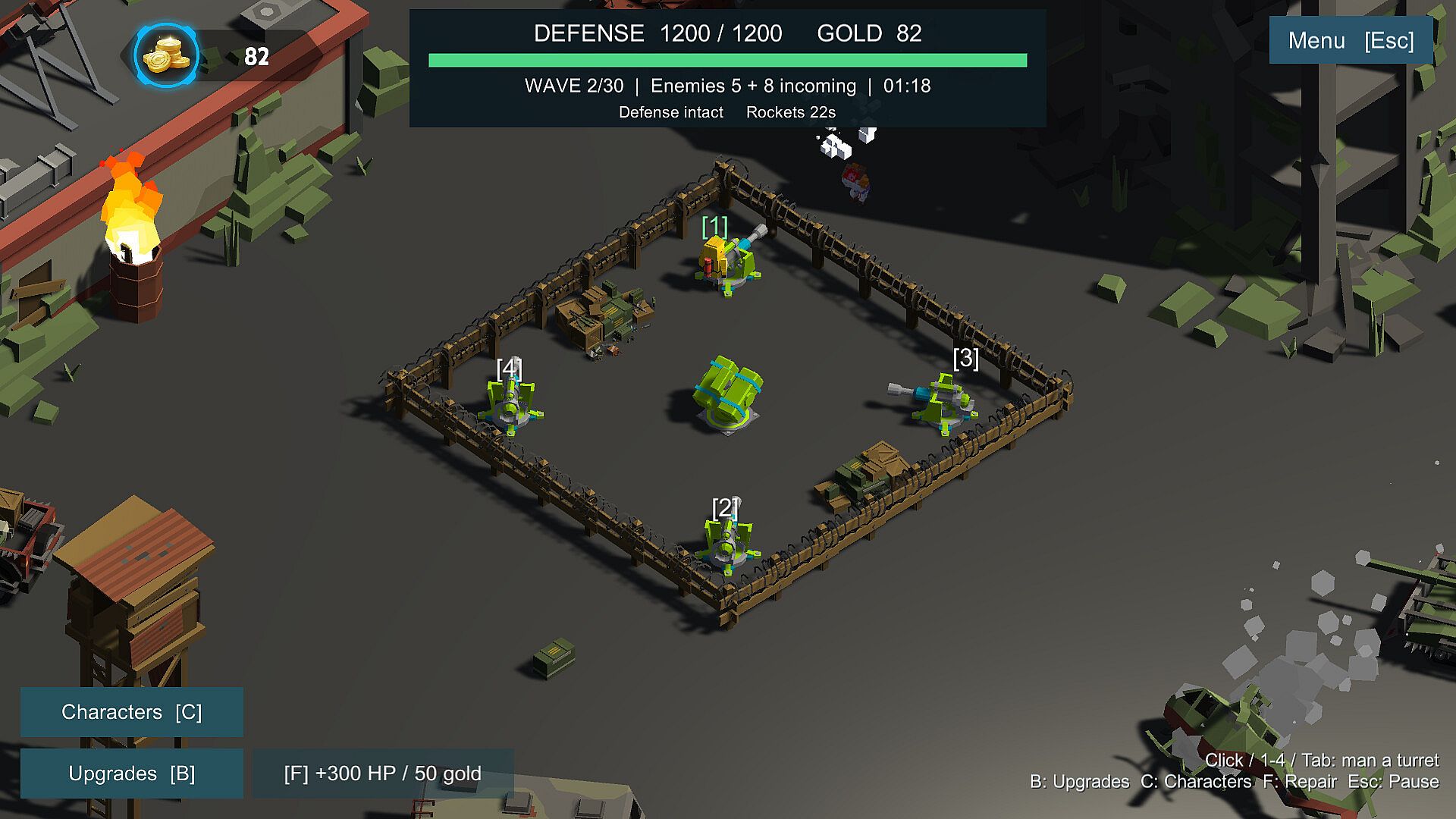
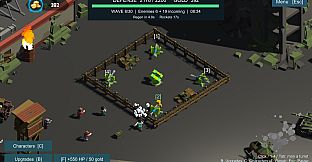
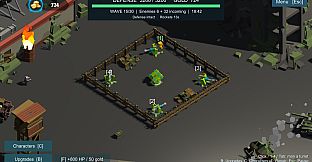
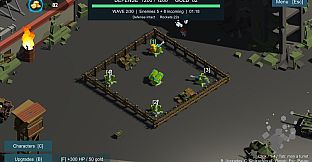
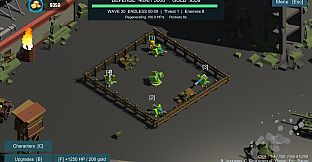
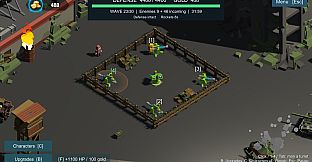
Midnight Gunwatch is a single-player zombie defense game that blends action and strategy elements in an indie package built for PC. Players take control of a survivor defending a lone barricade against waves of undead in a ruined city, switching between fixed gun positions to manage threats from multiple directions while managing limited resources.
Gameplay
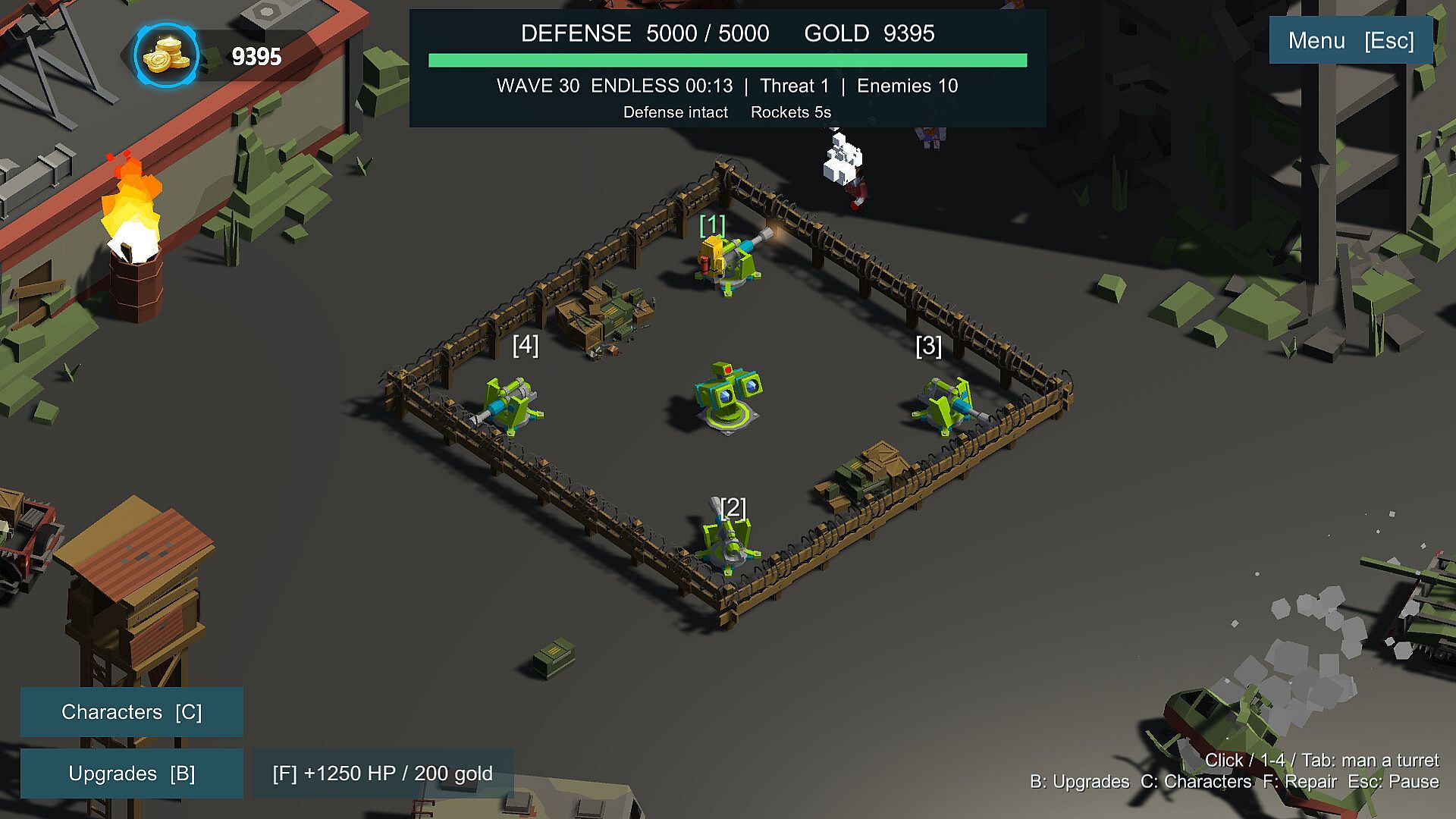
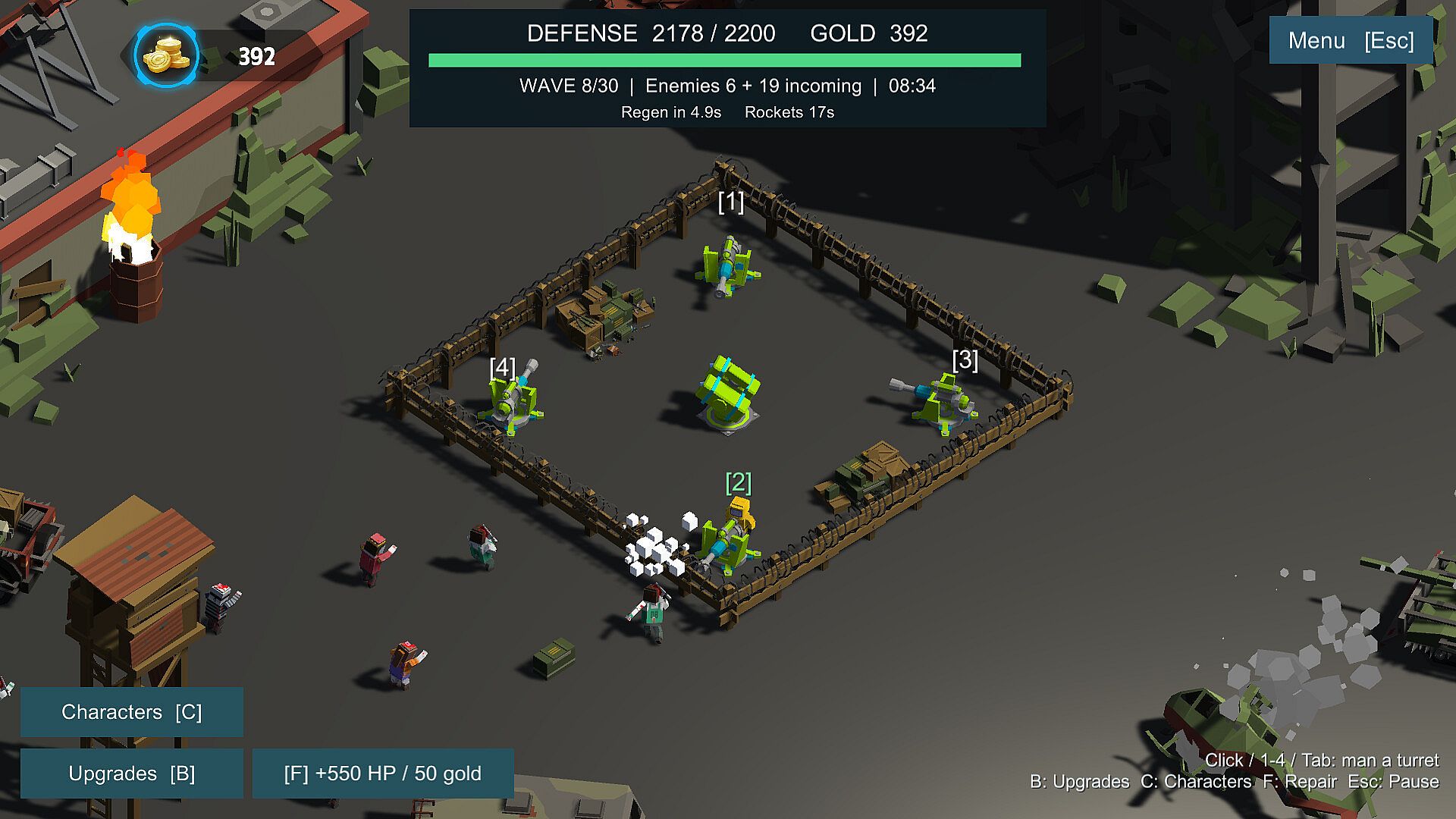
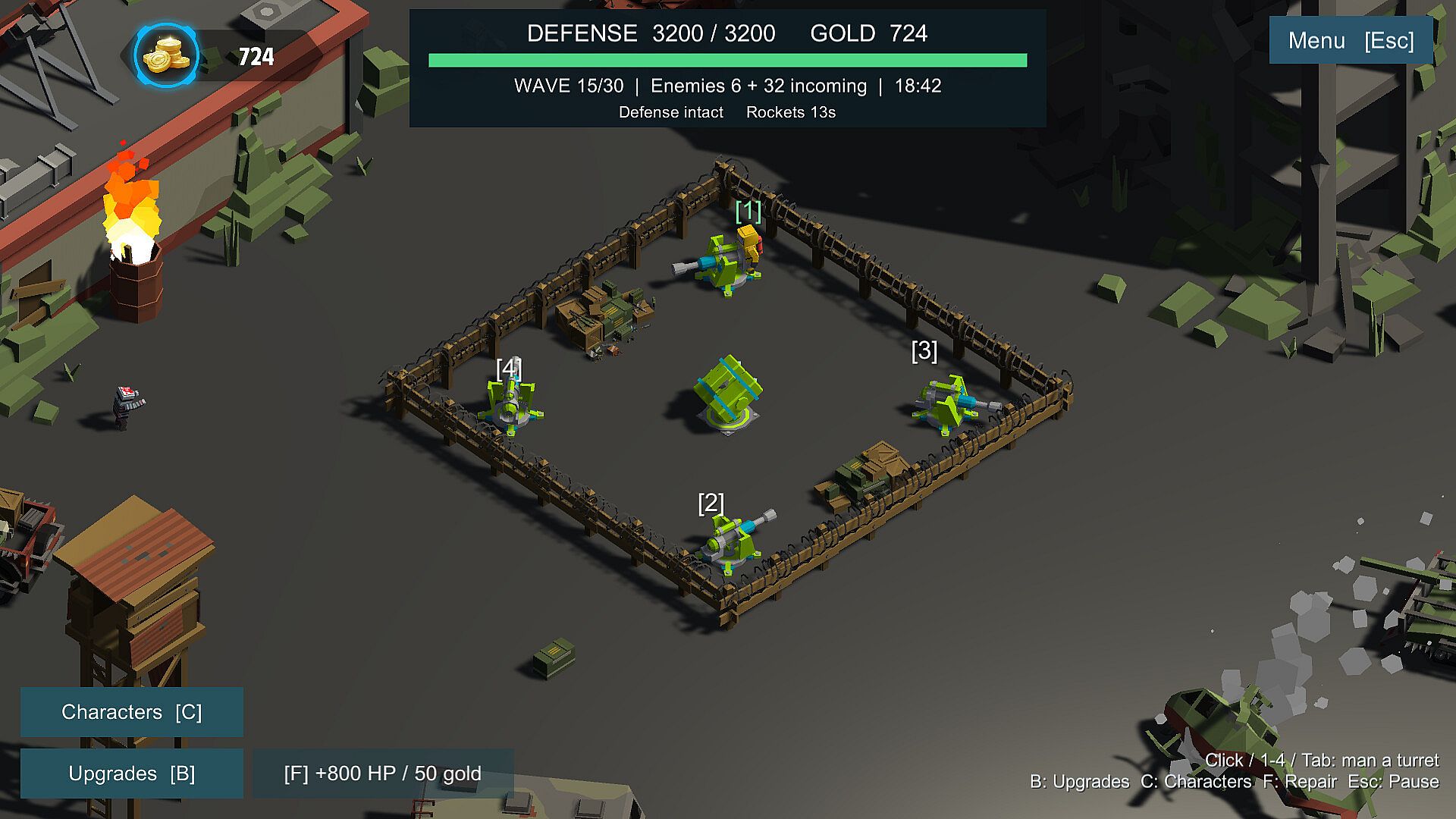
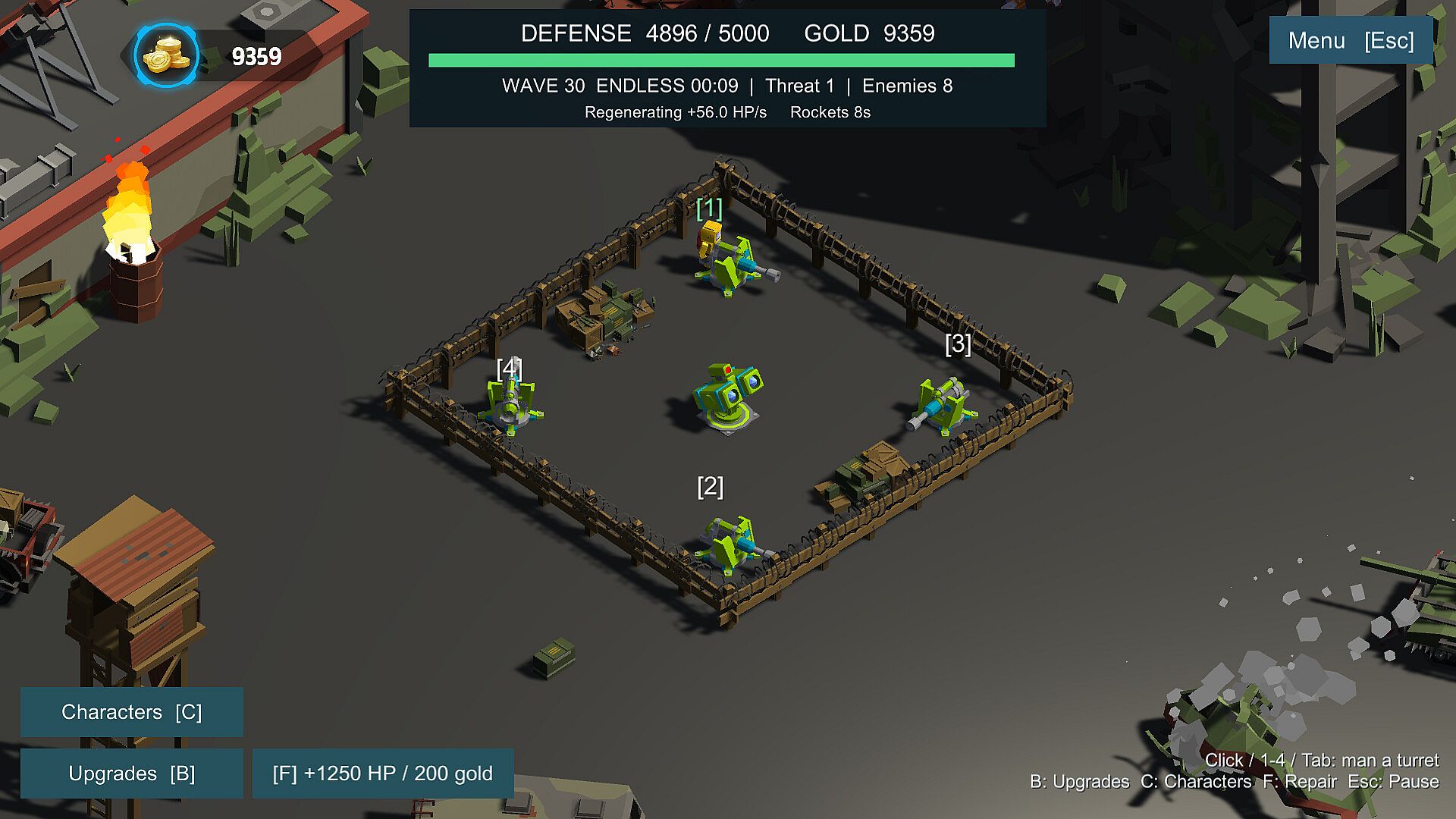
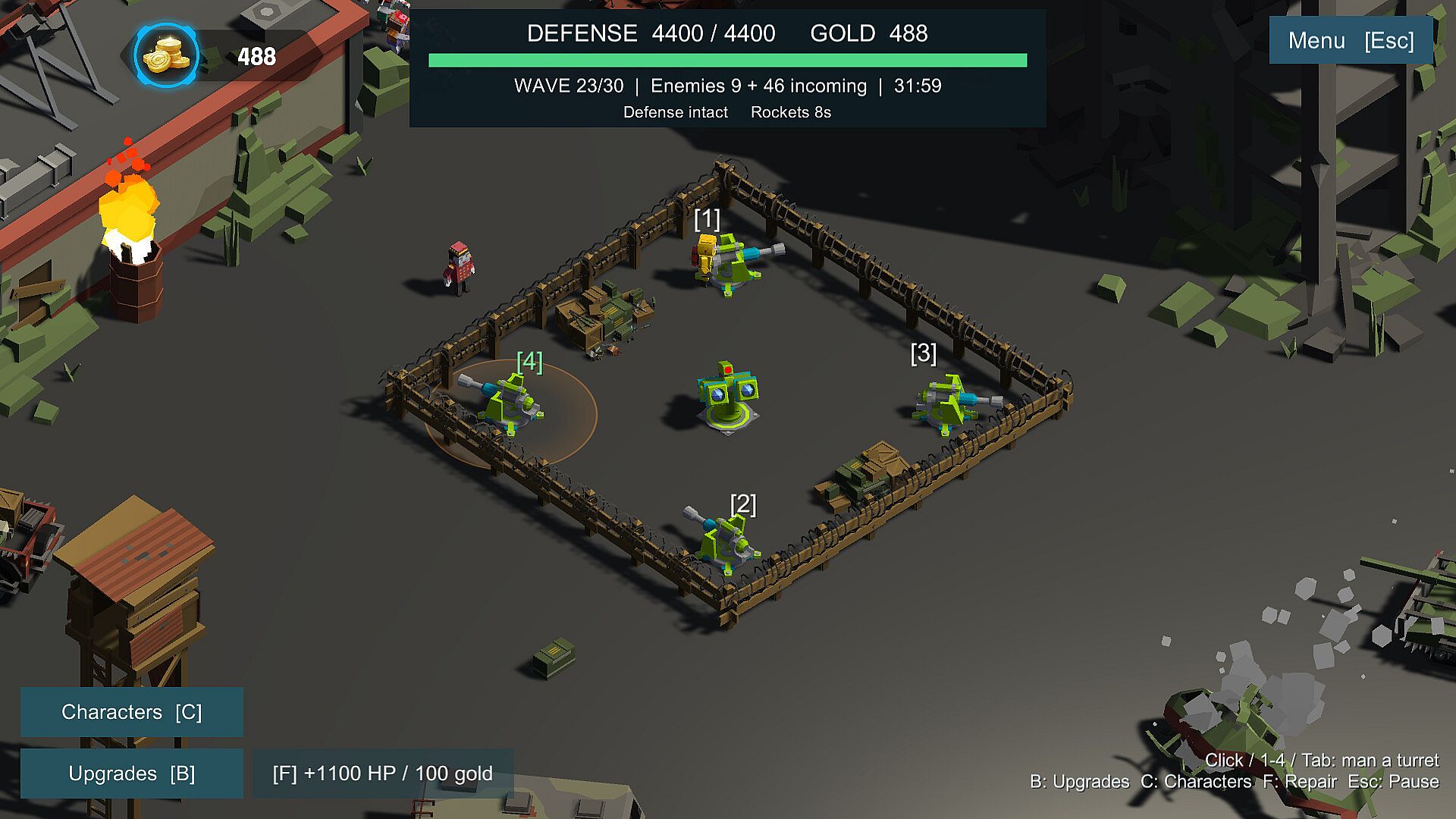
The core loop centers on positioning. Four mounted machine guns sit at the perimeter, and each fires only when the survivor stands at its station. Moving between them lets players respond to attacks that shift across sides as waves progress. A central rocket launcher provides automatic area support, dealing explosive damage to clustered enemies without direct input.
Gold earned from clearing enemies funds upgrades across three separate paths, each offering twenty levels of progression. One path improves gun damage and rate of fire, another strengthens the shared barricade, and the third enhances the rocket launcher's output. Costs increase with each level, but later waves drop more gold to offset the rising expenses. The barricade itself regenerates after five seconds without damage and can receive emergency repairs for extra time. If it collapses, the run ends immediately.
Enemy variety grows steadily. Early waves feature basic zombies, while later ones introduce faster runners and tougher brutes. Low-poly models give each type a distinct appearance, and attacks can spread to multiple sides of the outpost simultaneously. Keyboard and mouse controls handle movement and station switching, with a pause menu available alongside independent sliders for music and sound effects.
Game Modes
Midnight Gunwatch offers a single core experience built around wave survival. The first twenty-nine waves form a finite campaign that steadily ramps up enemy count, health, and damage output. Success on wave twenty-nine unlocks wave thirty, an endless mode where difficulty continues to climb each minute with no upper limit.
Progression ties directly to performance. Gold and upgrades reset on failure or restart, encouraging repeated attempts to push further into the wave sequence. Character appearance, personal records, and audio settings persist across runs, providing a light layer of persistence without altering the core challenge.
Core Mechanics and Progression
Resource management shapes every decision. Players must balance time spent at each gun station against the need to repair the barricade or collect gold. The shared fence acts as a single health pool for the entire perimeter, so neglecting one side can end a run even if other guns remain active. Upgrades provide meaningful power spikes, but their escalating costs force players to prioritize paths based on the threats they face most often.
Enemy behavior rewards anticipation. Faster units demand quick station switches, while durable brutes benefit from sustained fire or rocket support. The low-poly aesthetic keeps the focus on positioning and timing rather than visual complexity, and multiple zombie variants ensure each wave feels distinct even as numbers grow.
Is It Worth Playing?
Midnight Gunwatch targets players who enjoy focused single-player defense games with clear progression systems and escalating tension. Its wave structure delivers a complete finite campaign followed by an open-ended challenge, all within a compact indie scope that emphasizes mechanical precision over expansive features. With no multiplayer component or additional modes confirmed, the experience stays tightly centered on mastering station management and upgrade choices across repeated runs.
The game launches on September 29, 2026, for Windows PC and carries no user reviews at the time of writing. Those drawn to methodical zombie defense loops, resource allocation under pressure, and the satisfaction of optimizing a small set of systems will find the described mechanics align directly with that preference. Availability remains limited to the standard PC release without confirmed trials or free modes.