











March of the Red Queen is a single-player strategy indie RPG for PC in which players take on the role of the Red Queen leading a march across rival territories. The experience centers on resource decisions, reputation tracking, and tactical confrontations rather than traditional combat systems or open-world exploration.
Gameplay
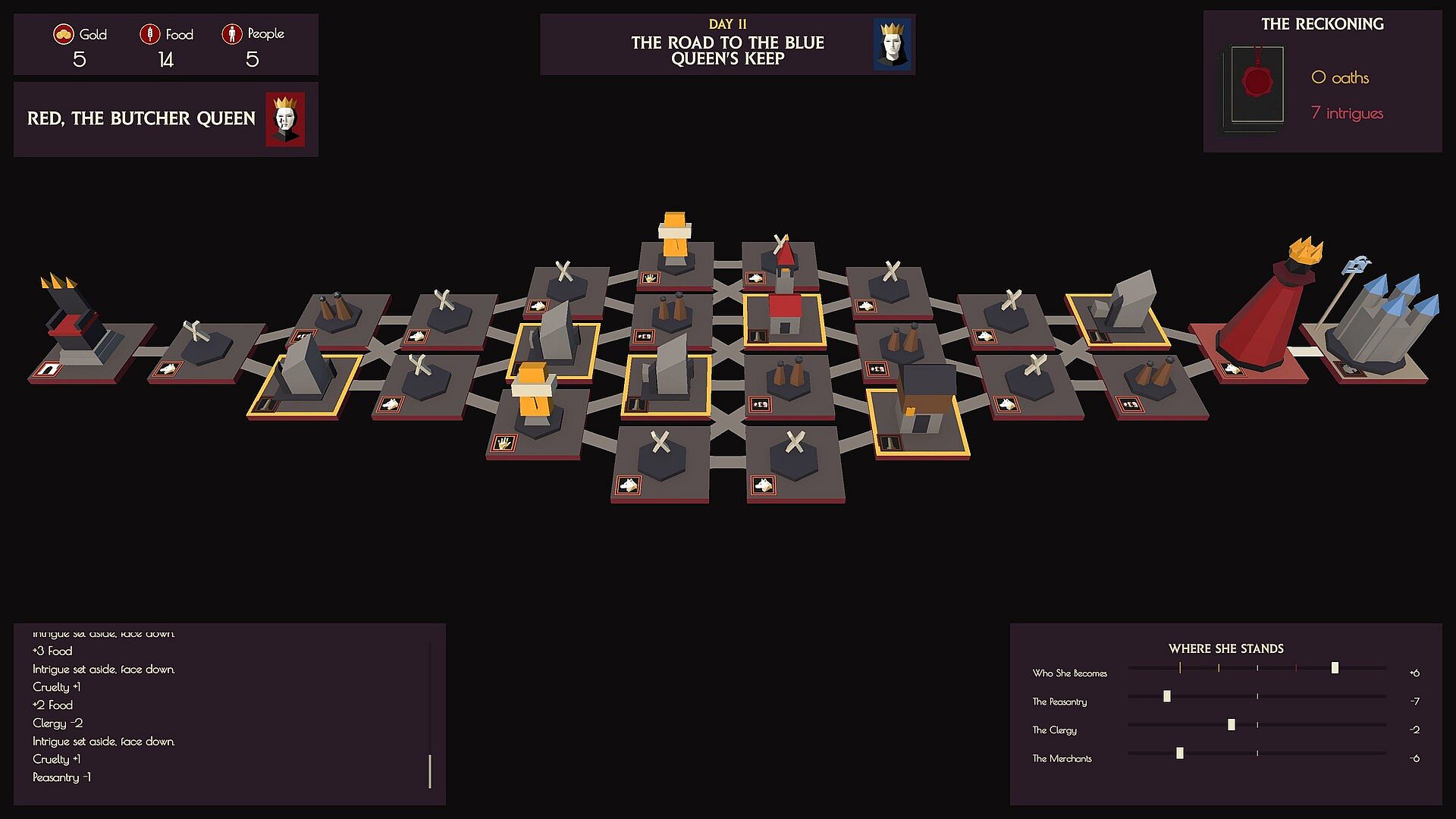
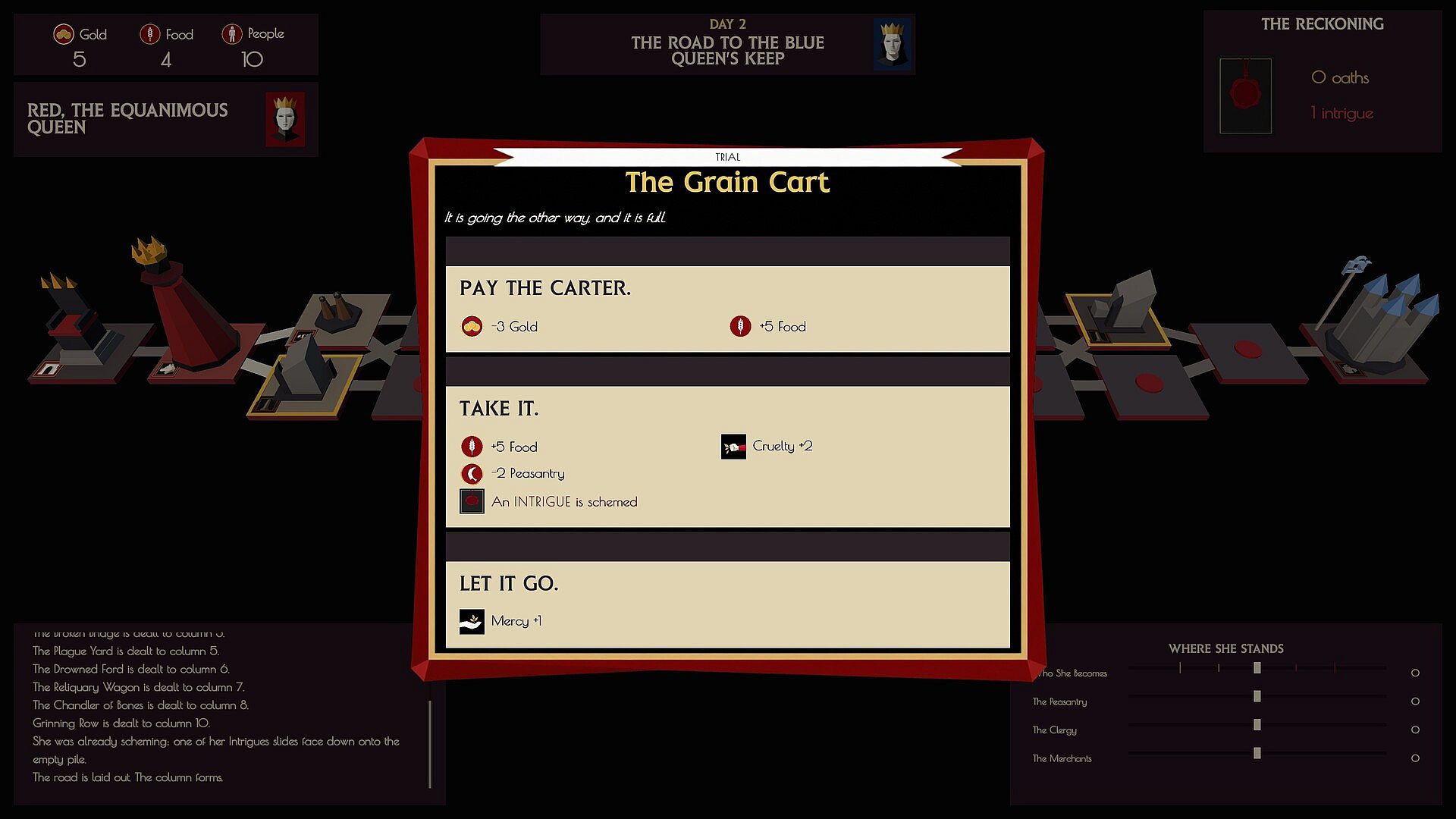
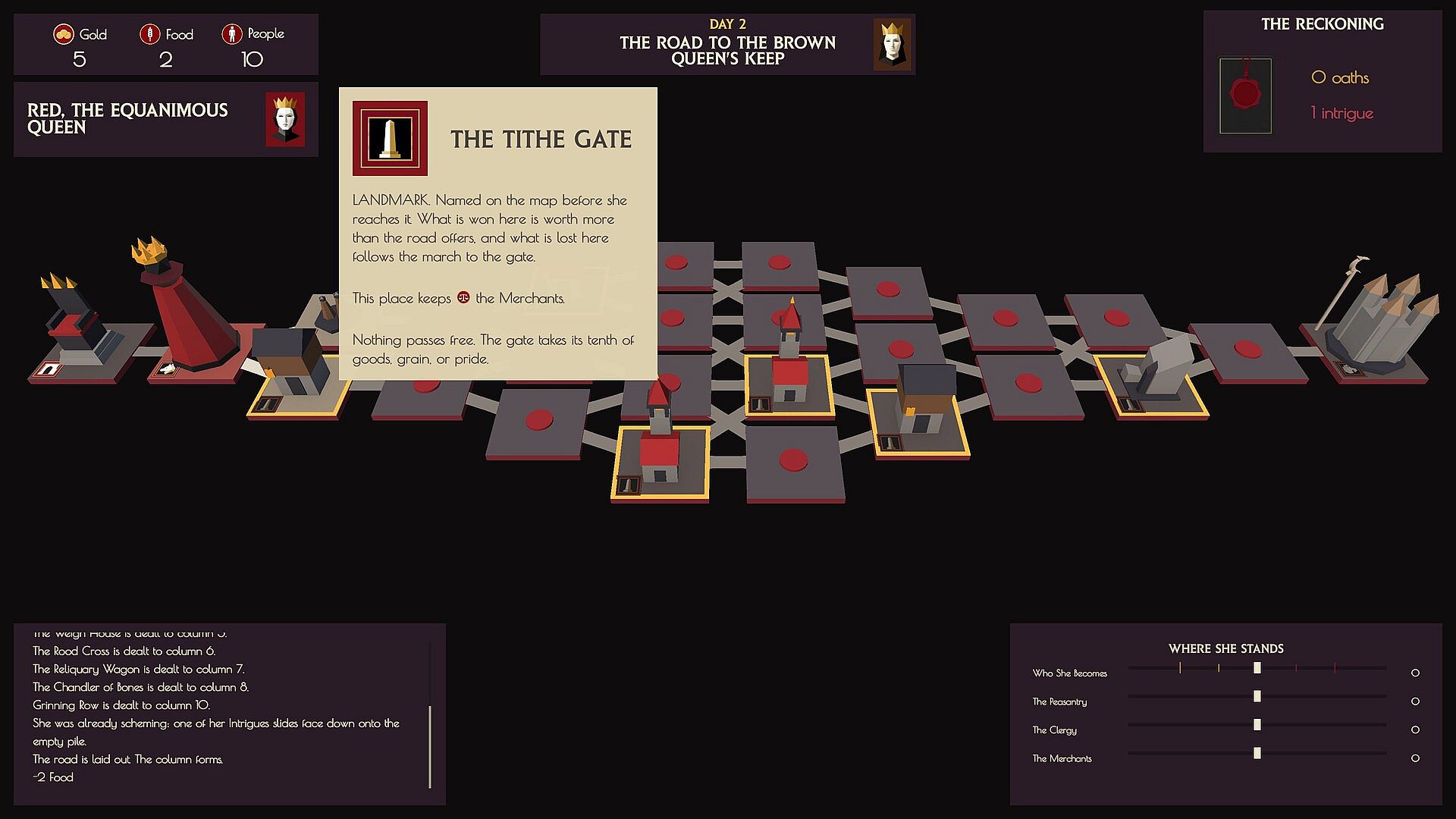
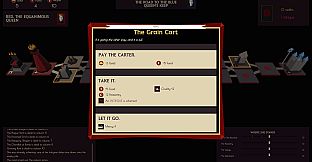
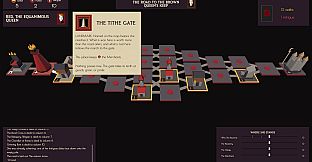
The core loop involves traveling across a series of tiles representing villages, magicians, and tithe barns on the way to confront another Queen. Every tile functions as a decision card that presents clear options with immediate and long-term effects. Feeding the starving increases column size but raises consumption needs, while seizing grain provides short-term relief at the cost of standing with local groups. Three factions track the player's actions separately through visible counters for peasantry, clergy, and merchants. Crossing certain thresholds unlocks or blocks paths such as back gates, picketed roads, or lost convoys.
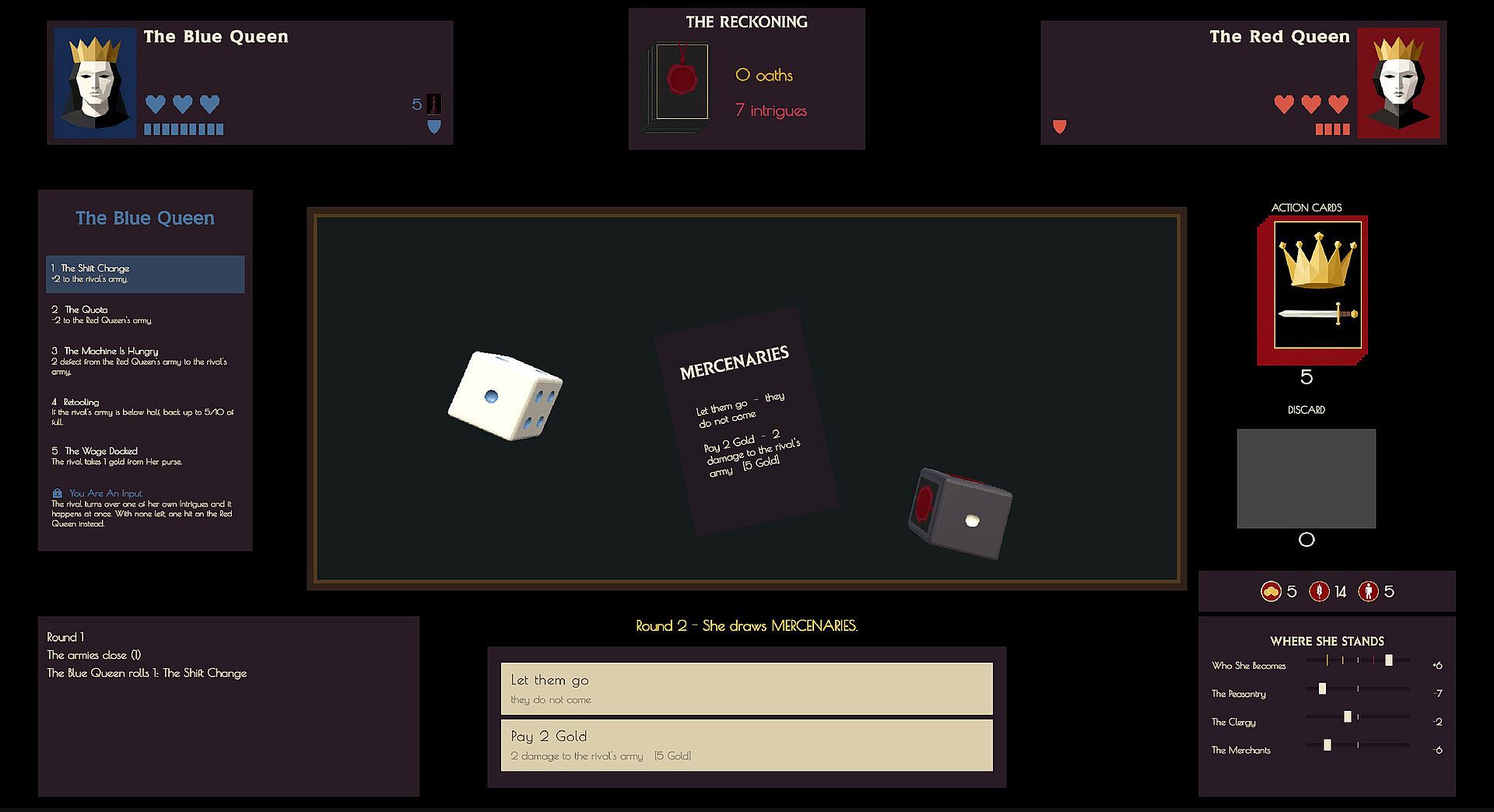
All information remains fully visible with no hidden statistics or behind-the-scenes rolls. Choices accumulate into persistent deeds called Oaths and Intrigues that carry forward and influence later stages of the march. These deeds shape available options and overall destiny without resetting between segments. The final confrontation uses a hand of five card types including mercenaries, peasants, reinforcements, sacrifice, and assault. Resolution relies on a clash die roll where the crown symbol determines success, and three successful hits end the encounter with a rival Queen.
Seven distinct rival Queens each bring unique realms, voices, fighting styles, and scheme decks. More than one hundred authored decision cards and over one hundred deeds provide hand-written text without procedural generation. A moral ledger tracks reputations and consequences across multiple runs, allowing prior choices to affect new marches. Four difficulty tiers scale the challenge from accessible paths to ones that reward prior experience with the systems.
Game Modes
The game operates as a single-player campaign structured around sequential marches against the seven rival Queens. Each march follows the same core structure of tile traversal, card-based decisions, deed accumulation, and final duel, but the specific cards, rival decks, and persistent ledger create variation across playthroughs. Difficulty tiers serve as adjustable settings within this framework rather than separate modes, letting players select the intensity of reputation consequences and resource demands before starting a run.
No additional modes such as multiplayer, endless variants, or separate campaign branches appear in the available details. The focus stays on repeated single-player attempts where the moral ledger and learned patterns from earlier marches inform later ones.
Key Mechanics and Systems
Reputation counters and deed persistence form the backbone of long-term strategy. Players must balance immediate survival needs against faction standing because negative thresholds close options while positive ones open alternatives. The open-information design means every decision carries transparent trade-offs visible before selection. Card play in duels adds a layer of risk management through the die roll, where outcomes depend on both hand composition and the crown result.
The authored cards emphasize narrative weight over randomization. Each presents concrete choices tied to the three factions and the growing column of followers. Consequences manifest as altered paths or new deed opportunities rather than numerical bonuses alone. This setup rewards careful tracking of multiple reputation tracks and planning for how early decisions will constrain or enable later marches.
Is It Worth Playing?
March of the Red Queen suits players who enjoy deliberate strategic decision-making in a single-player setting with visible systems and lasting consequences. The emphasis on open information, faction reputation, and persistent deeds across runs appeals to those interested in moral choice mechanics and card-driven confrontations without hidden elements or procedural filler. Four difficulty options allow gradual progression from straightforward marches to more demanding ones that build on prior knowledge.
As an upcoming title with no released version yet, current player reception data does not exist. The described features point to a focused experience for fans of indie strategy RPGs that prioritize authored content and transparent rules over broad scope or repeated content. Those drawn to campaigns built around reputation management and tactical duels will find the core loop aligned with those preferences.


