










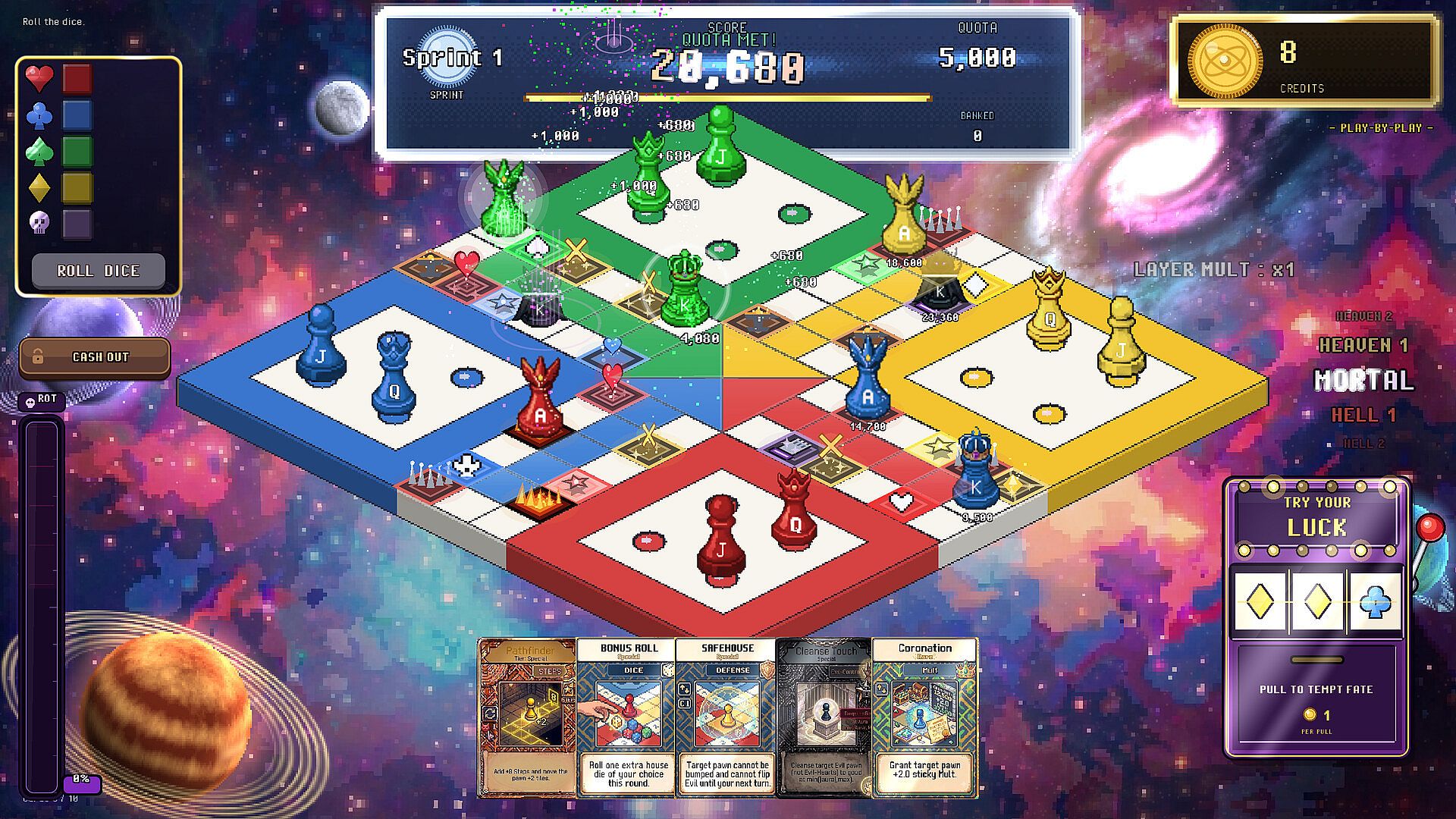
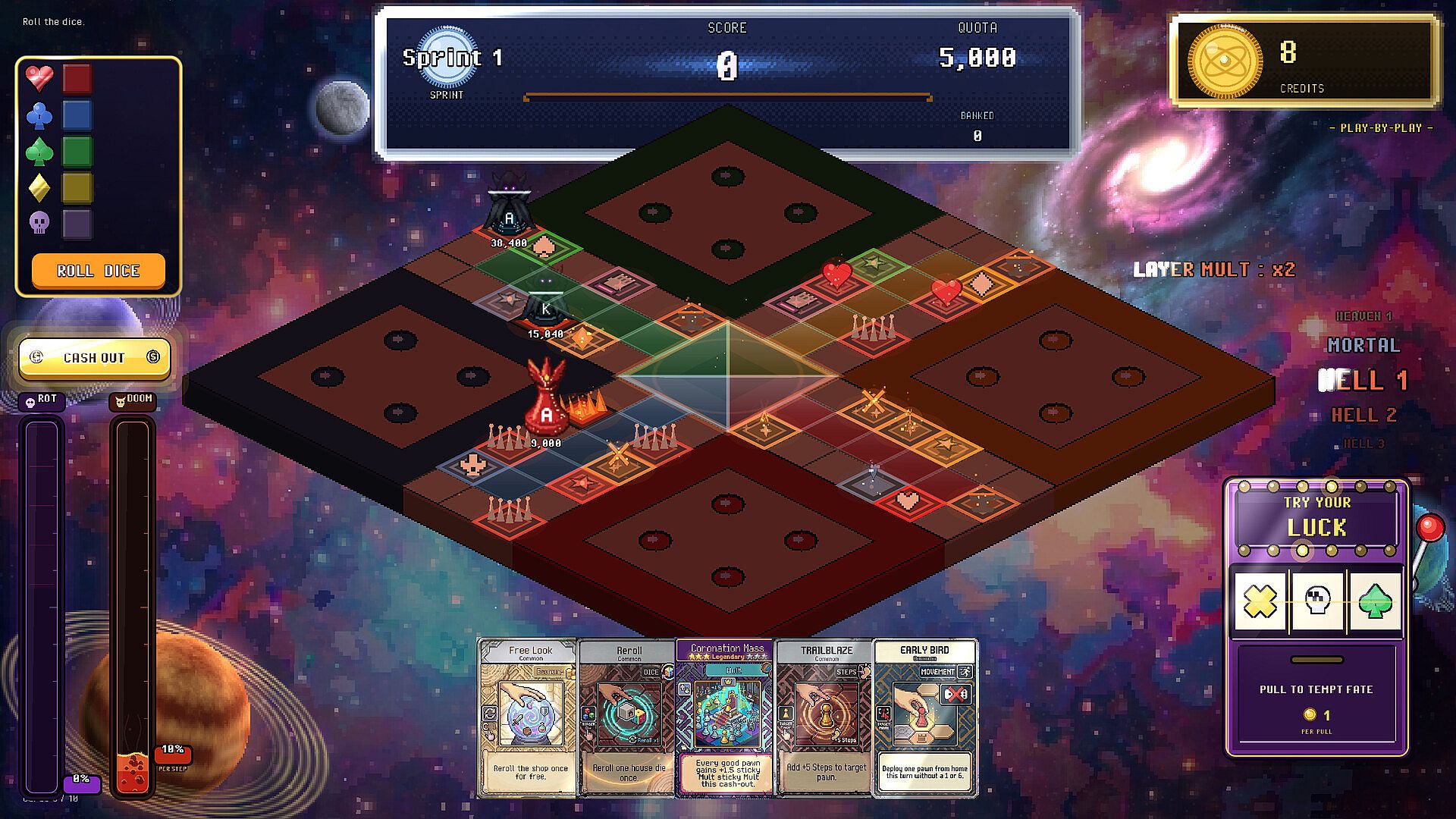

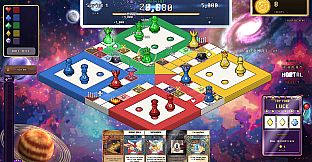
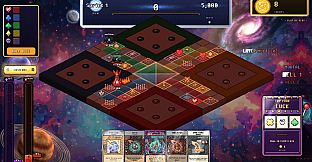
LUDOCOR é um jogo indie casual de estratégia para PC que transforma o tabuleiro clássico de Ludo em um desafio infinito de sobrevivência cósmica. O jogador conduz peões por um percurso corrompido, onde a pontuação cresce por meio de multiplicadores e avanços enquanto a corrupção avança sem parar. A experiência gira em torno de decisões arriscadas, com corridas que se aprofundam em andares sobrepostos sem meta final ou condição de vitória.
Gameplay
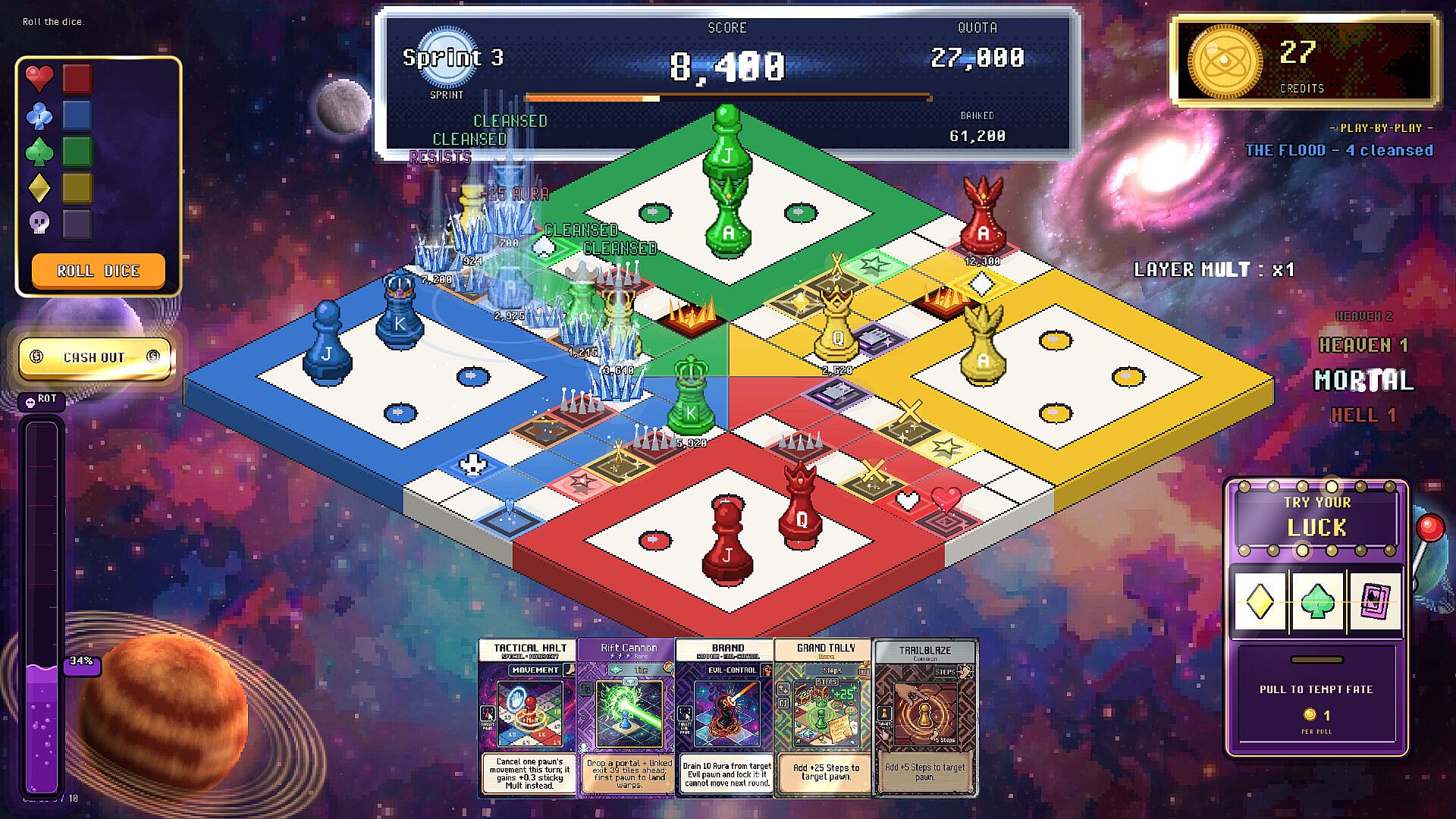
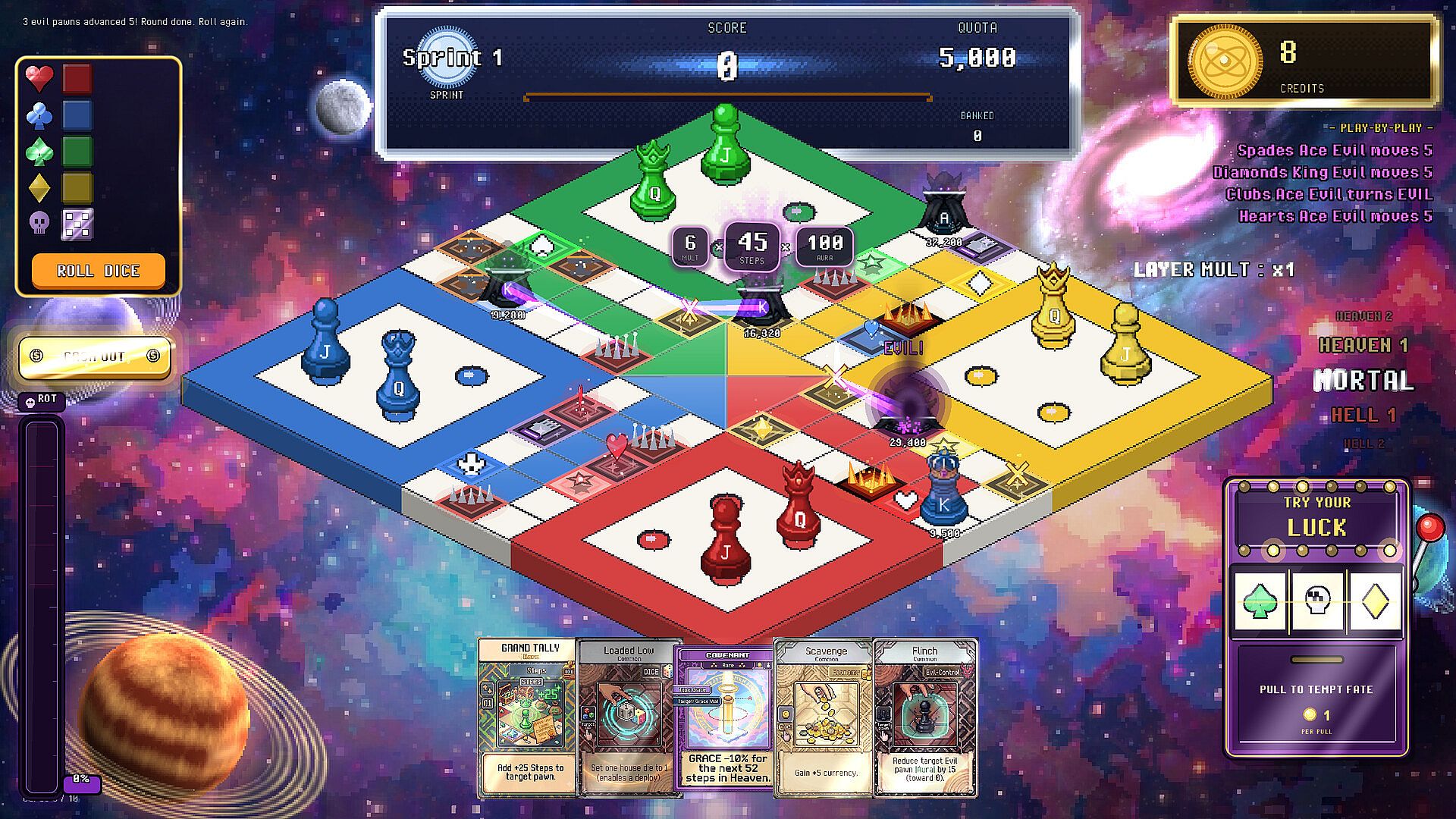
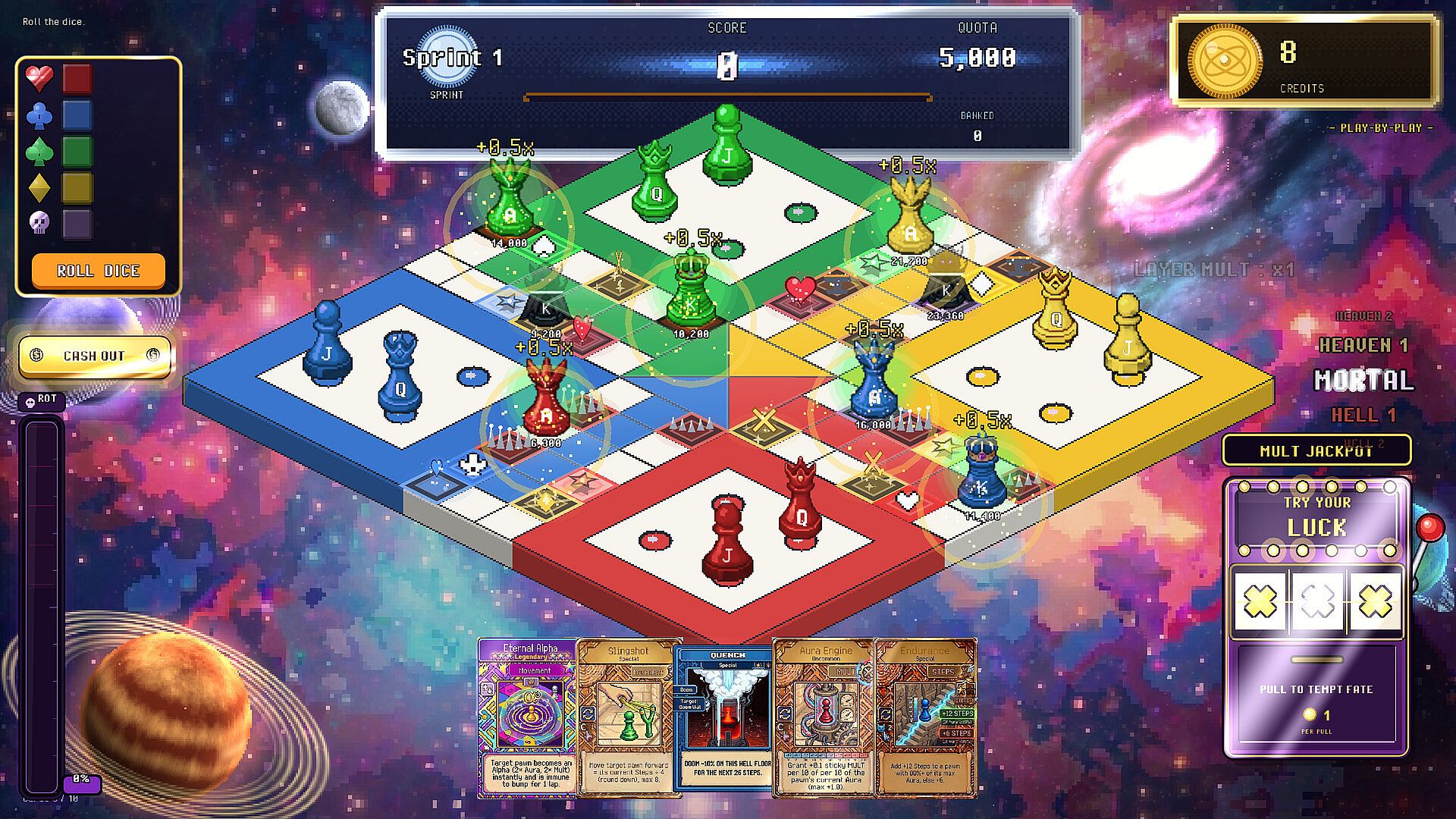
A pontuação principal é calculada por peão com a fórmula multiplicador × passos × aura, e os pontos permanecem acumulados até que o saque os transfira no sentido horário para o banco. Não cumprir a meta de avanço encerra a partida na hora. Quatro naipes determinam o comportamento dos peões: copas restauram vida, ouros aceleram o movimento, espadas atacam entidades malignas e paus eliminam corrupção. As cartas de figura trazem habilidades únicas, e apenas os valetes conseguem chegar à casa final, ativando um estado alfa que dobra a aura de todo o tabuleiro.
Cada peão possui um ultimate ligado ao seu naipe, que é liberado após avançar o suficiente com o recipiente cheio. Paus provocam uma inundação que purifica a corrupção local, espadas realizam uma poda que enfraquece o mal e ganha força do alvo mais poderoso, copas geram uma efusão que cura aliados, e ouros desencadeiam uma cavalgada que impulsiona os demais peões. O rank influencia a potência desses efeitos, e a ativação consome metade do recipiente. O frasco de podridão aumenta a cada rodada em que o jogador permanece parado, e mover os peões pode transformá-los em malignos. Peões malignos avançam sozinhos a cada rodada, drenando vida dos demais e crescendo com o valor roubado.
Os estratos do tabuleiro adicionam camadas: os andares do inferno multiplicam o valor dos passos por fatores duplos e introduzem rolagens de perdição que podem remover peões permanentemente. O céu é composto por três níveis com multiplicadores maiores, porém rolagens de graça expulsam todos quando ativadas. A transição entre andares exige completar meia ou uma volta completa no anel. Uma máquina caça-níqueis chamada bandit aceita moedas para sorteios que entregam um dos sete prêmios ou uma maldição, incluindo trios de naipes, purgas, multiplicadores, coroas alfa ou cartas extras. Entre as corridas, uma loja oferece um conjunto de 104 cartas com truques de movimento, purgas, ferramentas de controle, portais, proteções, seguros e motores, além de slots extras para a mão que podem ser comprados.
Modos de Jogo
O jogo funciona em um formato único de sobrevivência infinita focado em pontuação, baseado em corridas repetidas e saques. As partidas são salvas automaticamente entre rodadas, permitindo sair e retomar depois pela tela inicial. O progresso acontece pela acumulação de pontos nos peões, pelo controle dos níveis de corrupção e pelas transições entre andares, sem modos separáveis. Dados encadeados geram explosões em resultados seis, e elementos clássicos de Ludo, como saídas, capturas e recuos, permanecem como opções táticas.
Mecânicas-Chave e Progressão
O gerenciamento da corrupção é o principal ponto de tensão: cada rodada parada enche o frasco de podridão e cada movimento arrisca transformar peões em malignos. A horda de peças corrompidas cresce conforme a agressividade do jogador, avançando em conjunto e se alimentando das almas que passam. O bandit traz recompensas de alta variância que podem inverter o rumo por meio de bônus ou intervenções diretas contra o mal. As compras de cartas entre rodadas oferecem ferramentas para reduzir riscos ou aumentar a pontuação, transformando a loja em um momento decisivo onde o espaço limitado na mão obriga a priorizar.
A apresentação em pixel art combina com áudio sintetizado para efeitos e trilha sonora. Os controles priorizam o mouse com interface mínima, mantendo o foco nas interações do tabuleiro e em um único comando principal. A ausência de menus tradicionais favorece sessões rápidas e jogabilidade contínua.
Vale a Pena Jogar?
LUDOCOR agrada quem busca adaptações estratégicas de jogos de tabuleiro com ciclos intensos de risco e recompensa e elementos de sobrevivência roguelike. O formato infinito premia o controle cuidadoso da aura e saques bem-timed, punindo excessos com corrupção e rolagens de perdição. Quem gosta dos mecanismos clássicos de Ludo encontra movimento e captura intactos, além de novas camadas como ultimates dos naipes, multiplicadores de andar e o sistema do bandit. O jogo permite sessões curtas ou longas graças ao salvamento automático e não possui componente multijogador, concentrando-se inteiramente em corridas solo. Seu escopo indie entrega uma experiência focada na caçada por pontos, sem camadas adicionais de conteúdo ou atualizações sazonais. Jogadores que procuram estratégia casual com toques cósmicos e visuais pixelados podem encontrar engajamento na gestão dos peões e na navegação pela corrupção em tentativas sucessivas.


