





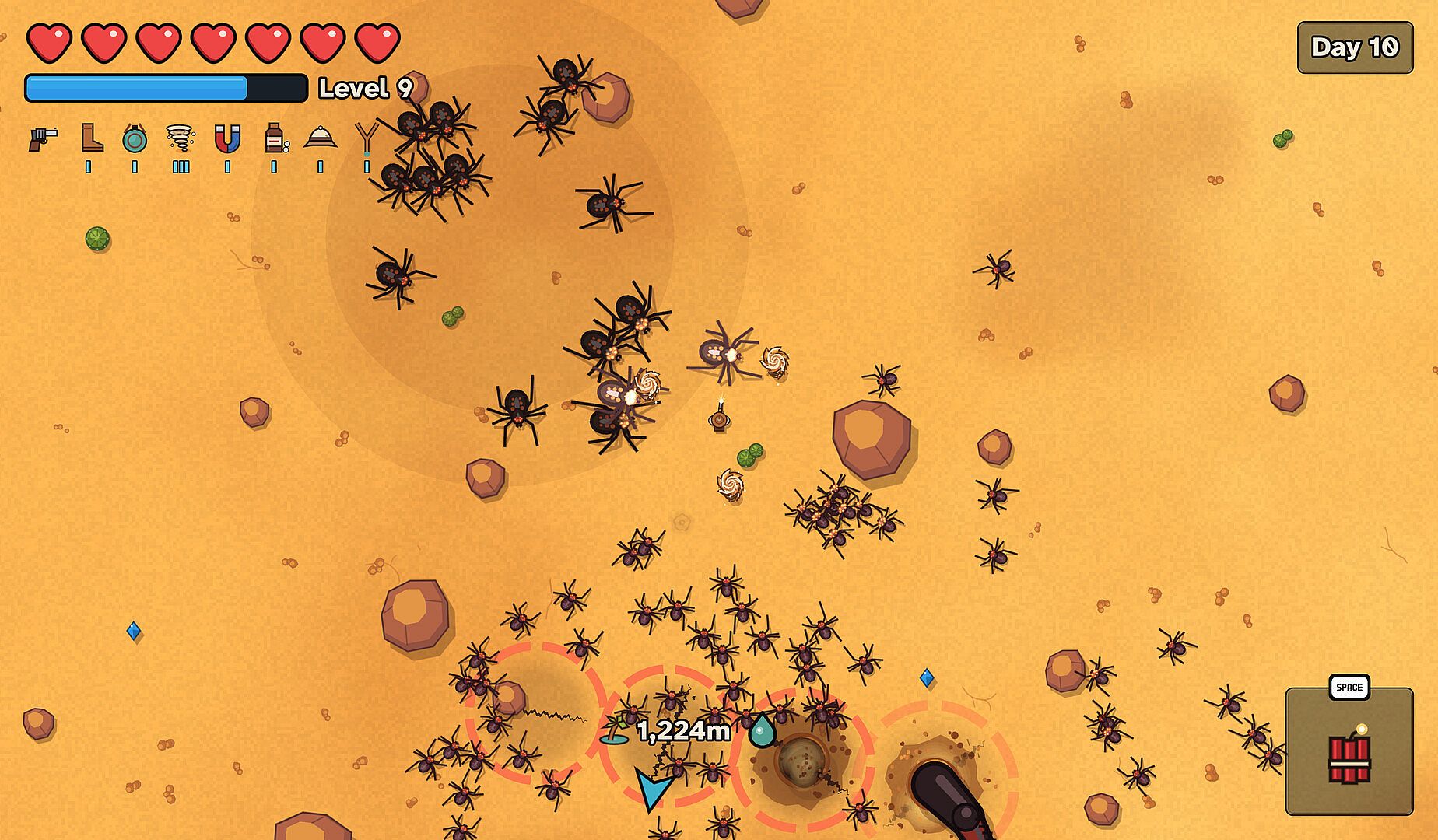
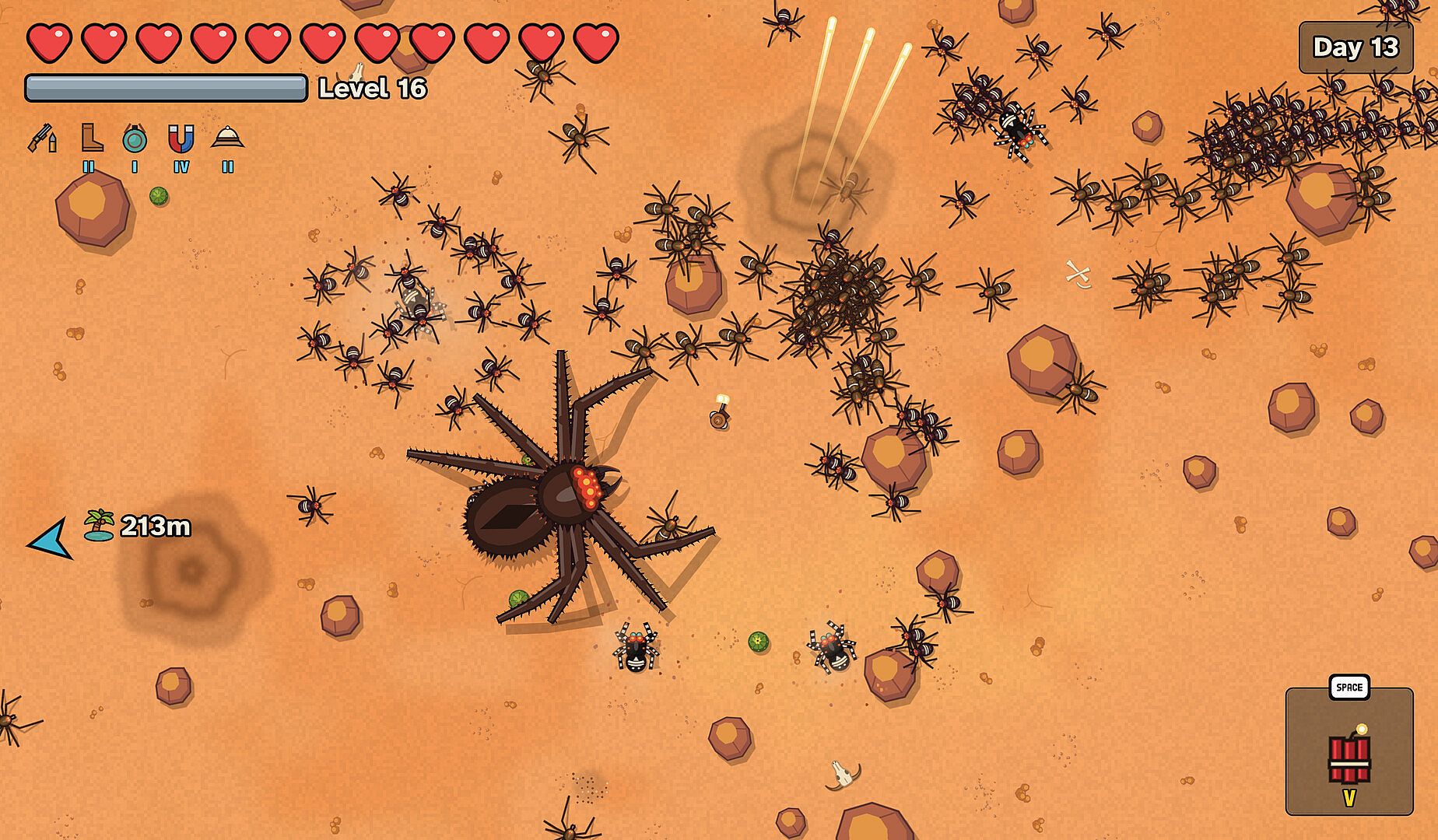
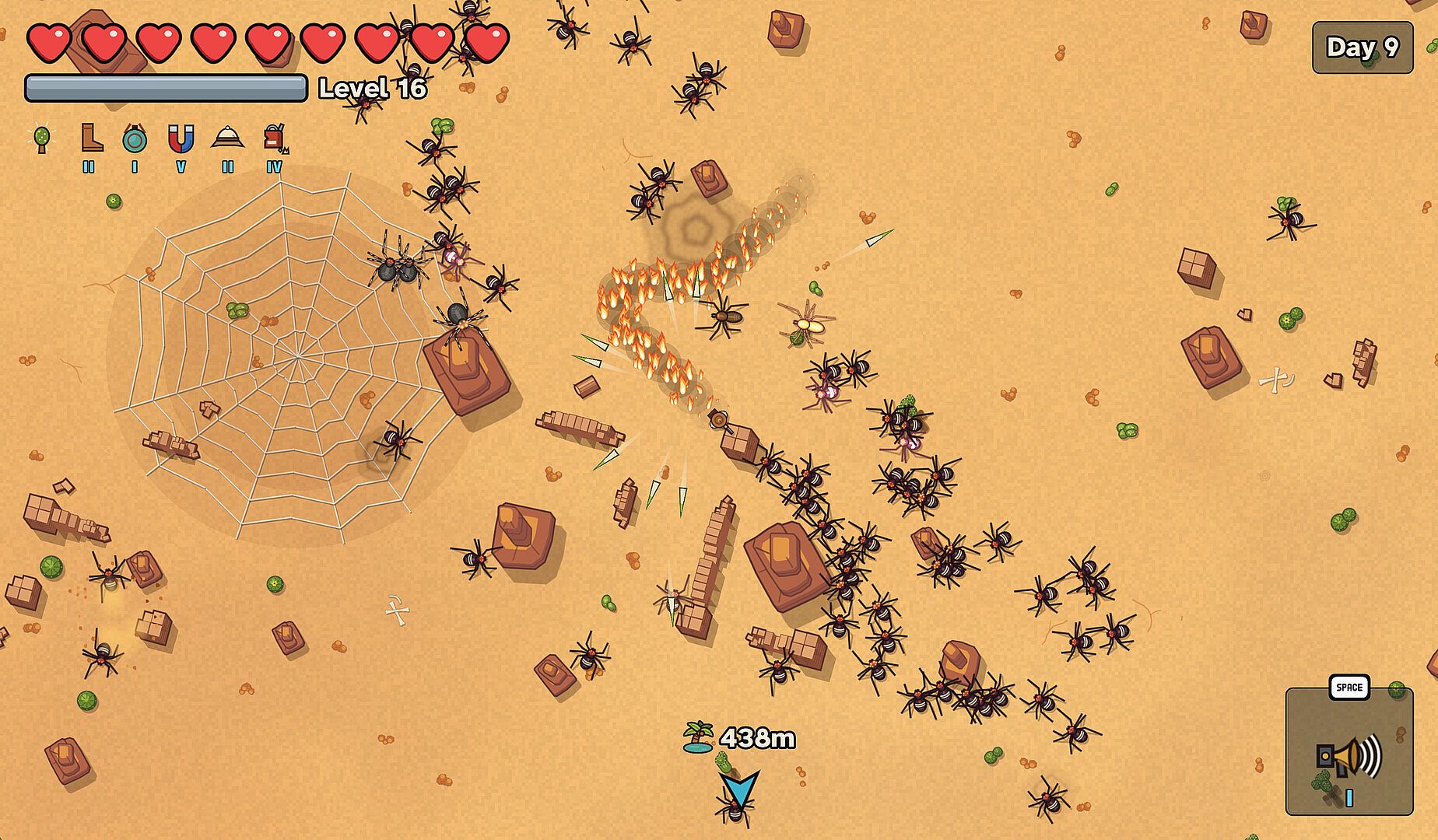
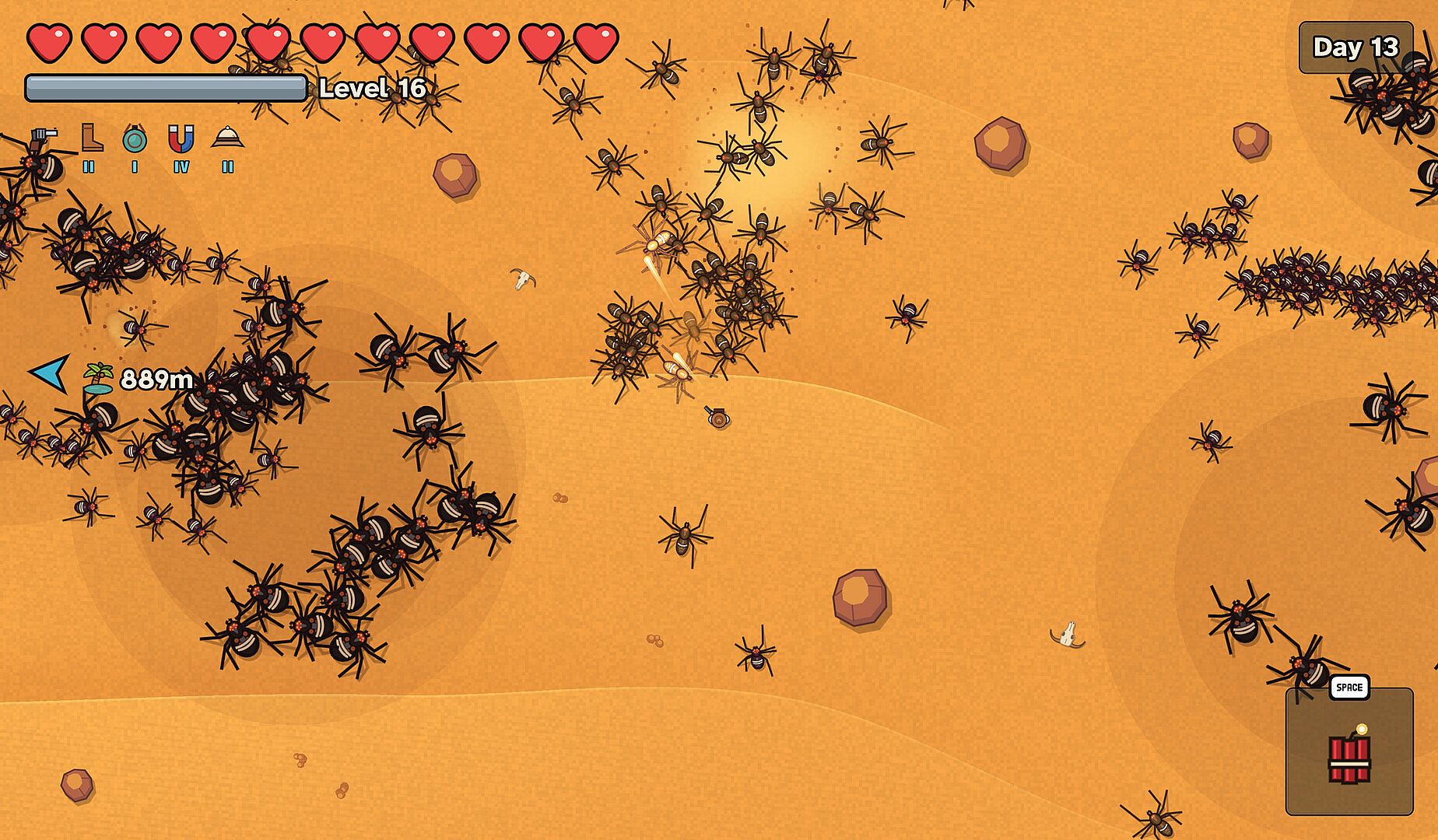
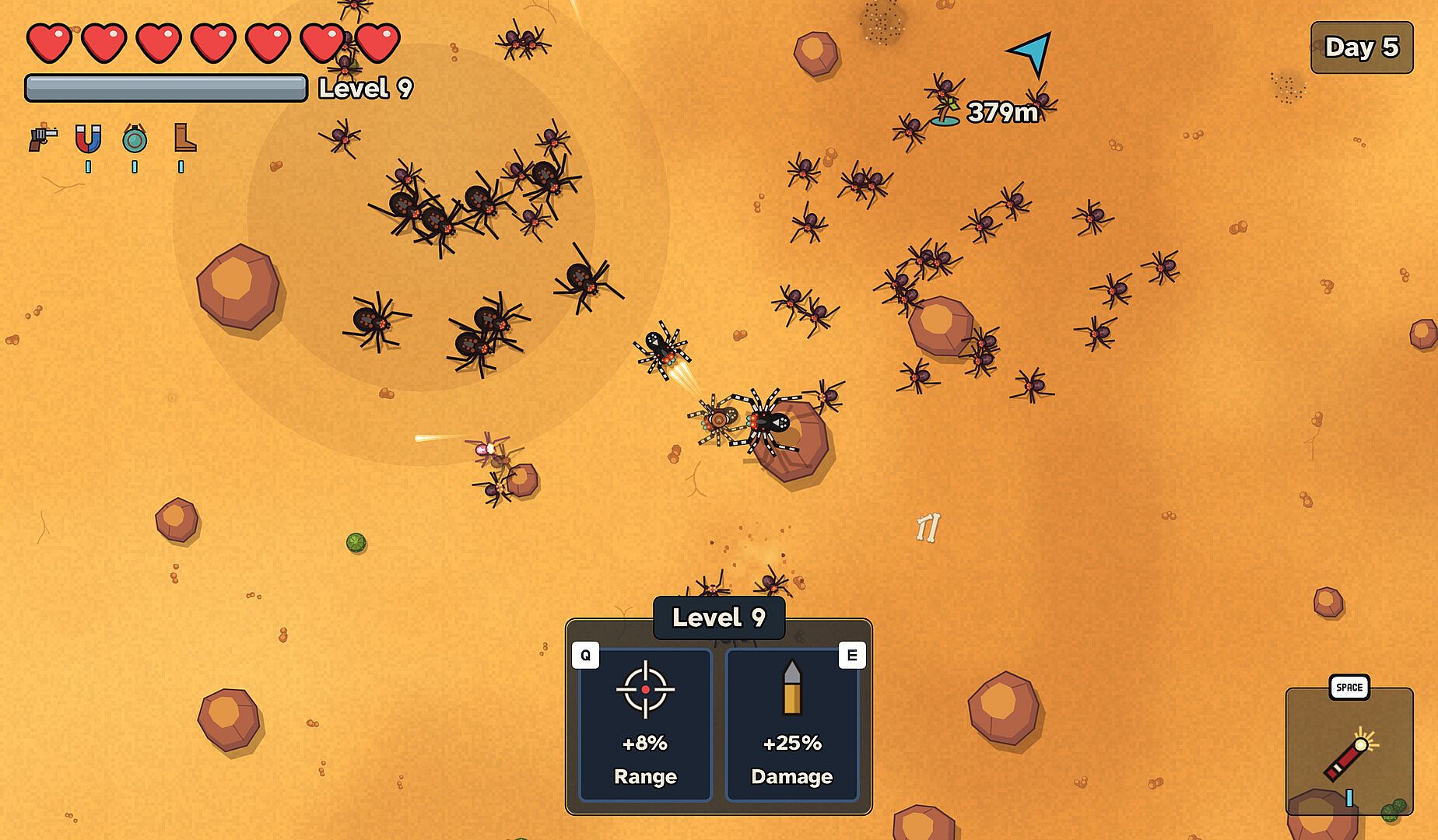

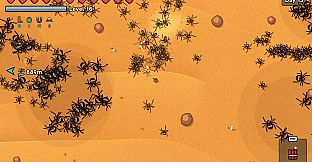
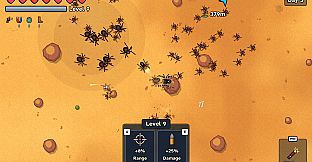

Lost in the Desert with Giant Spiders is a single-player action survival game built around an auto-shooter loop on PC. Players navigate open desert terrain while a weapon fires automatically, focusing movement and positioning to avoid threats that emerge from beneath the sand.
Gameplay
The core loop centers on daily runs across the desert toward successive oases. Each run lasts three to five minutes. The weapon handles firing on its own, leaving players to steer a path that threads between emerging dangers. Sand disturbances, ripples, and building rumbles serve as advance warnings for each of the twelve spider species. Learning these distinct signals allows anticipation of attack timing, location, and type, including irradiated variants that appear later.
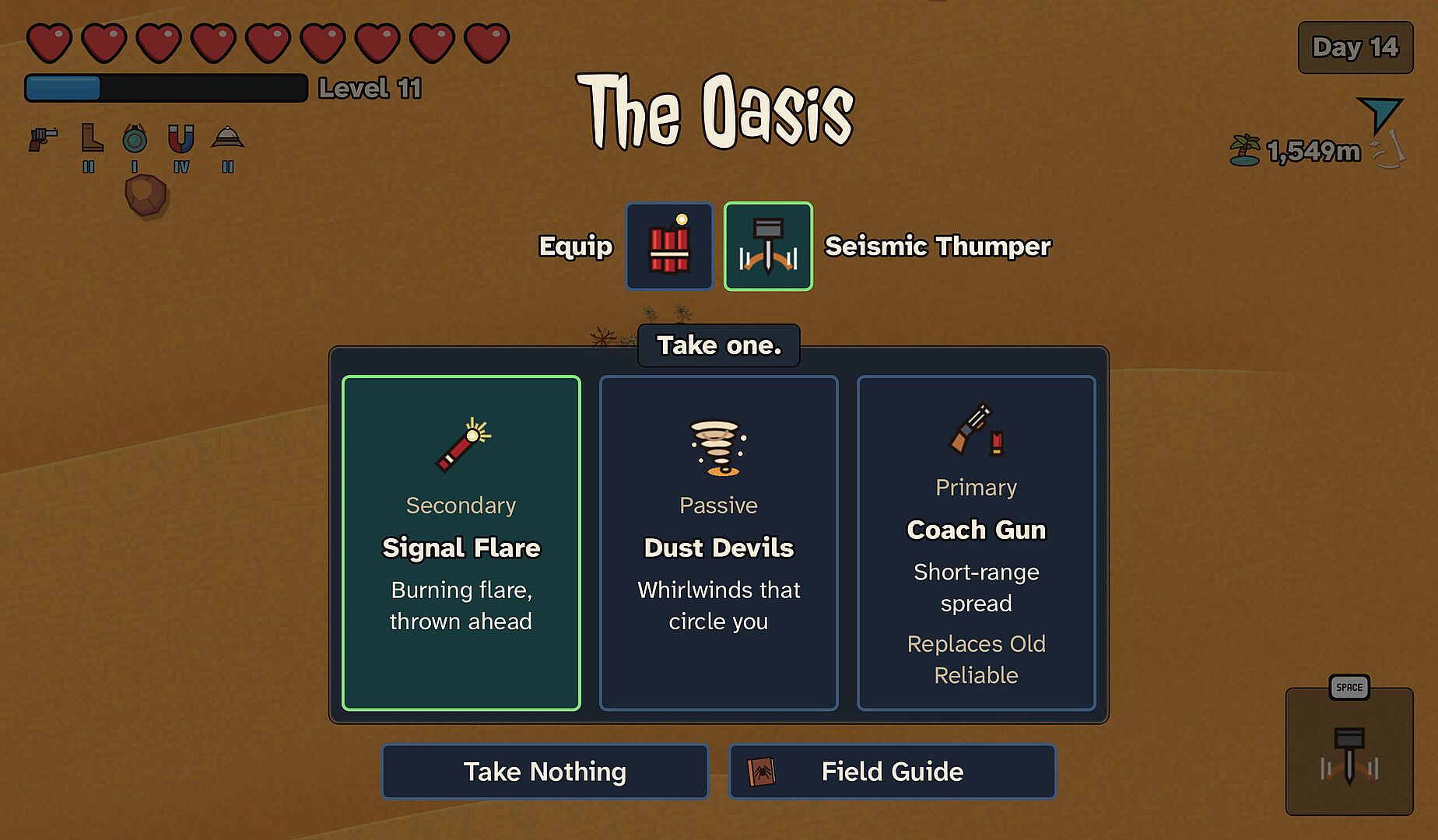
Fallen spiders drop experience points directly in the path of approaching swarms. Collecting them levels up the character without pausing the run. Reaching an oasis restores health and opens choices for new weapons or items. Continued progress triggers weapon evolutions that alter their behavior against the spiders. A larger presence beneath the sand tracks the player across days, while later stages introduce glowing spiders and longer, denser swarms. A field guide populates automatically as new species are encountered.
Four primary weapons, five secondary weapons, and seven passive items combine, upgrade, and evolve through repeated runs. Controller support is built in, with design emphasis on portable play.
Game Modes
The base experience consists of successive desert crossings that increase in length and intensity until rescue or failure. After completing a rescue, new modes and challenges become available. These additions expand on the established survival mechanics without altering the fundamental focus on ground reading and movement.
Recurring boss encounters occur beneath and between dunes, providing distinct tests within the run structure. The single-player format keeps all progression and encounters contained to one session at a time.
Key Mechanics and Progression
Progression ties directly to run performance. Experience collection happens in real time amid active threats, rewarding precise pathing that balances XP pickup with evasion. Item and weapon selections at oases create short-term builds that carry forward through evolutions on longer treks. The system encourages repeated attempts to unlock further content and refine survival strategies against the full roster of spider types.
Standstill behavior draws underground attention, enforcing constant forward pressure. The escalating scale, from initial small swarms to thicker later encounters and a pursuing entity, structures the overall difficulty curve across multiple days.
Is It Worth Playing?
This title suits players who enjoy auto-shooter survival games that emphasize pattern recognition and positioning over direct aiming. The short run length supports quick sessions while the unlock structure after rescue provides ongoing goals. Full controller support and Steam Deck optimization make it accessible for portable play. As an unreleased title with no user reviews available, its appeal rests on the described mechanics of ground reading, weapon evolution, and incremental daily challenges. Those drawn to B-movie themed action with learnable enemy tells will find the core loop a direct match for that interest.