







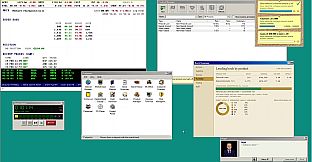
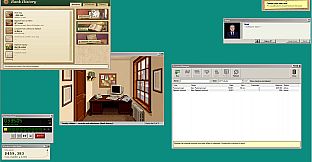
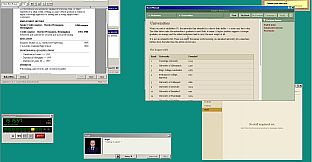
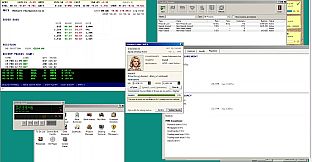
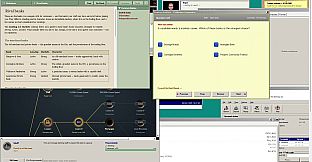
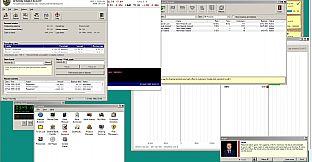
Liquidity is a bank management simulation set in 1995 on PC. Players start with a desk, workstation, startup cash, and banking license, then build products, customers, a trading book, and reputation from the ground up. The experience centers on realistic financial operations where every decision affects solvency and growth in a detailed market environment.
Gameplay
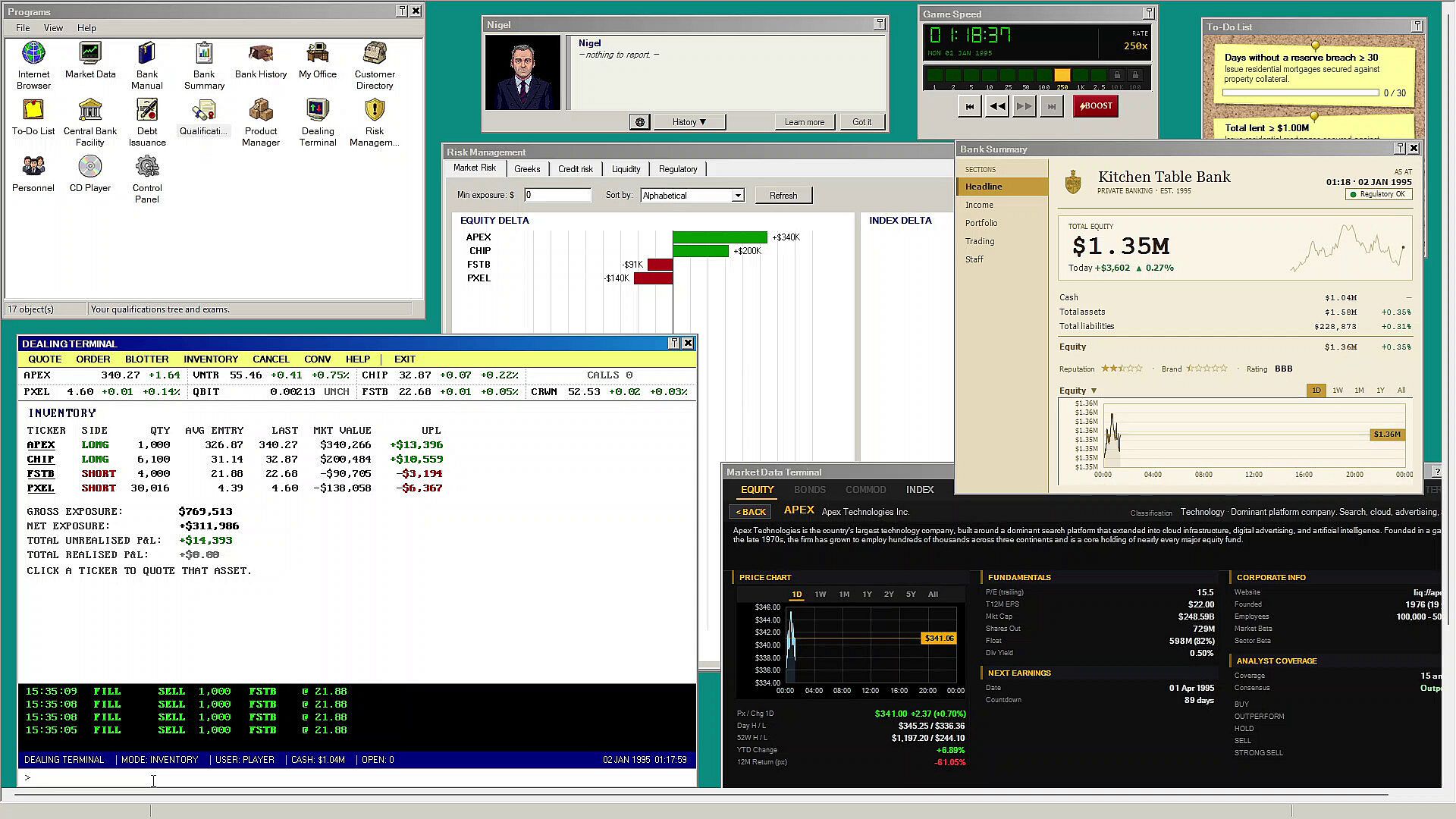
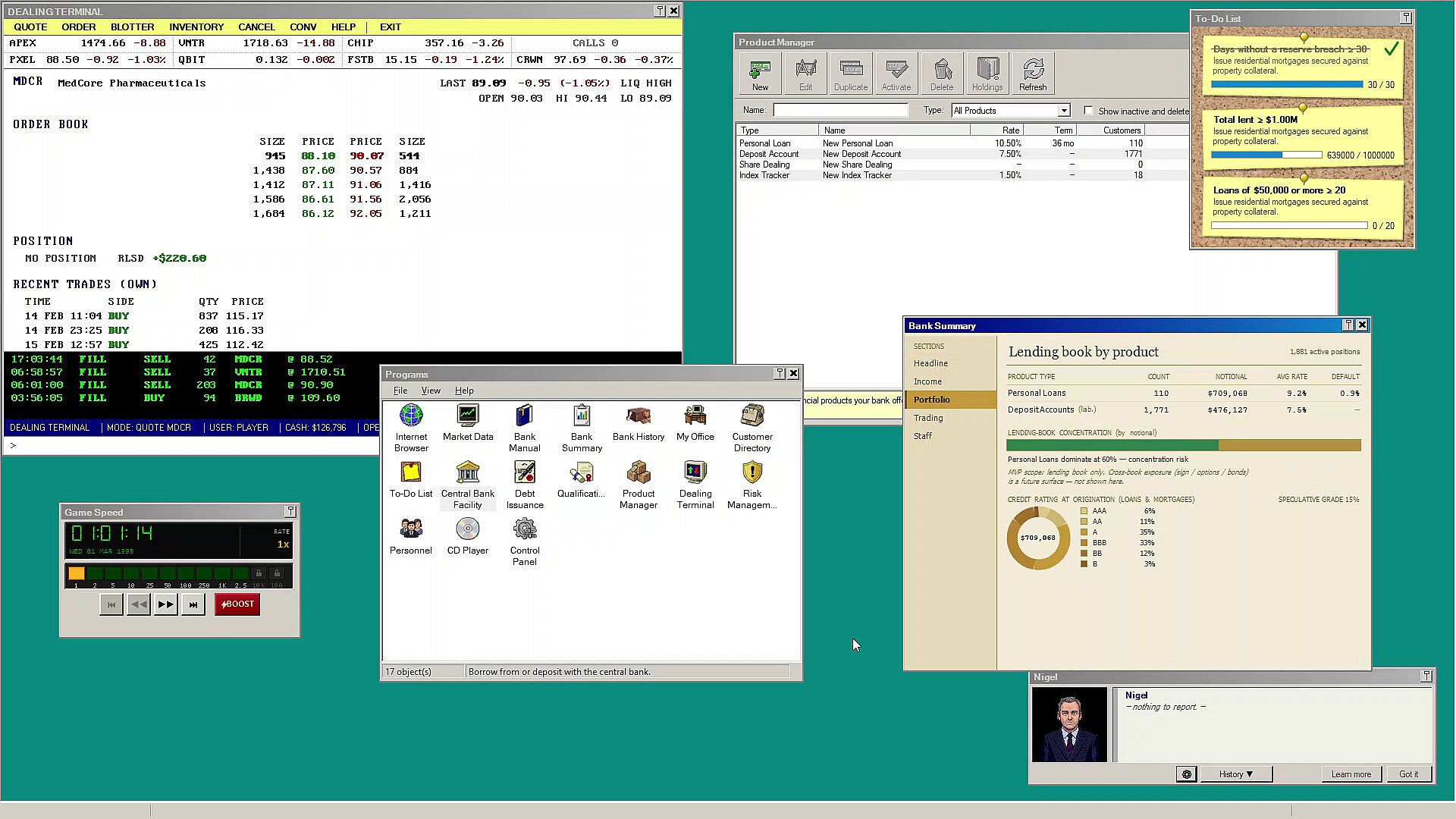
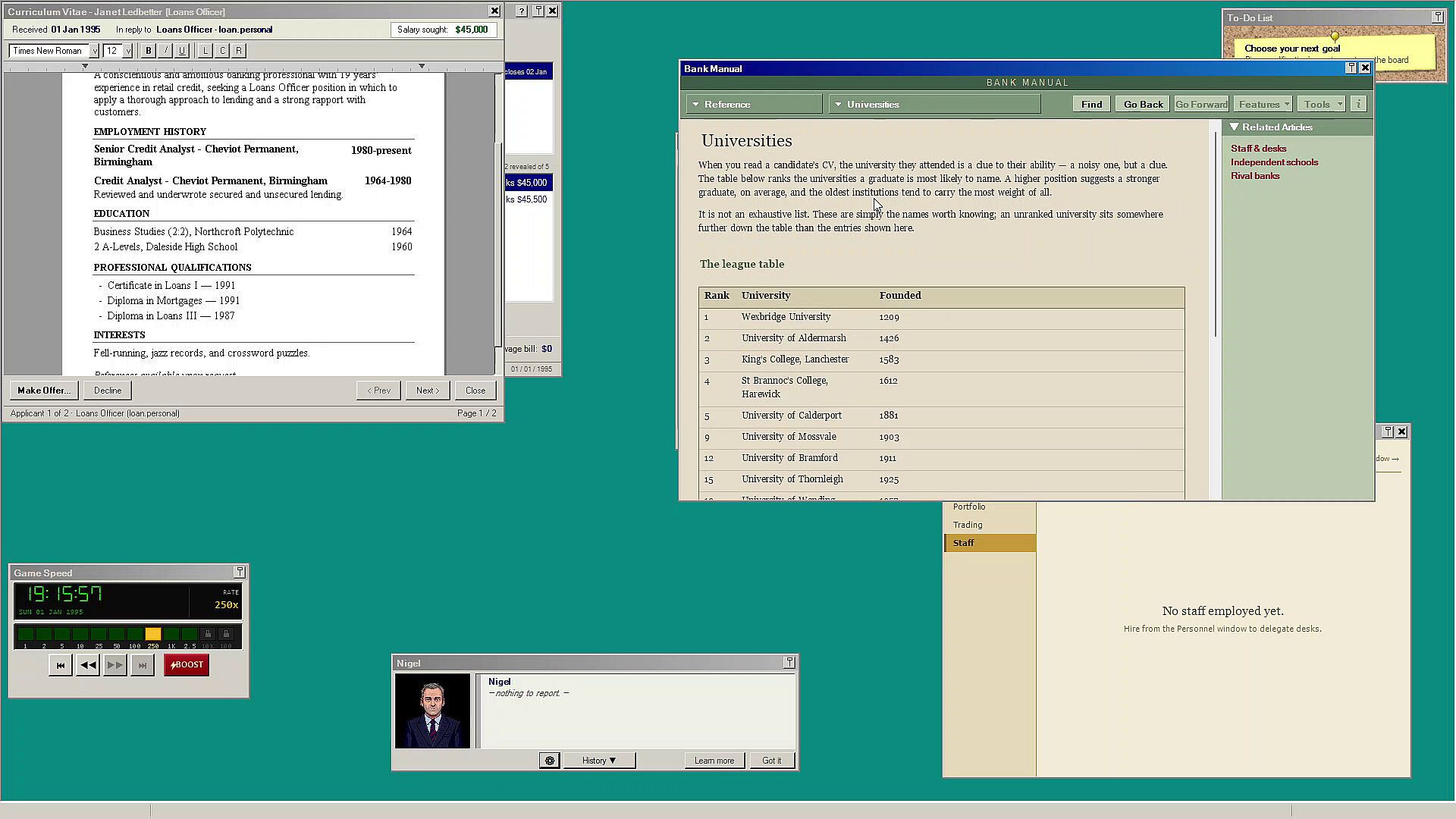
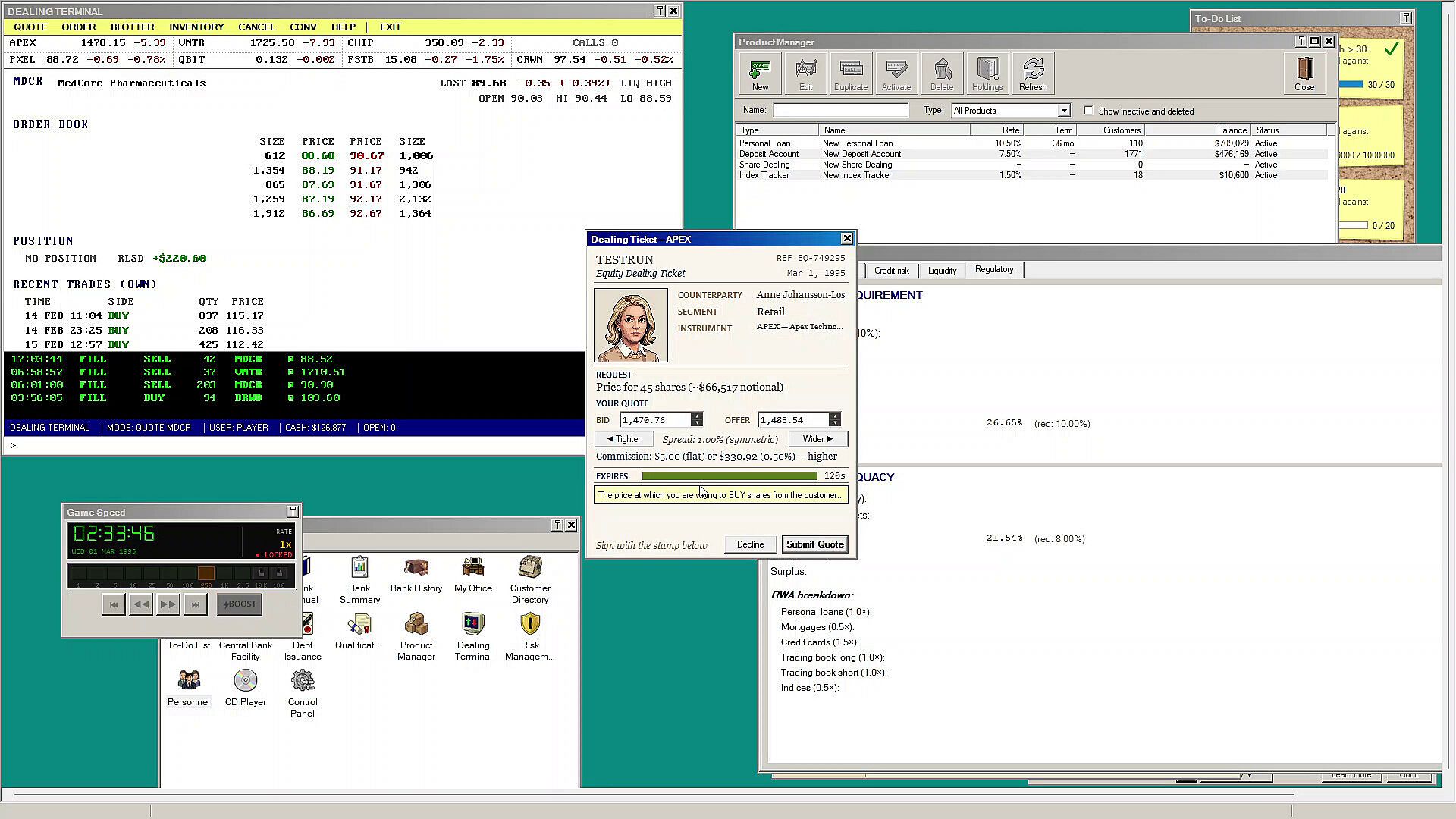
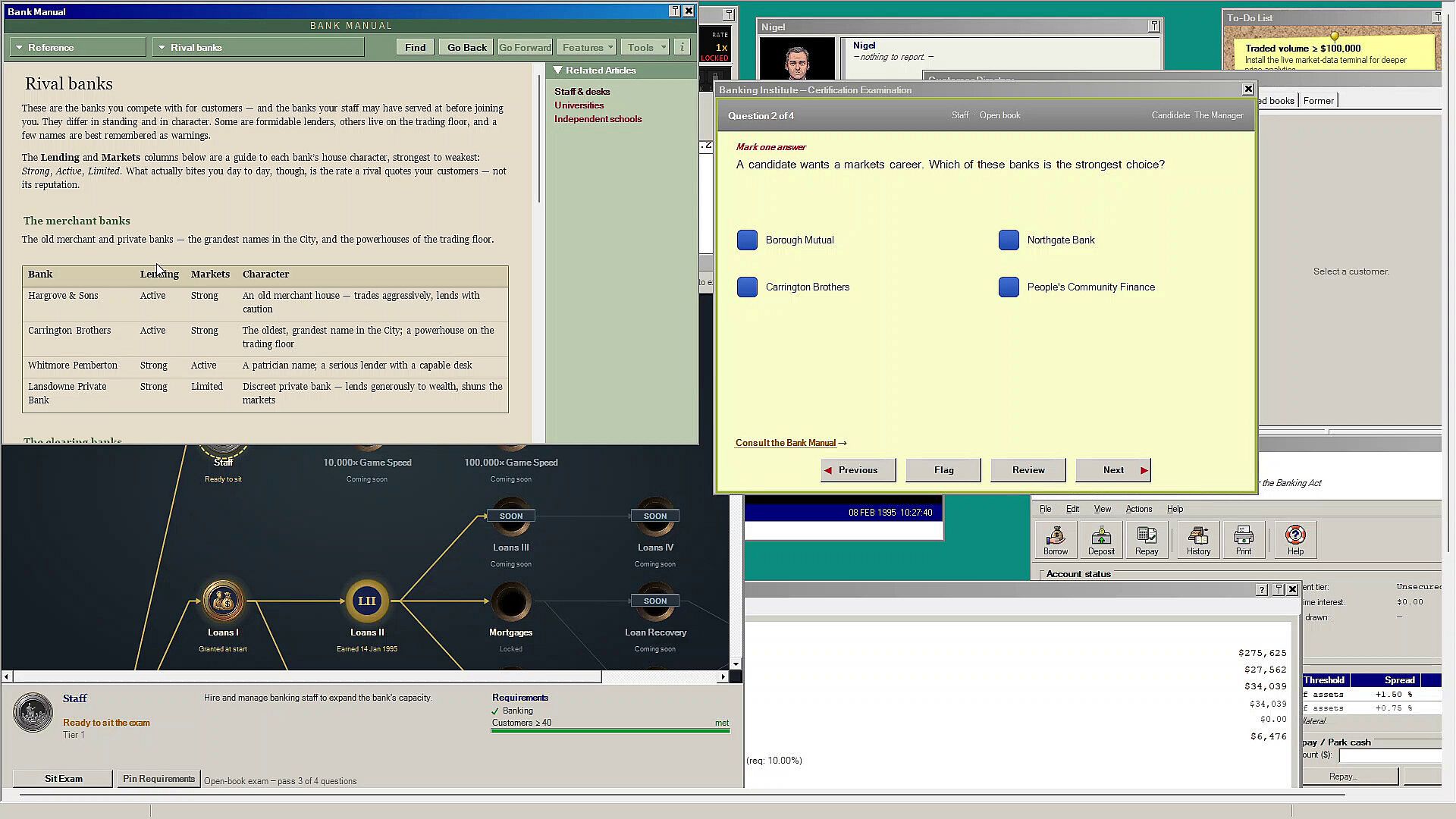
The core loop involves designing and pricing financial products such as personal loans, mortgages, credit cards, and deposit accounts while competing for customers against rival banks. Each credit application requires individual review based on the borrower's rating, loan amount, proposed rate, and the player's risk appetite. Funding comes from deposits that carry reserve obligations, with the option to issue bonds when deposit growth falls short of ambitions. A procedural market simulation runs in the background, featuring shifting economic regimes, sector correlations, earnings reports, and an order book that players access through a command-line dealing terminal typical of the era. Share-dealing and index-tracker products can be sold to customers, with risk hedged directly in the market. Staff hiring helps manage routine customer interactions, freeing time for strategic oversight. Qualifications unlock new products, markets, and operational capabilities over time. Reputation and brand management prove essential, as loss of confidence can trigger withdrawals and strain liquidity.
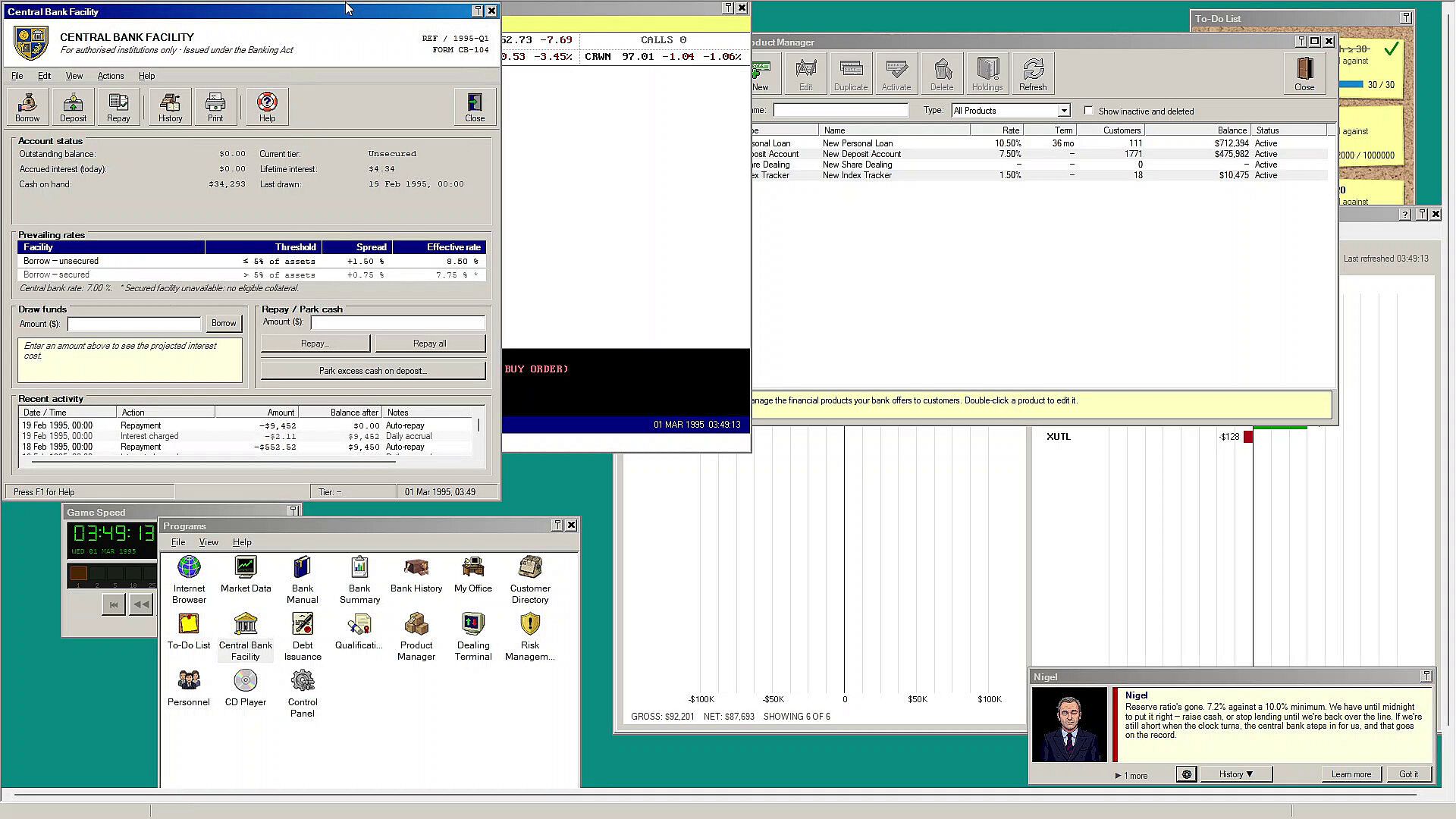
Reserve requirements receive nightly checks, and capital adequacy stays under constant watch. Shortfalls bring intervention from the central bank as lender of last resort, which damages reputation. Time passes at adjustable speeds via logarithmic controls, ranging from real time for hands-on decisions to accelerated rates where a full day completes in under a second. At higher speeds the focus shifts to rate adjustments, macroeconomic indicators, and emerging crises. The absence of modern web tools keeps all market access routed through the terminal interface, reinforcing the period setting.
Game Modes
Liquidity operates as a single-player management simulation without separate named modes. Players progress through an open-ended campaign of building and sustaining a bank, with the same core systems available throughout. Time-scale adjustments serve as the primary way to alter pacing, allowing focus on detailed credit decisions at slower speeds or broader market and macroeconomic oversight at faster ones. No multiplayer elements or distinct scenarios appear in the design.
Key Systems and Mechanics
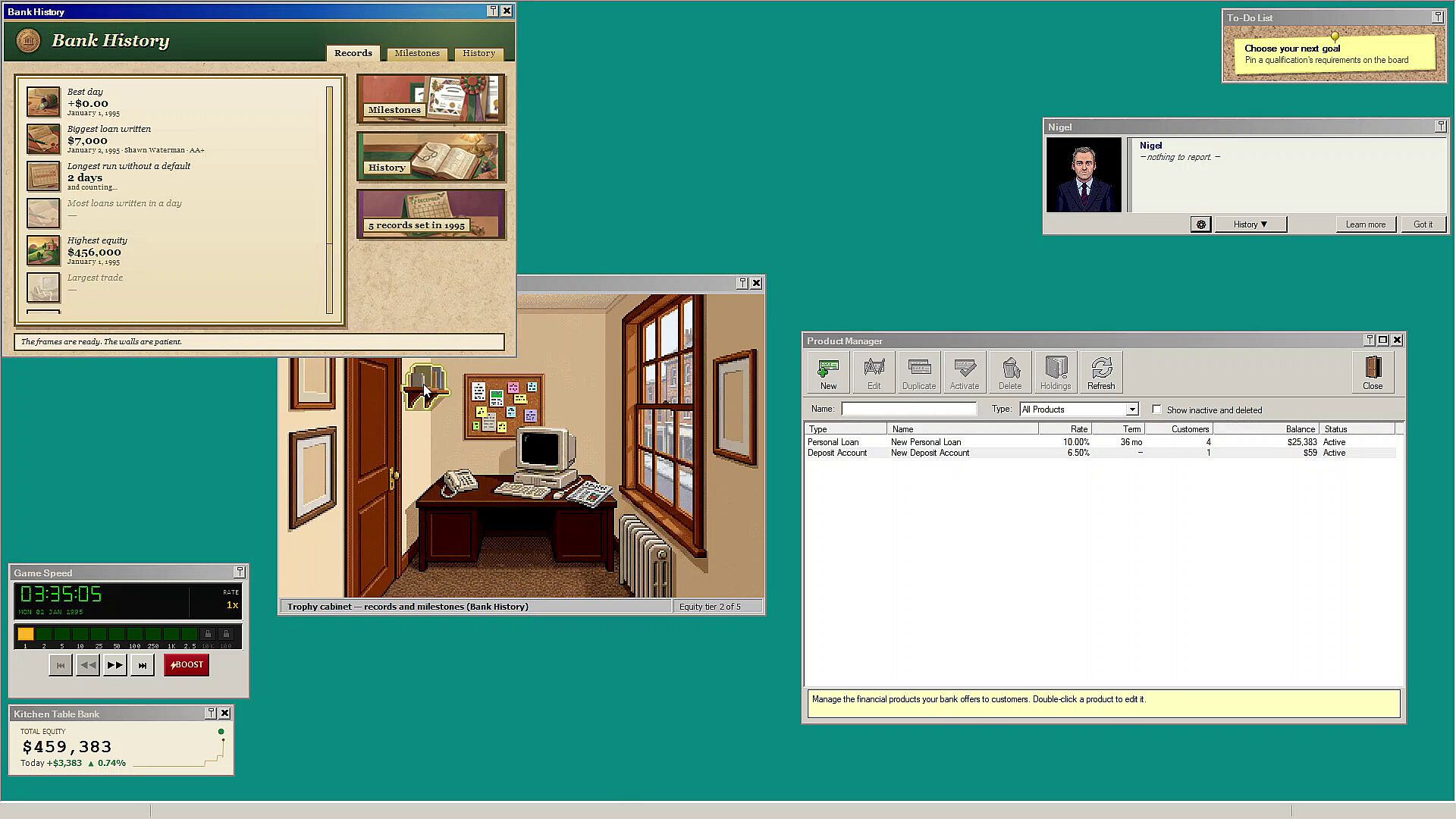
Product creation and pricing form the foundation, with each offering carrying unique risk and return profiles that must align with overall book management. Credit decisions occur case by case rather than through automated filters, requiring assessment of individual borrower data against current appetite. The underlying market model generates procedural activity that influences hedging opportunities and product performance. Reputation functions as a visible resource that affects deposit stability and regulatory treatment. Staff expansion and qualification progression provide clear advancement paths that expand available tools without altering the fundamental simulation rules. Bond issuance offers an alternative funding route once deposit capacity is exceeded, introducing additional balance-sheet considerations.
Is It Worth Playing?
Liquidity suits players who enjoy detailed financial and operational simulations with realistic constraints. The emphasis on manual credit approval, nightly reserve calculations, capital rules, and market hedging creates a focused experience centered on solvency and growth. Those interested in 1990s-era banking mechanics, command-line interfaces, and adjustable time scales will find the systems rewarding. The game remains in active development with its core simulation intact, making it appropriate for anyone seeking depth over broad accessibility. Players who prefer lighter management titles or modern conveniences may find the procedural market and regulatory checks demanding. Overall the title delivers a coherent bank-running loop grounded in the provided mechanics.