







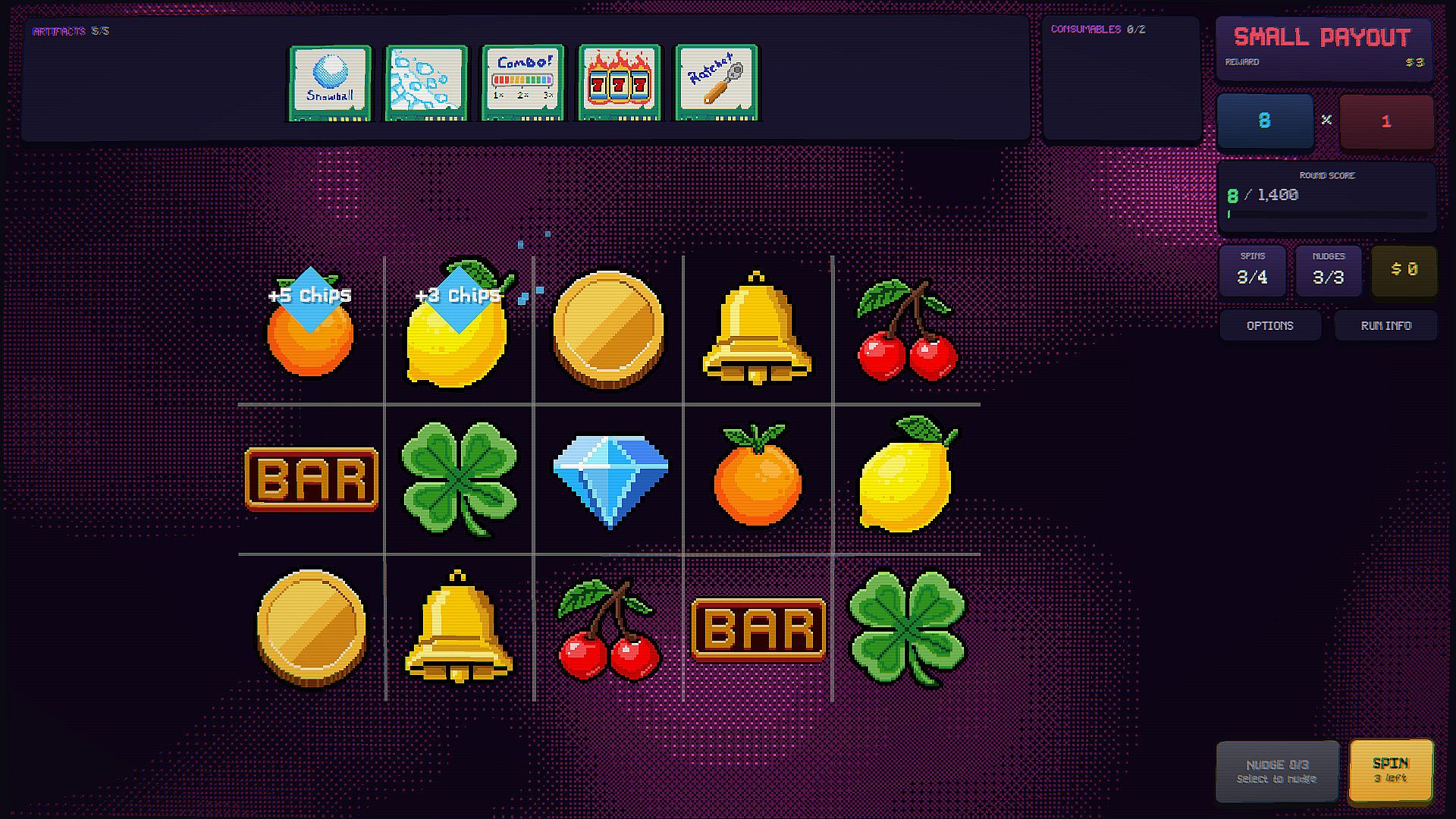
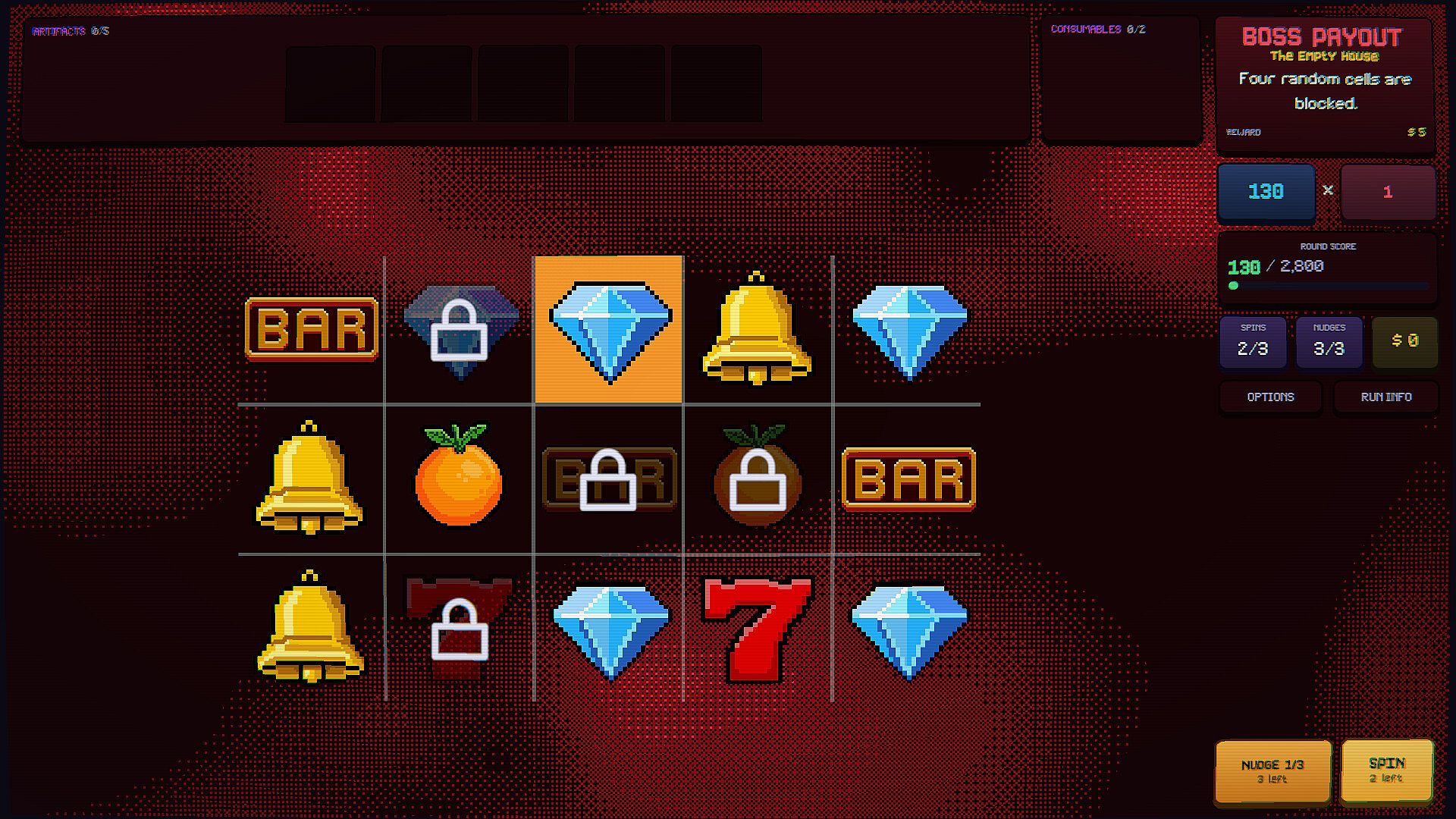
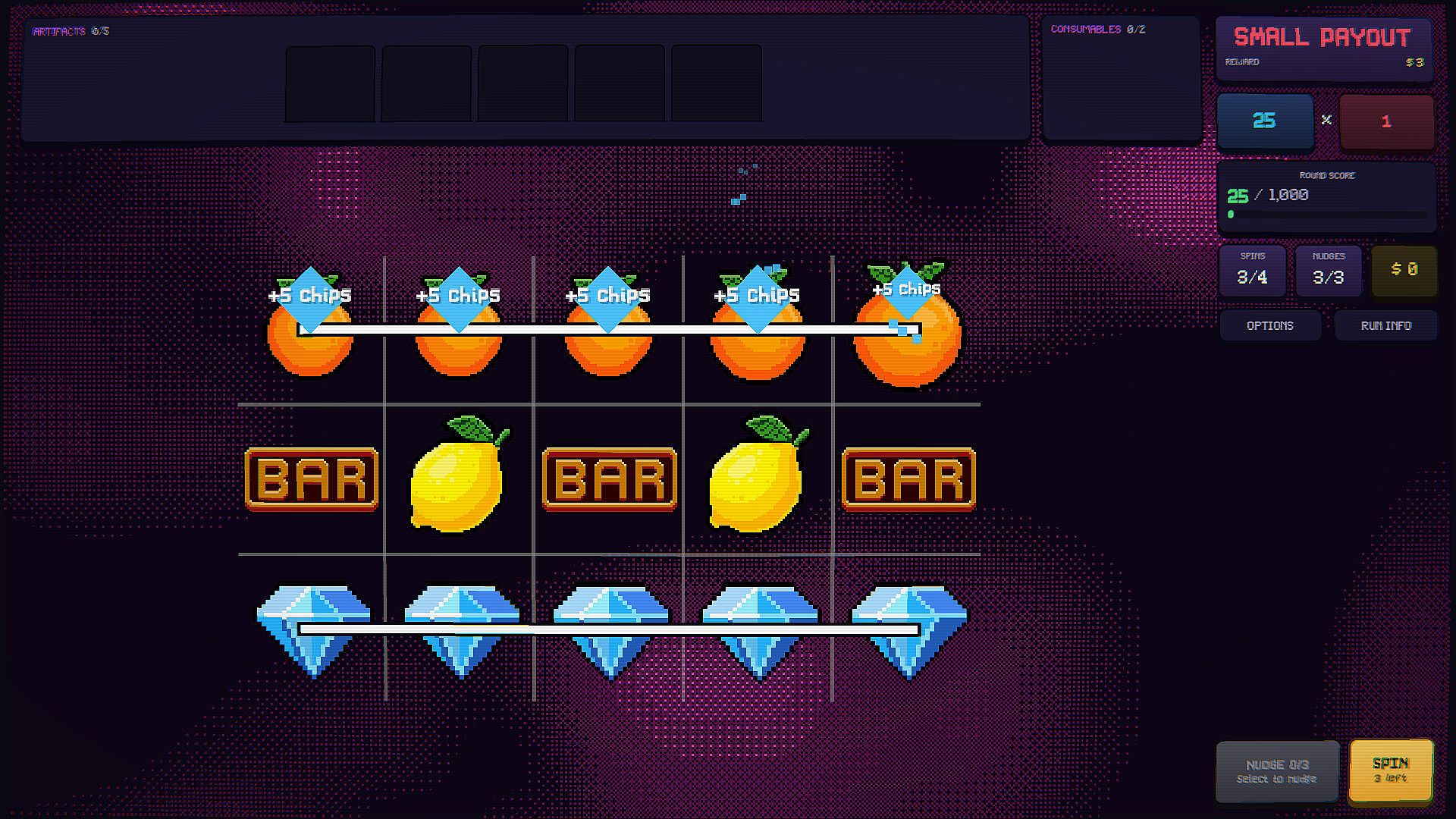
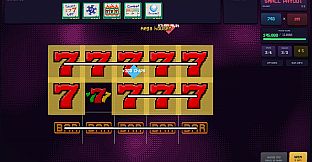
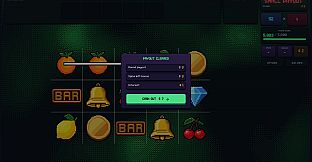
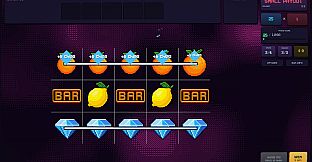
Laurus is a strategy indie game for PC that turns the familiar structure of a slot machine into a deep system of calculation and subversion. Players manage a five-reel cabinet with three rows and fifteen cells where lines, columns, diagonals, and five-of-a-kind combinations all contribute to payouts. The core loop revolves around four spins per payout, a limited bag of symbols, and the careful placement of artifacts that alter how those symbols interact and score.
Gameplay
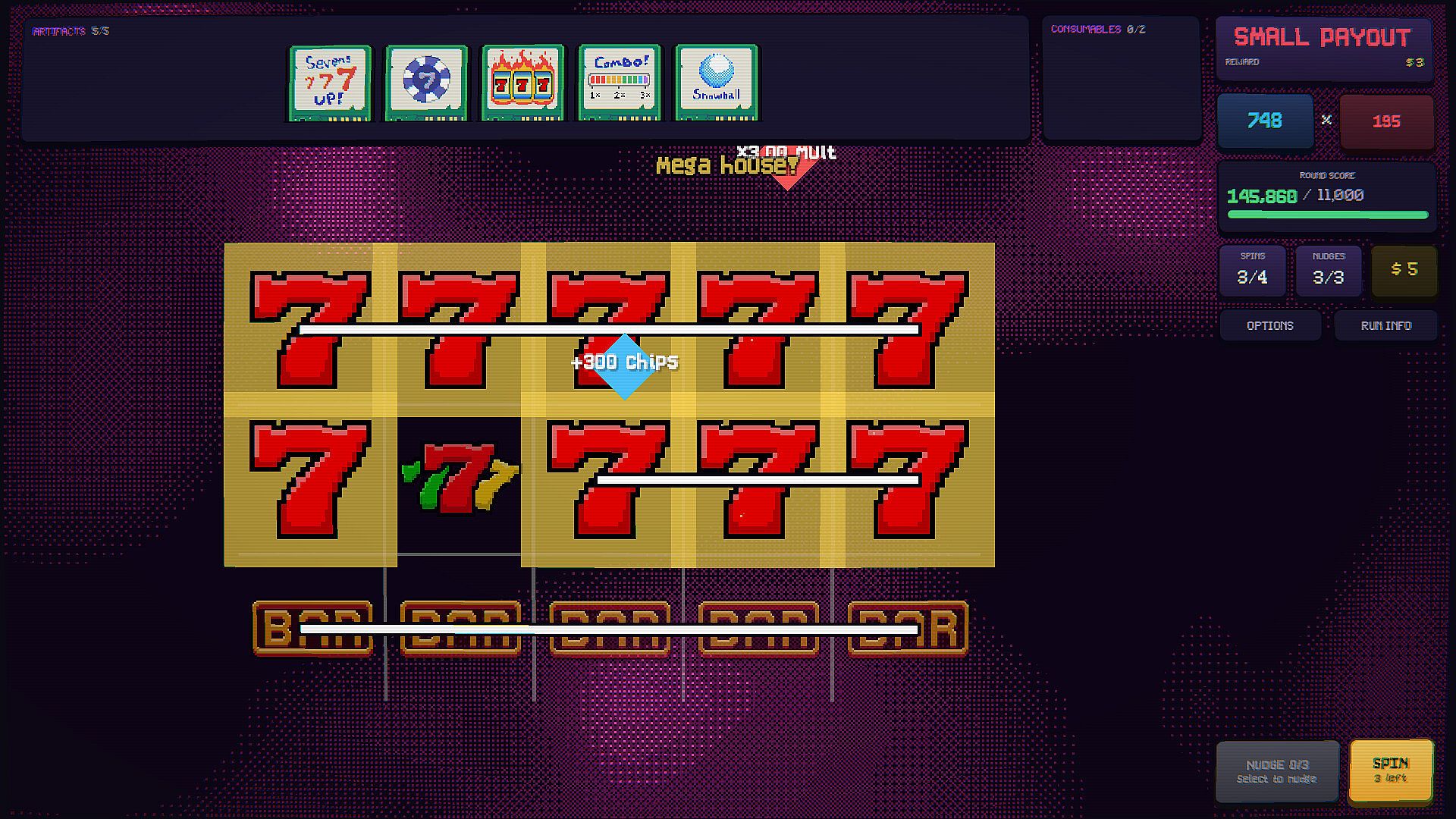
The cabinet begins with straightforward arithmetic but quickly becomes something players can bend. Artifacts function as circuit cards slotted into the machine, each one modifying line values or introducing new rules that compound across spins. A run that starts requiring hundreds of chips can scale into the tens of thousands once the right sequence of artifacts fires left to right. Position in the rack matters because artifacts activate in order, turning placement into a core part of every build.
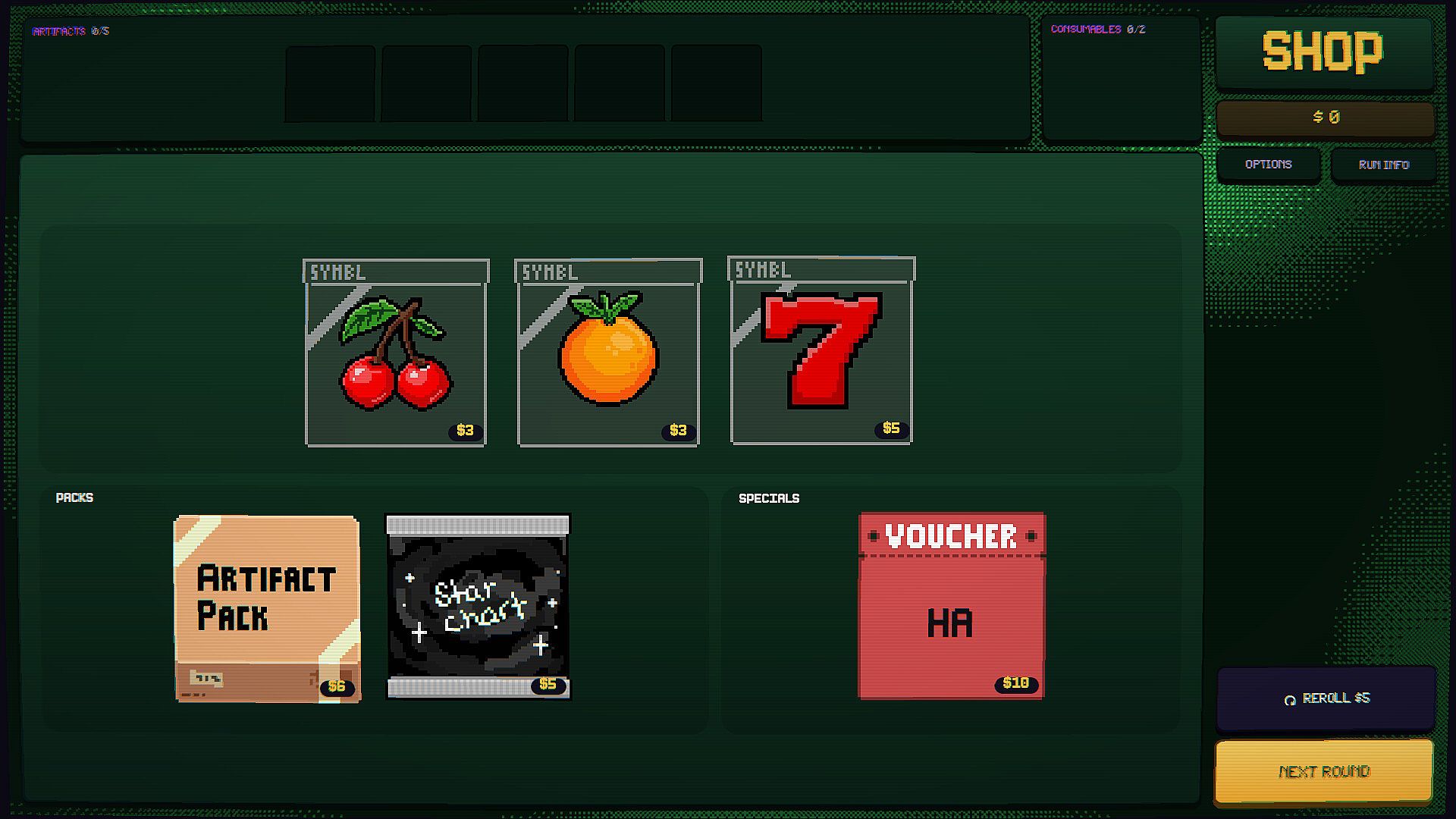
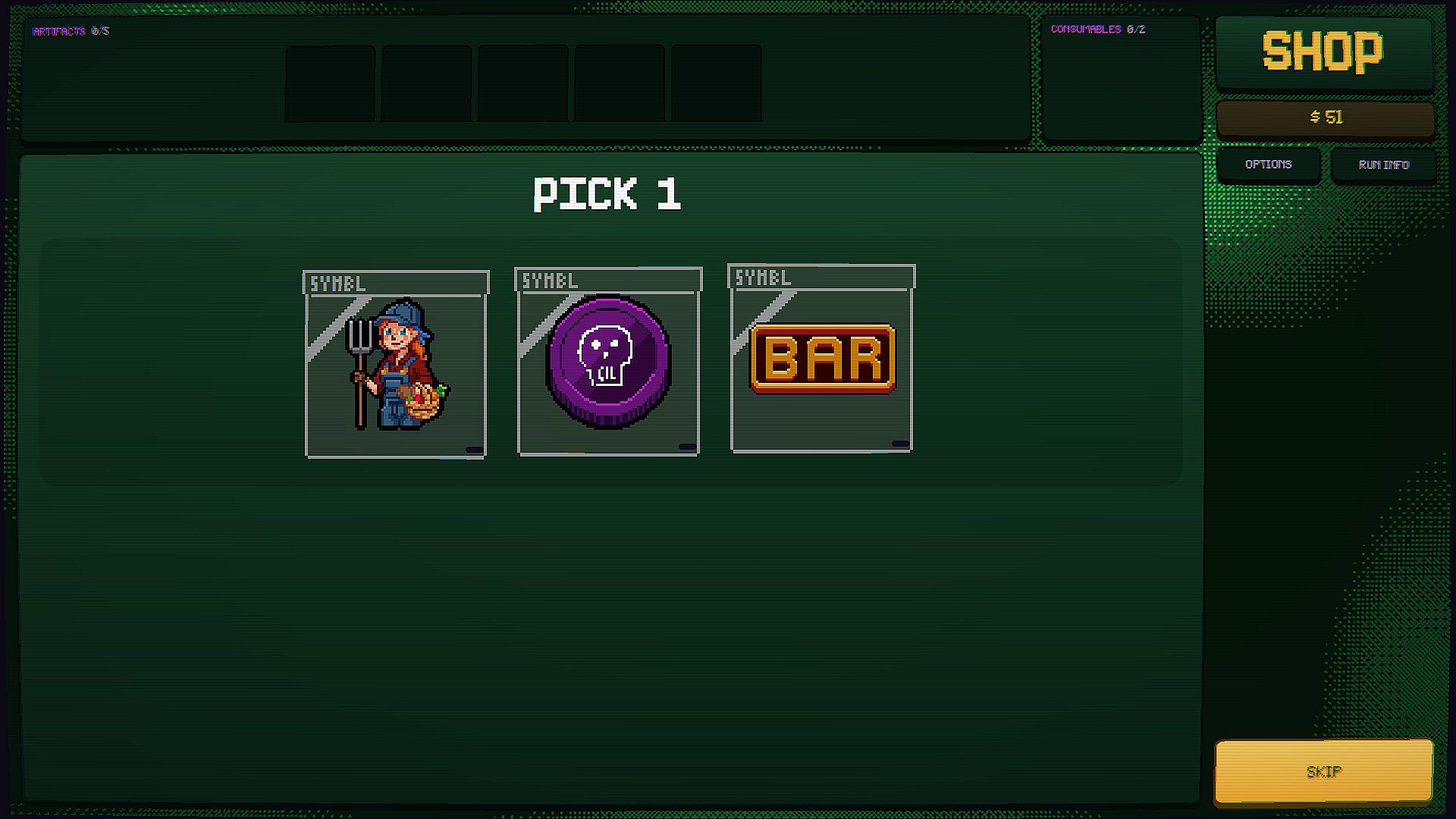
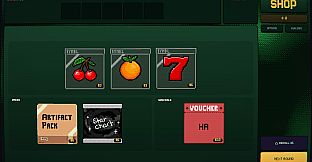
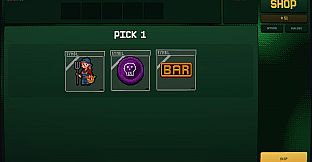
Symbol management adds another layer. Twenty-two symbols form the base pool, while sixty-five artifacts, eleven vouchers, nine consumables, six enhancements, and three seals provide the tools for customization. Players buy, sell, and rearrange these items between spins to shift probabilities and multipliers. Three nudges per payout let players mark and redraw specific cells while preserving the rest, offering precise control during critical moments.
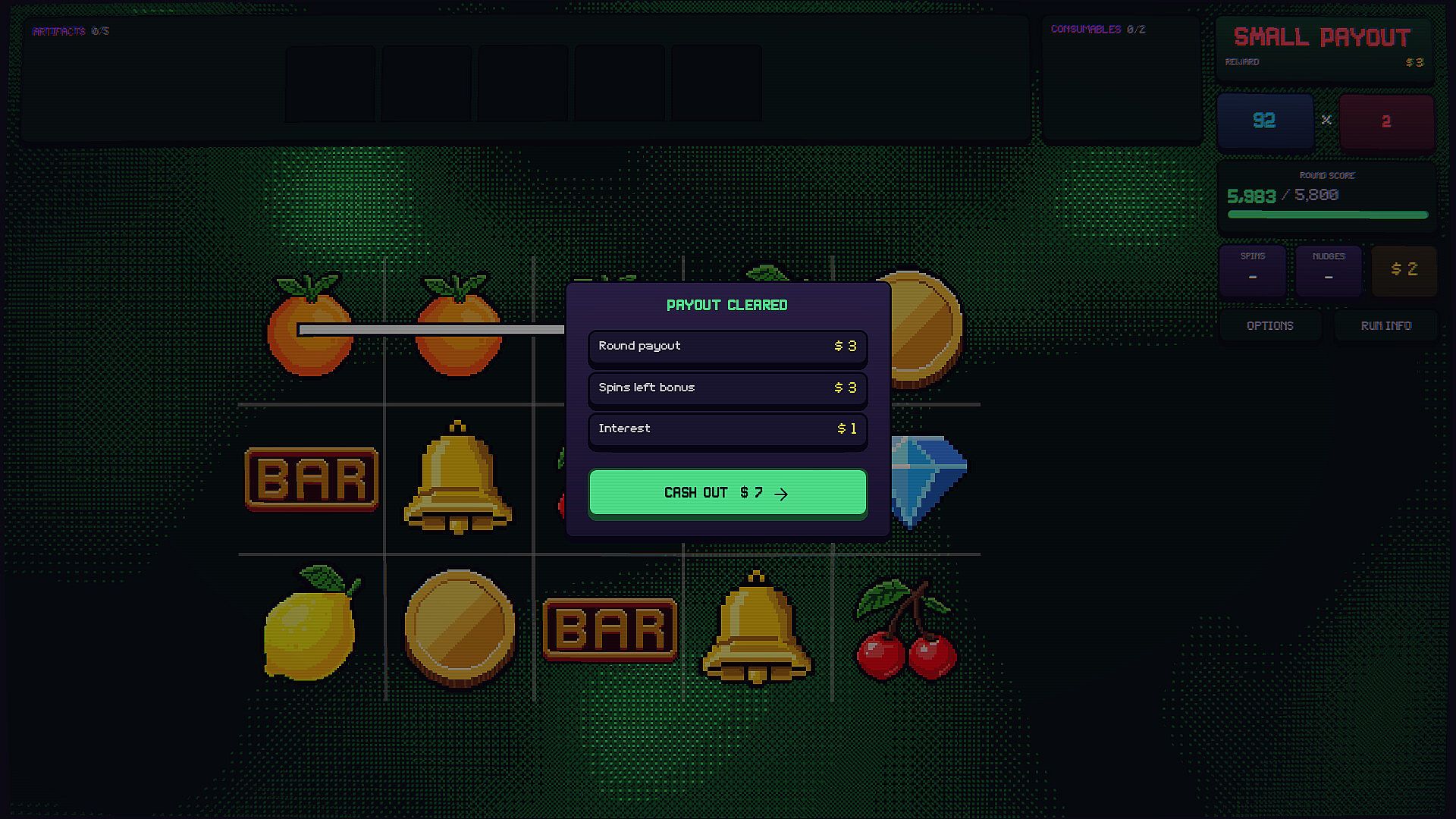
Progression spans eight levels with twenty-four payouts total, typically lasting thirty to forty minutes. Pixel art rendered on a thirty-two-color palette and viewed through a CRT filter gives the interface a distinct retro aesthetic that supports the focused, mathematical feel of each session. Everything runs offline with no accounts or additional monetization.
Game Modes
Five distinct machines each carry their own bag of symbols and strategic priorities, encouraging different approaches to artifact selection and ordering. Three challenge runs remove key systems one at a time, such as the shop, rerolls, or rare symbols, forcing tighter resource decisions. Eight stakes layer additional constraints on top of these runs, scaling difficulty while preserving the same core payout structure.
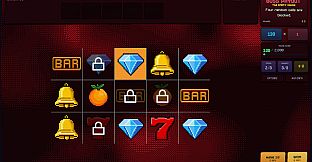
Eleven bosses test specific assumptions built during earlier levels. The Cold Reel, The Locksmith, The Purist, and The Ferryman each disrupt common strategies in targeted ways, requiring players to adapt artifact order, nudge usage, or symbol priorities on the fly. These encounters appear within the standard run structure rather than as separate modes.
Progression and Builds
Each run rewards experimentation with artifact synergies. Early levels focus on stabilizing payouts, while later stages demand precise ordering so that multipliers cascade effectively. Vouchers and consumables offer temporary edges, enhancements provide lasting changes, and seals introduce permanent alterations that carry strategic weight across multiple spins. Selling unwanted items recycles resources back into the economy, keeping the focus on arithmetic optimization rather than collection for its own sake.
The absence of external progression systems keeps attention on the immediate cabinet. Every decision about symbol placement, artifact timing, and nudge selection directly influences the next payout, creating a tight feedback loop that rewards careful planning over repeated attempts at the same configuration.
Is It Worth Playing?
Laurus suits players who enjoy breaking systems through calculation and iterative refinement. The single-player, offline format delivers complete runs without interruptions or additional costs, making it accessible for focused sessions. Those drawn to strategy games that emphasize resource ordering, probability manipulation, and adaptive responses to changing rules will find consistent depth across the five machines and layered challenges. The pixel-art presentation and self-contained design support repeated play without requiring external tools or communities. If the appeal lies in turning a house edge into a solvable equation through careful artifact engineering, the game delivers exactly that experience.