







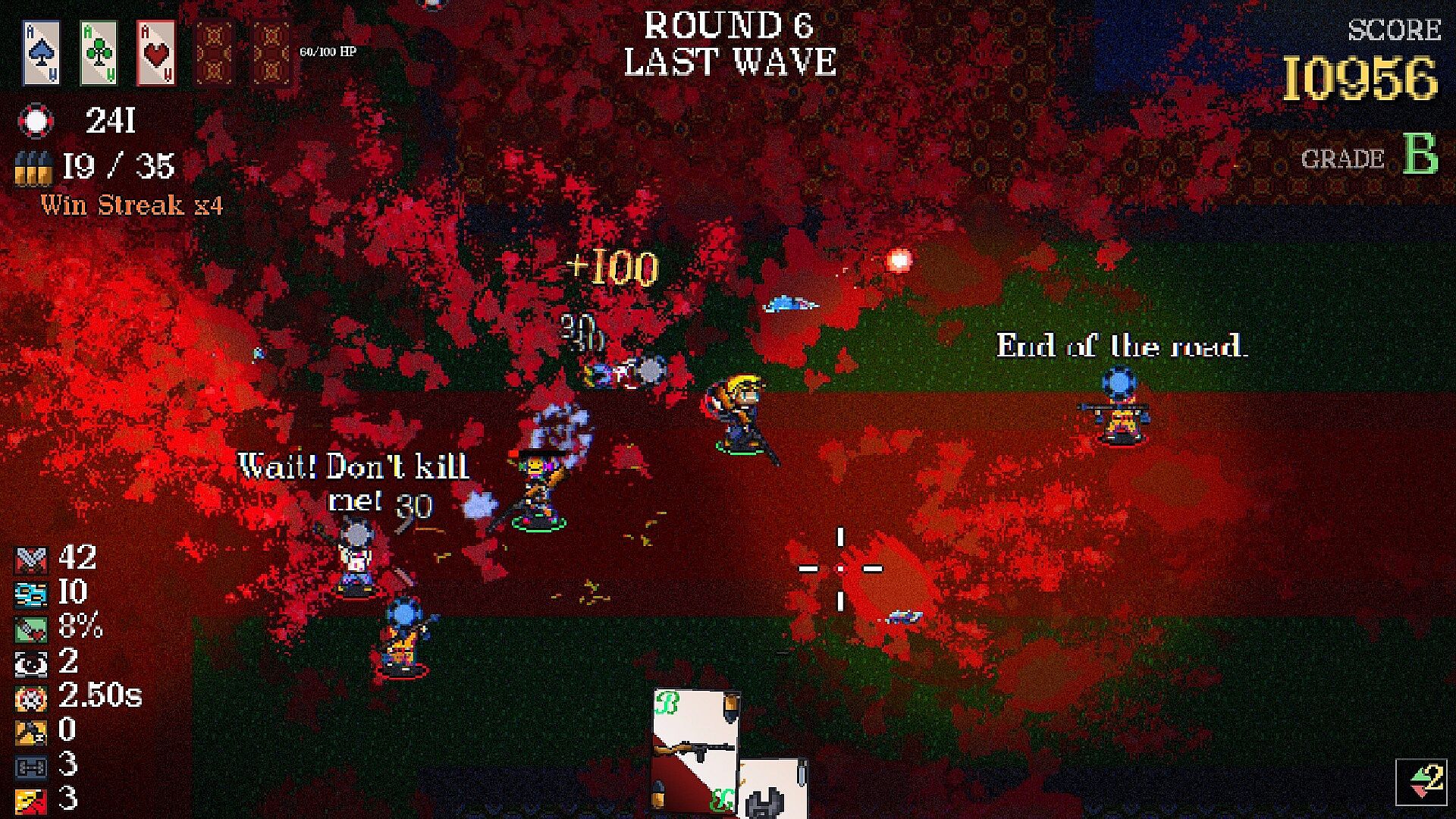
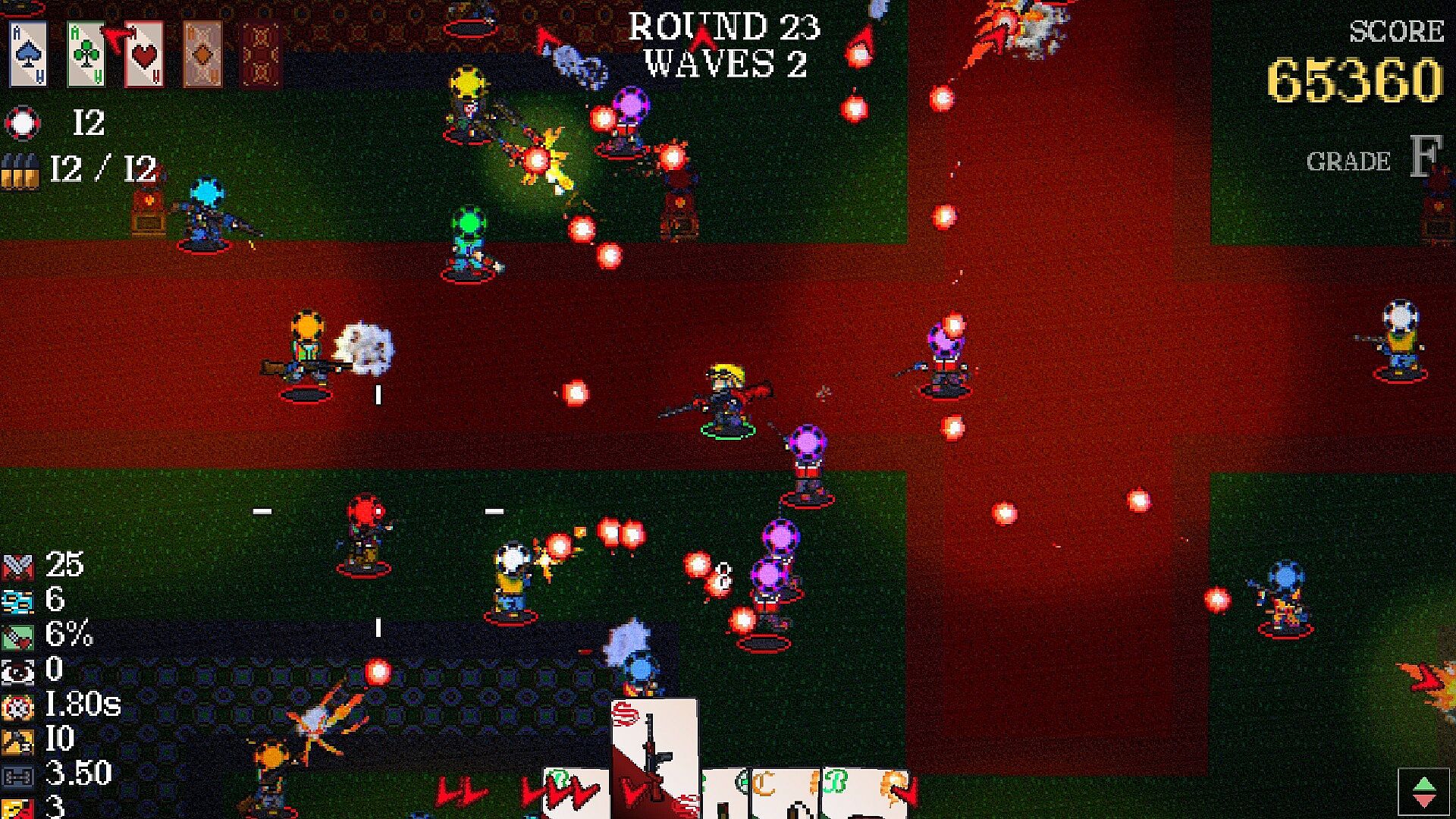
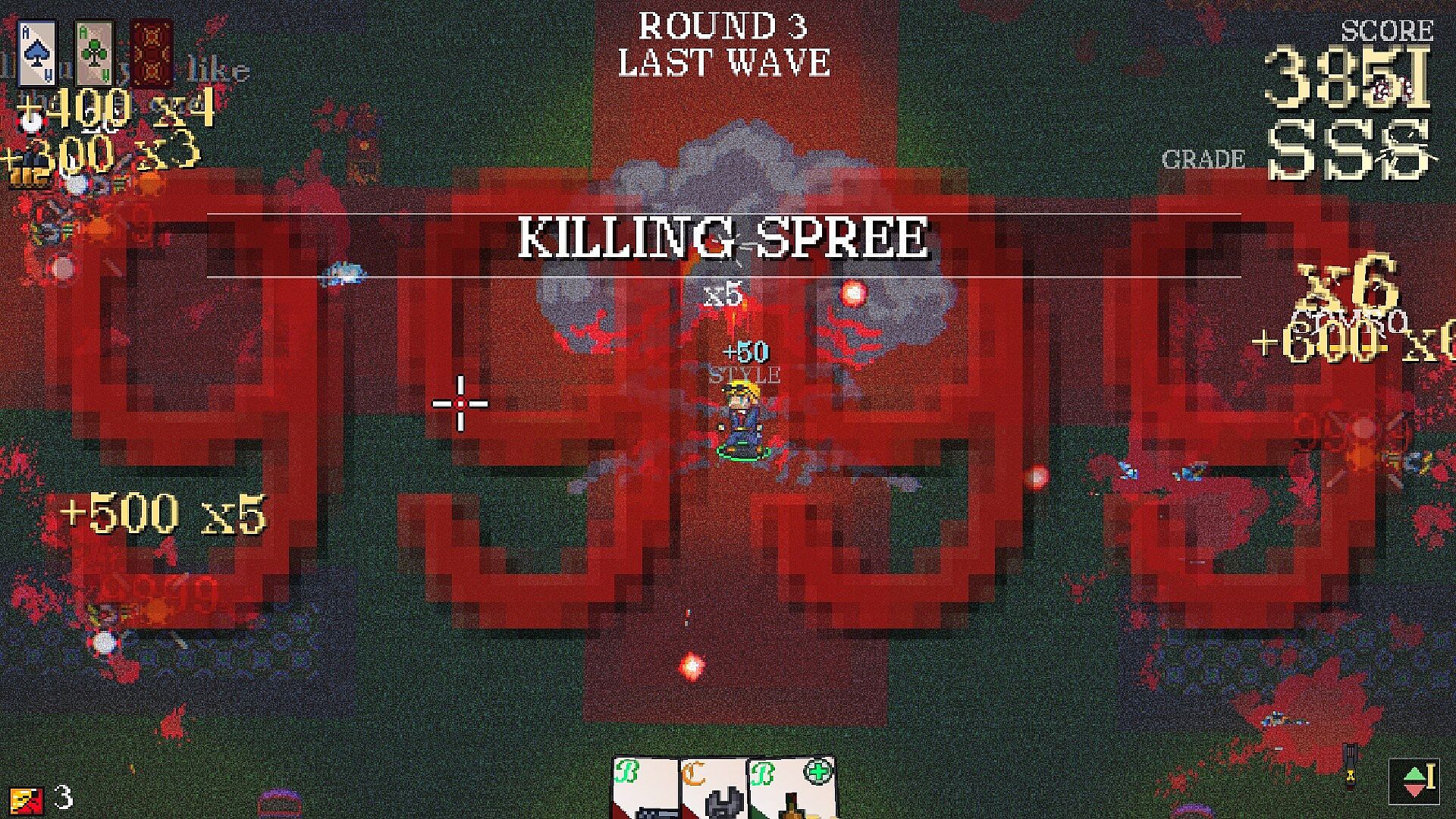
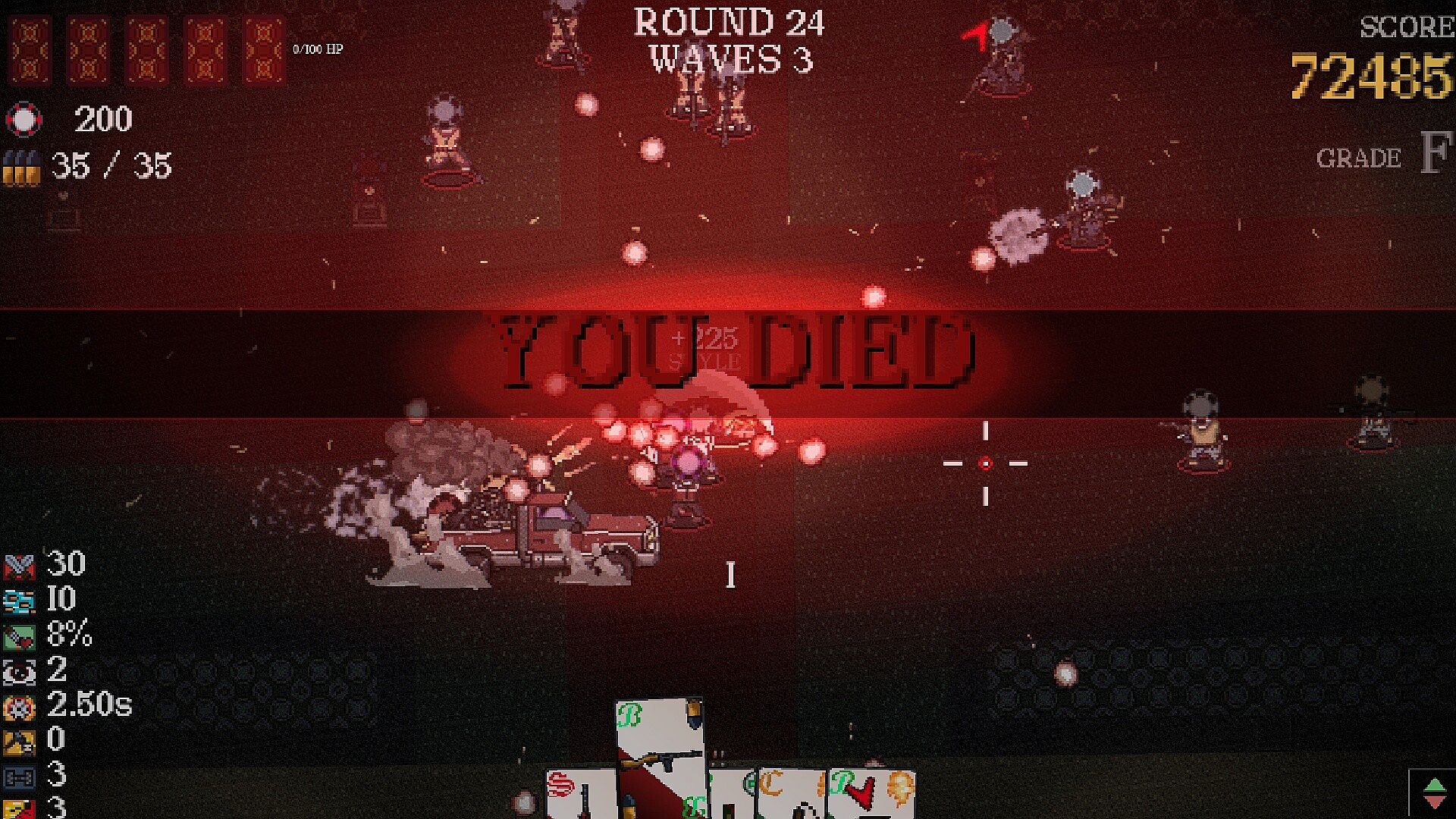
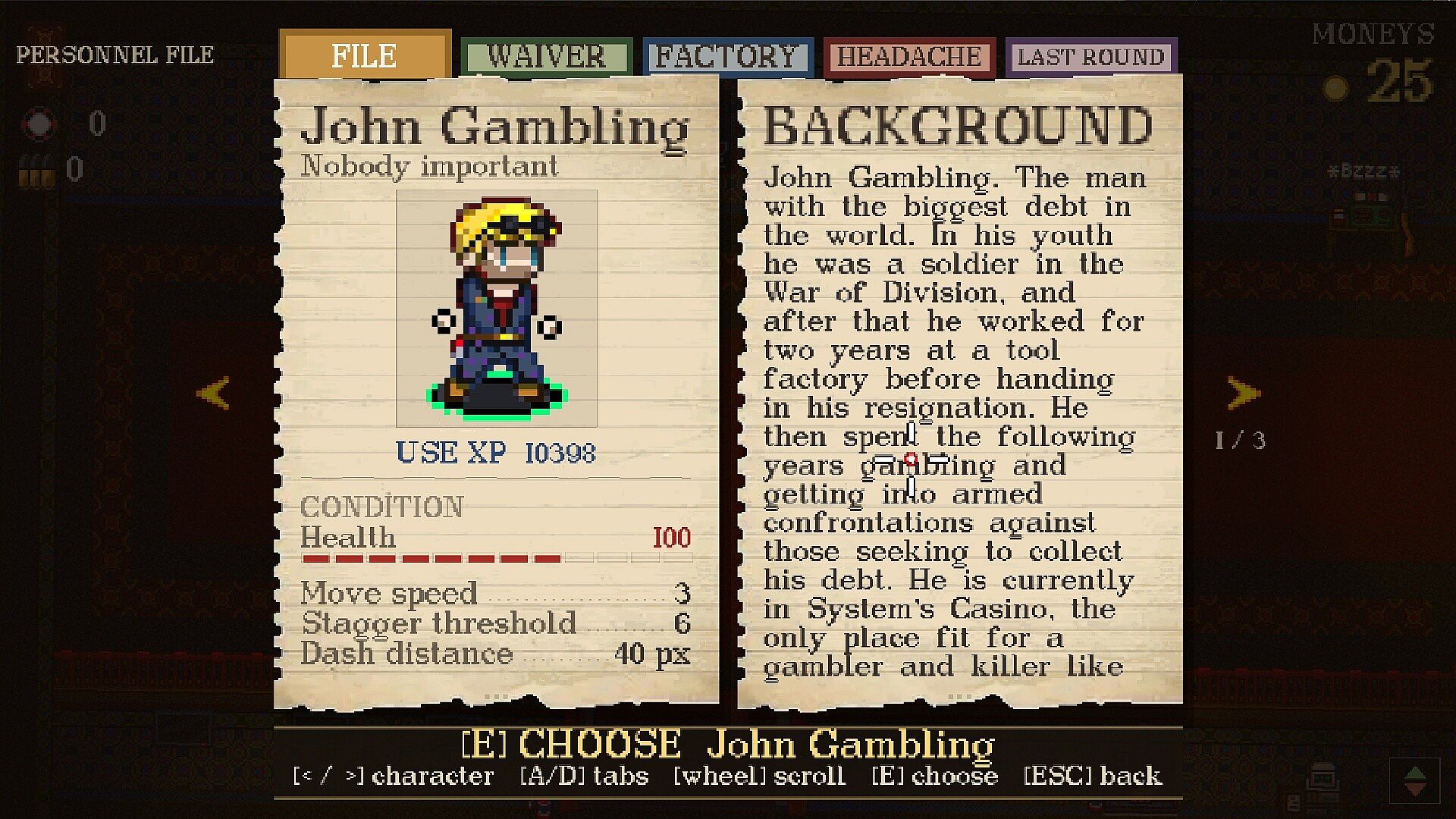
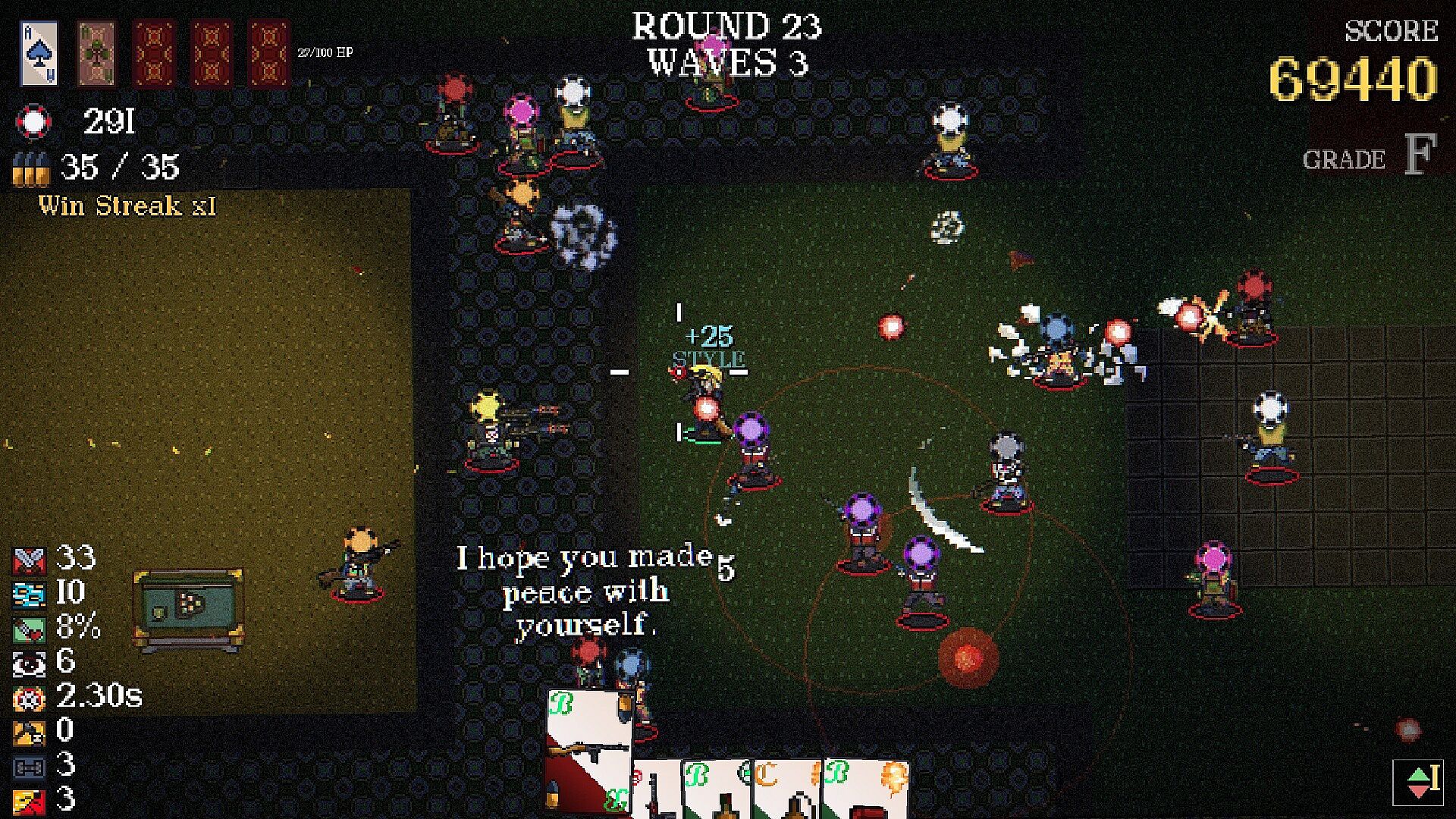




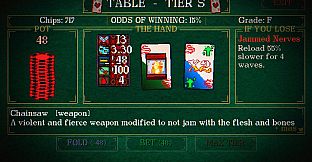
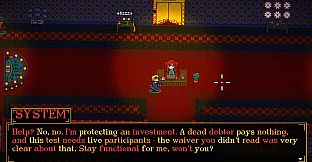


Late Stage Gambling is a single-player top-down action roguelike shooter set in a casino-coliseum where debt drives every decision. Players control John Gambling, the world's largest debtor, as he fights through waves of enemies to settle impossible obligations owned by a single mysterious figure known as System. The core loop combines shooting and melee combat with a betting system that forces choices about risk before each encounter.
Gameplay
The action unfolds from a top-down perspective against ten distinct enemy types and one mini-boss. Each foe fights with the same motivation as the player: to clear personal debts through violence. Combat options include more than forty-two guns and twenty melee weapons, supported by thirty buffs, twenty-five consumables, and various chips that players collect or wager. What gear and upgrades become available depends directly on the stakes chosen before a round begins.
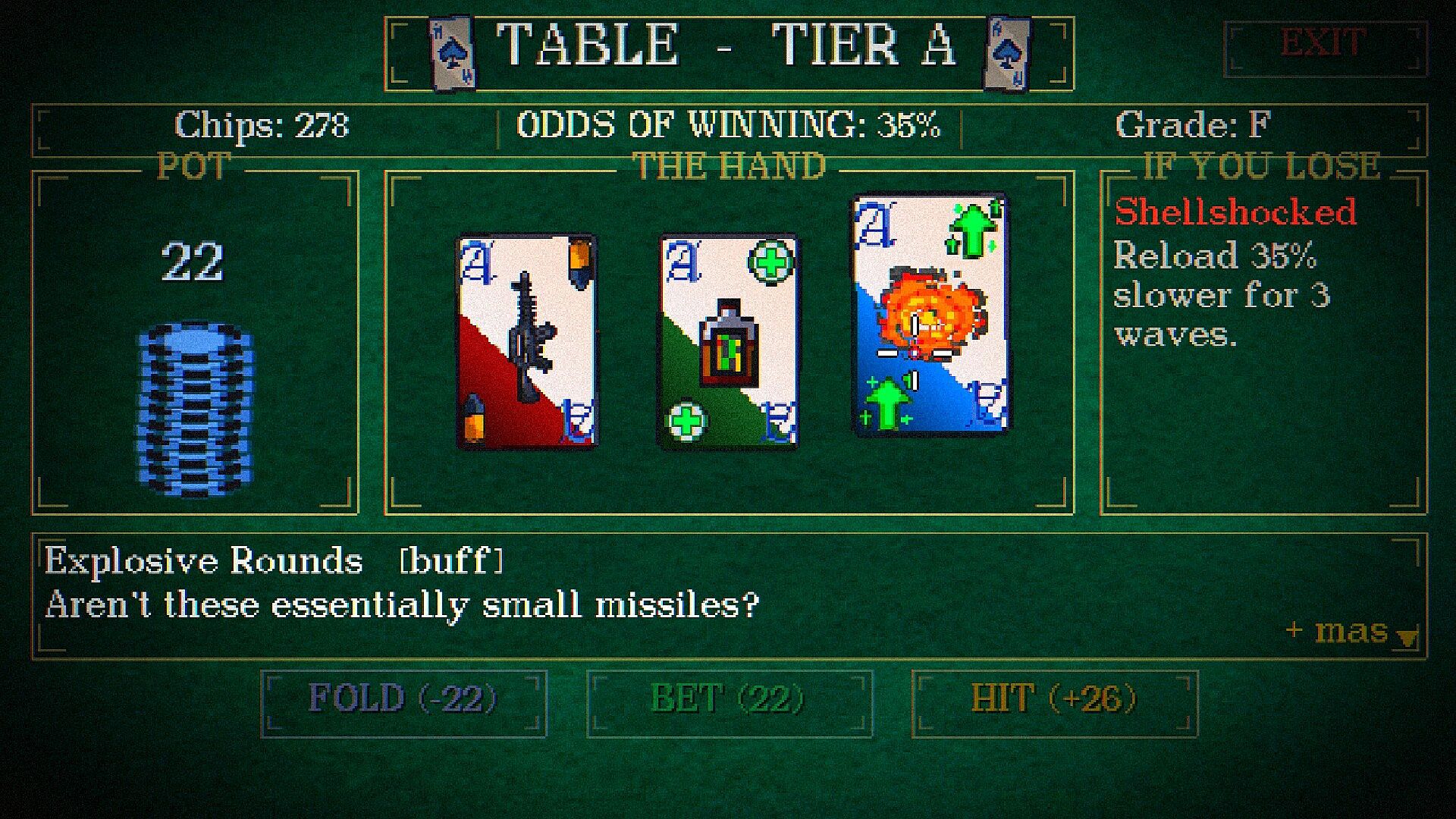
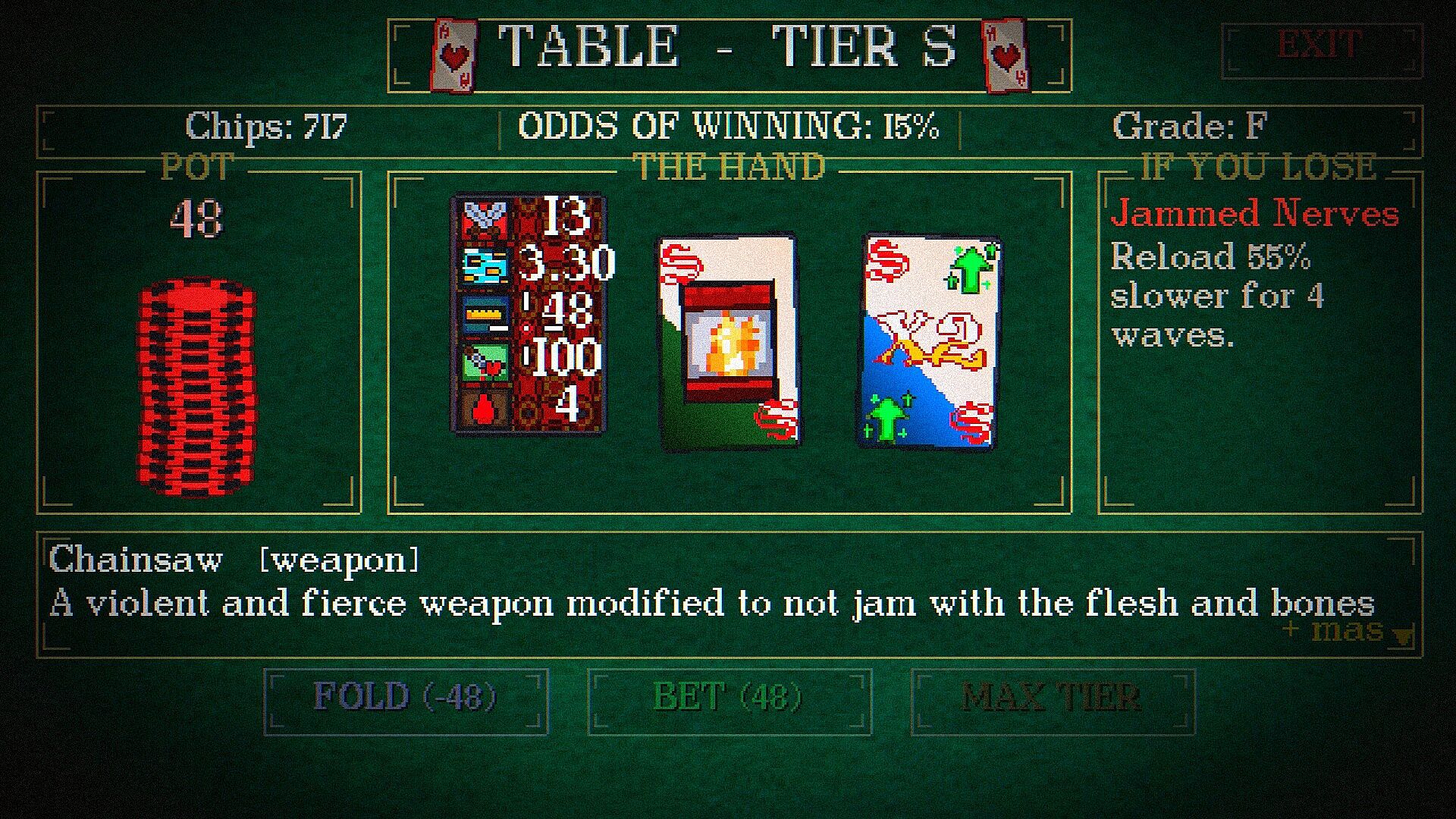
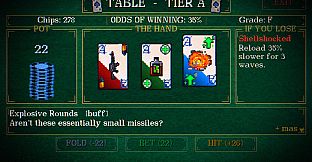
Before every round, players select how much to risk. Lower bets yield safer returns with basic equipment. Higher bets unlock stronger weapons, better buffs, and improved payouts, but they impose harsher penalties upon defeat. The system leaves the choice entirely to the player, though the consequences scale accordingly. This risk-reward structure shapes every run, turning each arena wave into a calculated gamble rather than a straightforward shootout.
Progression centers on surviving successive waves while managing limited resources. Chips serve as both currency and betting tokens, and the equipment carried into each fight reflects prior wagers. The setting emphasizes that everyone in the coliseum owes something, creating a shared desperation that fuels the constant cycle of violence and repayment.
Game Modes
The game operates as a single-player experience focused on repeated runs through the casino-coliseum. There are no separate multiplayer modes or co-op options confirmed. The primary structure revolves around the betting mechanic integrated into each round, where players decide stakes that alter available loadouts and failure outcomes. This creates a unified loop of preparation, combat, and consequence without additional named modes or variants.
Players navigate the arena while facing enemies from six different factions, each pursuing debt repayment through combat. The single-player format keeps all attention on personal risk management and survival across waves, with no external elements like leaderboards or shared sessions altering the core flow.
Story and Setting
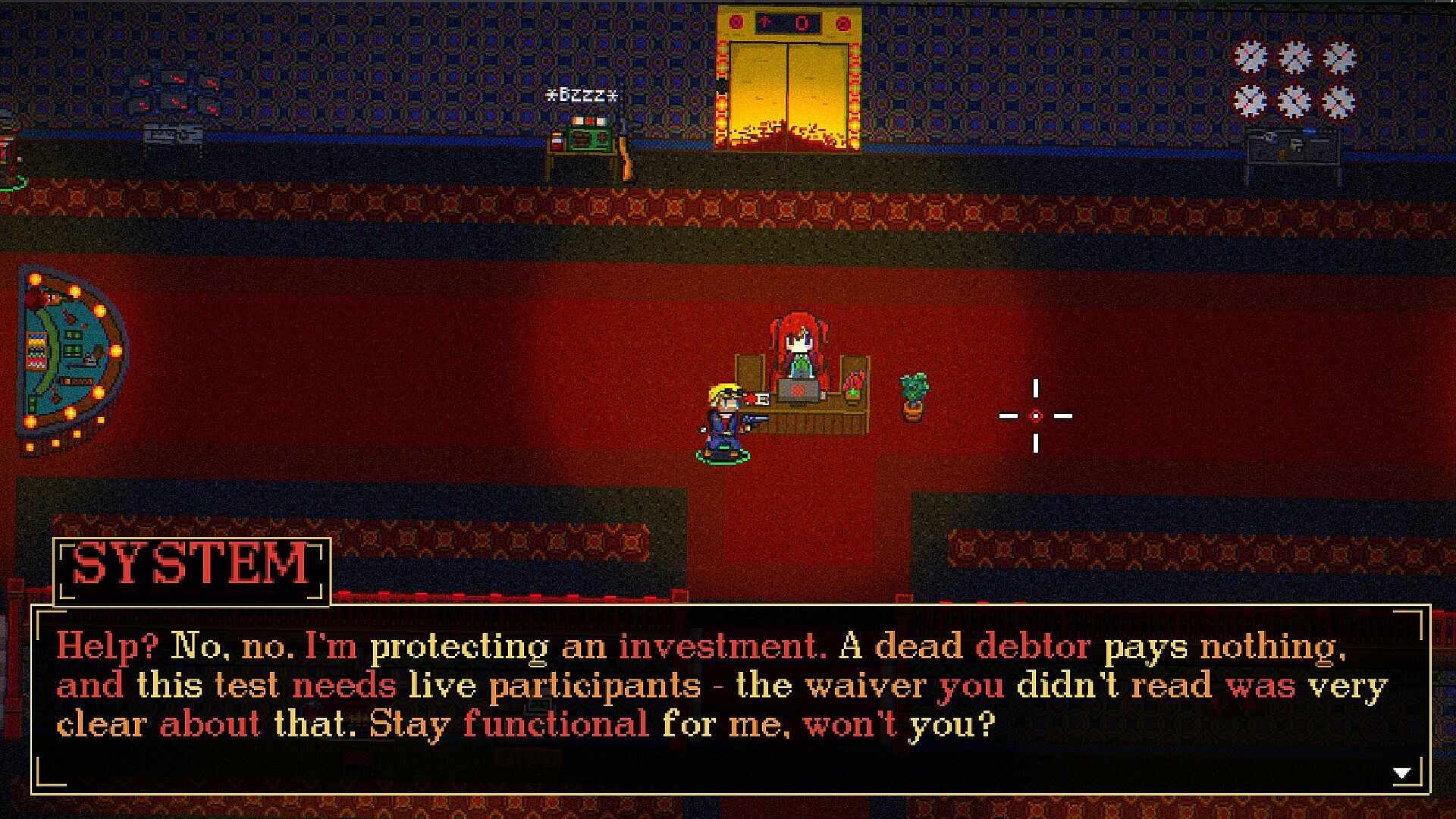
The narrative places the player as John Gambling, listed as the top debtor on a global record maintained by System. This figure controls all outstanding debts across countries, summoning the ten largest debtors to a deadly casino-coliseum. Participants fight not only for survival but to settle accounts with the blood of others. The environment blends gambling culture with brutal arena combat, where chips represent both literal bets and the value of life itself.
Six factions populate the arena, each member driven by the same debt burden. The story highlights that repayment often takes a backseat to the immediate thrill of the next wager. Blood becomes currency, and every victory funds one more high-stakes decision on the floor.
Is It Worth Playing?
Late Stage Gambling targets players who enjoy top-down shooters combined with roguelike risk elements and deliberate resource management. The betting system adds a layer of tension absent from standard arena combat, rewarding those comfortable with self-imposed difficulty spikes. Availability remains limited to PC, with support for English and Spanish interfaces and subtitles.
Because the game has not yet released and carries no user reviews, reception details are unavailable. Current information confirms a planned 2027 launch and single-player focus only. Those drawn to mechanics where voluntary risk directly influences power and punishment will find the described systems align with that preference. Others seeking traditional progression or multiplayer features may prefer titles without the integrated wagering layer.