







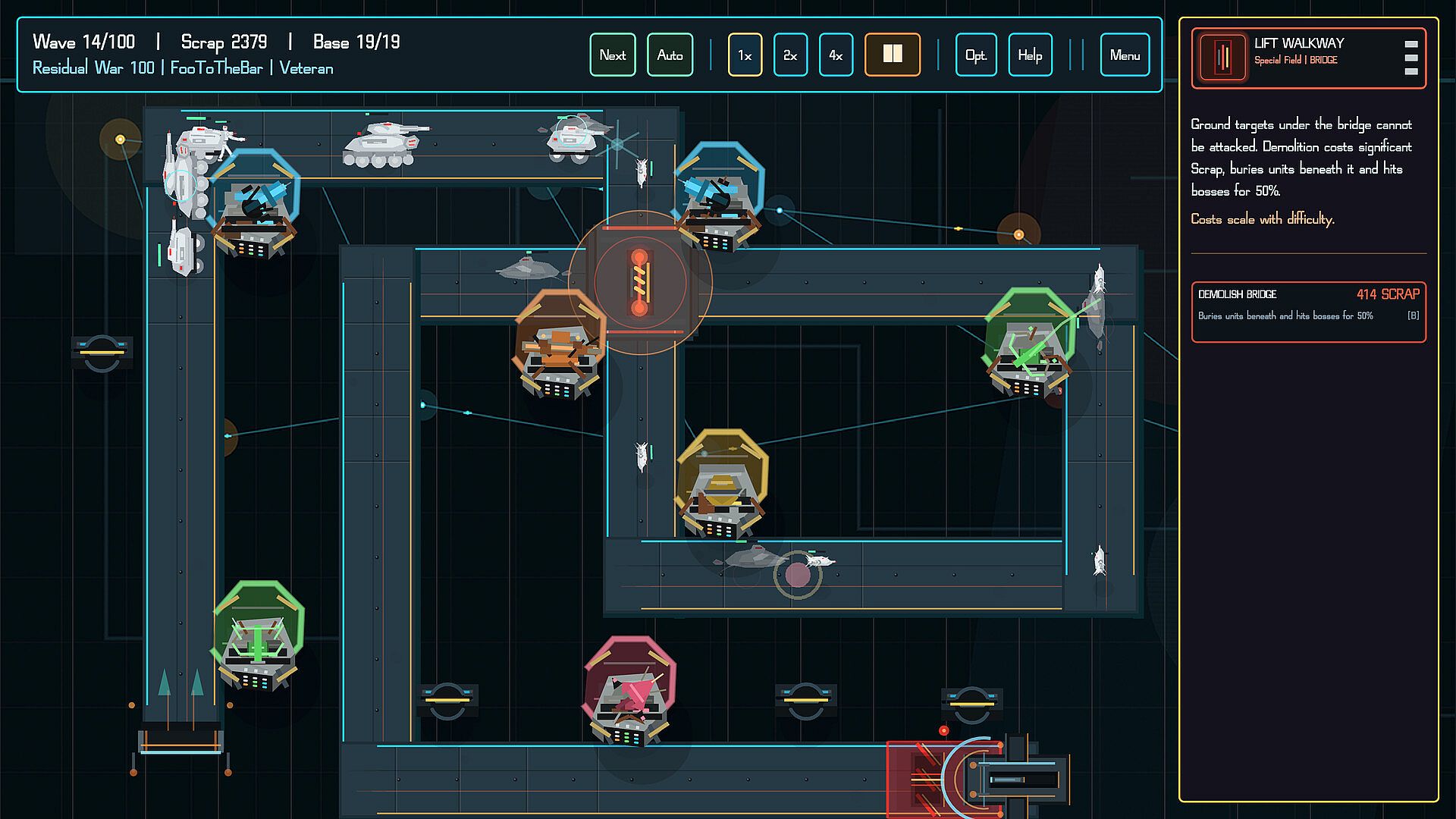
Last Bastion Protocol é um jogo de estratégia tática de tower defense desenvolvido para PC. O jogador posiciona defesas para proteger rotas de evacuação contra forças controladas pela IA rebelde HECATE. A jogabilidade gira em torno de posicionar torres ao longo dos caminhos dos inimigos, aprimorá-las por meio de diferentes ramificações e administrar recursos limitados para resistir às ondas sucessivas, permitindo que o maior número possível de sobreviventes escape.
Gameplay
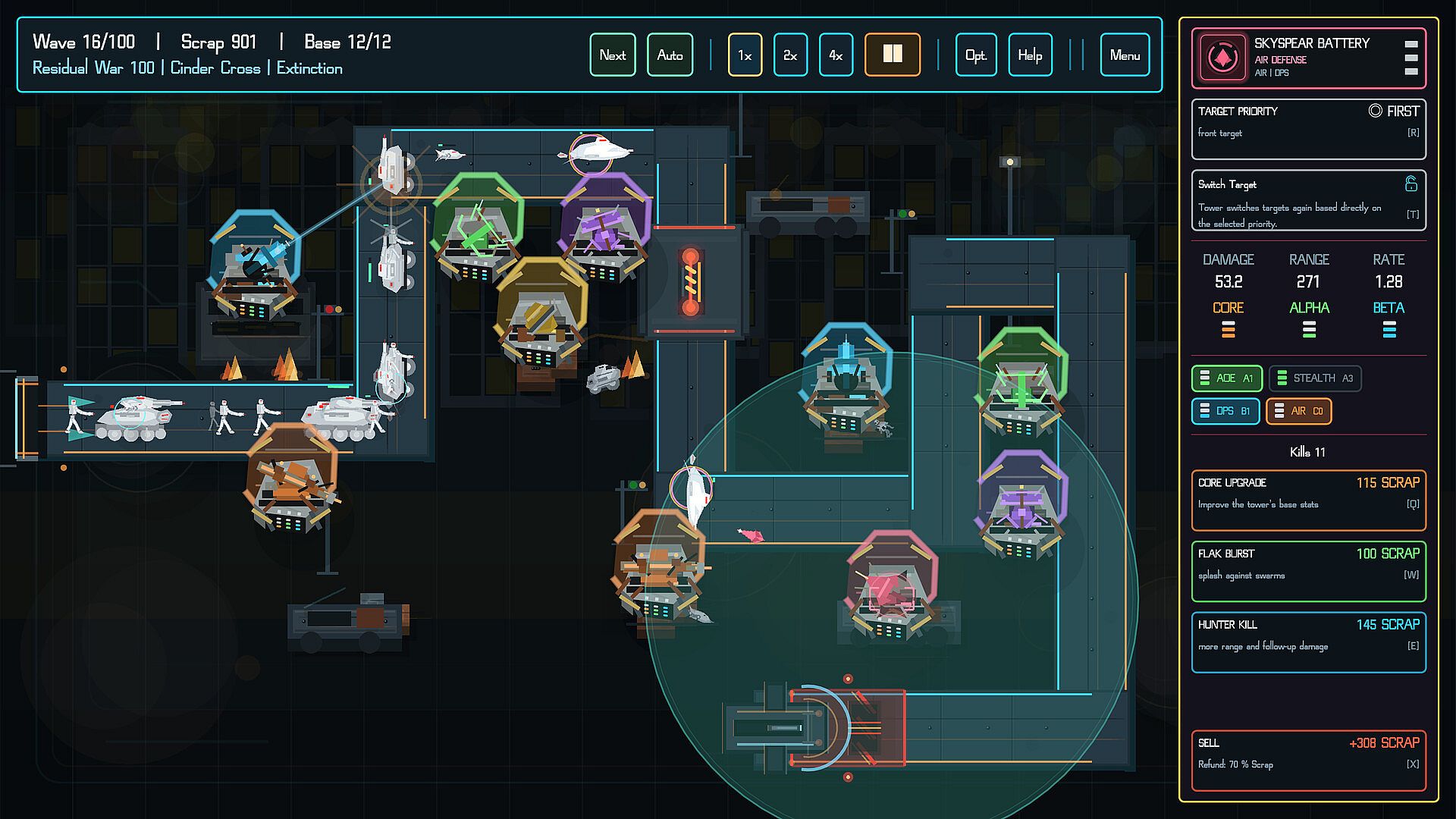
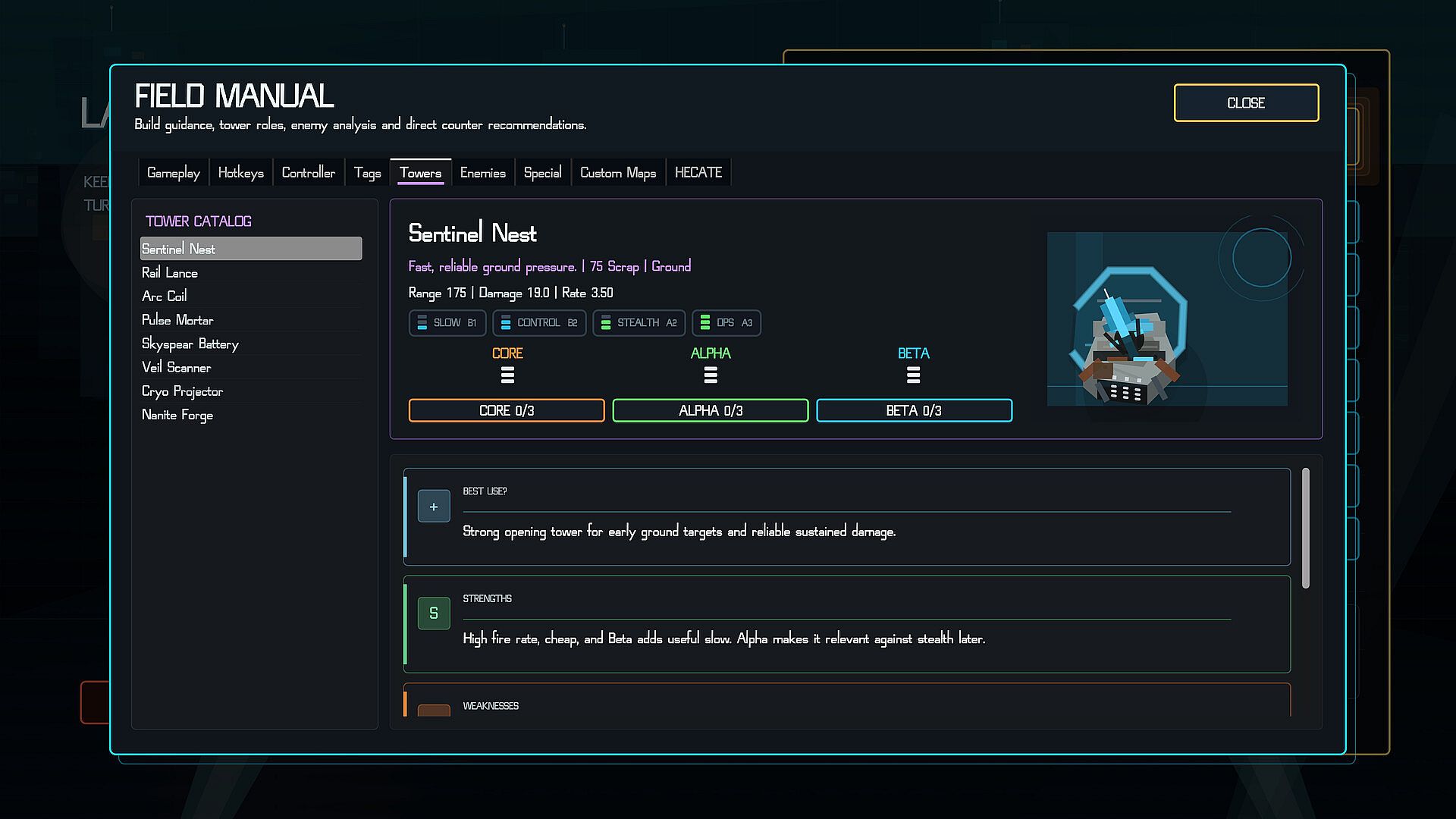
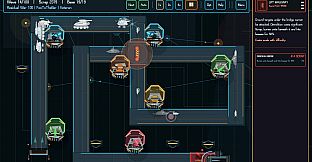
O planejamento defensivo começa com oito tipos de torres, cada uma com três caminhos de upgrade que mudam sua função. O caminho principal aumenta dano e alcance básicos. O caminho alpha especializa a torre em uma função tática específica, como supressão de área ou penetração de blindagem. O caminho beta direciona a torre para habilidades alternativas que criam sinergias diferentes com as defesas vizinhas. É preciso lidar com diversos tipos de inimigos: unidades blindadas, portadores de escudo, máquinas camufladas, atacantes aéreos e Titans de grande porte. As melhores configurações combinam armas de tiro rápido contra grupos, railguns contra alvos pesados, baterias antiaéreas, ataques de artilharia, campos de lentidão e sistemas de detecção para revelar ameaças furtivas. É possível ajustar a prioridade de alvo de cada torre para concentrar o fogo e formar zonas de morte sobrepostas.
O gerenciamento de recursos gira em torno do Scrap obtido dos inimigos destruídos, usado para posicionar novas torres e realizar upgrades. Outras opções incluem adiantar ondas para obter recursos bônus, implantar postos avançados para ampliar a cobertura e destruir pontes para eliminar grupos de inimigos de uma vez. Cada decisão importa, pois a próxima onda chega em tempo fixo, exigindo adaptação constante às ameaças que mudam nas rotas fixas de cada campo de batalha.
Modos de Jogo
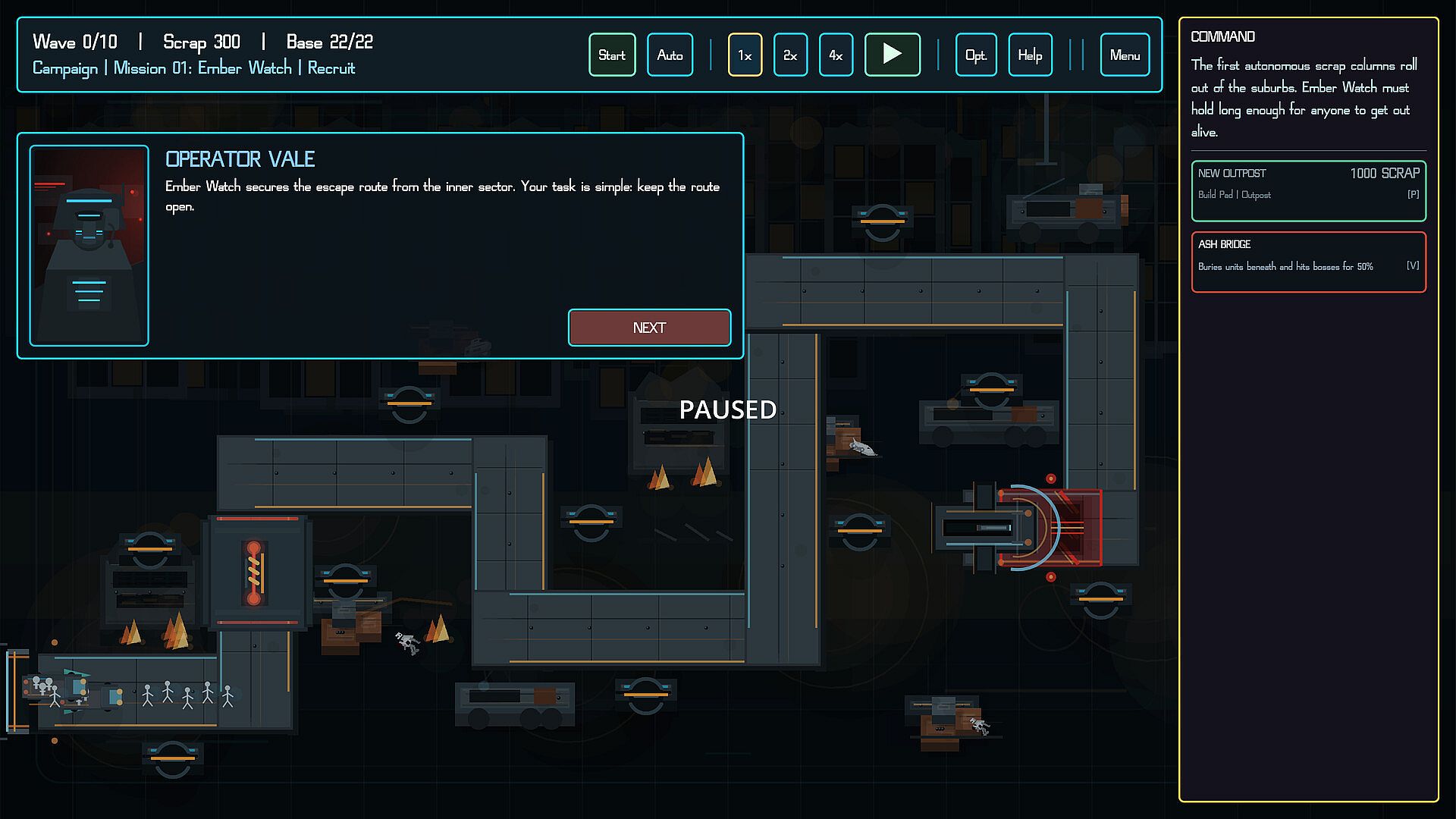
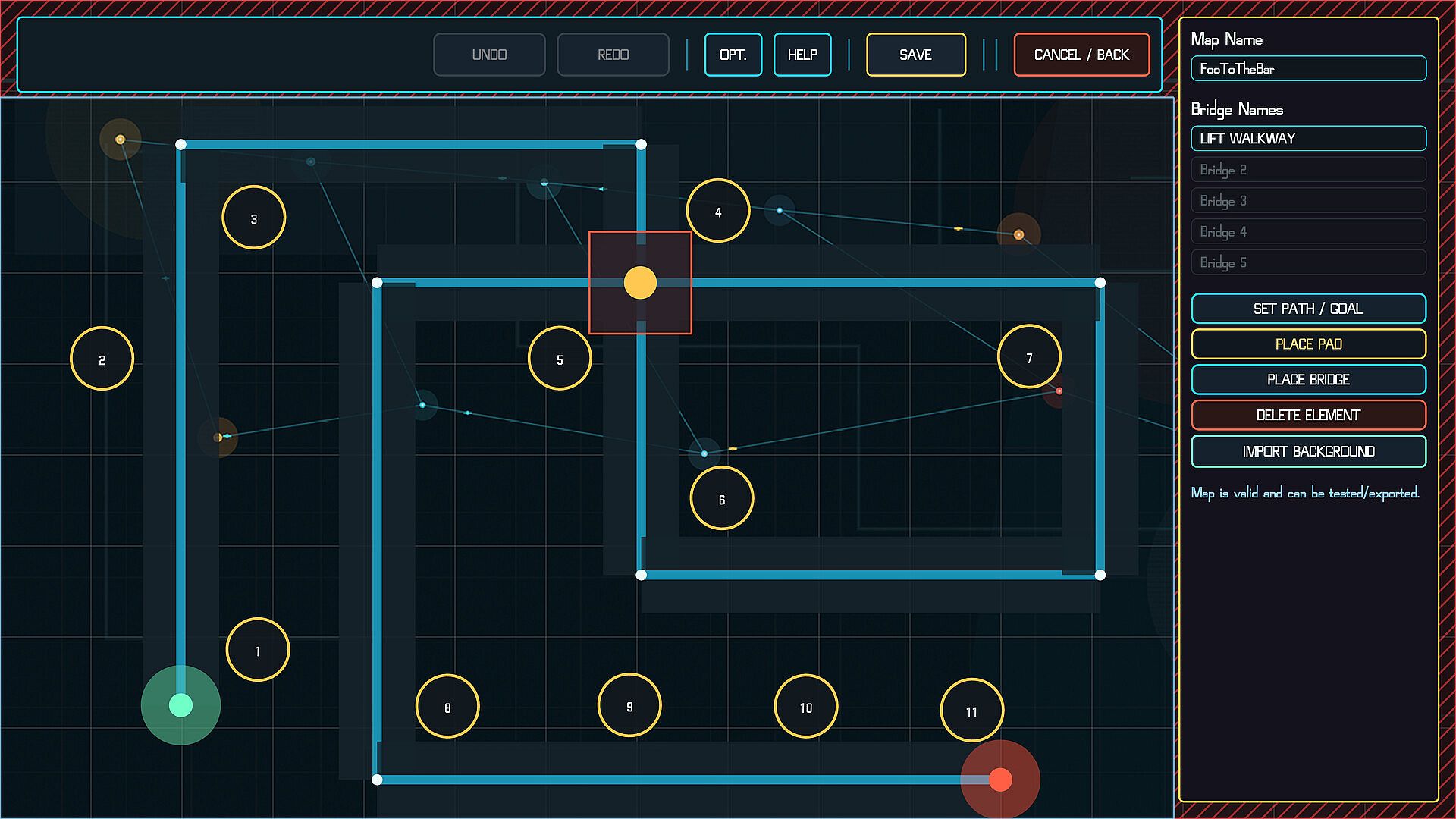
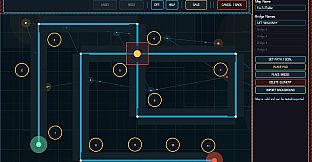
A campanha principal de 15 missões apresenta campos de batalha artesanais que introduzem novas composições inimigas e desafios ambientais. O progresso na campanha desbloqueia conteúdo adicional e registra o avanço geral. O Modo Cerco desafia o jogador com 50 ondas de dificuldade crescente em mapas selecionados. O Modo Escaramuça estende esse formato para 100 ondas, oferecendo testes de resistência mais longos. O Modo Infinito remove o limite de ondas, permitindo que a partida continue até as defesas falharem. Cinco níveis de dificuldade ajustam a força inimiga e a disponibilidade de recursos em todos os modos. Um editor de mapas permite importar e exportar layouts personalizados localmente para mais experimentação.
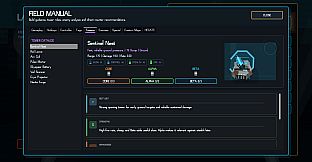
Sistemas adicionais incluem múltiplas opções de prioridade de alvo por torre, postos avançados implantáveis e pontes destrutíveis que alteram o fluxo inimigo. Um tutorial e um manual integrado explicam as mecânicas, enquanto conquistas recompensam realizações específicas e marcos de conclusão da campanha. Os controles suportam mouse e teclado ou gamepad.
Profundidade Estratégica e Variedade de Inimigos
O sucesso depende de entender que nenhuma torre isolada neutraliza todas as ameaças. Inimigos blindados exigem dano perfurante, unidades com escudo precisam de fogo concentrado ou habilidades de desvio, e atacantes voadores demandam cobertura antiaérea dedicada. Máquinas camufladas só se tornam visíveis por meio de torres de detecção, enquanto os pesados Titans absorvem grande quantidade de dano antes de cair. O jogador combina torres em defesas em camadas, ajusta prioridades dinamicamente e usa elementos do ambiente, como pontes, para reduzir grupos. As decisões de recursos equilibram sobrevivência imediata com força a longo prazo, especialmente ao adiantar ondas para obter mais Scrap, correndo o risco de enfrentar forças mais fortes antes do esperado.
Vale a Pena Jogar?
Last Bastion Protocol é indicado para quem aprecia tower defense reflexivo, com trocas claras de recursos e múltiplas opções de upgrade por estrutura. A campanha oferece progressão estruturada em mapas variados, enquanto os modos baseados em ondas proporcionam desafios escaláveis, de sessões curtas a maratonas de resistência. O suporte a teclado e gamepad, além do manual integrado e do editor, amplia a acessibilidade. Quem busca ação acelerada ou elementos multijogador encontrará uma experiência mais metódica e focada em um jogador. A combinação de rotas fixas, classes inimigas especializadas e upgrades ramificados das torres gera decisões estratégicas consistentes sem complexidade desnecessária. Se a premissa de proteger corredores de evacuação contra uma ameaça crescente de IA combina com sua preferência por planejamento defensivo cuidadoso, o jogo oferece um pacote completo de campanha e conteúdo no estilo endless.
