




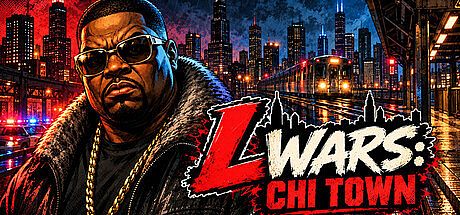



L Wars: Chi Town is a single-player strategy simulation set on Chicago's elevated train network. Players take on the role of someone starting deep in debt who must travel station by station, trading goods in a shifting street economy while balancing time, risk, and attention from authorities.
Gameplay
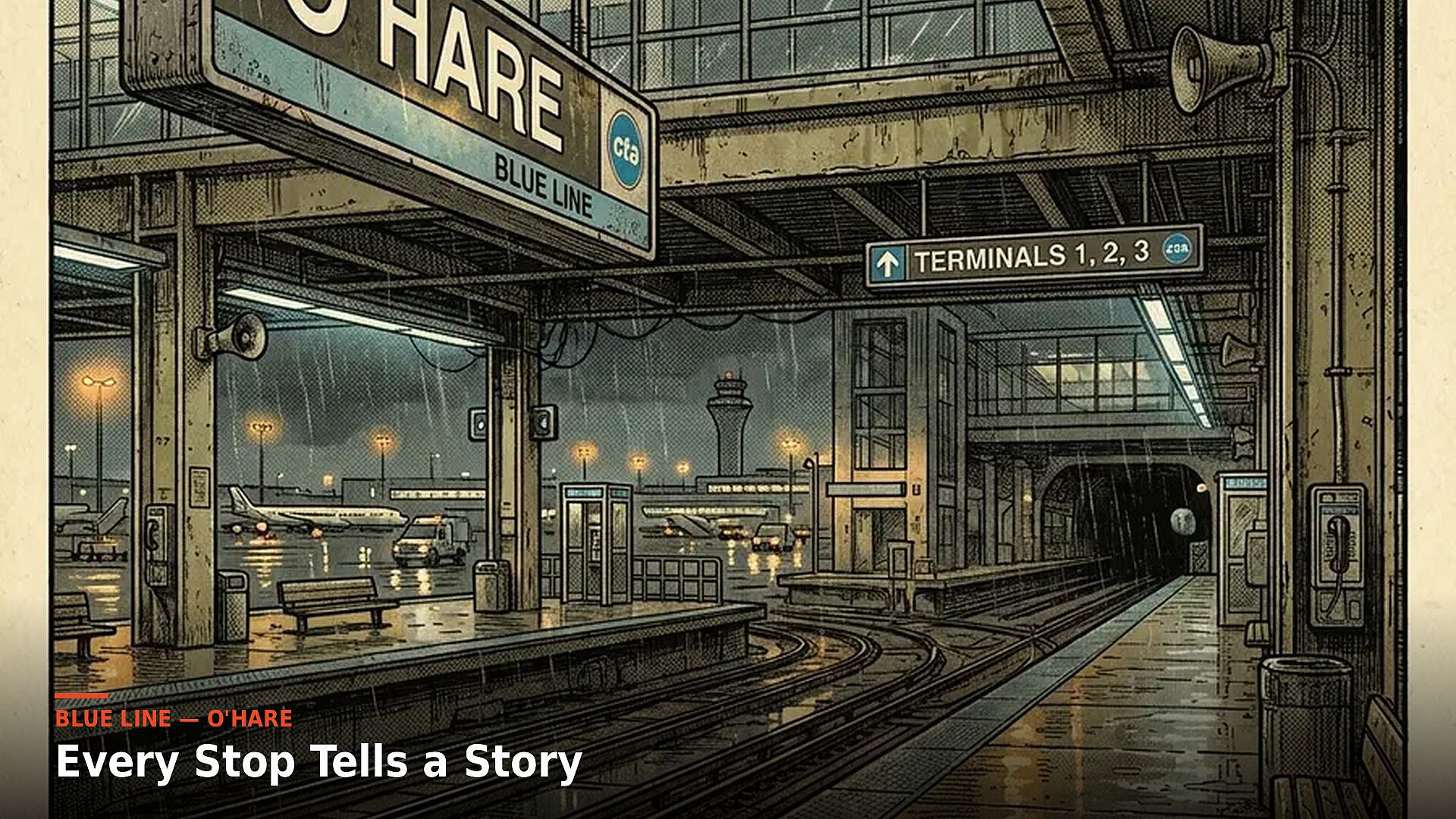
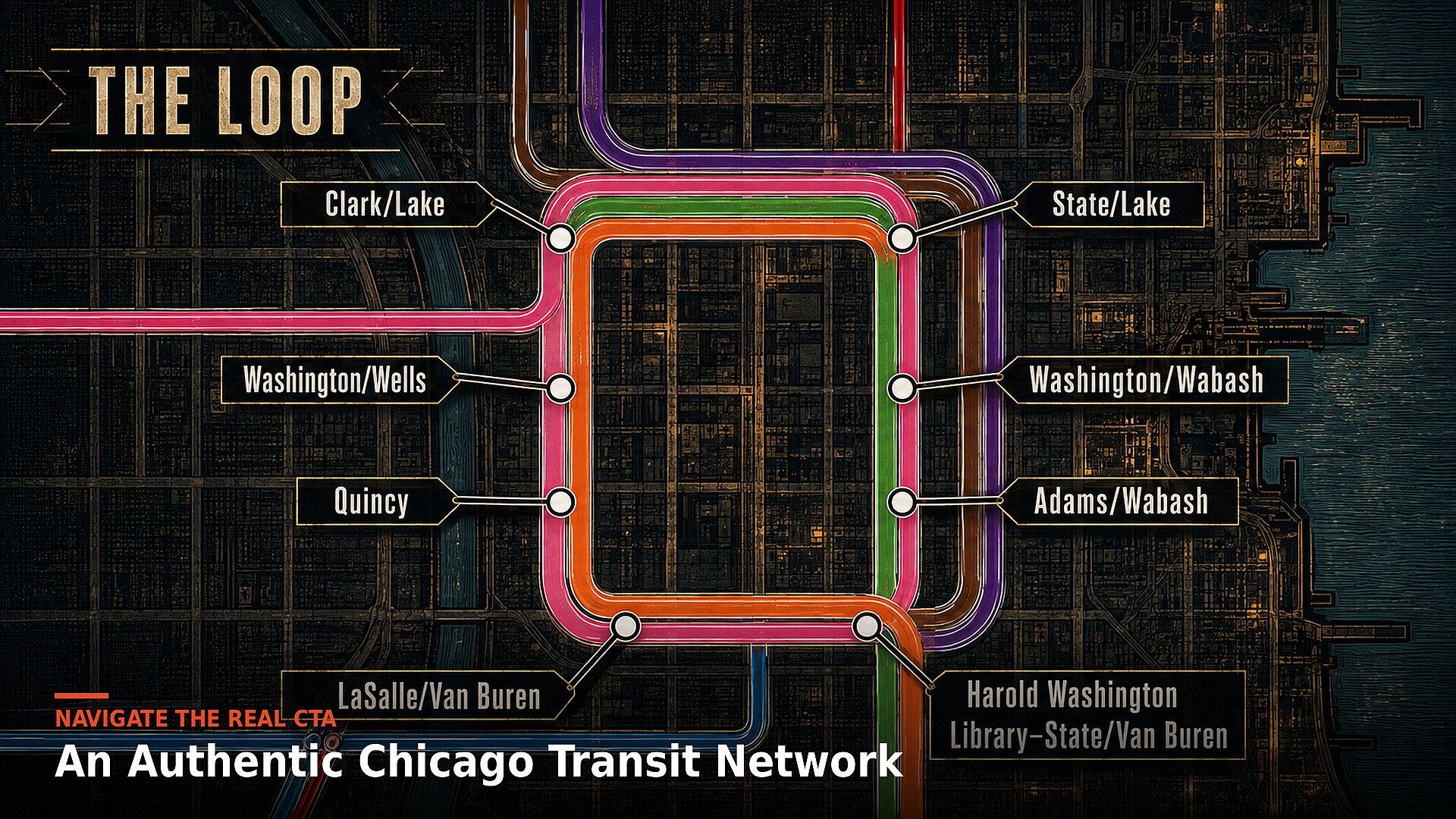
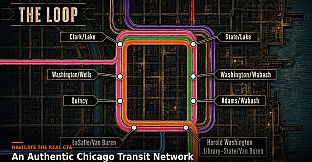
The core loop centers on route planning across a recreation of the city's L lines. Each stop presents opportunities to buy low and sell high as prices fluctuate based on supply and local conditions. Inventory management requires careful decisions about what to carry and when to offload, since every trip consumes limited time.
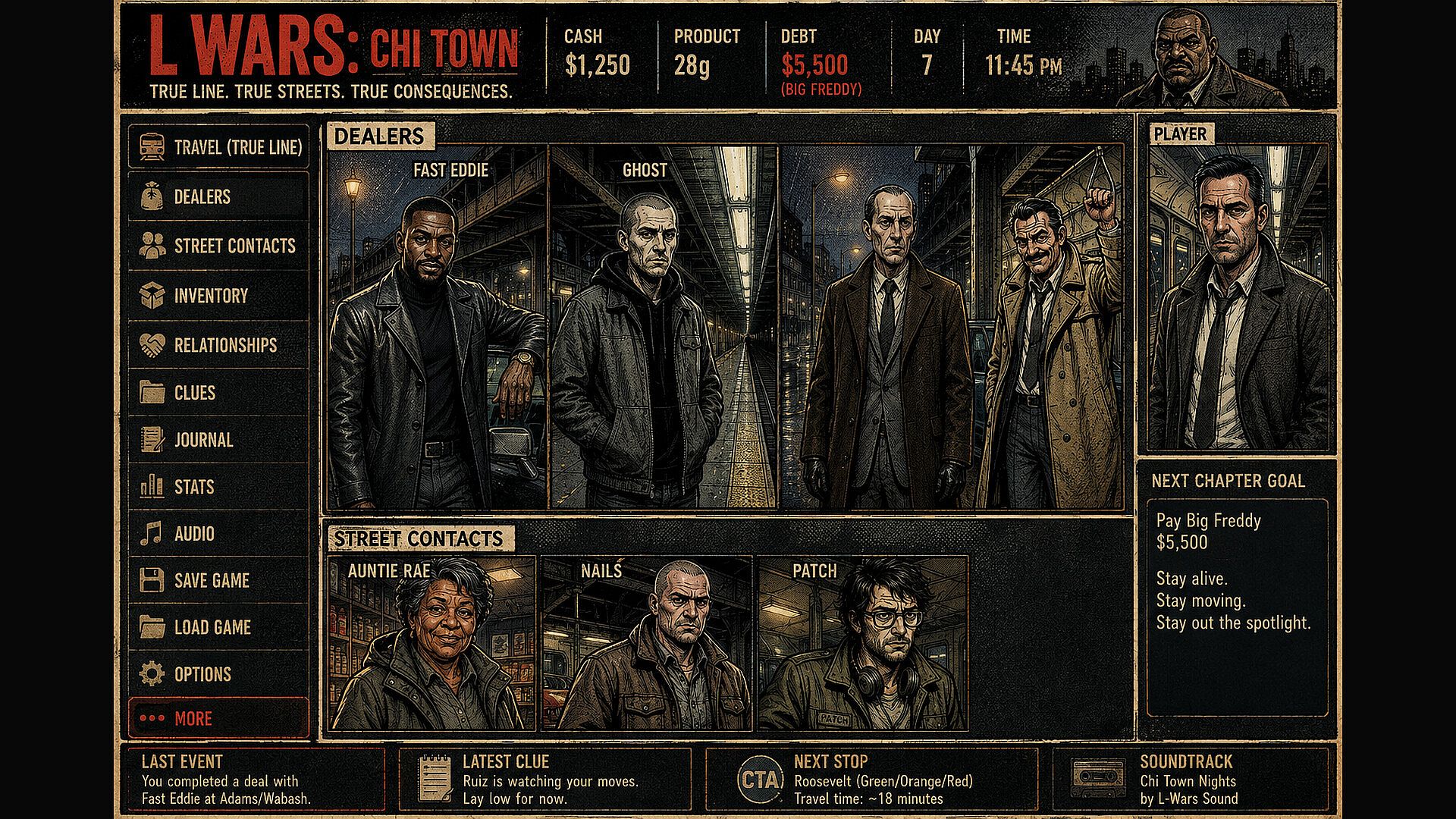
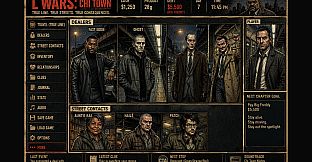
Resource tracking extends beyond cash to include debt repayment, reputation with individual contacts, and rising police heat that can trigger encounters or restrictions. Players build relationships through repeated interactions with dealers and street contacts, completing favors that open new routes or better deals while risking lasting consequences if trust is broken.
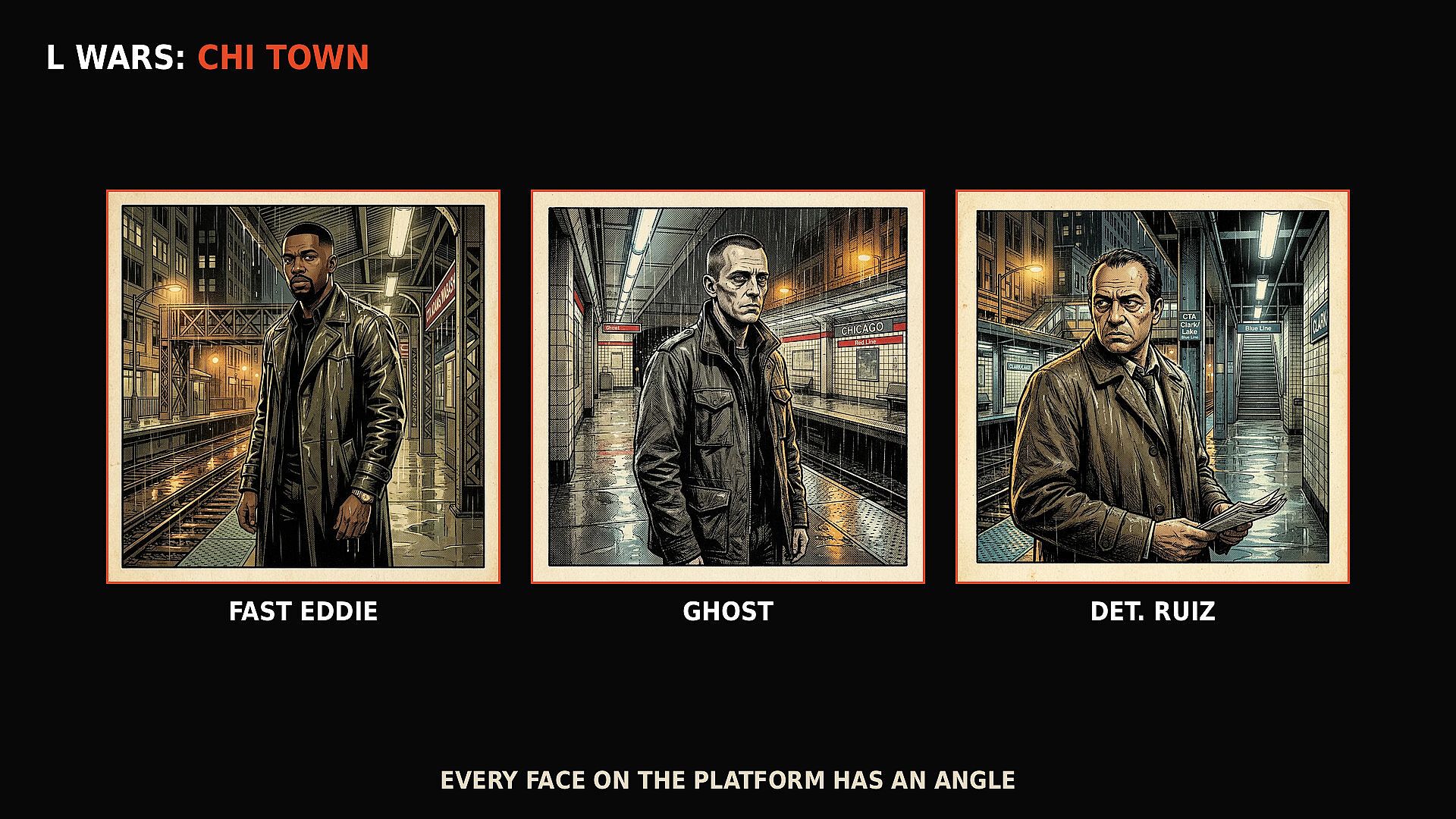
Events unfold through choice-driven encounters that remember prior actions. Officers, rivals, and other figures appear with responses shaped by the player's history, forcing ongoing calculations about whether to push for higher margins or exit a run early to avoid escalation.
Game Modes
Three run lengths structure each playthrough: 15 days, 30 days, or 45 days. Shorter runs emphasize quick decisions and efficient routing under tighter time pressure, while longer ones allow deeper relationship building and more complex inventory strategies across the full network.
Multiple difficulty settings scale the intensity of debt accumulation, price volatility, and police response. These options let players adjust the balance between economic opportunity and survival tension without altering the fundamental single-player structure.
Key Systems and Atmosphere
A dynamic economy drives the experience, with inventory and prices changing at each platform based on unseen market forces. Dozens of recurring characters populate the stations, each offering distinct trading options or story branches that tie into the player's growing reputation.
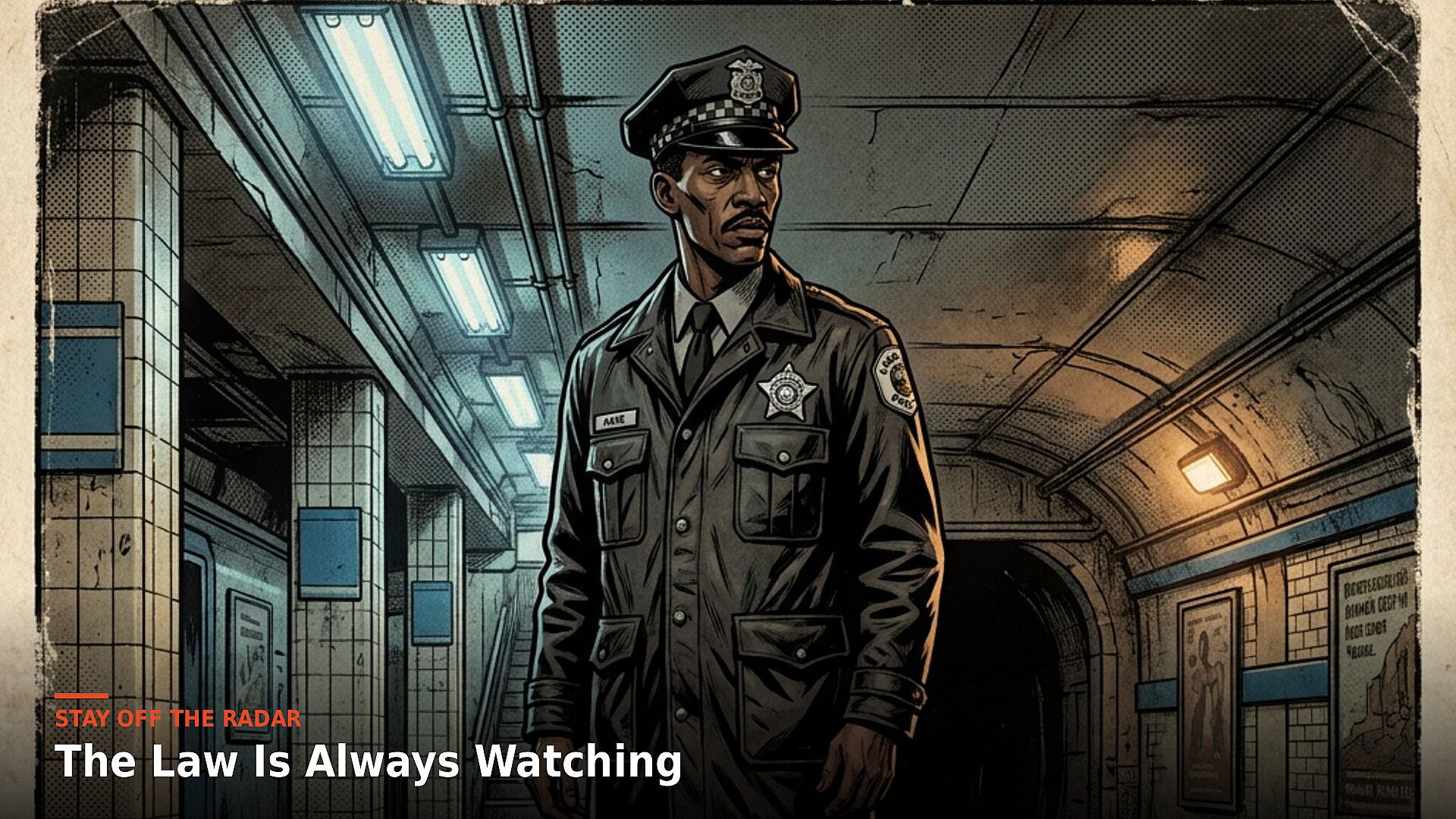
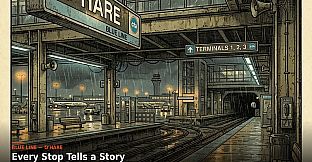
The presentation adopts a gritty, comic-book-inspired style that frames the Chicago setting without relying on graphic depictions. Strategic layers stack cash flow, time allocation, debt servicing, and heat management into every decision, creating tension even on routine runs.
Is It Worth Playing?
Players who enjoy management simulations focused on risk assessment and consequence tracking will find the systems here directly aligned with that preference. The emphasis on route efficiency, relationship management, and timed exits rewards methodical planning over rapid action.
Those drawn to choice-driven narratives with multiple endings may appreciate how decisions compound across a run, affecting both opportunities and threats. The mature themes center on simulated trading and encounters rather than visual intensity, suiting audiences comfortable with text-based criminal activity mechanics.
Availability on PC supports keyboard and mouse controls optimized for the planning elements. With no established player base or post-launch updates confirmed at this stage, interest depends primarily on whether the described loop of station-to-station trading and resource juggling matches individual taste for deliberate strategy games.