






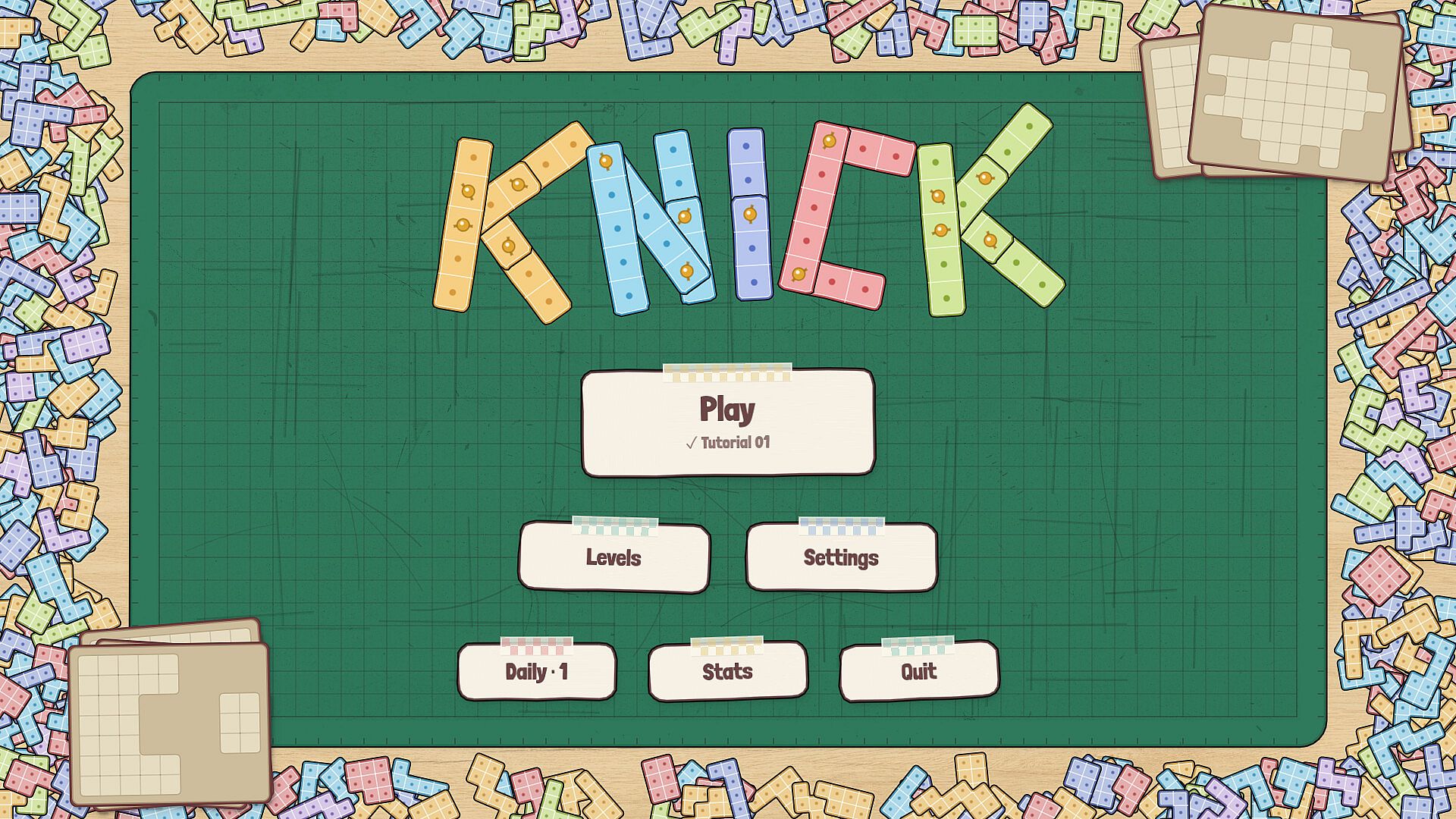
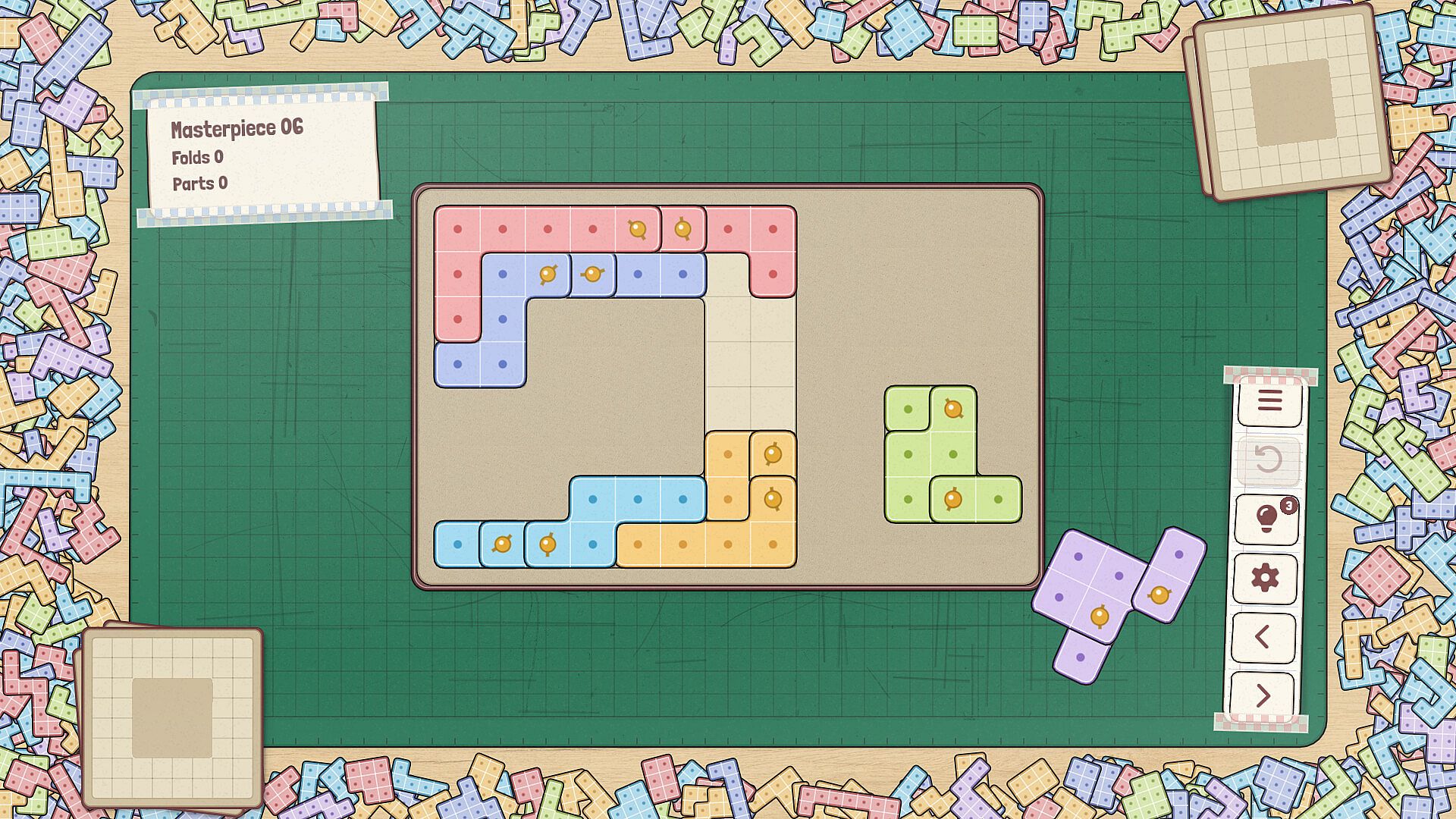
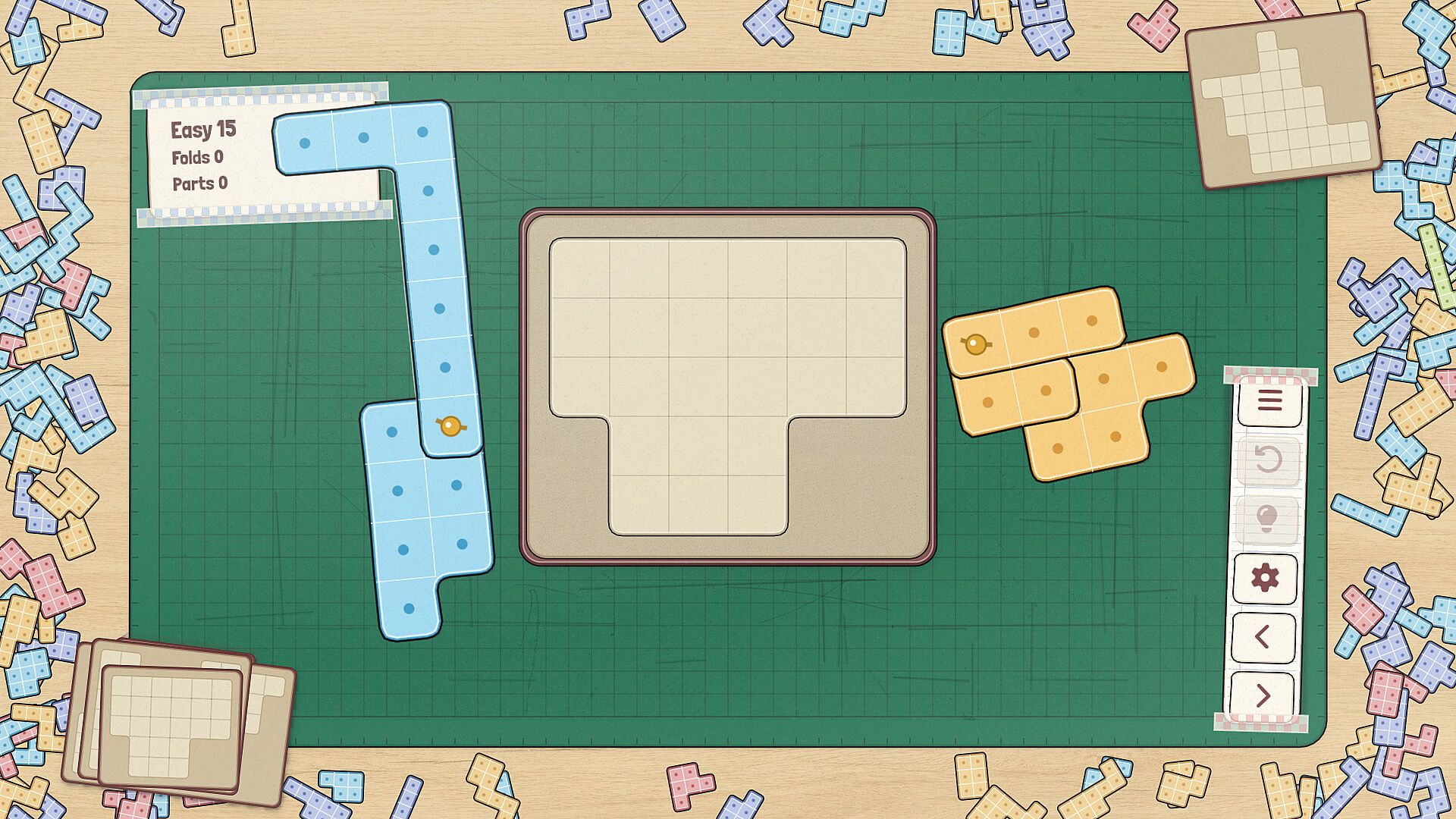
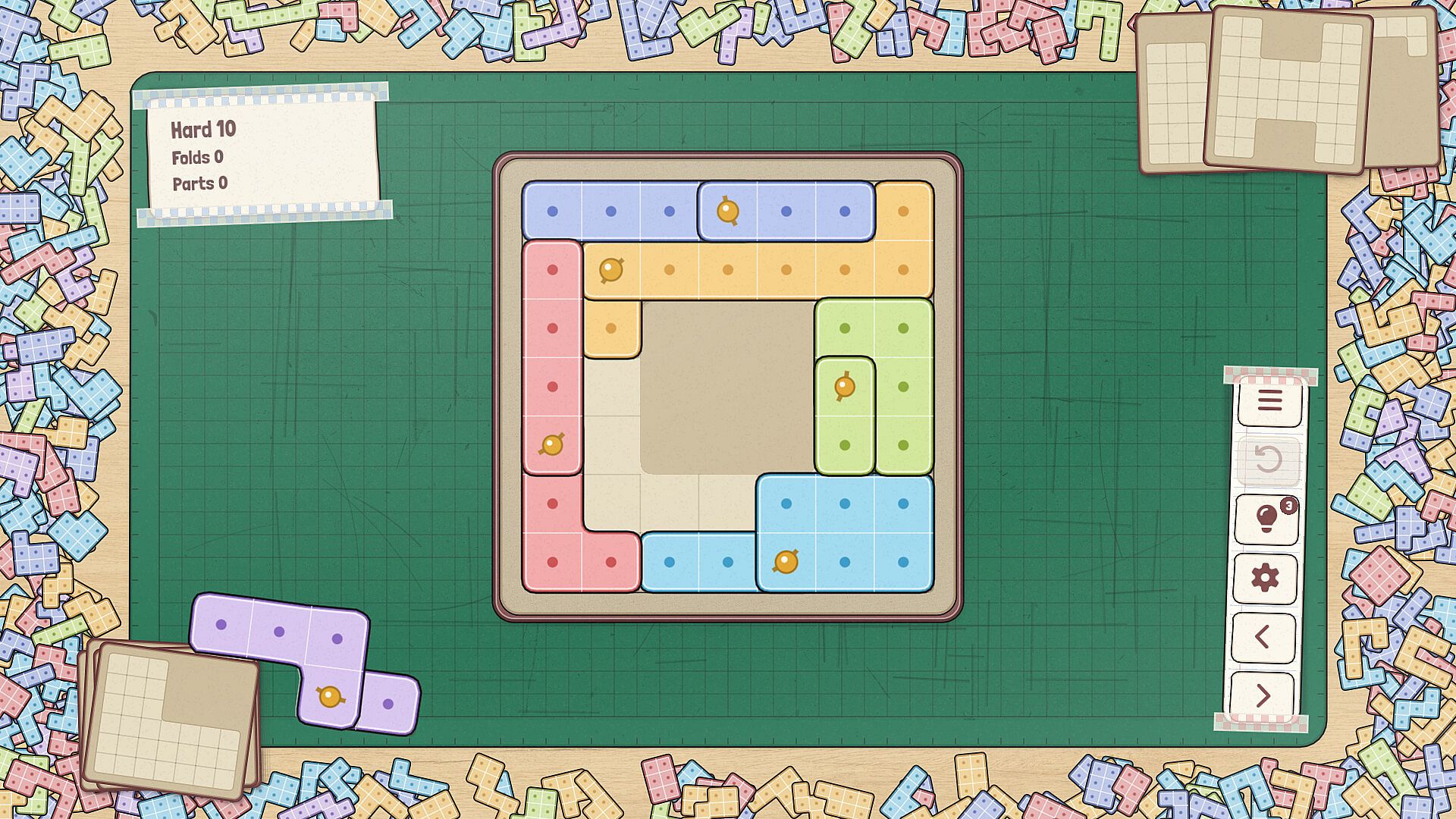
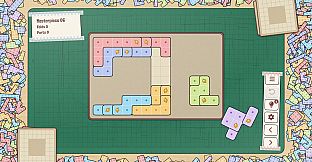
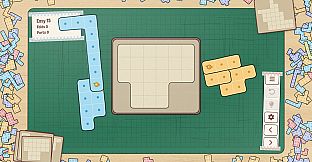
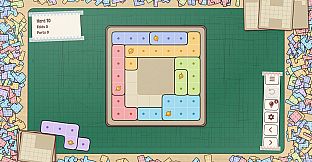
Knick is a casual puzzle game for PC that centers on manipulating chains of paper segments connected by hinges. Players work at a virtual workbench using a cardboard game board and loose paper pieces to complete increasingly intricate challenges. The core appeal lies in its tactile, hands-on approach to spatial reasoning, where every piece can be reshaped through simple actions without timers or competitive scoring systems.
Gameplay
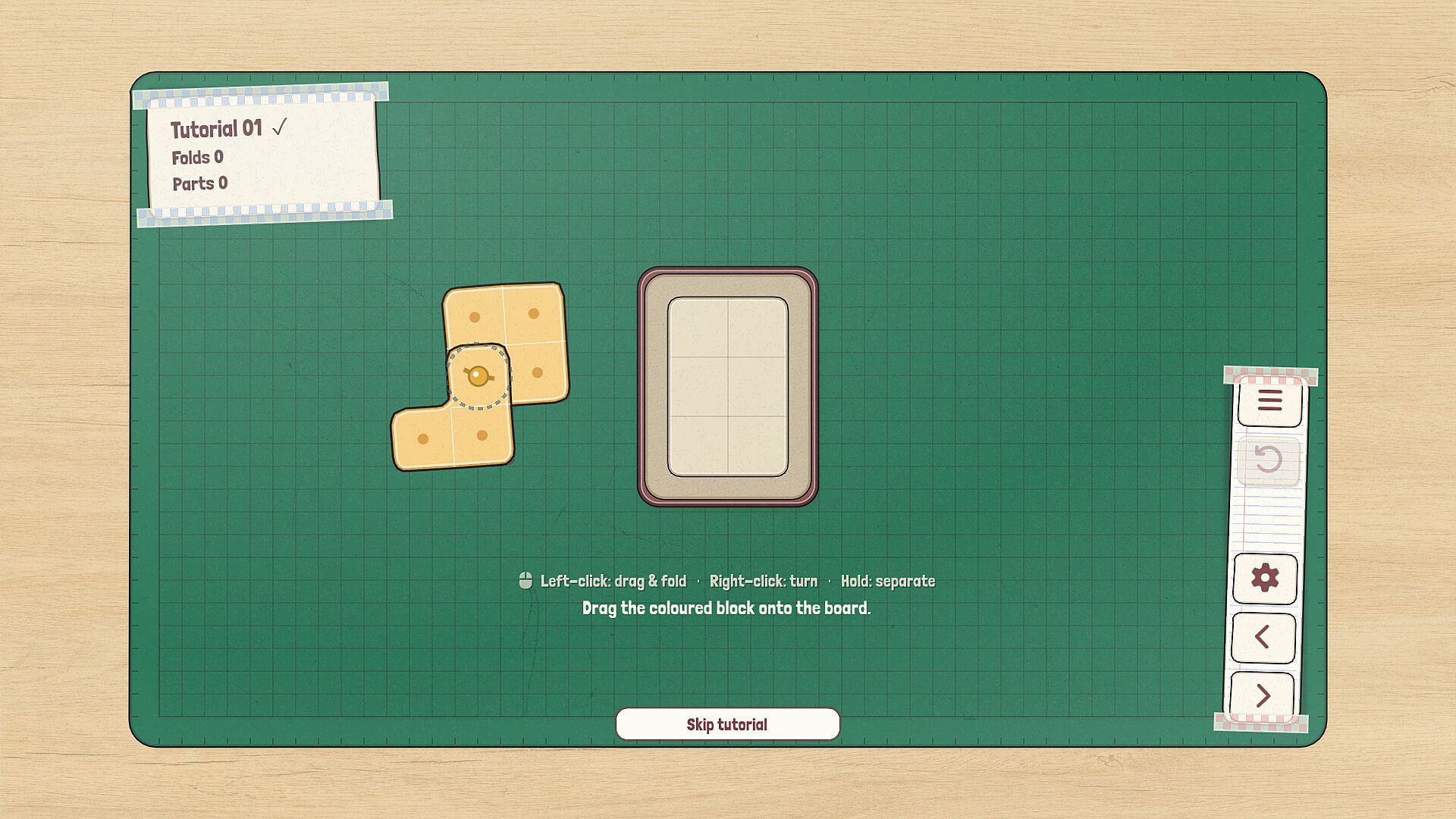
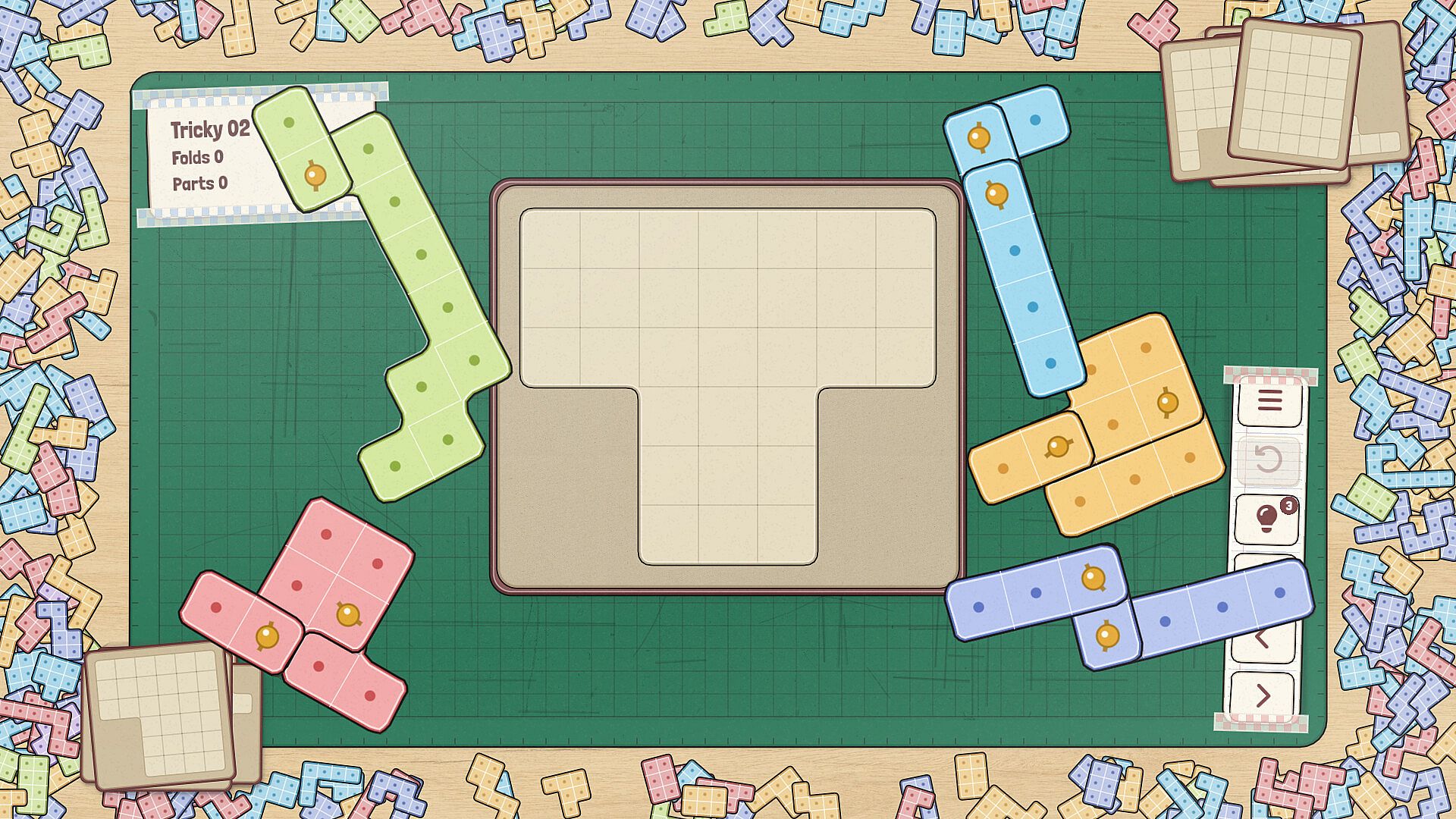
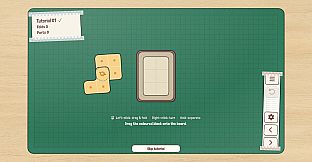
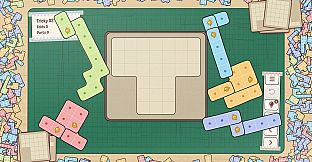
Each puzzle in Knick begins with flat chains of paper segments joined by fasteners that function as hinges. These connections allow pieces to fold into angles, turn into hooks or staircases, split apart for rearrangement, and join back together to form the exact configuration needed to solve the level. The first few challenges introduce these four moves in straightforward ways, helping players understand how small adjustments can create larger structures. As chapters progress, solutions require more mental detours and experimentation with the same set of tools, encouraging players to visualize multiple configurations before committing to changes. Undo functionality supports trial and error at any stage, keeping the focus on creative problem solving rather than frustration.
The absence of time limits or point systems means sessions can unfold at a comfortable pace. Players explore different ways to achieve the same goal, often discovering that a single level supports multiple valid arrangements. This flexibility keeps the experience fresh across the full campaign while reinforcing the mechanical consistency that defines the game.
Game Modes
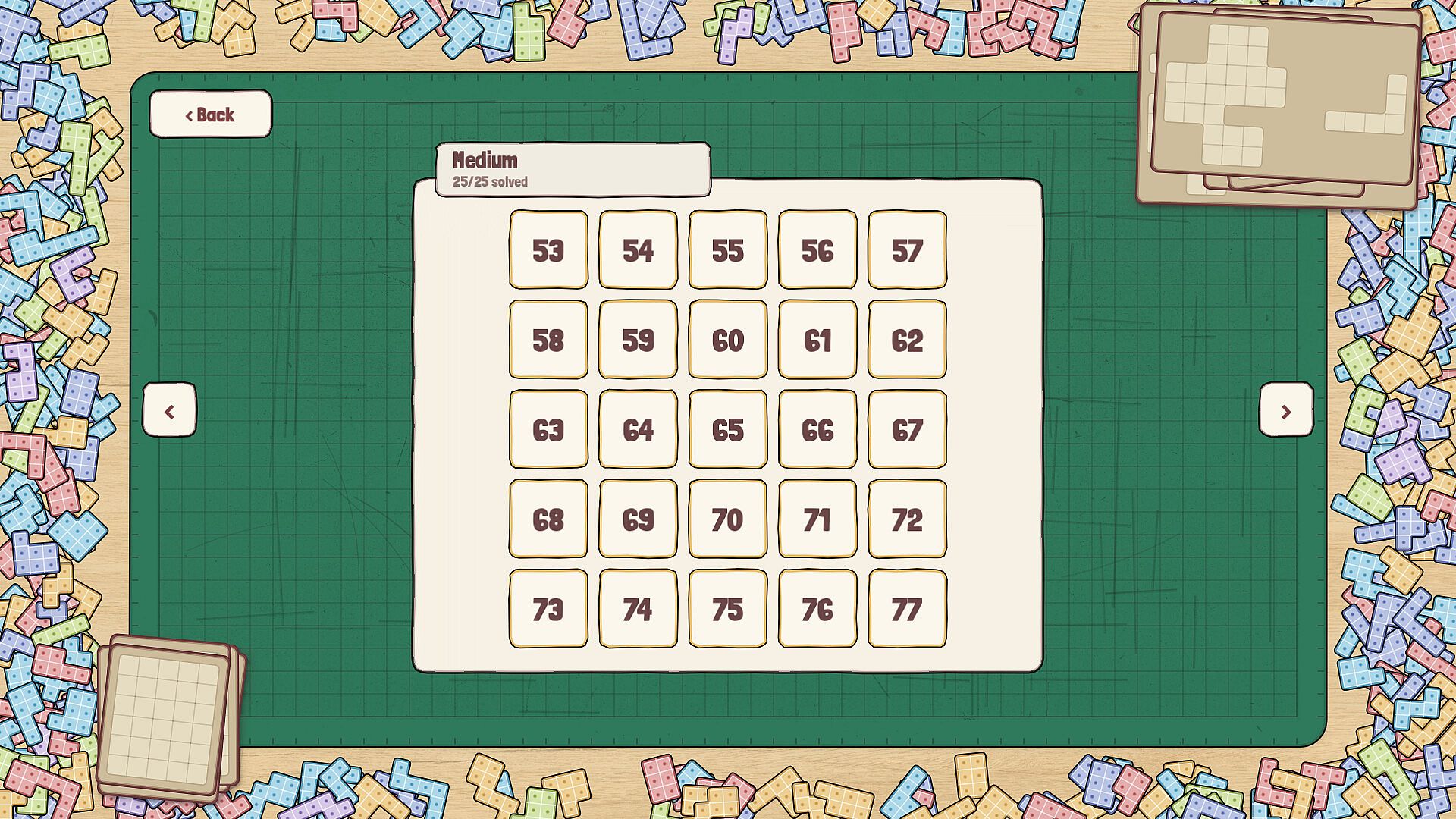
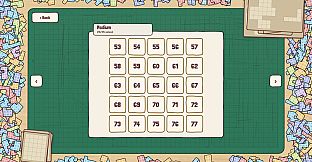
The primary experience consists of more than 120 levels spread across six chapters. Each chapter introduces a distinct overarching task while relying on the same four moves of fold, turn, split, and join. Early chapters emphasize basic folding and turning to build familiarity, while later ones demand more complex combinations of splitting and joining to navigate tighter spatial constraints. A separate daily puzzle mode sits alongside the main campaign, offering a fresh challenge each day that draws from the same core mechanics without requiring progression through the chapters.
Progression remains entirely optional and self-paced. Players can revisit any solved level to experiment further or skip ahead if a particular configuration proves elusive. The structure rewards persistence and creative thinking over speed or perfection on the first attempt.
Progression and Accessibility
Levels scale in complexity gradually, allowing newcomers to the genre to develop an intuitive grasp of hinge-based manipulation before facing tougher spatial puzzles. The consistent rule set across all chapters means mastery comes from applying the four moves in novel combinations rather than learning new systems. Undo support and the lack of penalties further lower barriers, making the game suitable for short sessions or extended exploration alike. Visual feedback from the paper pieces and fasteners provides clear cues about valid connections, helping players track their adjustments without additional tutorials beyond the opening levels.
Is It Worth Playing?
Knick suits players who enjoy deliberate, low-pressure puzzle experiences focused on spatial manipulation and iterative refinement. The campaign offers substantial content through its chapter-based structure and daily puzzles, while the forgiving design encourages repeated attempts without external pressure. Those who appreciate games built around a small set of versatile mechanics will find the consistent toolset rewarding as challenges grow more demanding. The overall presentation remains straightforward and focused on the core loop of reshaping paper chains, delivering a contained experience that emphasizes thoughtful arrangement over spectacle or competition.