


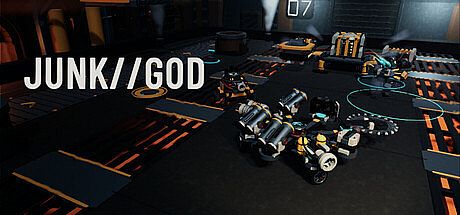


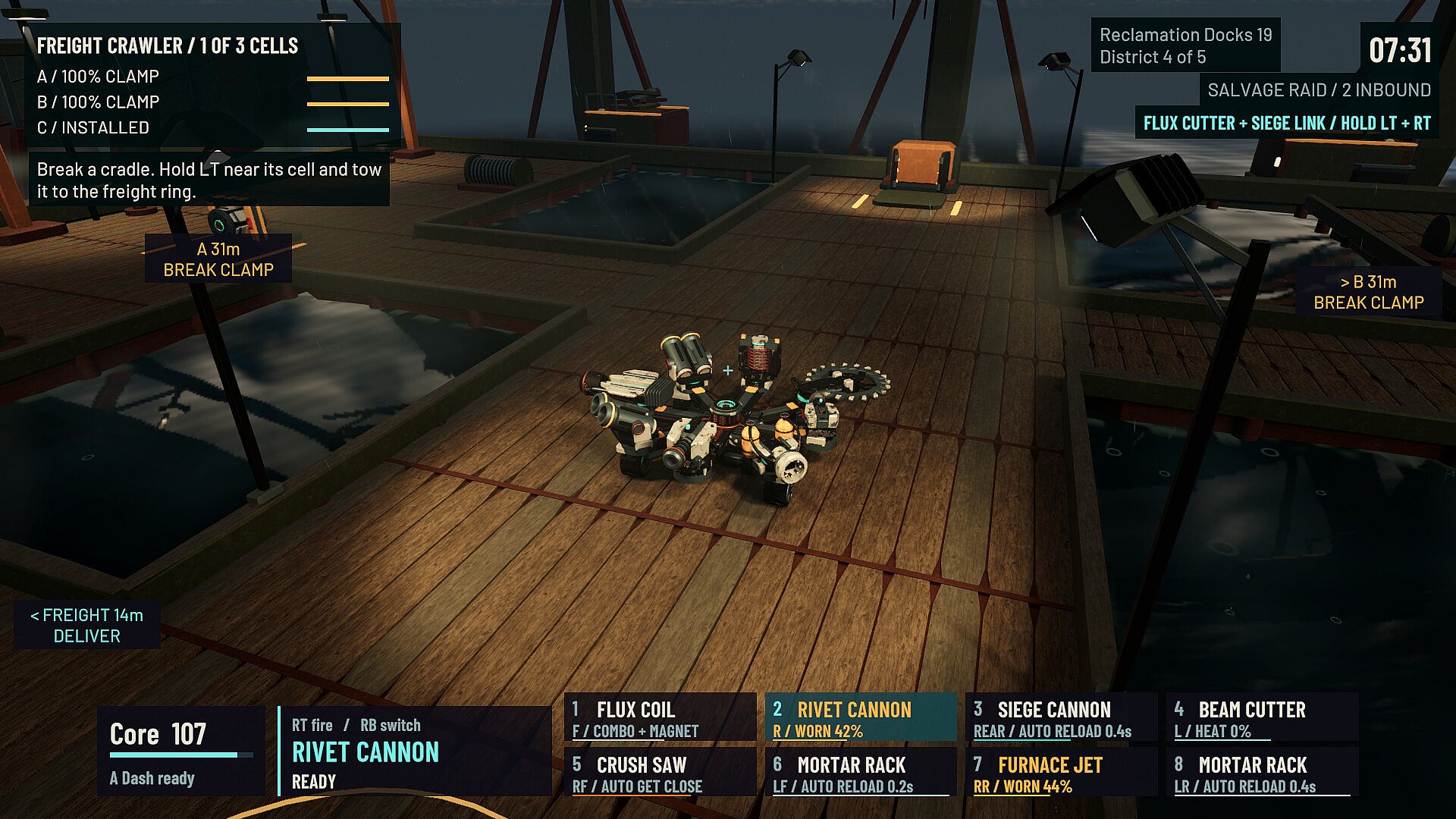
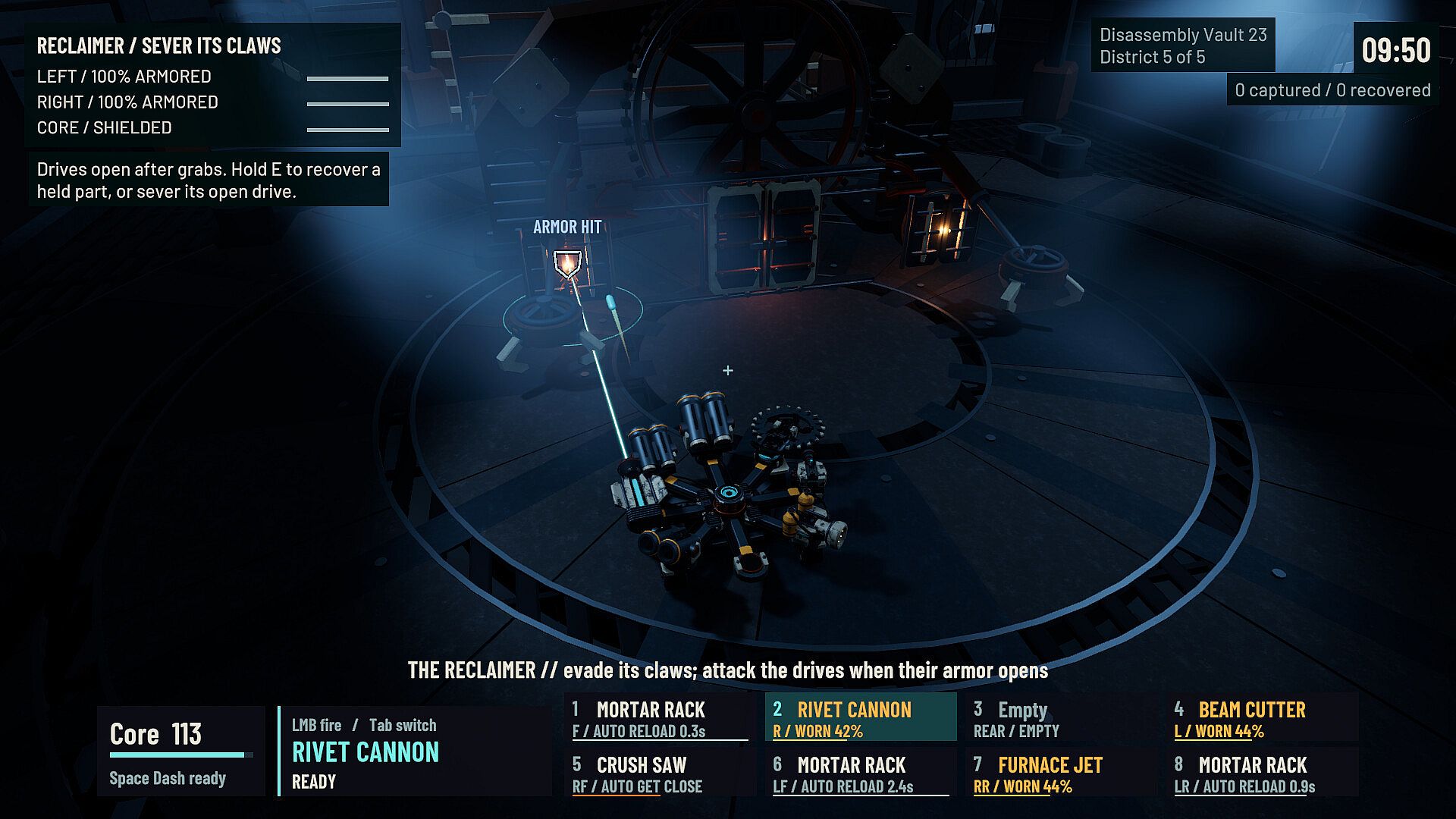
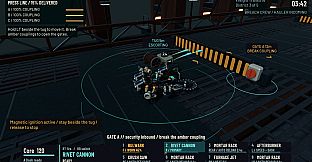
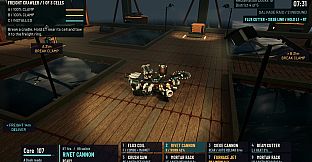
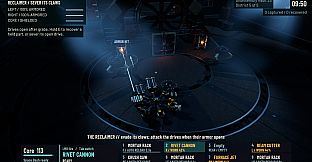
JUNK//GOD is a single-player 3D action roguelite where players start as a small robot equipped with a magnetic core and gradually assemble a larger machine from salvaged enemy parts. The core loop involves destroying hostile machines in an industrial complex, pulling loose components onto the chassis with the magnet, and using those parts as functional weapons and upgrades that alter shape, reach, and firepower. Enemies can rip mounted pieces away during combat, forcing quick decisions on recovery or adaptation.
Gameplay
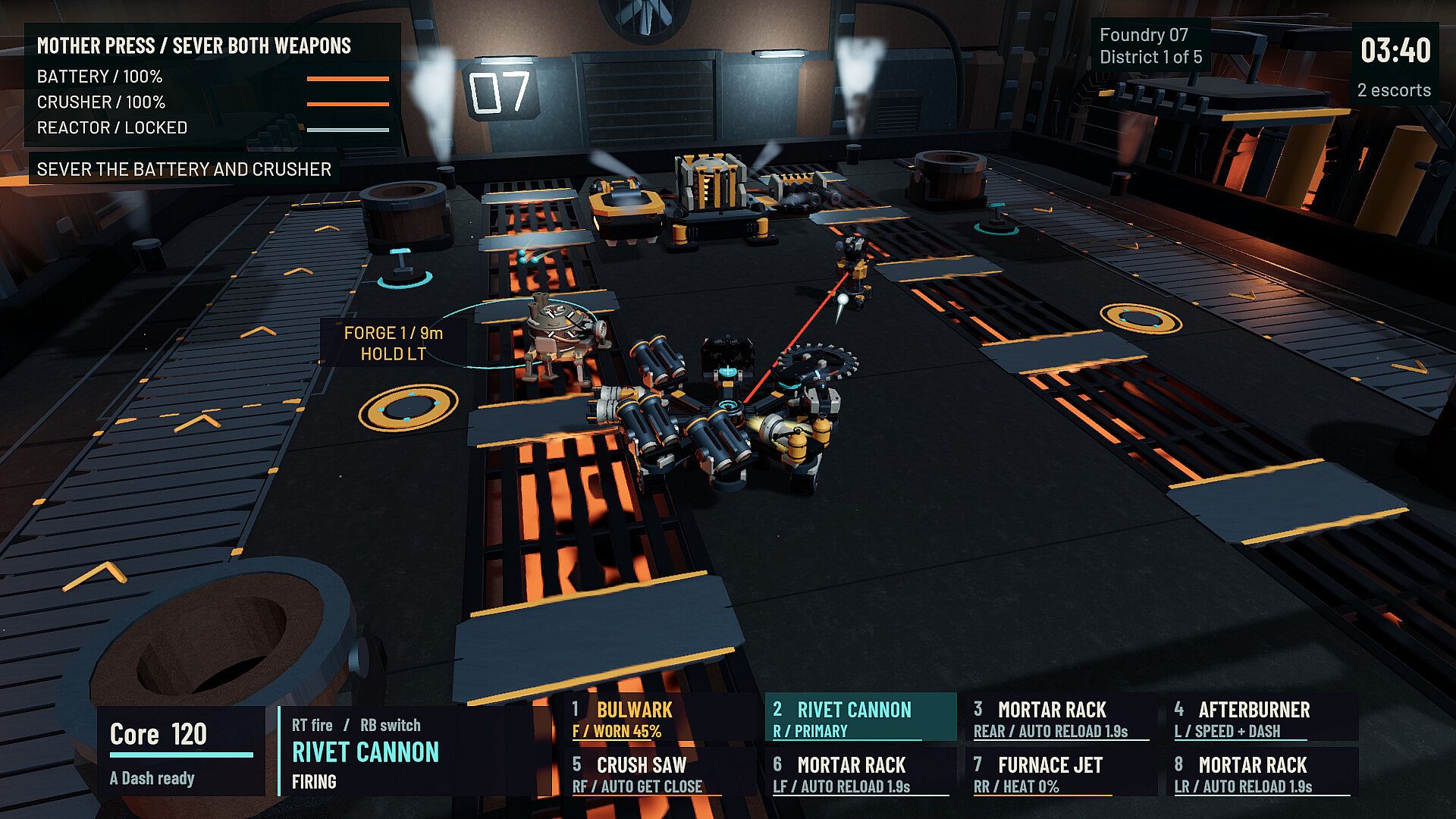
The central mechanic revolves around weapon and part salvage. Players begin with limited mounts and expand to eight as runs progress. Available components include rivet cannons, ripsaws, mortars, beam cutters, furnace jets, arc forks, and tow winches. These attach to the chassis and can receive protection through armor plates or directional shields, or gain mobility from thrusters and flux coils. Primary weapons fire on command while secondary mounts provide automatic support fire. Combinations create special effects, such as two saws paired with a flux coil producing an orbiting Blade Storm or two cannons with a coil forming a charged piercing Siege Link. Losing a required part in combat disables the combination until the assembly is rebuilt.
Frame selection influences combat options. A broad low frame offers stability, while a taller machine can fire over low obstacles. Between encounters, players install circuits and rearrange hardware plans. Lost weapons can be retrieved mid-fight by dashing clear and pulling them back with the magnet. Service stops allow spending accumulated charge on repairs, reforging damaged parts, or swapping circuits. Weapon mastery and completed challenges unlock new starting blueprints for subsequent runs, encouraging repeated experimentation with different layouts and weapon mixes.
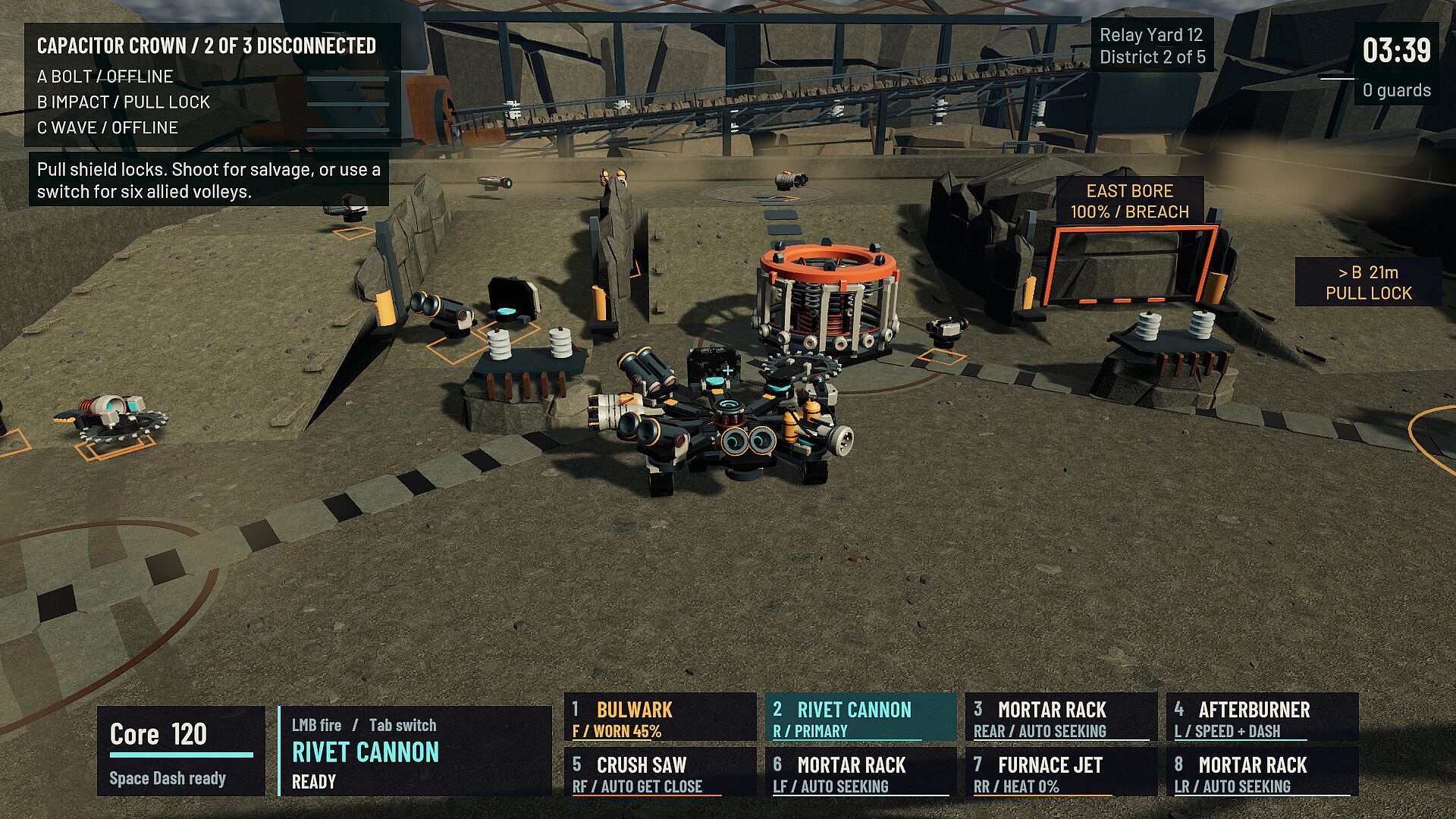
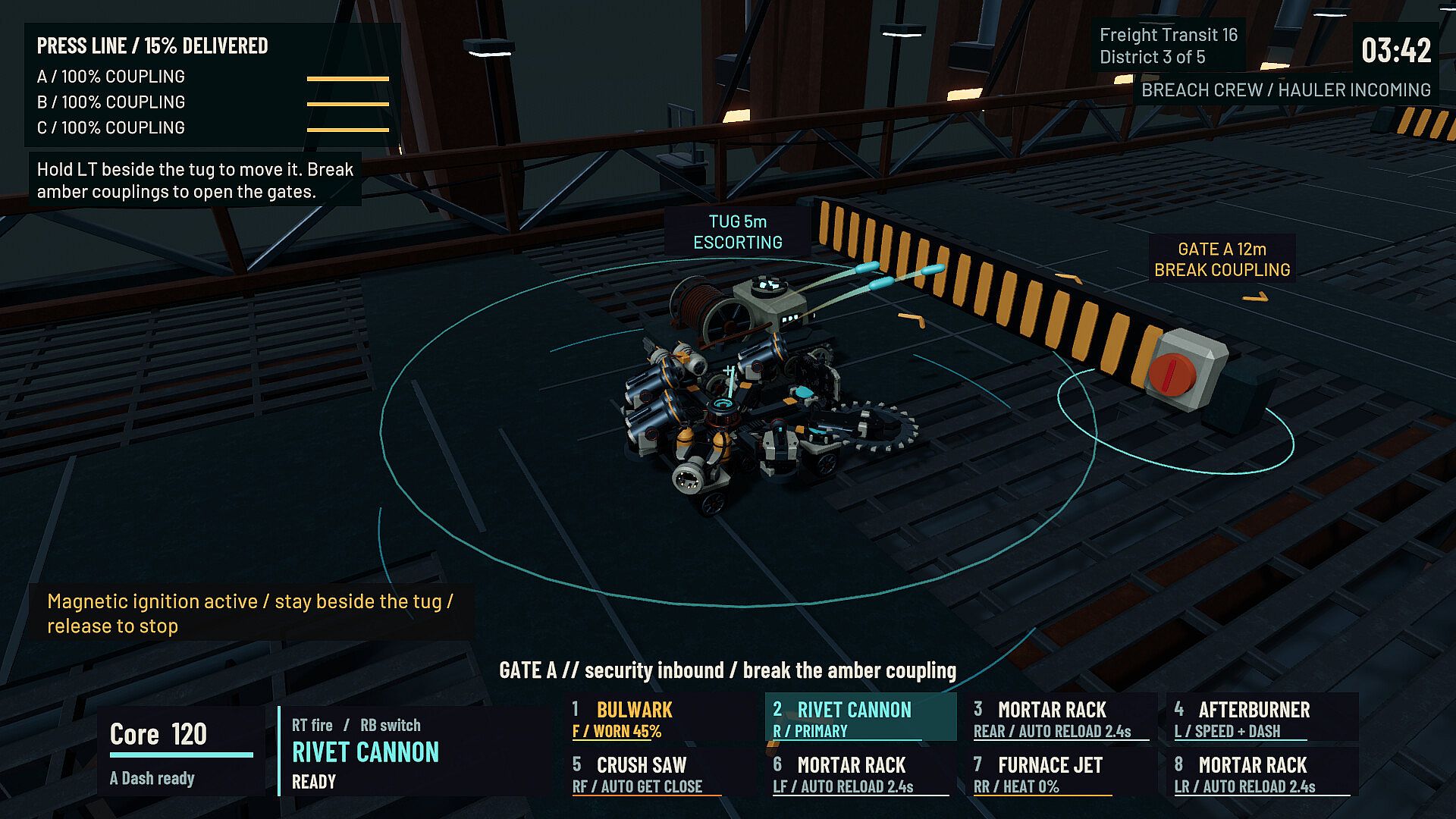
Progression takes players through five distinct districts. Foundry 07 features moving conveyors, forge machinery, and the Mother Press. Relay Yard 12 involves climbing a terraced quarry while managing relay locks and avoiding live feeder lanes. Freight Transit 16 requires choosing freight routes, escorting a tug, and breaking gates guarded by the Bridge Warden. Reclamation Docks 19 focuses on towing power cells across piers amid attacks from the Shipbreaker's machinery. The final area, Disassembly Vault 23, pits players against the Reclaimer in a boss encounter that involves severing claws and recovering stolen parts.
Game Modes
JUNK//GOD operates entirely as a single-player experience built around roguelite runs. Each attempt starts from a small robot and builds outward through the five districts, with death returning the player to the beginning while retaining unlocked blueprints. Runs support saving and continuing at any point. A first-run cinematic and guided encounter teach core systems including movement, part salvage, and basic combat before full freedom begins. Controls can be rebound, and options exist to adjust HUD text size, camera behavior, damage flash intensity, music volume, and vibration feedback.
Progression and Customization
Long-term advancement comes from mastering weapons and completing challenges that grant new starting options across runs. Players experiment with mount counts, frame shapes, circuit placements, and part synergies to create varied assemblies. The system rewards careful part management because losing key components breaks active combinations until replacements are found or repaired. Service stops provide moments to refine the current build without resetting the entire run.
Is It Worth Playing?
JUNK//GOD suits players who enjoy single-player action roguelites centered on build experimentation and part-based combat. The salvage and mounting systems create a constant loop of adaptation as weapons attach, combine into special attacks, and detach under enemy pressure. The five districts offer structured progression with distinct environmental challenges, while the ability to save mid-run and unlock new blueprints supports repeated attempts without starting from zero each time. Those who prefer methodical customization and recovery mechanics over fixed loadouts will find the robot assembly loop engaging. The game runs on standard PC hardware with modest requirements, making it accessible for experimentation across multiple sessions.