






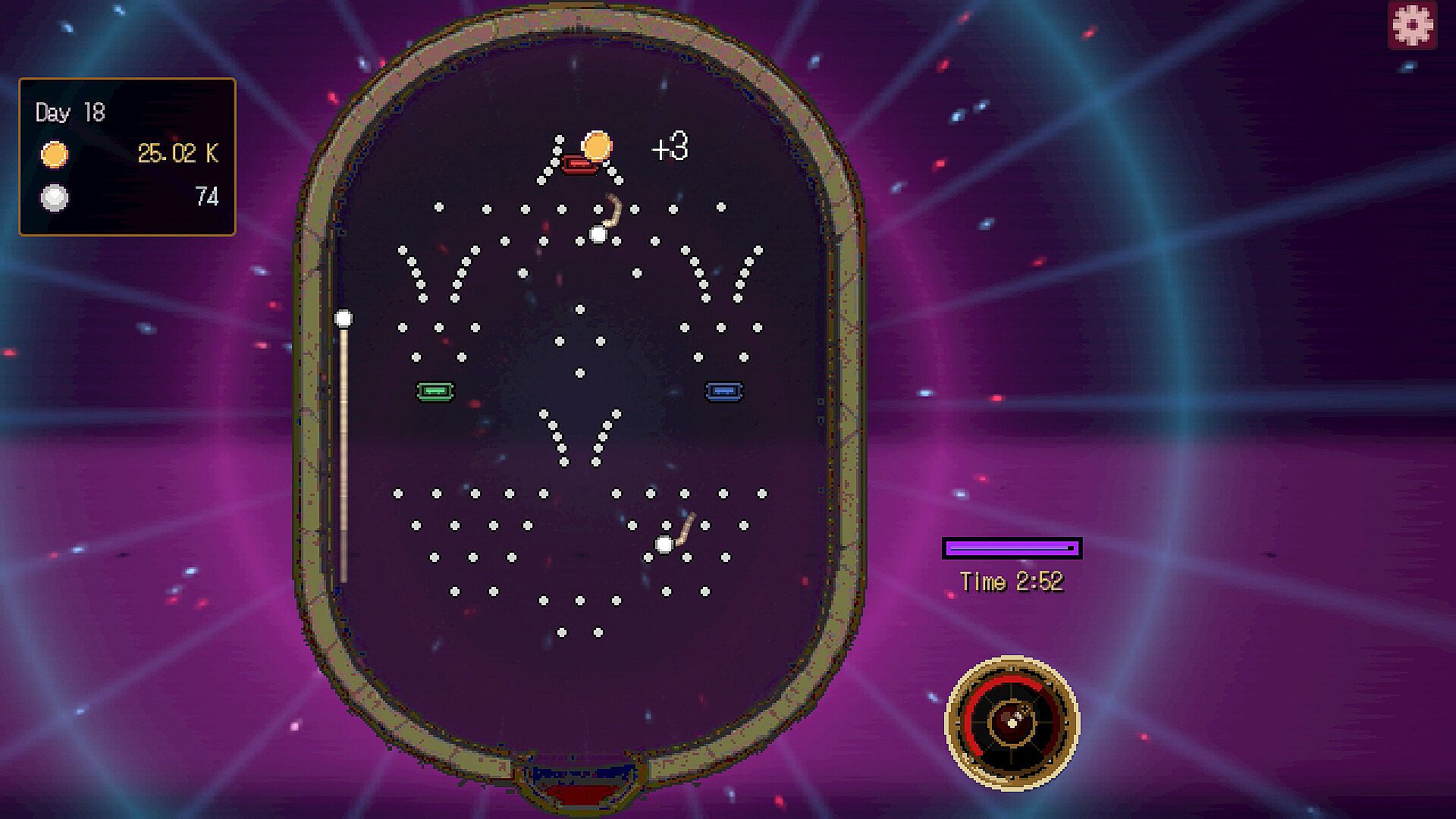
Incremental Pachinko Heaven is a single-player incremental game that blends physics-based pachinko mechanics with steady progression systems. Players begin with a basic board and limited balls, launching them to bounce through pins and land in reward zones that generate medals. These medals fuel upgrades that expand the setup over successive days, turning quiet sessions into dense displays of activity and escalating numbers.
Gameplay
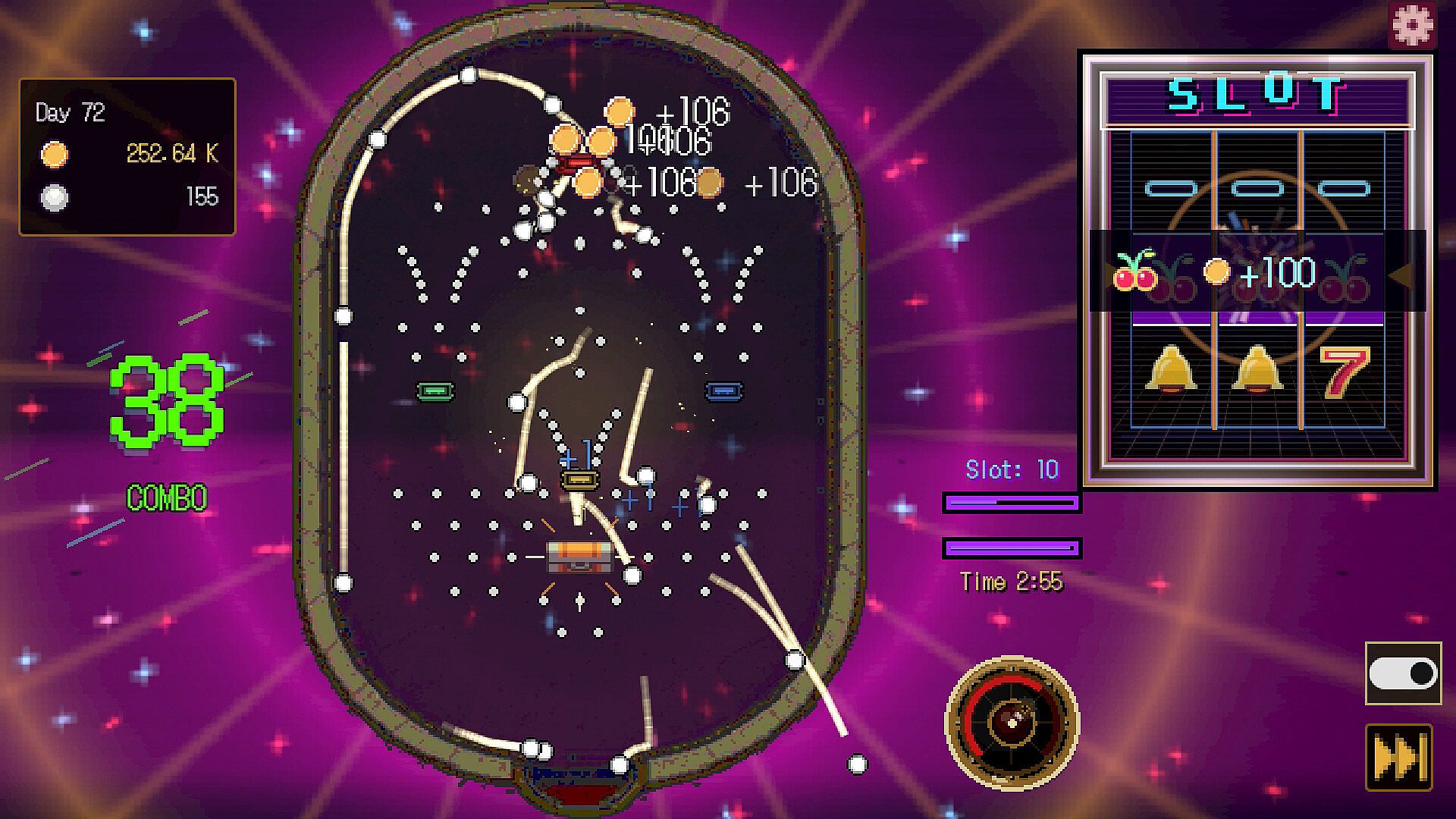
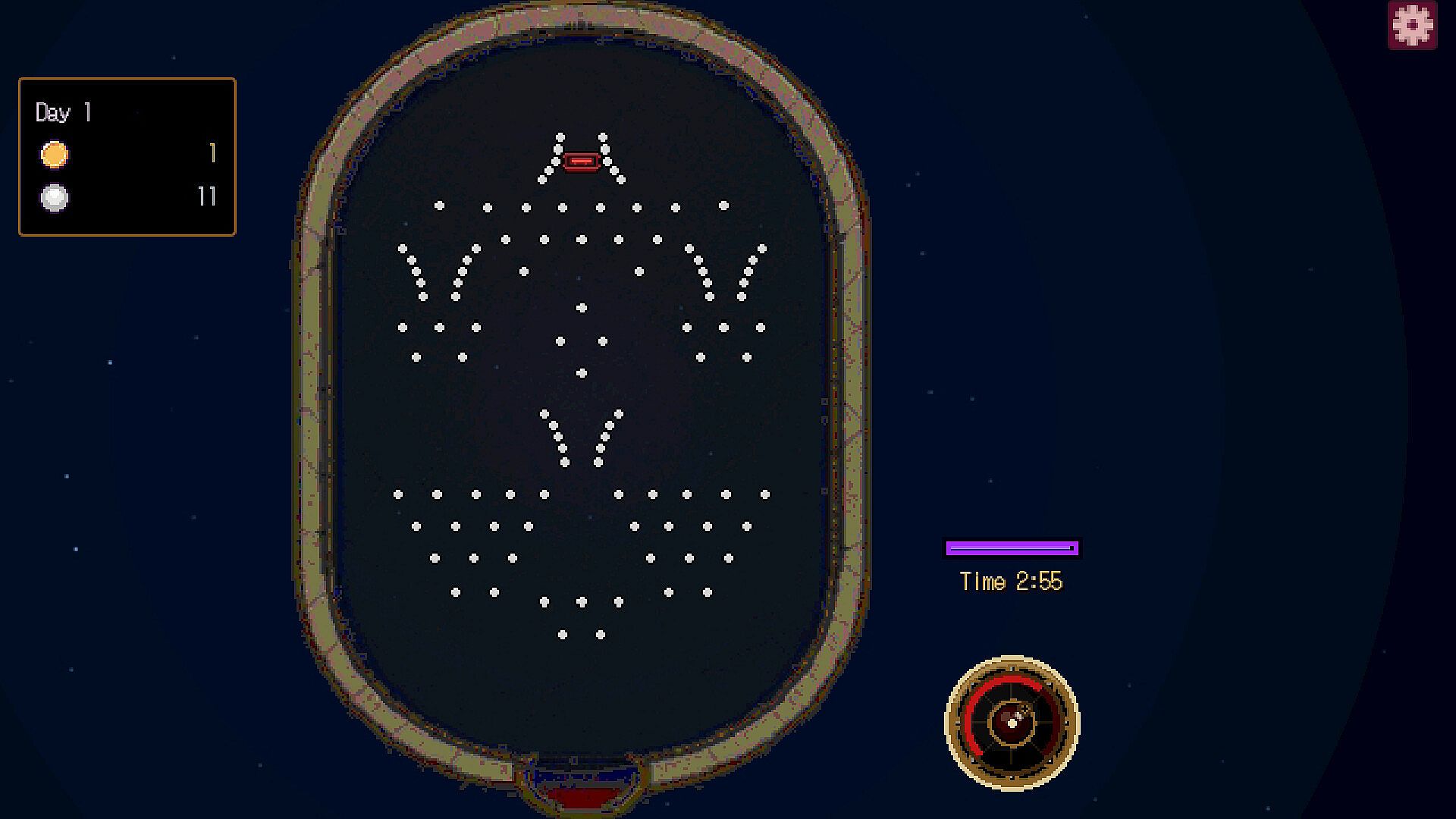
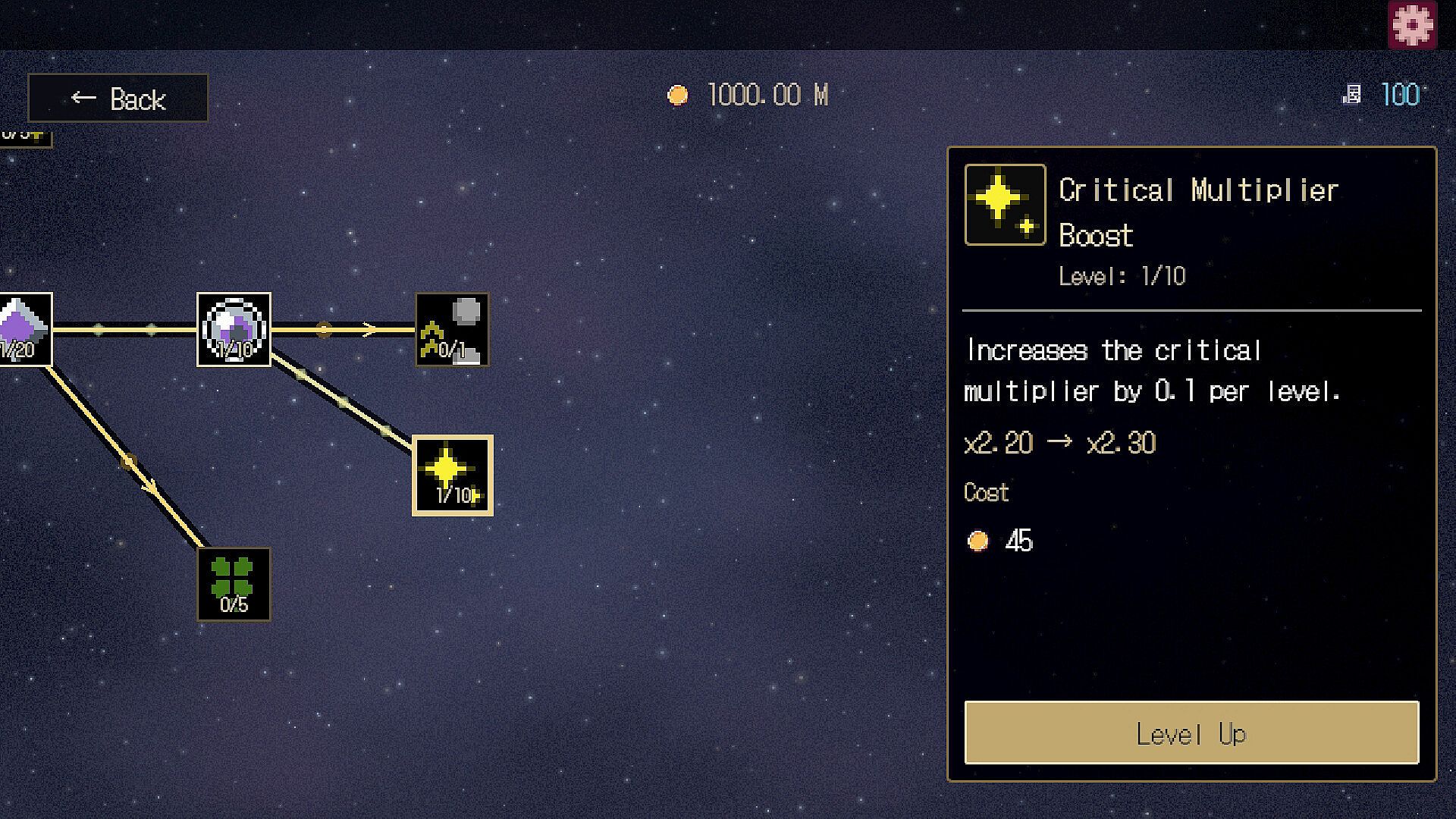
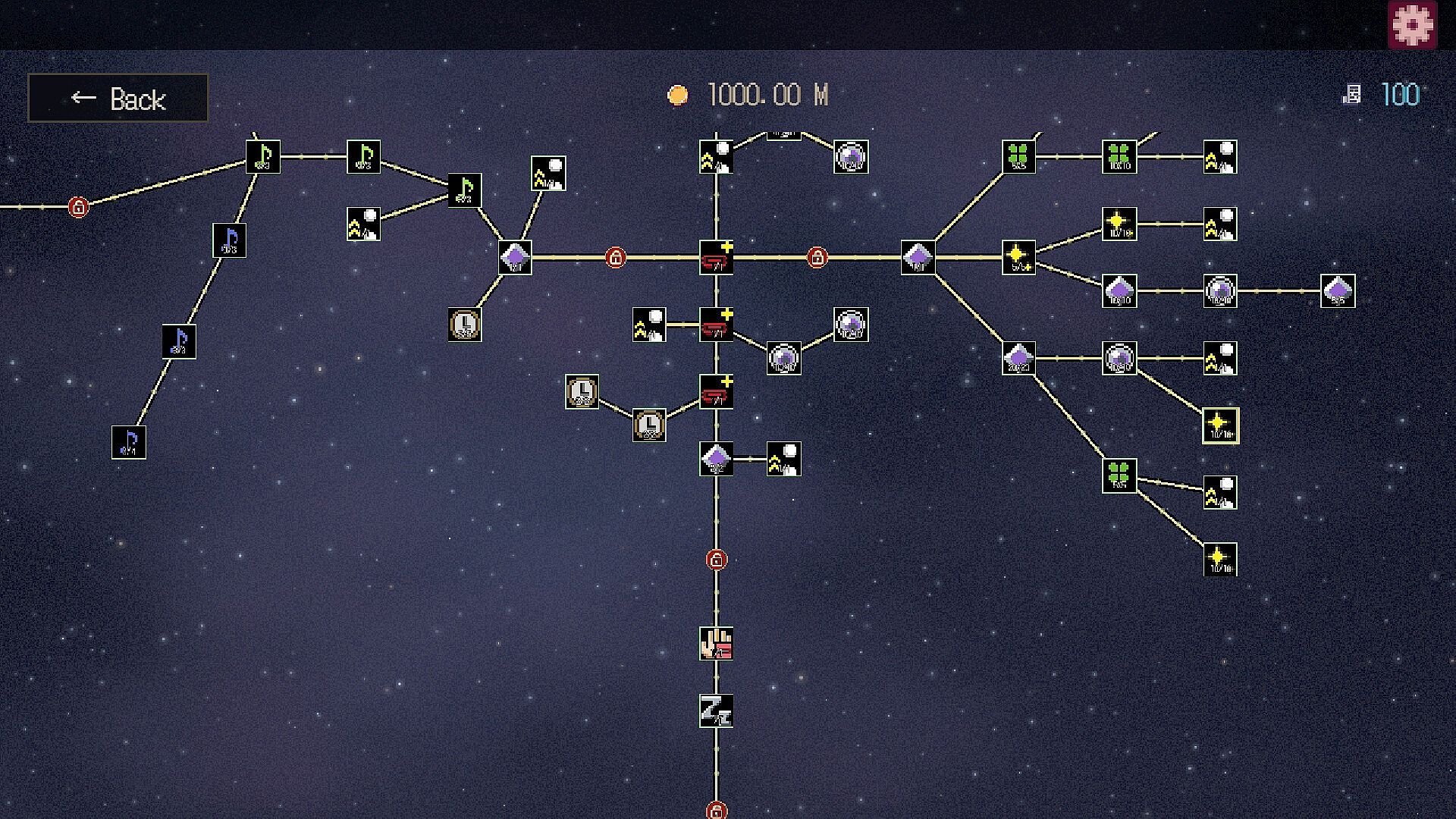
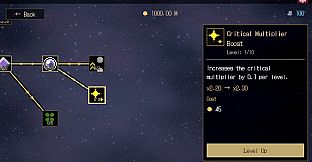
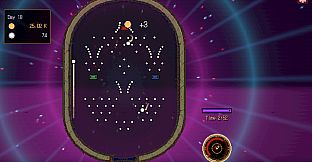
The core loop centers on launching pachinko balls and observing their paths across the board. Early stages feature sparse pins and modest returns, but each cycle of play feeds into a skill tree where medals unlock new nodes. These nodes introduce fresh earning methods, additional balls, and visual expansions that alter how the board operates. Upgrades visibly reshape the layout, intensify sound layers, and amplify light effects as the session advances.
Progress builds across multiple days within a single run. At the close of each day, earned medals support further skill tree investments while also addressing ongoing debt contracts. Clearing one contract immediately introduces the next, maintaining forward momentum without extended downtime. The entire experience condenses into a focused 4 to 6 hour playthrough that accelerates from minimal elements to a crowded, high-intensity board filled with overlapping actions and rising totals.
Physics interactions remain central throughout. Balls ricochet according to pin placement and velocity, directing them toward higher-value zones as upgrades accumulate. The incremental layer ensures that every medal spent compounds future gains, encouraging repeated launches to test new configurations and observe their effects on medal flow.
Game Modes
Incremental Pachinko Heaven operates exclusively as a single-player title with no separate multiplayer or competitive options. The primary structure revolves around the daily progression cycle, where each day serves as a contained session of ball launches, medal collection, and upgrade decisions. This cycle repeats and intensifies until debt obligations are met and the run concludes.
Within this framework, the skill tree functions as the main avenue for variation. Players allocate medals across different nodes to customize earning rates, ball counts, and board behaviors. No distinct named modes exist beyond this unified loop, keeping the focus on incremental expansion and the satisfaction of watching systems scale in one continuous experience.
Progression and Upgrades
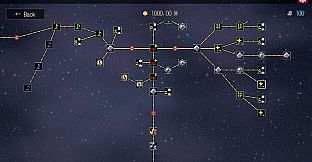
The skill tree provides multiple paths for development. Nodes unlock capabilities that diversify how medals are generated, such as new pin interactions or enhanced reward zones. Each investment alters the board's appearance and audio profile, creating clear feedback on advancement. This system supports experimentation, as different node combinations produce distinct patterns of ball movement and point accumulation.
Debt management adds structure to the progression. Medals cover both upgrades and contract payments, creating a balance between immediate power gains and long-term completion goals. The sequence of contracts ensures steady objectives without requiring external guidance, guiding players through the compact runtime toward a complete payoff.
Is It Worth Playing?
This title suits players who enjoy incremental games centered on visible growth and physics-driven loops. The 4 to 6 hour length delivers a self-contained session that builds steadily to a high-density finale, appealing to those seeking a concise experience rather than extended campaigns. Single-player focus and the absence of additional modes keep the emphasis on personal optimization of the pachinko setup.
With no user reviews available prior to release and a planned 2026 launch, reception remains unconfirmed. The game targets casual and indie audiences interested in resource management through repeated launches and tree-based upgrades. Those drawn to short, escalating incremental titles with clear audio-visual progression may find the mechanics engaging for a single playthrough.