





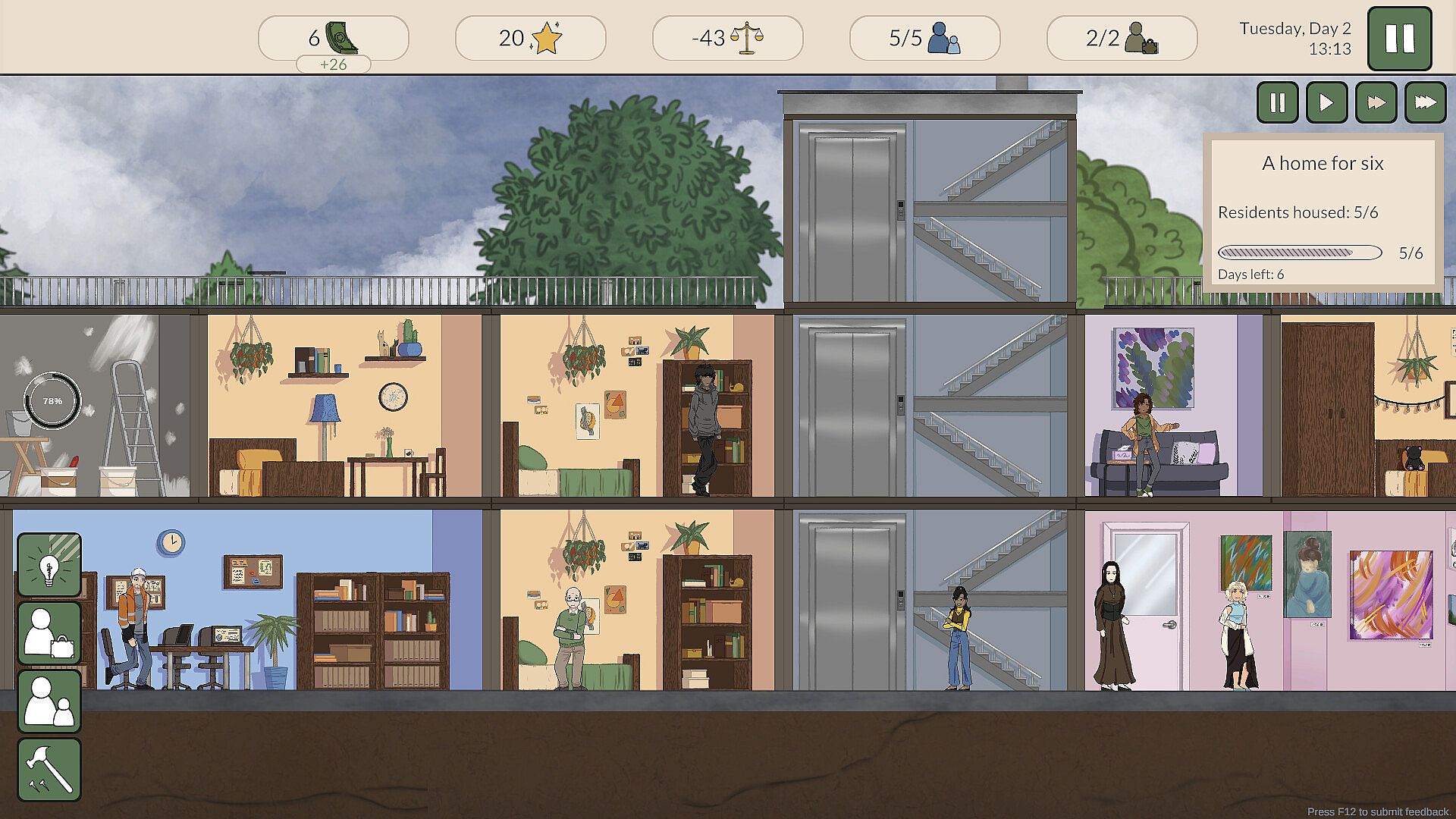
House of Open Hands is a single-player strategy and simulation game that places players in charge of a temporary home for individuals facing personal hardships. Developed as an indie title with casual and management elements, it focuses on resource allocation, interpersonal decisions, and long-term planning in a social care setting. The core experience revolves around expanding facilities, supporting residents through individualized needs, and balancing operational demands without any multiplayer components.
Gameplay
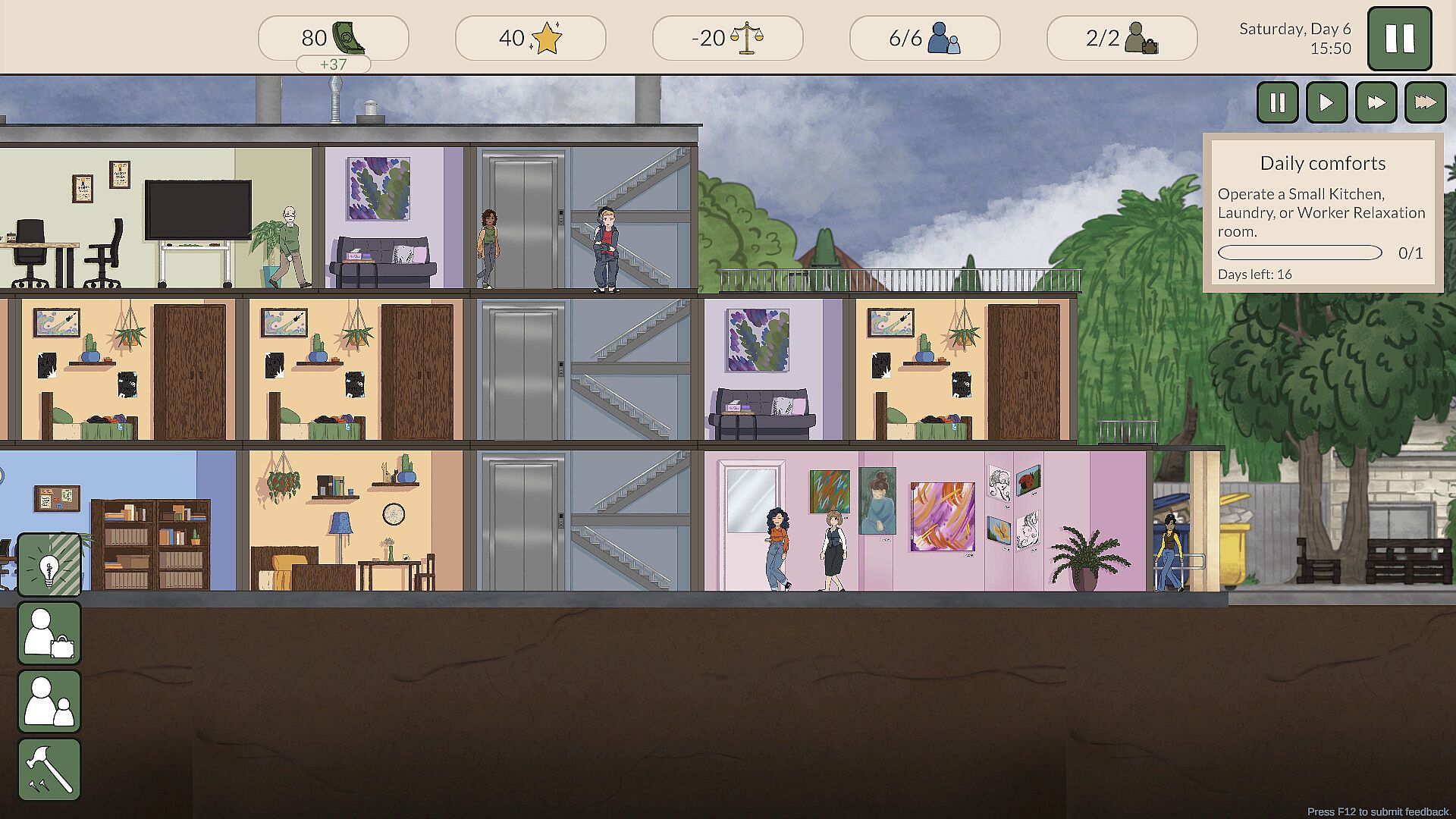
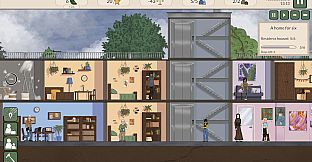
Players begin with a modest residence and gradually add rooms across multiple floors to accommodate more residents and support services. Construction choices include residential spaces, offices, counseling areas, kitchens, and communal zones, each affecting capacity and operational requirements. Limited funds, staff time, and physical space force ongoing prioritization as the home scales up.
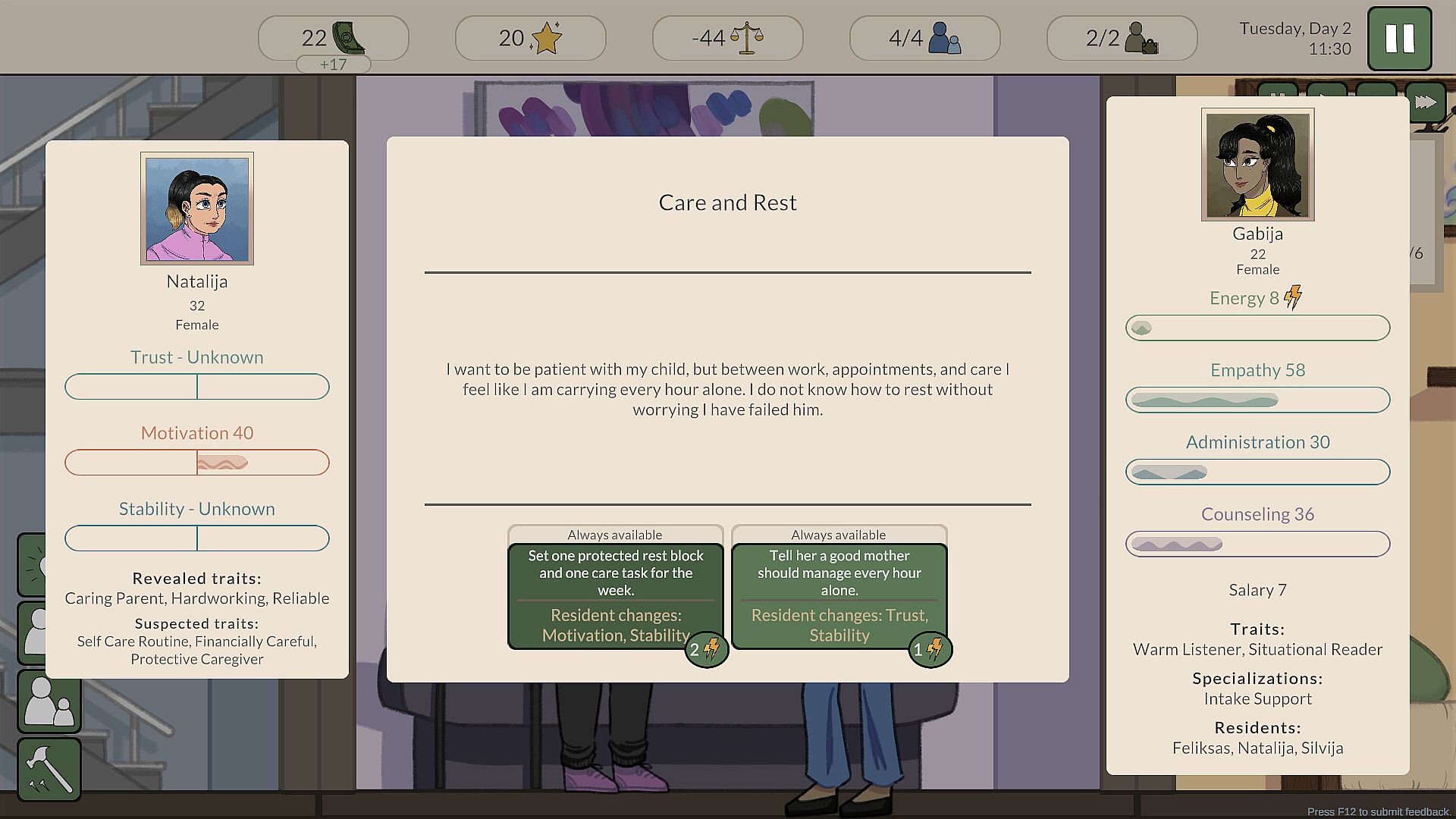
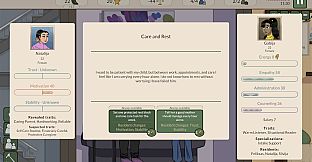
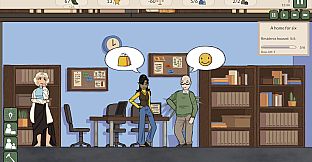
Residents arrive with distinct personalities, strengths, and difficulties that unfold gradually through interactions. Support activities range from interview preparation and routine building to addressing immediate practical needs. Insights gained from these relationships unlock tailored response options during events or crises.
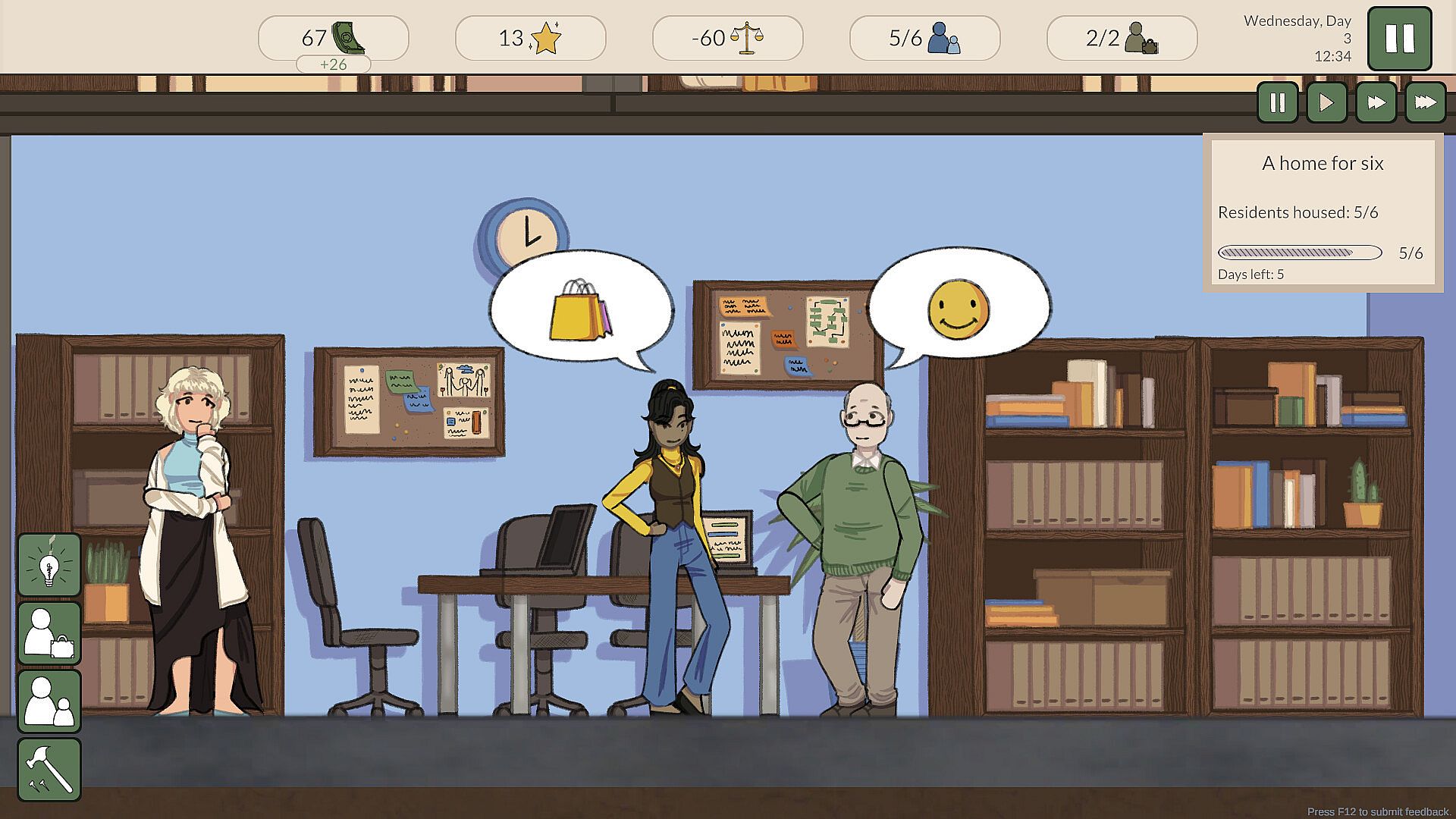
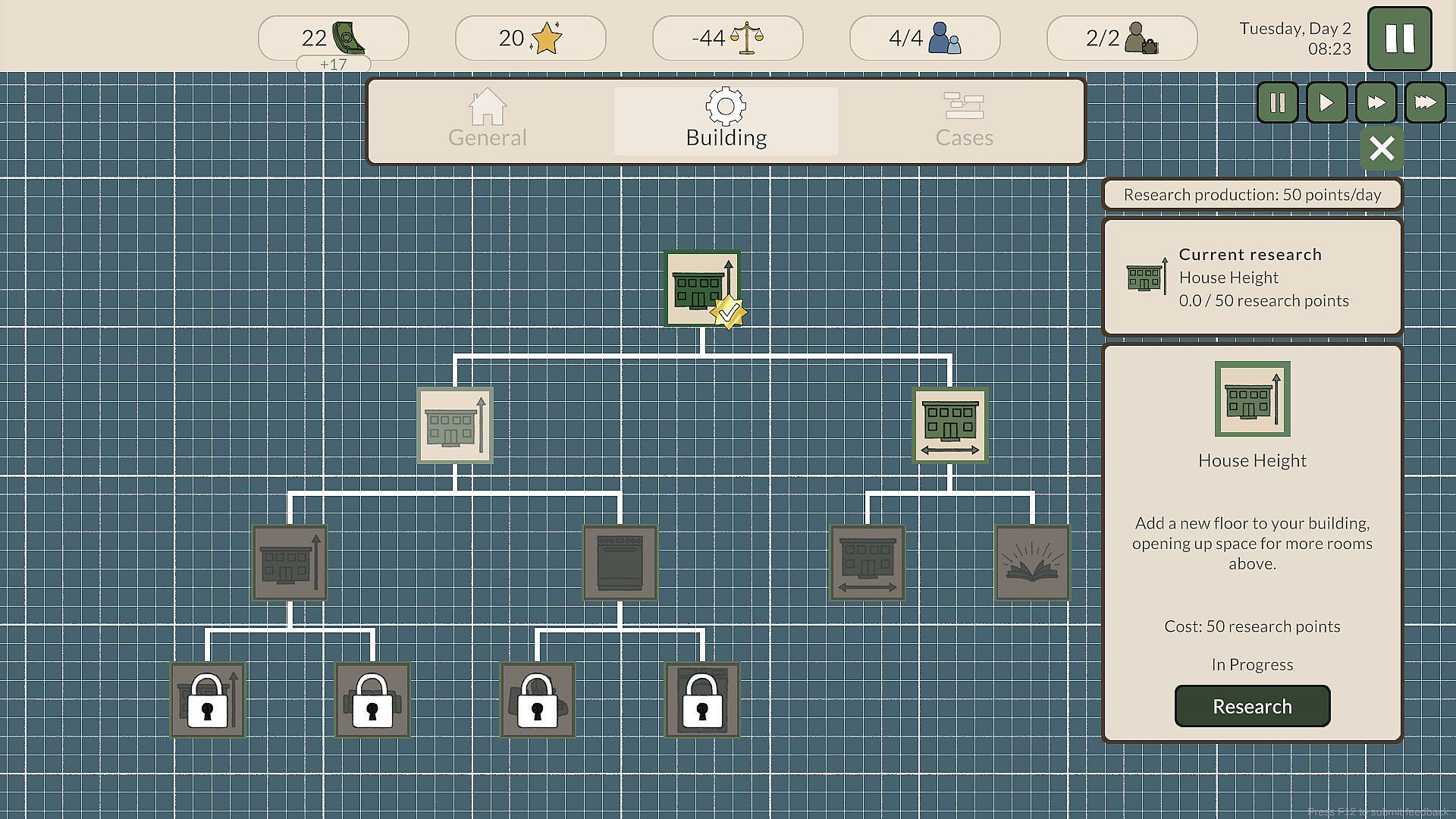
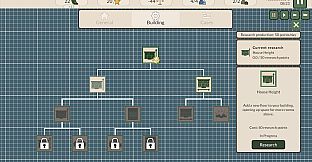
Staff recruitment involves selecting individuals with varied skills and traits, followed by assignment to specific residents and ongoing training to improve capabilities. Energy levels and workload distribution must be monitored to maintain effective care. Research into new facilities and support methods expands available strategies over time.
Daily cycles show residents and team members moving through scheduled activities from morning to evening. Players can pause for adjustments, alter simulation speed, or review finances and reputation metrics. Unexpected events and personal issues require choices whose effects may appear immediately or after several days, influencing individual progress and overall home stability.
Game Modes
The game structures its experience around a campaign that guides players toward specific milestones while introducing core systems and narrative elements. Completion of campaign objectives unlocks continued play in sandbox mode, where the home can be managed without the same sequence of targets.
Sandbox play emphasizes freeform expansion, resident intake, and experimentation with different team compositions and facility layouts. Both modes share the same underlying mechanics for building, staffing, and decision-making, allowing seamless transition once the structured campaign concludes.
Key Mechanics and Systems
Resource management sits at the center of every session. Money covers construction and wages, while time and space constraints shape daily operations. Reputation grows or declines based on outcomes for residents and responses to external events, indirectly affecting future opportunities.
Consequence tracking adds depth to choices. A decision made on one day can produce delayed results that alter resident trajectories or staff dynamics. Boundaries, encouragement, and structured support each carry different implications that players observe across multiple in-game days.
Progress metrics focus on practical improvements such as steadier daily routines, preparation for independent living, or renewed readiness to address challenges. These outcomes emerge from consistent application of learned resident preferences rather than any single optimal path.
Is It Worth Playing?
House of Open Hands targets players who enjoy deliberate management simulations with strong narrative and character focus. The emphasis on individualized resident stories and delayed consequences creates a thoughtful pace suited to those interested in social care themes and incremental progress.
Because the title remains unreleased with a planned 2027 launch and currently lists no user reviews, direct player feedback is unavailable. Those drawn to single-player strategy experiences that blend building, staffing, and choice-driven outcomes may find the described systems appealing once the game becomes available. Wishlisting provides the option to receive updates on its release.