




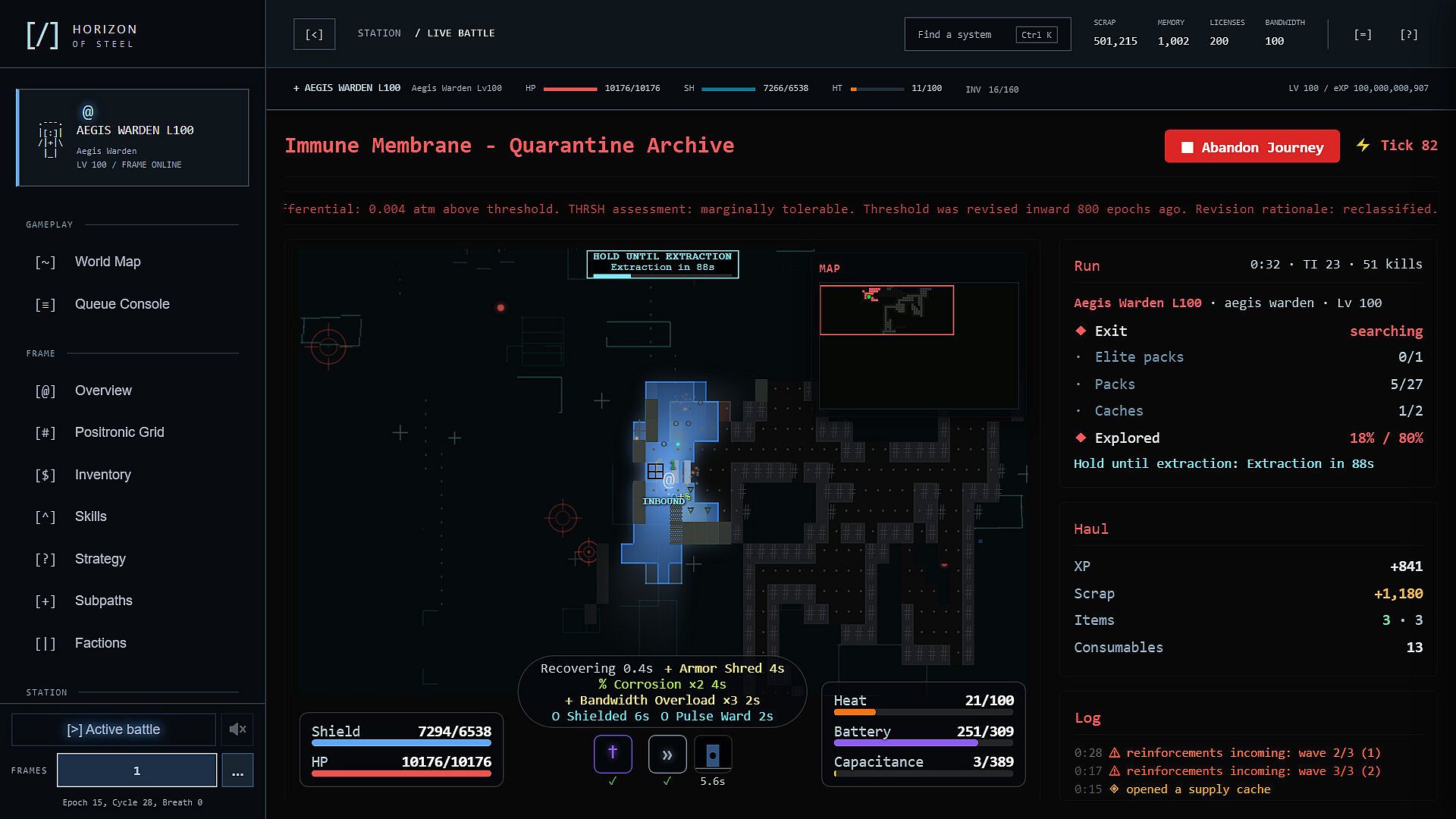
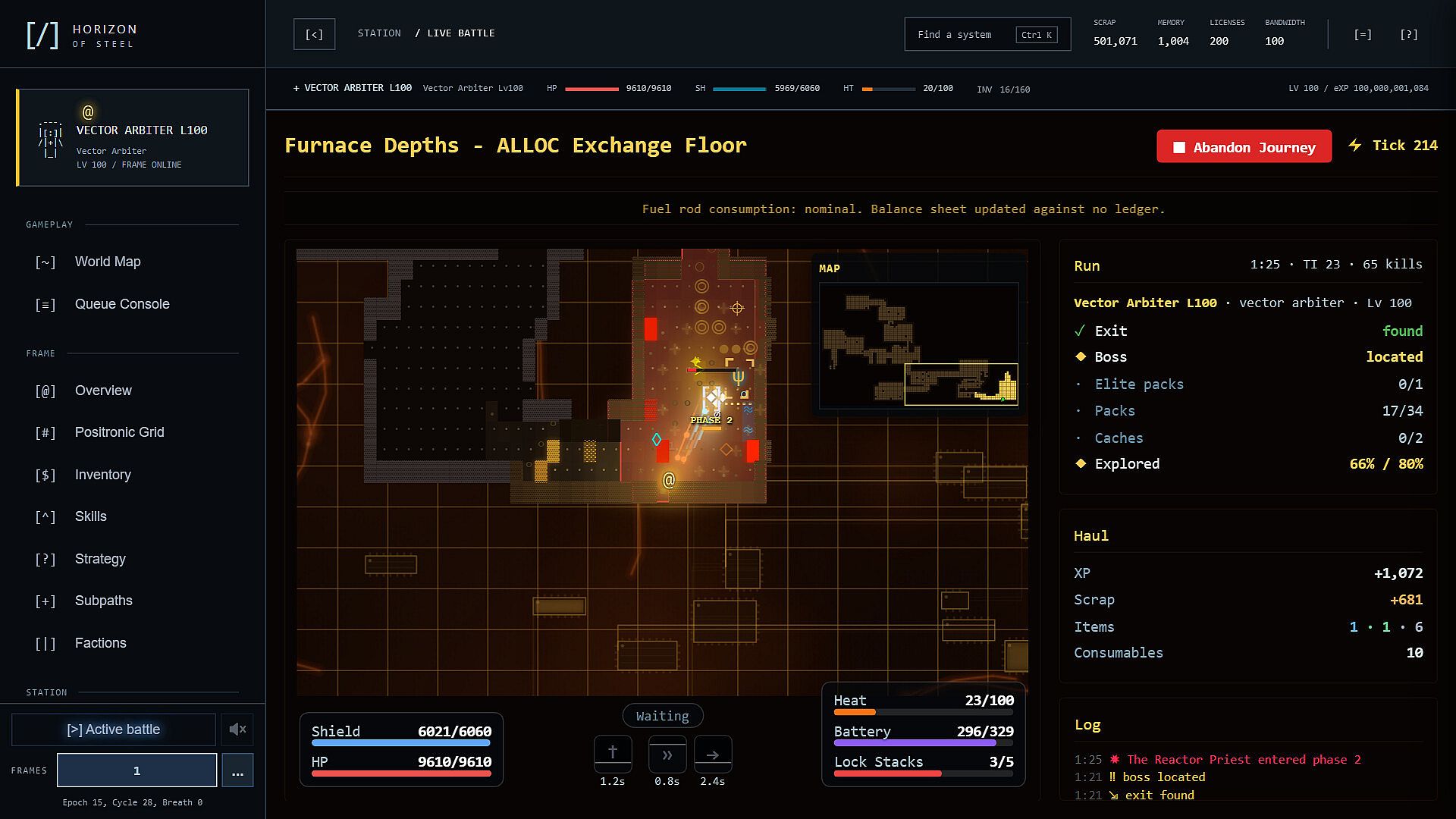
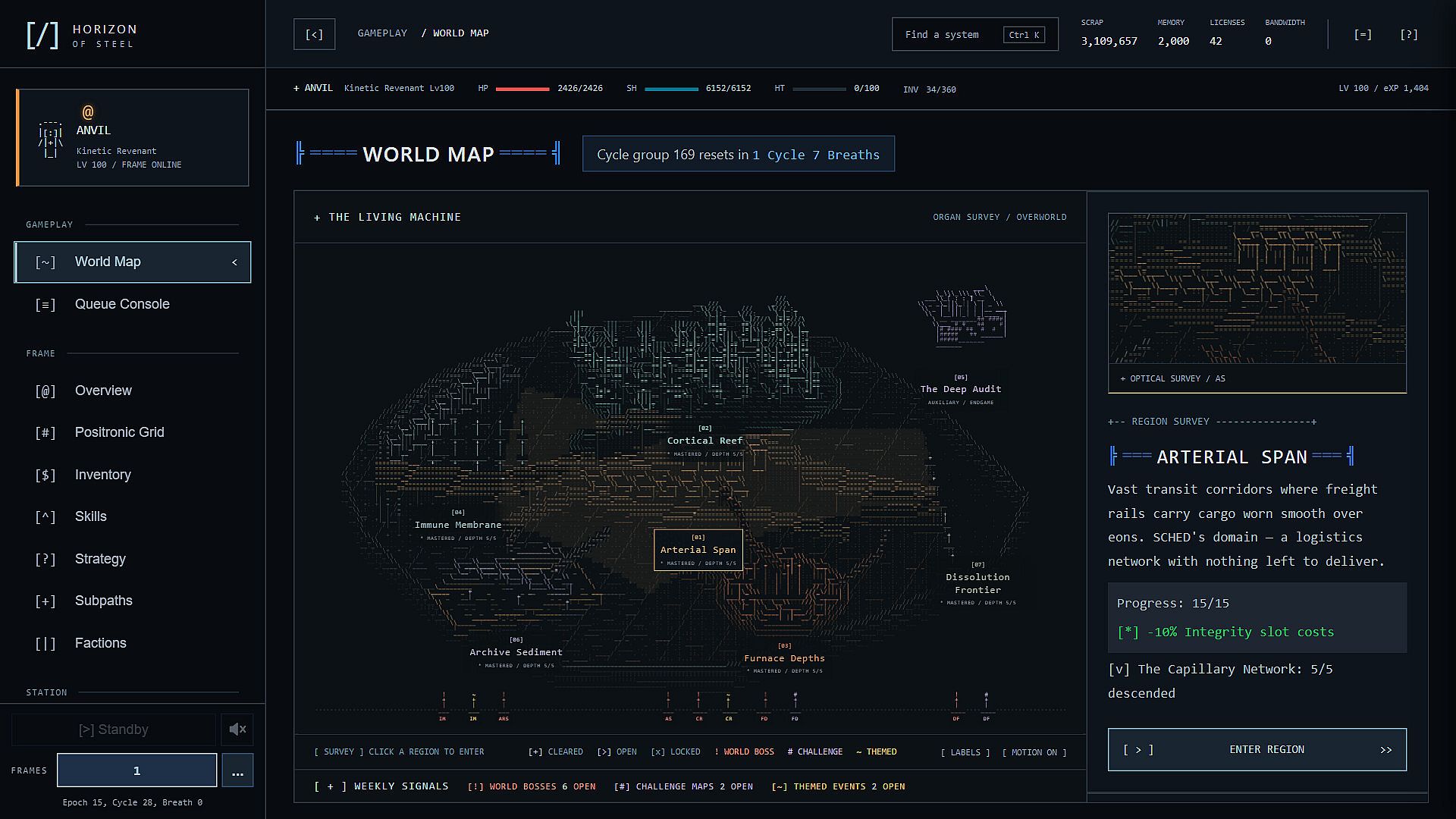
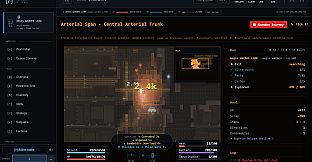
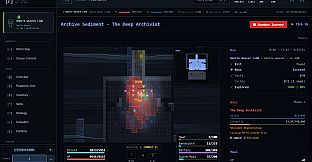
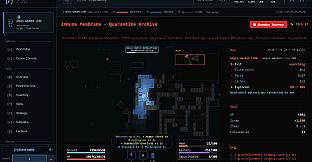
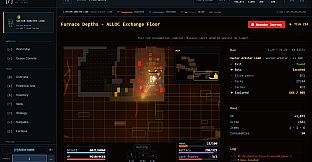
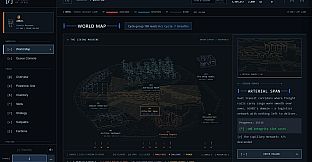
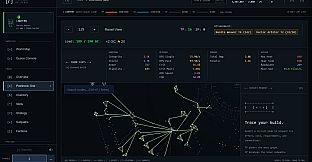
Horizon of Steel is a single-player idle action role-playing game with strategy elements developed for PC. Players construct automated combat units known as Frames and send them on independent missions called Journeys across a machine planet that continues running threat assessments even while dormant.
Gameplay
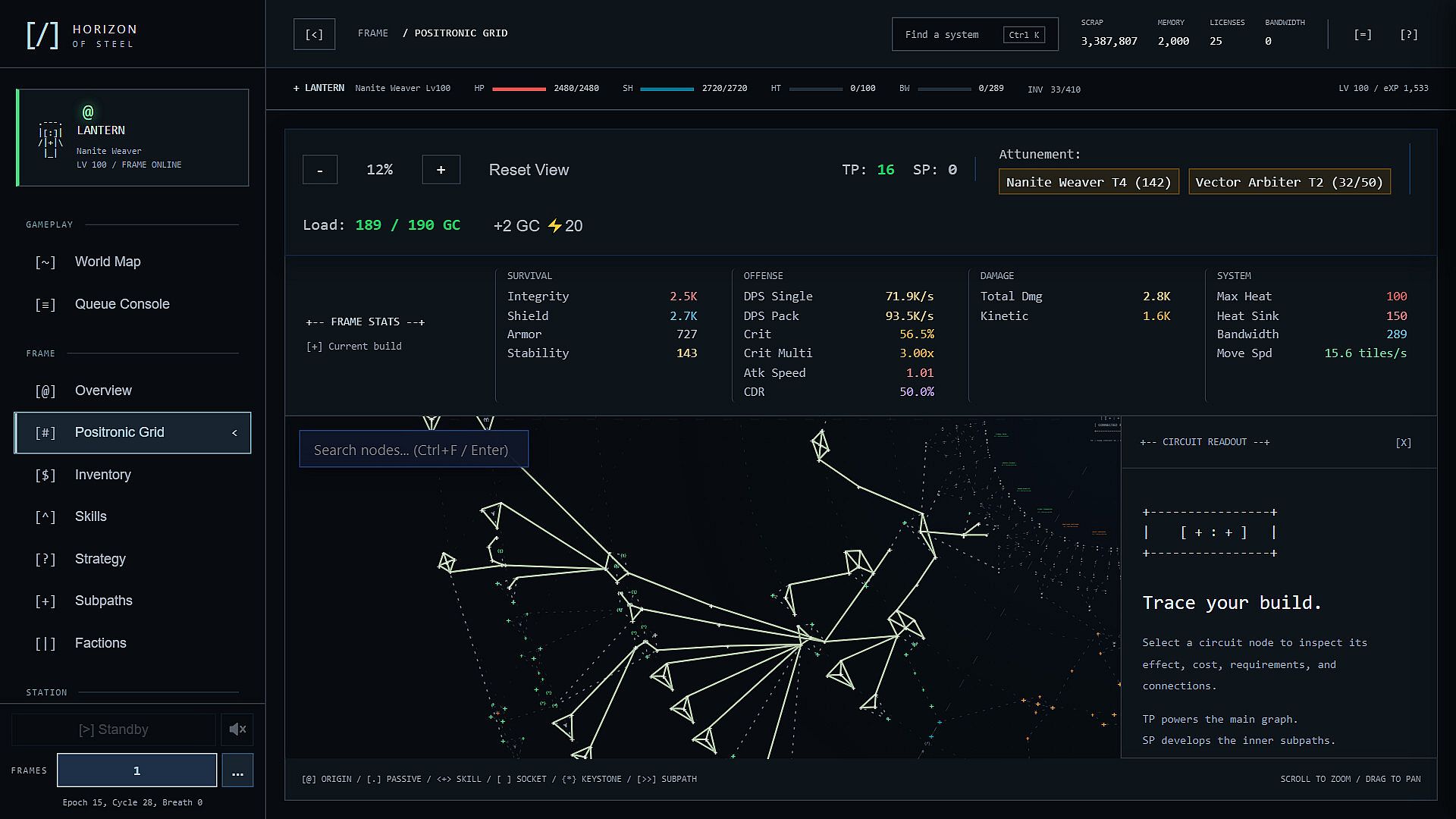
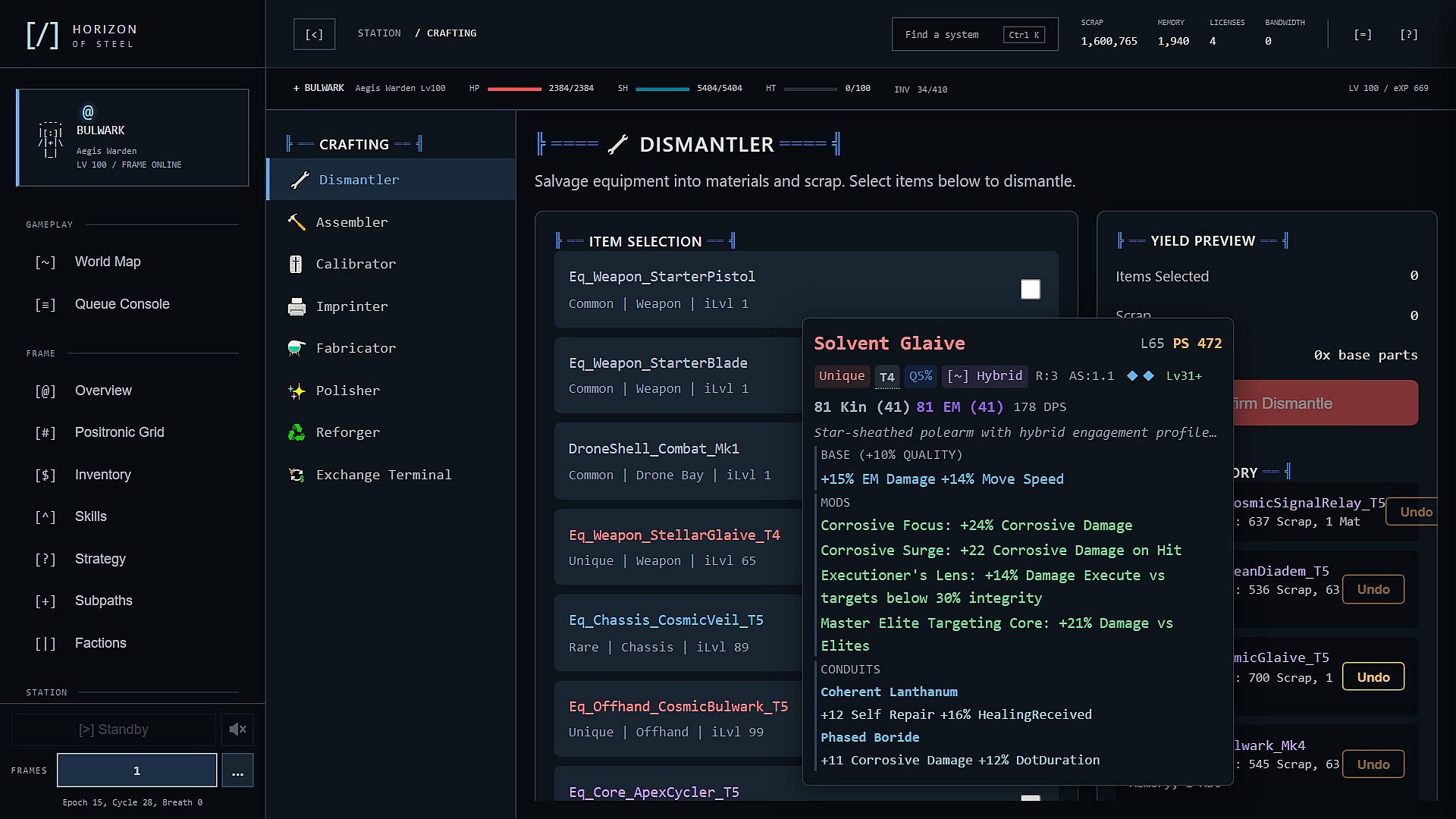
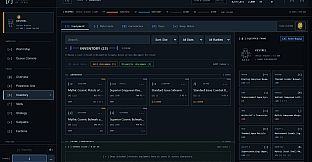
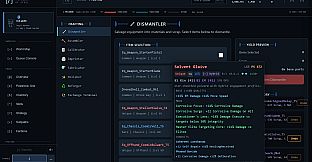
The core loop centers on building and refining a Frame rather than direct combat control. A single 880-node grid supports four base classes: Aegis Warden, Nanite Weaver, Vector Arbiter, and Kinetic Revenant. Each class offers four subpaths for further specialization. Players socket 267 skills and 88 directives into the grid alongside drones and constructs. Gear selection draws from 246 bases and 438 affixes, plus 62 unique items. Seven crafting operations allow further refinement of equipment.
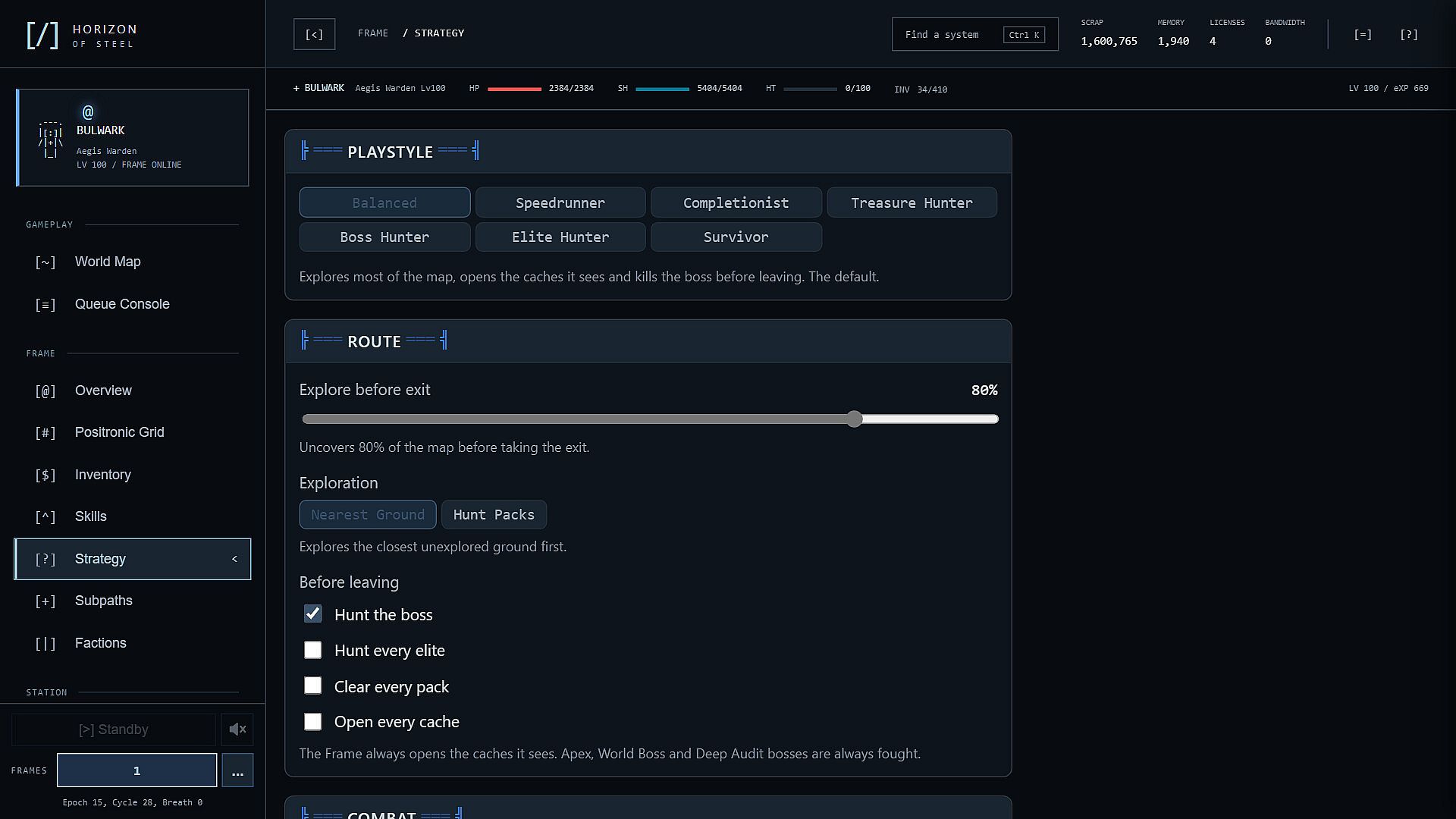
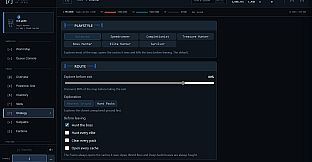
Each loadout includes a dedicated strategy profile that governs targeting priorities, mission objectives, navigation paths, and reaction thresholds for health and shields. These settings determine how the Frame behaves during automated runs without player input during the actual engagements.
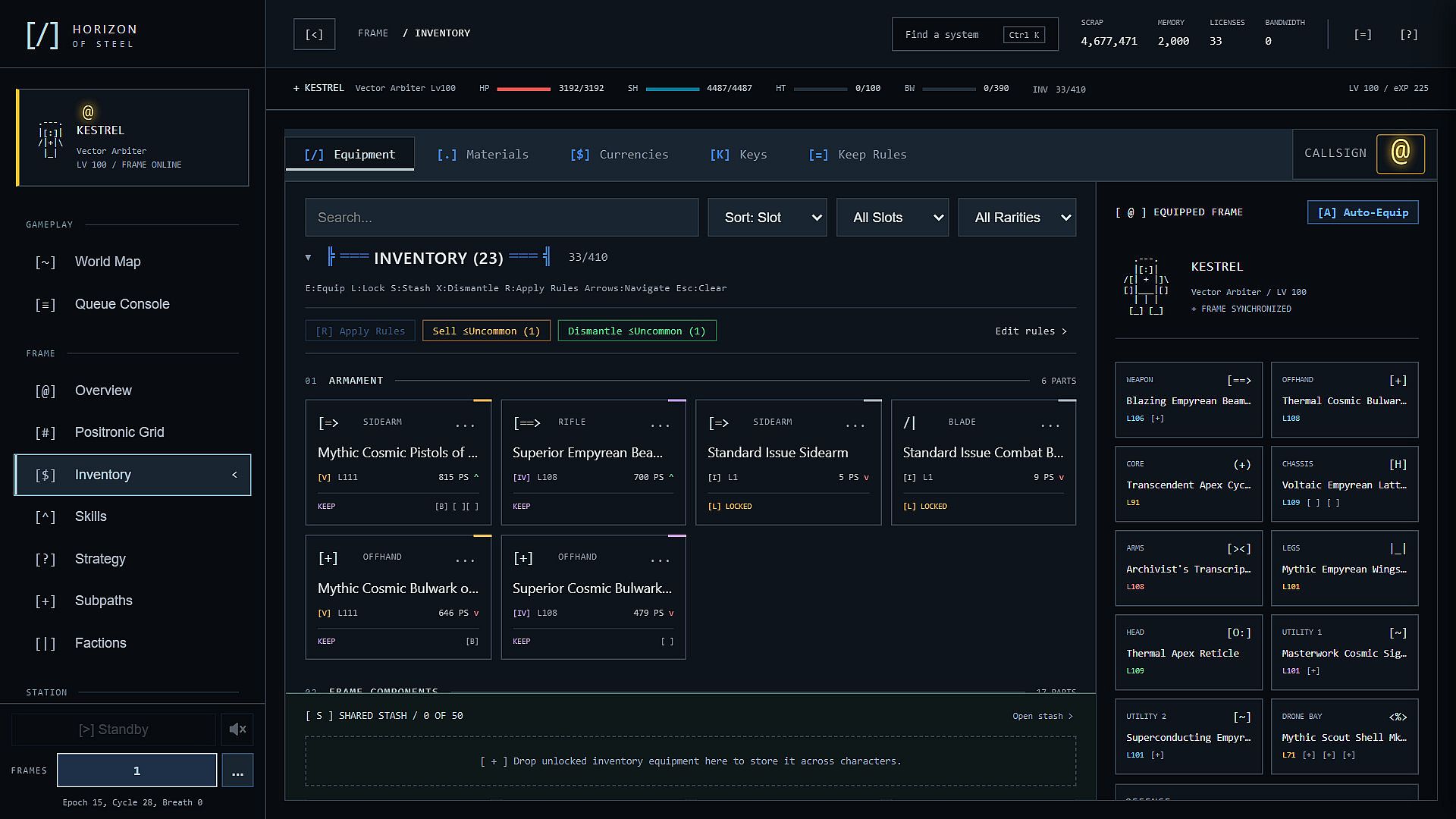
Progression relies on repeated Journeys that generate loot from every defeated enemy. A rule-based filter automatically manages drops by keeping, selling, or dismantling items according to player-defined rules. Vendors and a crafting bench provide additional avenues for equipment improvement.
Game Modes
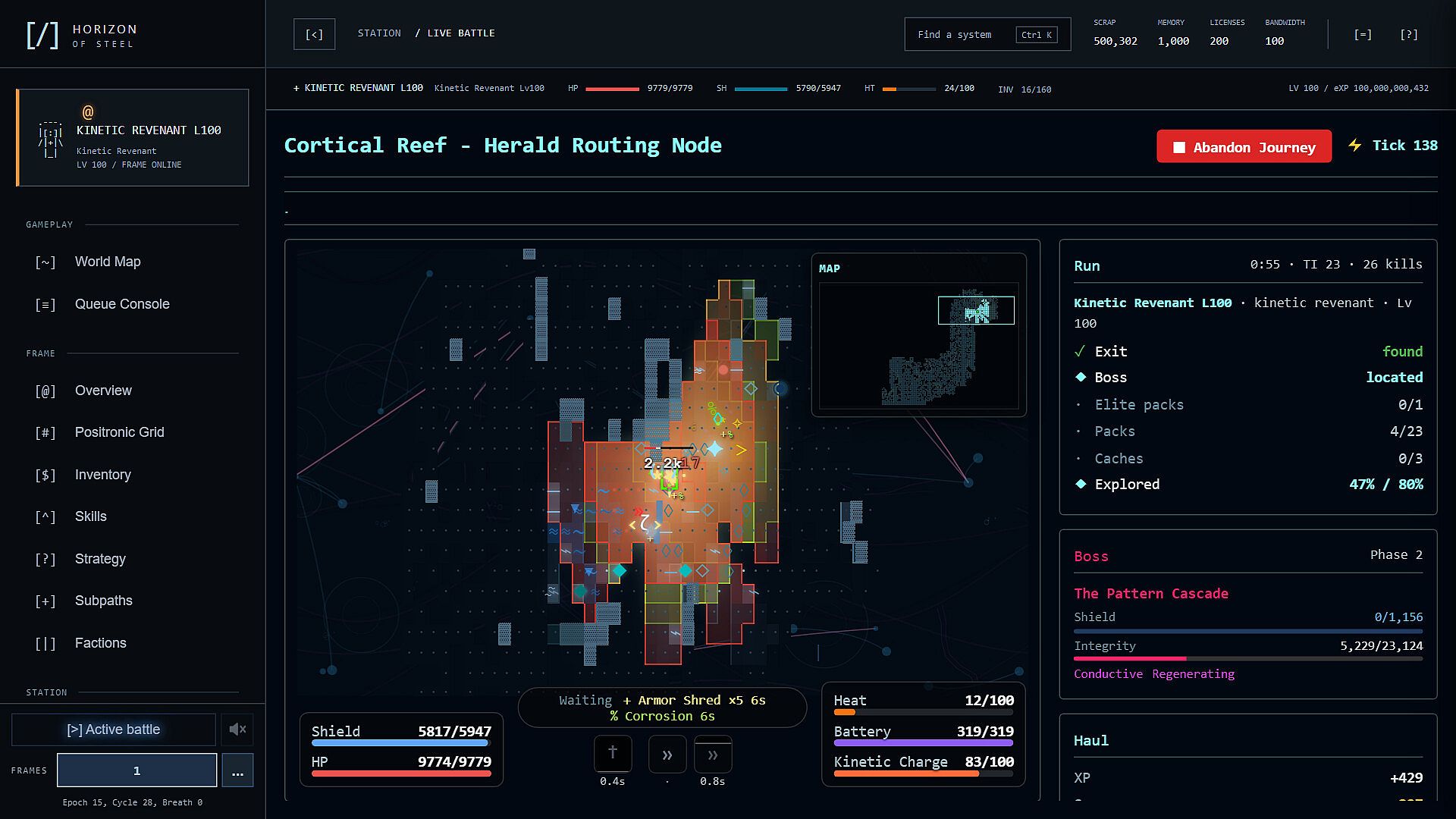
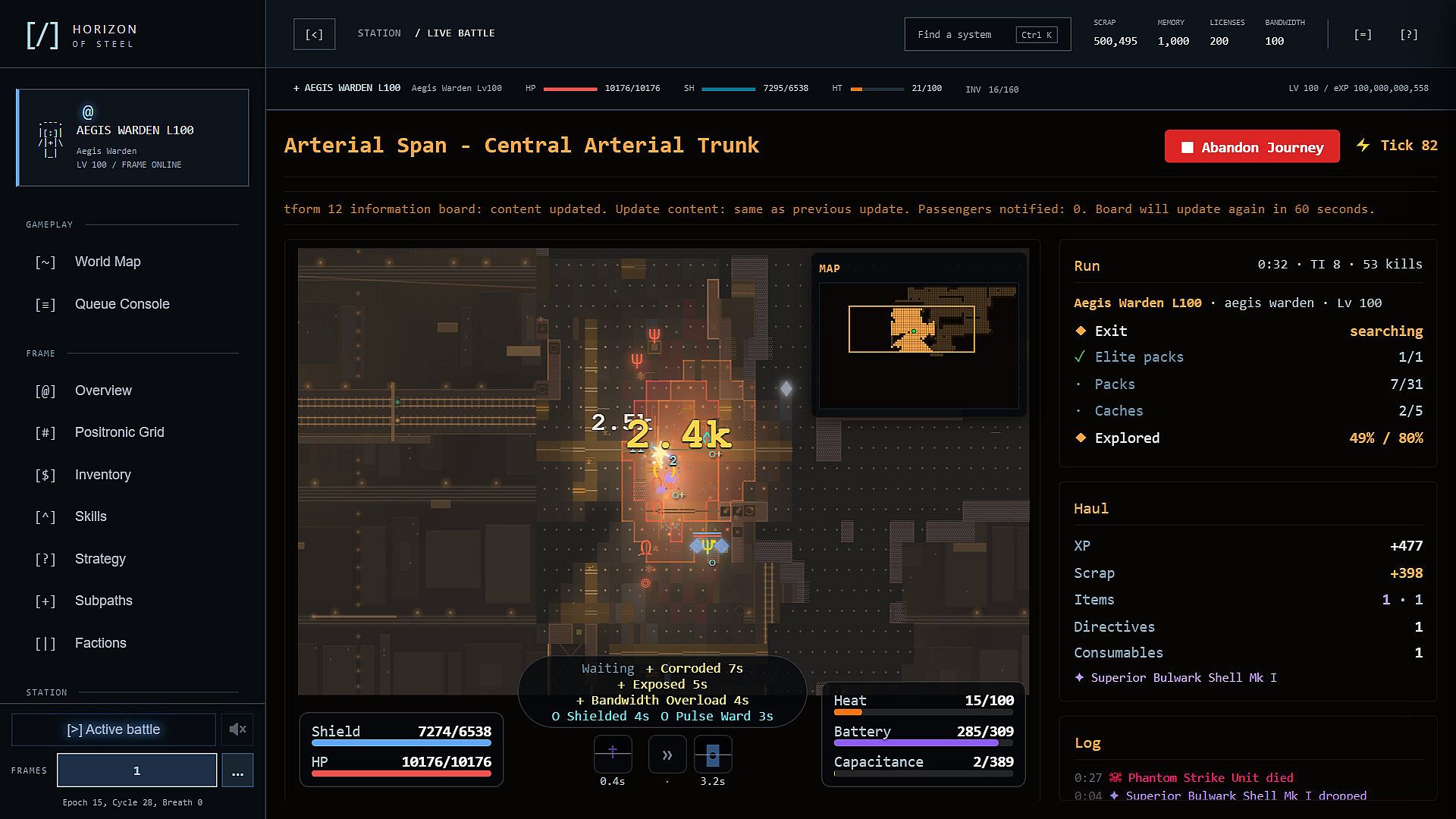
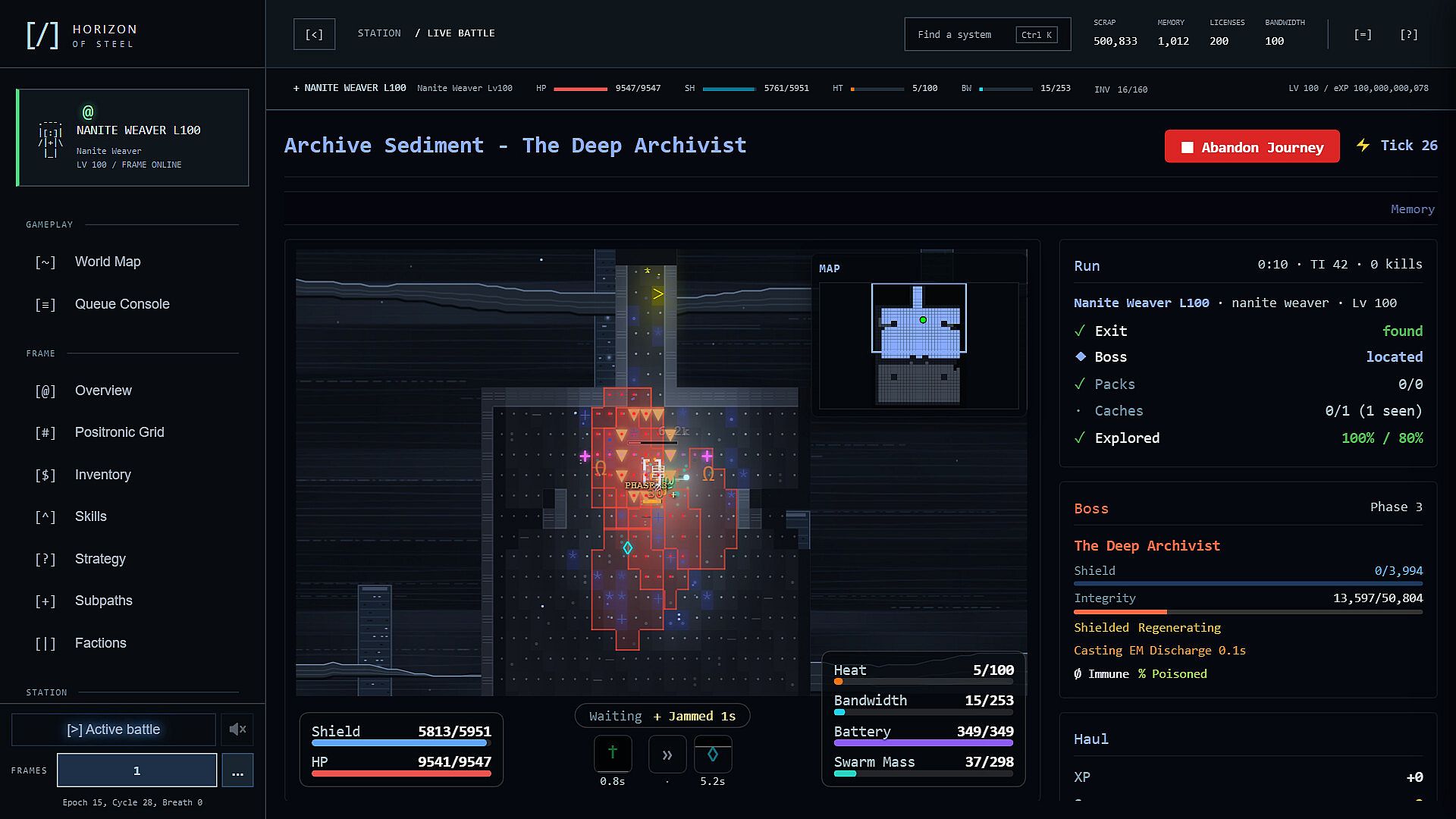
The primary activity consists of 154 Journeys spread across six biomes. These runs incorporate missions, 19 minibosses, and 19 bosses that feature telegraphed phases. Every Journey functions as a deterministic simulation, allowing players to observe the action in an ASCII battle view, replay any completed run exactly as it occurred, or exit the game entirely while offline progress continues.
Offline catch-up begins at four hours of simulated time and scales up to 24 hours as the player advances. Multiple characters maintain separate queues that advance simultaneously. After reaching level 100, which requires roughly 40 hours of accumulated runs, the Deep Audit endgame opens alongside weekly events, faction interactions, and account-wide Chronicle feats that track long-term accomplishments across characters.
Progression and Systems
Advancement emphasizes long-term planning over moment-to-moment decisions. The shared grid and extensive affix system encourage experimentation with different class combinations and directive setups. Loot management through the filter reduces manual sorting, while crafting operations provide targeted upgrades. The deterministic nature of runs means outcomes remain consistent when replayed with the same configuration, supporting precise optimization of strategy profiles.
Endgame content in Deep Audit expands on these foundations with recurring events and faction activities that introduce new objectives and rewards. Chronicle feats serve as account-wide milestones that persist beyond individual characters.
Is It Worth Playing?
Horizon of Steel appeals to players who enjoy idle progression systems combined with deep buildcrafting and automation mechanics. The emphasis on grid-based customization, deterministic simulations, and offline advancement suits those who prefer setting up complex loadouts and reviewing results rather than active combat. With a planned release in March 2027 and no user reviews available yet, the game remains in pre-release development. Interested players can follow its Steam page for updates on the final feature set and any adjustments prior to launch. The single-player focus and detailed mechanical systems make it a potential fit for fans of strategy-infused idle RPGs who value long-term optimization over direct control.