







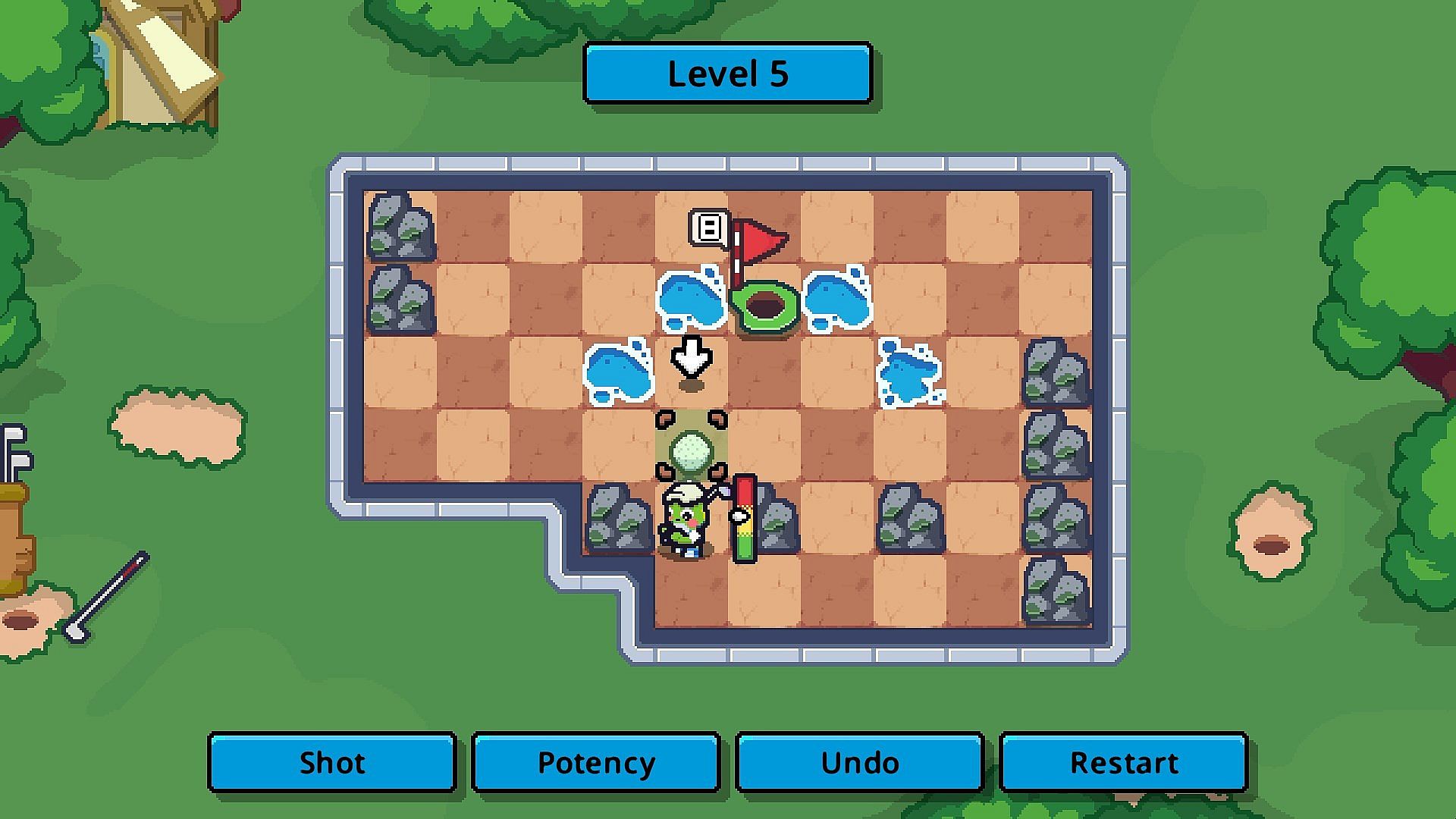
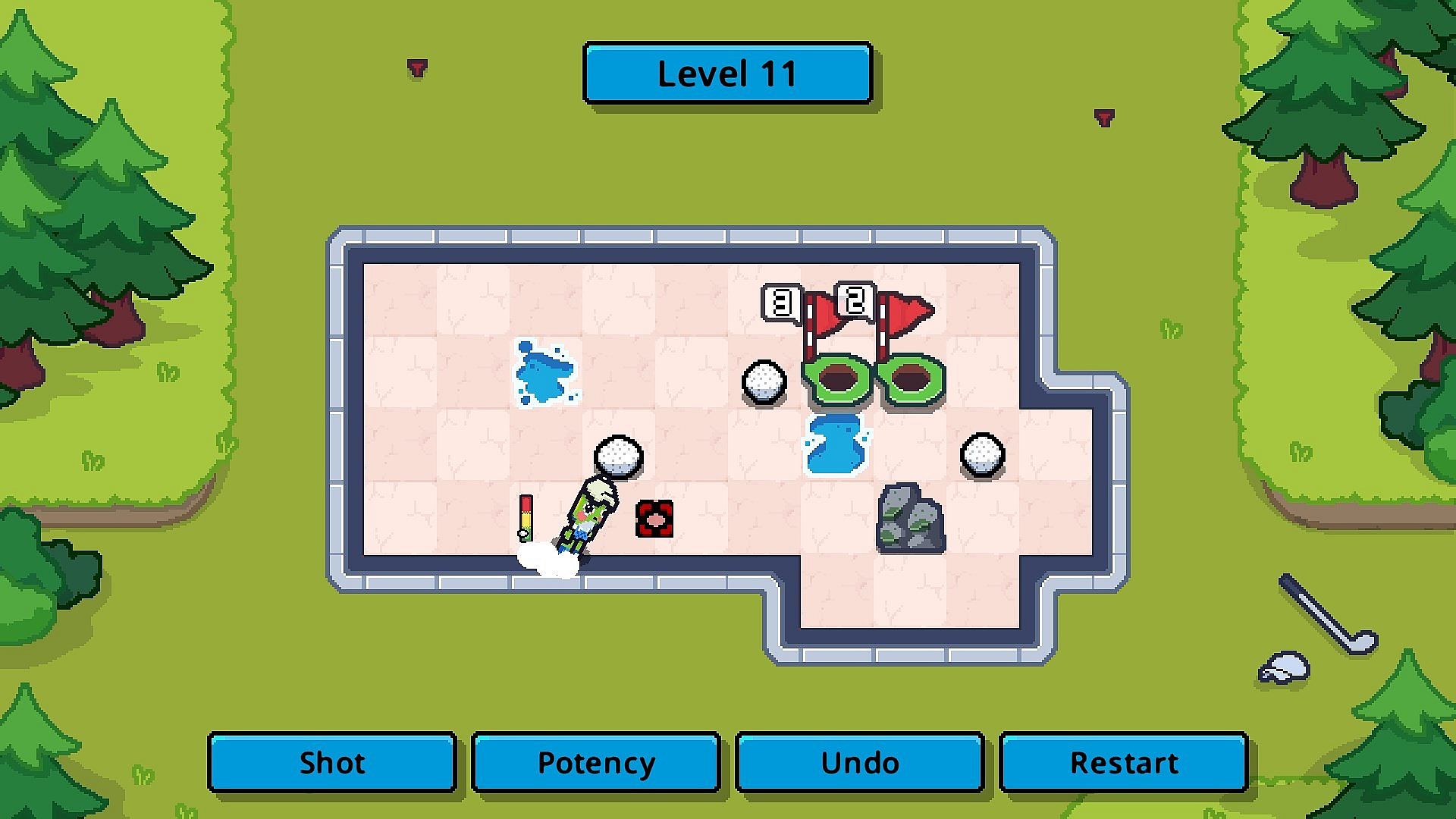
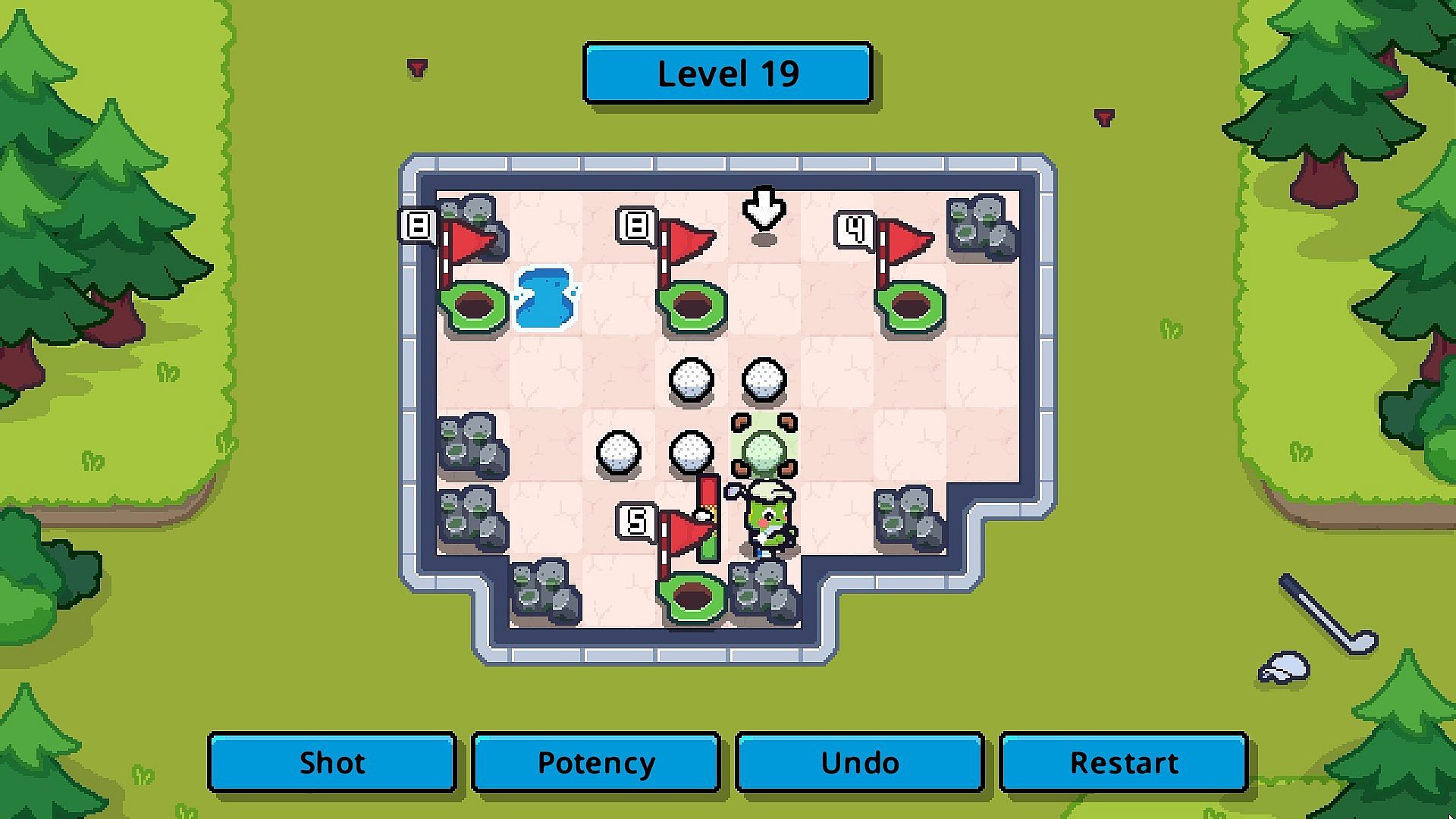
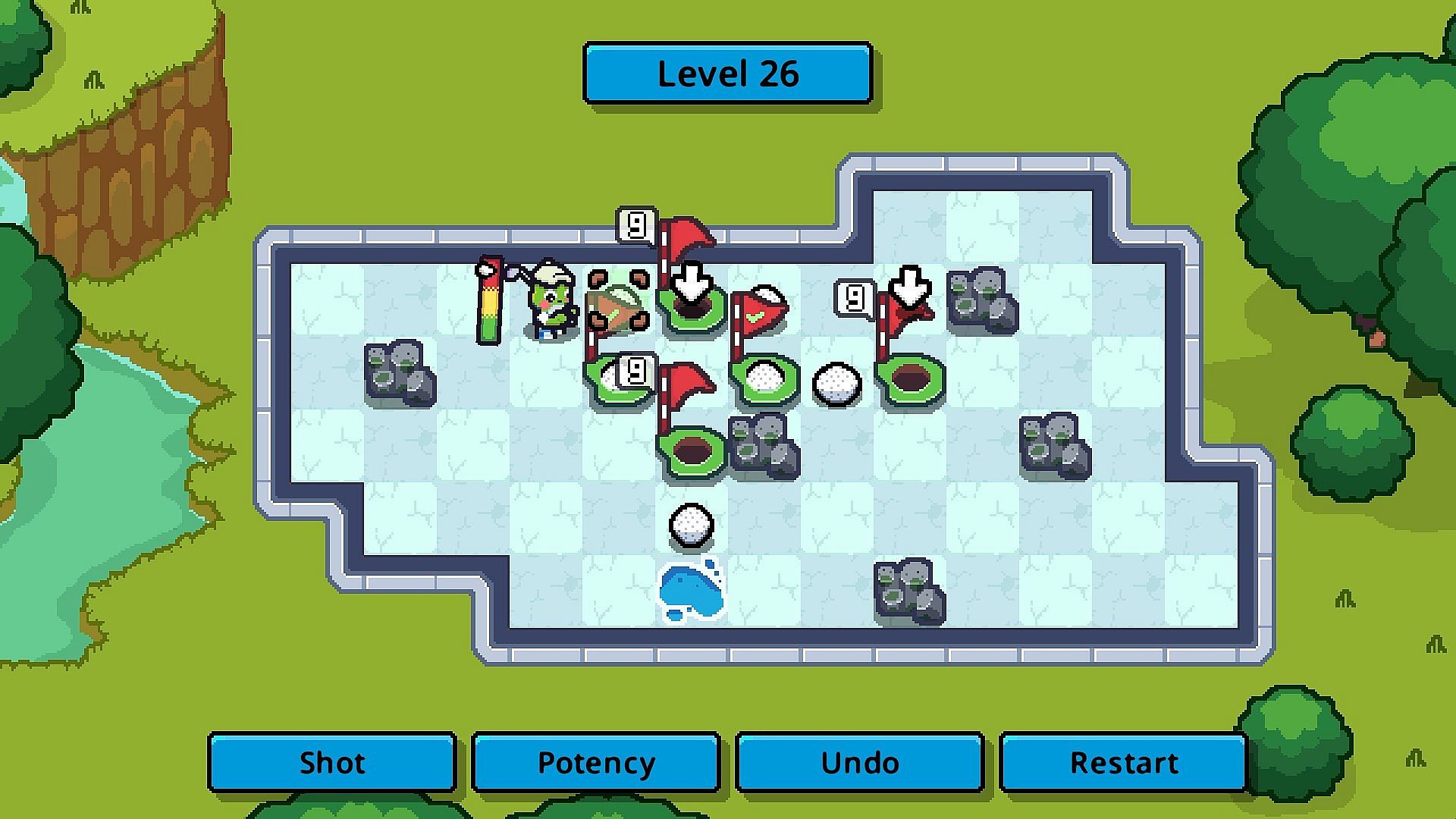
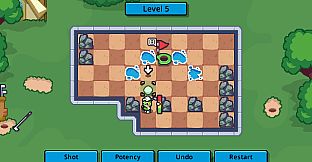
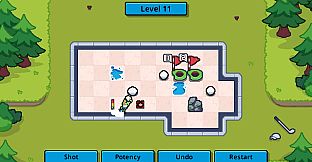
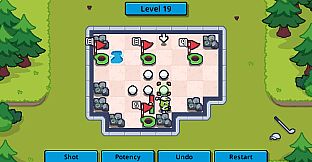
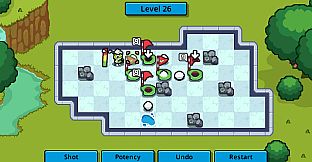
Hole in Many is a strategy and casual puzzle game that blends precise aiming mechanics with logical planning on Xbox One and Xbox Series consoles. Players guide multiple golf balls across grid-based boards toward designated holes while managing limited shots and ball interactions. The game emphasizes thoughtful sequencing over quick reflexes, making each decision about shot power and direction critical to success.
Gameplay
Core play revolves around selecting one of three distinct shot strengths for each move. Light hits allow short, accurate adjustments that keep balls under tight control. Medium hits cover moderate distances with balanced force. Strong hits propel balls farther but require careful consideration of paths and potential overshoots. Momentum carries over between shots, so one ball can nudge another into position or trigger chain movements across the board.
Every shot reduces the available attempts for all holes on the current stage. This shared limit forces players to plan sequences several steps ahead rather than reacting move by move. Collisions between balls add another layer, as contact can redirect trajectories or create efficient multi-ball progressions. The undo function lets players revert individual actions to test alternatives without restarting an entire stage.
Thirty stages introduce new obstacles and ball counts gradually. Early levels focus on basic routing and strength selection, while later ones demand precise timing of interactions and efficient use of limited shots. The design rewards observation of the full layout before committing to a sequence.
Game Modes
Hole in Many operates entirely as a single-player experience built around its thirty progressive stages. There are no separate competitive or cooperative modes. Instead, the structure relies on escalating puzzle complexity within the same core ruleset. Players advance by completing each stage, with later levels adding more balls, tighter shot counters, and layouts that reward experimentation with momentum and collisions.
Progression follows a linear path through the stages, though the undo tool encourages revisiting earlier attempts on any given board. The absence of additional modes keeps the focus narrow on refining strategy and discovering optimal routes for each unique arrangement.
Key Mechanics and Features
Shot strength selection forms the central decision point. Light, medium, and strong options each behave differently in terms of distance and control, and players must match the right strength to the required movement. Ball-to-ball collisions become increasingly important as stages grow more crowded, turning individual shots into opportunities for combined movement.
Shot counters apply globally to every hole on a stage, so conserving attempts across the entire board matters as much as directing individual balls. The undo button supports iterative problem solving, allowing players to backtrack specific moves while preserving the rest of their progress on that attempt.
Is It Worth Playing?
Hole in Many suits players who enjoy deliberate logic puzzles that reward forward planning and pattern recognition. Its short length and straightforward rules make it accessible for short sessions, while the increasing complexity across thirty stages provides steady challenge without overwhelming newcomers. The golf-themed presentation adds a light thematic layer to the abstract grid movement.
At its budget price point, the game offers a focused single-player puzzle package with no ongoing updates or additional content required. Those who appreciate games built around precise movement and resource management will find consistent satisfaction in solving each stage. Players seeking multiplayer options or longer campaigns may want to look elsewhere, but the core loop delivers exactly what the premise promises for its target audience.
