







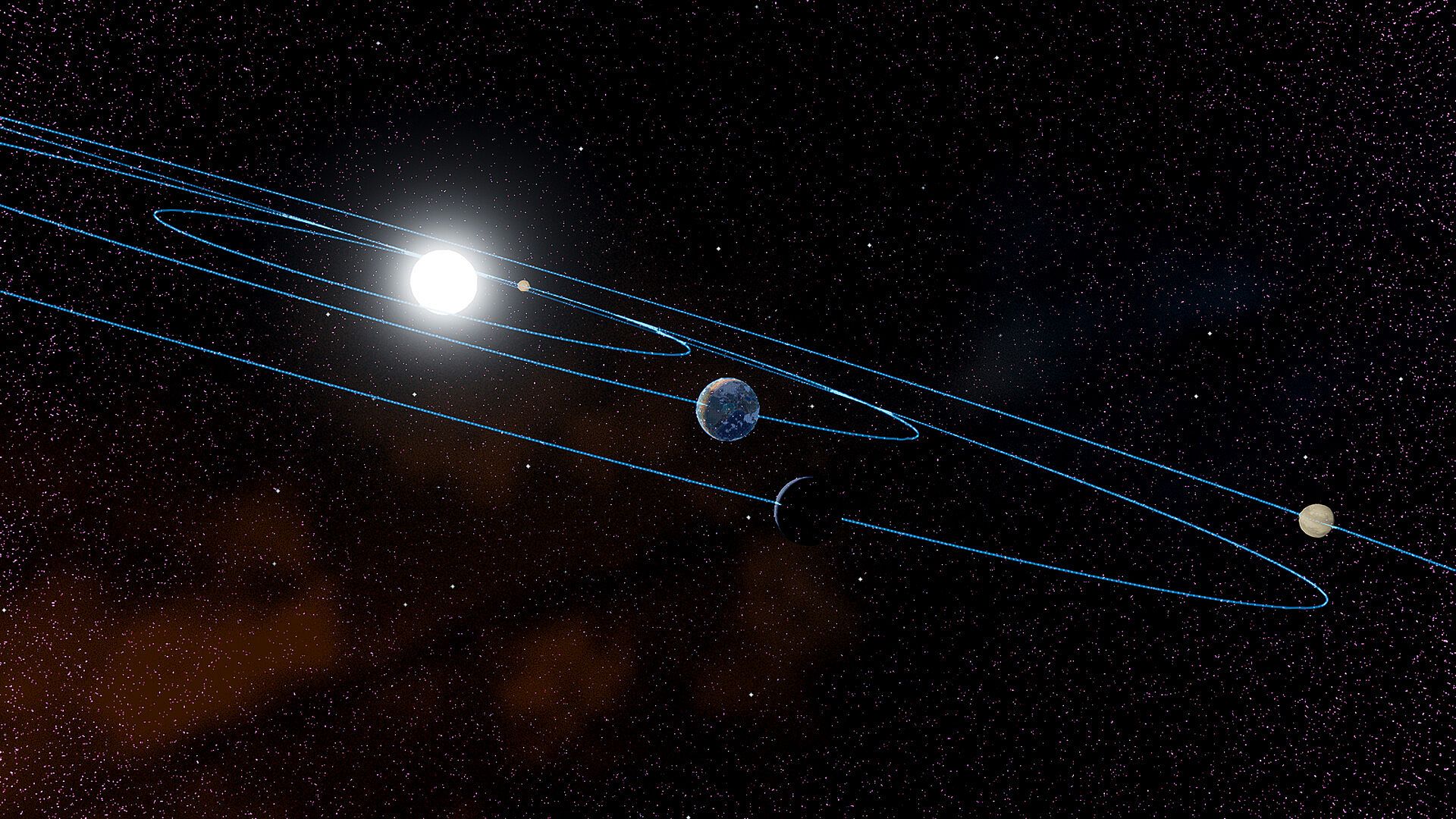
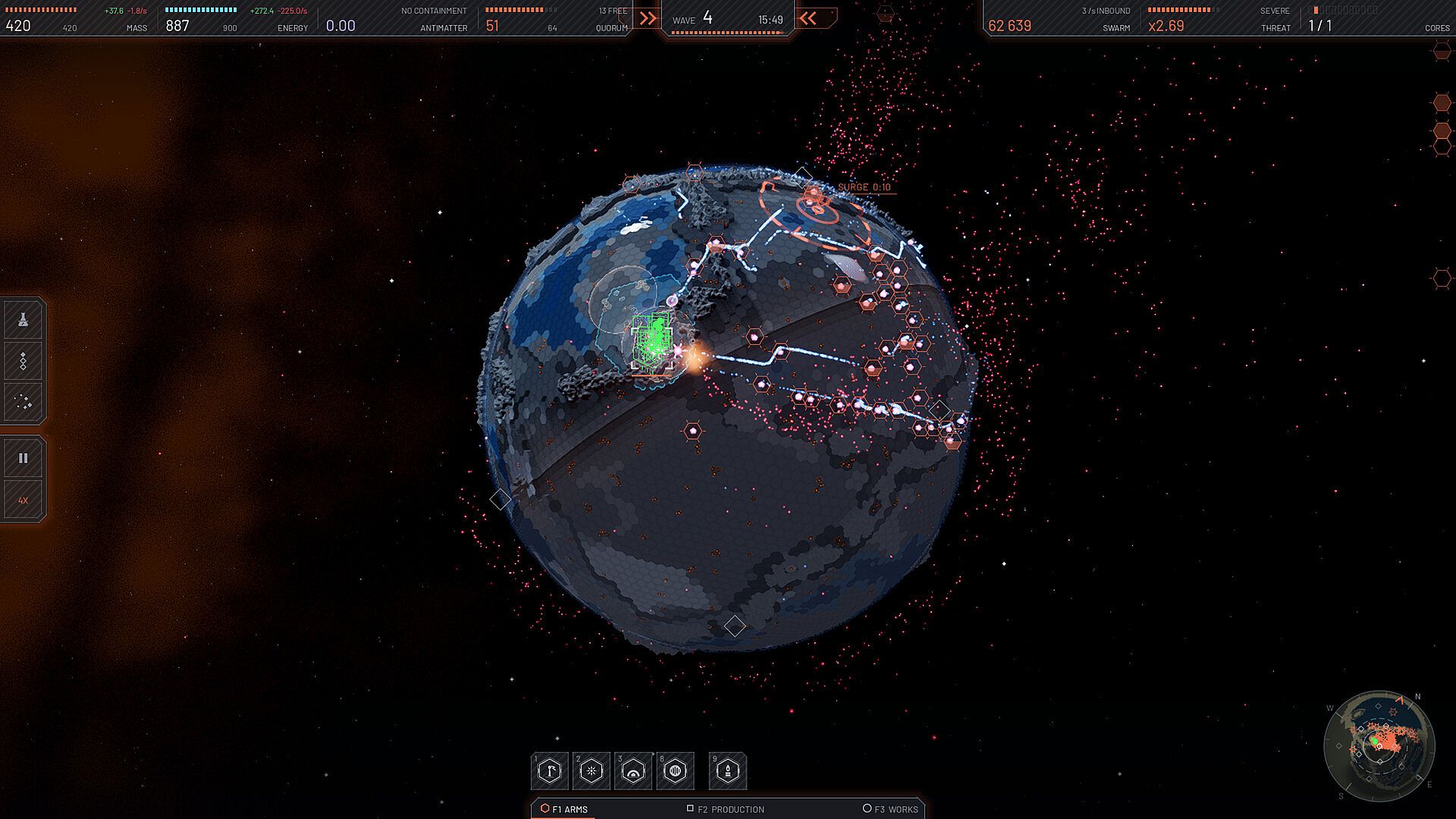
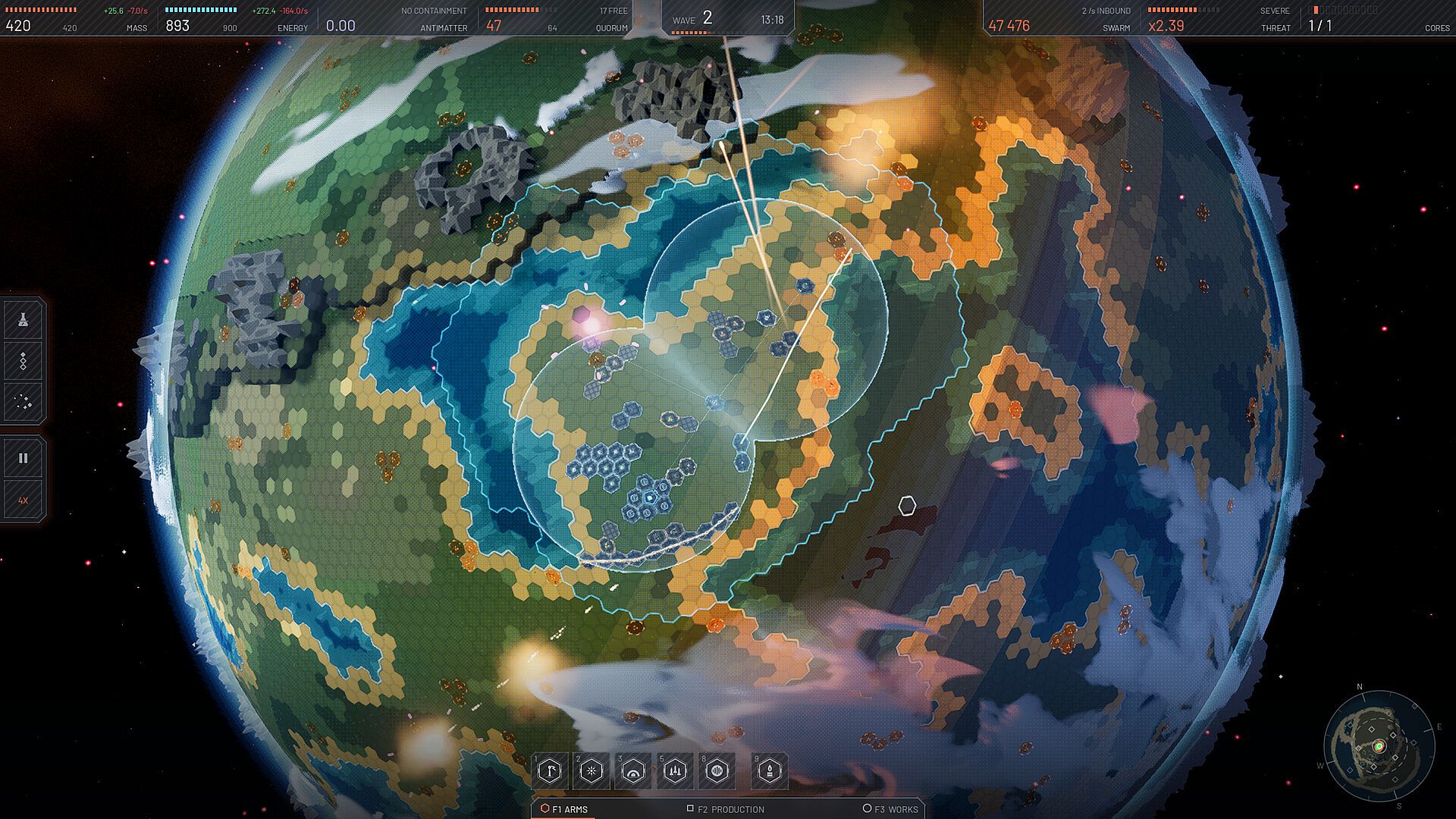
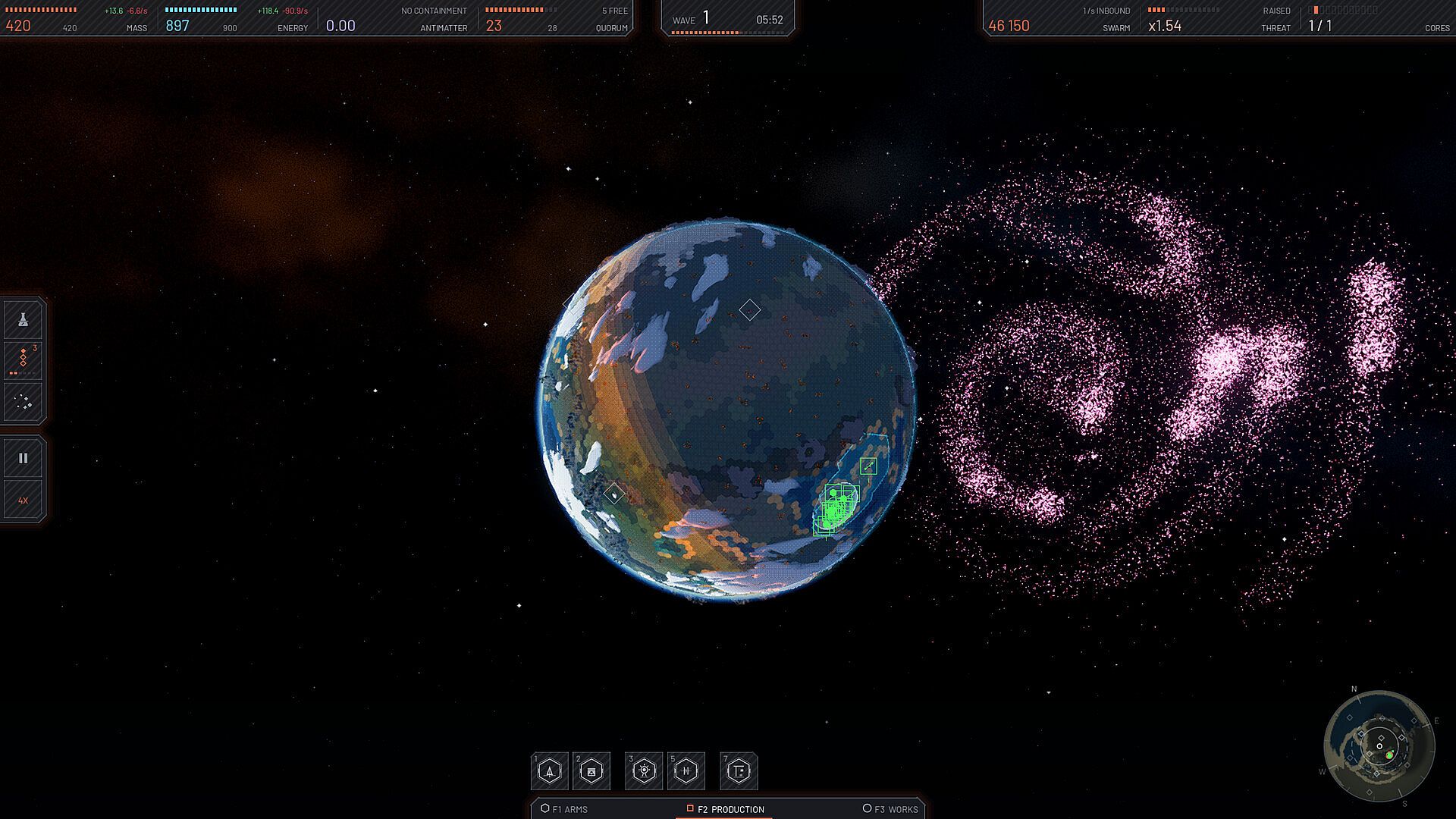
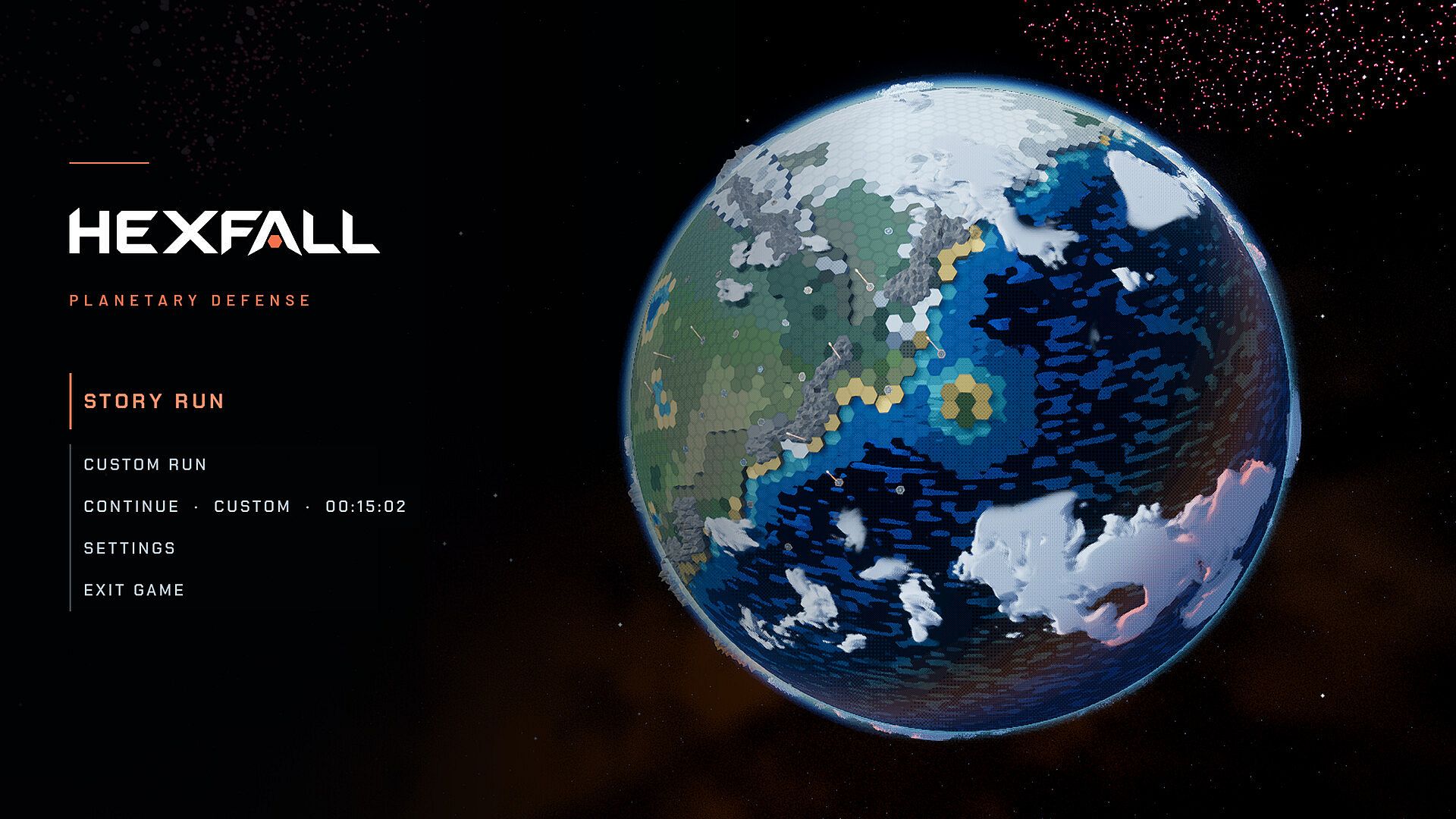
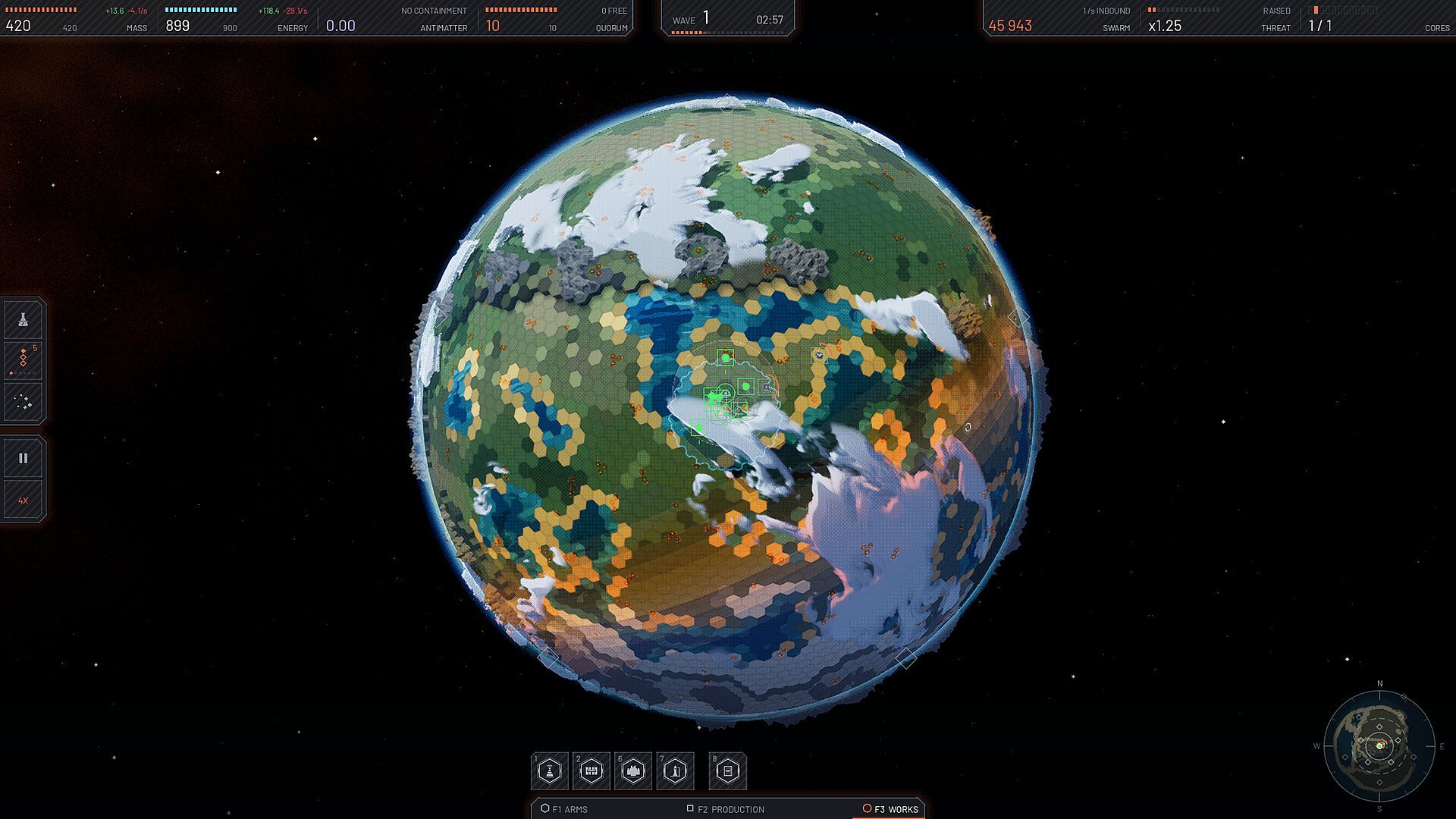
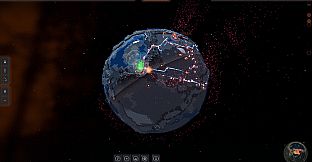
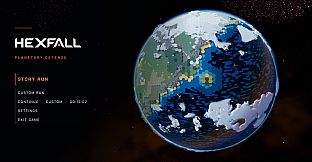
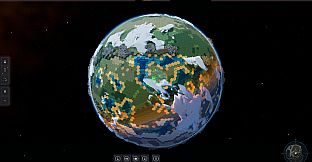
Hexfall Swarm Defense stands out as a strategy tower defense game set across an entire planet. Players step into the role of an automated defense system left running after its creators vanished. The core challenge involves holding back enormous enemy swarms that can reach peaks beyond 100,000 units, with every enemy tracked individually as it moves across the surface.
Gameplay
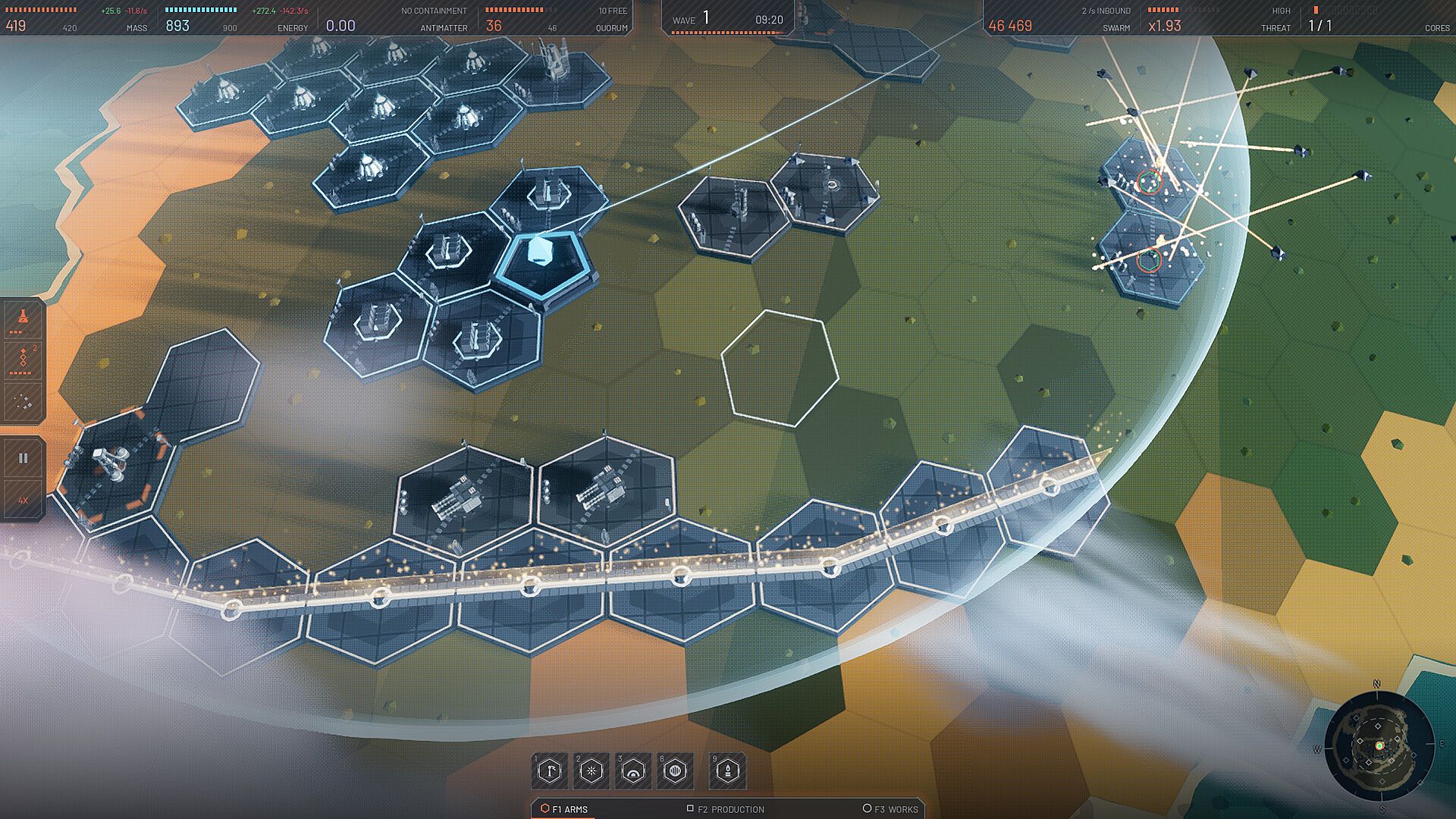
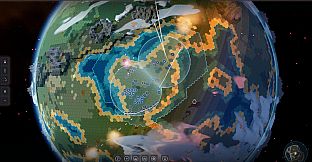
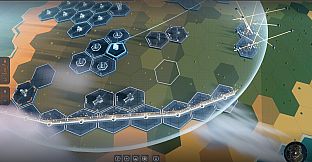
The defense relies on twelve cores embedded in the world, though only one remains active. Power flows through a single interconnected grid, so any break in the lines leaves downstream structures without energy. This creates constant tension around placement and protection of key lines.
Turrets form the backbone of resistance. Available options include cannons, railguns, lasers, flak, chain lightning, missiles, shield domes, decoys, and orbital strikes. A superweapon that consumes antimatter provides a final escalation when needed. Each turret improves through direct combat experience, gaining rank from kills earned under pressure. Higher ranks unlock branching doctrines that alter how the turret functions, allowing a few standout units to become central to an entire defensive layout.
Everything operates under real-time constraints. The swarm arrives in waves that test both raw firepower and the integrity of the power network. Survival depends on balancing immediate threats against long-term grid stability while adapting to the terrain of each planet.
Game Modes
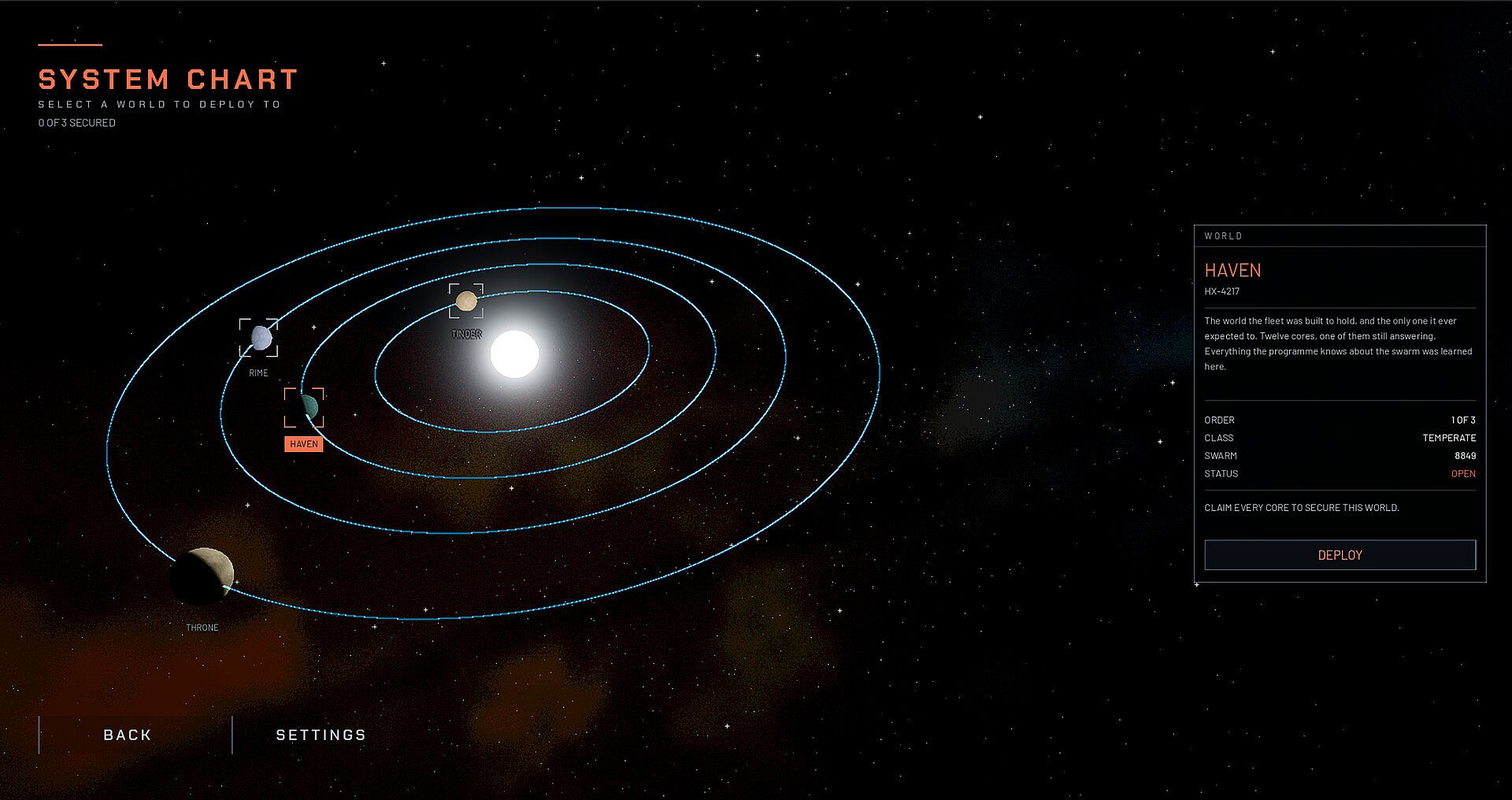
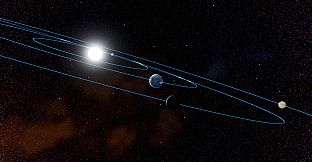
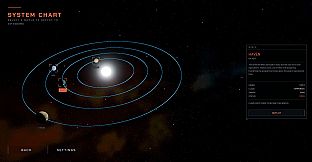
Two primary approaches shape how sessions unfold. A structured campaign takes players across multiple worlds within one system, each presenting distinct defensive problems tied to the environment and escalating swarm intensity.
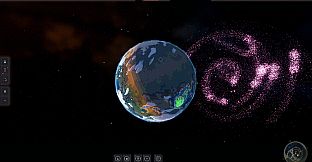
Procedural generation offers an alternative through custom planet creation. Players define parameters such as seed, biome, and pressure level to produce unique maps. This system supports repeated play with fresh layouts while maintaining the same core rules around enemy volume and power management.
Core Mechanics and Progression
Turret development adds depth beyond simple placement. Units that survive intense combat earn ranks that open specialized paths, turning individual defenses into potential linchpins for the whole strategy. The power grid mechanic forces careful routing decisions, as losing a segment can cascade failures across connected structures.
Enemy scale reaches extreme levels, with all units moving independently rather than following simplified paths. This demands defenses that handle both concentrated assaults and dispersed threats across wide areas. The single active core keeps the system operational, mining resources and constructing new assets even as the original purpose fades into the background.
Is It Worth Playing?
Hexfall Swarm Defense suits players who enjoy large-scale tower defense with interconnected systems and meaningful progression. The combination of massive enemy counts, power grid management, and turret specialization creates sessions focused on planning and adaptation rather than rote repetition. Those drawn to strategy games that reward careful layout and long-term unit development will find consistent depth in both the campaign and procedurally generated planets. The indie presentation keeps the focus squarely on mechanics without unnecessary layers, making it a solid choice for fans of the genre seeking a fresh take on planetary defense.