







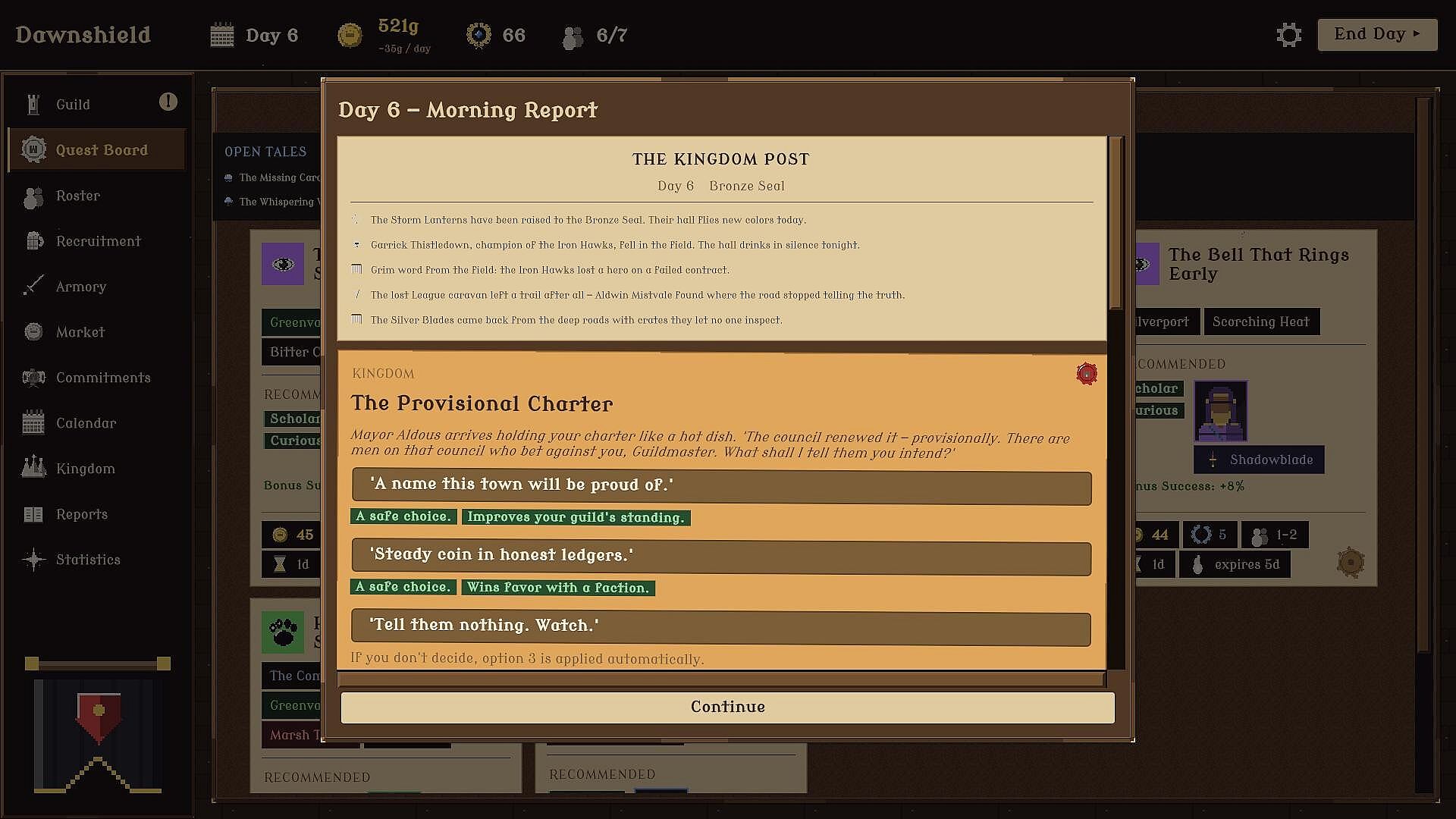
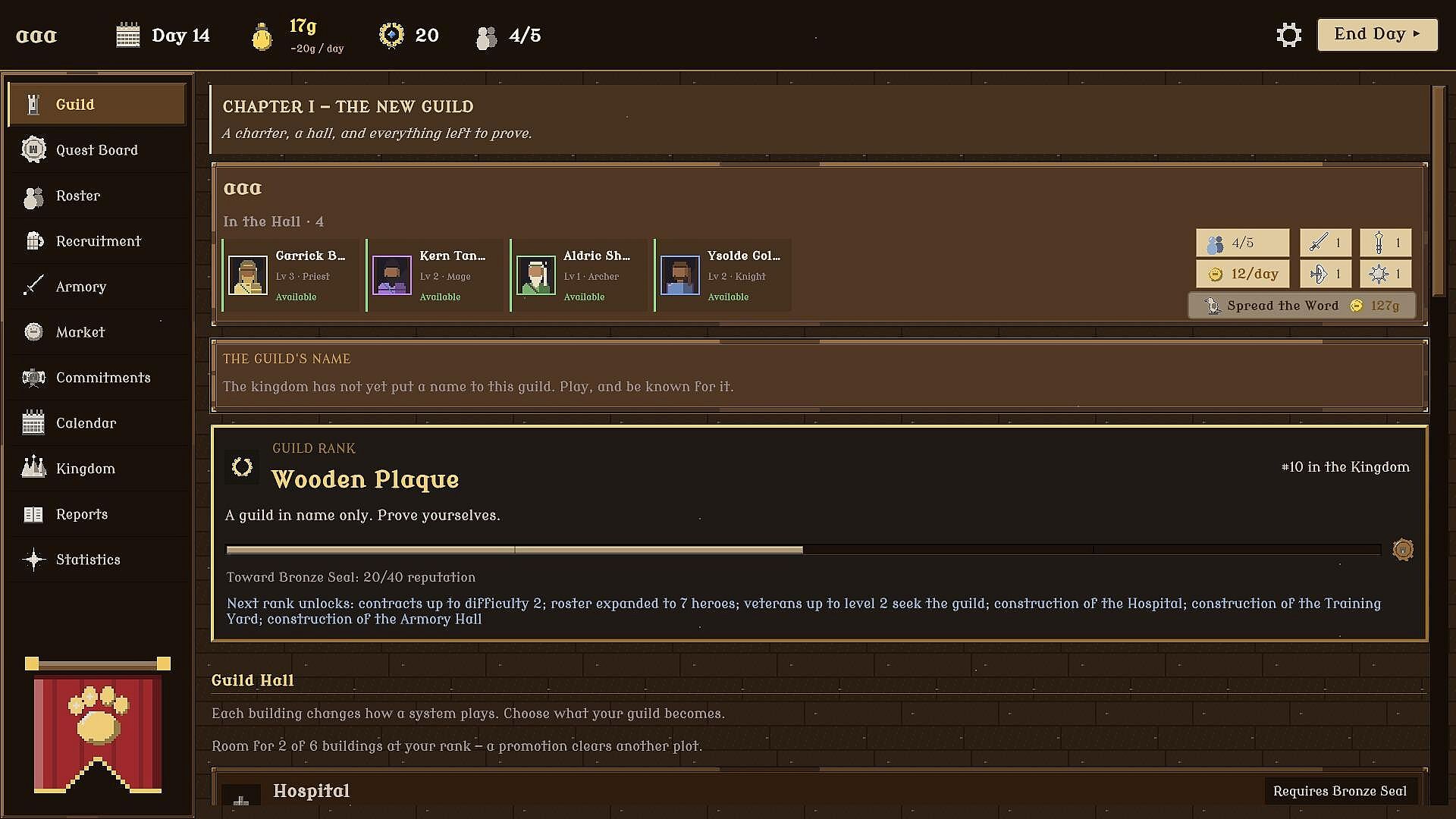
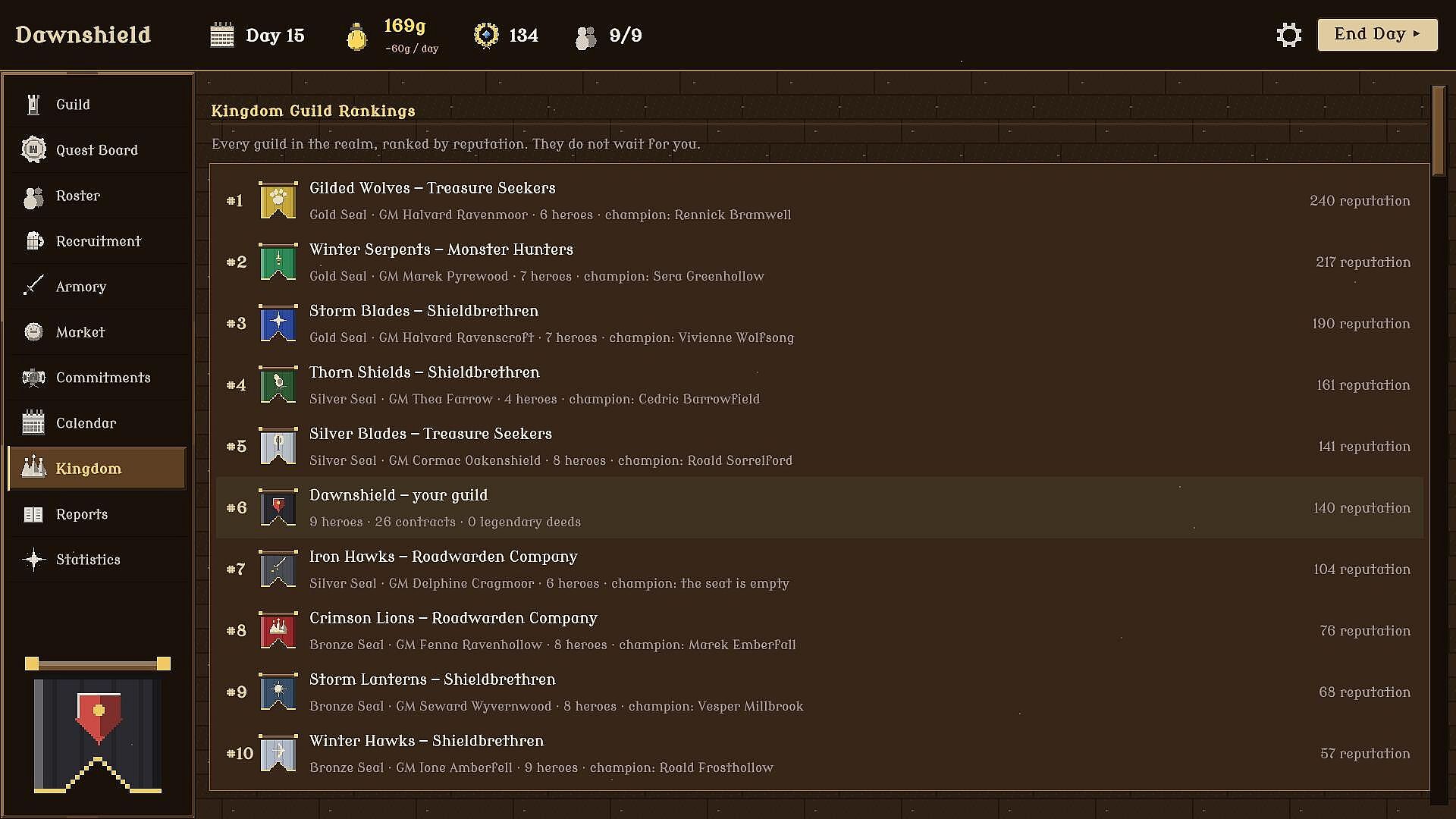
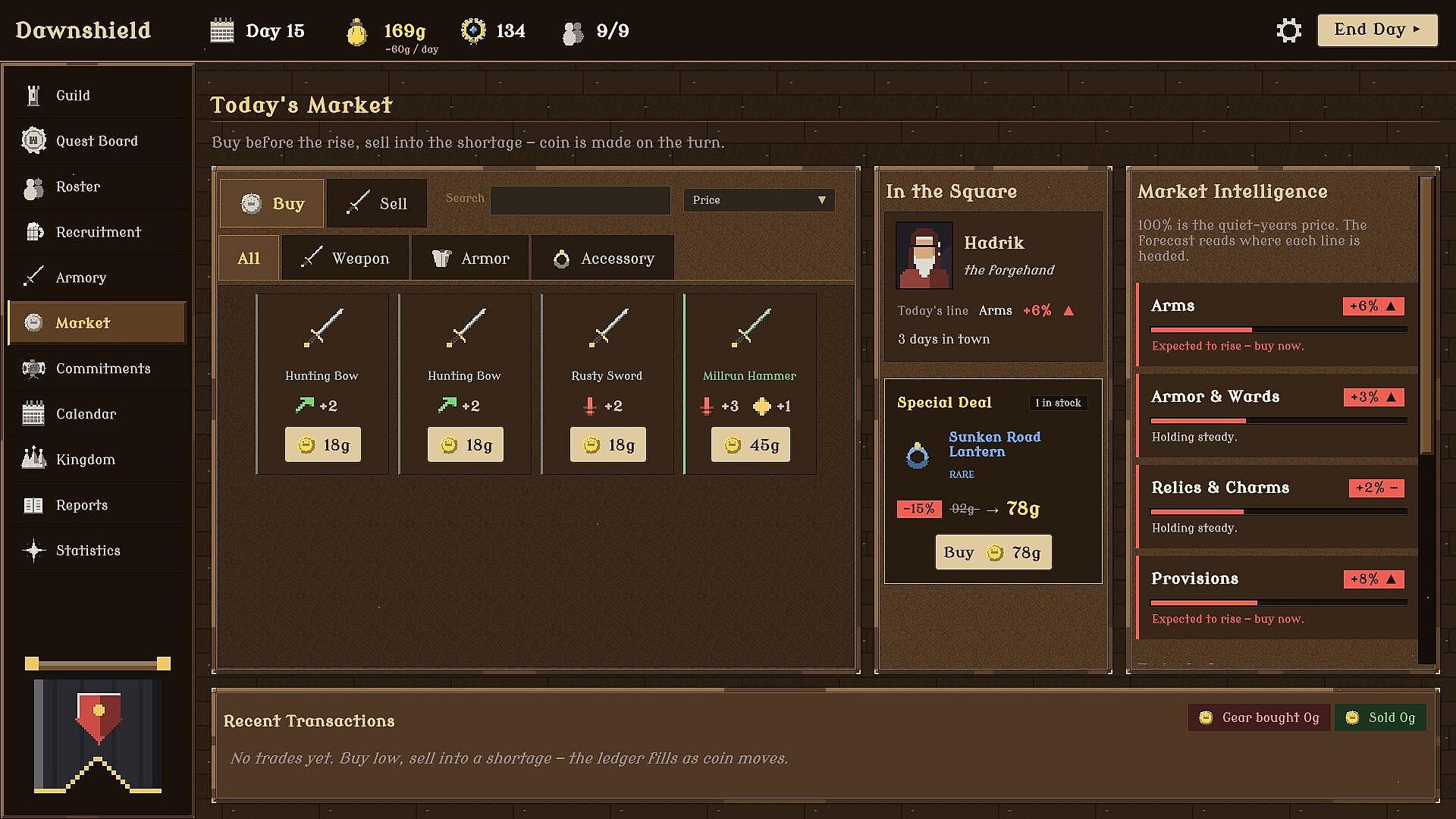
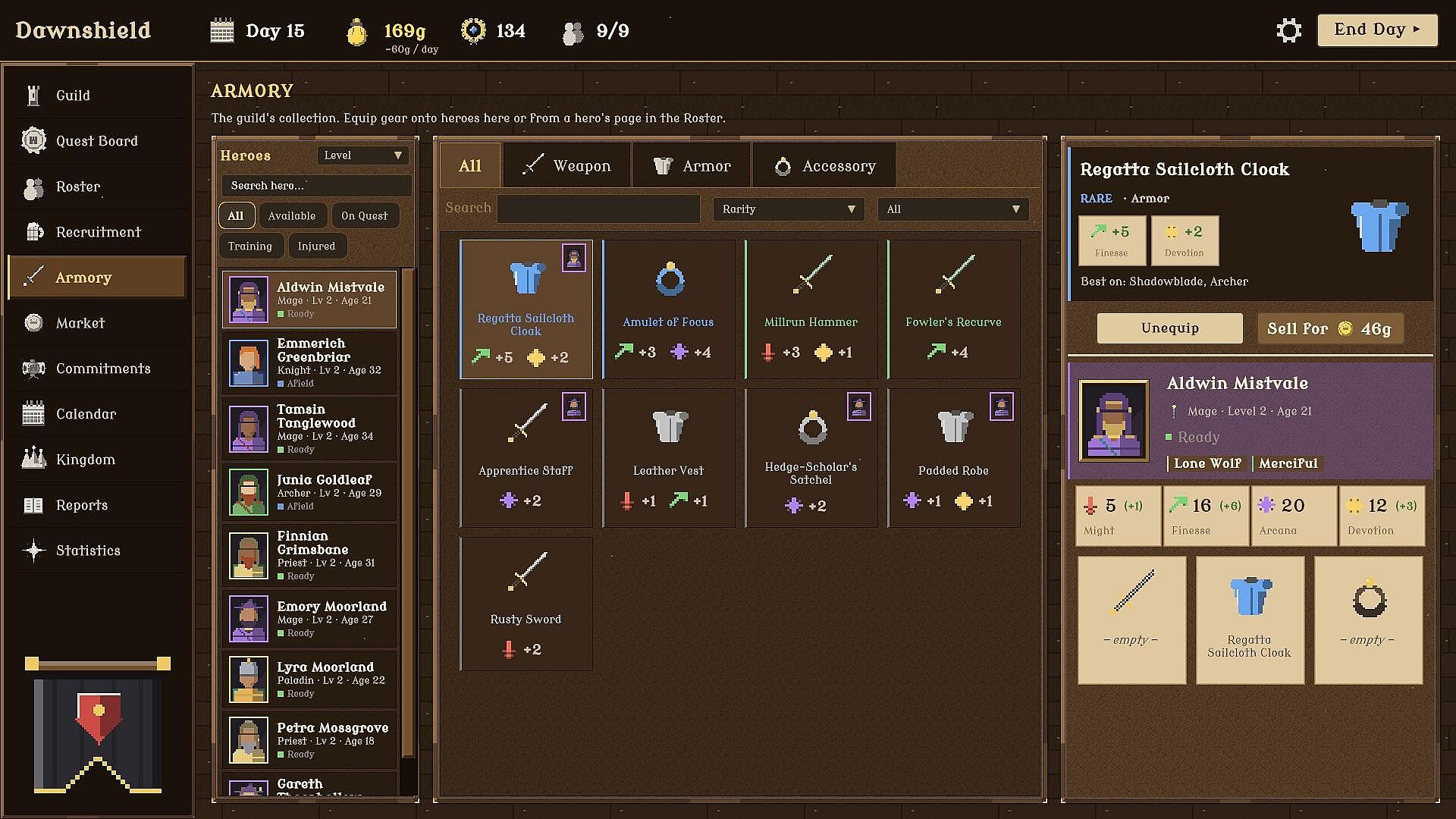
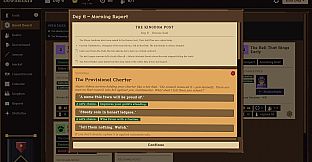
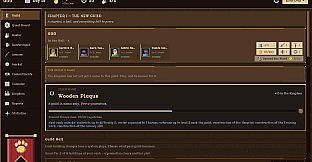
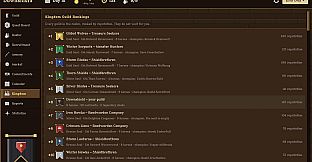
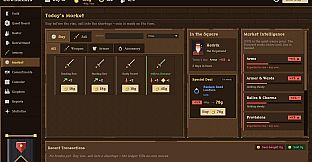
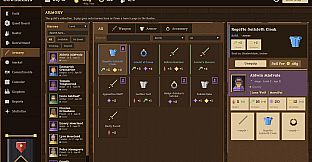
Guild Forge é um jogo de simulação estratégica centrado na gestão de guildas. O jogador assume o papel de mestre de guilda, transformando uma pequena sala de aventuras em uma organização renomada dentro de um reino de fantasia. O foco está em recrutar aventureiros, desenvolver instalações e enviar equipes em contratos que geram recursos e prestígio.
Gameplay
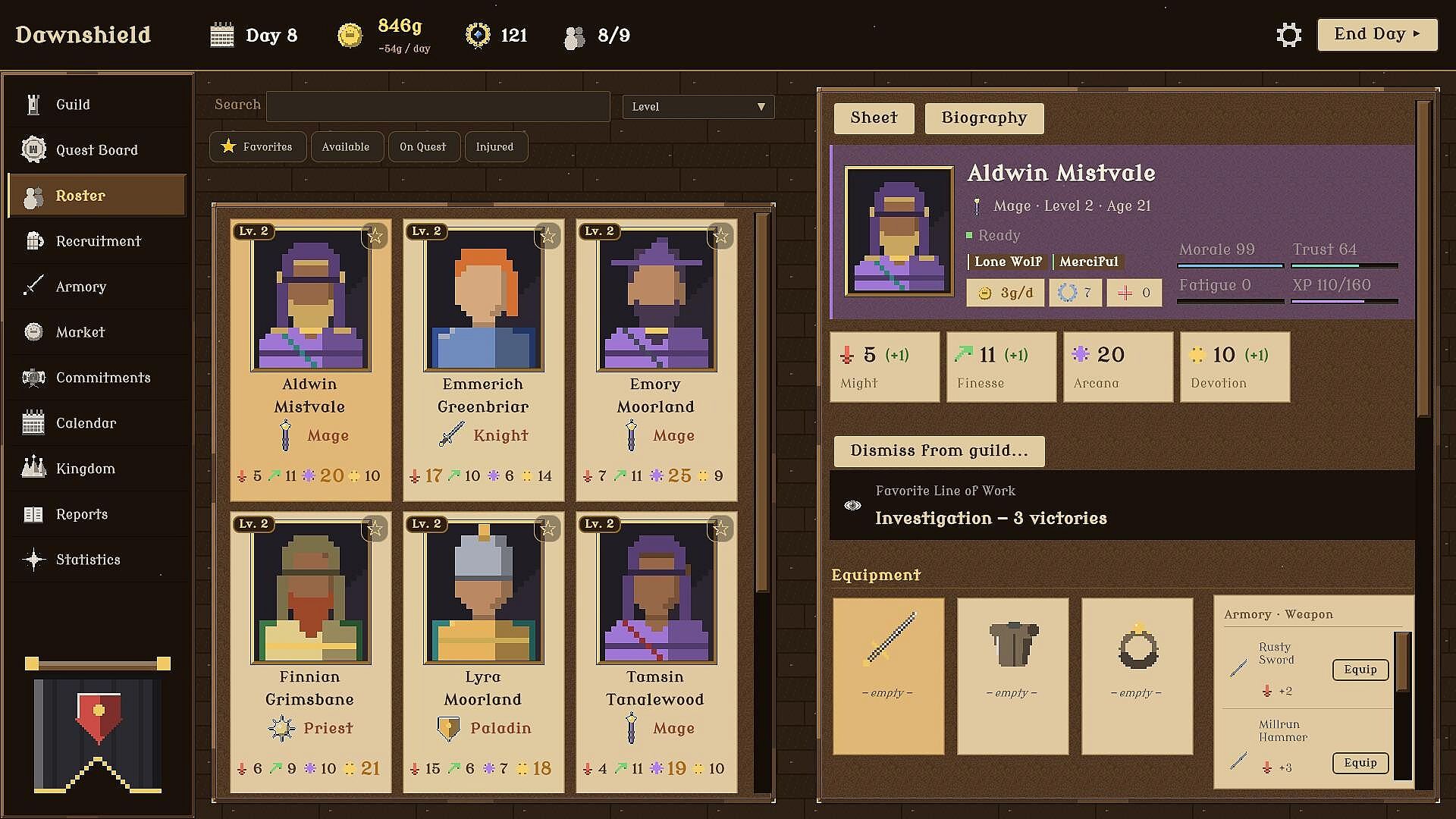
O ciclo principal envolve equilibrar recrutamento, treinamento e designação de missões. Os heróis chegam com classes distintas, como guerreiros, arqueiros, ladinos e magos, cada um com traços individuais que afetam o desempenho em campo. Essas características influenciam as escolhas estratégicas na formação de grupos, já que certas combinações se saem melhor em contratos específicos.
A gestão econômica é outro pilar importante. Os líderes da guilda cuidam dos salários, acompanham ganhos e perdas de reputação e investem recursos em melhorias. As instalações da sede se expandem com o tempo, ampliando as opções de recrutamento e treinamento e fortalecendo o grupo como um todo. Os heróis evoluem conforme participam de contratos, adquirindo experiência que aprimora suas habilidades e cria novas sinergias entre traços.
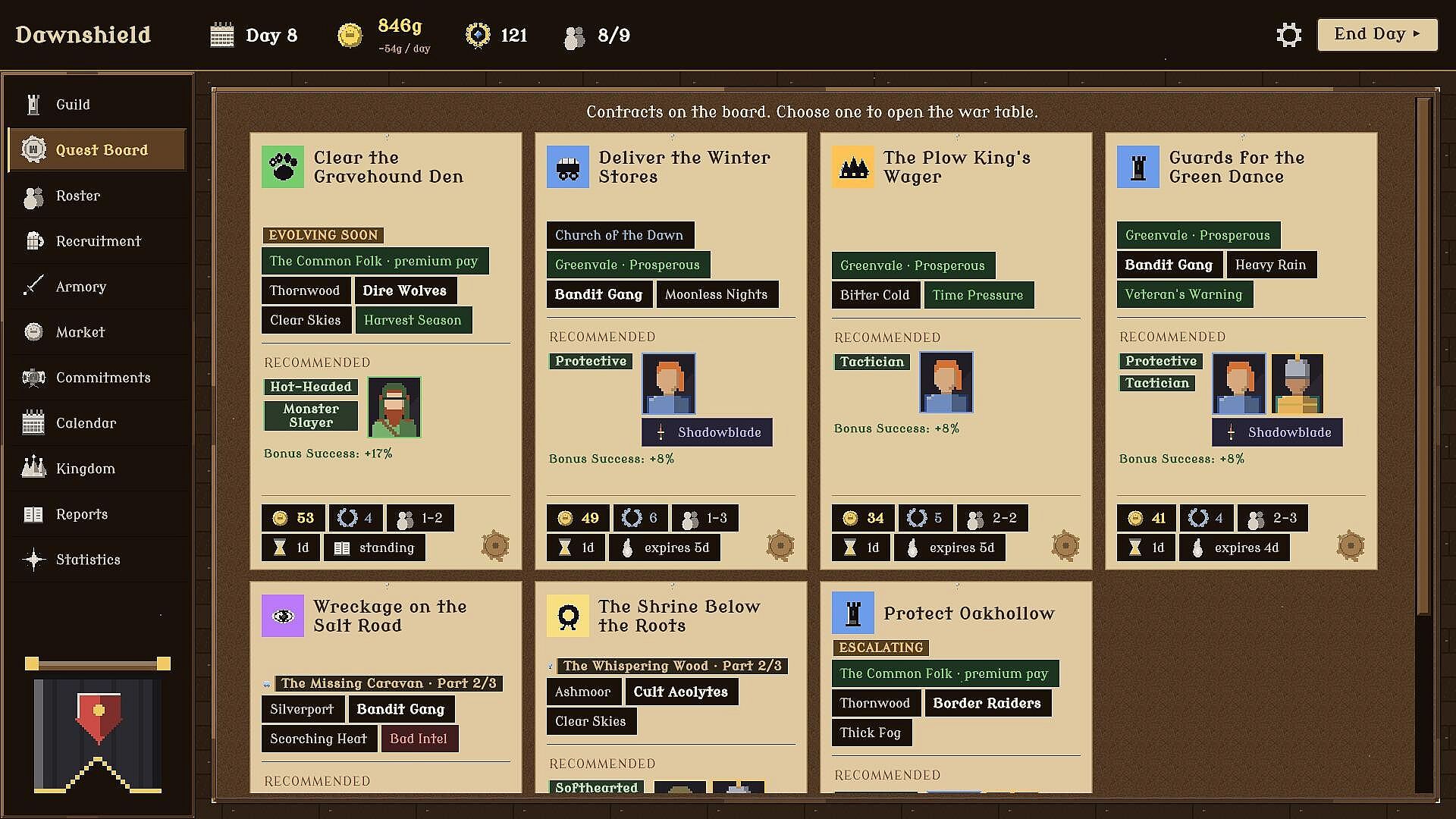
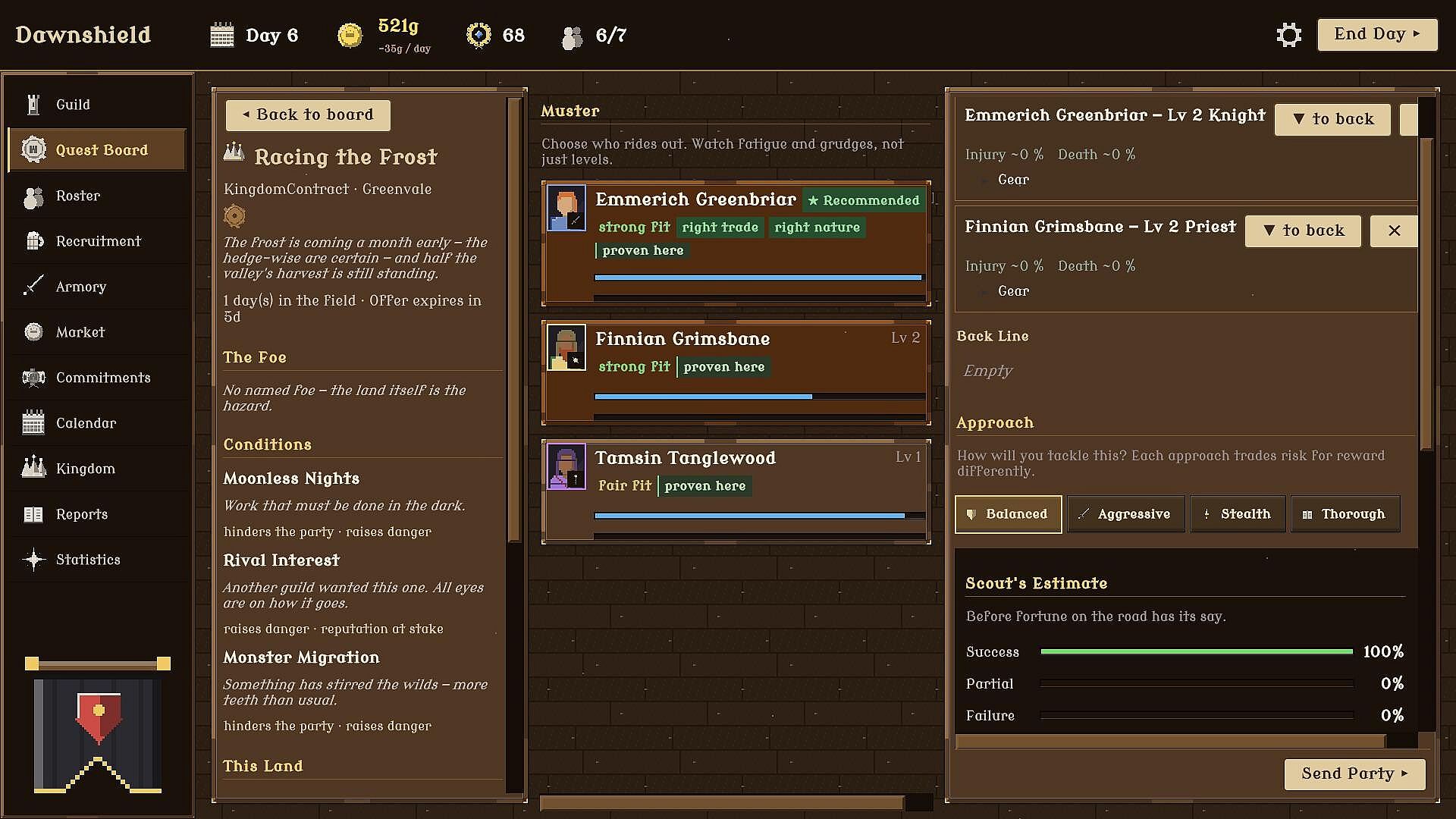
Resolver missões exige atenção à composição da equipe. Grupos equilibrados aumentam as chances de sucesso em contratos perigosos, trazendo ouro, reputação, experiência e outras recompensas. Planejamento ruim pode resultar em fracassos que prejudicam o prestígio e consomem recursos, obrigando o jogador a ajustar seus planos de longo prazo.
Modos de Jogo
Guild Forge funciona como uma simulação contínua de gestão, sem modos competitivos ou multijogador. A atividade principal consiste em supervisionar as operações diárias da guilda e planejar contratos maiores que testam a profundidade do grupo e a capacidade das instalações. A progressão acontece por meio de melhorias graduais e desenvolvimento dos heróis, sem etapas fixas ou sistemas de ranqueamento.
A variedade de contratos incentiva a experimentação com diferentes formações e investimentos em instalações. Algumas missões recompensam com reputação, atraindo recrutas mais qualificados, enquanto outras priorizam retornos em ouro para financiar expansões. A ausência de eventos temporários ou reinícios sazonais mantém o foco no crescimento constante e controlado pelo jogador.
Sistemas Principais e Progressão
O recrutamento parte de um conjunto de aventureiros diferenciados por classe e atributos pessoais. Investir em indivíduos promissores por meio das instalações de treinamento acelera seu desenvolvimento e reduz fraquezas. A reputação funciona como um filtro, liberando acesso a candidatos mais fortes e contratos mais lucrativos conforme a guilda cresce.
As melhorias na sede trazem benefícios concretos. Novas instalações aumentam a eficiência do treinamento, ampliam os alojamentos para suportar grupos maiores ou adicionam salas especializadas que beneficiam tipos específicos de heróis. Essas melhorias criam ciclos de feedback visíveis, onde infraestrutura superior resulta em equipes mais fortes e maior taxa de conclusão de contratos.
A profundidade estratégica surge das escolhas difíceis. Gastar ouro em salários retém talentos, mas reduz o orçamento para upgrades, enquanto missões agressivas podem causar fadiga ou ferimentos nos heróis. O jogador precisa equilibrar ganhos imediatos com a saúde a longo prazo da organização.
Vale a Pena Jogar?
Guild Forge é indicado para quem gosta de simulações de gestão deliberadas com temática de fantasia. O foco em formação de equipes, alocação de recursos e expansão gradual atrai jogadores que preferem planejamento em vez de ação rápida. Seu modelo free-to-play no PC elimina barreiras de custo inicial, permitindo que interessados explorem os sistemas no próprio ritmo.
Quem se interessa por jogos baseados em composição de equipes e crescimento organizacional de longo prazo encontra engajamento constante no sistema de contratos e na progressão dos heróis. A simulação valoriza decisões bem pensadas em vez de reflexos, oferecendo uma experiência estável para fãs do gênero.
No geral, o título apresenta uma abordagem focada na gestão de guildas, sem complexidade excessiva. Jogadores que buscam uma simulação direta de construção e manutenção de uma companhia de aventureiros devem encontrar boa afinidade com a proposta.
