







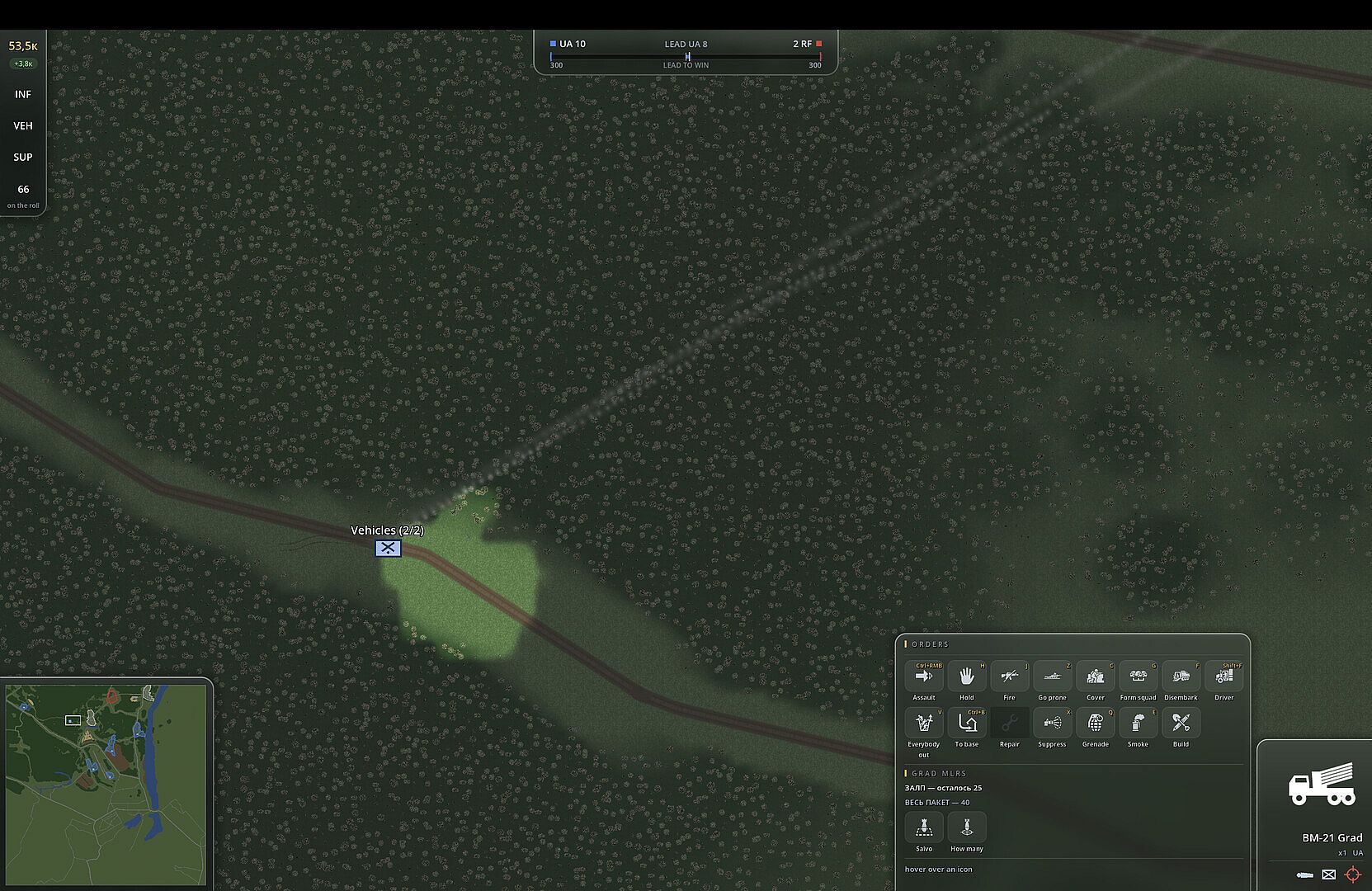
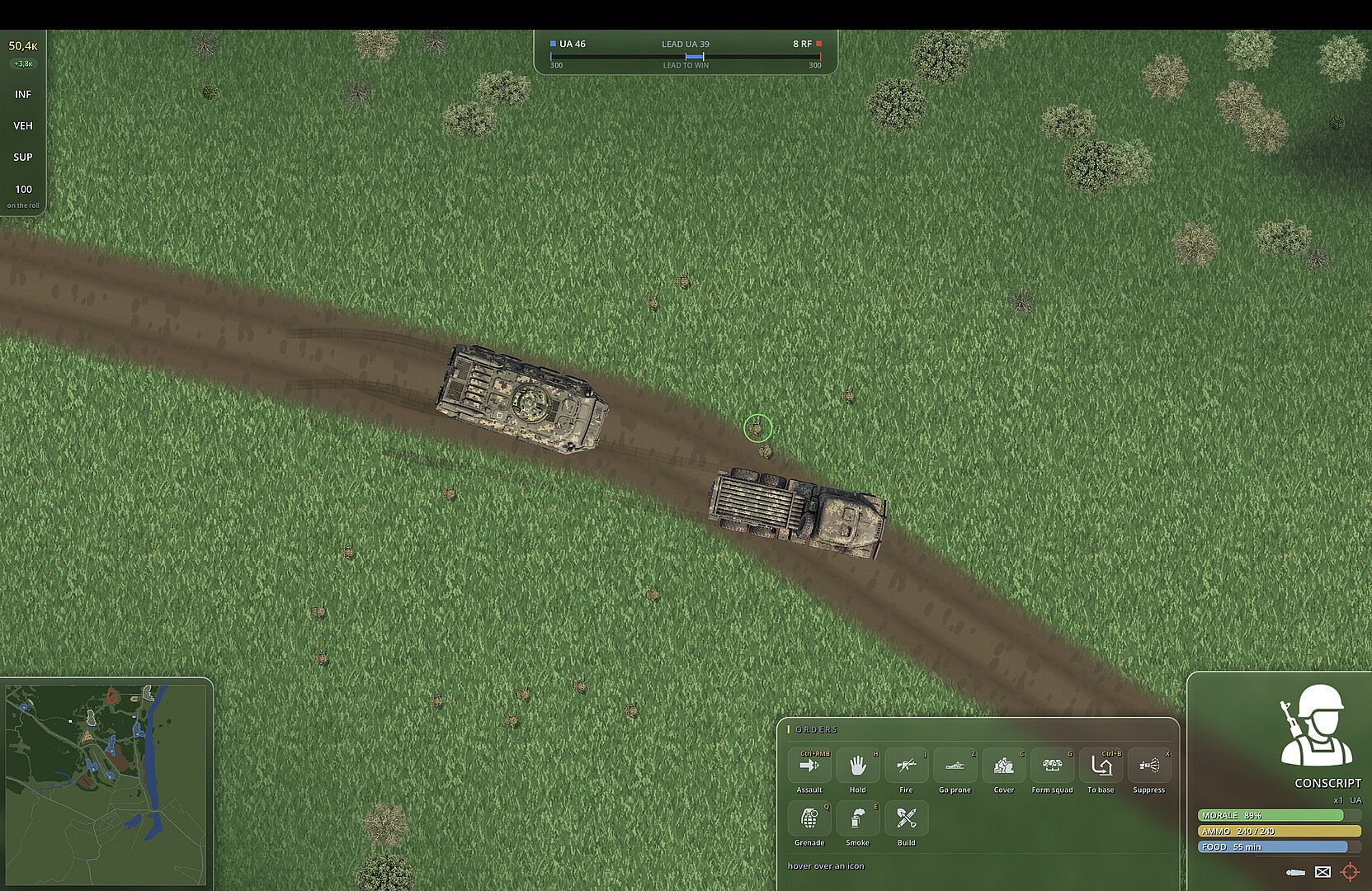
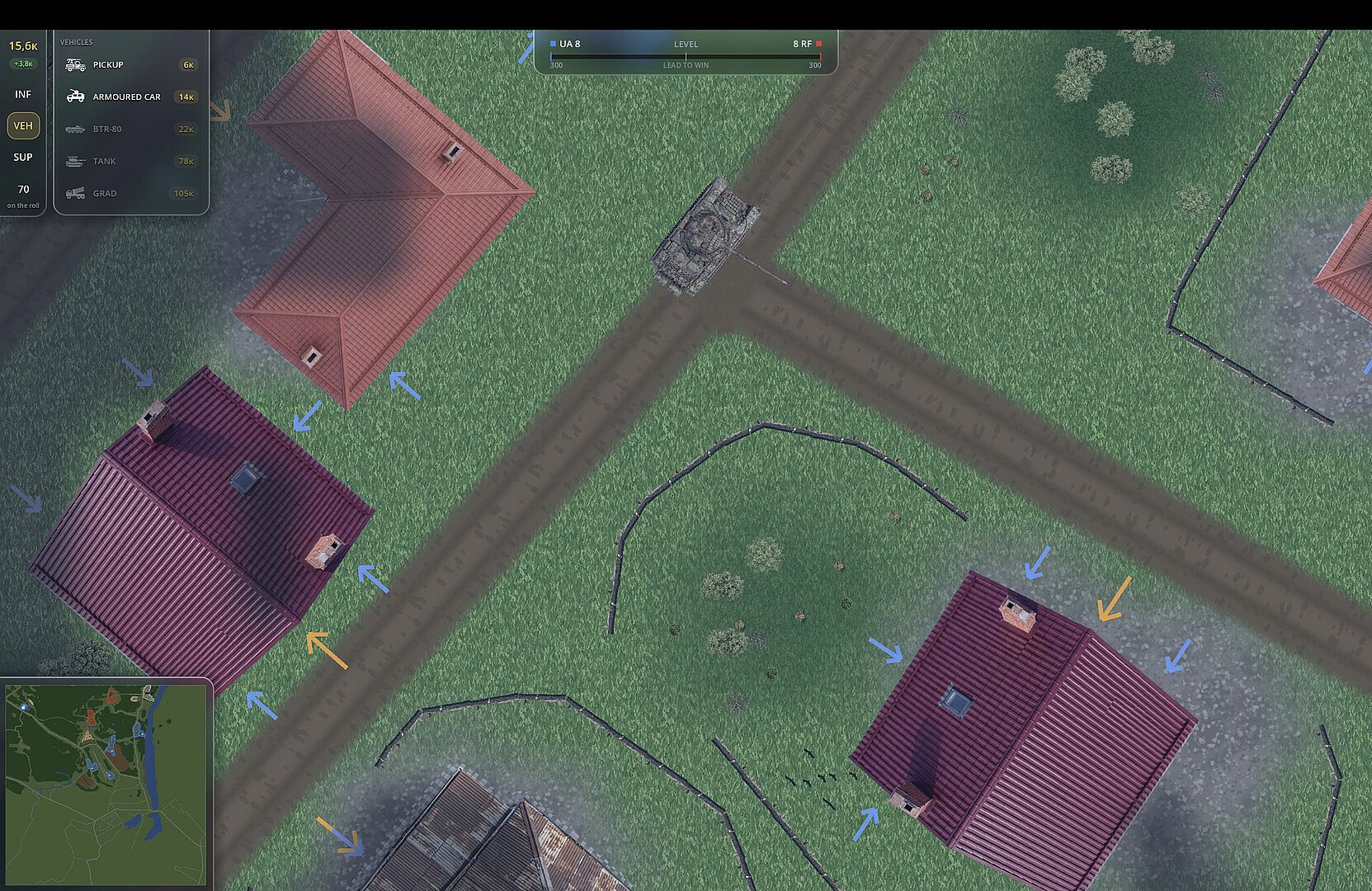
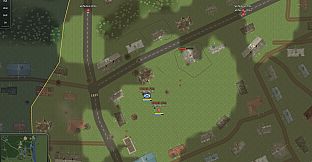
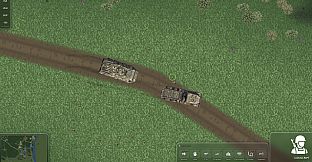
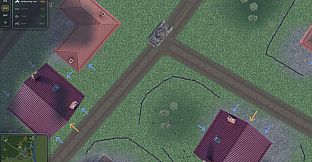
GroundInFlames is a real-time tactics strategy game focused on modern combined-arms warfare in a top-down view. Players command squads and vehicles across a sector of the front without building bases or spawning unlimited forces. Limited resources, detailed terrain interactions, and realistic mechanics for infantry, drones, and armor define the experience on PC.
Gameplay
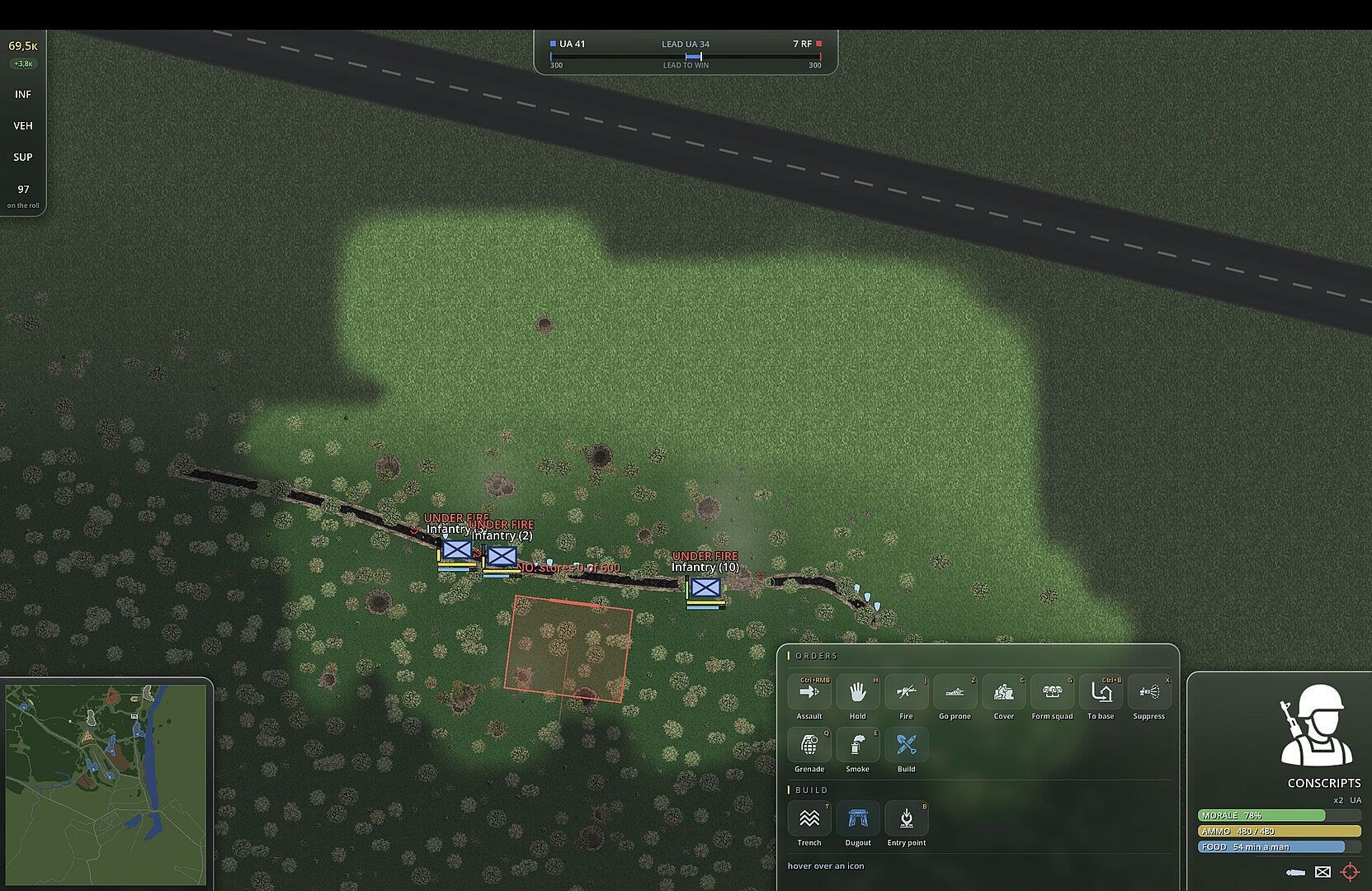
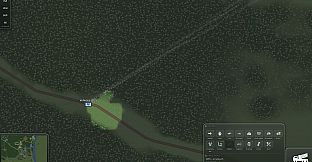
The core loop centers on managing scarce manpower and supplies while advancing or defending positions. Squads handle their own cover and reactions to fire, including going prone or suffering suppression that halts orders until recovery. Terrain layers matter directly: foliage strips away under shelling, altering visibility and protection along treelines and folds in the ground. Fortifications such as trenches and dugouts can be constructed but degrade and collapse under sustained attack.
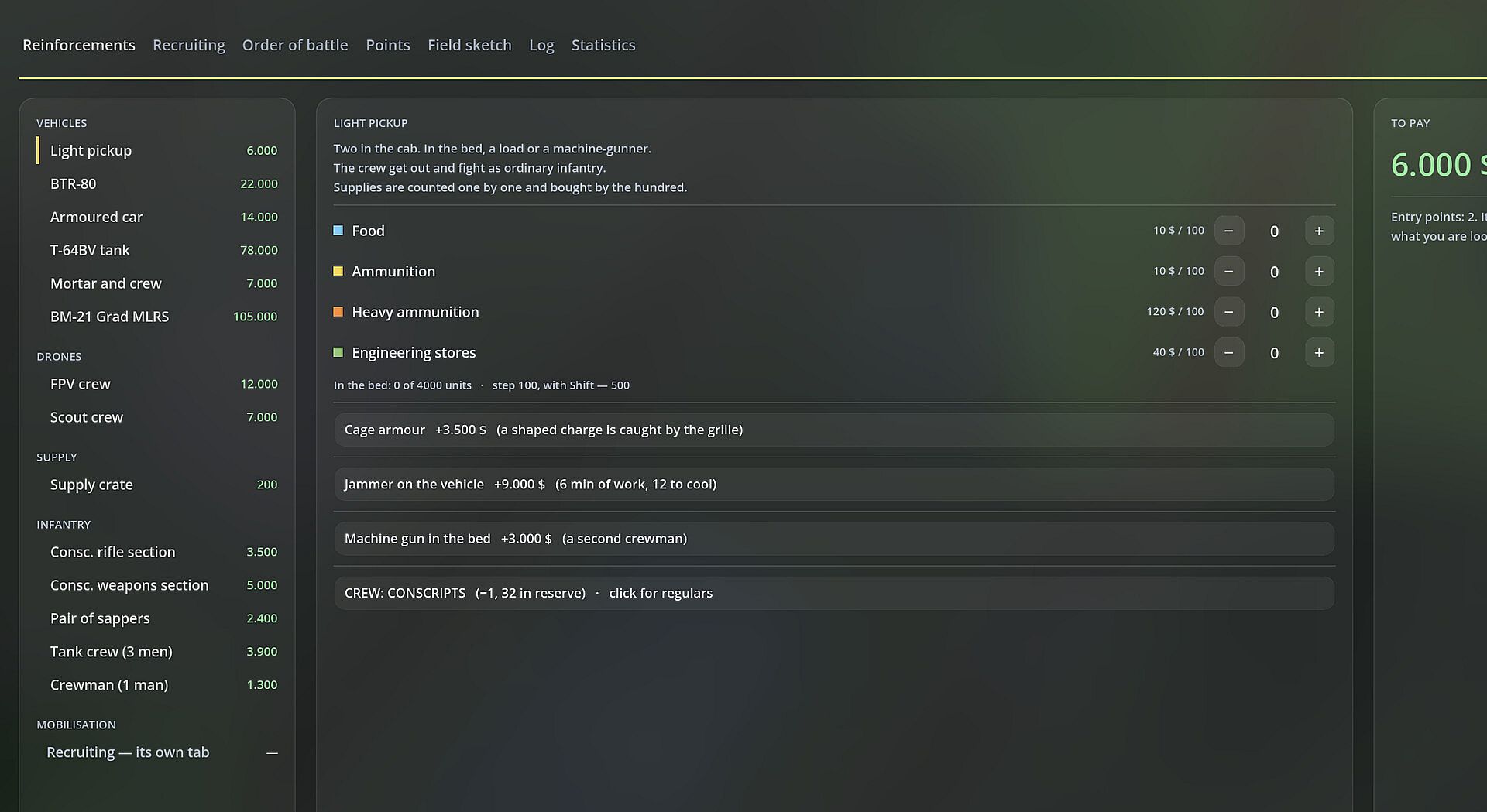
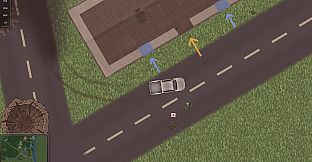
Vehicle systems incorporate angle-based penetration, ricochets, and modular damage. Tracks form a distinct layer that shells may sever or pass through. Crew positions affect vulnerability, and open transports expose infantry to small arms. Fires spread independently once started, and ammunition can detonate in burning wrecks. Anti-drone cages function mechanically by disrupting shaped charges rather than serving as visual detail only.
Drone operations form a central pillar. FPV drones deliver precise strikes with controls designed for fluid play, while recon variants provide observation without weapons. Electronic warfare introduces frequency matching between operators and jammers, allowing drones to evade interference when bands differ. Supply delivery, mortar fire, smoke, grenades, and vehicle-mounted machine guns support these systems, with direct unit control available for players who prefer hands-on command.
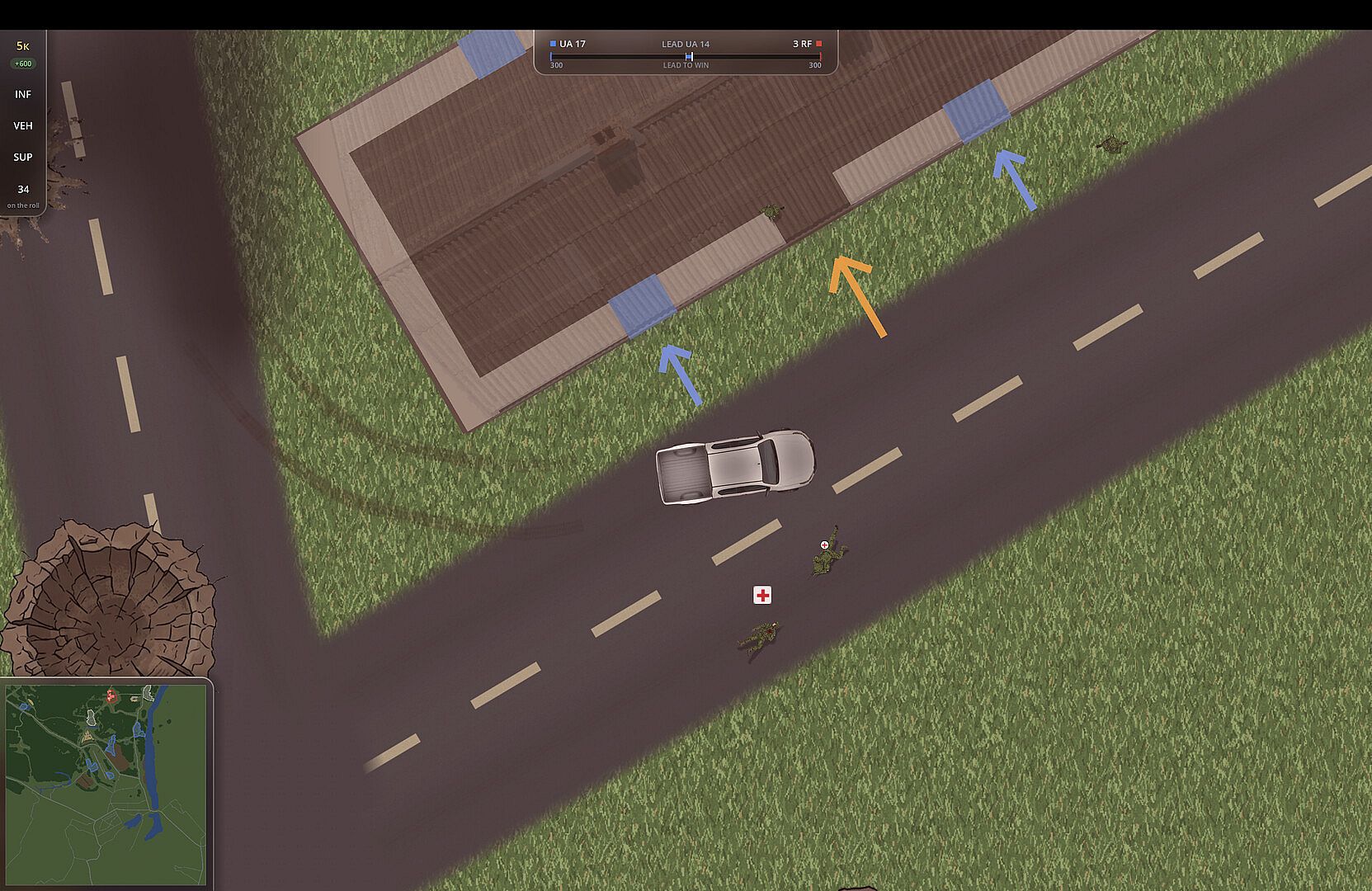
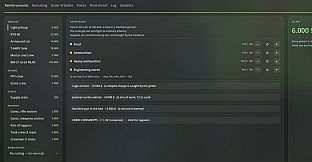
Manpower mechanics reflect attrition. Mobilization resources recover gradually through frontline success, while forced conscription provides immediate troops at the cost of rear-area discontent that disrupts supply quality. Wounded soldiers can be extracted by medics or abandoned, and prisoners offer tactical options. Fog of war restricts knowledge to observed events only, so distant artillery strikes reveal positions but not precise outcomes until reconnaissance confirms them.
Game Modes
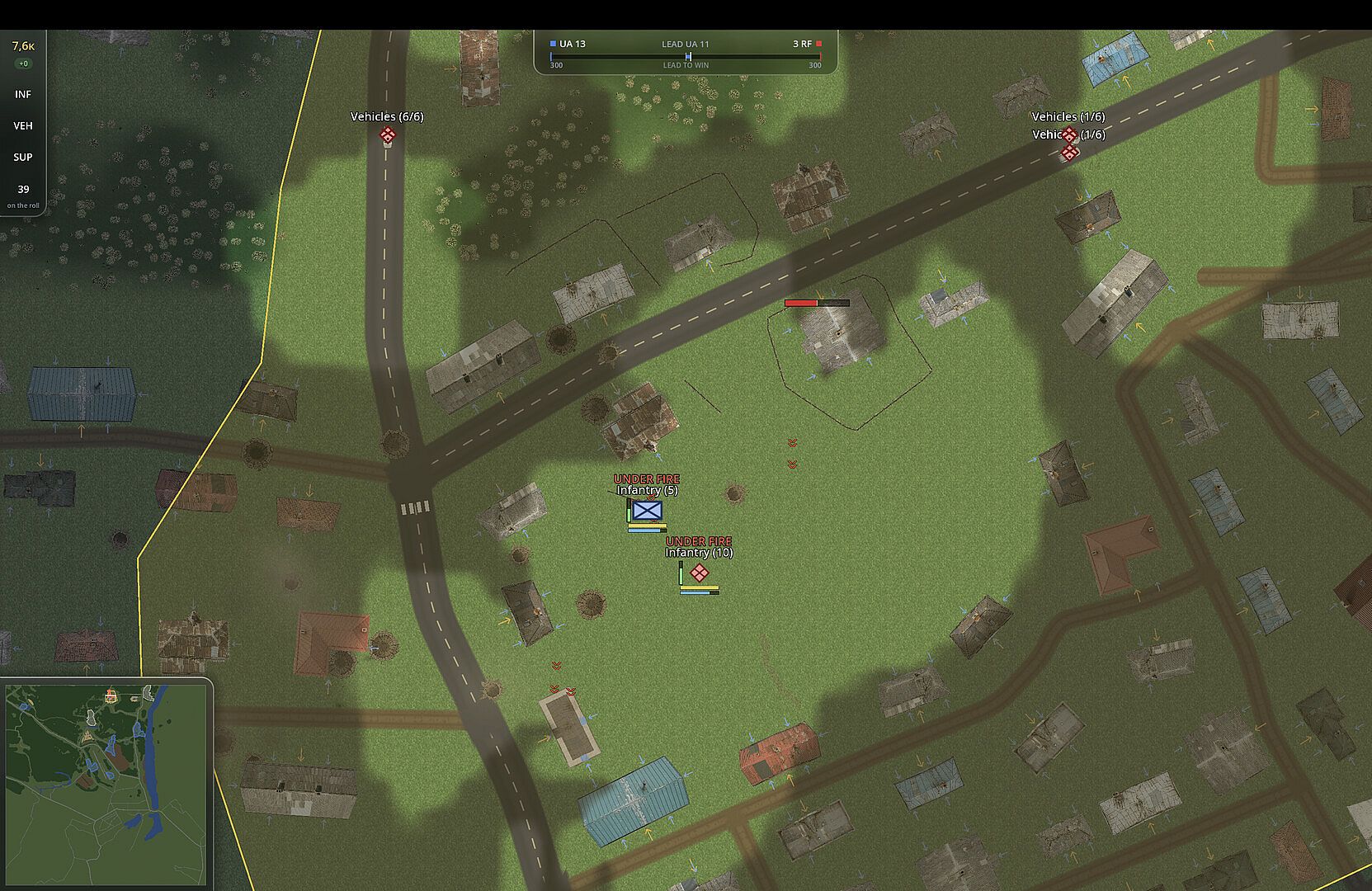
GroundInFlames supports single-player battles against an AI opponent that plans its own attacks and defenses on a detailed map of the Hostomel area, including locations such as Zdvyzhivka, Lubianka, and others. Online PvP and online co-op allow players to contest sectors together or against each other. Key points on the map determine scoring by margin of control, and a battle log records all engagements for review after the fact.
Story missions focus on specific historical sites, beginning with Antonov Airport. These scenarios integrate the full range of combined-arms tools, resource limits, and terrain effects into structured objectives. Larger multiplayer confrontations are planned for future updates, expanding beyond current sector-scale fights.
Key Mechanics and Systems
Fortification building connects positions through communication trenches, yet all structures remain vulnerable to progressive destruction. Building assaults reward creative approaches, such as breaching walls with tanks instead of committing infantry directly. The absence of instant army spawns forces careful allocation of every squad and vehicle across the map.
Electronic warfare and drone frequency management add layers of counterplay absent in simpler real-time tactics titles. Armor modeling extends to running gear interactions and crew-specific vulnerabilities, while persistent fires and independent vehicle damage create ongoing battlefield hazards. These elements combine to reward observation, positioning, and timely reinforcement over brute force.
Is It Worth Playing?
GroundInFlames targets players who value realistic modern warfare simulation with emphasis on resource scarcity, suppression, and environmental detail. The upcoming Early Access version includes a playable map, AI opponents capable of independent planning, artillery and anti-tank systems, full armor penetration and damage modeling, medics, prisoners, supply lines, and fortification tools. Interfaces support English, Russian, and Ukrainian.
Those seeking fast-paced action or base-building loops will find the deliberate pace and limited forces less appealing. Fans of detailed combined-arms tactics, drone integration, and persistent battlefield state changes stand to gain the most. As an Early Access title planned for 12 to 18 months of development, buyers should expect ongoing balance adjustments, performance improvements, and feature expansions based on community input. The game rewards patience with its systems and suits those comfortable participating in iterative refinement.