




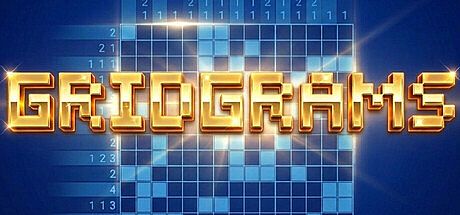


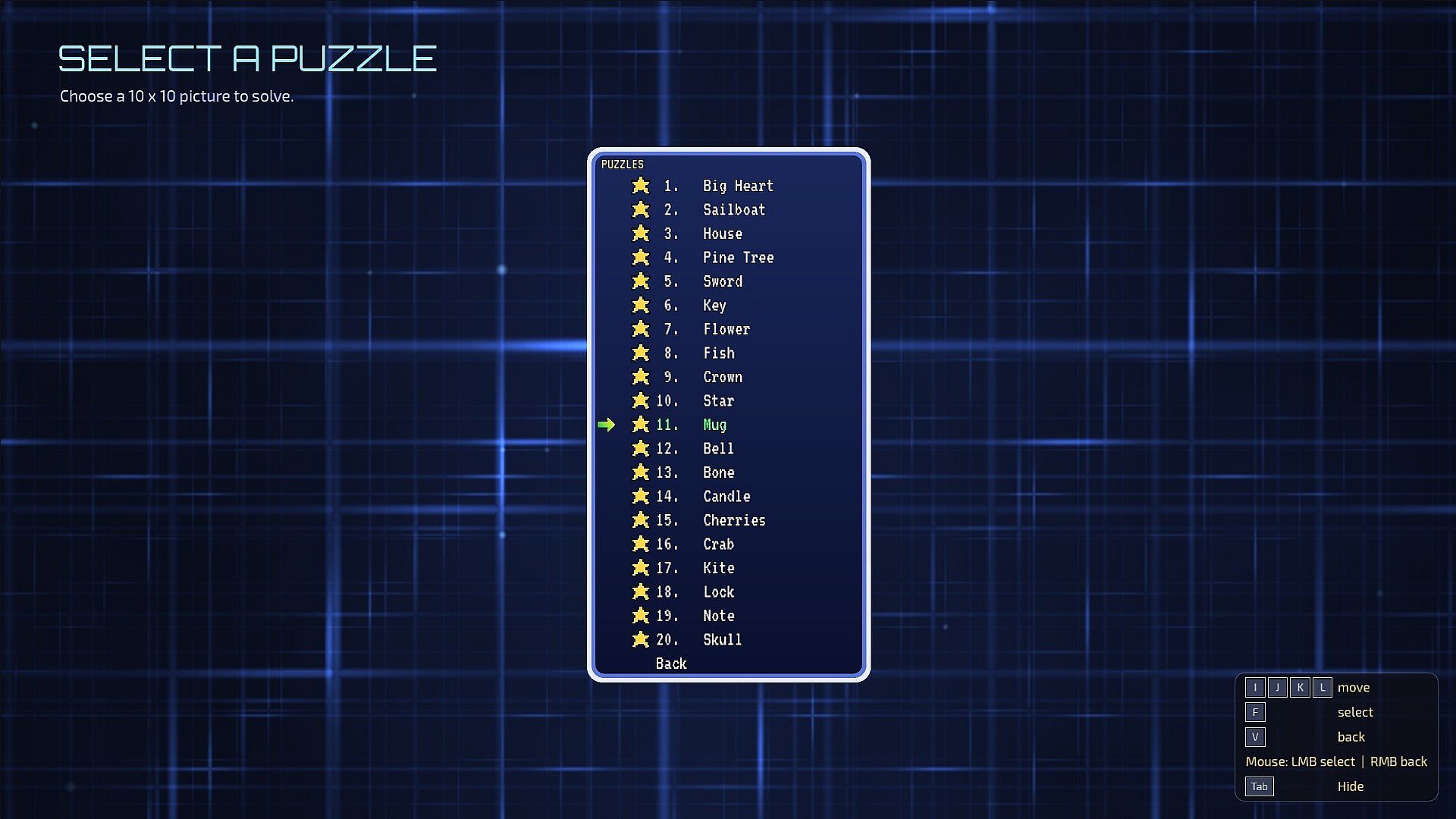
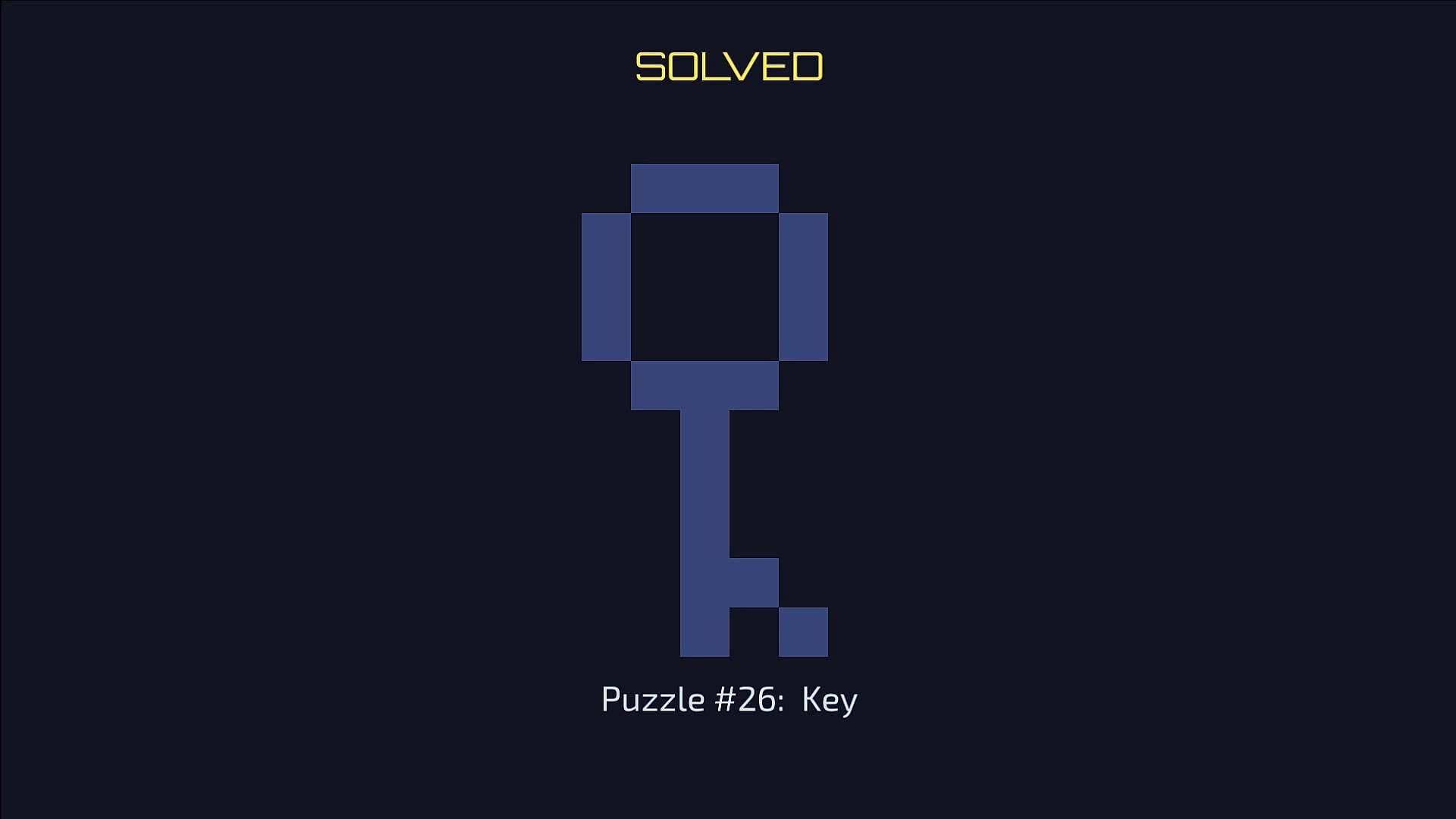
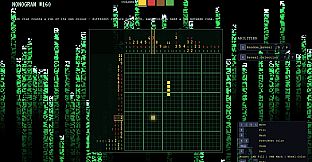
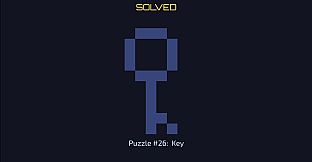
GRIDGRAMS is a casual puzzle game built around nonogram logic, where players fill grids according to numerical clues to reveal images. The experience centers on deduction rather than trial and error, with every puzzle beginning as a blank grid of numbers that gradually forms a complete picture through careful cell placement.
Gameplay
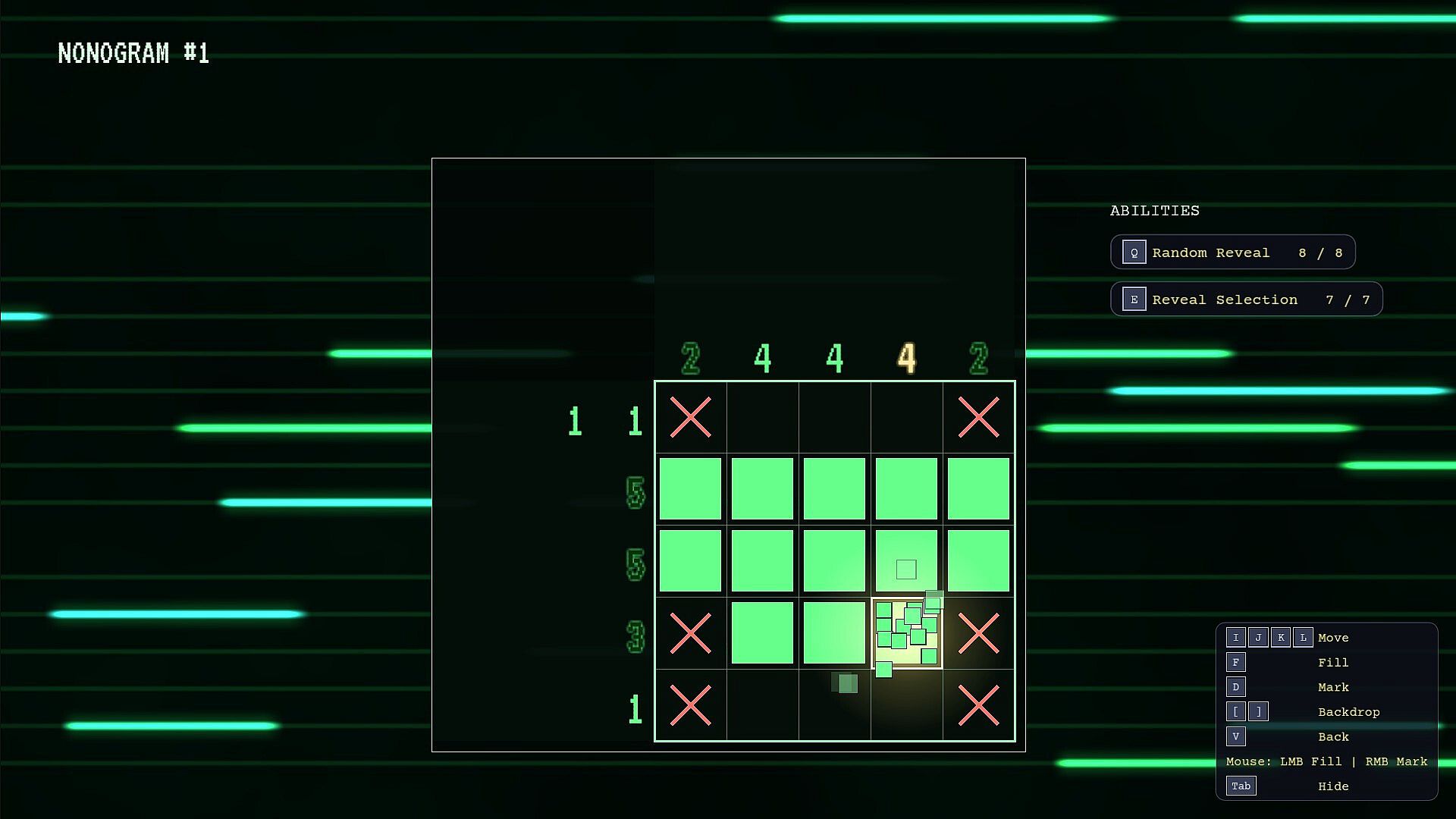
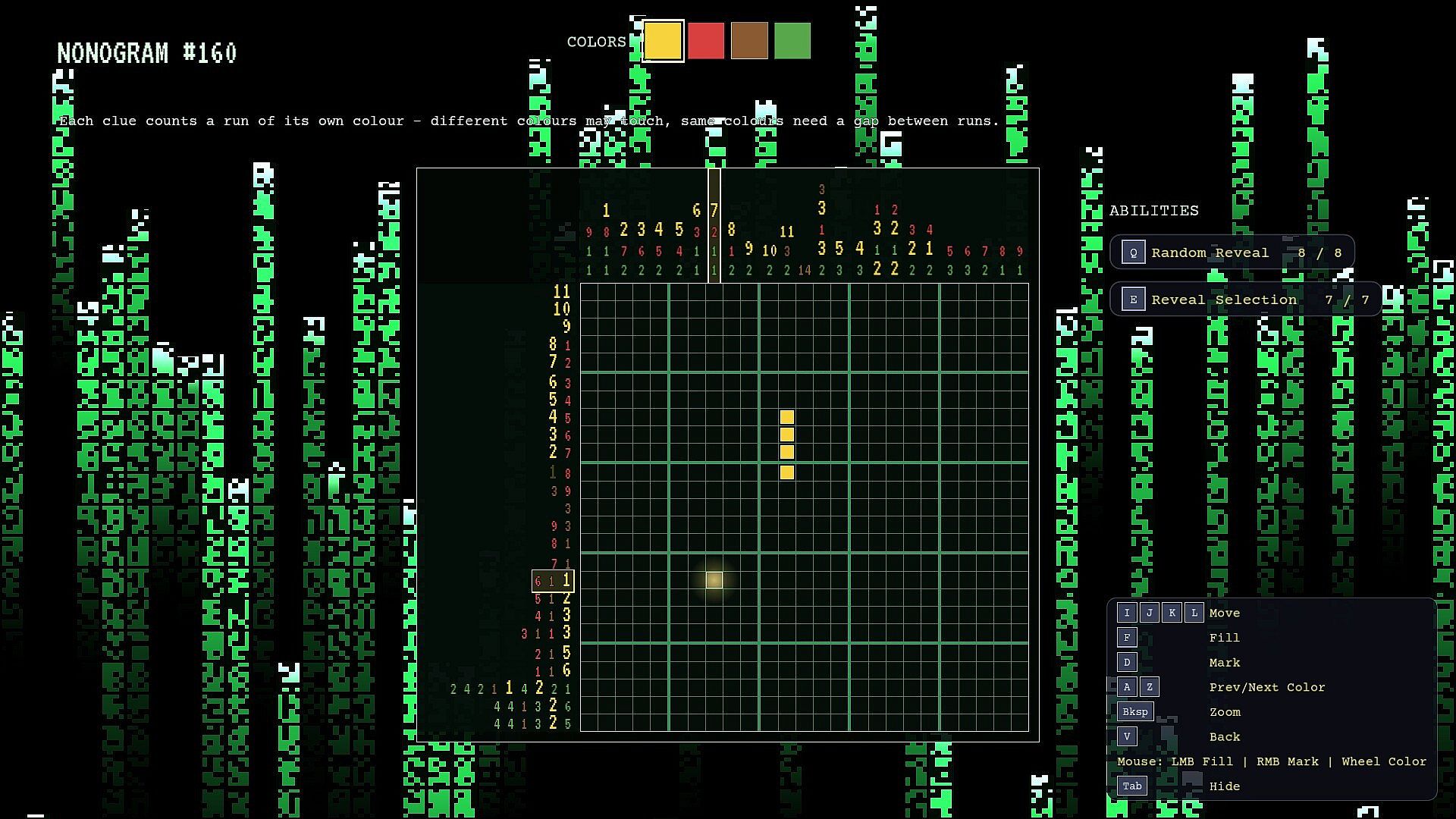
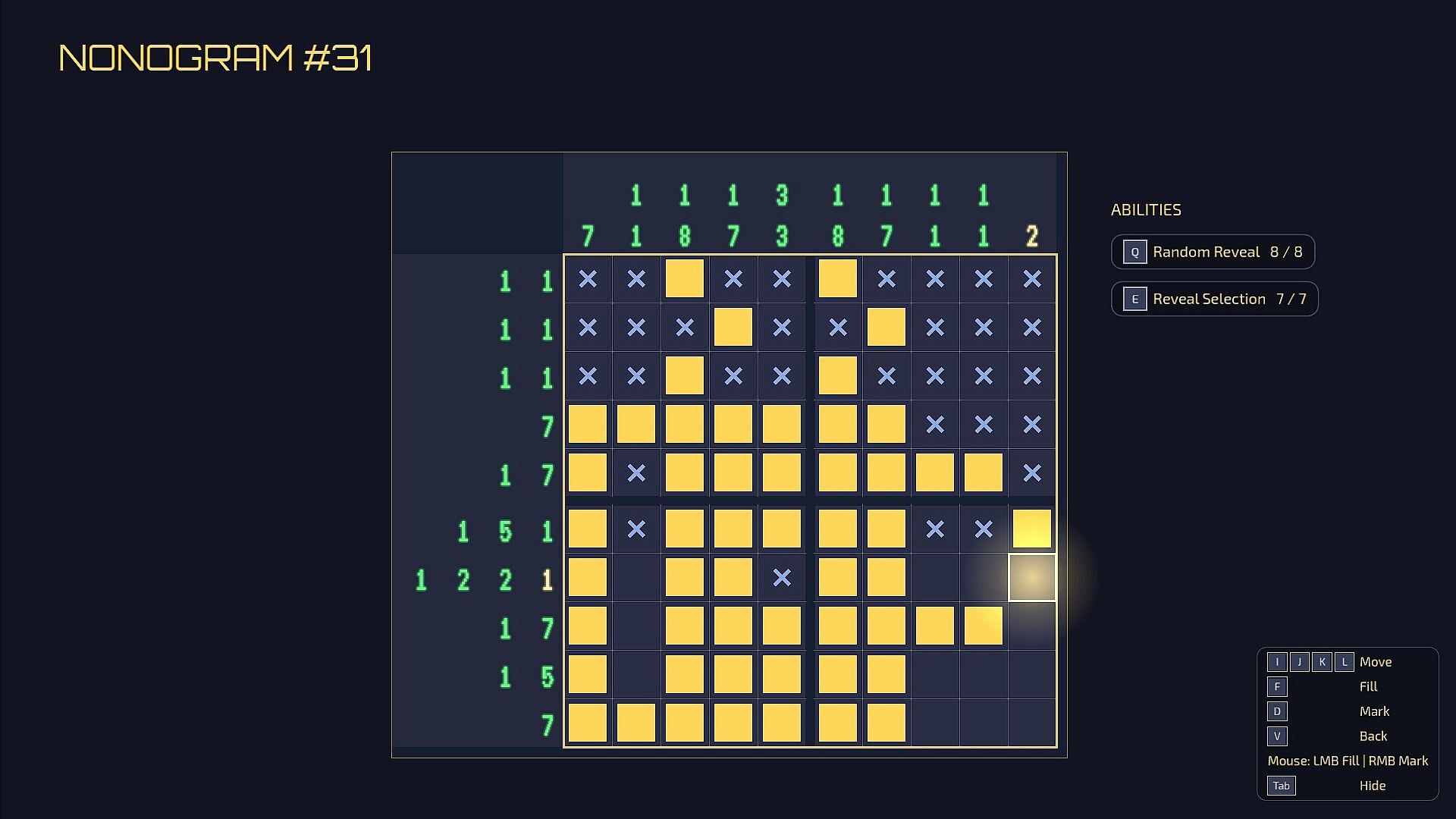
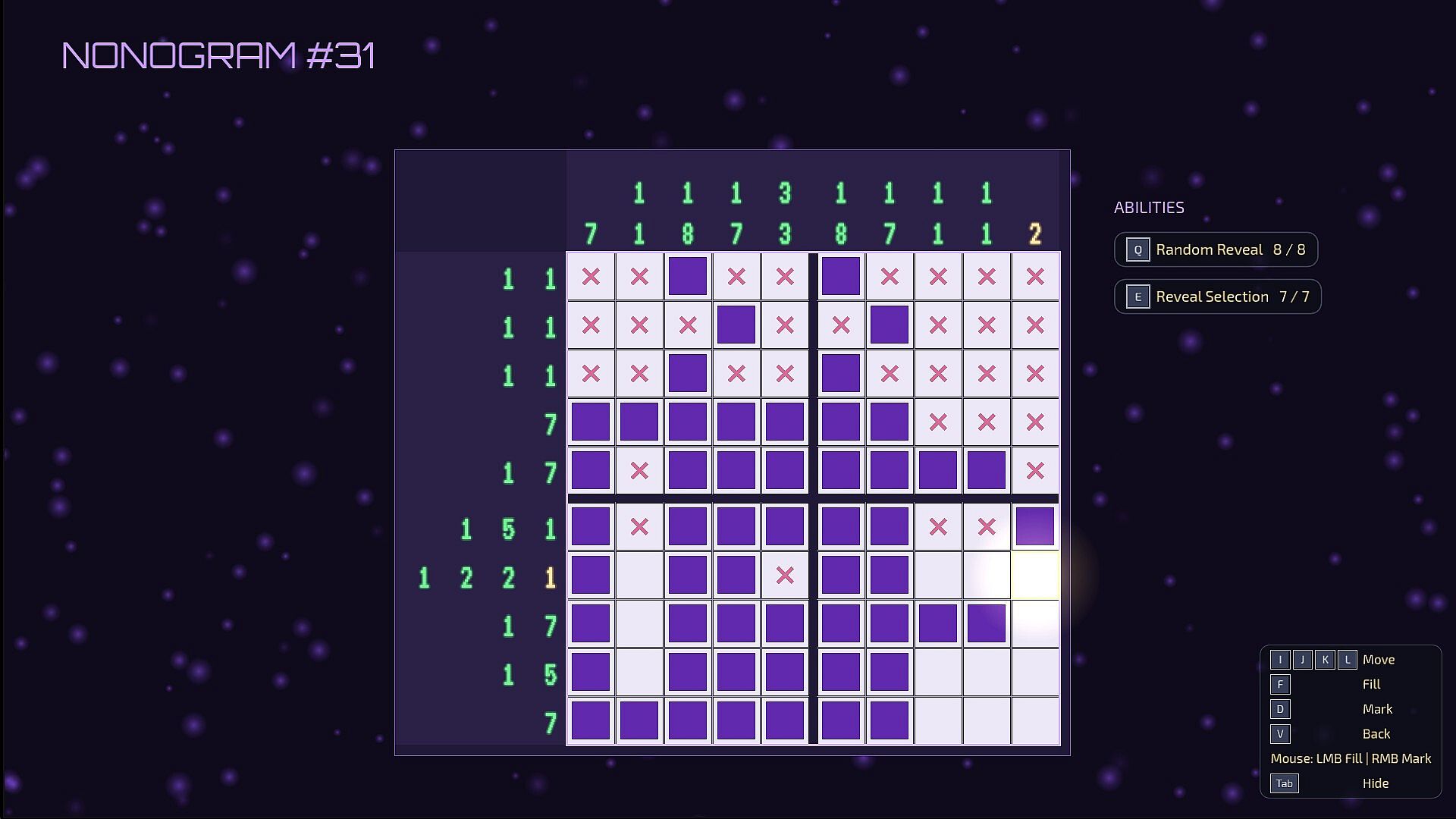
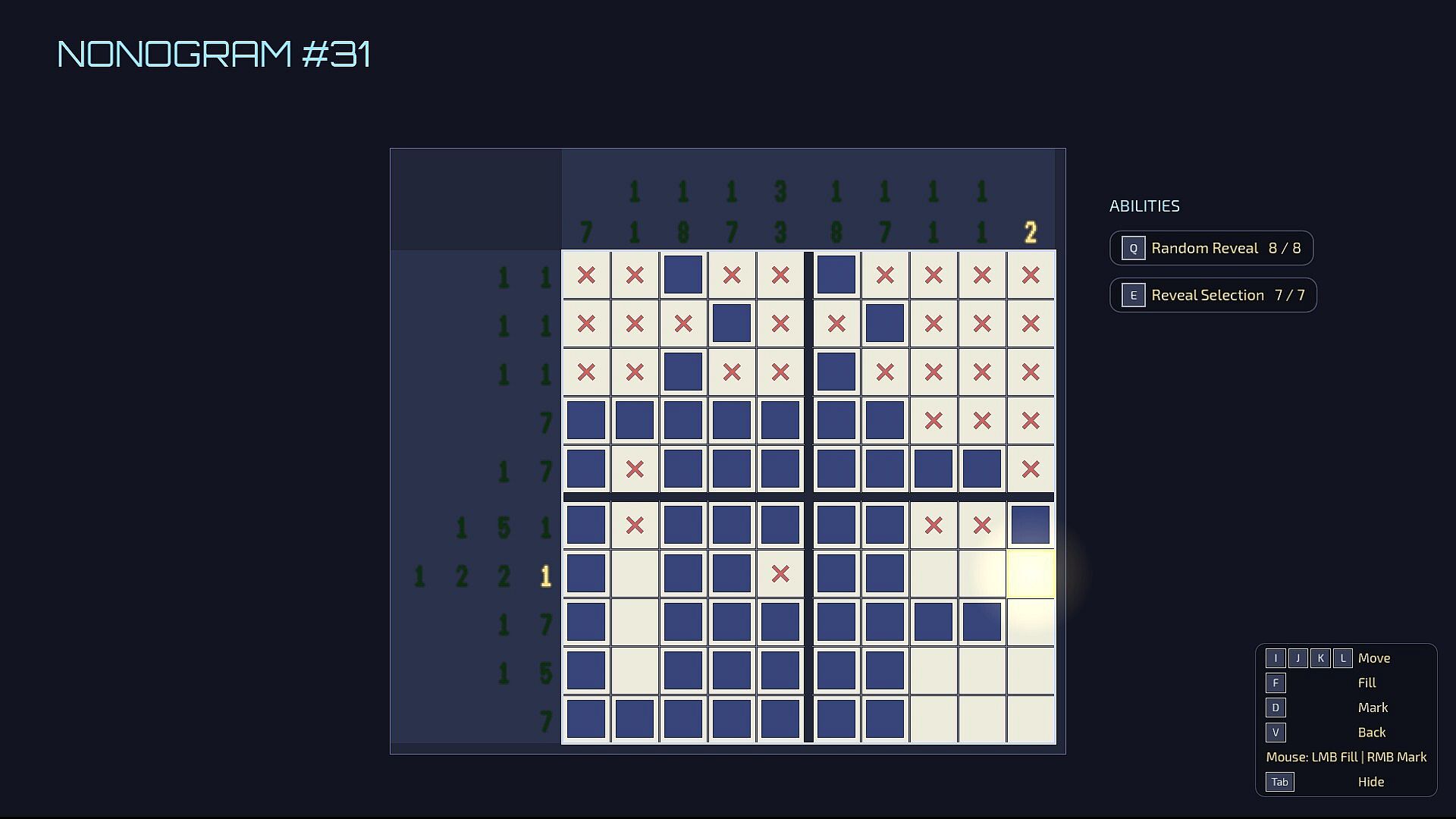
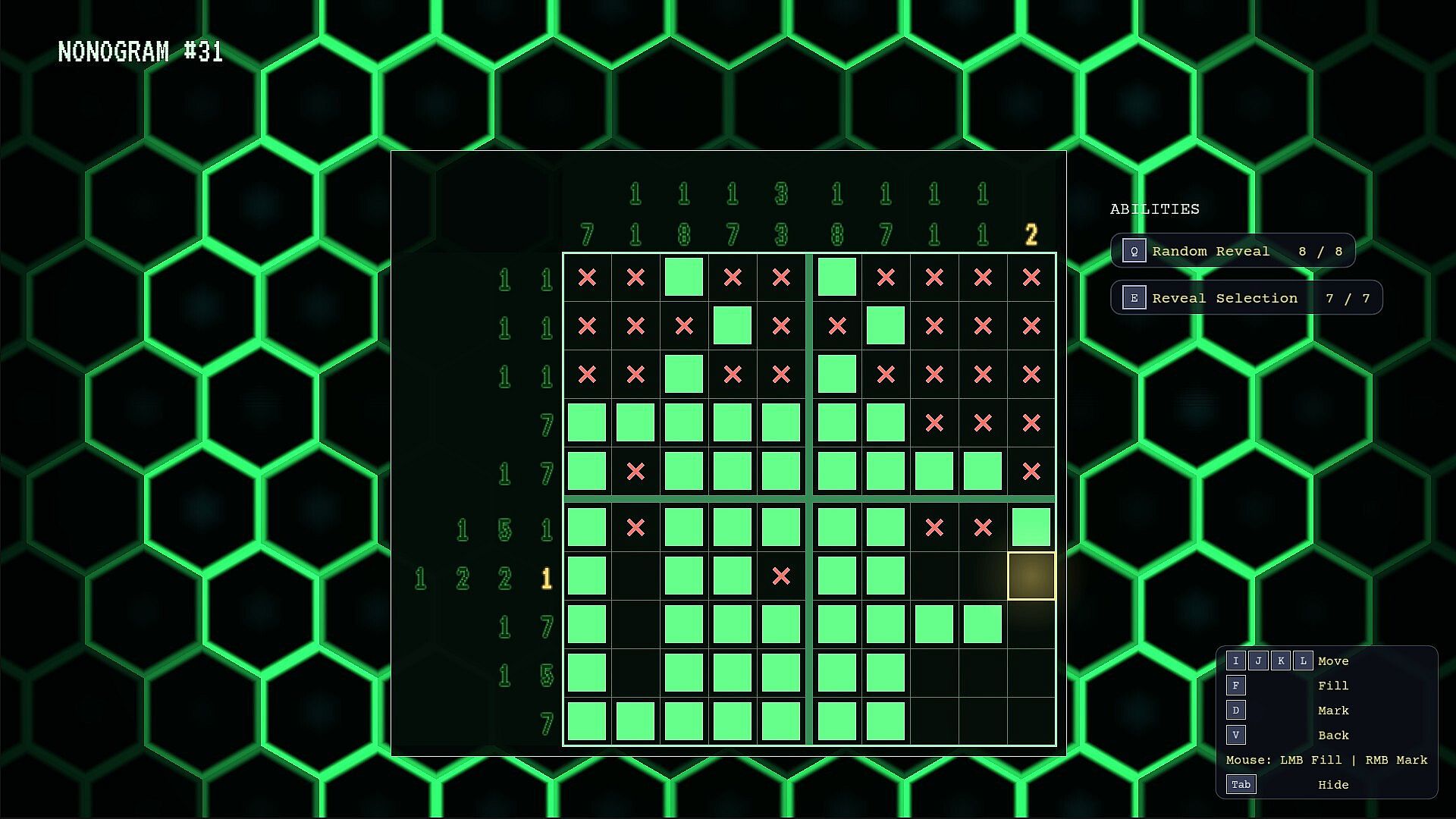
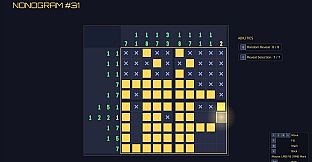
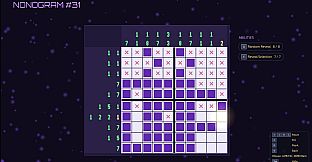
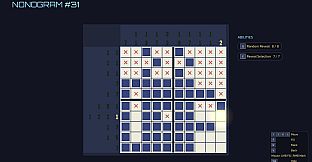
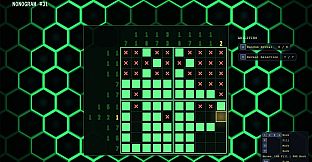
The core loop involves interpreting row and column clues to determine which squares to fill. Clues update in real time, turning green once a line satisfies its requirements, which provides clear confirmation even on larger boards with lines containing up to 60 cells. This feedback system supports steady progress without forcing random guesses. When progress stalls, two abilities become available after earning uses through completed puzzles: Random Reveal exposes a single cell at random, while Reveal Selection highlights a targeted area. Both serve as targeted assists rather than full solutions.
Controls accommodate different preferences. Mouse input supports clicking to fill cells, right-clicking to mark exclusions, and drag-painting across multiple squares, with an optional straight-line mode for precise runs. Keyboard and controller inputs are fully rebindable, including native support for Xbox, PlayStation, and Nintendo controllers. Larger boards include zoom functionality to maintain visibility on varied screen resolutions, and the game runs ready for Steam Deck use without additional setup. Sessions can pause at any point, resuming with the exact grid state, cursor position, and ability counts preserved.
Game Modes
Puzzles appear in four visual styles that alter the grid presentation without changing the underlying logic. Classic uses a blueprint blue theme, Cyberdeck features green-on-black digital elements, Goldleaf applies gold tones on a slate background, and Amethyst incorporates wind-blown sky motifs. Each style allows further customization of fill animations and cursor appearance.
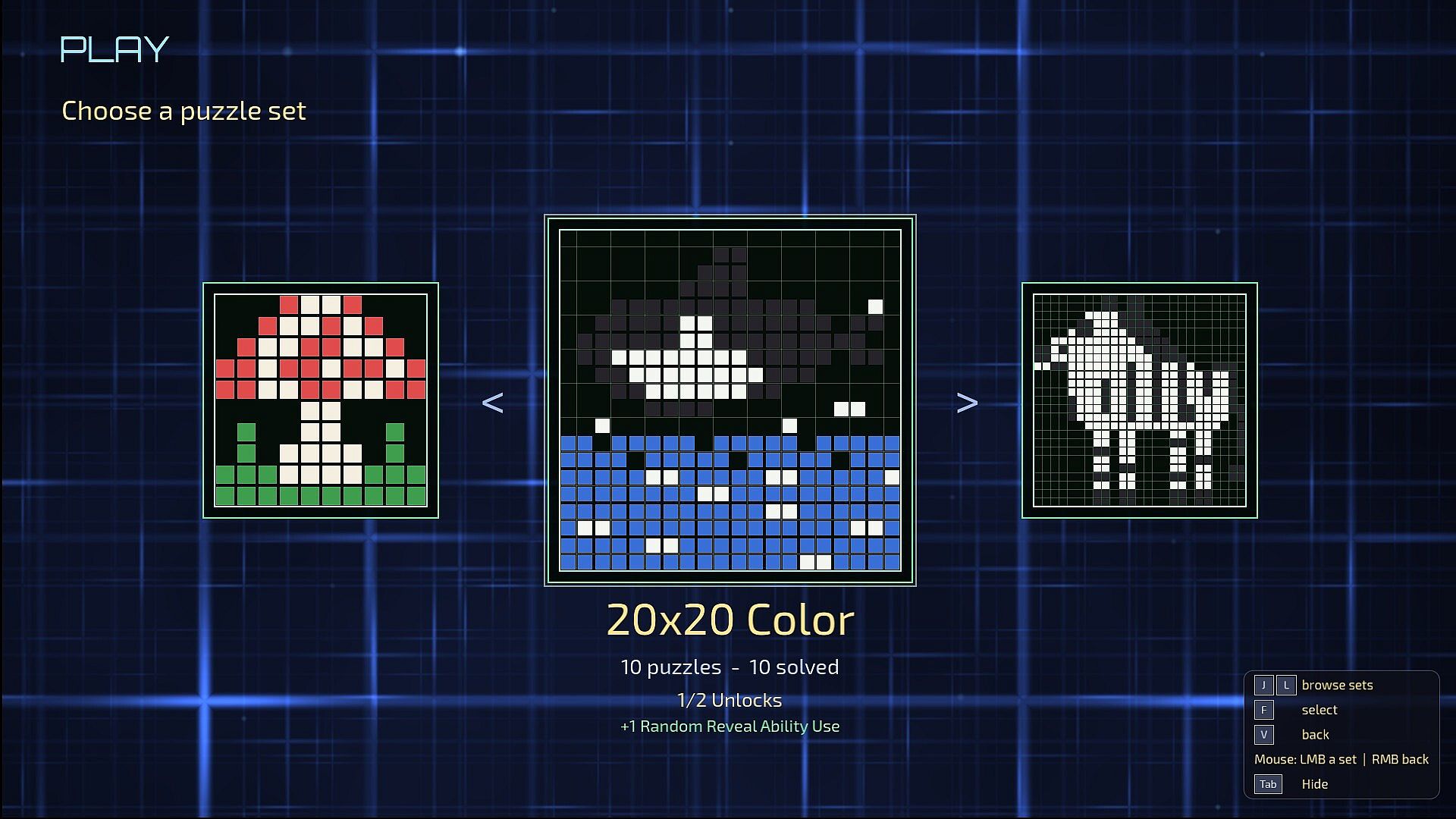
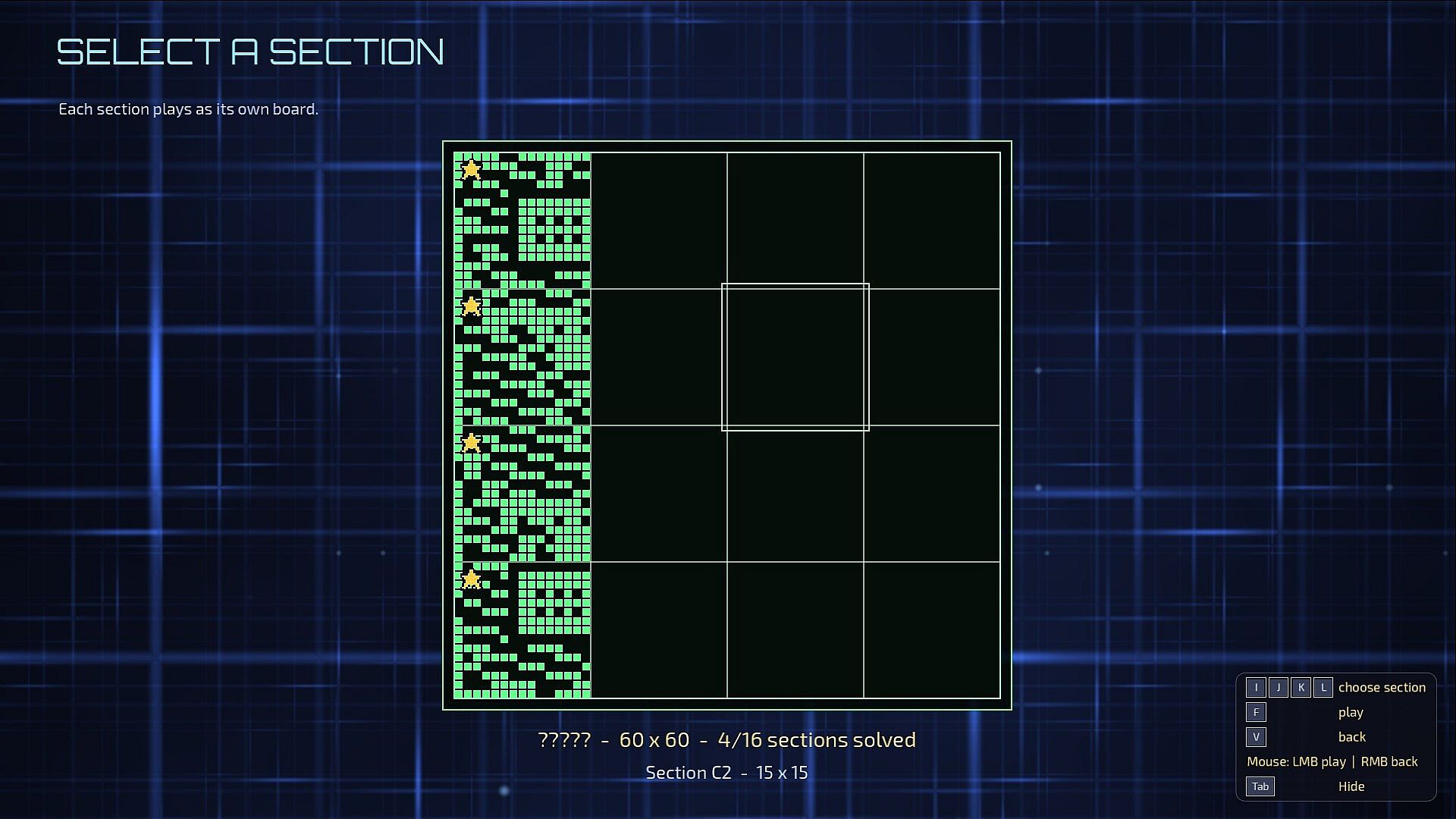
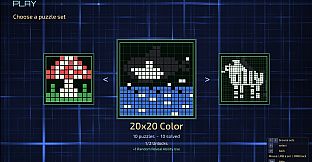
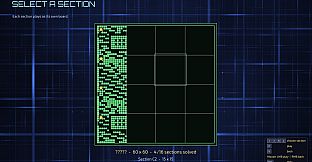
Standard puzzles range across five sizes from 5x5 to 25x25. Colored variants introduce palettes of up to 16 colors, requiring players to match both position and hue according to the clues. Mega-Grams expand the format into oversized images divided into multiple separate boards. Each section solves independently, and completion assembles the full artwork tile by tile across the larger composition.
Puzzle Variety and Progression
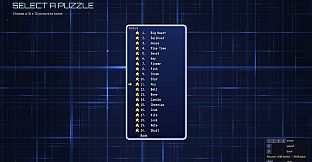
Over 175 hand-crafted puzzles populate the collection, mixing single-board challenges with the multi-section Mega-Grams. Progression tracks best completion times per picture and unlocks additional ability uses as more puzzles clear. Achievements cover milestones such as first solves and perfect runs on the largest grids. All progress, including partial boards, carries forward through cloud saving.
The design emphasizes respect for player time. No forced restarts occur on exit, and the logic focus means solutions remain reachable through deduction alone, even when lines grow complex. Customization options extend to square fill animations and cursor tuning, allowing each session to match individual preferences.
Is It Worth Playing?
GRIDGRAMS suits players who enjoy methodical puzzle solving and visual reveal mechanics in a single-player casual format. The combination of standard nonograms, colored grids, and expansive Mega-Grams provides sustained variety across different scales and complexities. Features like instant clue feedback, optional ability assists, and flexible controls reduce frustration on tougher boards while preserving the satisfaction of logical completion. Save-anytime functionality and controller support broaden accessibility for shorter or longer play sessions. Those seeking a focused nonogram experience with modern quality-of-life additions will find consistent depth without extraneous elements.