




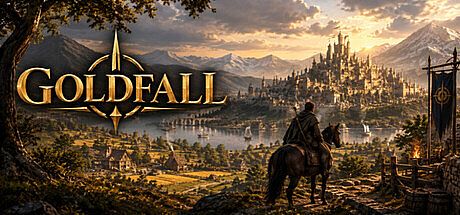


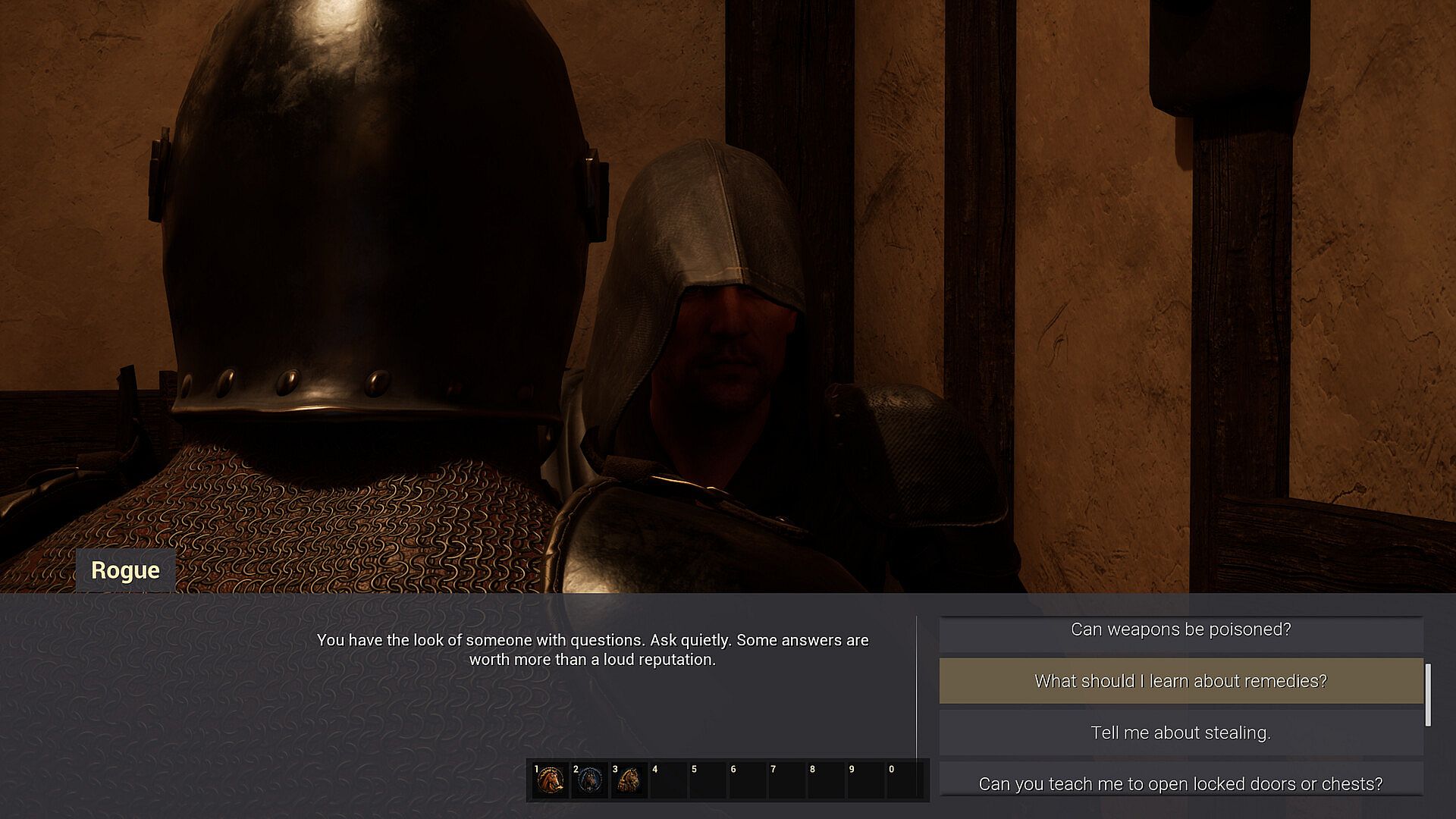
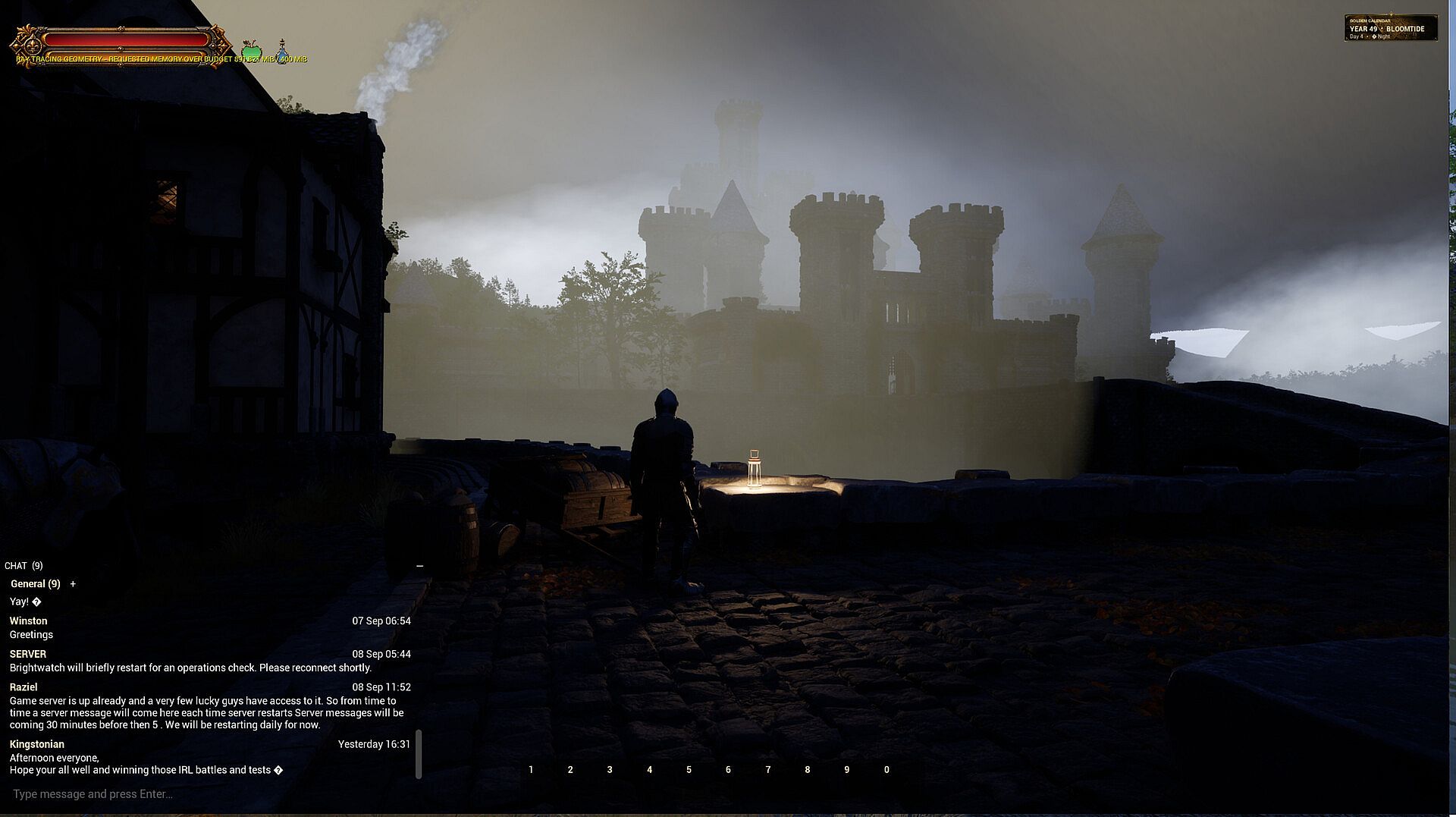
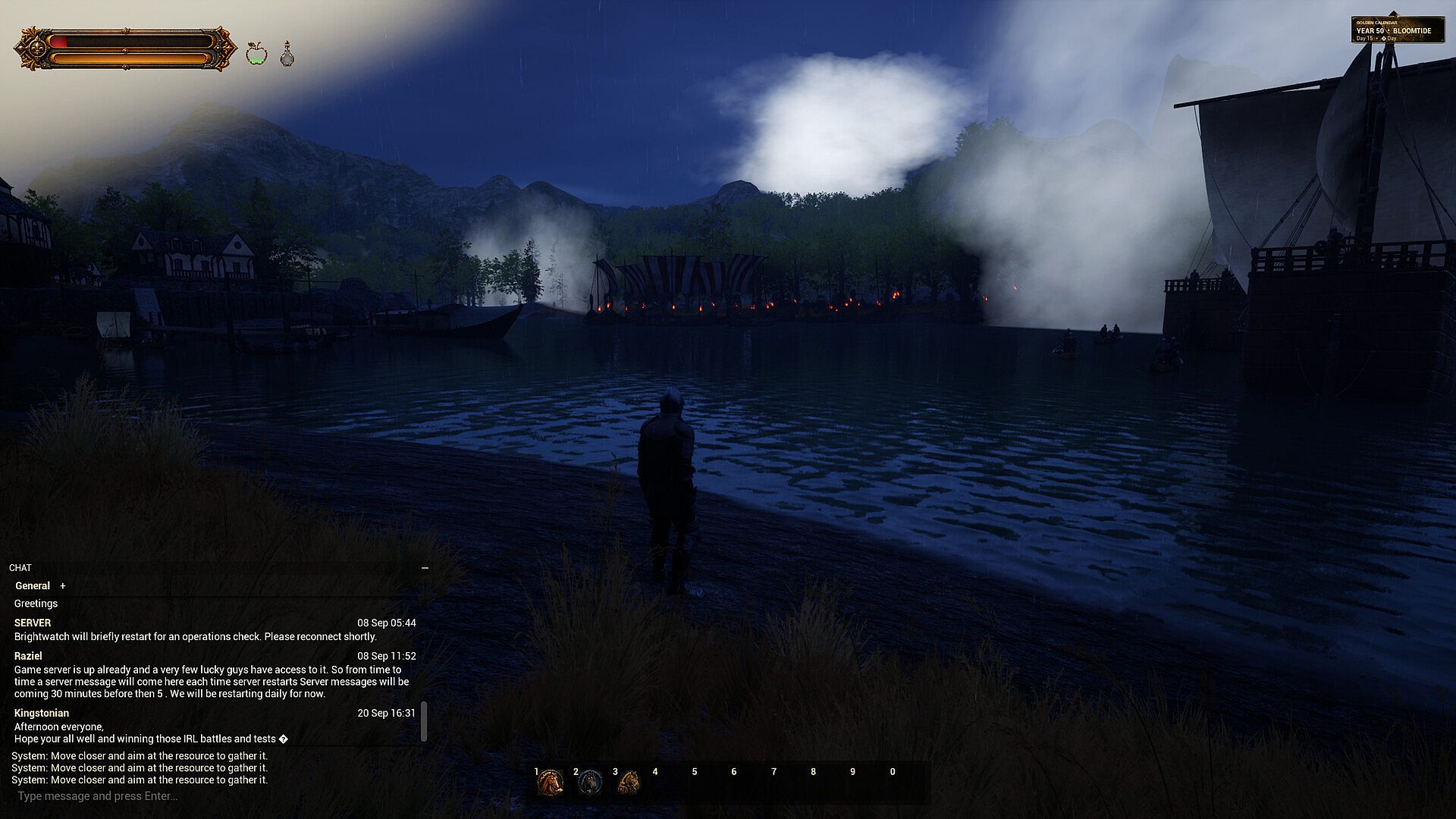
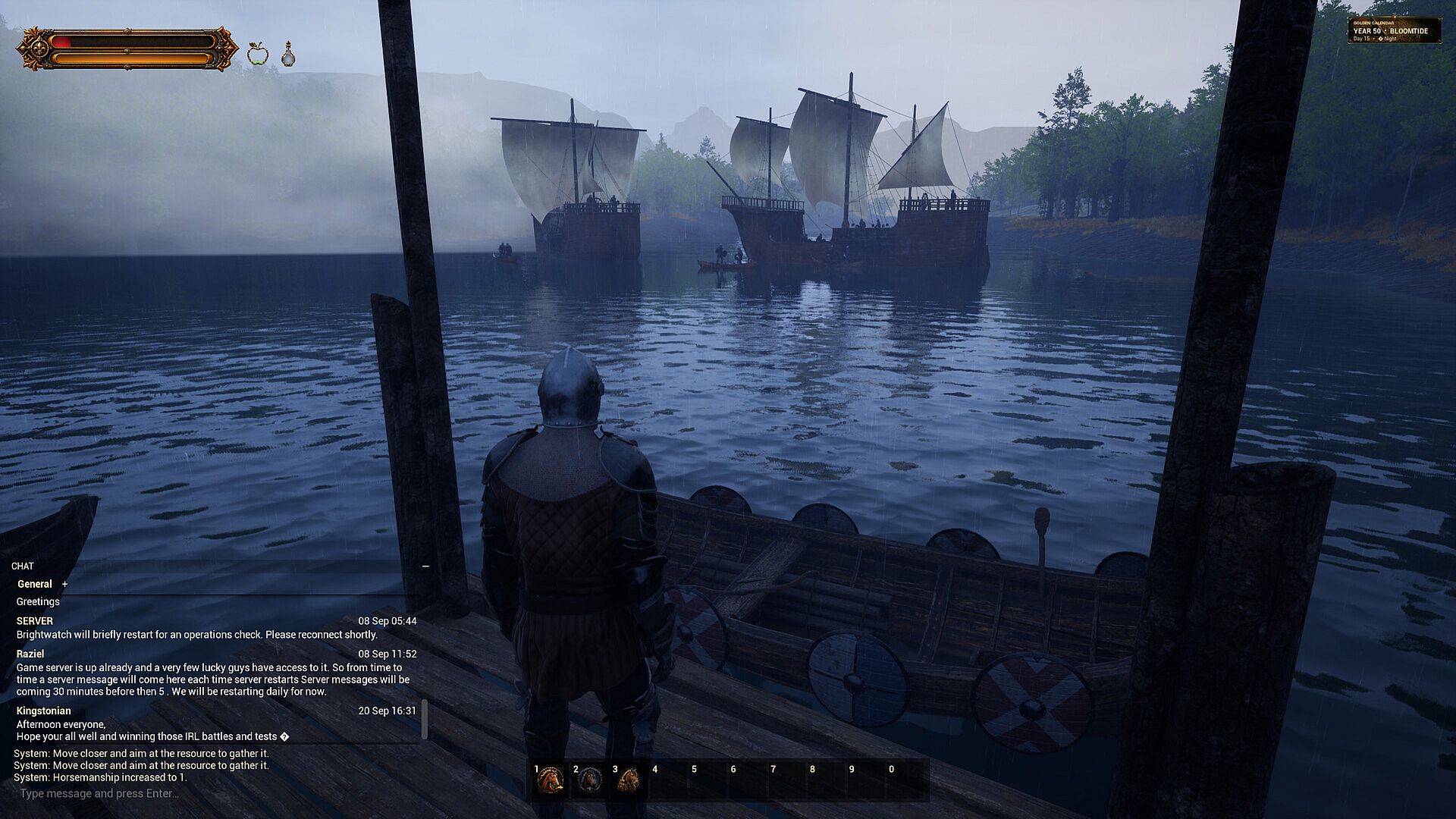
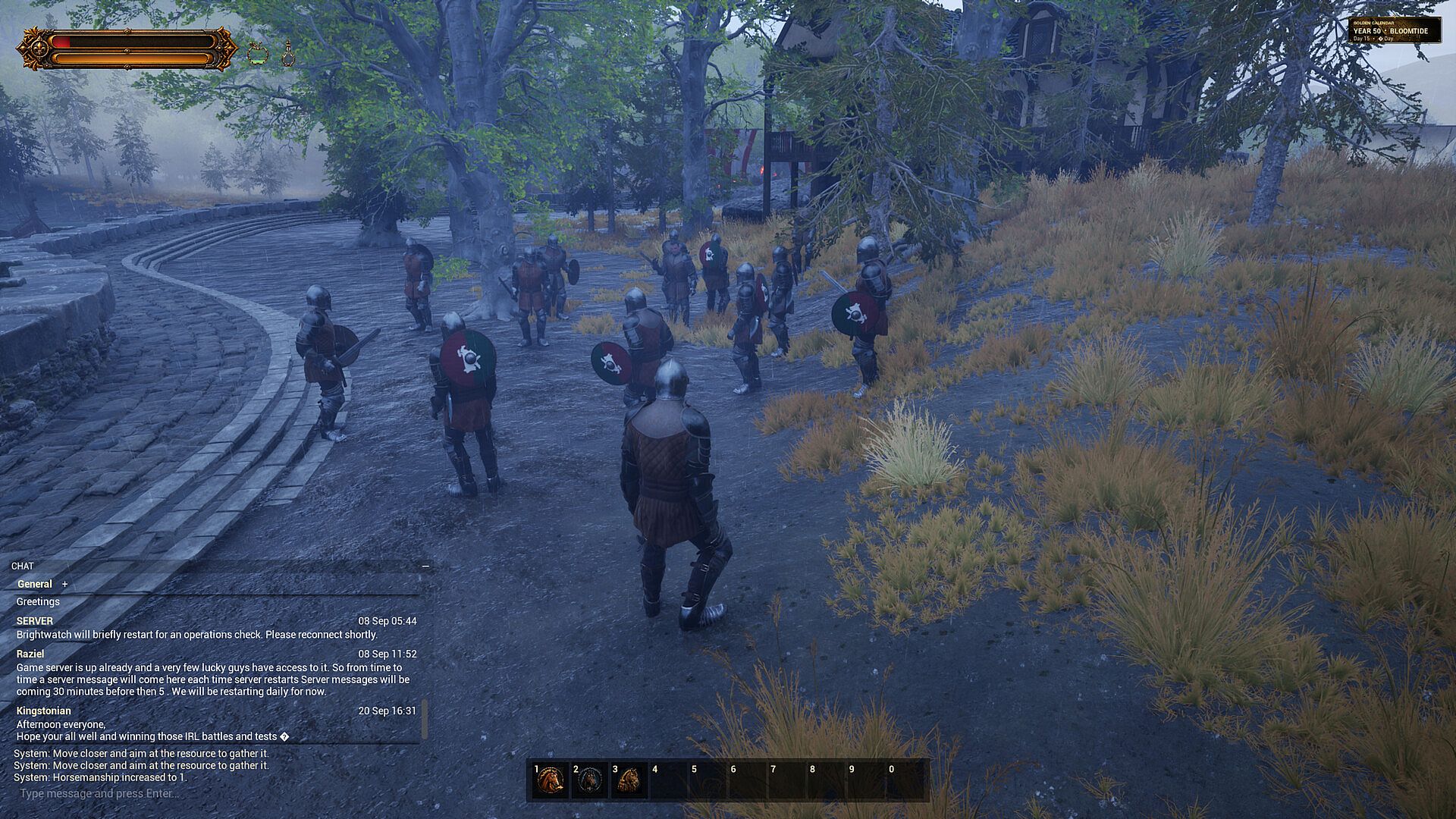
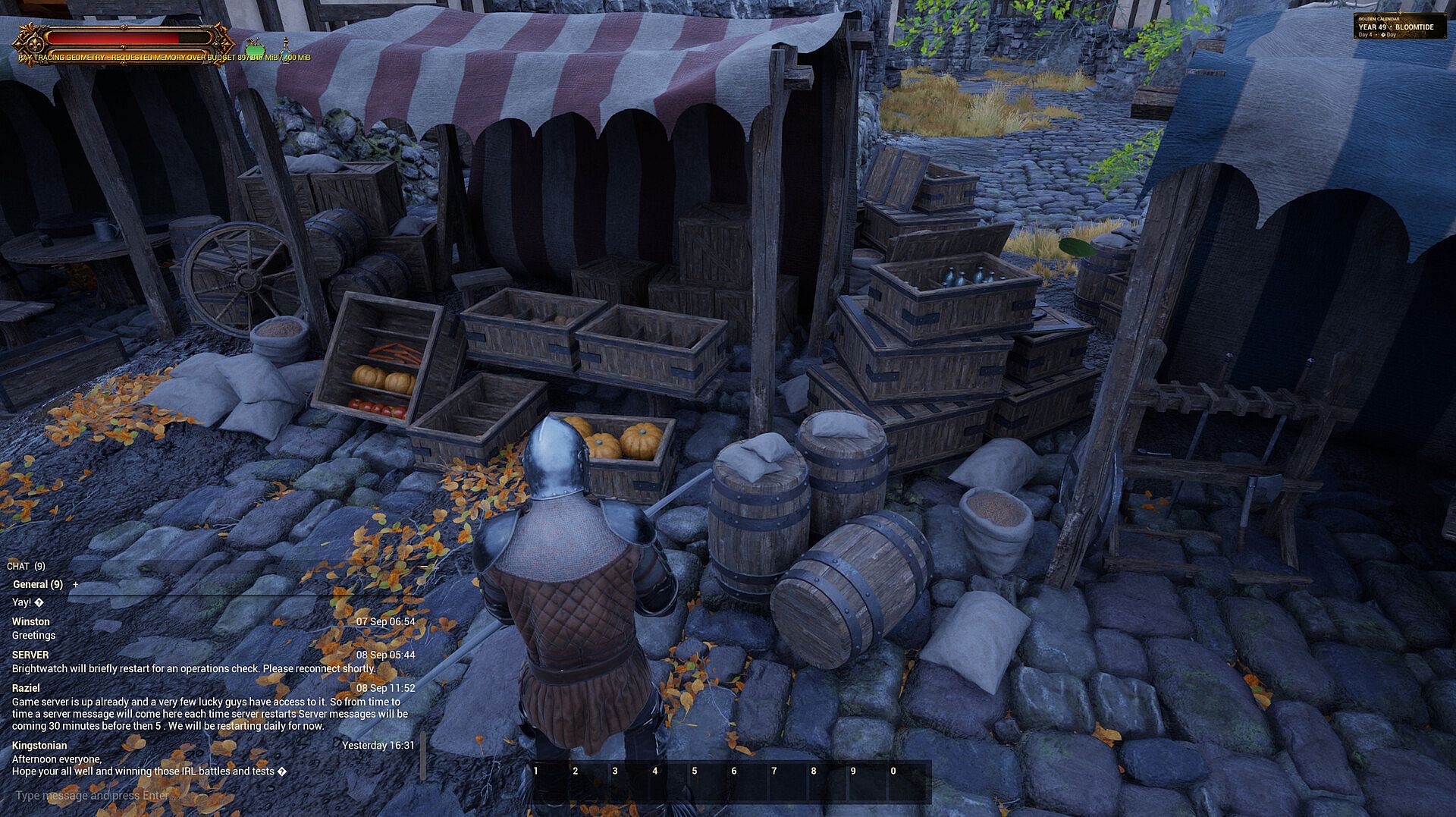
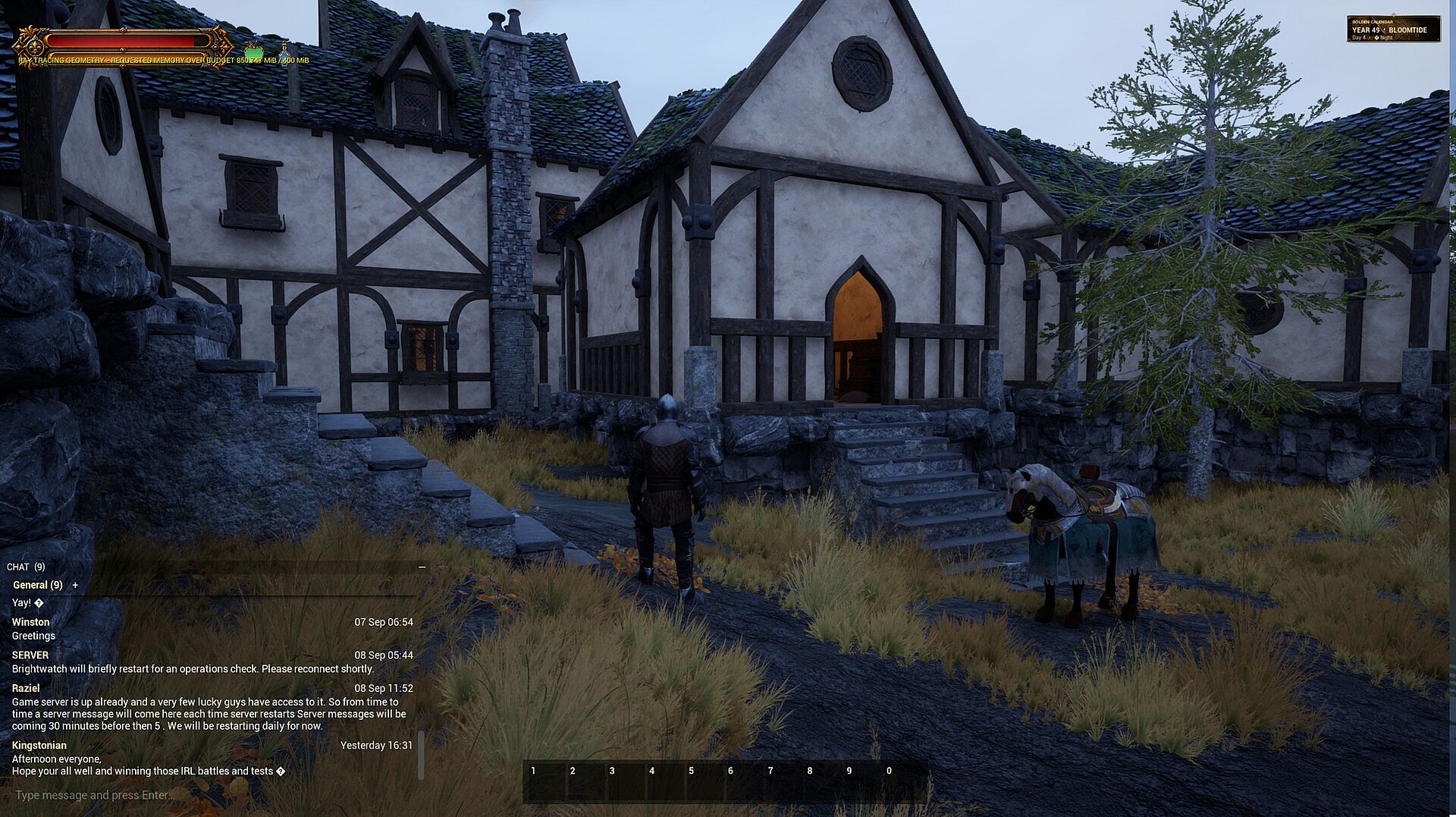
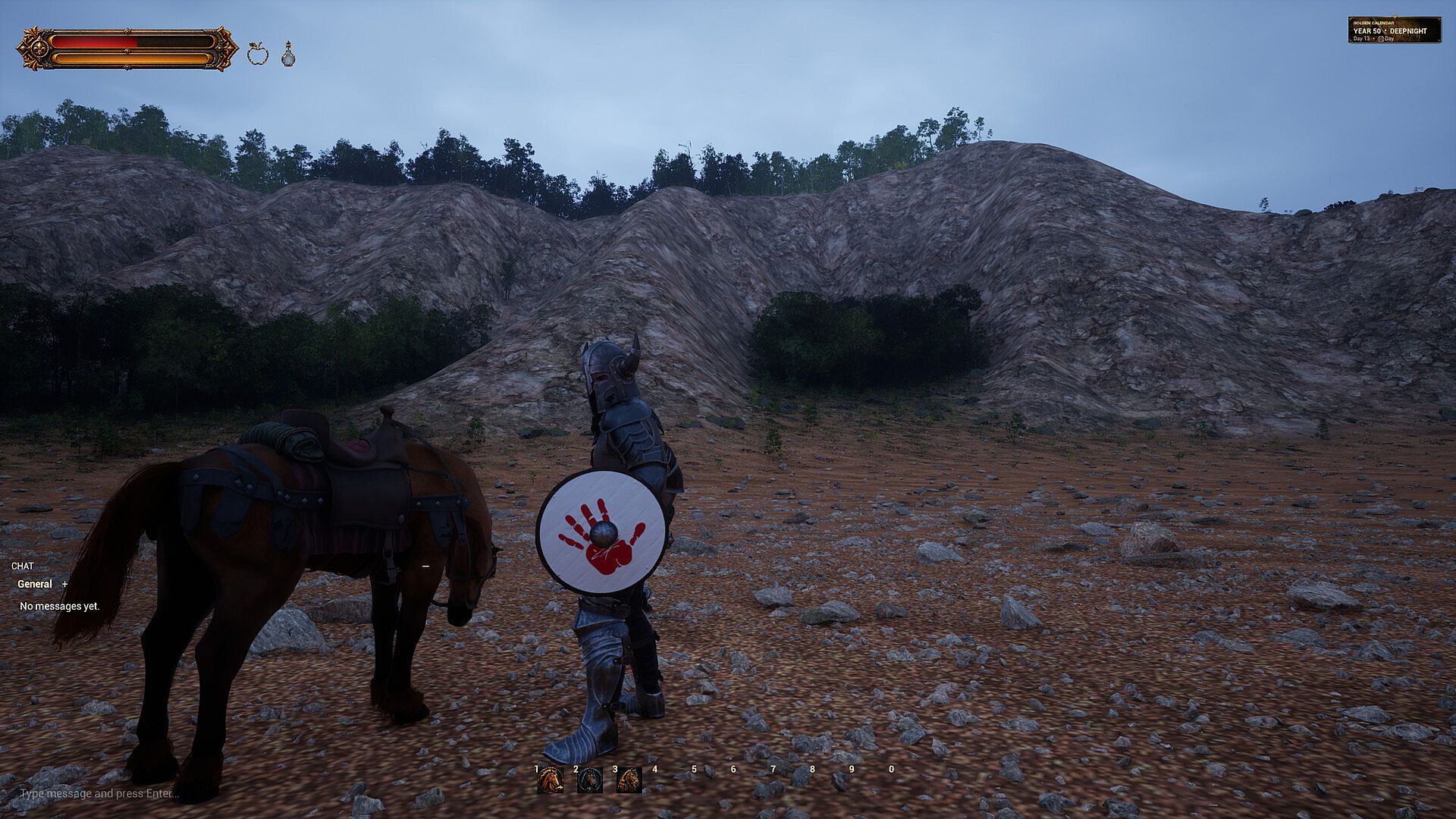
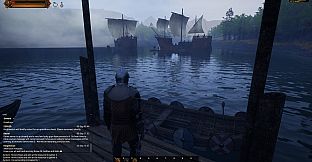
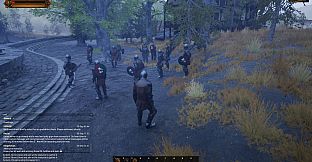
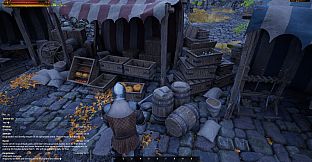
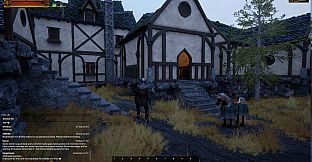
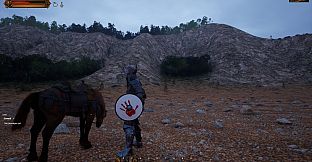
Goldfall is a medieval sandbox survival MMORPG set in a persistent world on PC. Players begin with minimal resources and must hunt, gather, craft, and build to establish a place in a dangerous environment where survival depends on preparation and understanding of the surroundings.
Gameplay
The core loop centers on resource management and skill development. Food and water remain essential, requiring players to hunt animals, collect natural materials, and secure water sources before venturing far. Characters progress through professions and knowledge systems rather than fixed classes, allowing specialization in areas such as crafting, construction, or animal handling. Horses serve as companions for travel across large landscapes, while pets add practical value to daily activities.
Building extends beyond basic shelters. Players construct functional structures for storage, production, and infrastructure that integrate into growing settlements. These elements support the broader economy, where gathered and crafted goods gain purpose through trade and community needs. Real-time combat emphasizes weapons, armor, stamina, and preparation, with outcomes influenced by cooperation and environmental awareness.
Game Modes
Goldfall operates as a single persistent sandbox environment without separate modes or instances. Players define their experience through choices in roles such as hunter, merchant, builder, soldier, or landowner. The world supports both solitary wilderness living and participation in organized communities, with systems for property ownership, family formation, and institutional involvement emerging from player actions rather than scripted events.
Conflict arises organically from competition over resources, territory, and influence. No predetermined narrative guides progress, allowing individuals to focus on exploration, trade, governance, or rejection of settled life entirely.
Player-Driven Systems
The economy relies entirely on player activities. Resources flow from gathering and hunting into production and exchange, creating value based on supply, demand, and community requirements. Settlements develop through collective contributions to infrastructure and production facilities.
Social structures form around player-created houses, dynasties, religions, and governance systems. Reputation, alliances, and political positions carry tangible weight, shaping access to property, authority, and influence within the world.
Is It Worth Playing?
Goldfall suits players seeking deep sandbox experiences in a medieval setting with strong emphasis on survival mechanics, crafting progression, and emergent multiplayer interactions. Those who prefer structured quests or solo-focused stories may find the open-ended design less engaging. The persistent nature and player-driven economy provide ongoing opportunities for long-term involvement, particularly for groups interested in building communities or pursuing specialized roles over extended periods.