









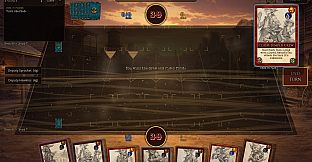
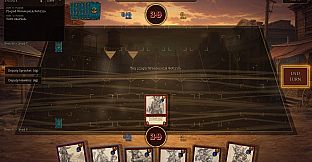
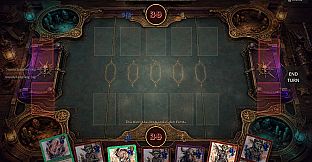
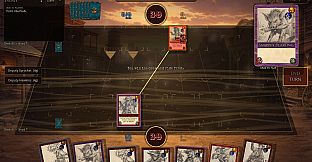
Goblins and Gunslingers é um card game de faroeste fantástico que mistura feitiçaria com táticas de revólver em um campo de batalha de múltiplas pistas. Os jogadores montam decks a partir de oito facções de foras da lei e duelam em uma fronteira onde posicionamento, timing e gerenciamento de dois recursos definem o resultado. O jogo prioriza combates abertos em vez de trocas fixas de pistas, permitindo que criaturas ataquem em qualquer direção assim que a cobertura for removida.
Gameplay
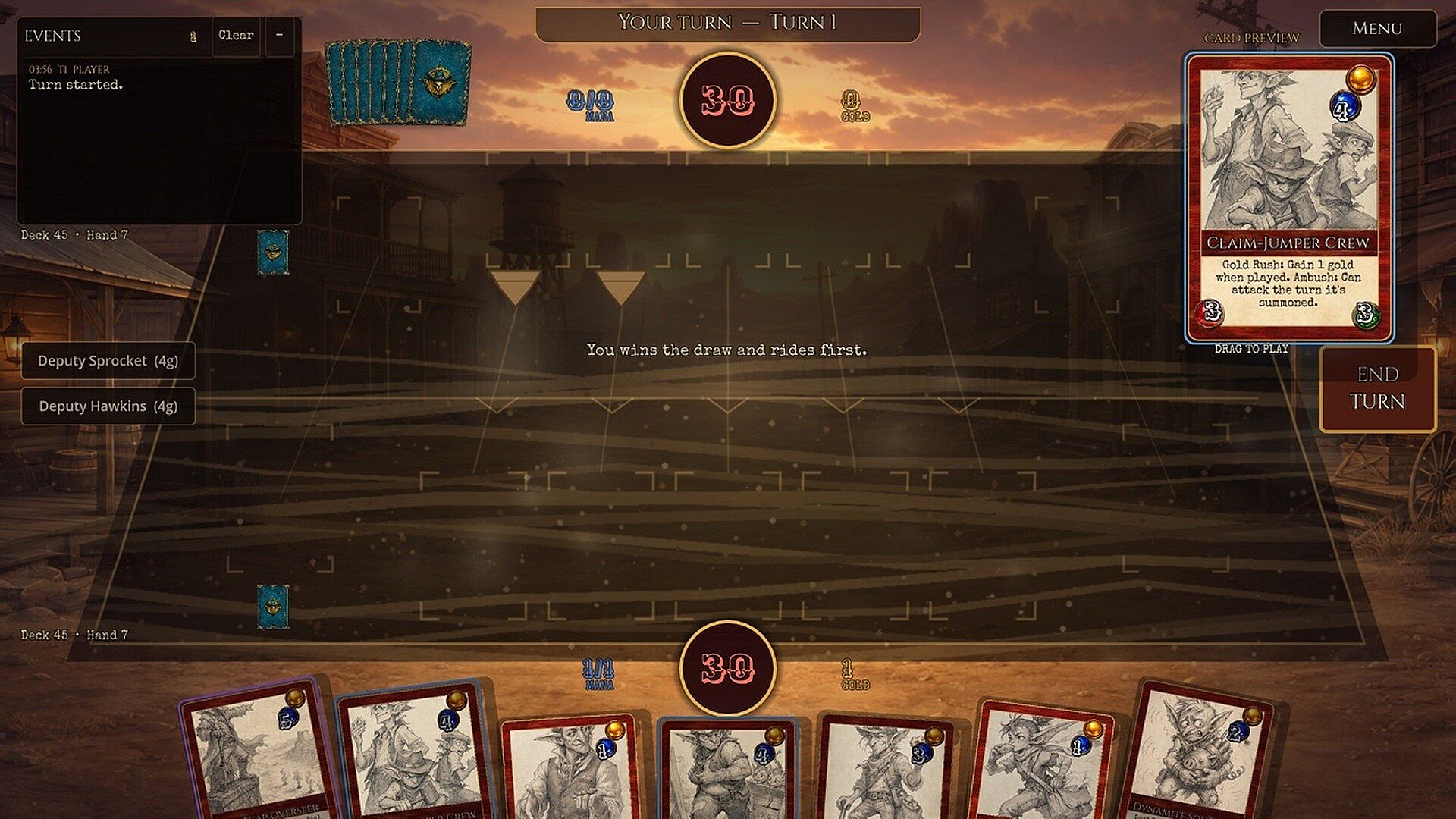
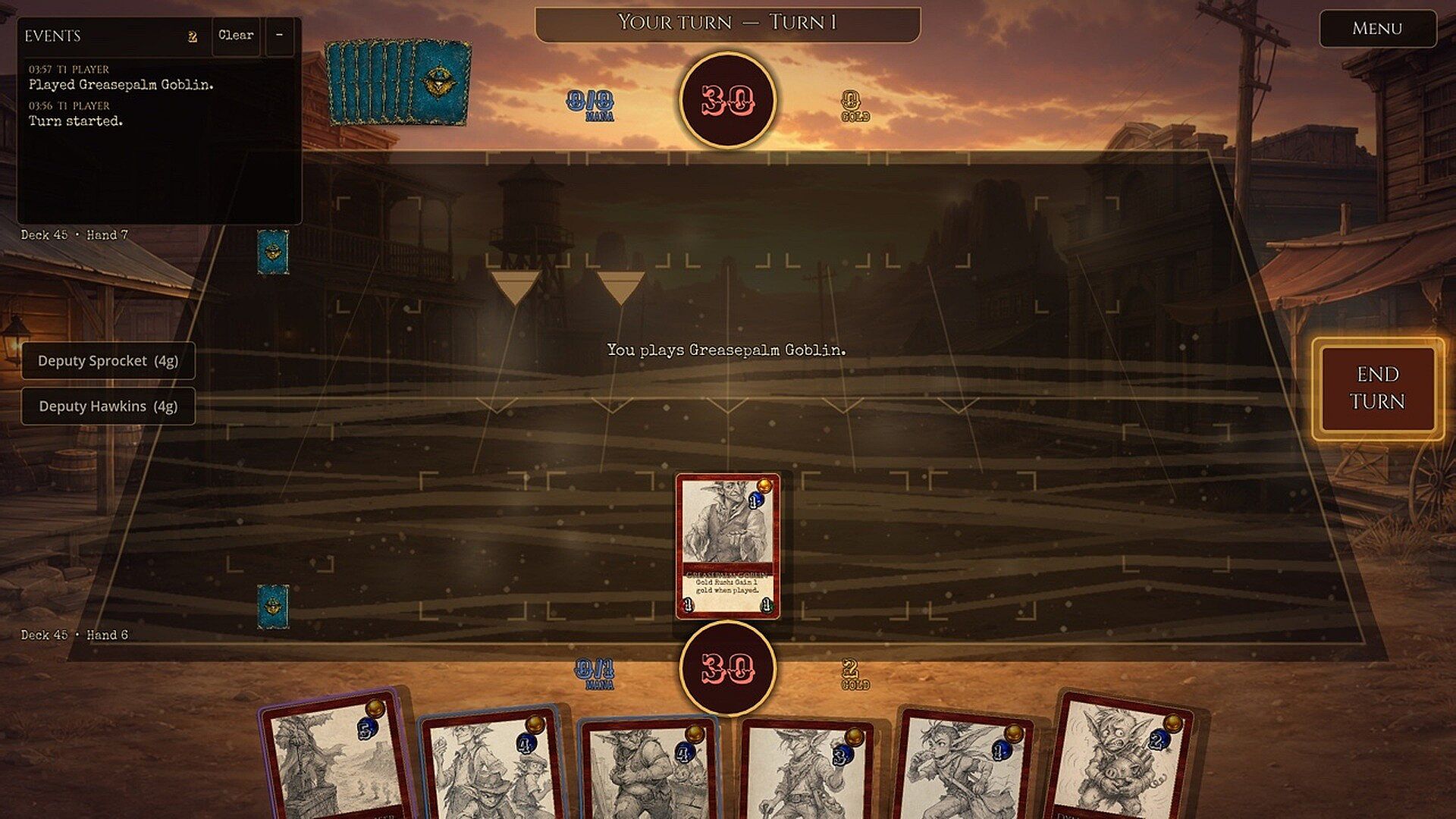
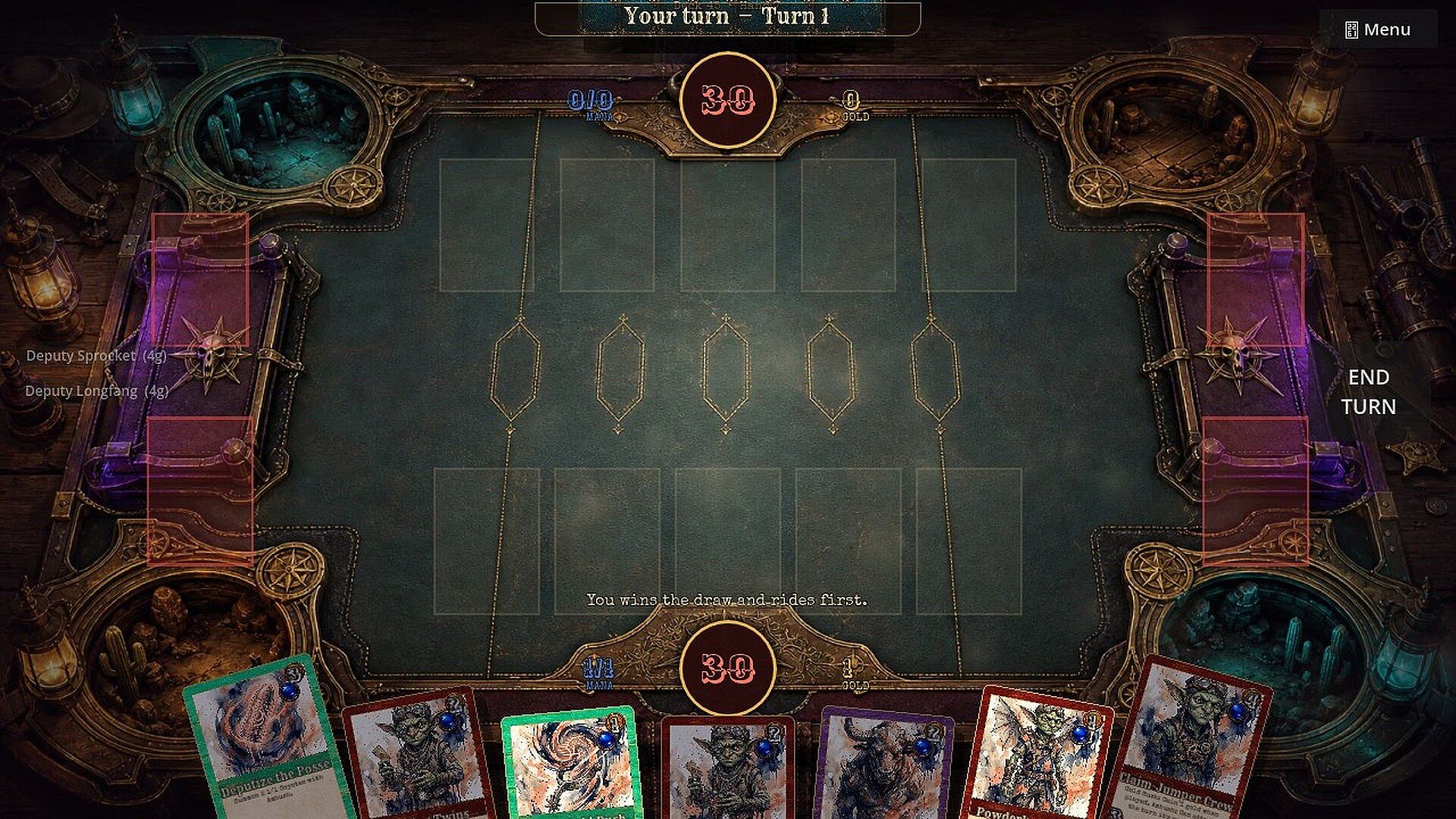
Os duelos acontecem em um campo de sete posições, com cinco pistas centrais e dois poleiros elevados. As criaturas ocupam esses espaços, e a posição afeta linhas de ataque, interações de cobertura e vantagens de terreno alto. As pistas centrais permitem múltiplas unidades e abrem ataques diretos ao xerife quando os tokens de cobertura são eliminados, enquanto os poleiros oferecem camuflagem até o momento do ataque.
Dois recursos conduzem a partida. Mana acumula a cada turno sem limite e financia feitiços e invocações. Ouro chega em ritmo constante, com bônus por dano causado ao oponente, e paga por adjuntos e certos itens. Essa divisão cria ritmos distintos: mana favorece investimentos em feitiços de longo prazo, enquanto ouro recompensa pressão agressiva no tabuleiro.
Ataques seguem regras de combate aberto. Qualquer criatura pode mirar qualquer unidade inimiga válida ou token de cobertura, sem ficar presa à pista oposta. Mecânicas como ricochetes, últimos suspiros e mandados de ataque obrigatório adicionam camadas de interação e exigem leitura constante do estado do campo. Criaturas voadoras ignoram cobertura por completo, e dano excedente pode atravessar bloqueadores.
A transformação característica de Gnomo-para-Golem permite carregar um gnomo com um feitiço para convertê-lo em um golem maior durante o duelo. A transformação mantém a pista, o dano e os acessórios da criatura, exigindo dois feitiços adversários para reverter. O sistema favorece arquétipos dedicados a gnomo-golem e premia precisão no timing.
A construção de decks usa oito facções: Humanos, Goblins, Diabos do Deserto, Elfos de Palha, Gnomos com suas formas de golem, Anões e Feras selvagens que podem ser incluídas em qualquer deck. Os jogadores escolhem até duas facções principais e qualquer quantidade de feras, com limites de cópias para manter o equilíbrio. Adjuntos ficam fora do deck principal e oferecem habilidades fora do campo ou presença poderosa quando invocados.
Game Modes
Quatro modos distintos atendem a diferentes estilos de jogo. O tutorial de história apresenta uma campanha cinematográfica em quatro partes que ensina as regras básicas enquanto acompanha uma narrativa desde o acidente de diligência até o posto de xerife.
O multiplayer online permite partidas ranqueadas contra outros jogadores, com sistemas resistentes a trapaças e coleções vinculadas à conta. O modo Escaramuça oferece duelos rápidos contra oponentes controlados pelo computador para testar decks ou jogar offline.
Frontier Run funciona como uma campanha roguelike em que os jogadores montam decks durante a partida, escolhem rotas ramificadas, visitam lojas e gerenciam a saúde da trilha ao longo de múltiplos estágios. Recompensas e melhorias persistem dentro de uma única run, estendendo as regras centrais para uma progressão solo mais longa.
Deckbuilding and Factions
A construção de decks gira em torno de construções de 52 cartas limitadas a duas facções principais, com inclusão flexível de feras. Cada facção traz adjuntos, palavras-chave e condições de vitória distintas que recompensam sinergia ou estratégias sem criaturas. A ausência de vantagens pagas significa que todas as cartas podem ser obtidas apenas jogando.
A variedade de facções suporta abordagens de pressão, controle, economia e caos. Gnomos destacam-se pelo timing de transformação, enquanto outros grupos focam em geração de ouro, remoções em massa ou sinergias com adjuntos. Os jogadores podem experimentar combinações enxutas ou composições mais amplas de duas facções.
Is It Worth Playing?
Goblins and Gunslingers oferece uma experiência free-to-play com coleções totalmente obtíveis e progresso de conta entre navegador e o lançamento futuro para desktop. Seu foco tático em posicionamento em sete pistas, relógios de dois recursos e combate aberto o diferencia dos card games tradicionais de pista única.
O jogo atende jogadores que valorizam profundidade estratégica na construção de decks e nas decisões em partida, em vez de partidas rápidas ou progressão cosmética. Frontier Run fornece conteúdo solo substancial, enquanto os modos online suportam escalada competitiva. Com o lançamento no Steam marcado para 7 de agosto de 2026, o título já está acessível pelo cliente de navegador para quem busca duelos de cartas em faroeste fantástico que recompensam gerenciamento cuidadoso de pistas e timing de recursos.
