






Get To Orbit is a casual simulation game built around authentic two-body orbital mechanics. Players take on the role of a pilot completing precise orbital contracts on PC, where success depends on understanding real physics rather than simplified arcade controls.
Gameplay
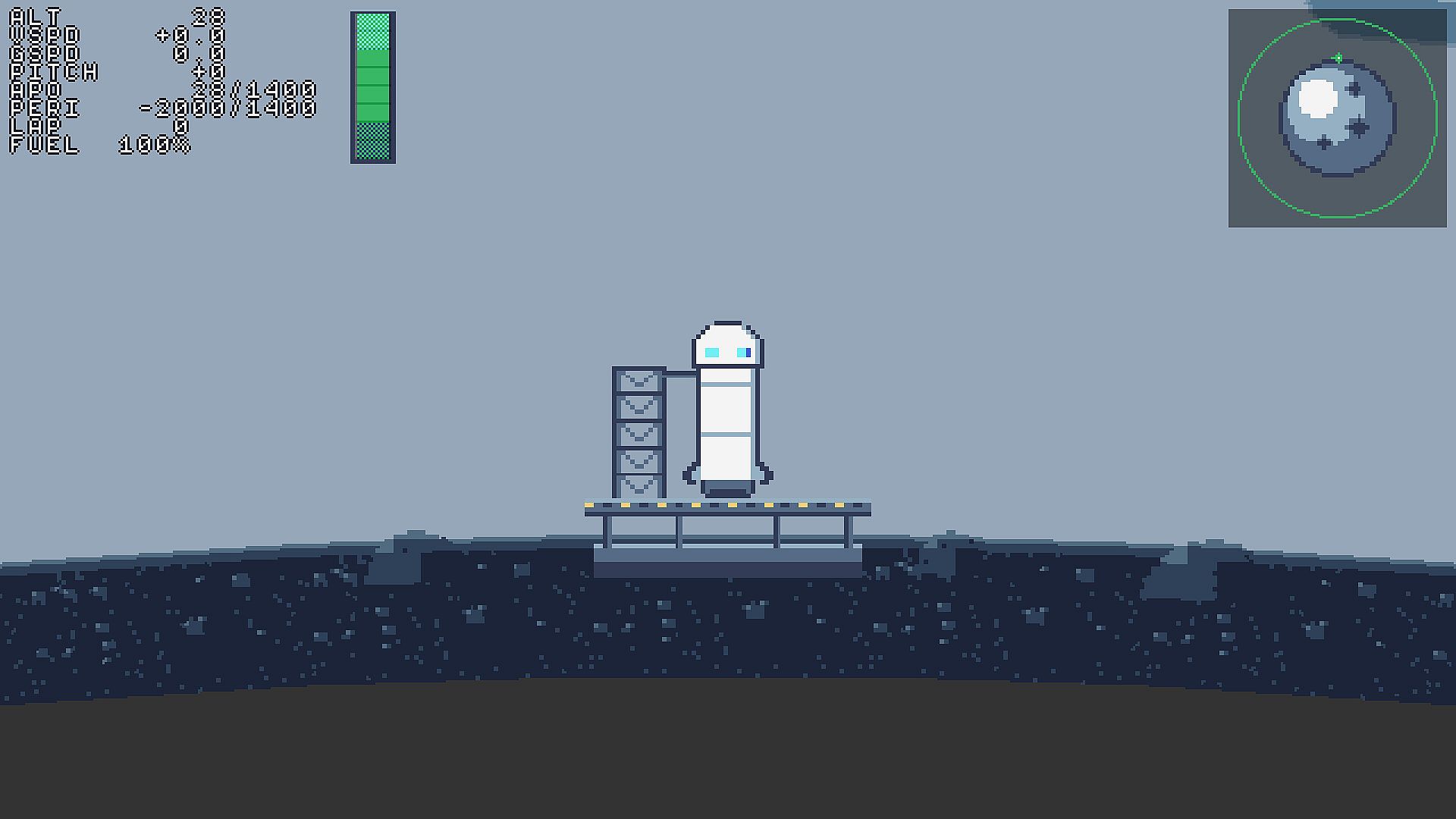
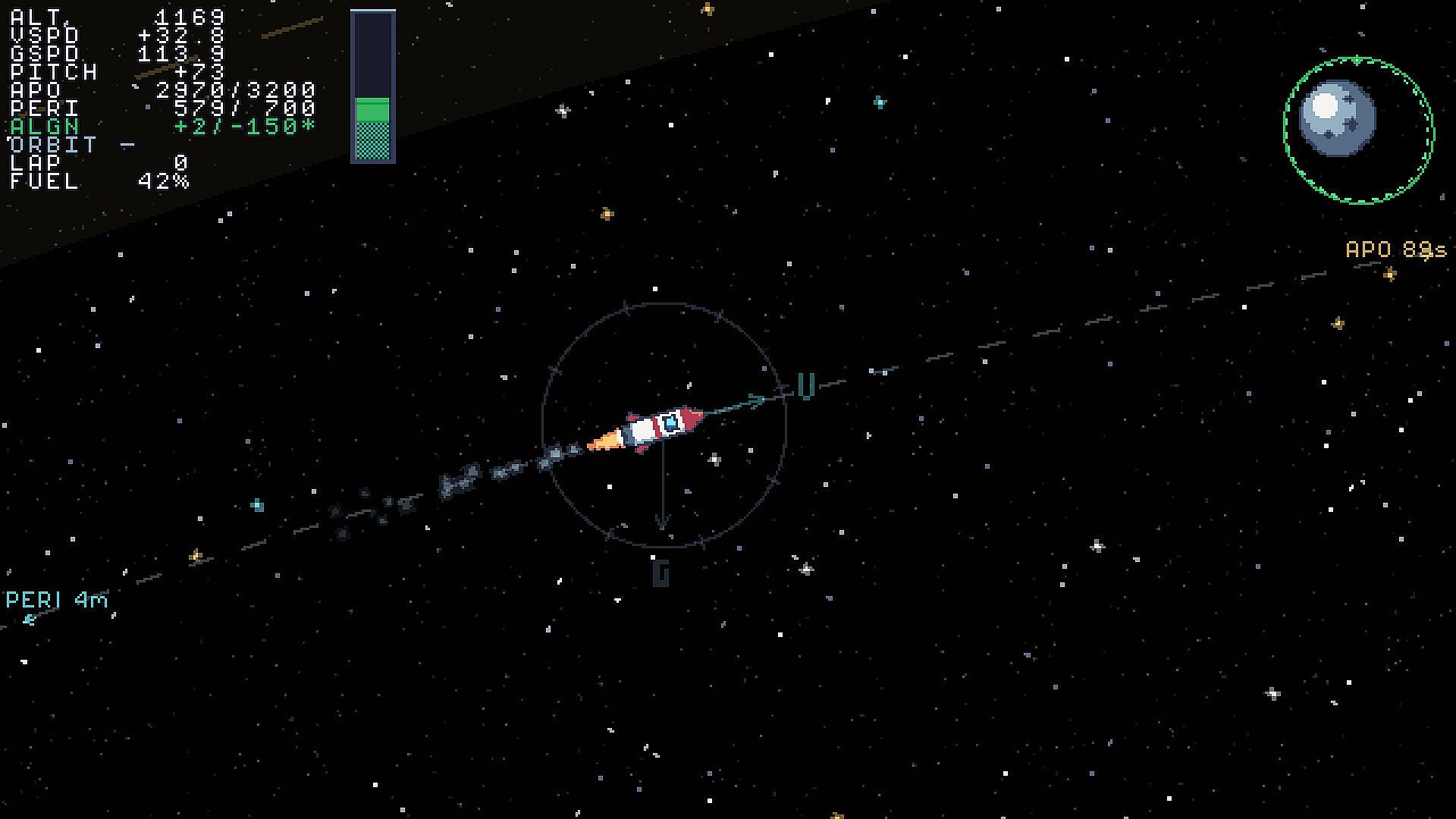
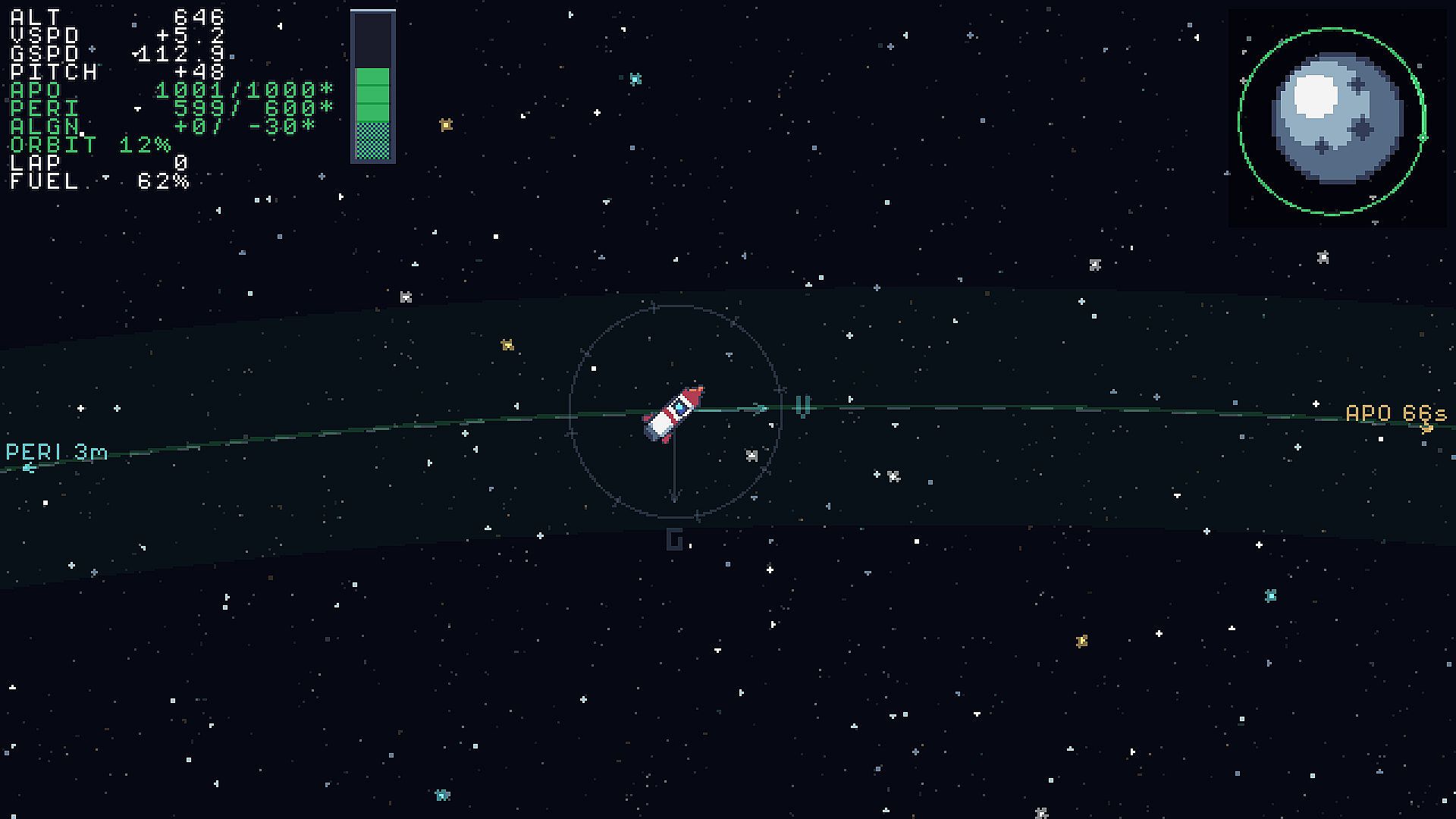
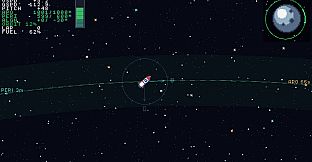
The core loop centers on launching a rocket, executing a gravity turn, coasting to apoapsis, and performing a circularization burn to reach and maintain a target orbit. Missions present exact orbital parameters drawn to scale, with fuel limits that enforce efficient flying. The simulation uses true conic sections for trajectories, allowing players to coast through long periods with time warp while monitoring periapsis, apoapsis, eccentricity, and alignment.
Three distinct hull families shape each flight. The nimble Kestrel X-1 offers quick response for tight maneuvers. The Sparrow MK-1 provides balanced handling for standard contracts. The Jeff, a heavy freighter, demands careful planning due to its slow turning radius. Pilots switch between orbit map and cockpit views during ascent and orbital phases. An ambient soundtrack layers loops at prime lengths, creating subtle variations across repeated flights without repetition.
Scoring evaluates accuracy within tolerance bands, fuel efficiency against a physics-derived benchmark, and completion without unnecessary orbits. Bronze, silver, and gold stars reward performance tiers on every mission. Nineteen achievements track progress, including six tied to specific failure states.
Game Modes
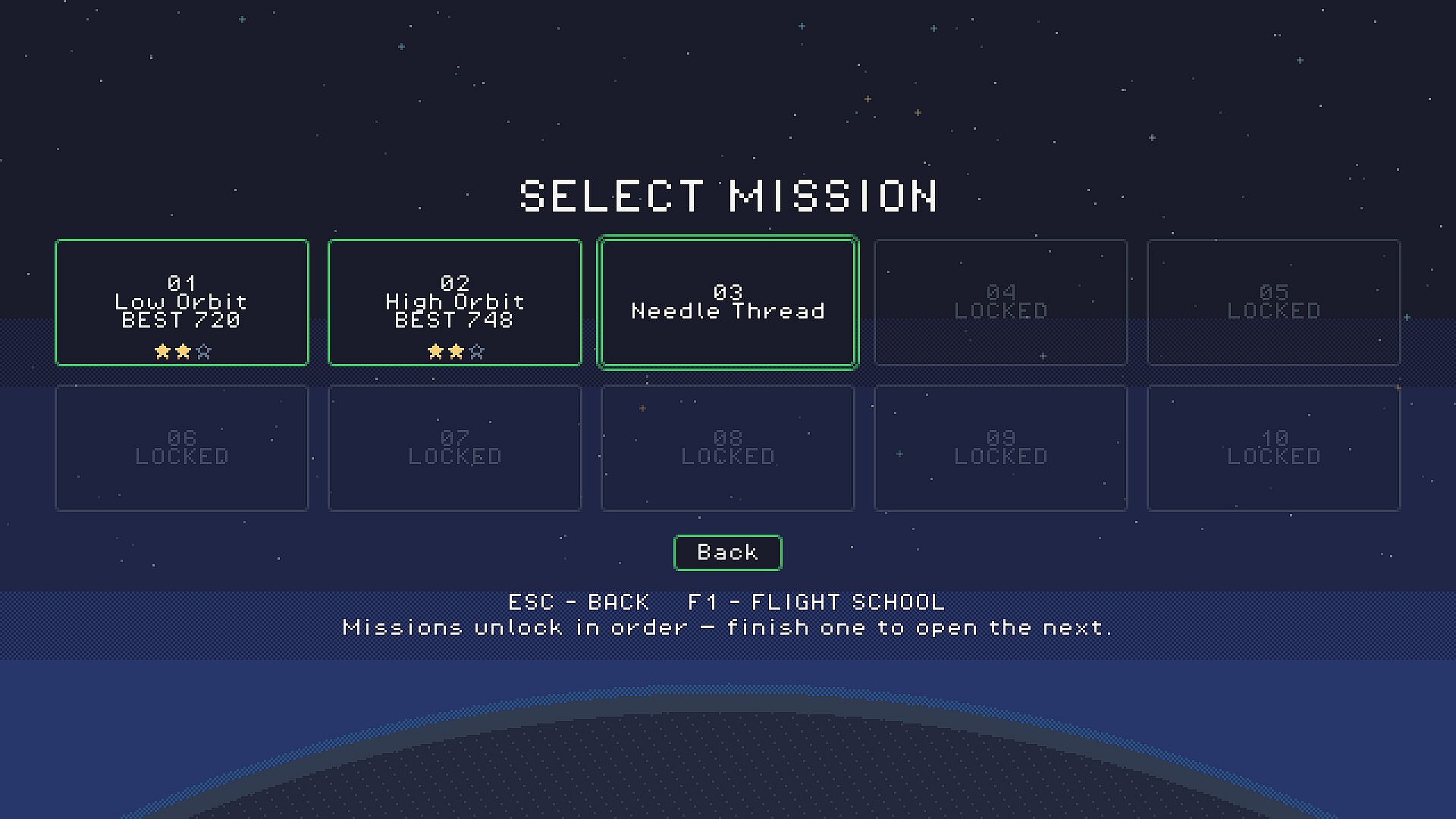
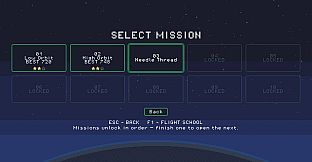
The primary experience is a ten-mission campaign of score-chasing contracts. Each mission sets a unique orbital target, ranging from standard circular orbits to elliptical paths with alignment requirements. One contract begins in a pre-existing orbit for a salvage scenario, another requires retrograde flight, and a later mission involves atmospheric heating on a denser world. A final challenge on a heavier planet tests precise fuel management near escape velocity.
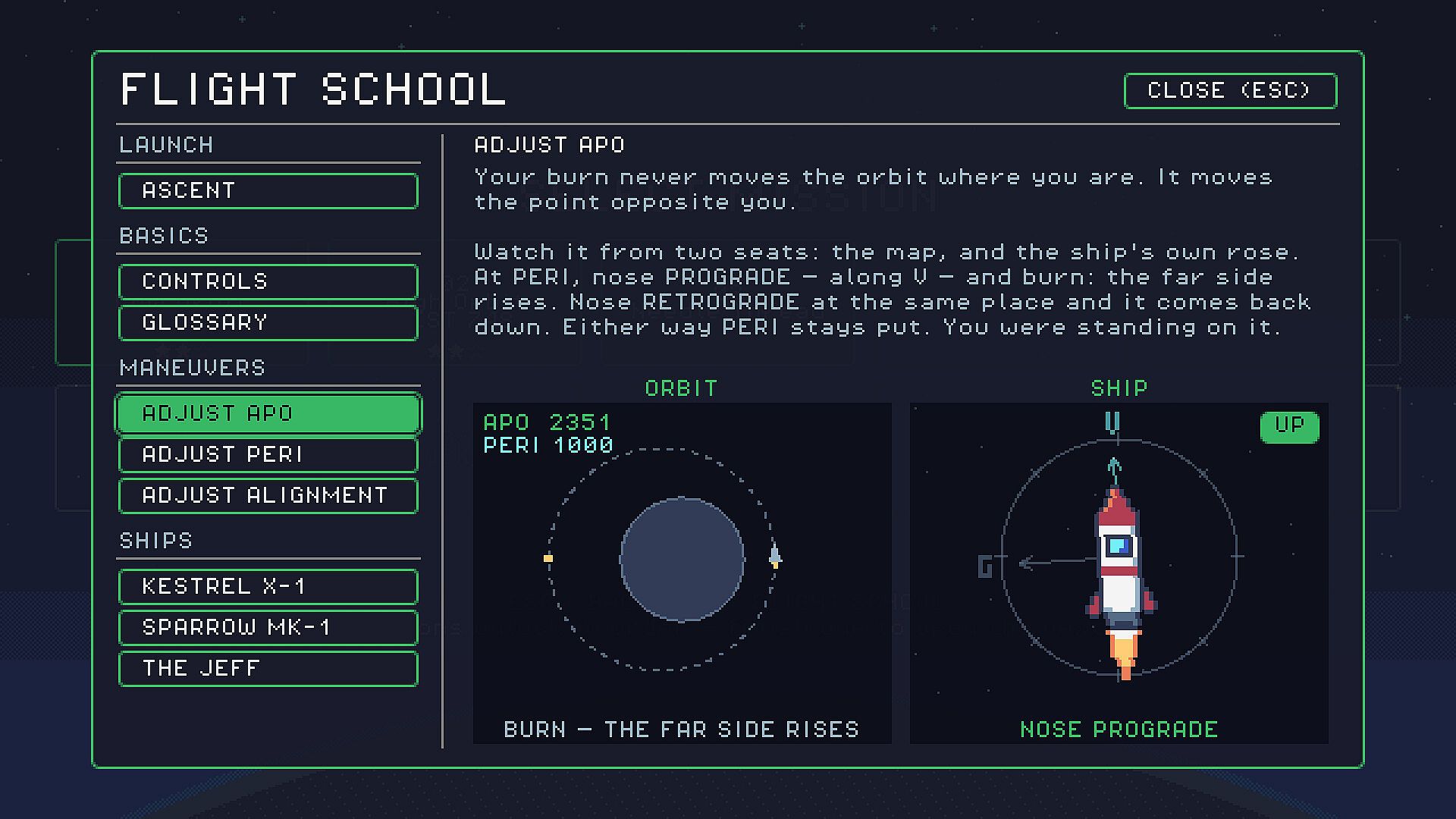
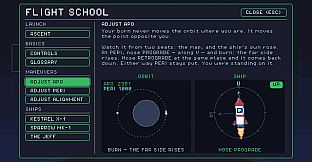
Flight School integrates directly into the simulation. Lessons place players in real rockets performing real maneuvers, teaching ascent profiles, orbital insertion, and coasting techniques through synchronized map and cockpit perspectives rather than pre-recorded videos. Leaderboards for each mission encourage competition on the same contracts.
Key Mechanics and Features
Tolerance bands start forgiving and narrow progressively, demanding center-line precision on later missions. Elliptical targets include specific alignment locks that must be held for a full lap. An atmosphere dense enough to generate significant heat shifts priorities from pure gravity management to thermal considerations. Controller support covers all flight inputs for precise pitch and throttle adjustments.
The campaign contains no filler missions. Every contract introduces a distinct challenge, from retrograde burns against natural orbital direction to starting positions already in someone else's trajectory. Gold-star performance on the final missions exceeds the developer's reference autopilot, confirming the targets remain achievable through skilled play.
Is It Worth Playing?
Get To Orbit suits players interested in realistic orbital mechanics presented through short, focused contracts rather than open-ended sandbox building. The emphasis on score attack, tightening tolerances, and varied hull handling rewards repeated attempts and precise execution. Full controller support and the integrated tutorial make the physics approachable while preserving authenticity. Those seeking a compact campaign of authentic spaceflight challenges without extraneous systems will find the structure and scoring system engaging for mastery runs and leaderboard competition.