





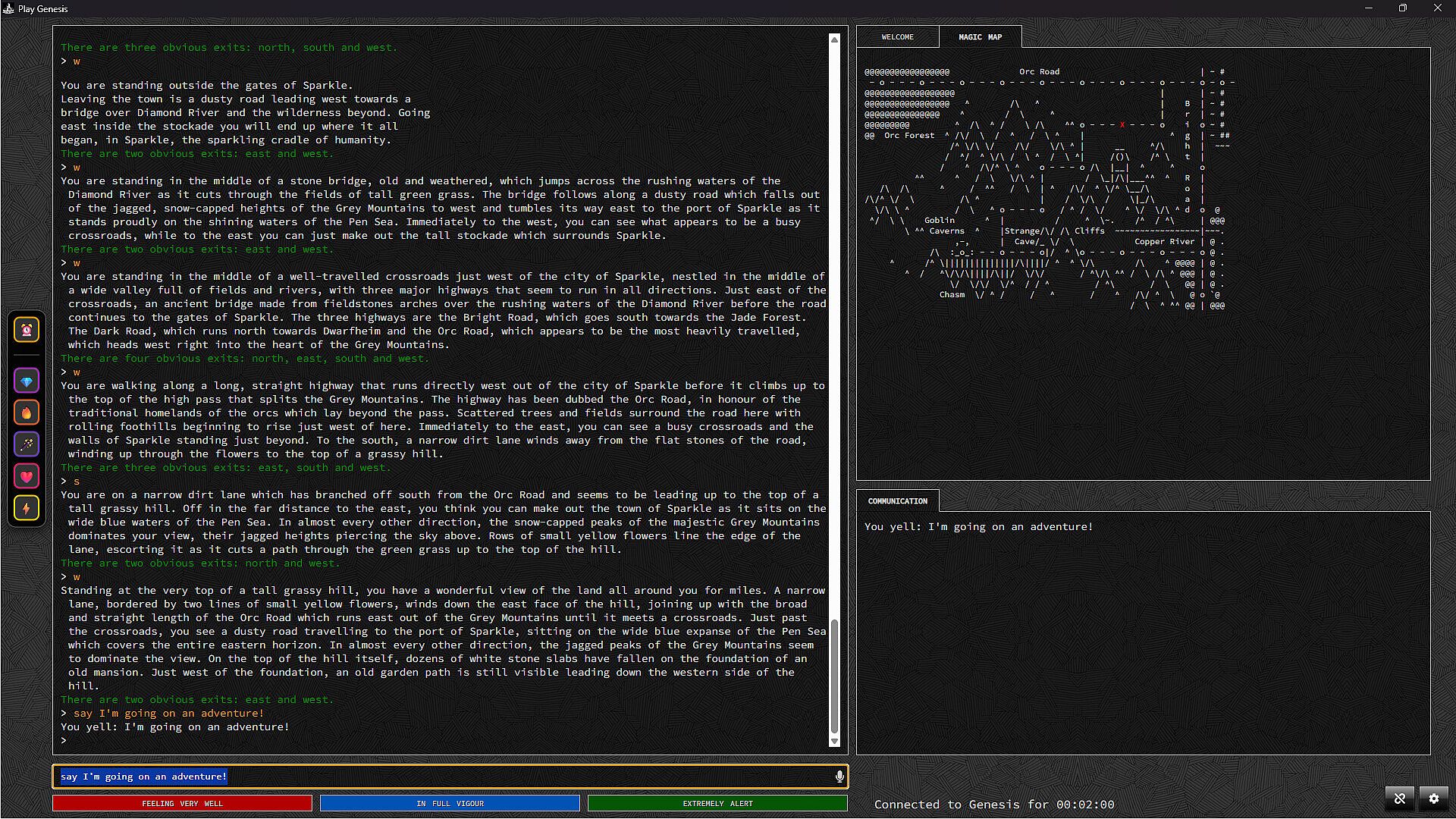
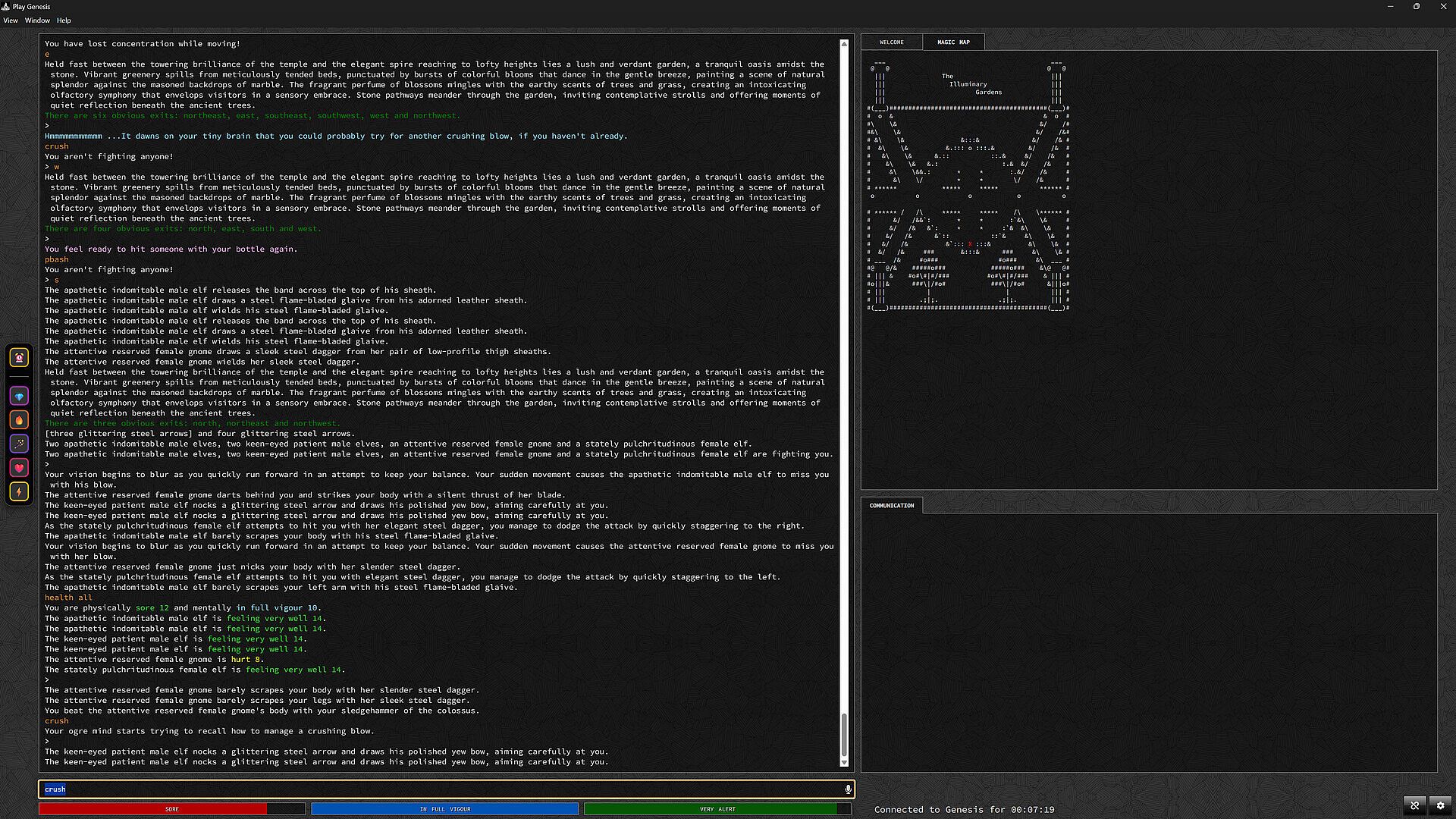
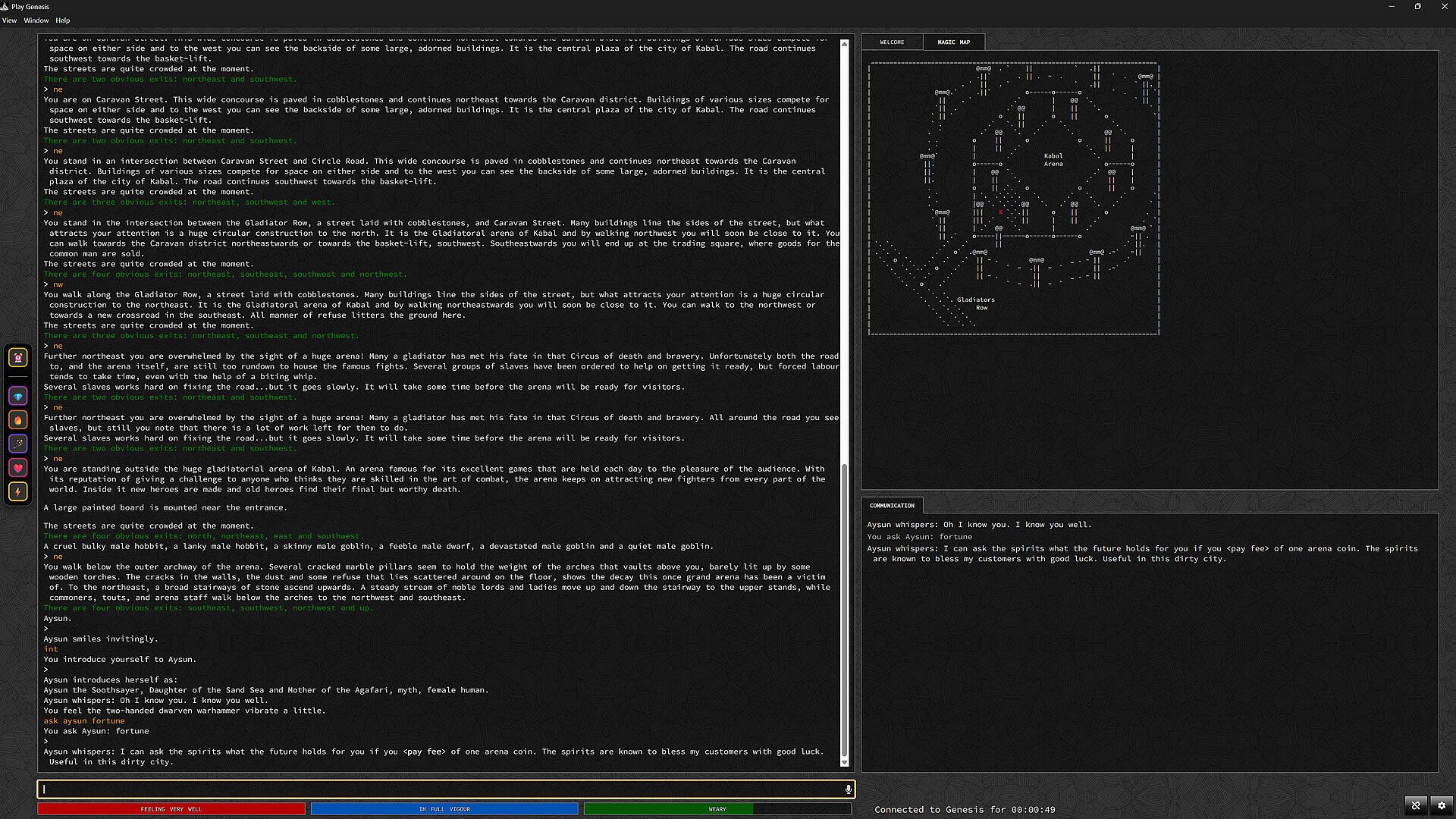
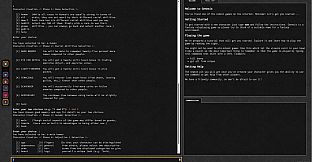
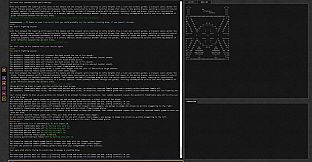
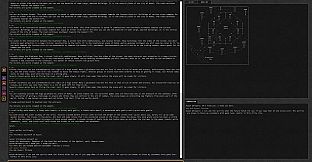
Genesis is a free-to-play text-based massively multiplayer online role-playing game on PC, recognized as the original LPMud. Launched in 1989 in Sweden, it places players in a persistent medieval fantasy world shaped like a vast donut floating in space, filled with continents, oceans, and domains drawn from literary influences including Tolkien and Dragonlance. The experience relies entirely on typed commands and descriptive text, allowing the imagination to fill in visuals while delivering a complex simulation of character growth and world interaction that has evolved over more than three decades.
Gameplay
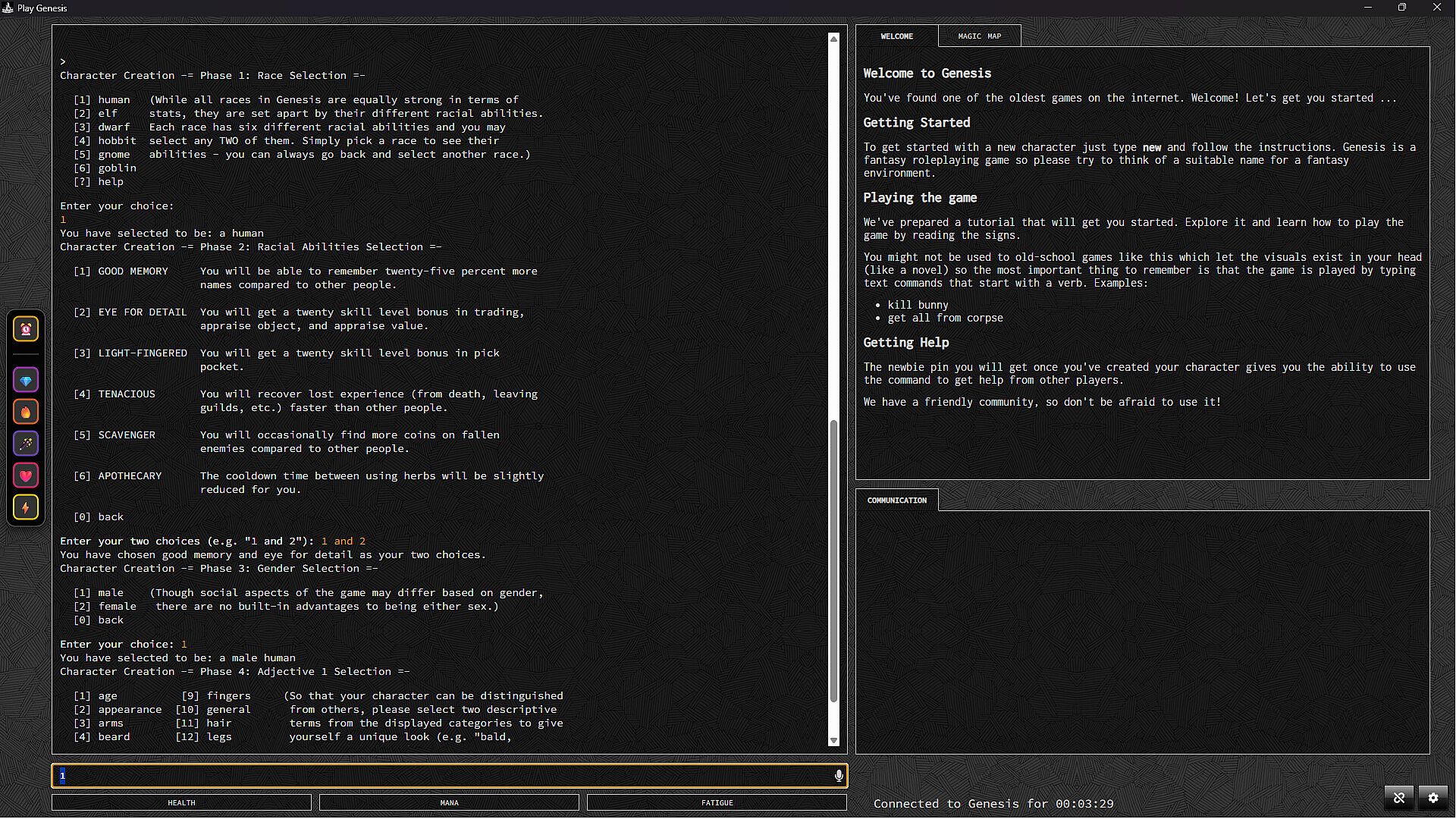
Players begin by selecting a race such as human, elf, dwarf, gnome, hobbit, or goblin, often with sub-races available. No traditional numerical levels or classes exist at the start. Instead, characters develop through qualitative stages that reflect experience and reputation, progressing from novice and greenhorne to great-adventurer, hero, and the rare myth tier. Skills and abilities come from joining guilds across categories like racial, occupational, layman, and craft, with many options that provide distinct spells, combat techniques, and roleplay opportunities. Up to four guilds can typically be combined, one from each category, creating highly customized characters.
Combat avoids numeric damage readouts. Descriptions convey health, fatigue, and effectiveness in narrative form, encouraging strategic thinking over simple button mashing. Experience accumulates from quests, combat, crafting, and exploration, tracked through progress labels rather than point totals. The world contains more than twenty thousand rooms across multiple domains, connected by walking, ships, or magical means. Quests number in the hundreds and range from straightforward tasks to intricate storylines that reward careful investigation. Crafting systems let players gather resources and produce items, while events organized by administrators introduce temporary challenges or competitions across the server.
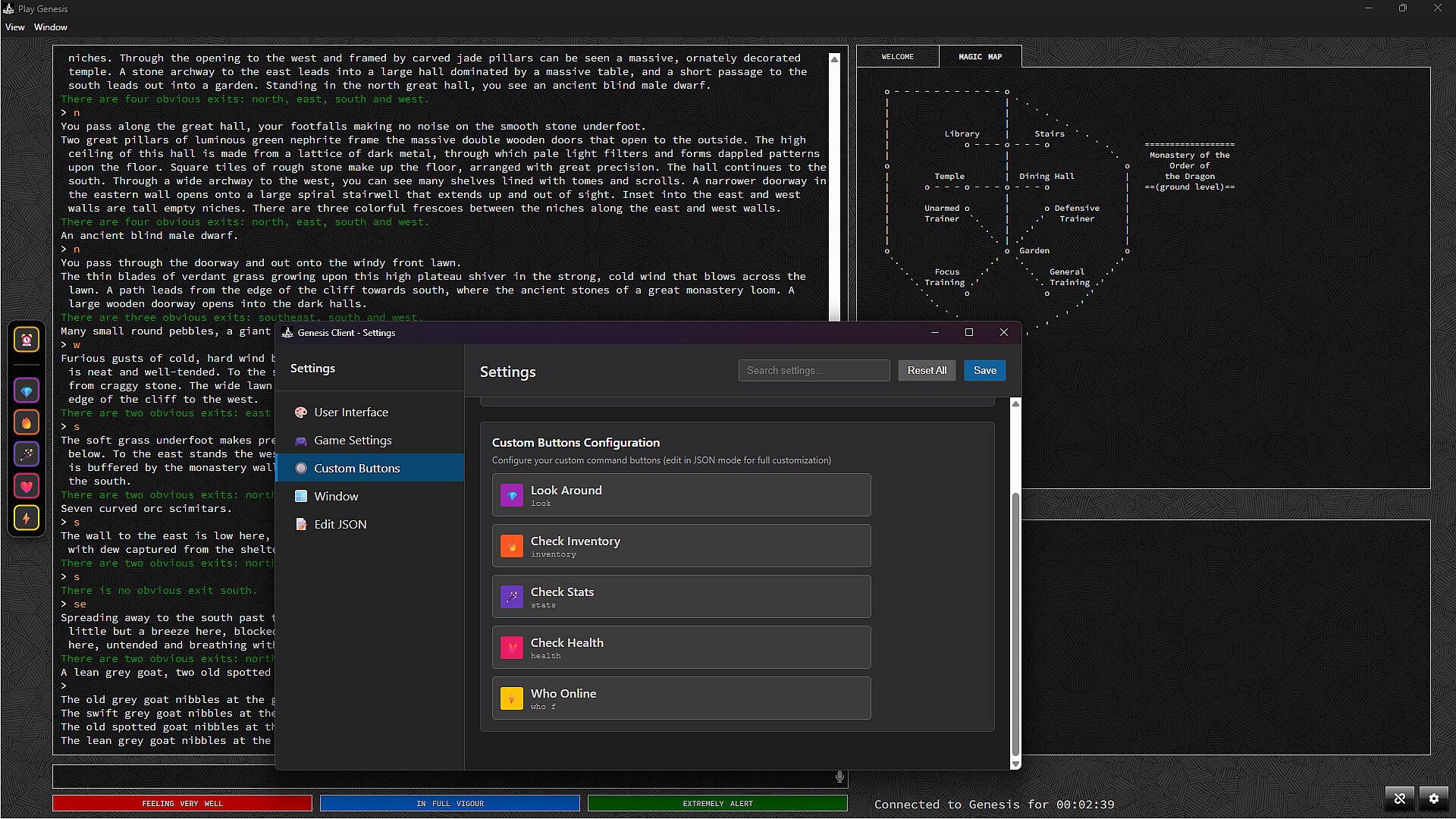
A built-in tutorial on a dedicated island helps newcomers learn commands and systems through guided exercises. The interface supports browser play without downloads or traditional MUD clients, though dedicated clients remain an option. Player-killing occurs under strict rules that prohibit targeting new characters or engaging in harassment, with outcomes tied to roleplay context and no permanent character loss.
Game Modes
Genesis operates as a single persistent world rather than segmented modes, yet supports several overlapping styles of play. Roleplay forms the foundation, with guilds maintaining alliances, truces, or conflicts that shift over time and influence daily interactions. Adventuring emphasizes exploration, quest completion, and combat against monsters in forests, swamps, cities, and ruins. Guild-focused activities include internal politics, inter-guild events, and structured player-versus-player encounters that follow roleplay guidelines.
Crafting and profession paths allow characters to focus on production, gathering, or support roles alongside combat skills. Community events provide temporary group objectives such as scavenger hunts or guild competitions. The absence of level caps means long-term players continue advancing through deeper mastery of skills and relationships rather than hitting artificial ceilings. These elements blend within the same world, letting individuals shift emphasis between solitary quests, group adventures, and social or competitive guild dynamics as desired.
Community and World Building
The player base remains active decades after launch, supported by volunteer administrators known as wizards who both maintain the game and allow dedicated players to contribute new content through coding. This player-driven development has expanded the world continuously while preserving its challenging core. Relations between guilds create organic politics that affect trade, access to areas, and large-scale conflicts without requiring external matchmaking. New players receive guidance from experienced members, and charity systems within adventurer guilds provide starter equipment. The emphasis stays on authentic character development and meaningful choices rather than rapid power gains.
Is It Worth Playing?
Genesis suits players who value depth over graphics and prefer systems that reward patience, creativity, and long-term investment. Its free-to-play model removes financial barriers, and the browser accessibility lowers entry hurdles. Reviews from dedicated MUD communities consistently highlight the rich world size, supportive atmosphere, and unique progression mechanics as strengths. Those seeking modern visual spectacles or quick sessions may find the text interface and learning curve demanding, yet the game continues to attract participants who appreciate its historical significance and ongoing evolution. For anyone interested in classic multiplayer role-playing with genuine freedom and community involvement, the experience remains distinctive and accessible today.
