







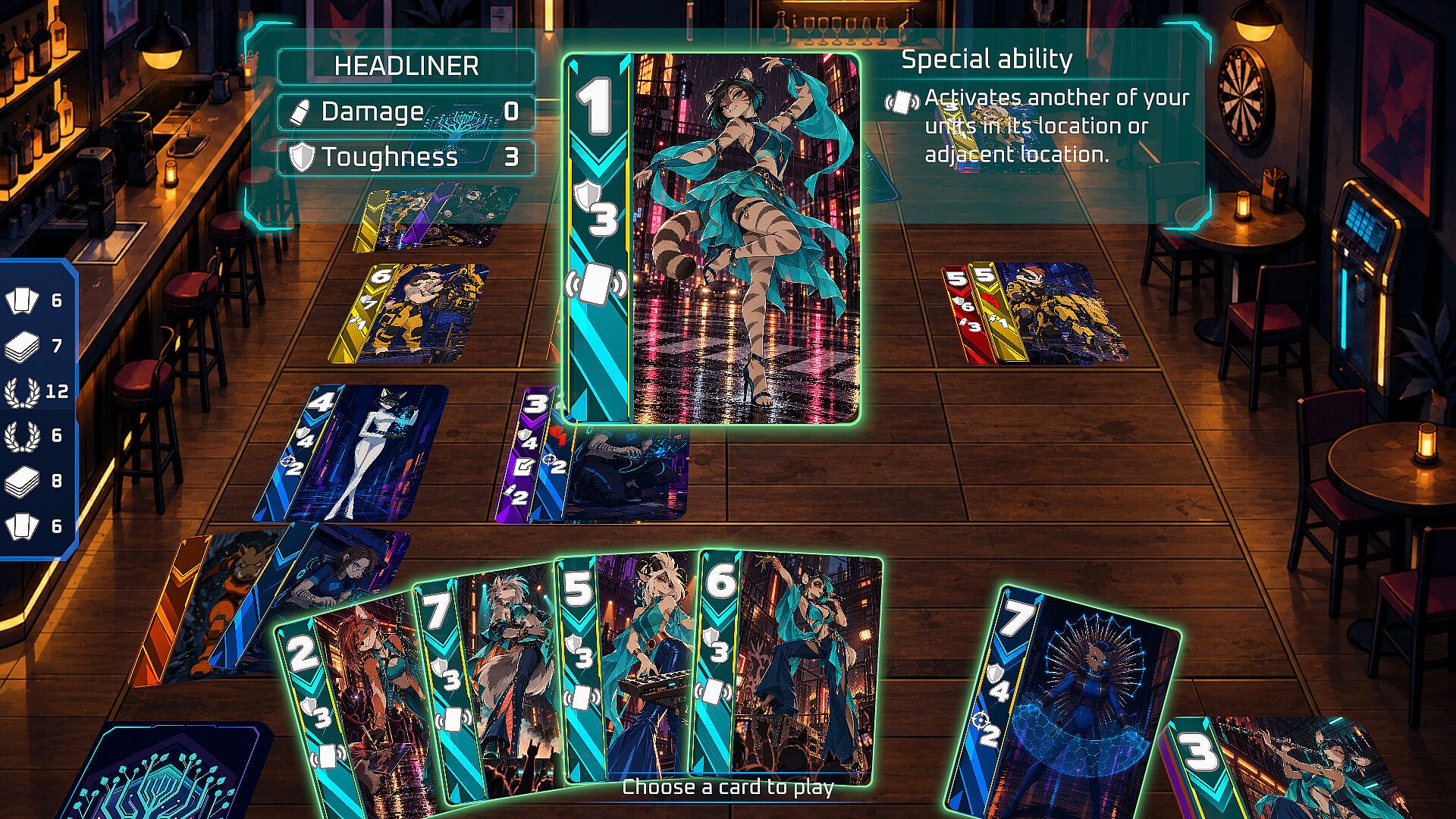
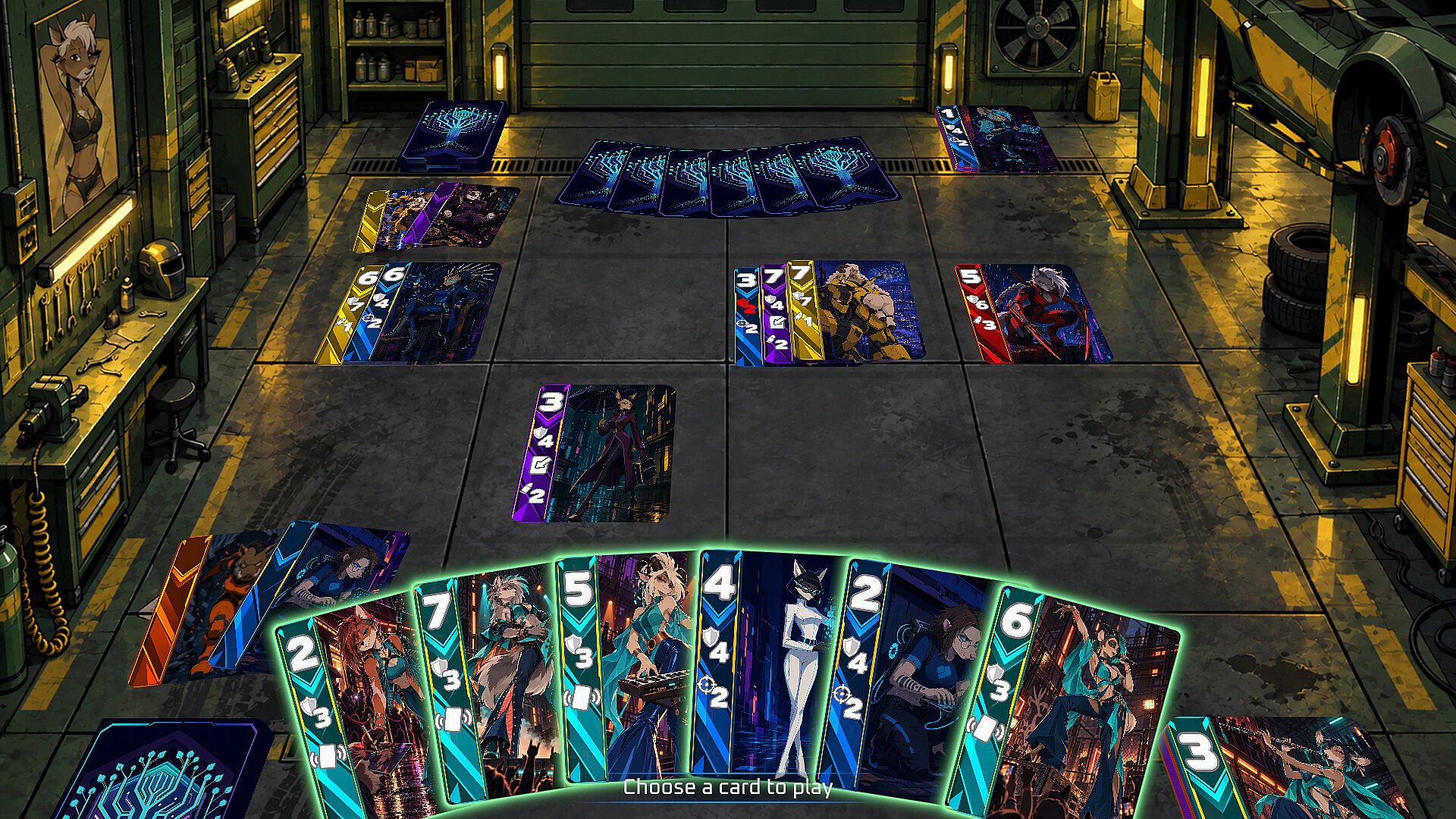
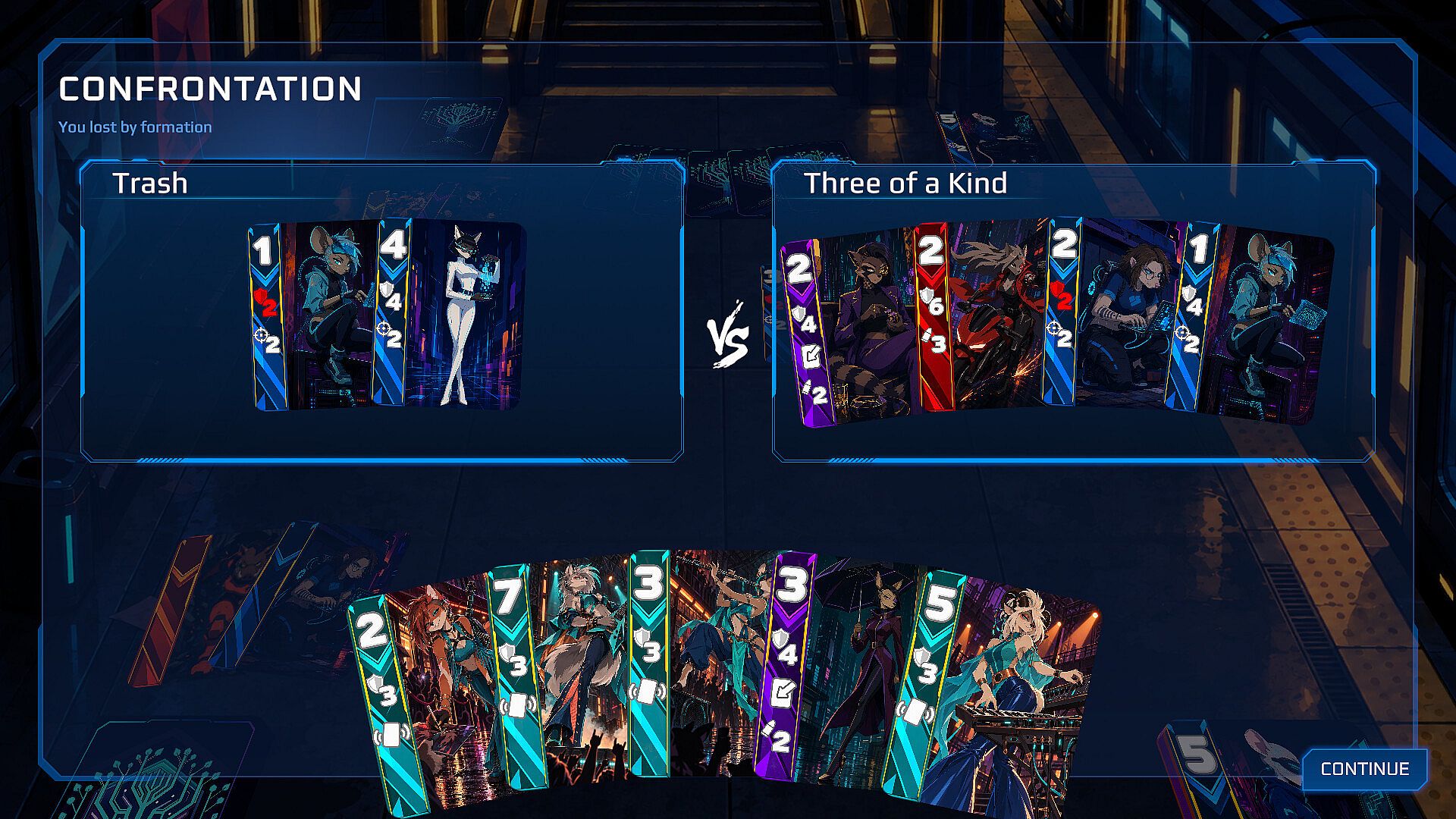
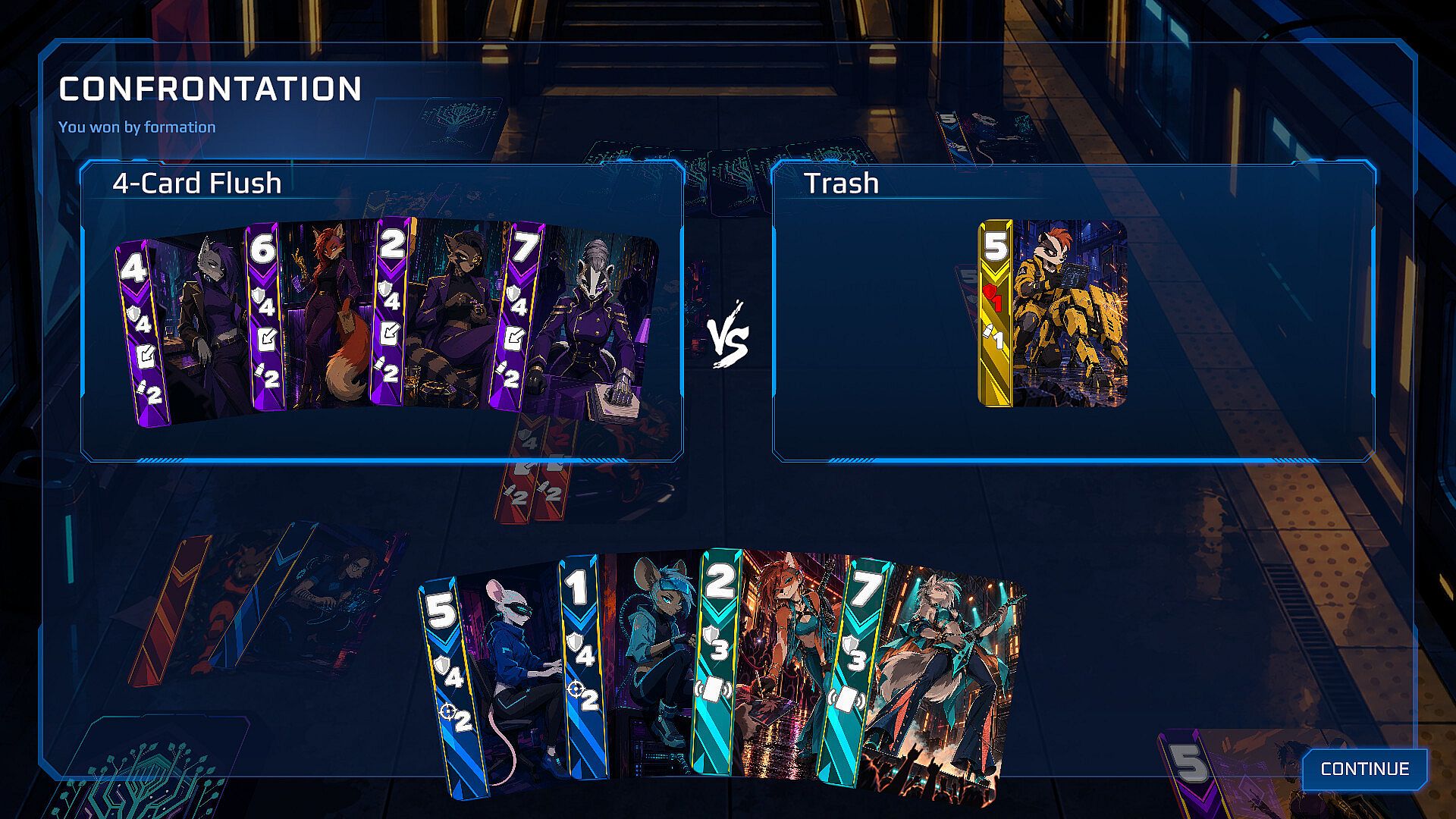
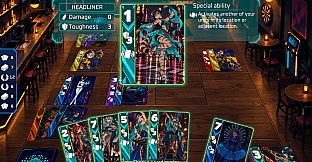
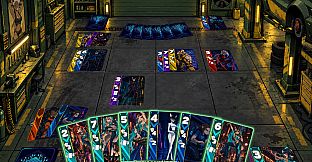

Gangs of Nightglade is a strategy card game with action, indie, and RPG elements set on PC. Players lead a gang through tense confrontations where positioning units and forming combinations determine control over key locations in a cyberpunk-inspired city.
Gameplay
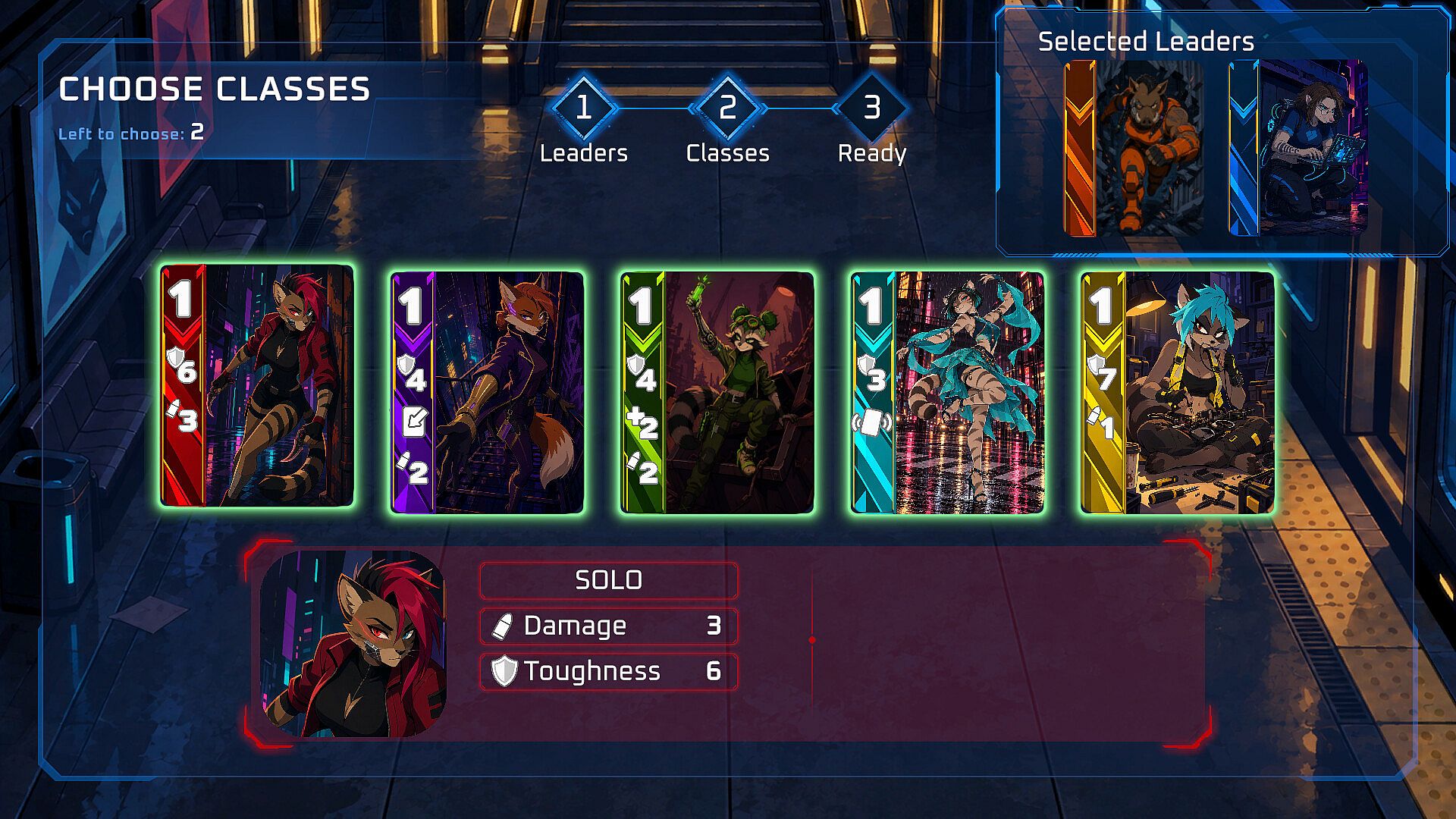
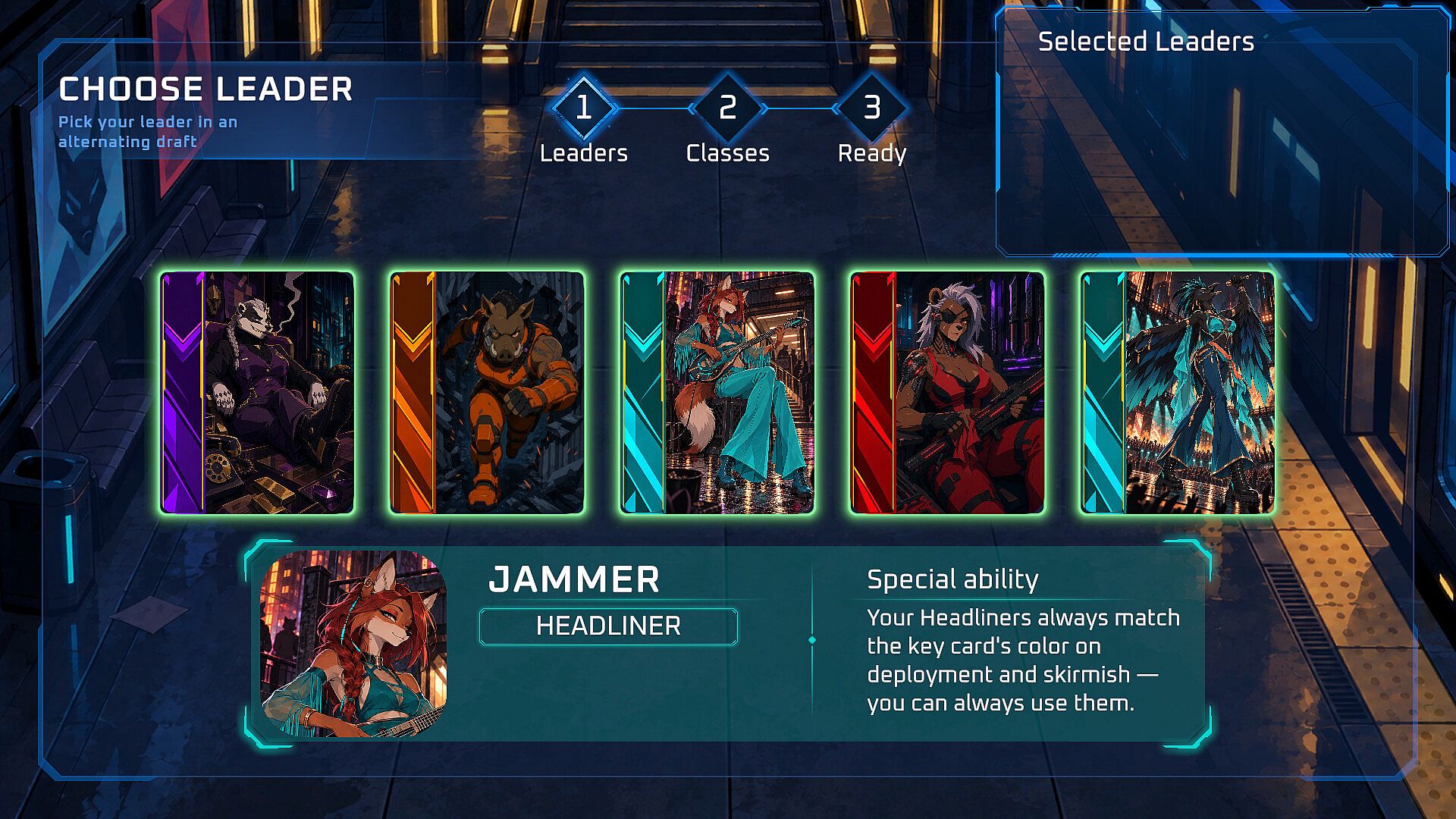
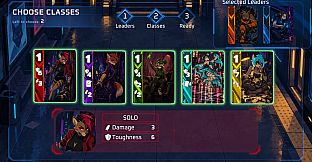
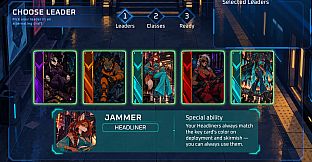
The core loop centers on building and deploying cards to locations while disrupting an opponent. Seven card classes each fill distinct battlefield roles: Solo, Fixer, Datarat, Nomad, Techie, Drone Operator, and Headliner. Two leaders per class alter how those cards function, so the leader draft at the start of a match sets the foundation for an entire deck. Players then select four supporting classes to round out their options.
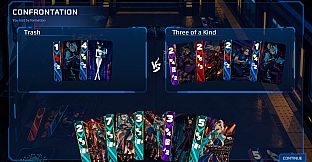
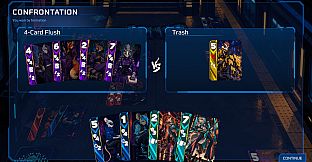
Every card activates the moment it enters play. A player can assign it as a Commander to pull matching cards from hand by color or rank and send them to chosen spots, or as a Messenger to trigger abilities on matching cards already on the board. Damage and effects resolve immediately, keeping pressure high throughout each turn. At the same time, units occupy locations to assemble four-card poker hands. Success depends on both creating strong combinations and preventing the rival from doing the same.
Gear purchases and training sessions let players strengthen gang members between encounters, adding progression that carries into longer sessions.
Game Modes
Two distinct ways to play exist. Standalone skirmishes pit a player against another person or the AI in self-contained matches. These focus purely on the leader draft, class selection, and rapid card deployment described above.
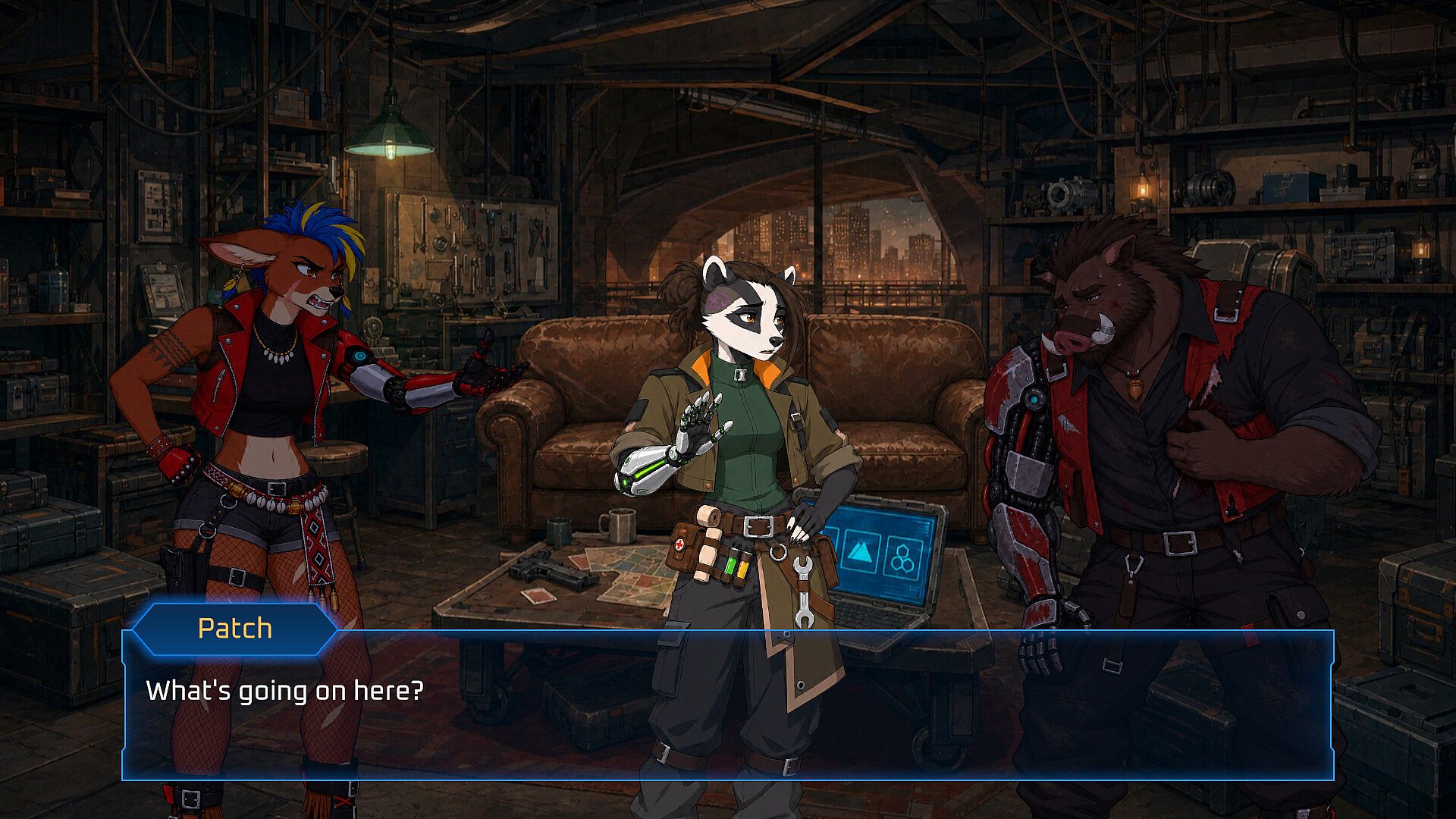
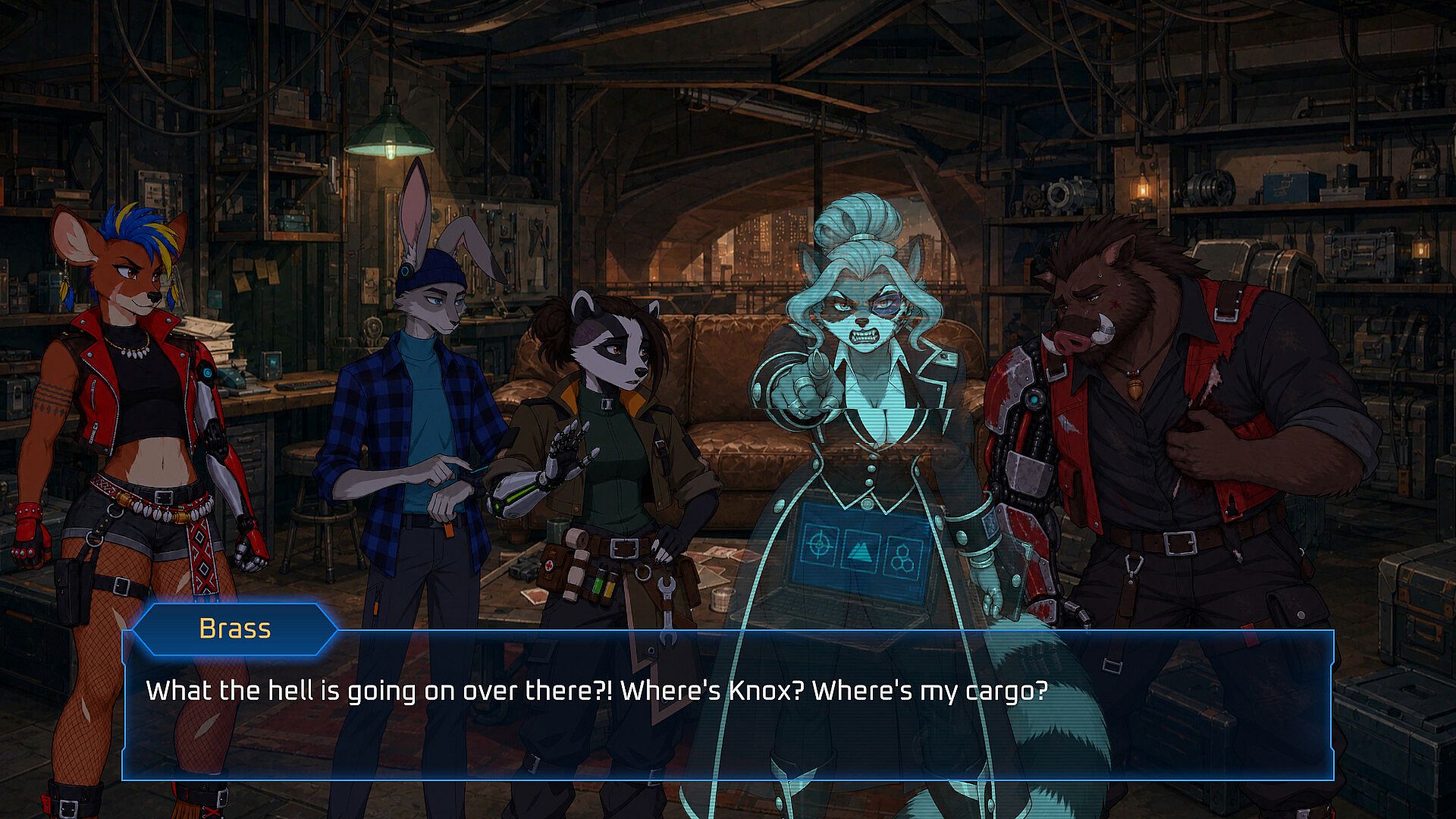
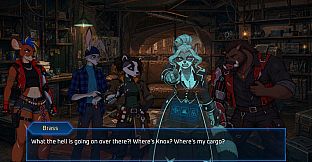
The story campaign follows Patch, a medic who assumes temporary leadership of the gang after Knox disappears. Side jobs, new contacts, and shifting alliances across Nightglade form the backbone of the narrative. Decisions about trust, sacrifice, and corporate dealings directly influence how events unfold and which ending players reach. Gang growth through gear and training remains available here, tying mechanical progression to the unfolding plot.
Strategic Depth and Progression
Success requires reading an opponent's intentions while managing limited resources across multiple locations. Color and rank matching create flexible plays that reward foresight and adaptability. The poker-hand objective adds a layer of set collection that runs parallel to direct combat, forcing constant trade-offs between offense, defense, and positioning.
Over repeated skirmishes or through the campaign, players experiment with different leader and class combinations. Each pairing changes card interactions, encouraging repeated matches to explore new approaches without altering the fundamental rules.
Is It Worth Playing?
Players who enjoy strategic card games that blend immediate tactical decisions with longer-term hand building will find a focused experience here. The dual modes support both quick competitive sessions and a narrative-driven single-player path with meaningful choices. Those seeking deep customization through leaders and classes, combined with direct confrontation mechanics, will appreciate the structure. Availability on PC makes it accessible for anyone interested in this specific mix of strategy, card play, and light RPG progression.