







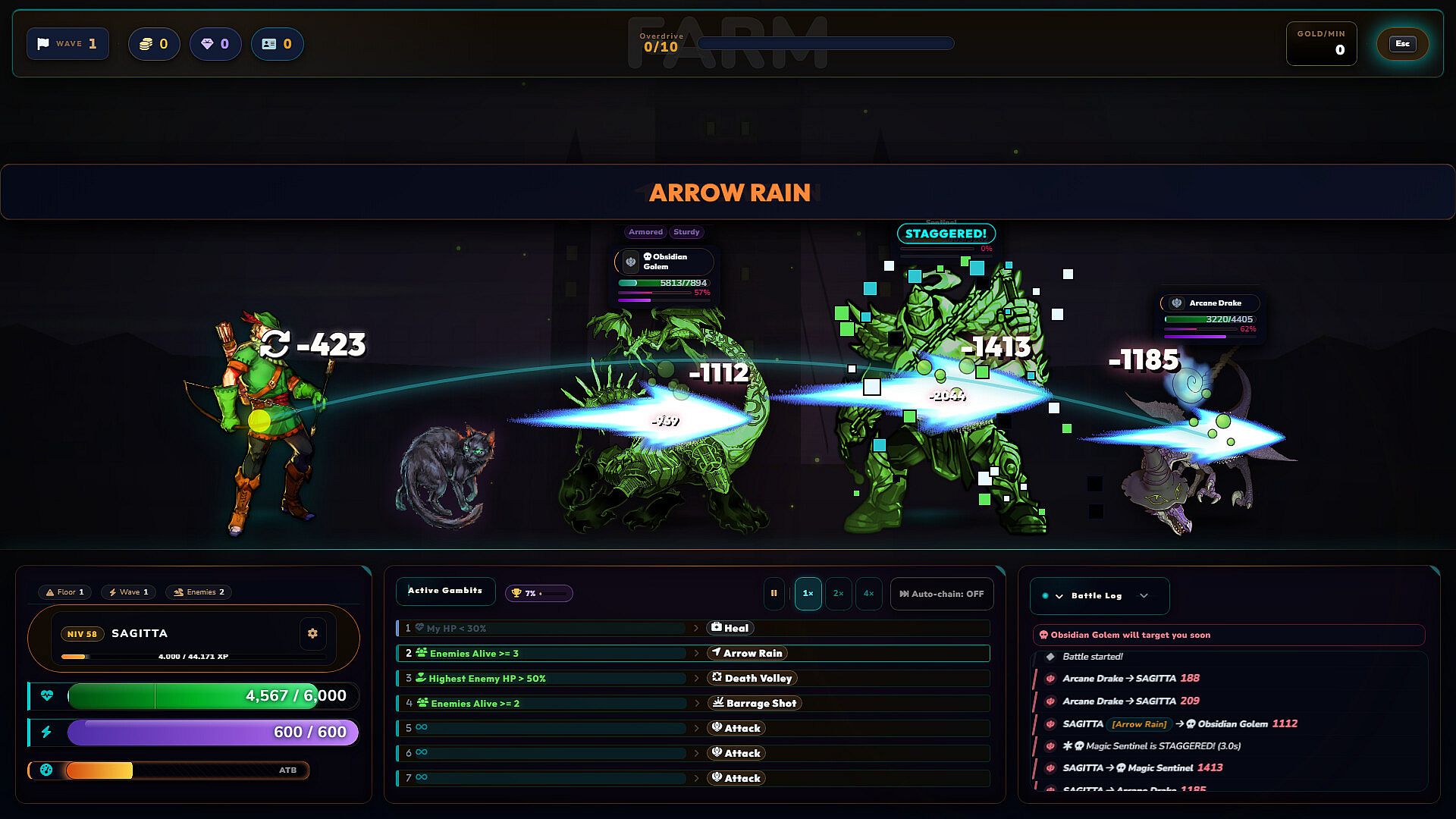
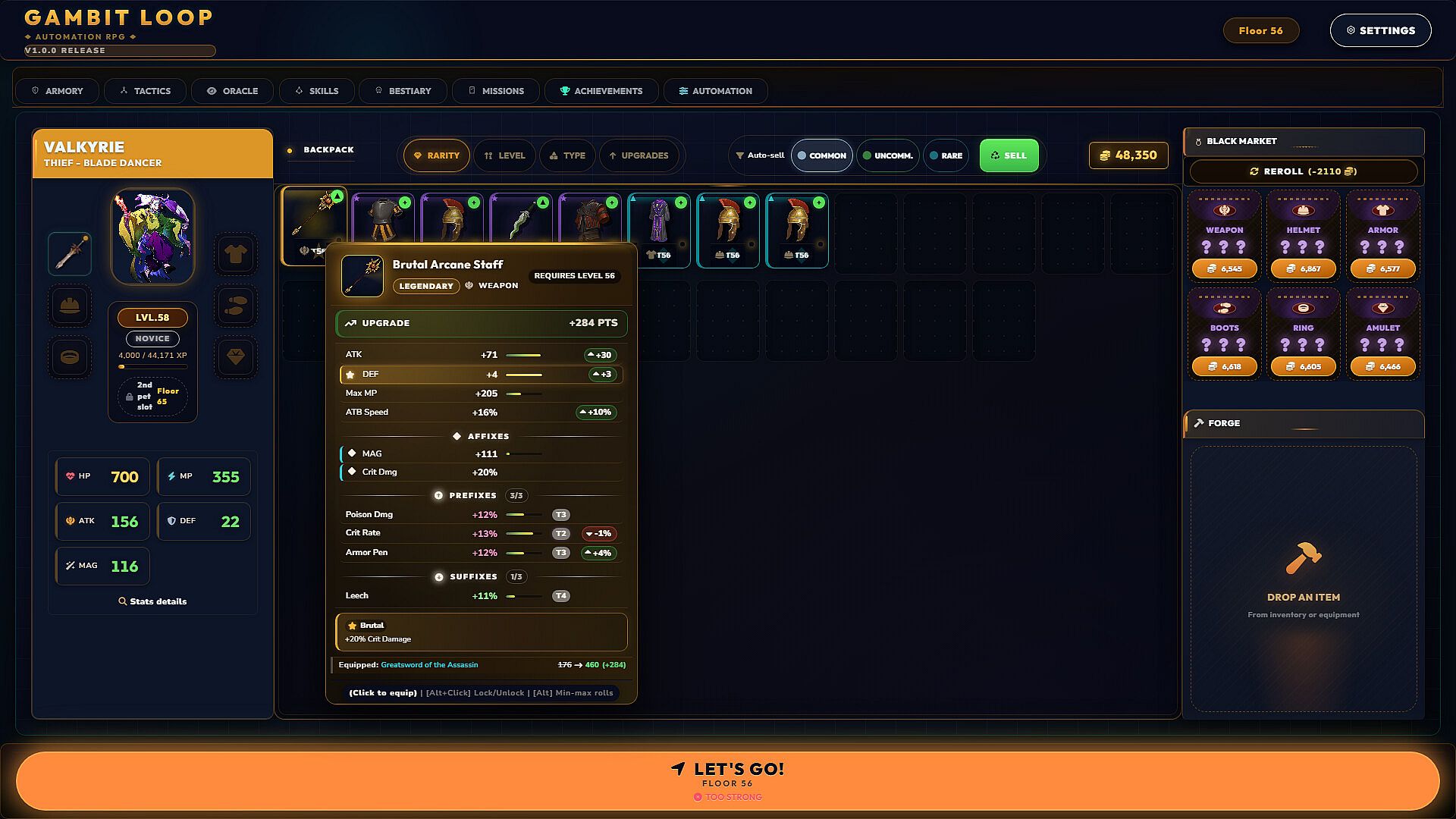
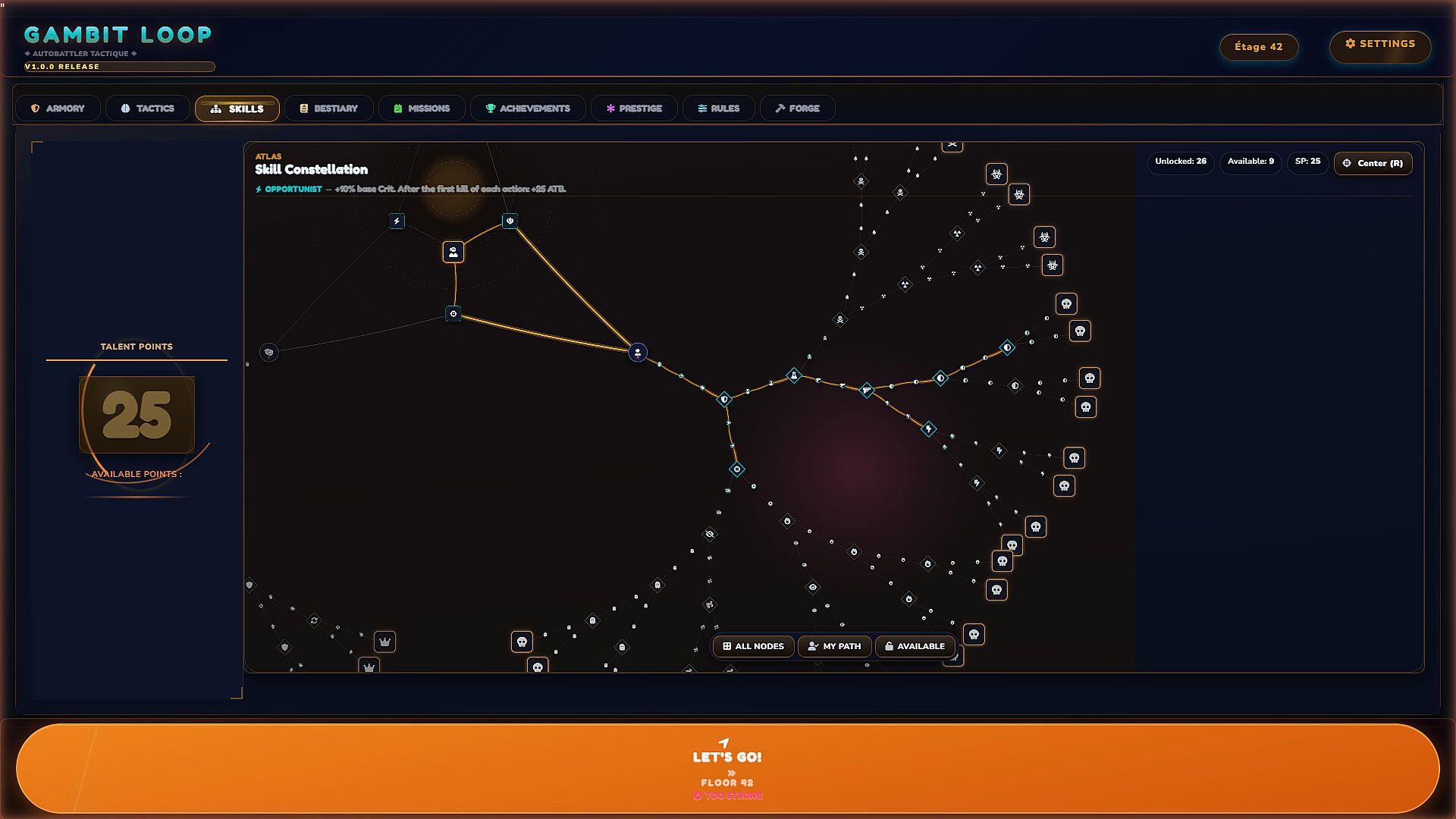
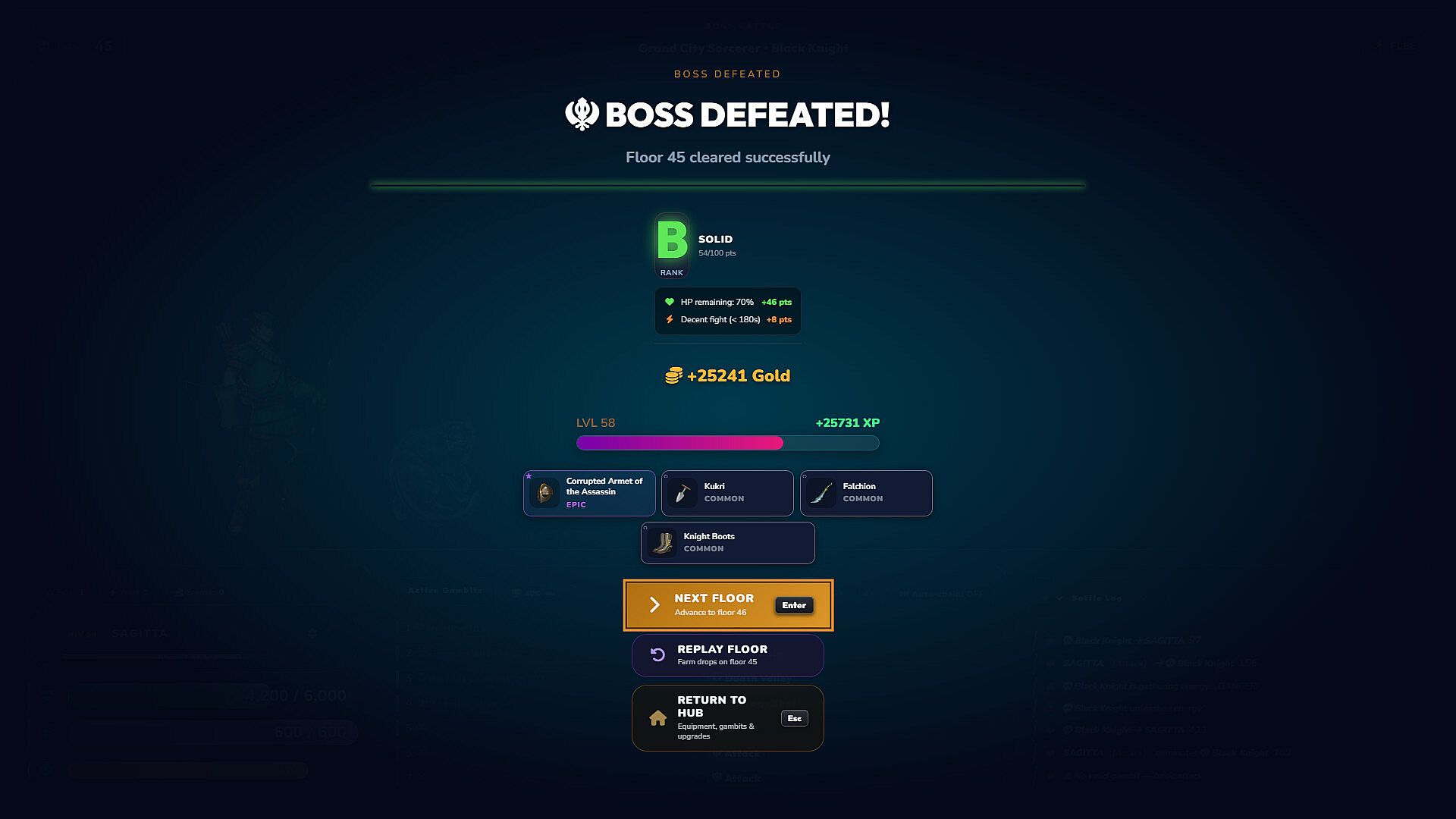
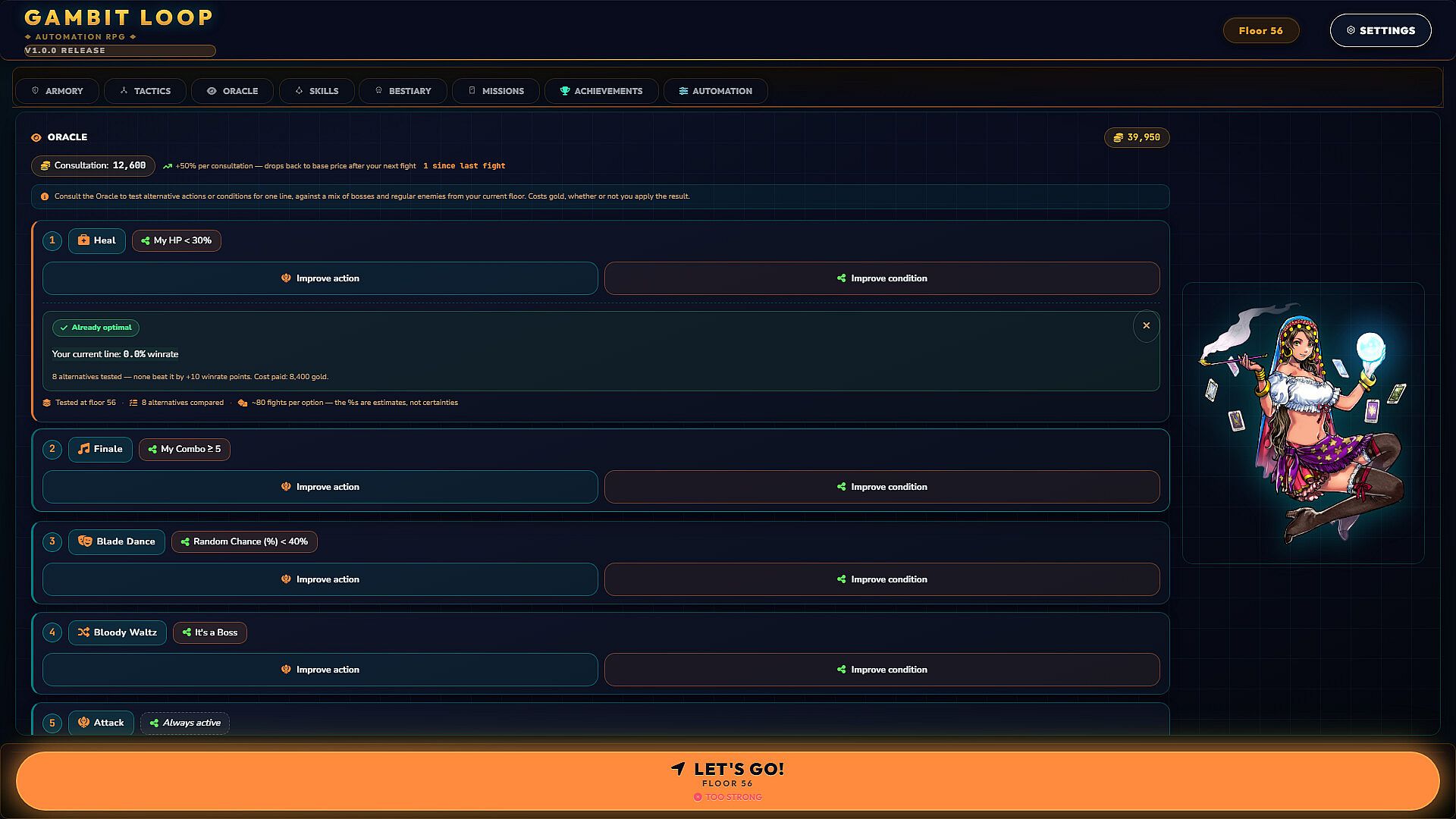
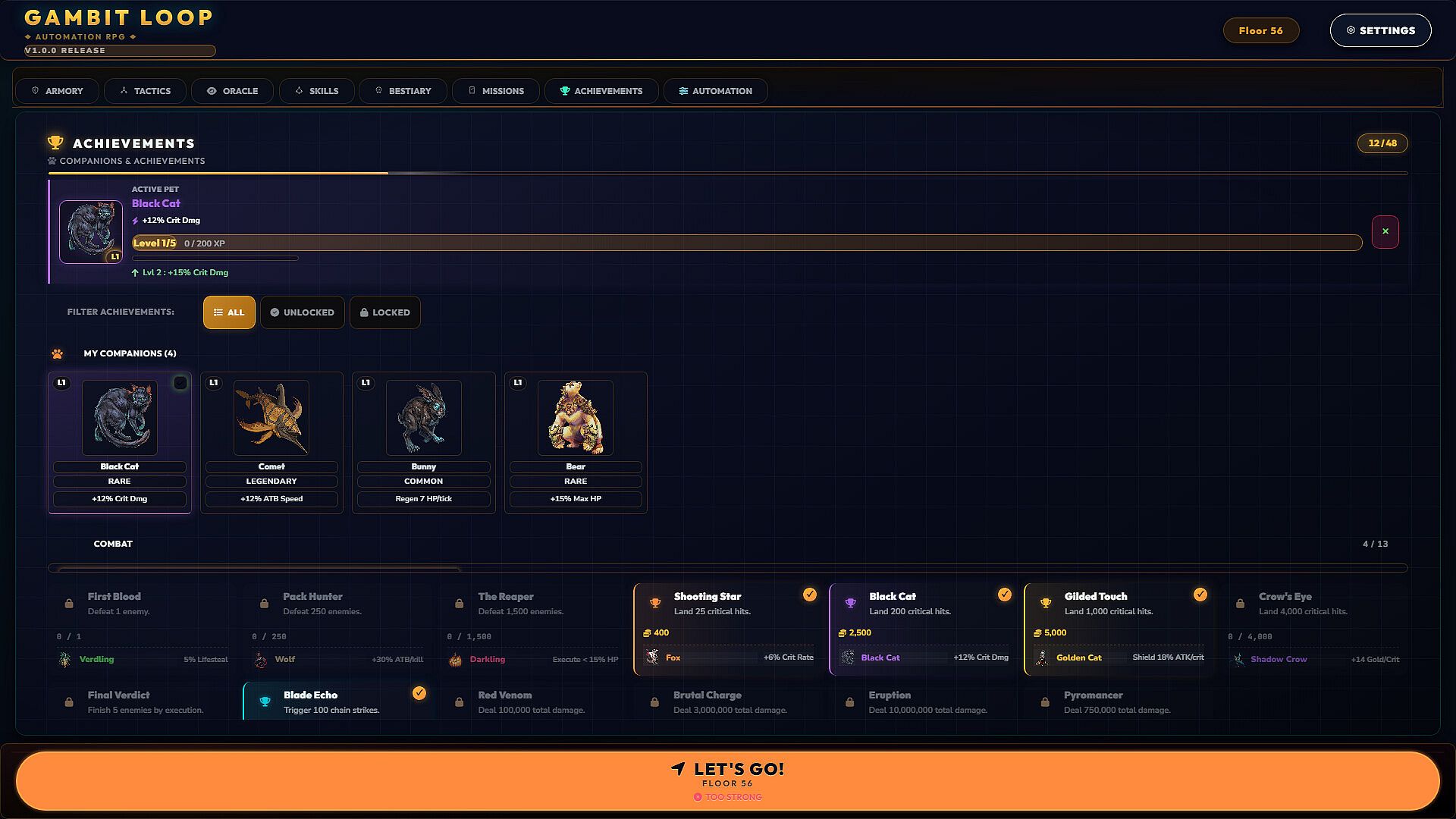

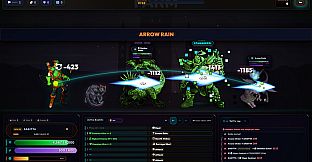
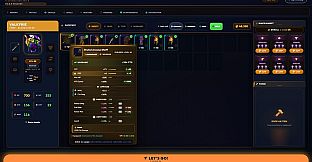
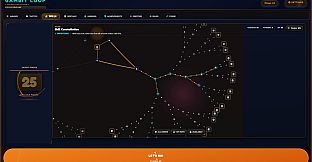
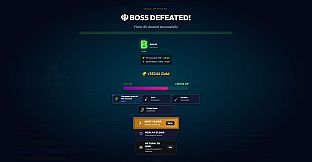

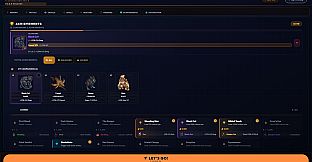
Gambit Loop é um RPG single-player de auto-battler idle que coloca estratégia e preparação no centro de cada combate. O jogador define regras condicionais para determinar como o herói age em batalha e observa os resultados enquanto o sistema cuida dos combates automaticamente. O jogo mistura elementos de estratégia, indie, RPG e casual, priorizando o planejamento em vez de ações em tempo real ou reflexos.
Gameplay
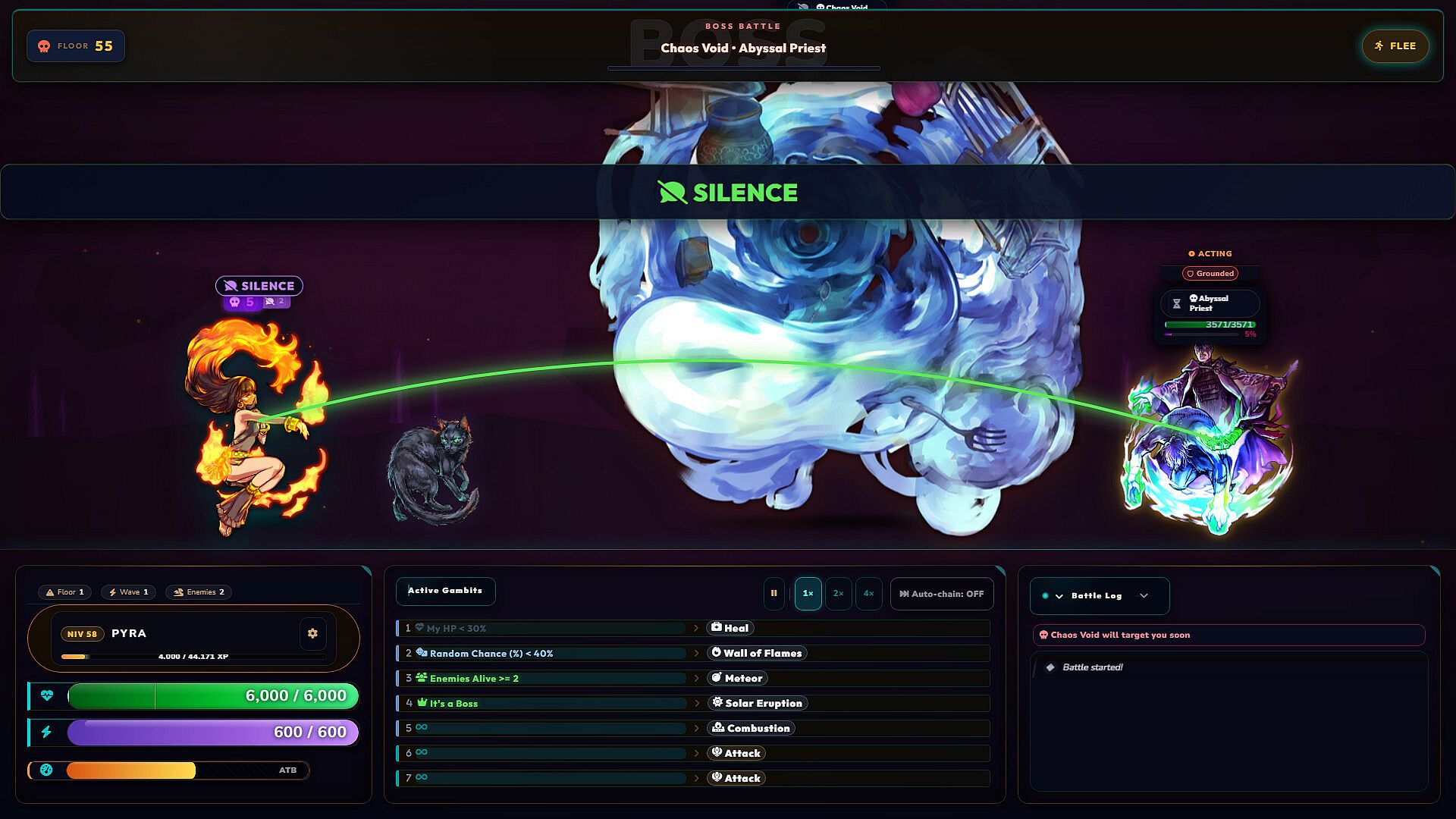
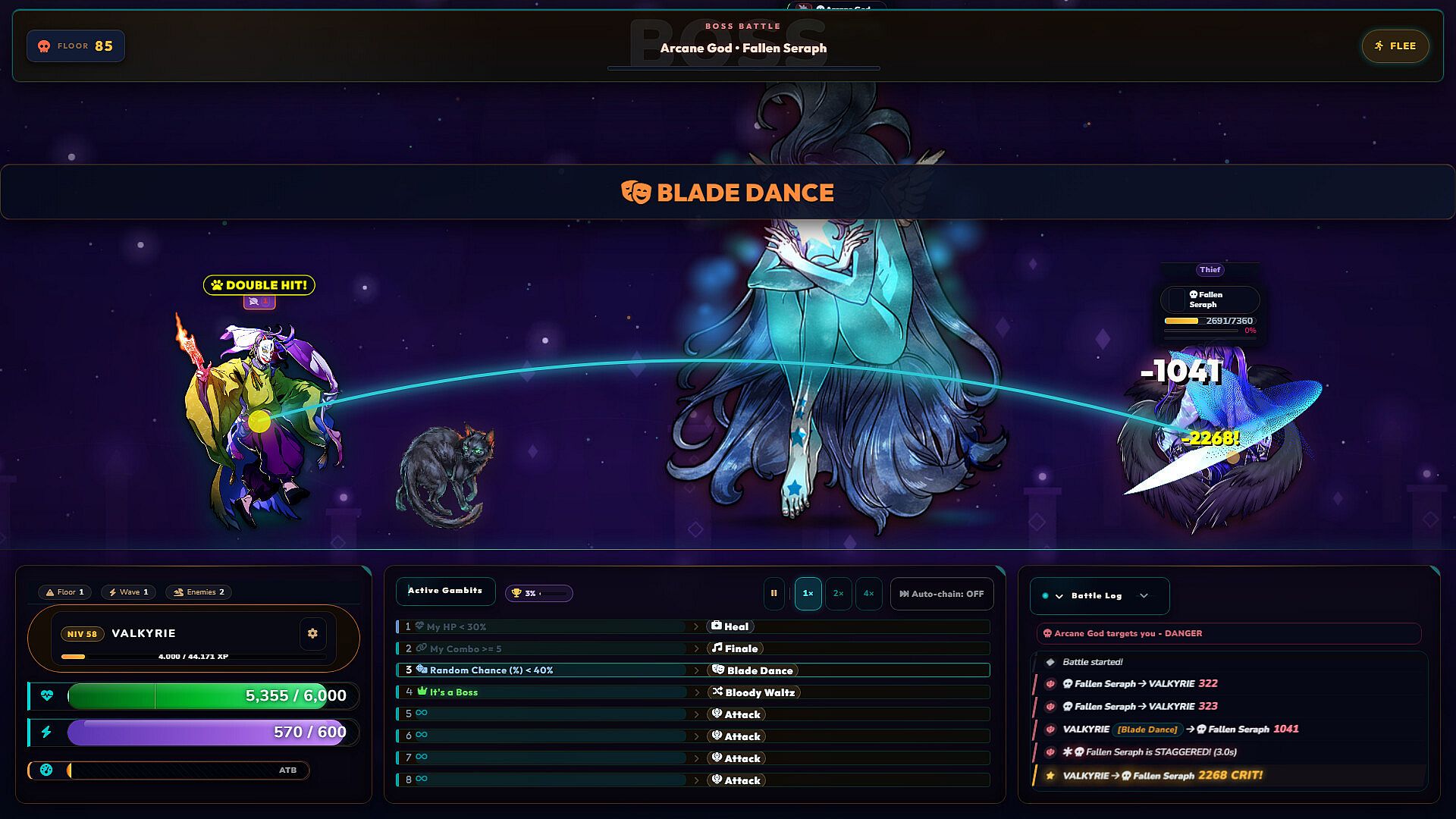
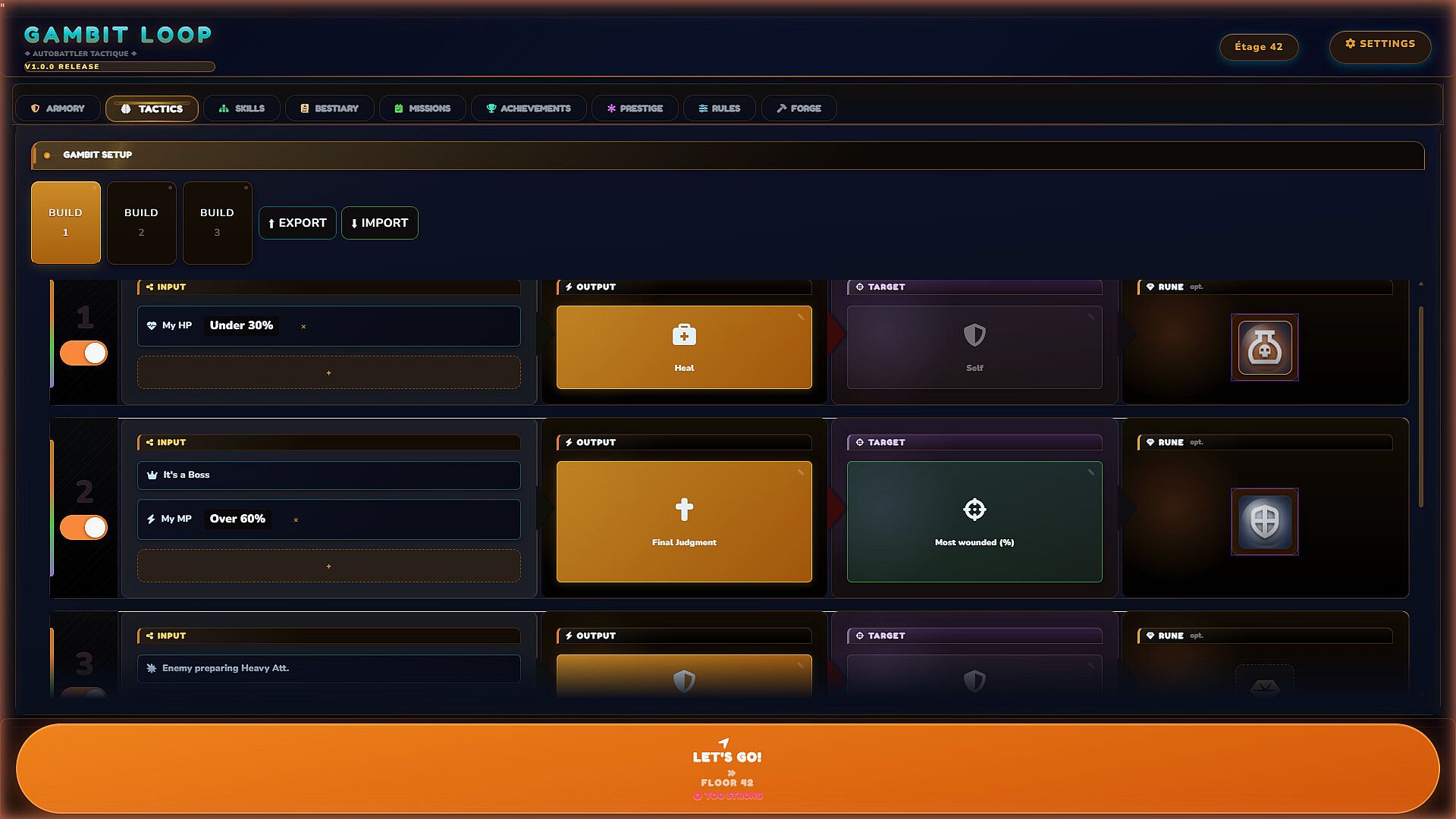
O núcleo da experiência gira em torno do sistema de gambits. Antes de iniciar uma run, o jogador cria árvores de decisão associando condições como limiares de vida, tipos de inimigos ou status de buffs a ações específicas do kit de habilidades. Exemplos incluem ativar cura quando a vida cai abaixo de uma porcentagem definida ou usar uma habilidade poderosa apenas contra um chefe, desde que haja recursos suficientes. Depois de configurado, o herói executa essas regras sem intervenção adicional, permitindo que o jogador foque em refinar a lógica para obter melhores resultados em tentativas sucessivas.
A progressão do personagem oferece três arquétipos principais com especializações distintas. Os Guerreiros incluem o Paladino, focado em tanque e sustentação, o Berserker, especializado em dano explosivo, e o Caçador, que usa armadilhas e sangramentos. Os Magos contam com Fogo para queimaduras em área, Gelo para congelamento e controle, e Trovão para raios em cadeia. Os Ladinos abrangem o Assassino, com dano explosivo e execuções, o Arqueiro, com ataques perfurantes à distância, e o Dançarino, que foca em evasão e debuffs. Uma árvore de talentos oferece mais de 300 habilidades ativas e passivas, incentivando experimentação com combinações que se adaptam a diferentes estilos de jogo e desafios inimigos.
A progressão abrange mais de 100 andares distribuídos em mais de 20 biomas. Cada bioma traz grupos de inimigos e chefes únicos, totalizando 193 inimigos, alguns com variantes elite que possuem afixos perigosos. Os drops de equipamentos variam de comum a lendário, incluindo bônus de set que recompensam builds temáticas e itens únicos que alteram a jogabilidade de forma significativa. Os chefes frequentemente exigem ajustes nos gambits durante a run para lidar com novas ameaças.
Modos de Jogo
Gambit Loop funciona inteiramente no formato single-player, centrado em runs repetidas de masmorras. Cada run envolve percorrer andares, gerenciar recursos e adaptar as configurações de gambit conforme os inimigos e chefes encontrados. O sistema valoriza a melhoria incremental por meio de ajustes nas regras, em vez de controle direto durante os combates, onde pequenas mudanças na prioridade das condições ou na seleção de ações podem alterar drasticamente os resultados.
Os recursos de suporte incluem Conquistas do Steam para acompanhar o progresso, saves em nuvem para continuidade entre sessões e compatibilidade com Steam Deck. O design mantém a experiência autônoma, sem elementos multijogador ou modos adicionais além da progressão baseada em runs pelos biomas e andares.
Progressão e Customização
A profundidade surge da interação entre a árvore de talentos, os sets de equipamentos e as regras flexíveis dos gambits. O jogador pode testar variações na ordem das regras ou na seleção de habilidades para lidar com diferentes desafios dos biomas, criando experiências distintas mesmo em andares já conhecidos. O sistema recompensa a antecipação do comportamento dos inimigos e a preparação para afixos ou mecânicas de chefes que surgem mais adiante na run.
A exploração dos mais de 20 biomas revela composições de inimigos variadas que testam os limites de qualquer configuração. Ajustes na árvore de decisão tornam-se necessários à medida que novas ameaças aparecem, reforçando a camada estratégica ao longo de várias partidas.
Vale a Pena Jogar?
Gambit Loop é indicado para jogadores que apreciam estratégia metódica e experimentação de sistemas em um RPG single-player. O foco na construção e refinamento de regras condicionais atrai quem busca mecânicas de auto-battler combinadas com opções profundas de customização. Com lançamento previsto para 2026 e ainda sem avaliações de usuários, o jogo é voltado para quem valoriza preparação cuidadosa e melhoria iterativa em vez de ação acelerada. Sua escala indie e sistemas focados o tornam uma boa opção para sessões casuais que exigem planejamento e adaptação a desafios procedurais.
