


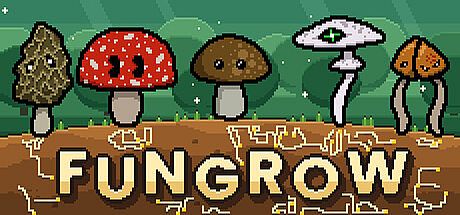


Fungrow is a casual simulation idle game built around the mechanics of decay and resource management on PC. Players begin with a single mushroom species on a forest floor and work to accelerate the breakdown of biomass through mycelium and fungal growth until the entire world is consumed.
Gameplay
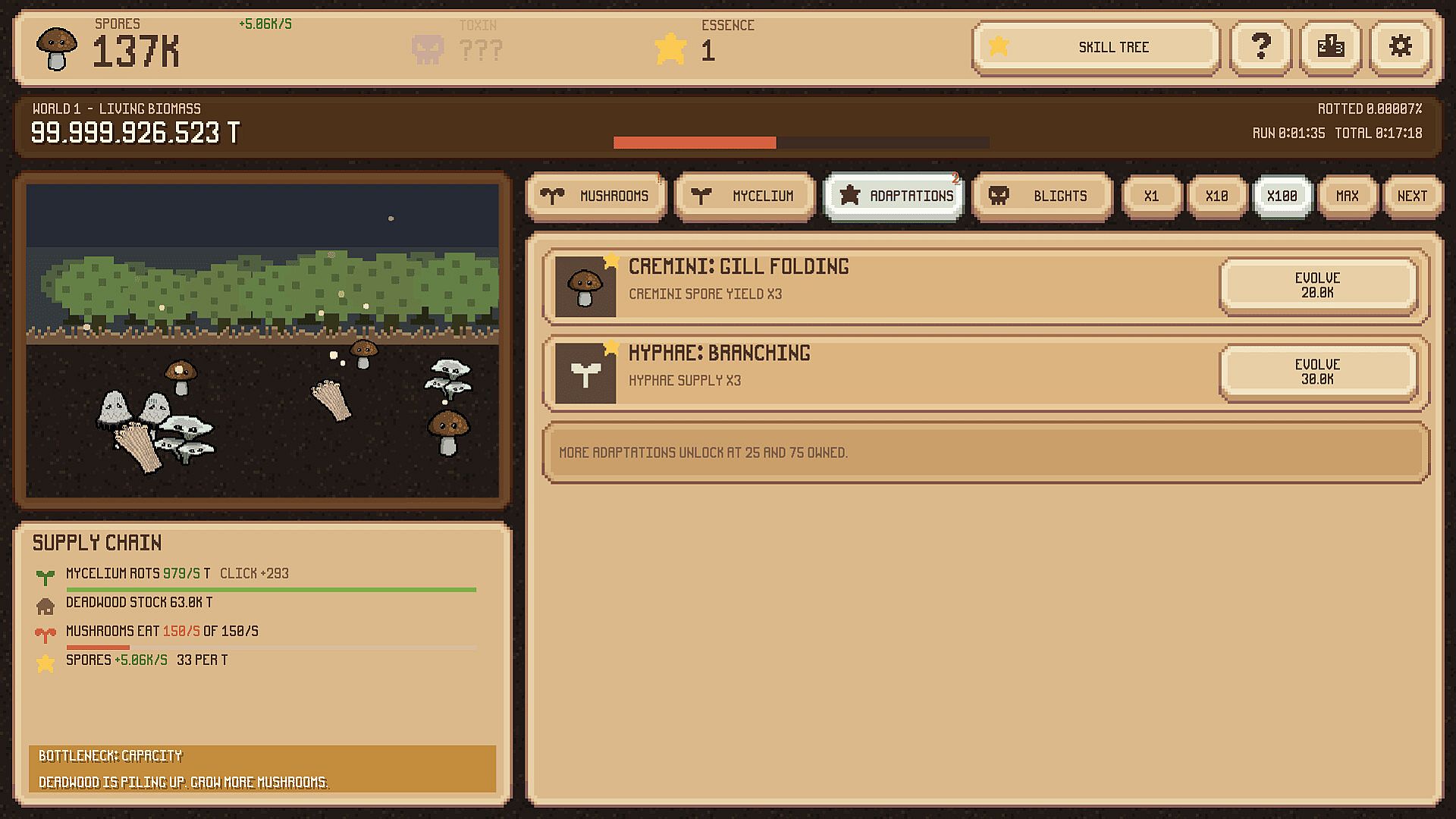
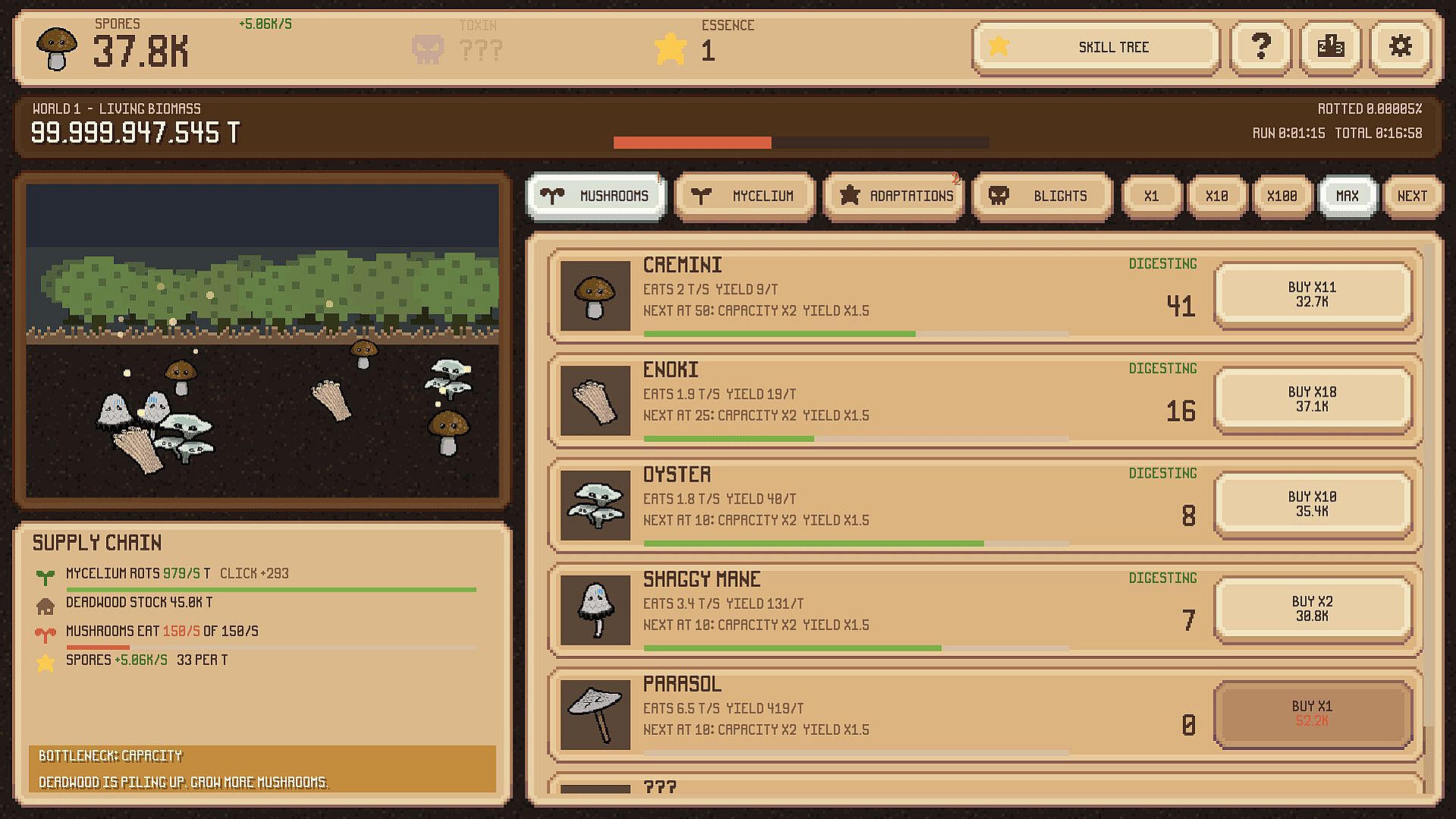
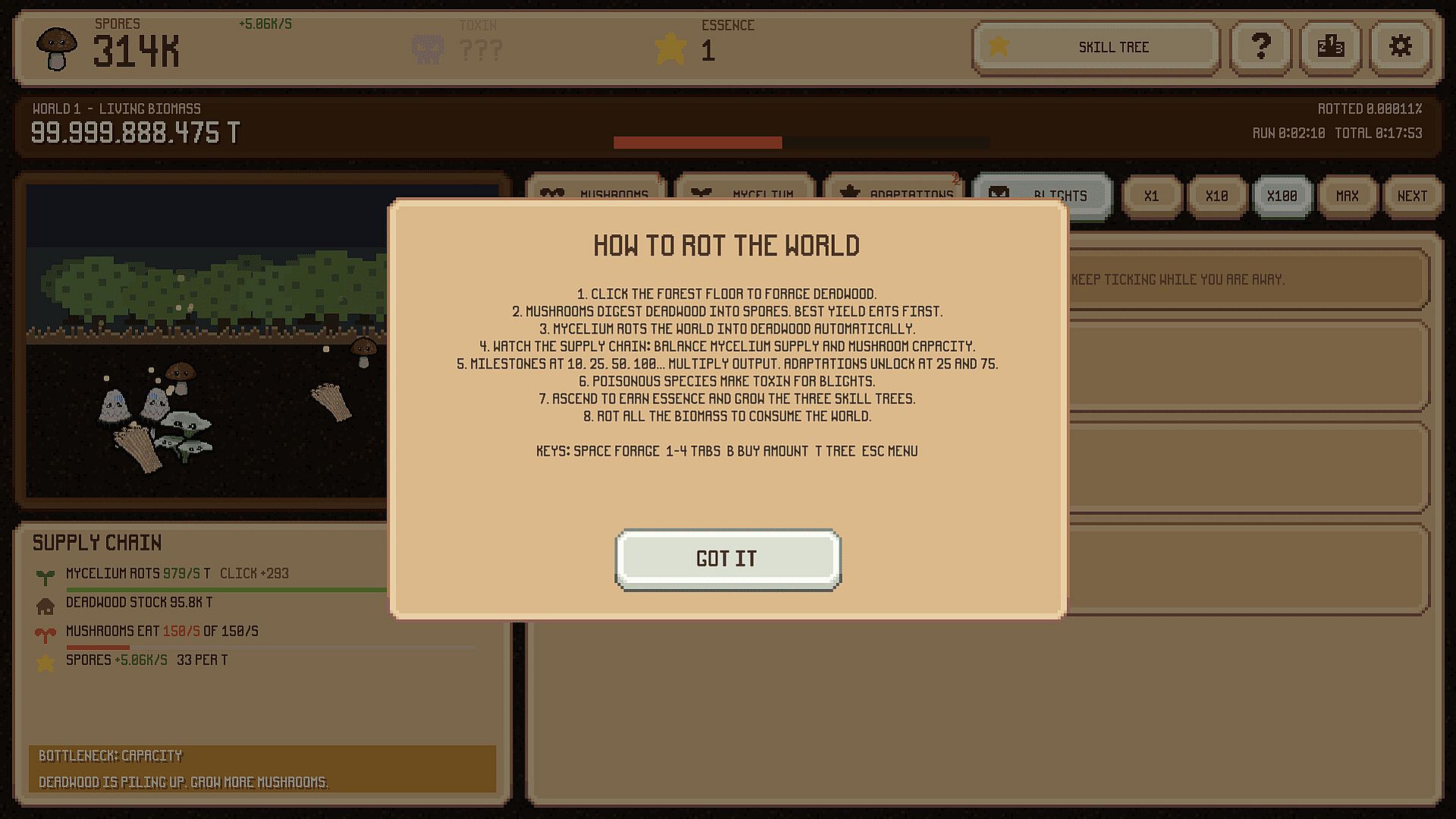
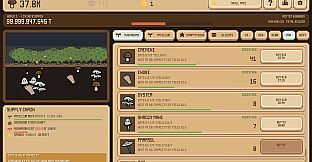
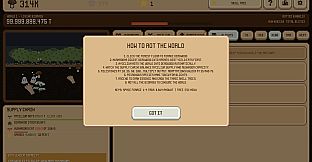
The core loop centers on balancing two interconnected systems: mycelium that rots living material into deadwood and mushrooms that consume the deadwood to produce spores. Players start by foraging manually through clicks on the forest floor to gather initial resources for the first mushrooms. As the simulation progresses, the supply chain panel highlights bottlenecks, such as insufficient mycelium leaving mushrooms starved or excess deadwood going unused, allowing targeted adjustments to restore efficiency.
Fifteen mushroom species appear in sequence, each with distinct digestion rates and spore yields. Early options include Cremini, Enoki, and Oyster, while later species such as Fly Agaric, Jack O Lantern, Funeral Bell, Death Trumpet, and the Destroying Angel offer greater returns but require prior unlocks. Ownership milestones increase capacity, and adaptations further strengthen each type through evolution. Six tiers of mycelium spread across the environment, advancing from basic Hyphae to advanced structures like Fairy Rings, the Wood Wide Web, and ultimately a Spore Cloud. Poisonous mushrooms generate toxin that fuels abilities including Spore Burst, Bloom Frenzy, and Blight Bomb, with an auto-cast option available later.
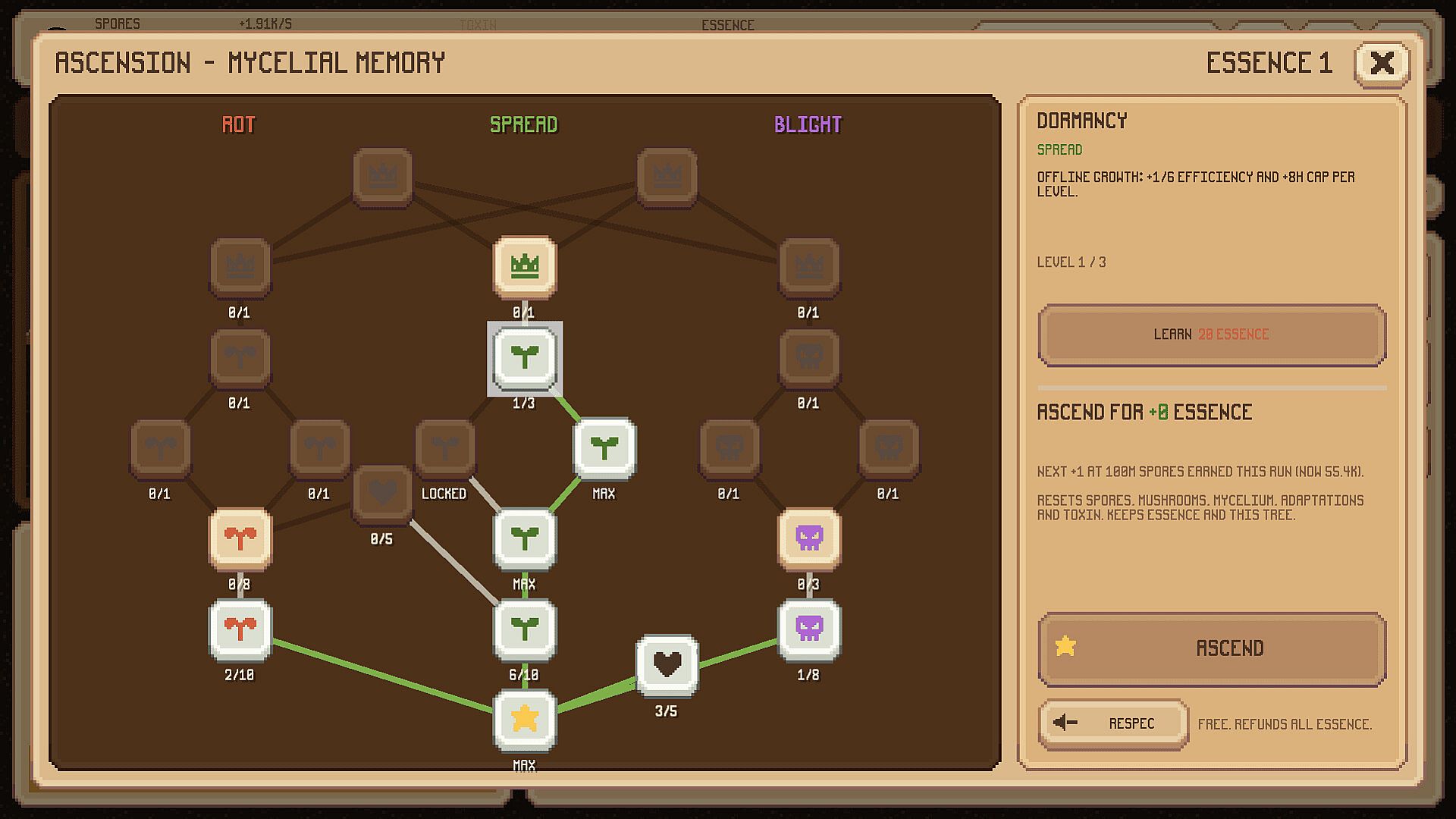
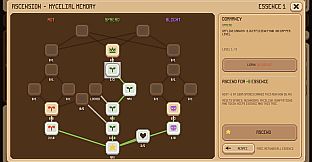
Progression includes three branching skill trees focused on Rot, Spread, and Blight. Each tree presents commitment choices at forks and concludes with a capstone ability. Essence earned through ascension funds these upgrades, and respec remains free at any time. Offline growth continues the decay process during player absence, while leftover Essence supports uncapped permanent upgrades.
Game Modes
Fungrow operates as a single-player experience with a linear yet repeatable structure centered on world consumption. The initial world features a fixed biomass total that players reduce to zero through sustained management of the decay cycle. Completion grants a victory screen, records the elapsed time, and awards double Essence for future runs.
Subsequent worlds scale the biomass by a factor of one hundred, extending the same core systems into longer sessions. This creates an endless progression loop where each cleared world resets the environment at a larger scale while preserving accumulated upgrades and species unlocks. No separate competitive or cooperative modes exist; all activity remains focused on optimizing the single-player supply chain and skill builds across these expanding scenarios.
Progression and Features
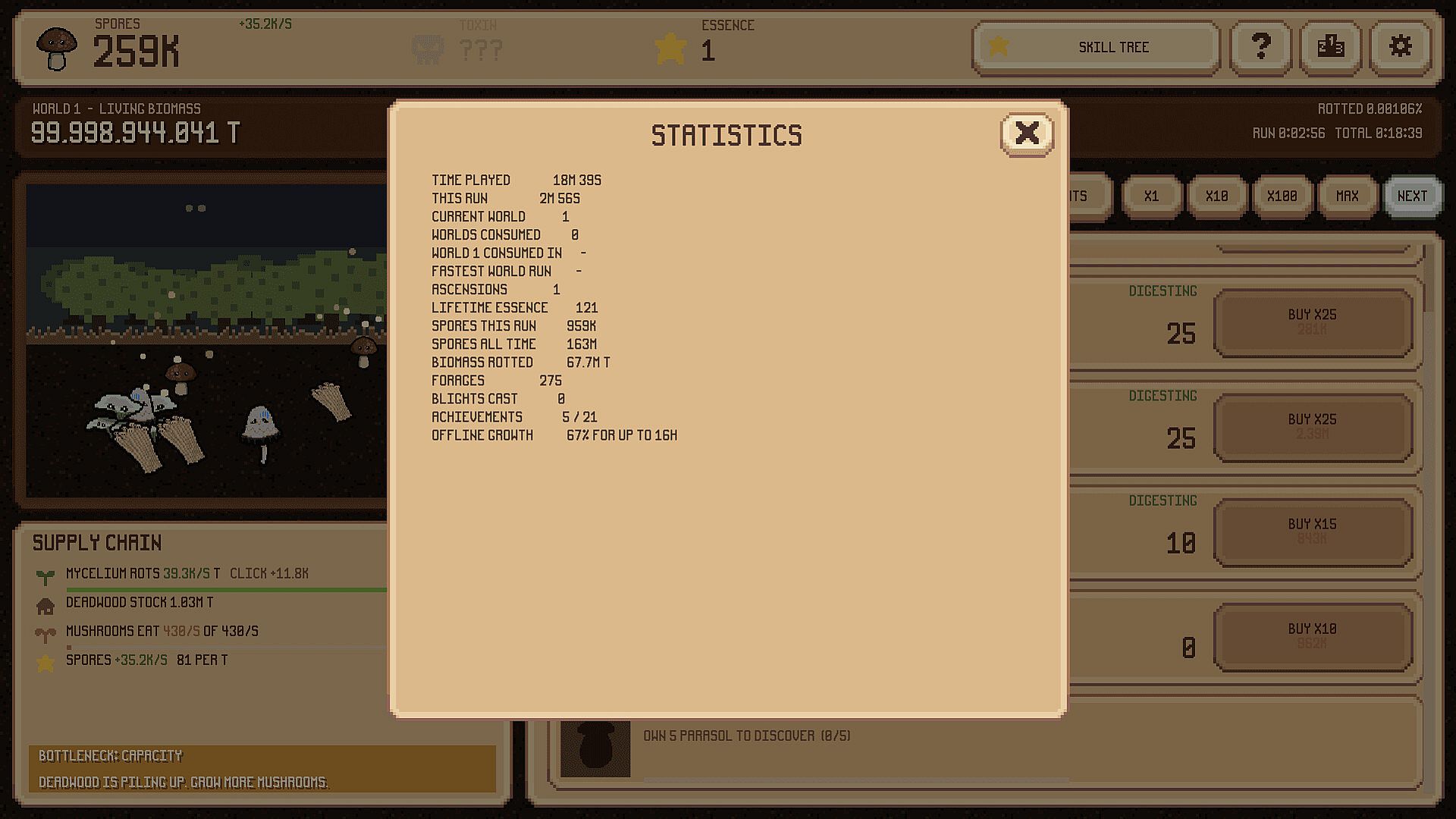
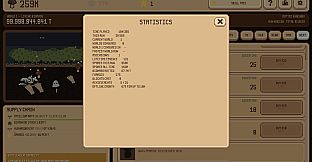
Hand-drawn pixel art represents every mushroom species and environmental stage. A dedicated panel tracks the supply chain in real time, and three blight options expand tactical choices during rapid rot phases. Twenty-one achievements track milestones such as species ownership and world completions, while a fastest-world leaderboard ranks completion times. Steam Cloud support preserves progress across sessions, and adjustable settings cover volume, display options, resolution, and number formatting for large counters.
The simulation emphasizes steady, incremental advancement rather than direct control, rewarding consistent balance adjustments and strategic tree selections over extended play periods.
Is It Worth Playing?
Fungrow suits players who enjoy idle simulation games that combine resource balancing with long-term progression. The decay theme and mushroom management create a distinctive loop distinct from typical farming or crafting titles. Because the game remains in a pre-release state with no player reviews available yet, prospective buyers should review the listed features against their preference for passive, numbers-driven gameplay. Those drawn to incremental systems with offline elements and repeatable world scaling will find the described mechanics align closely with that style. The absence of multiplayer or additional modes keeps the focus narrow on the single-player decay cycle.