




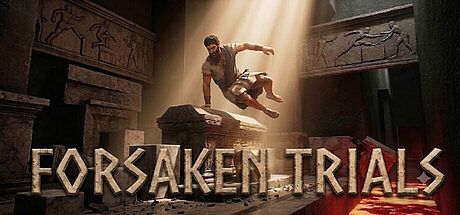


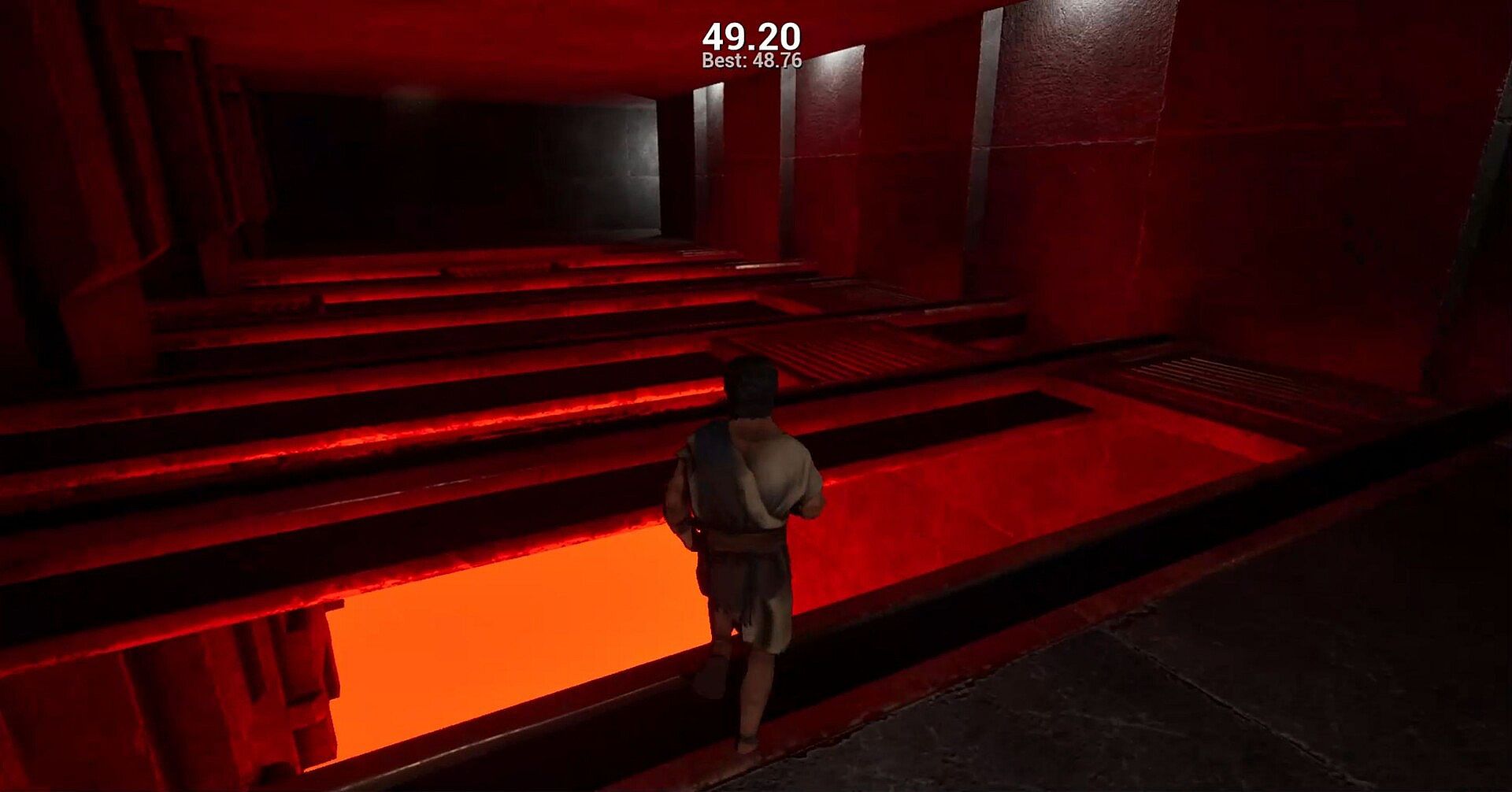
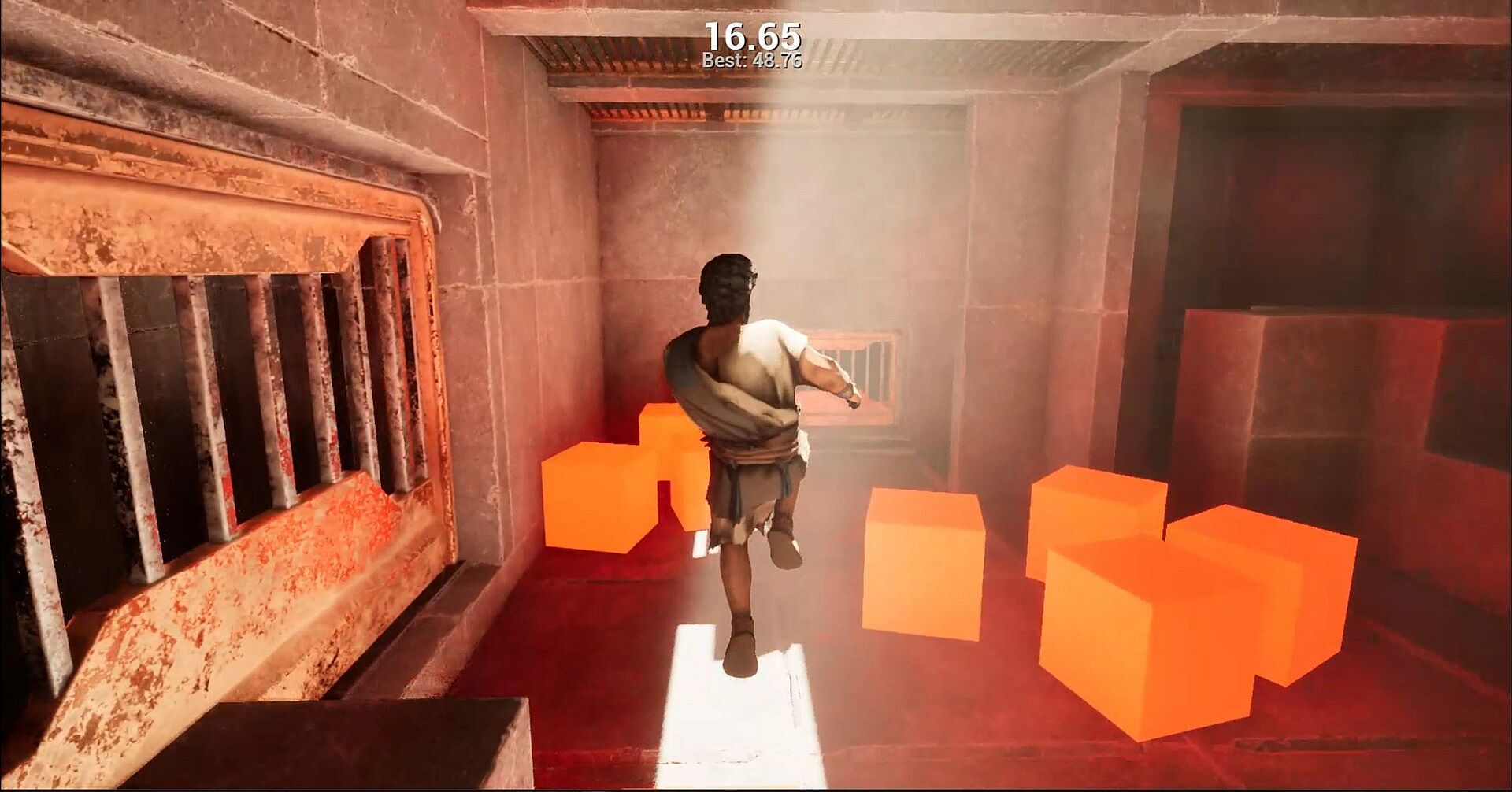
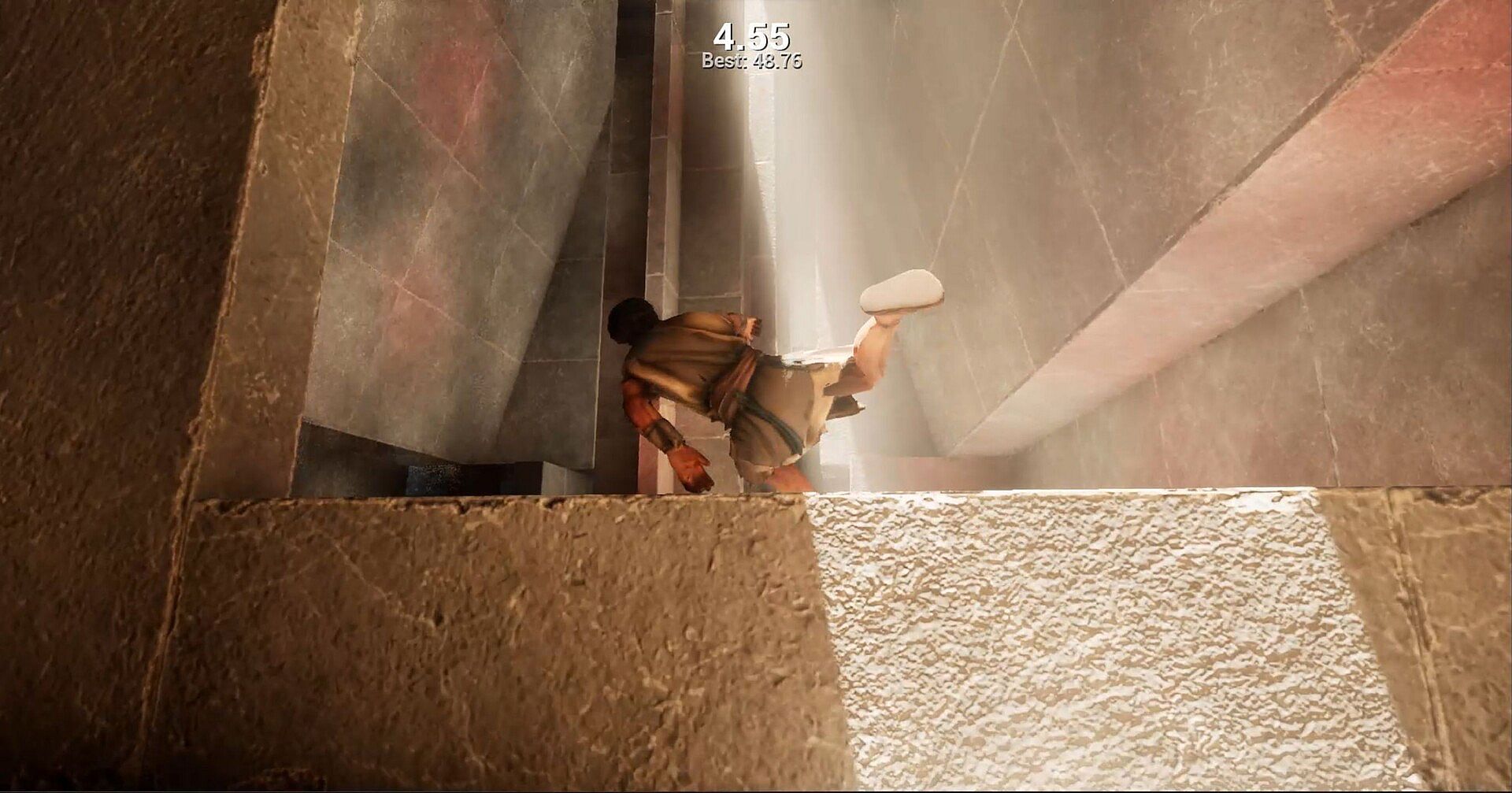
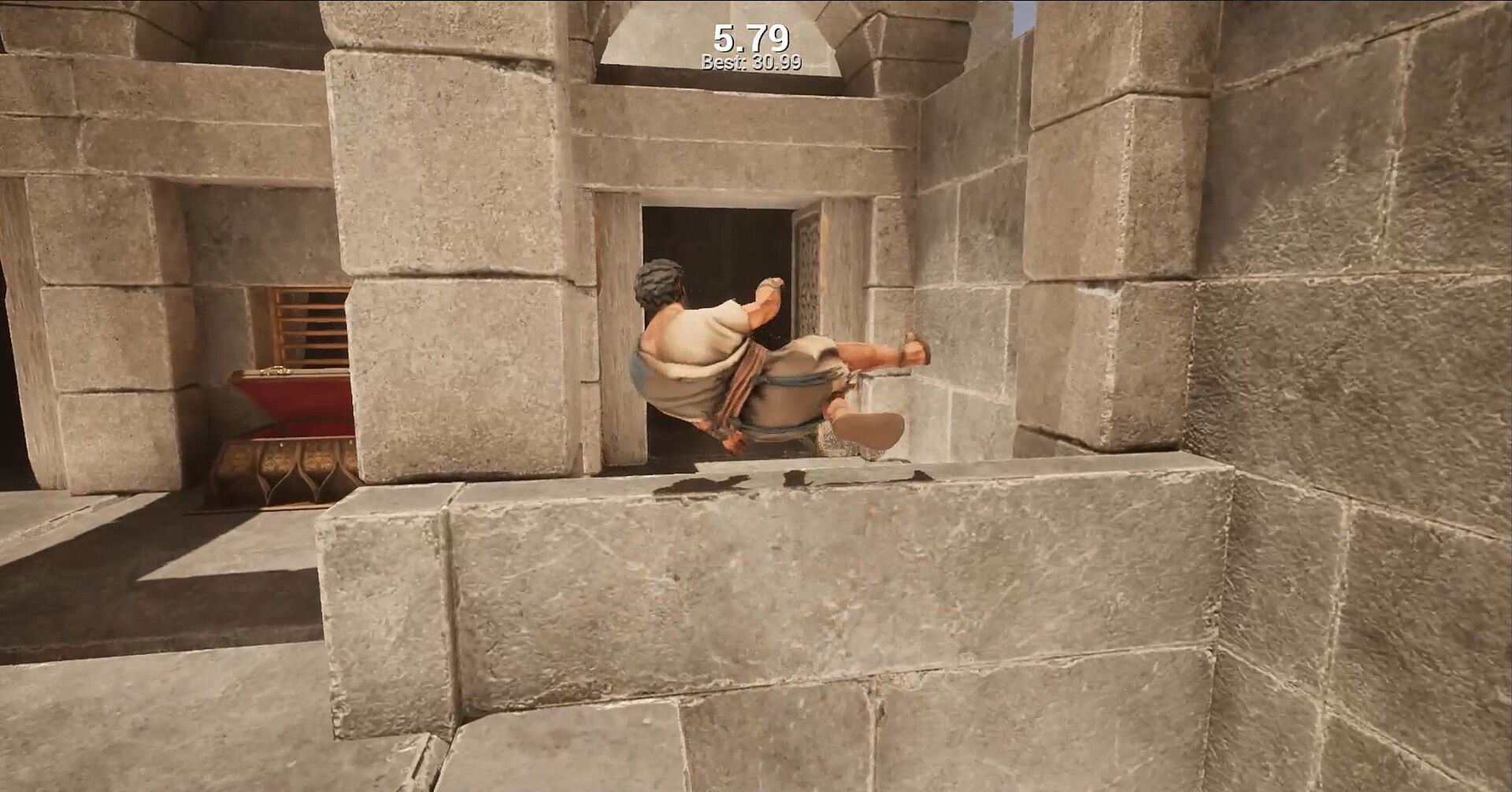
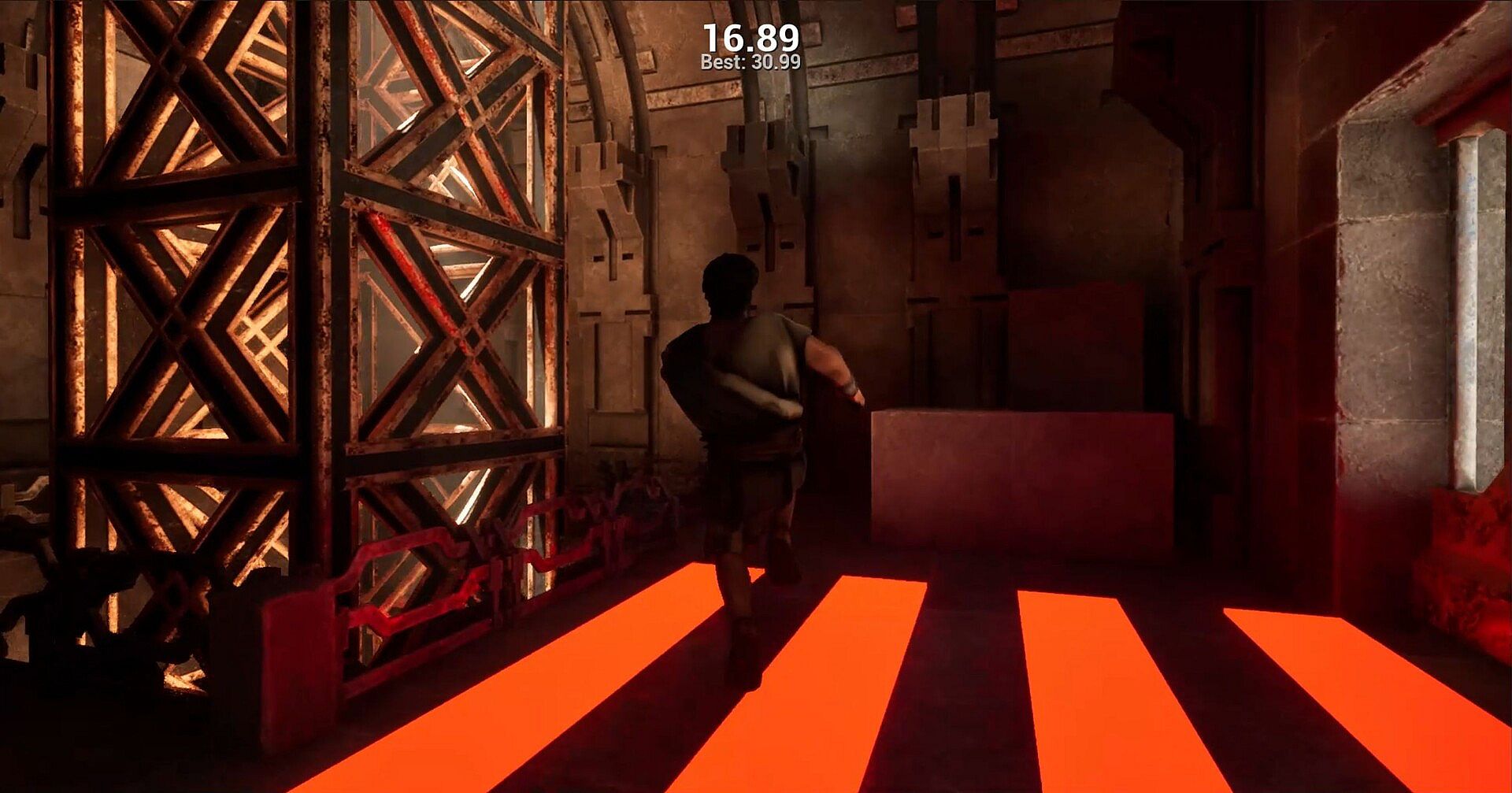
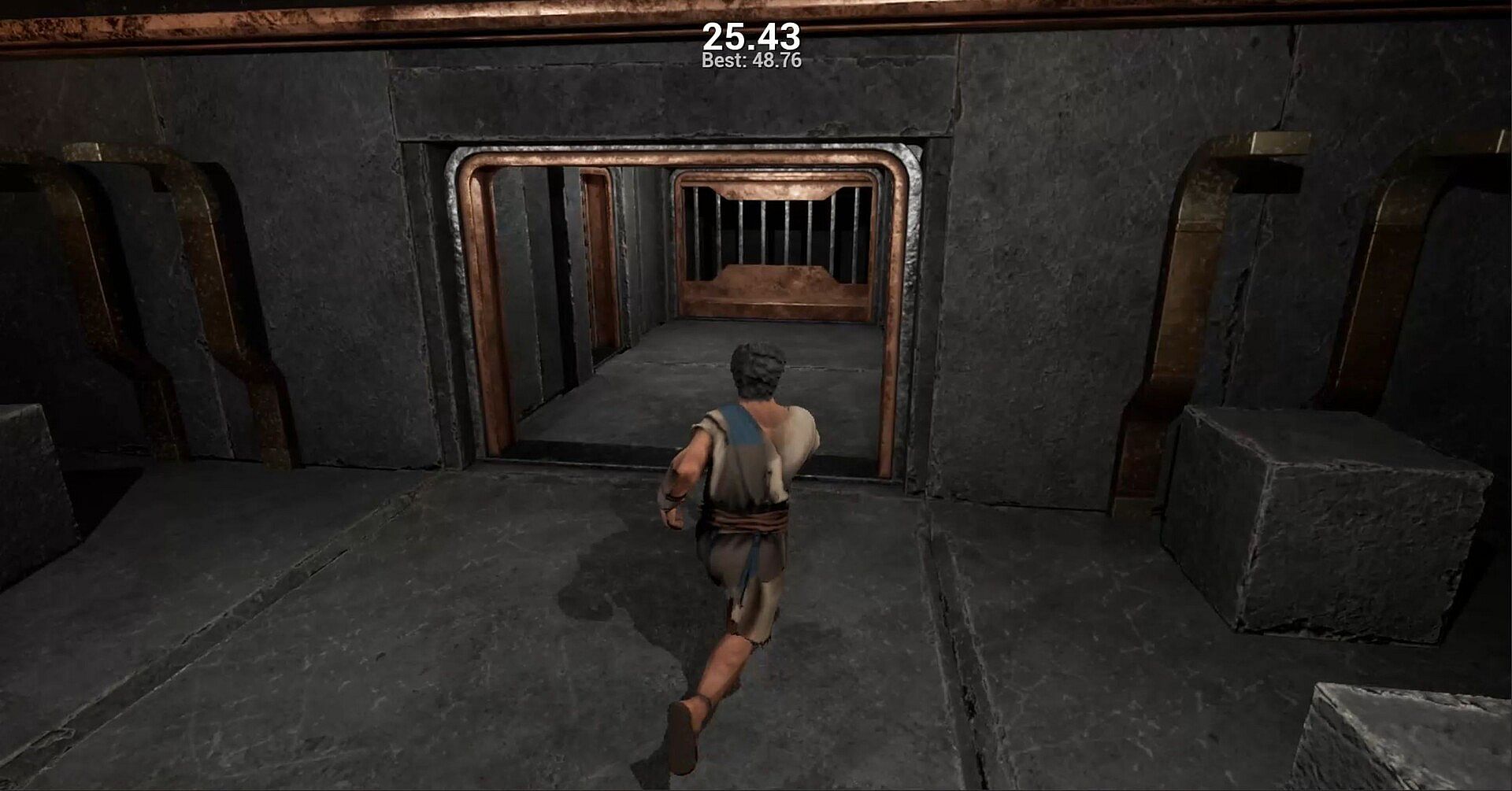
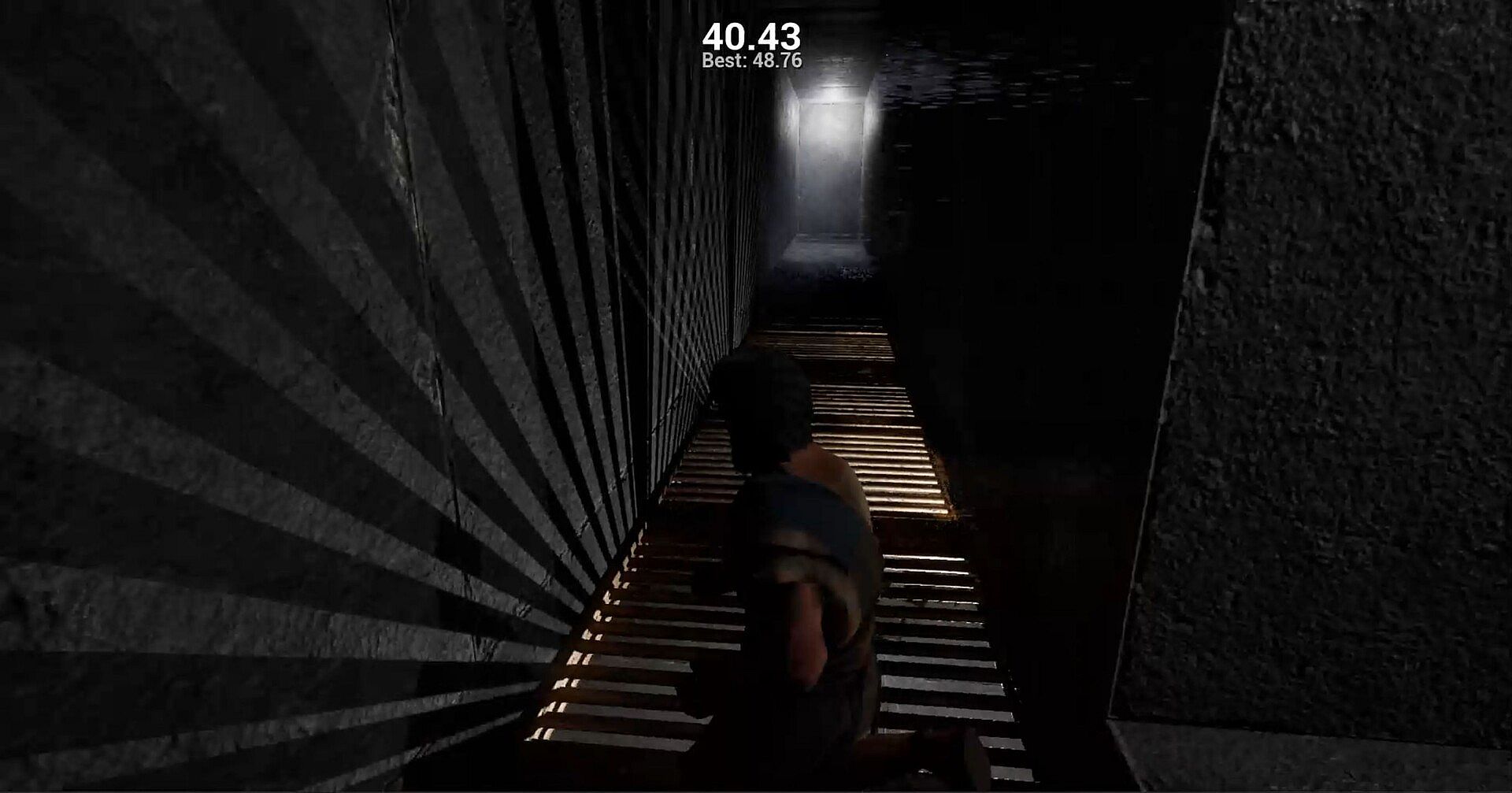
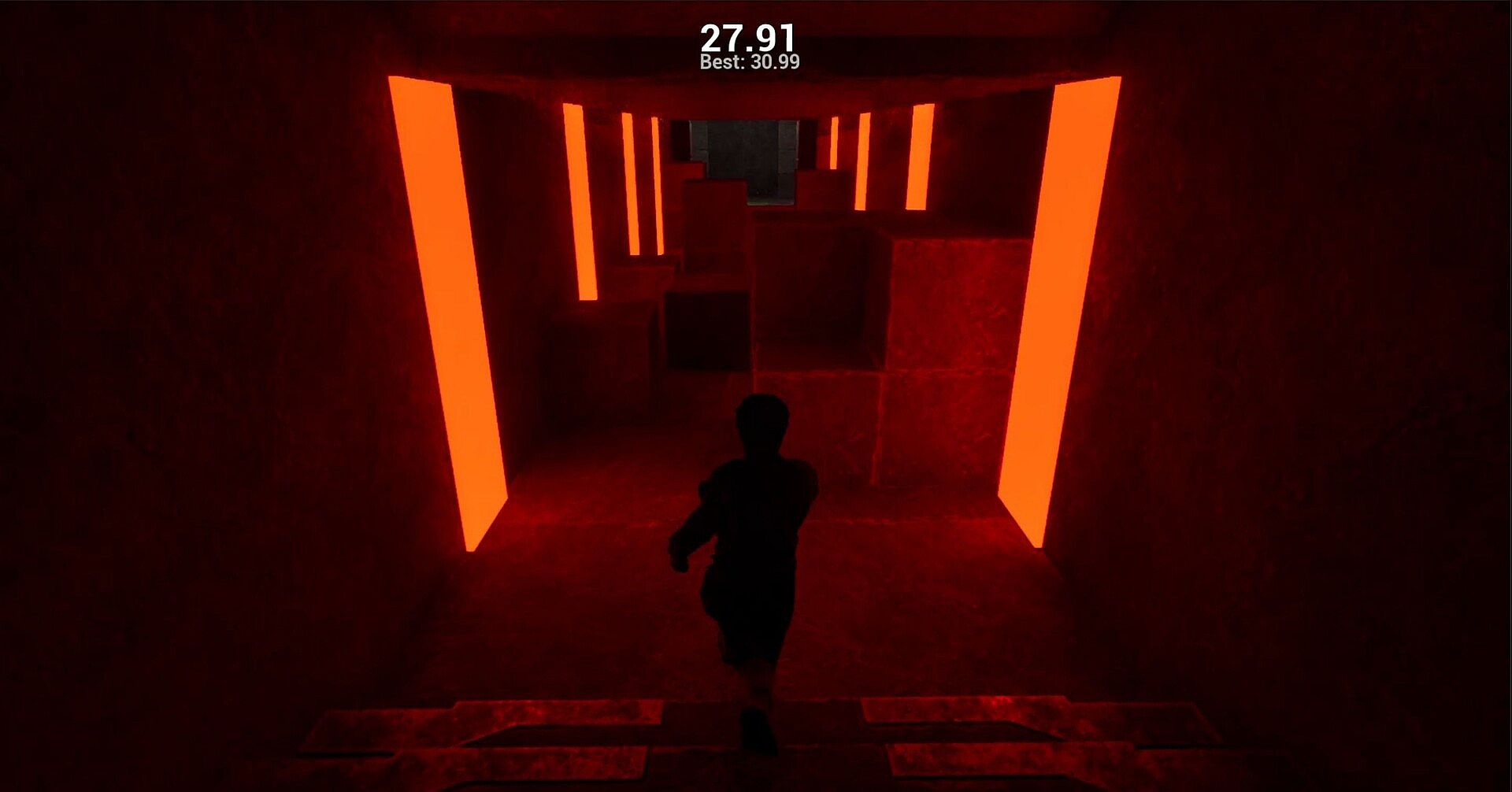

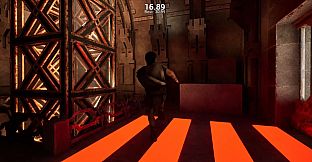
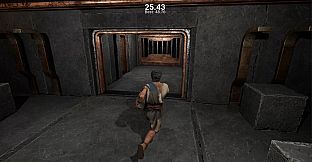
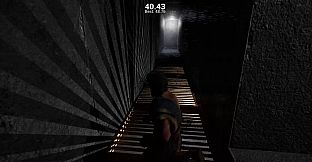

Forsaken Trials is a third-person action indie platformer built around precise momentum-based movement and instant failure. Players control a cursed adventurer who must navigate ancient stone ruins without checkpoints or forgiving mechanics. The core loop centers on committing to runs, managing speed for jumps, and restarting immediately upon any mistake to refine timing and pathing.
Gameplay
Movement forms the foundation of every attempt. Sprinting generates increasing momentum over distance, which directly determines jump reach since jump height remains fixed and air control does not exist. Players must plan each sequence on the ground before takeoff, as mid-air adjustments are impossible. Vaulting and landing require exact positioning relative to ledges and platforms. The physics reward consistent rhythm and punish hesitation or miscalculation with immediate death and a full restart from the beginning of the current section.
Precision extends to every input. Sprint builds gradually, so early acceleration decisions affect later gaps. Fixed jump arcs mean horizontal distance depends entirely on velocity at the moment of launch. The absence of checkpoints forces full runs during practice, turning each attempt into a test of memory and execution under pressure. The curse mechanic implied in the setting reinforces repeated tries without external assistance or variable difficulty options.
Game Modes
Seven training levels introduce the basic movement systems in a controlled environment. These serve as the only structured introduction before players face more demanding content. Five Temple of Initiation levels follow, focusing on skill verification through tighter sequences and longer unbroken runs. Three full campaign series provide the primary challenge for those who complete the earlier stages, each series presenting extended routes through the ruins with increasing complexity in momentum management and path commitment.
All modes operate under the same ruleset. No separate difficulty settings or tutorial overlays exist beyond the training grounds. Progression relies on personal mastery rather than unlocks or modifiers. The structure emphasizes singleplayer endurance and repetition over variety in rules or objectives.
Level Design and Progression
The ancient ruins setting supplies the environmental backbone for all challenges. Stone architecture creates consistent visual cues for timing jumps and vaults while maintaining a uniform aesthetic across sections. Training levels isolate individual mechanics such as sprint acceleration and basic vault timing. Temple of Initiation levels combine those elements into continuous sequences that test cumulative decision-making. Campaign series extend the format into full-length runs that demand sustained focus and route optimization.
Progression follows a linear skill gate. Completion of training unlocks access to the Temple of Initiation, and success there opens the campaign series. Each stage removes safety nets progressively, reinforcing the momentum-driven rules without introducing new systems or external variables.
Is It Worth Playing?
Forsaken Trials suits players who seek uncompromising singleplayer platforming that prioritizes execution and repetition over narrative or exploration. The instant restart loop and fixed mechanics create a focused experience where improvement comes directly from repeated attempts and pattern recognition. Those who enjoy games that strip away assists and demand ground-level planning will find the structure rewarding once the initial learning curve is cleared.
The game offers no multiplayer elements, seasonal content, or adjustable parameters. Its current state remains consistent with the described singleplayer focus, with a demo available for testing the core movement before committing to the full release. Players comfortable with high failure rates and self-directed practice will benefit most from the design. Those preferring guided progression or varied objectives may find the rigid ruleset limiting after initial sessions.