


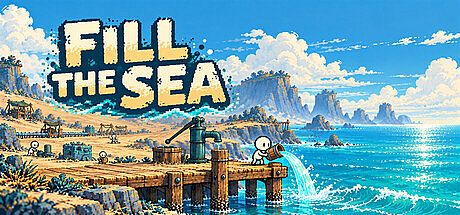


Fill the Sea is an indie casual simulation game built around incremental progression and pixel art visuals. Players begin with a single hand pump on the shore and work to channel water into an empty sea, expanding a network of sources and transport systems until the water level rises to its conclusion.
Gameplay
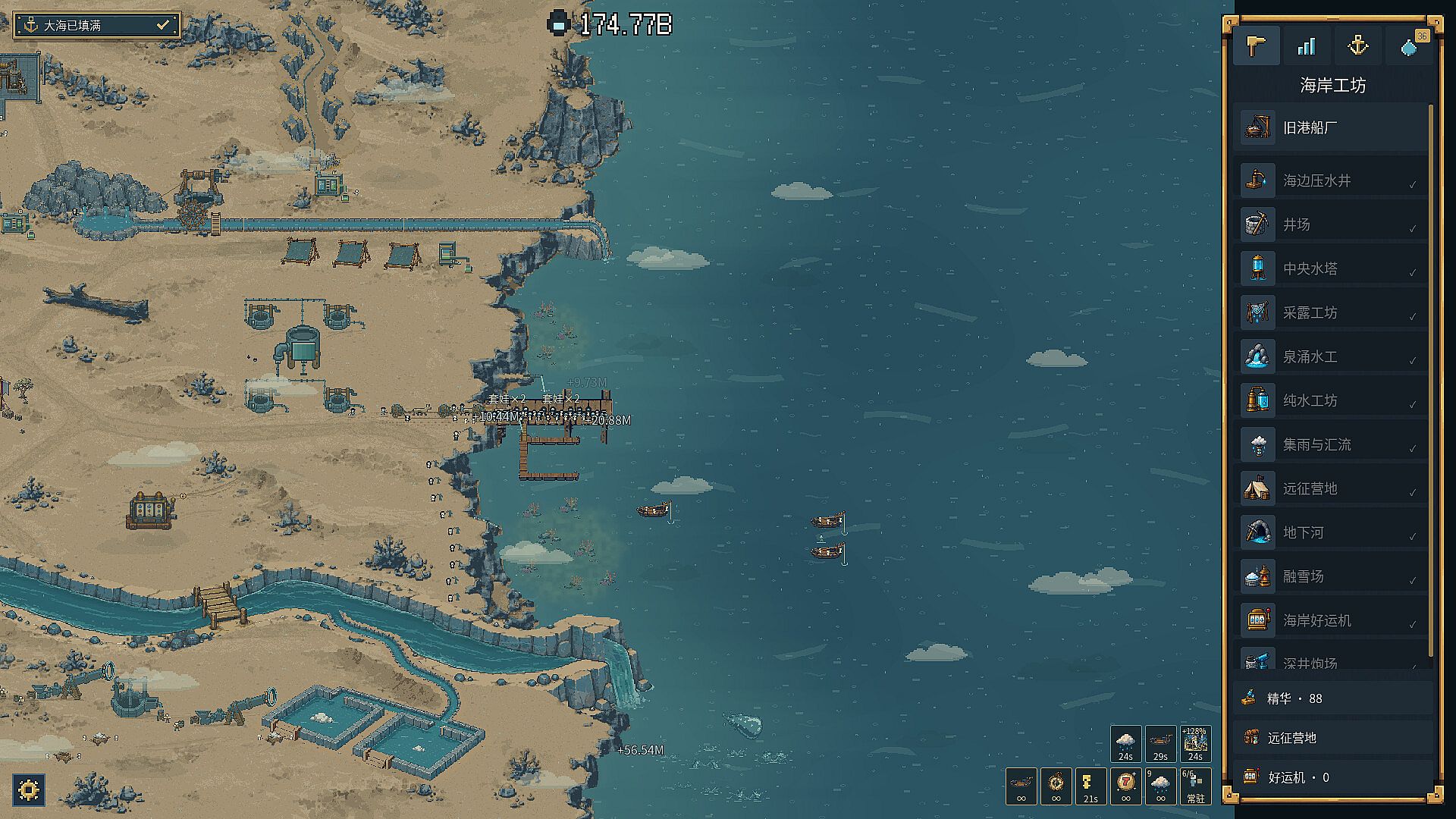
The core loop centers on collecting and moving water through manual effort at first. Early stages involve direct pumping to fill buckets, which players then carry or direct toward the sea. As progress continues, the system introduces automation through recruited helpers known as tibos. These small characters handle fetching, carrying, and pouring tasks, allowing the flow to continue even when the player steps away from active clicking.
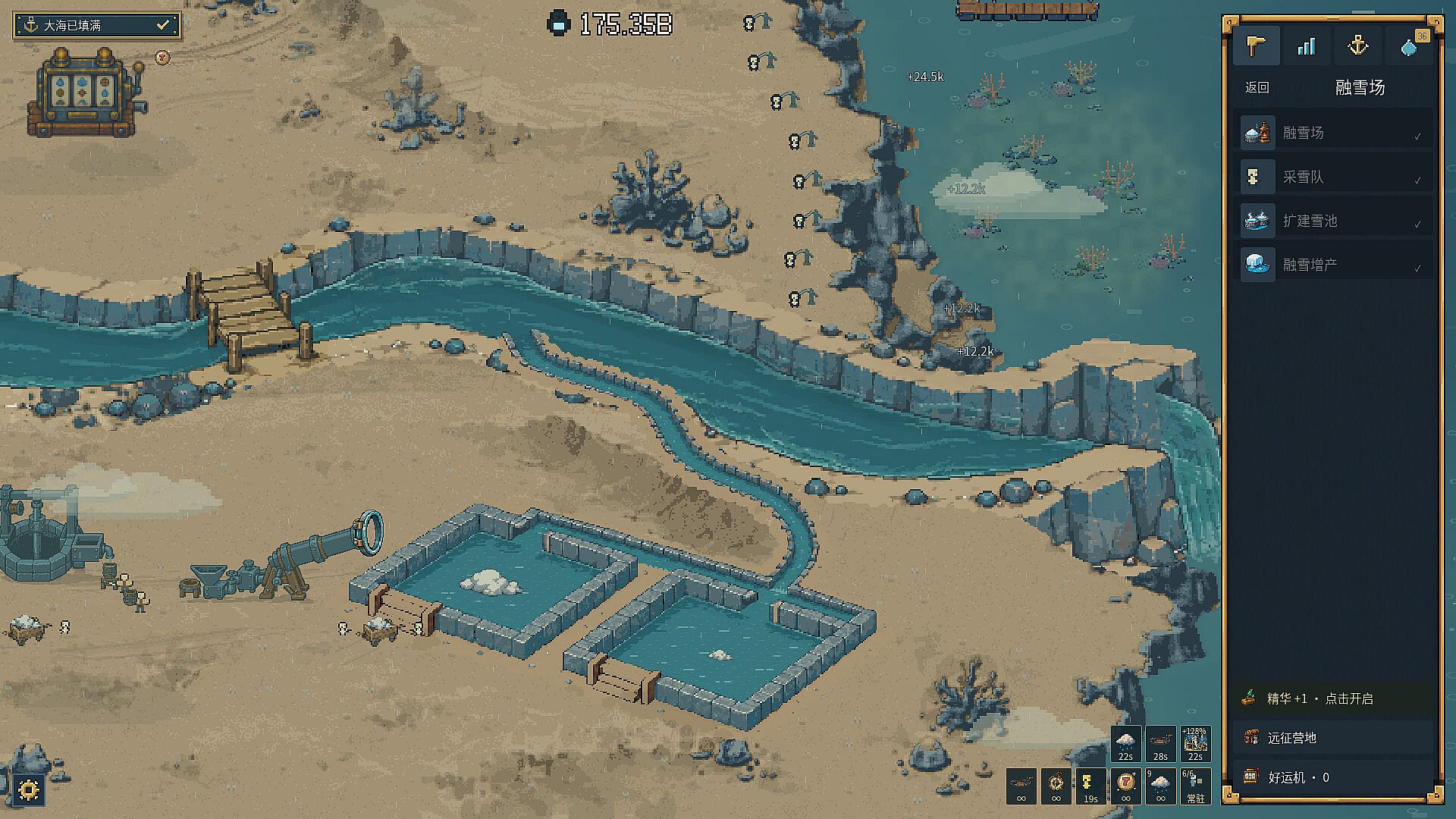
Water sources expand beyond the initial pump to include wells, collected rain and dew, and melted snow. Each addition feeds into a growing transport network that routes the water efficiently. Upgrades improve output at every stage, turning small contributions into steady streams. The pixel art style keeps the expanding facilities and moving helpers easy to follow while maintaining a calm, visual focus on the water's journey.
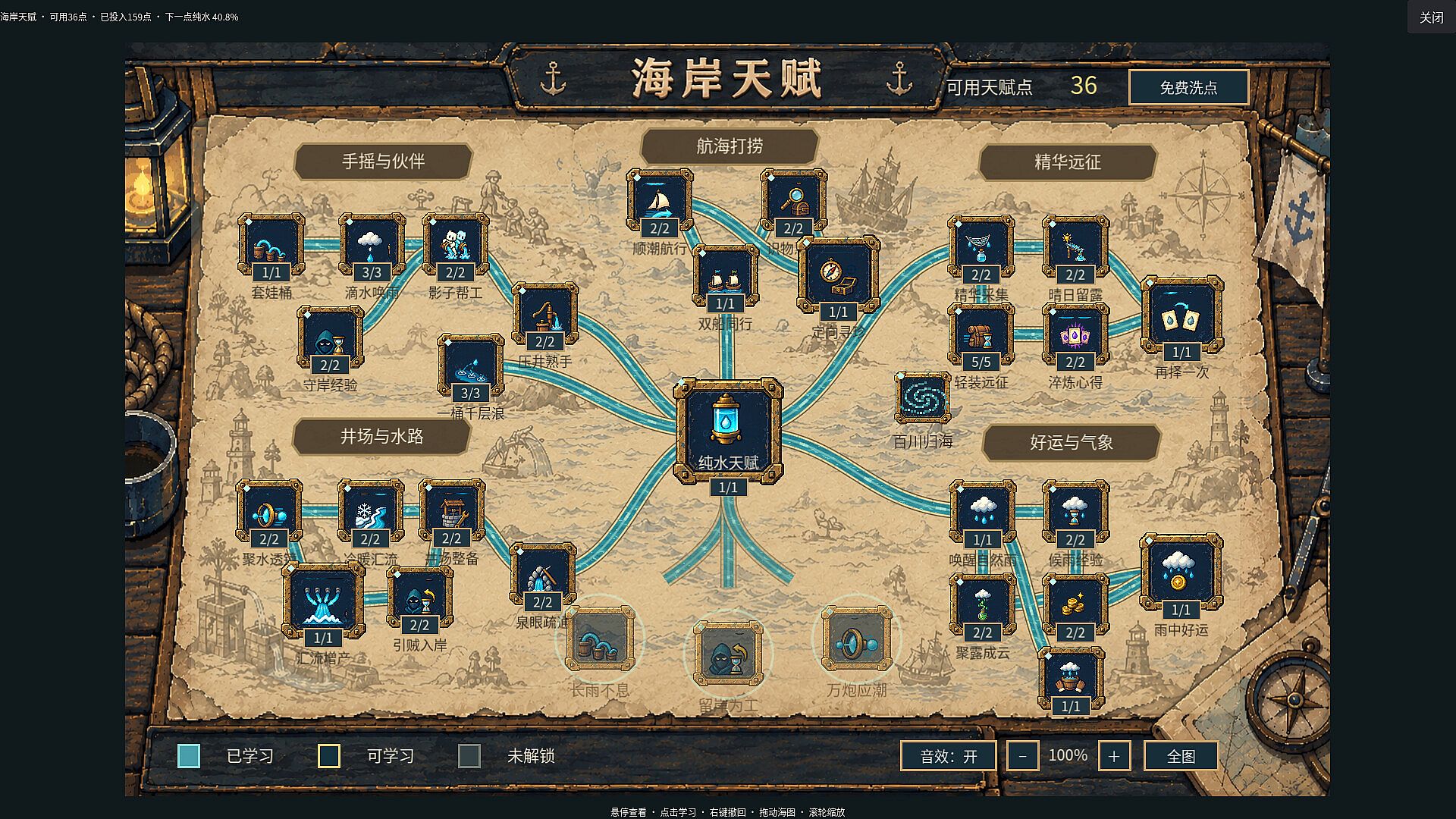
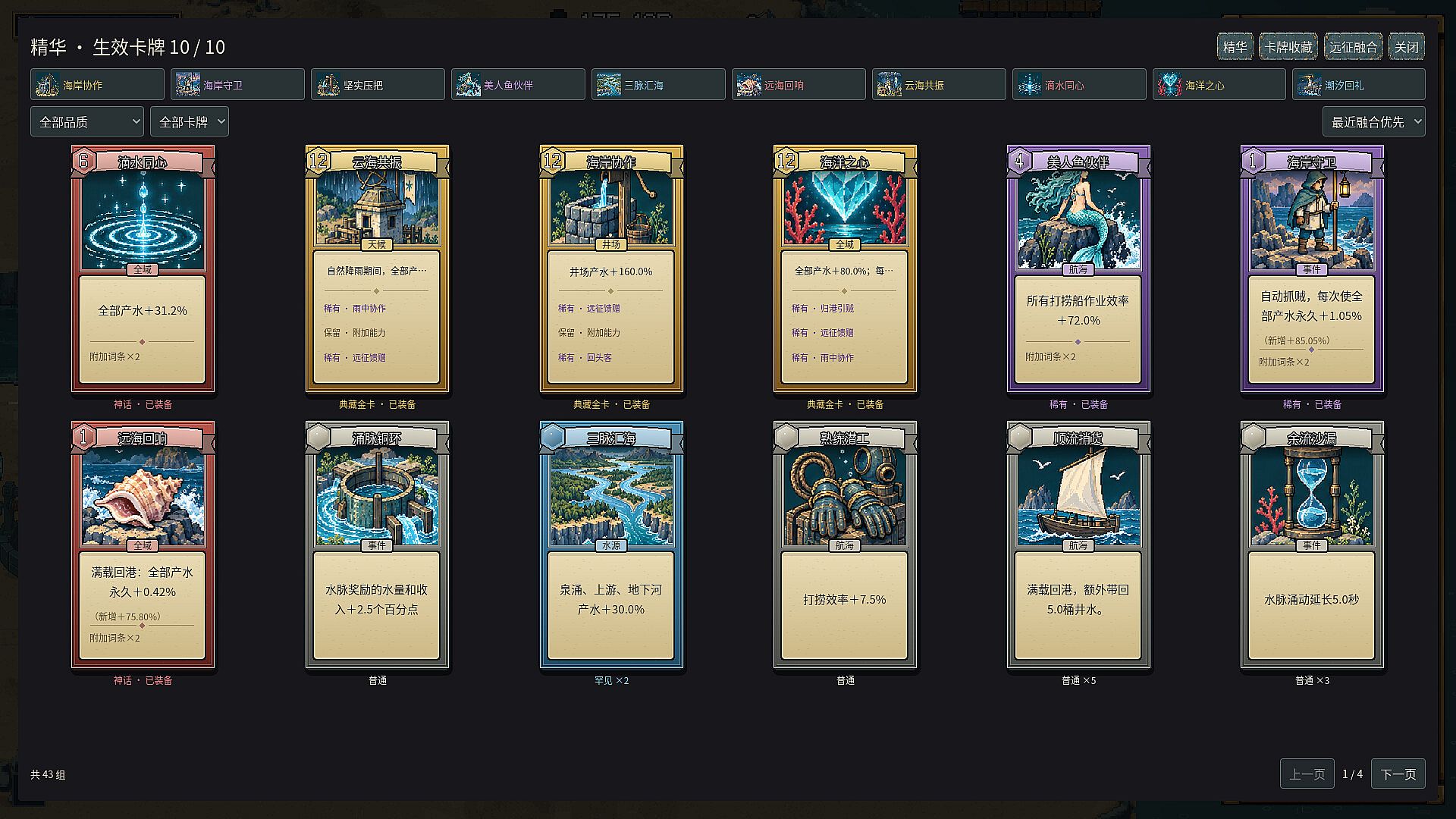
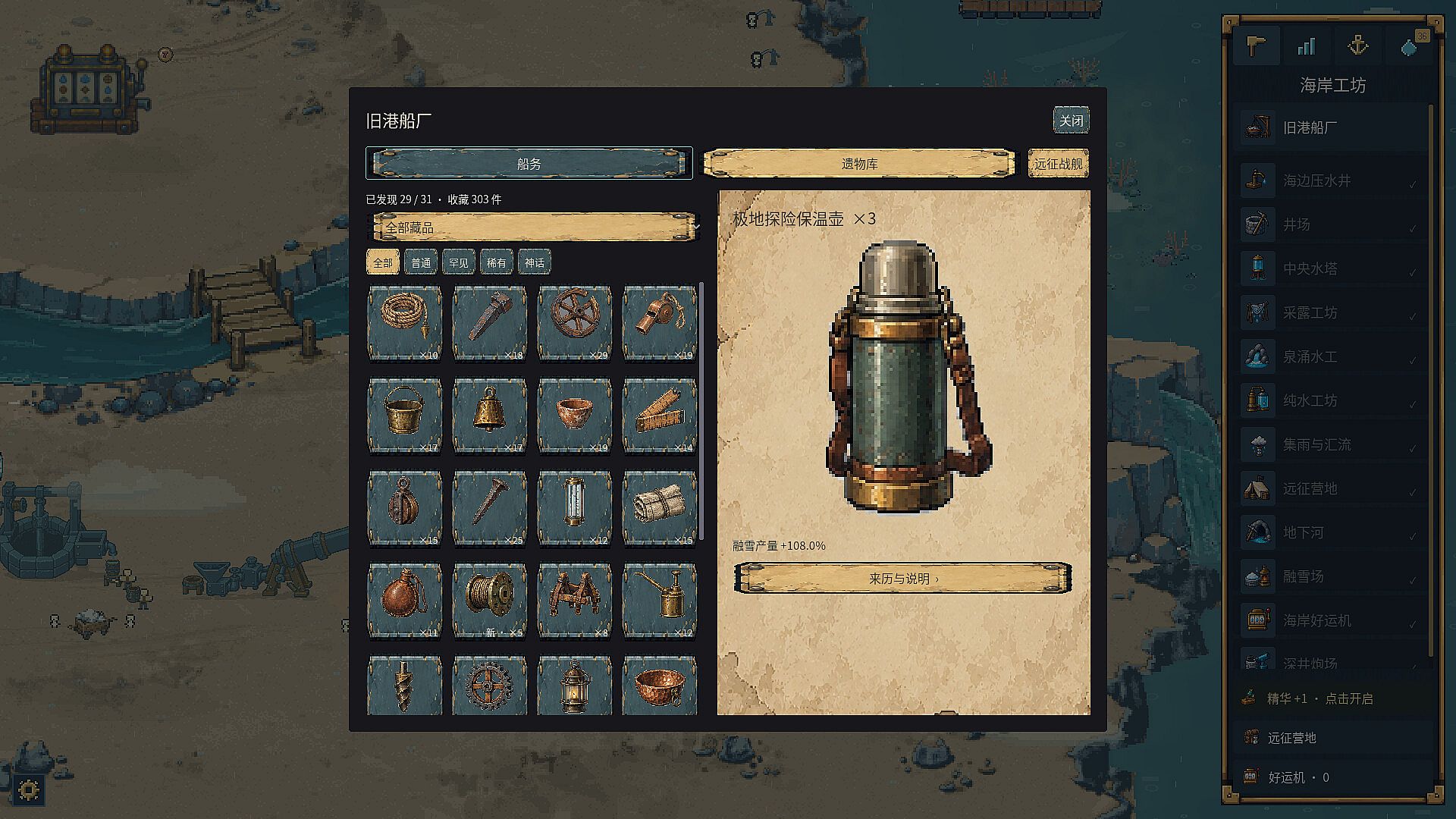
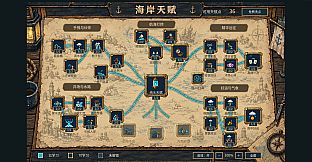
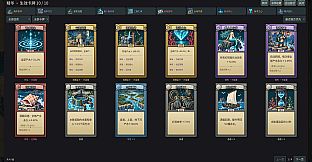
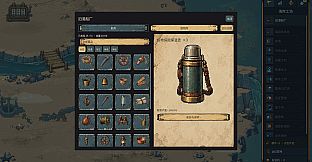
Essence gathered during play unlocks cards of varying rarities. These cards provide bonuses that players combine and fuse to better match their current facilities. Research trees offer further improvements to buildings and processes, while talent points earned from pure water let players customize long-term growth. Relics and occasional random encounters add variety to the steady rhythm of expansion.
Game Modes
Fill the Sea operates as a single-player experience with no separate competitive or cooperative modes. The entire journey follows one continuous progression path from the first bucket to the sea's completion. Players move at their own pace, balancing active management of pumps and helpers with periods of passive collection while upgrades and tibos continue working.
Within this structure, the game emphasizes observation and planning. Watching the helpers move water across the map provides a relaxing break from upgrades, and the clear endpoint of raising the sea level gives the incremental systems a defined purpose. No additional modes alter the core water-filling objective or introduce different rulesets.
Progression and Systems
Technology research unlocks new facility types and efficiencies, while card collection encourages experimentation with combinations that amplify water output. Fusion mechanics let players refine stronger versions of useful cards over time. Talent points spent on upgrades shape how quickly distant goals become reachable, creating a steady sense of forward momentum without requiring constant input.
The visual feedback of water levels rising serves as the main indicator of success. Players can pause to watch natural events like rain or collectibles appear, then return to directing resources. This mix of hands-on building and automated flow suits sessions of varying length.
Is It Worth Playing?
Fill the Sea suits players who enjoy incremental and simulation games focused on steady growth and automation. The pixel-art presentation and helper animations reward time spent watching the systems run, while the card and research layers add light strategy to the collection loop. Those seeking a relaxing single-player title with a clear endpoint and minimal pressure will find the water-filling journey matches that preference. The game remains in active development with its core mechanics already playable as described.