
























Everyone Expire is a strategy, indie, and simulation game for PC in which players take on the role of a scheming Dungeon Master in a card-driven tabletop deckbuilder. Instead of controlling heroes, participants manipulate a party of adventurers through carefully constructed dangers, exploiting their flaws and traits to push them toward failure. The experience blends deckbuilding mechanics with push-your-luck tension and dark humor about the power imbalance between the person behind the screen and those at the table.
Gameplay
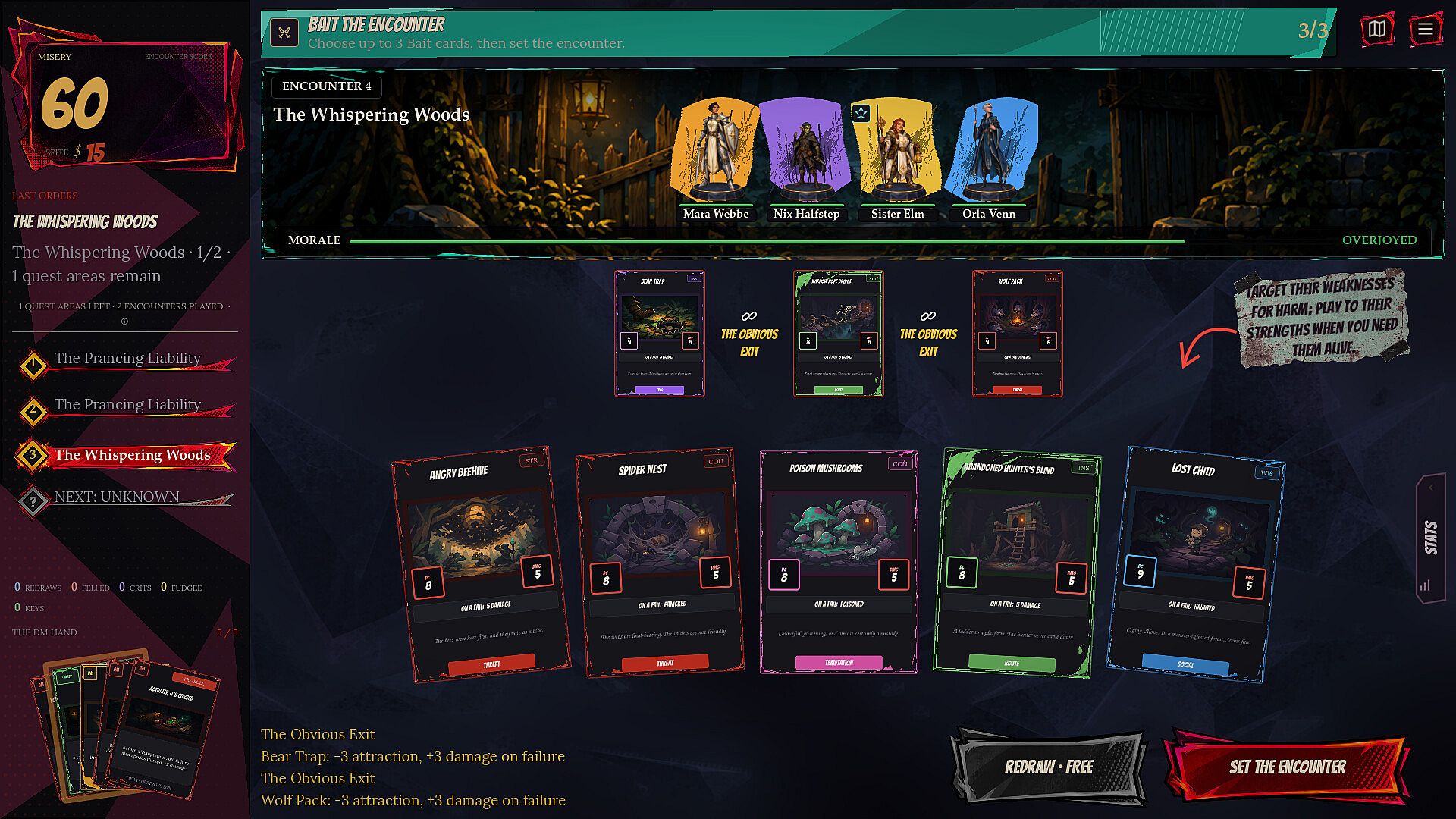
The core loop revolves around baiting adventurers into risky choices, adjusting outcomes when rolls go against the plan, and capitalizing on their reactions. Each encounter begins with laying out bait cards that present tempting options across categories such as temptation, traps, social encounters, threats, routes, and monsters. These cards display clear details upfront, including difficulty checks, potential payoffs, failure costs, and the spite value earned regardless of success. Adventurer traits influence which baits prove most appealing, allowing the player to read the group's composition and tailor encounters accordingly.
Once dice hit the table in full view, inconvenient results can be altered through the fudge hand. Cards from this deck introduce subtle interventions like loaded dice or narrative adjustments that shift the outcome without obvious cheating. Each fudge card carries a visible burn chance, turning every use into a calculated risk rather than an automatic advantage. Higher progression unlocks stronger options, including ways to impose group disadvantages or force specific poor rolls, while occasional cursed cards create moments where helping the party becomes the strategic play.
Adventurers do not remain passive. They can interrupt the flow by calling out to one another mid-encounter, forcing the player to decide whether to expend a card from their own hand to hinder the roll or allow the moment to pass. Recurring characters from a persistent roster carry detailed sheets with stats, quirks, afflictions, and skills that become familiar over multiple runs. Ten classes each feature a signature flaw paired with exploitable quirks, such as a rogue who prioritizes personal gain or a cleric with misplaced faith in unstable structures. Group rolls add further layers as multiple adventurers tackle the same bait, with outcomes revealed dramatically one by one.
Game Modes
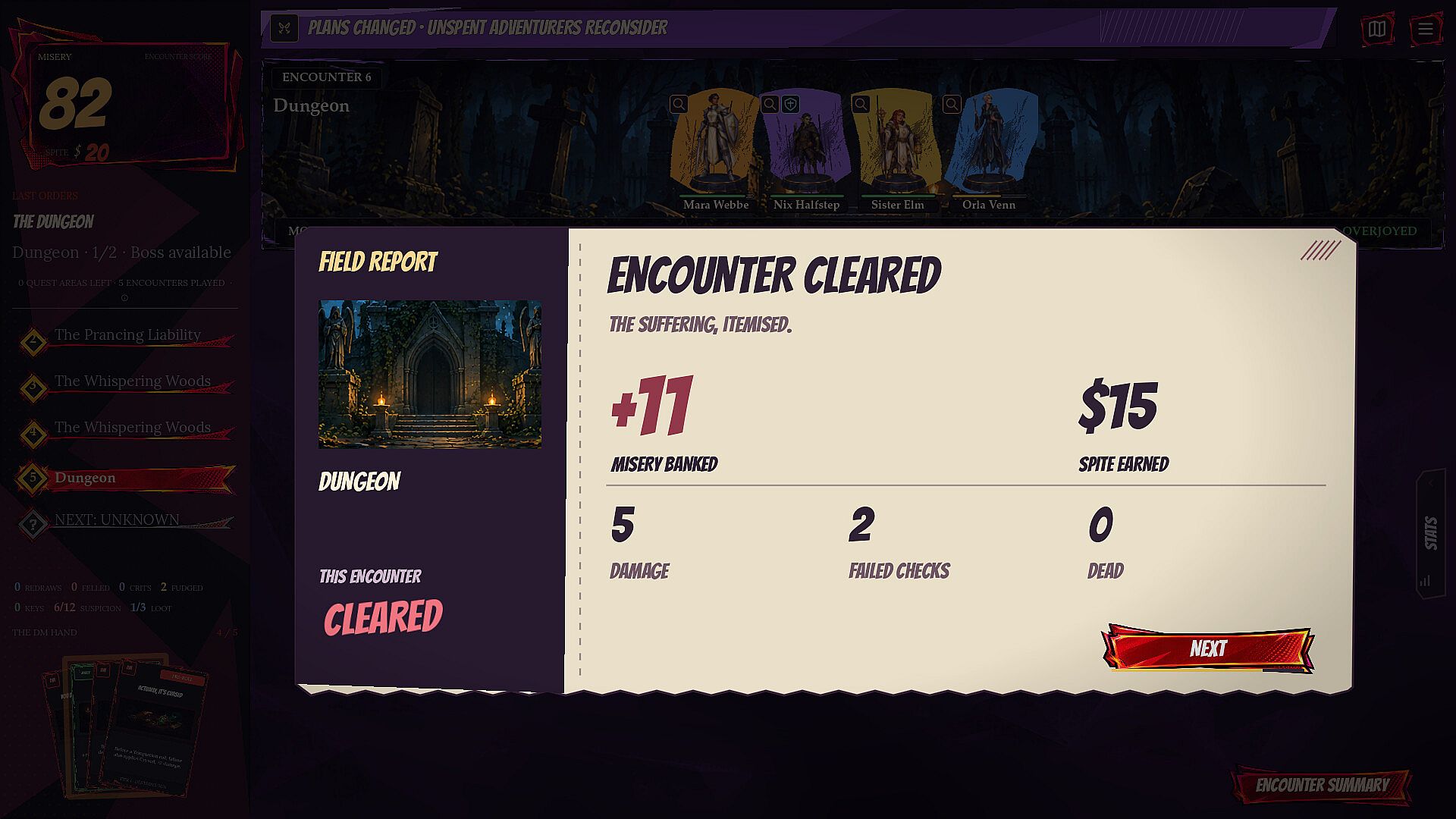
Everyone Expire centers on single-player campaign runs that follow hand-authored routes through themed areas like taverns, forests, shrines, crypts, and caverns. Each run builds toward a multi-phase boss lair where the player assigns minions, sets guard objectives, and continues applying fudge cards to influence the final confrontation. The structure emphasizes compounding bad decisions across encounters rather than isolated challenges.
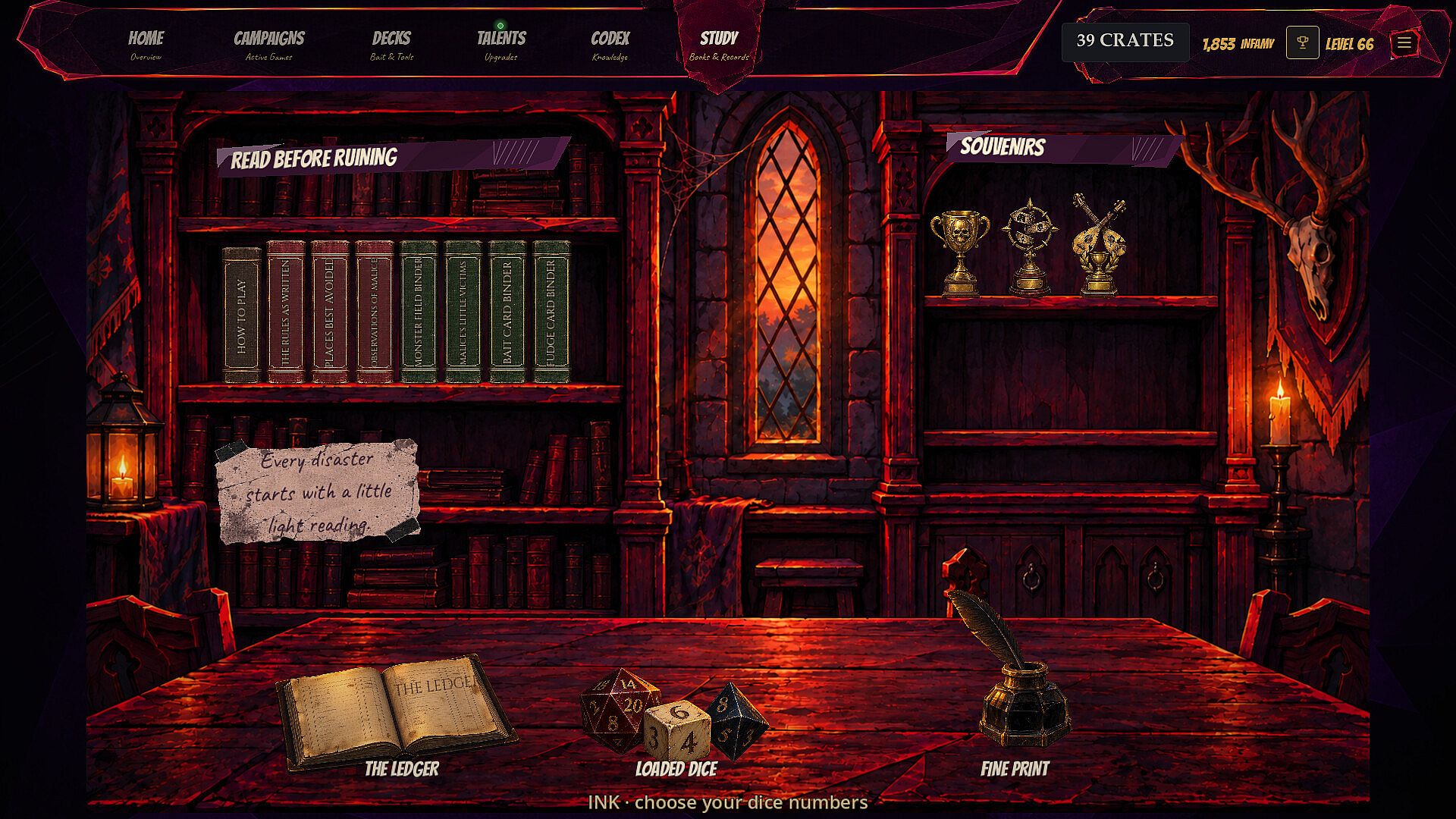
Progression between runs occurs through a persistent study environment that tracks DM level, experience, and career statistics. Level-ups provide access to a loot crate containing new cards for selection, while a codex catalogs encountered elements for reference. Talents purchased with infamy offer permanent upgrades to sway mechanics and other table-running tools. The scoring system evaluates each run based on sustained misery levels, whether the party reaches the boss, and whether a total party kill occurs at the lair, rewarding precise timing in the conclusion.
Progression and Meta Elements
Meta-progression rewards consistent play with new bait cards, fudge options, and dungeon-building components for future routes. The study serves as a hub where players review ledgers, examine dice sets, and plan upgrades. Achievements cover both straightforward milestones and hidden objectives tied to specific run outcomes. Wildcard minigames occasionally emerge from bait resolutions, introducing side challenges such as competing with the party's bard in a musical contest that affects subsequent rolls.
Employer commentary from the character Malice provides ongoing narration throughout runs, framing the player's actions within a larger context of deliberate suffering. The persistent adventurer roster ensures that weaknesses identified in one campaign inform strategies in the next, turning repeated exposure into a planning advantage.
Is It Worth Playing?
Everyone Expire appeals to players who enjoy strategic deckbuilding combined with simulation elements and a twisted take on tabletop roleplaying conventions. The single-player focus allows for deliberate pacing and experimentation with different card combinations and party compositions. Since the game remains in active development with no released version yet available, interested players can follow updates through official channels to assess the final balance of risk and reward in the bait-fudge-betray-expire cycle. Those drawn to dark comedy, recurring character management, and systems that reward reading opponent tendencies will find the mechanics align closely with that preference. The absence of multiplayer modes keeps the experience intimate and focused on personal mastery of the DM role.