




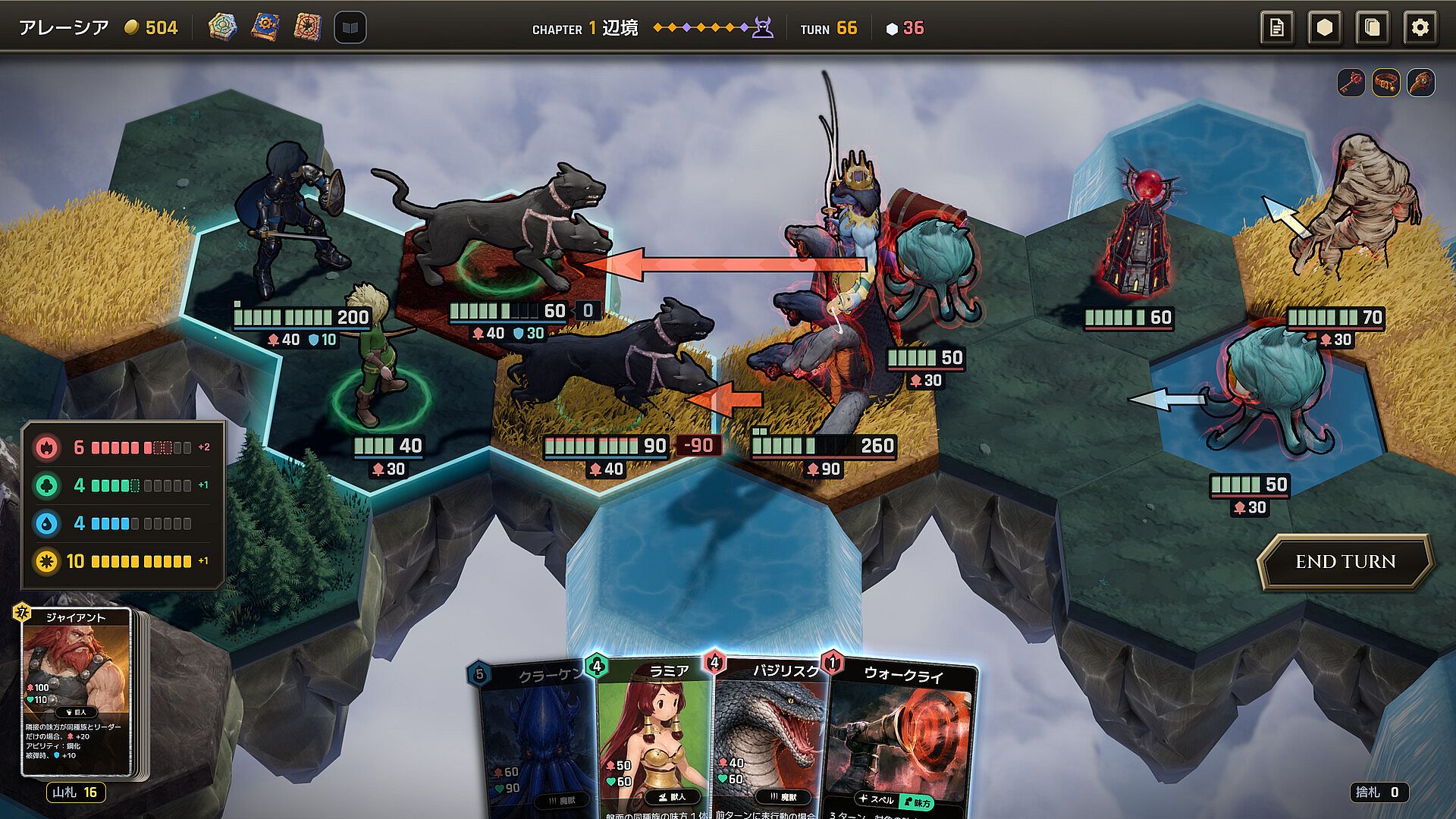
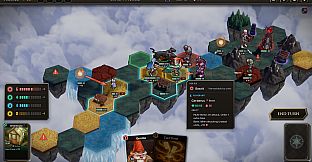
Everbrink is a single-player 4X roguelike deckbuilder set on floating islands that crumble away each turn. Players control leaders such as the paladin Alethea, using a deck of cards to summon units like elves and Cerberus, construct structures, and cast spells while managing resources and pushing forward against skeletons and zombies. The core loop combines exploration, expansion, resource exploitation, and extermination through card play, with the constant pressure of collapsing terrain forcing steady advancement.
Gameplay
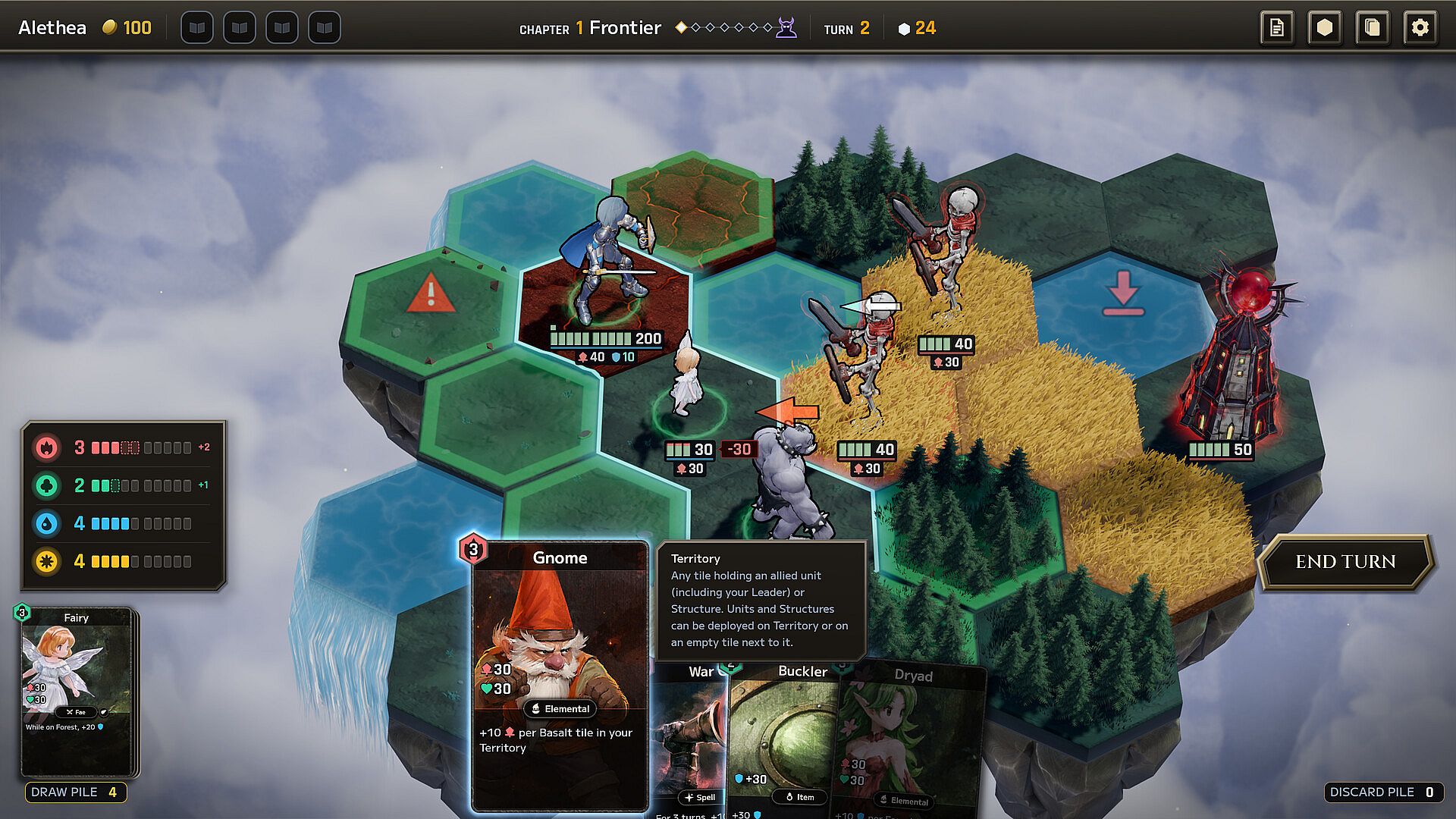
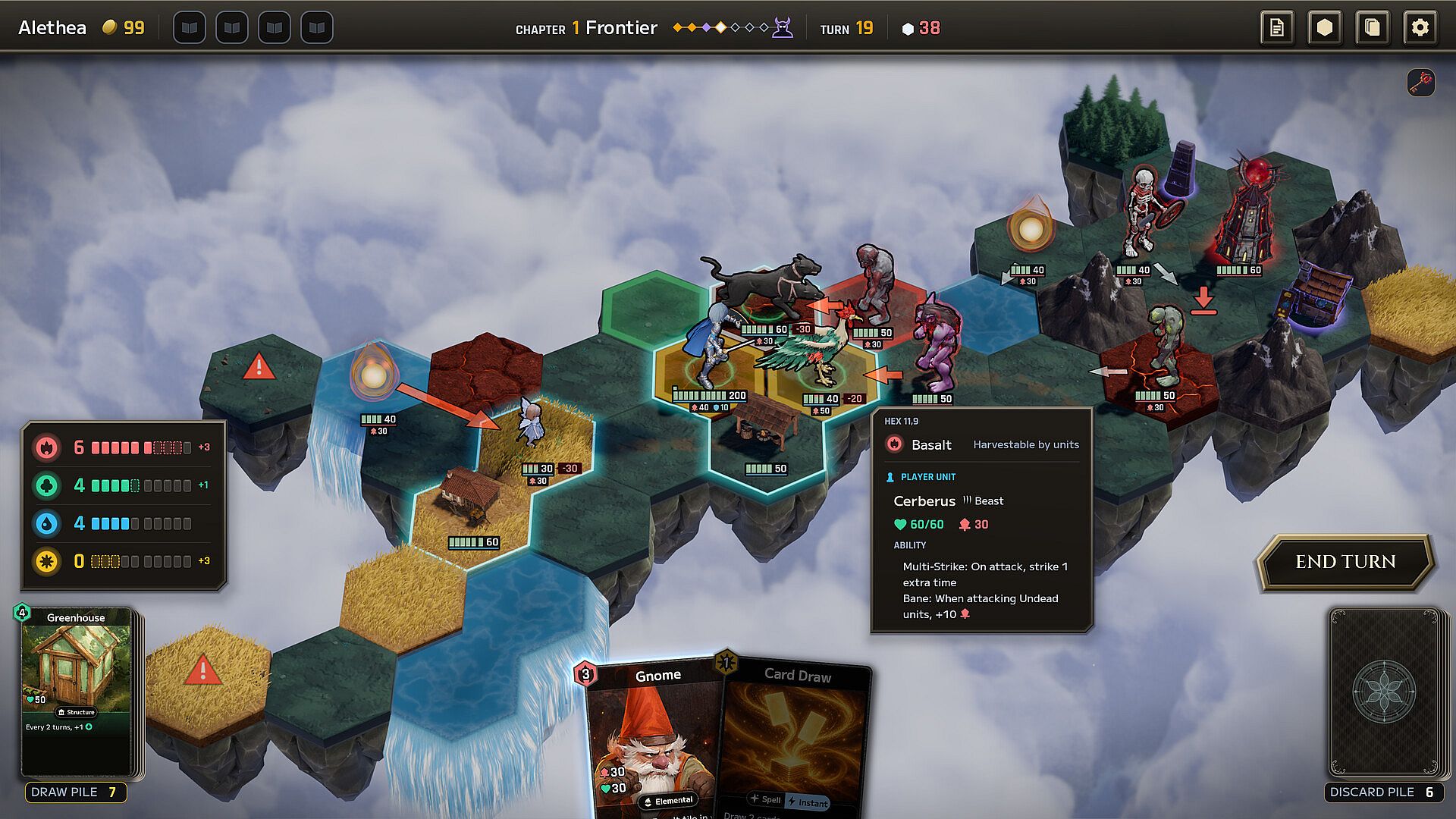
The battlefield consists of hex tiles on shrinking islands. Units and structures occupy territory that must expand adjacently, and new placements require connection to existing holdings. Four resource colors come from terrain types such as forests and seas, with structures like logging camps or fisheries improving collection rates. Players decide between stockpiling for a large push or aggressive early pressure based on available cards and board state.
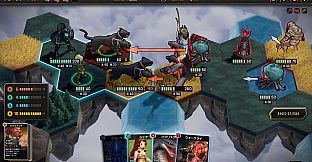
Direct Assault allows a unit card from hand to strike an adjacent enemy immediately. Success clears the target and places the unit on that tile in one action. The Collapse mechanic marks tiles in advance for removal at the end of each turn, affecting both sides equally and rewarding precise timing to eliminate threats without direct engagement.
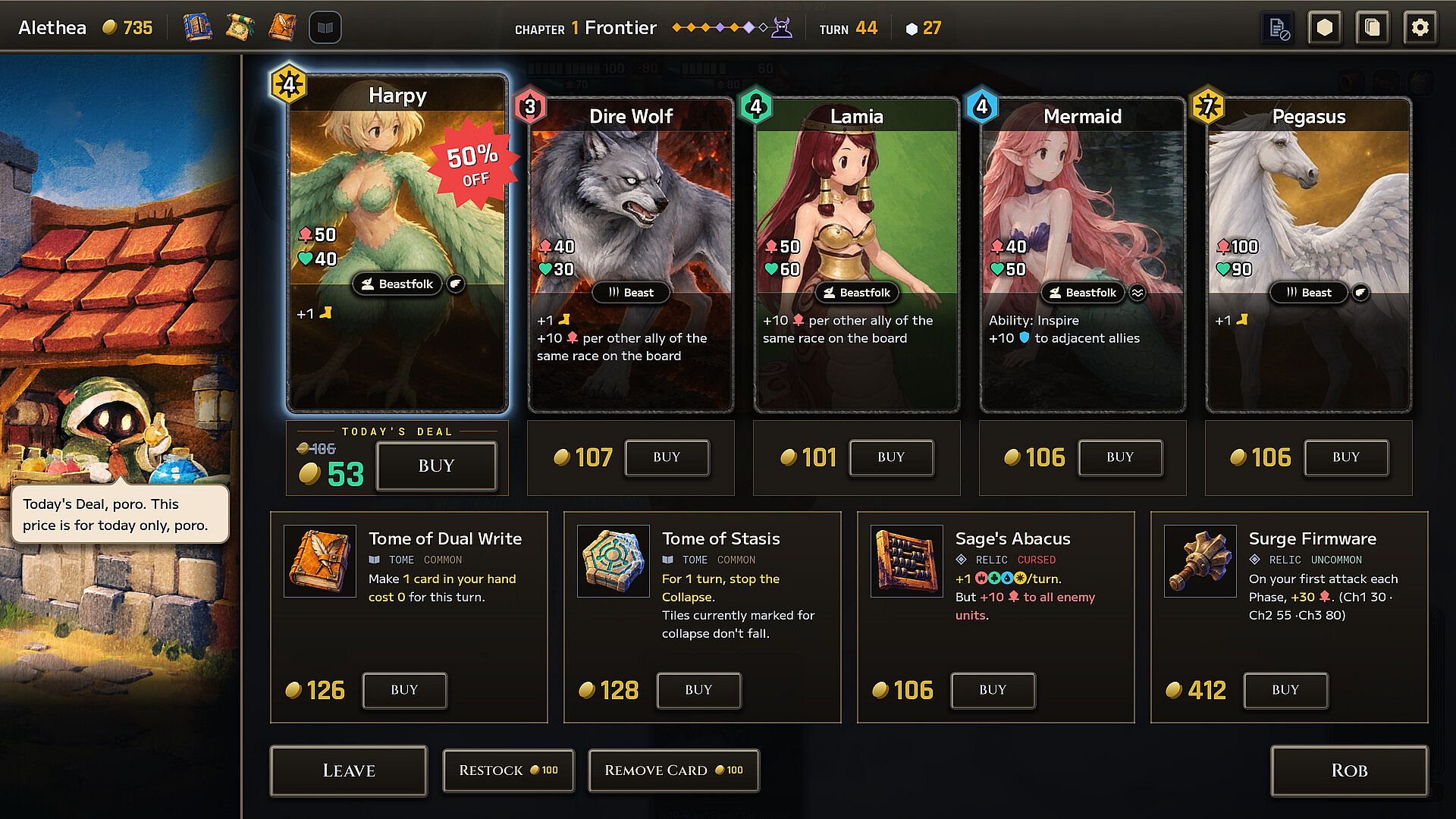
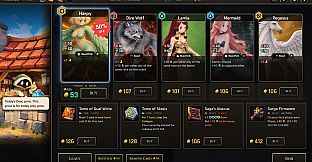
After destroying an enemy stronghold, the next island merges with the current one, expanding available space. Structures and the deck persist across merges, though summoned units clear from the board. New islands introduce Events that players activate on their turn, including Cairn selections for deck additions, Altar upgrades for unit cards, and Trader options for items. Gained cards enter the top of the draw pile for immediate next-turn access.
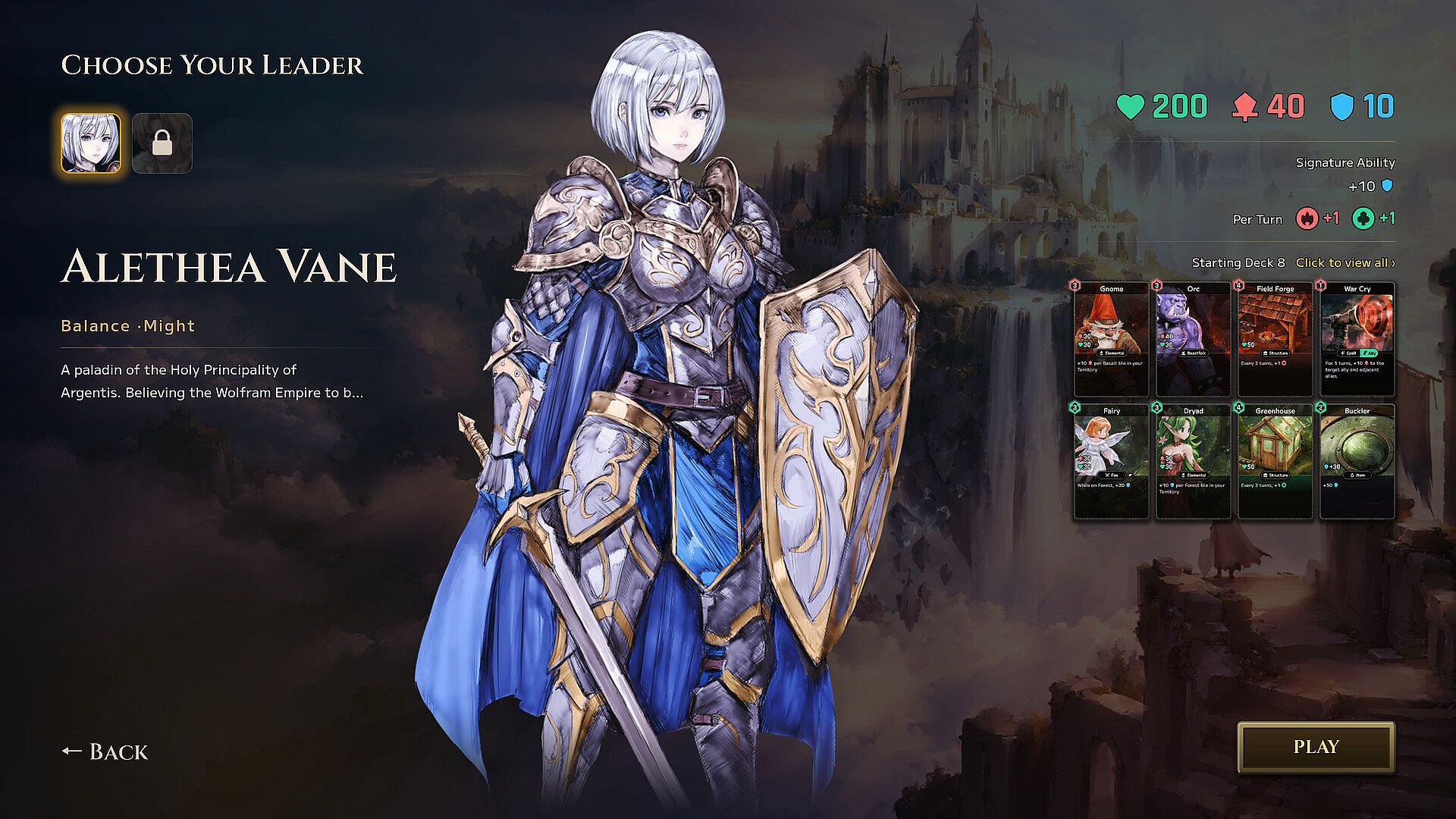
Leaders provide distinct starting decks, abilities, and balance shifts. Units fall into categories such as beasts, beastmen, and spirits, with potential synergies when multiples of the same type occupy the board. Resource management and territory control remain central across every run.
Game Modes
Everbrink supports only single-player sessions. Each run follows the roguelike structure of island traversal, with procedural island selection that varies resource distribution and enemy strength. Players choose the next island carefully before merging, as some present lopsided resources or tougher opposition. Deck and structure progression carries forward within a run, while unit summons reset on each merge.
The experience emphasizes tactical adaptation to the shrinking map and Collapse timing rather than separate modes. No multiplayer or versus options exist. A free demo is in preparation to let players sample the core systems ahead of the planned Early Access release in 2027.
Key Mechanics and Progression
Card play consumes resources in four colors, encouraging efficient tile control and structure placement. Territory growth determines placement options and front-line advancement. Events triggered mid-battle differentiate the deckbuilding from traditional formats by integrating upgrades directly into combat turns.
Island merges create larger battlefields while preserving key progress elements. The roguelike nature appears through repeated runs that test different leader choices, card synergies, and island paths. Enemy types remain consistent in theme, with skeletons and zombies closing in as the map shrinks.
Is It Worth Playing?
Everbrink targets fans of strategic deckbuilders and 4X systems who enjoy single-player experiences with high tactical depth and procedural variety. The combination of collapsing terrain, Direct Assault, and mid-battle Events creates a distinct loop that rewards forward momentum and careful resource timing. Early Access plans include additions such as new leaders, units, cards, relics, Events, and enemies, along with balance refinements based on player feedback.
The game launches as buy-to-play with no in-game purchases and supports English and Japanese. With no user reviews available yet, interest depends on preference for turn-based strategy that blends deckbuilding with territory control and survival pressure. Those drawn to roguelike runs and card-driven 4X gameplay will find the verified mechanics align closely with that style.