




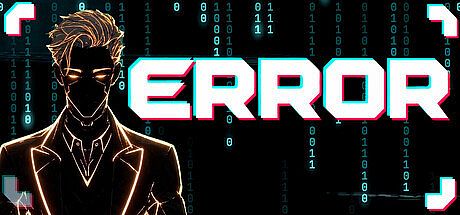


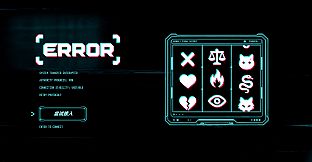


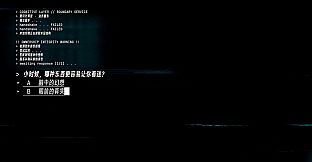
ERROR: Me, Cyber Guys, and Weird Block Battles is a single-player strategy game for PC that blends 1010-style block placement with roguelite progression and interactive romance elements aimed at a female audience. Players enter a corrupted network where they navigate permission domains guarded by distinct personality instances. The experience centers on tactical board management, module customization, and dialogue choices shaped by a personality profile.
Gameplay
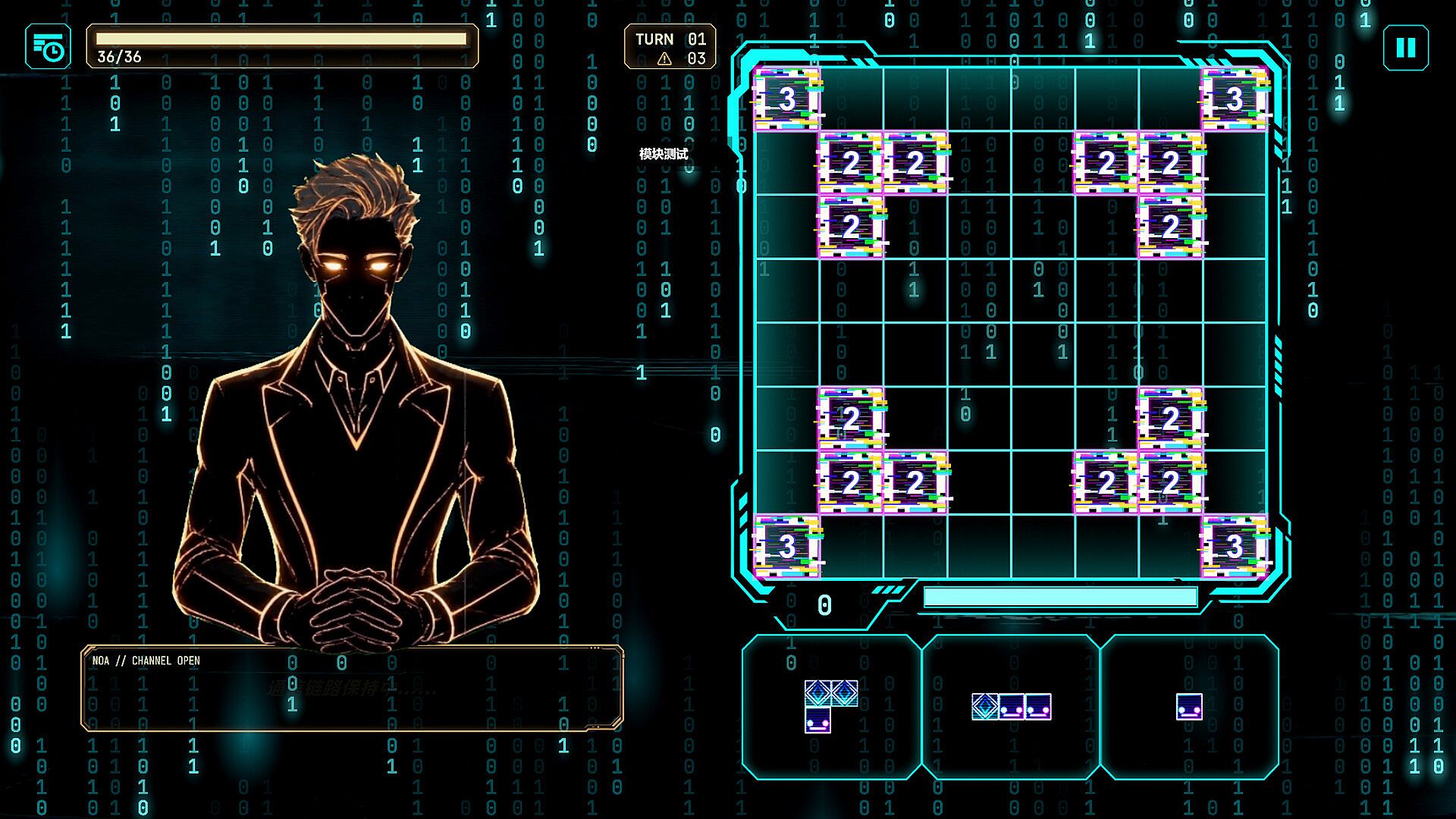
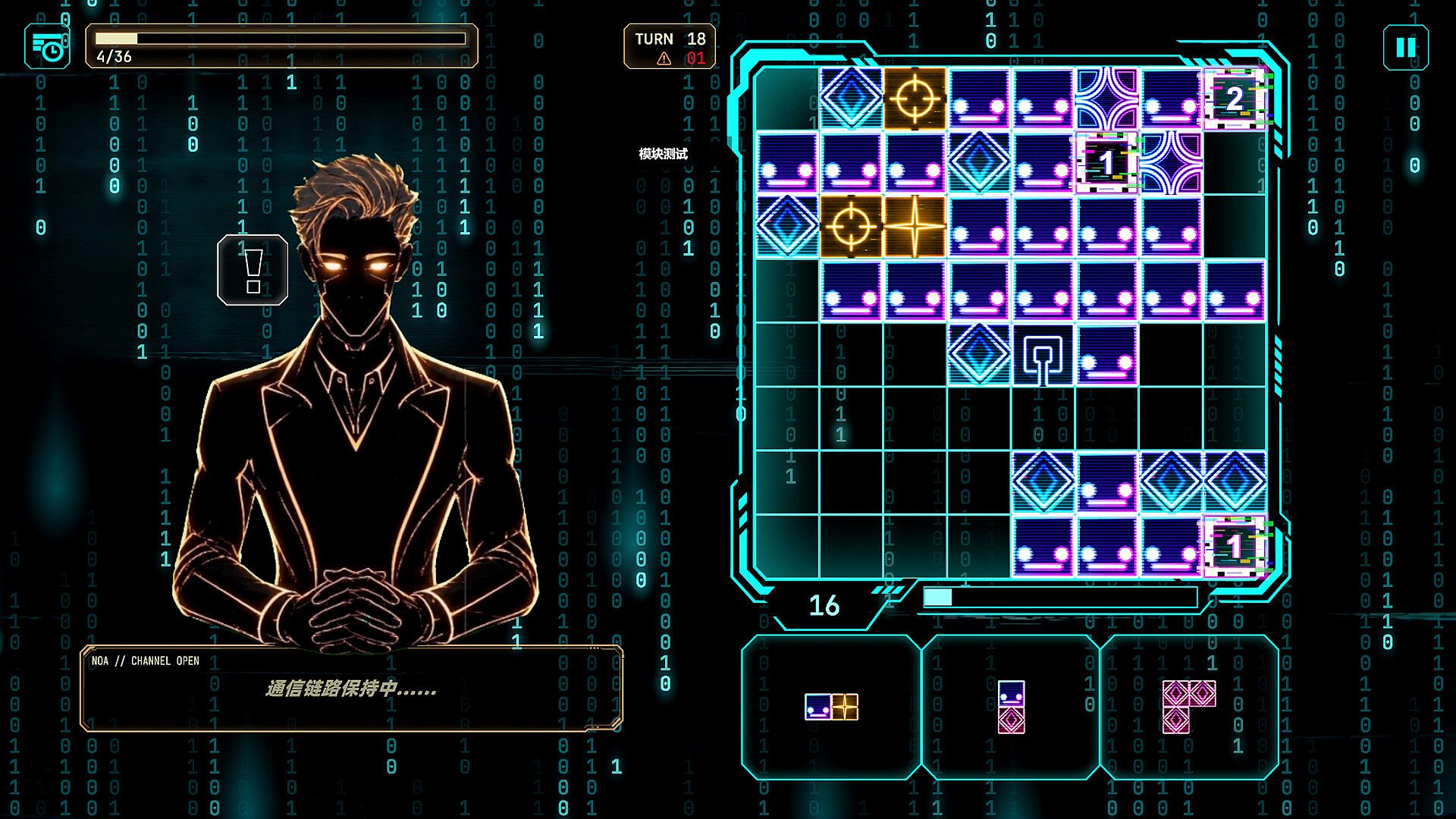
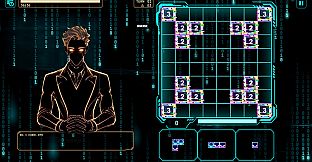
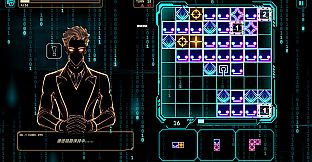
Battles unfold on an 8x8 grid. Each turn delivers three data blocks of varying shapes. Players position these blocks to complete full rows or columns, triggering a Compile that clears the line. The objective focuses on targeting locked structures that represent an opponent's defenses rather than maximizing score. Strategic placement accounts for limited space, remaining turns, enemy-imposed restrictions, and potential chain reactions from future Compiles.
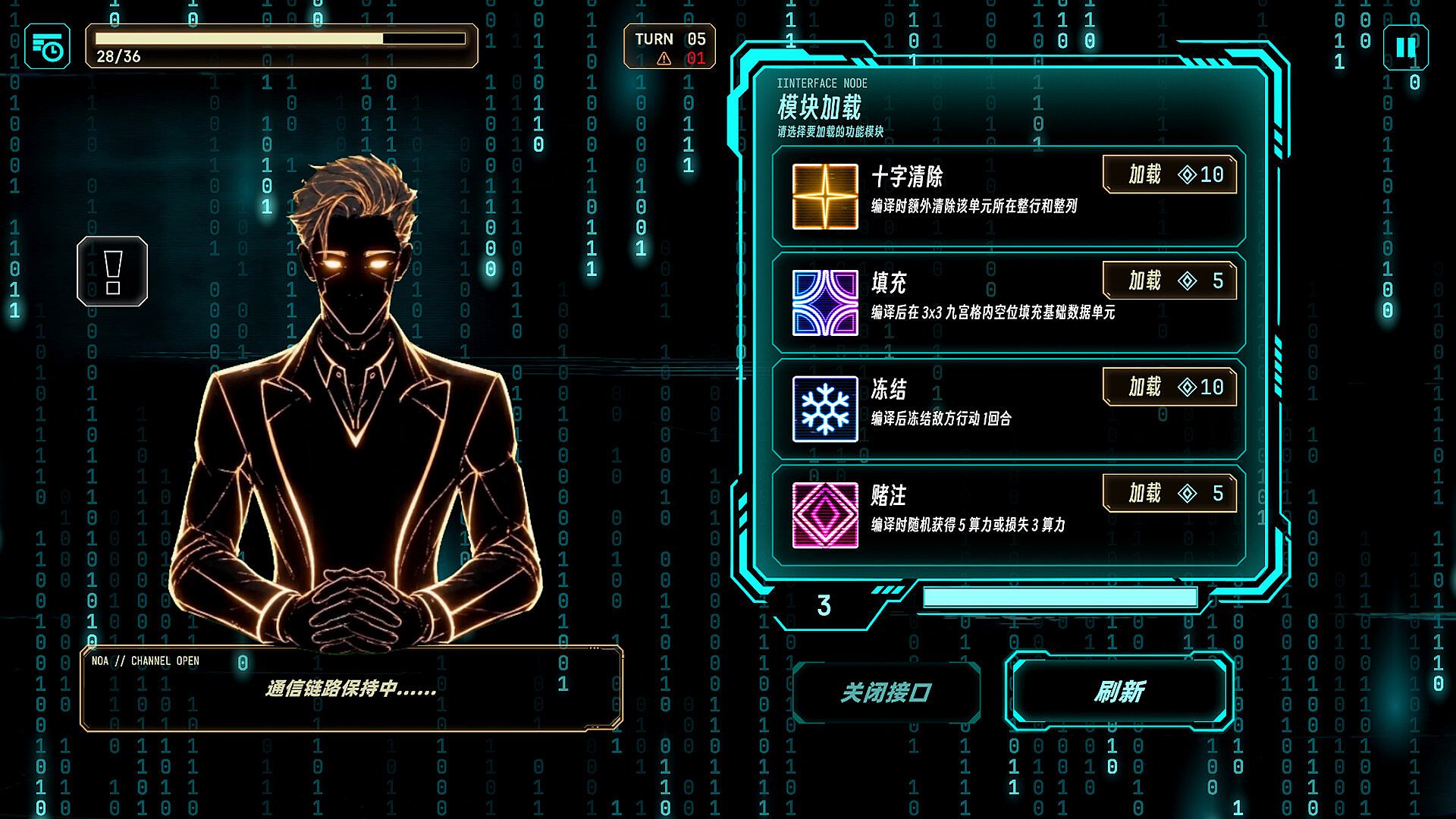
Compute resources collected during combat can be spent at Interface Nodes to load modules. More than 50 modules exist, each with unique mechanics such as Extract, Fill, Freeze, Refresh, Copy, or Gamble. Loaded modules attach to abilities for the current run and may appear on special Data Cells. When triggered, these cells activate effects that interact with one another, turning a basic Compile into resource bursts, repeated fills, structural removals, or extended cascades. This system lets players gradually alter board rules through combinations.
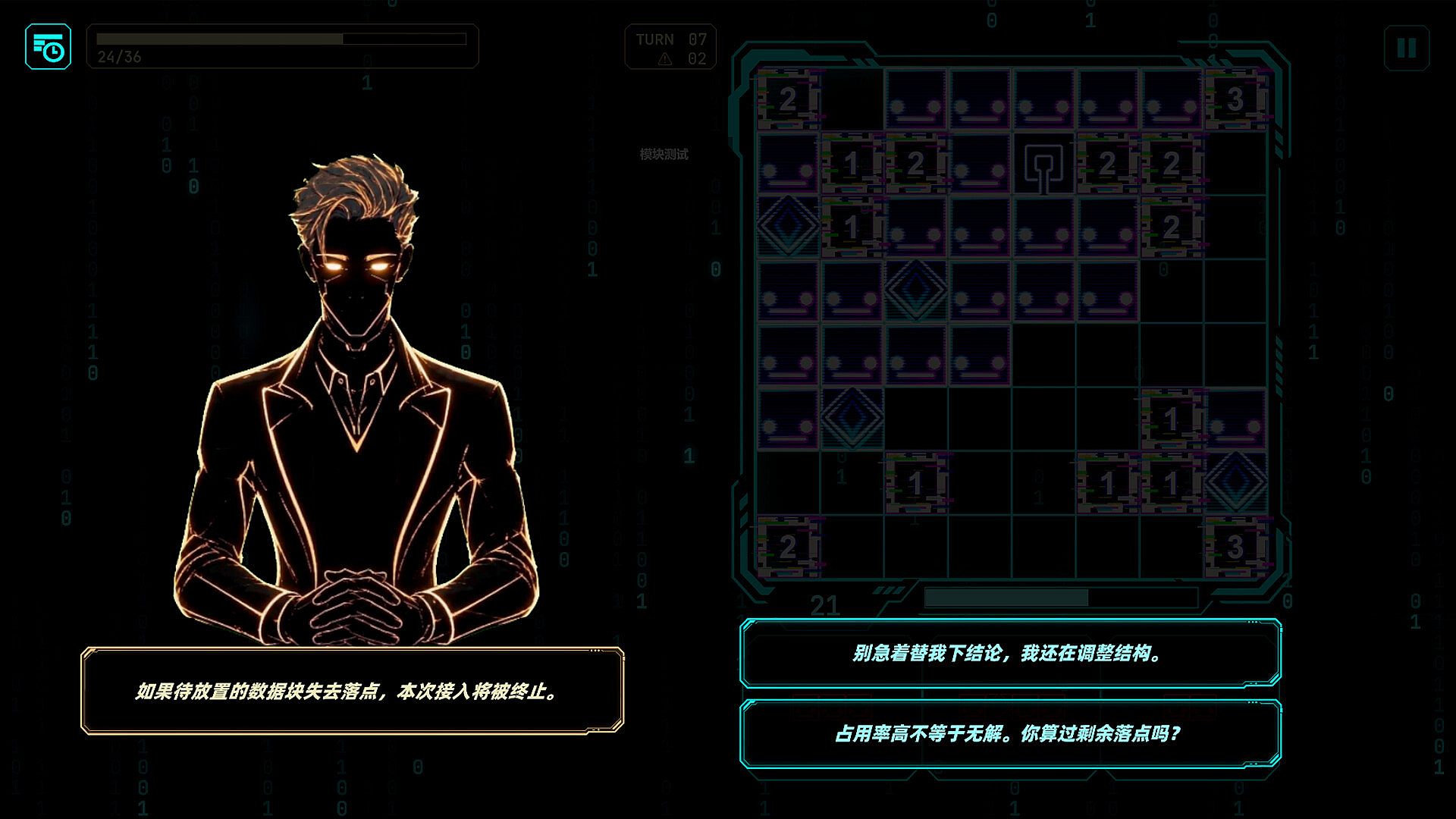
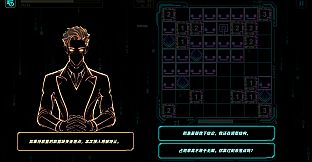
Defeating a personality instance grants control over its domain and unlocks new module options for subsequent battles. These instances observe player actions, respond to injuries or hesitation, and react to specific module use or unusual states. Responses integrate directly into the narrative flow rather than remaining separate from combat.
Game Modes
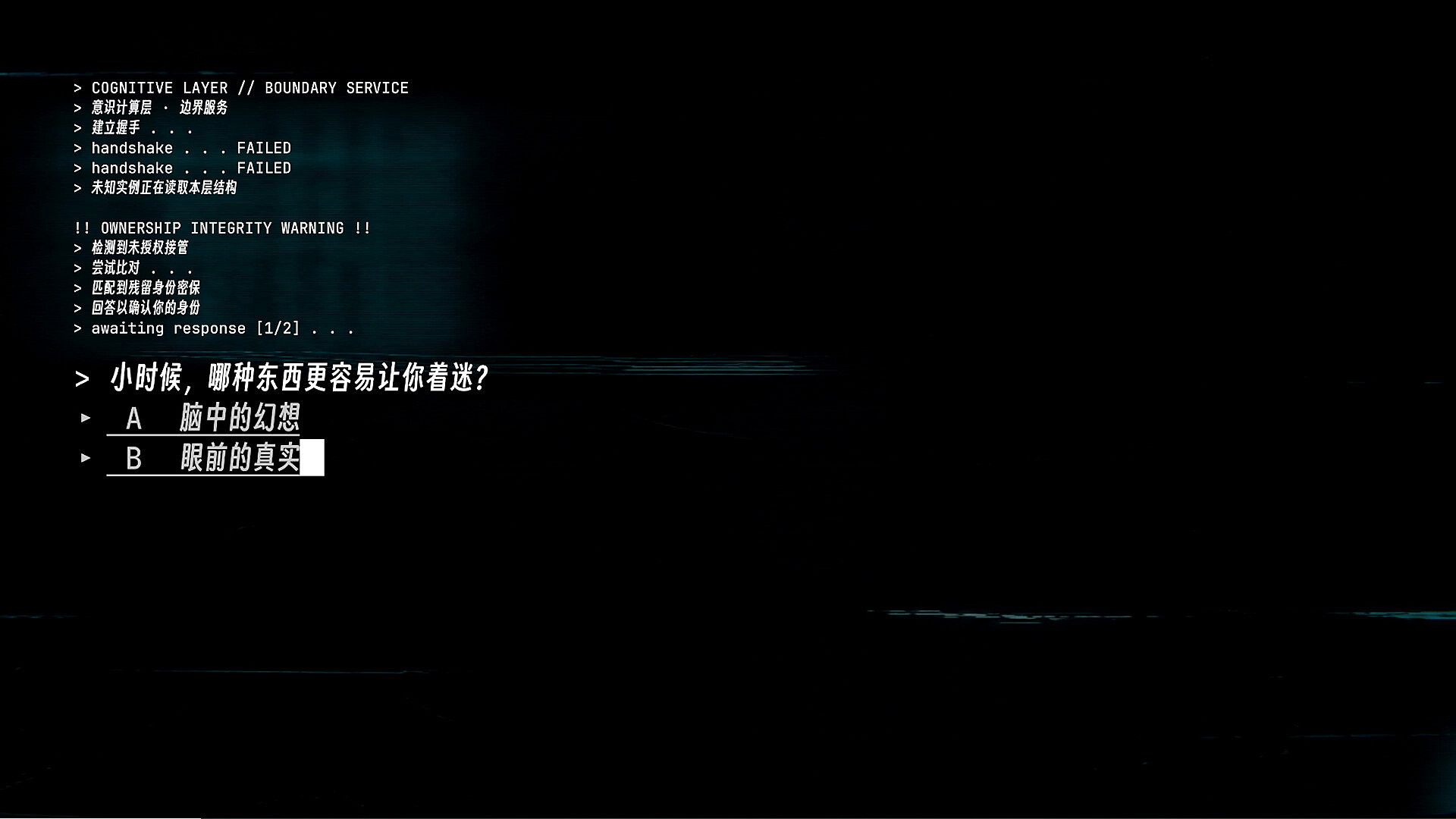
The game operates entirely in a single-player format with no multiplayer components. Progression occurs through sequential domain conquests where each personality instance presents distinct restrictions and post-defeat rewards. Battles emphasize roguelite elements through module acquisition and retention across runs, while the core loop remains consistent: place blocks, manage resources, trigger Compiles, and adapt to enemy behaviors. Personality verification at the start influences available dialogue options without creating fixed paths or endings.
Story and Characters
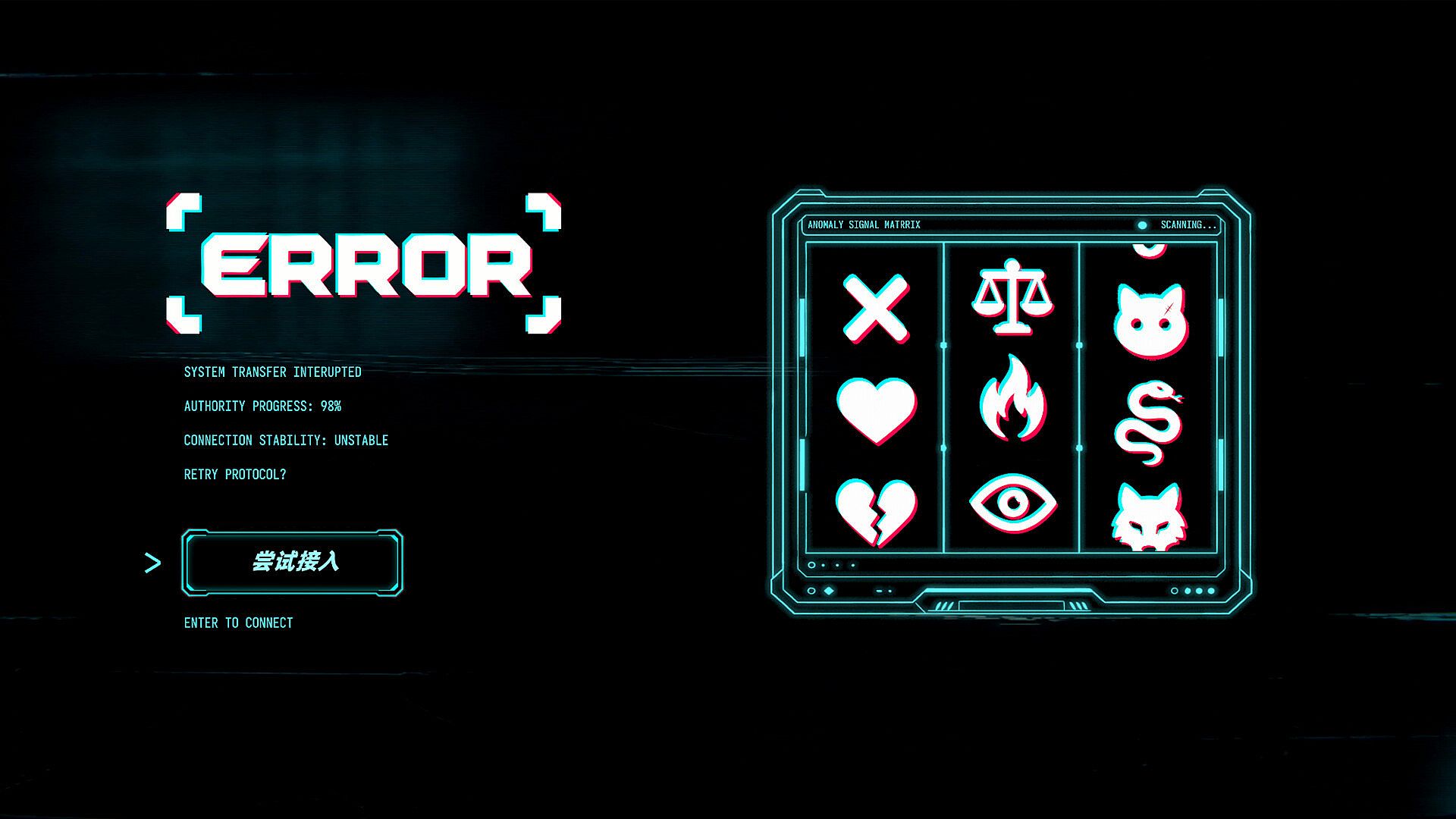
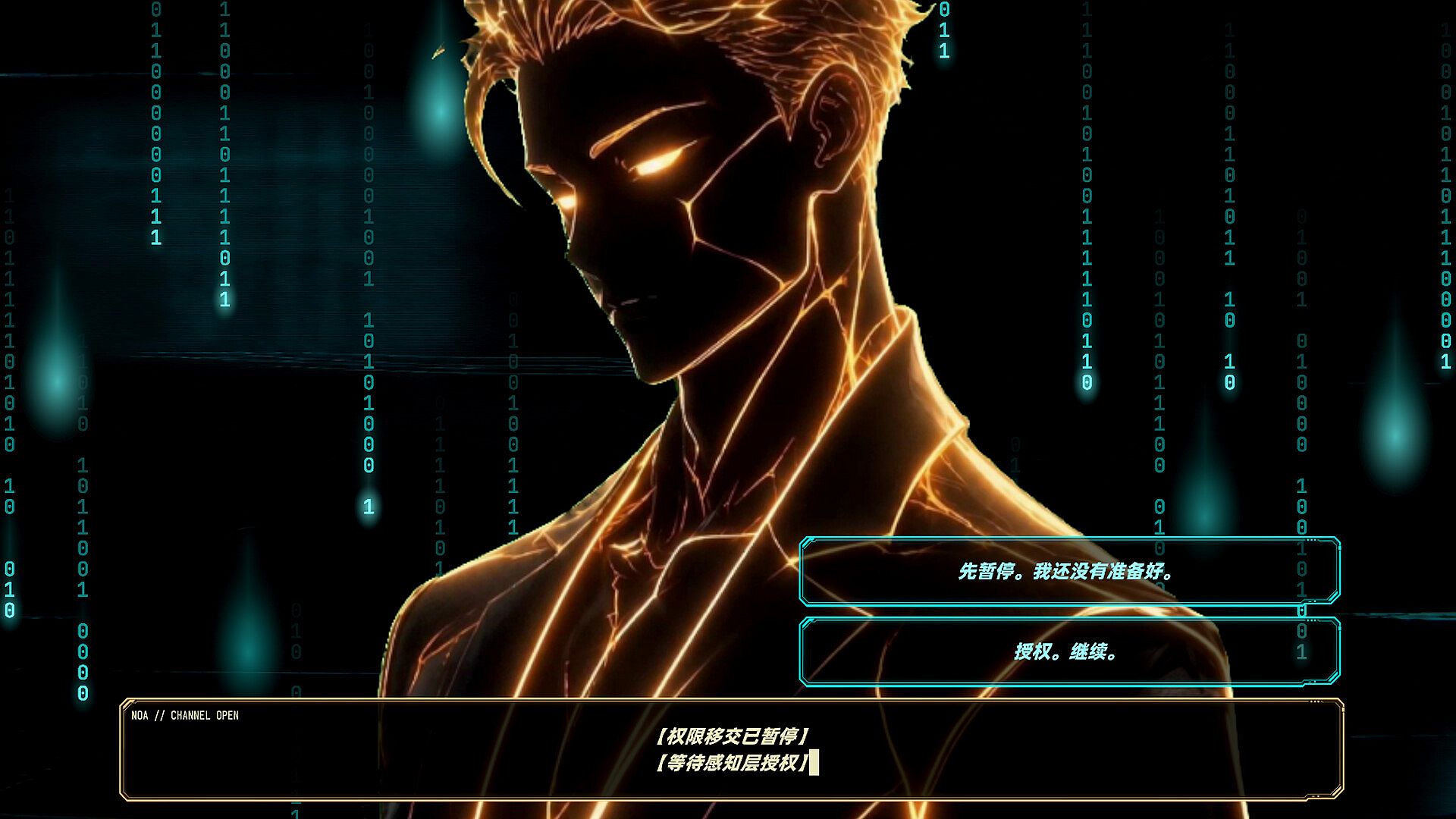
The narrative begins when a player accidentally opens a corrupted file, halting at 98 percent and fracturing the network into isolated permission domains. A long-suspended program recognizes the player and grants access, positioning them as a challenger. Exploration deepens as players break through defenses to claim permissions and uncover events. Personality instances function as both obstacles and evolving figures whose observations tie combat decisions to story branches. Dialogue adapts to a four-temperament system drawn from MBTI dimensions, allowing expression styles such as analytical, emotional, rule-focused, or action-oriented responses. Choices affect phrasing but leave multiple routes open regardless of profile.
Is It Worth Playing?
The game remains unreleased with a planned launch in Q1 2027 and currently carries no user reviews. Its appeal lies in the combination of precise block-placement tactics, module-driven rule changes, and integrated character responses that react to gameplay states. Players who enjoy single-player strategy titles with roguelite customization and narrative layers tied to mechanics may find the systems engaging once available. The mature romantic themes and innuendo appear through suggestive language and interactions without explicit depictions. Those seeking a focused PC experience built around board control and personality-driven encounters can add it to a wishlist for future consideration.