




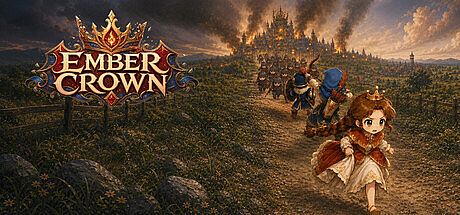


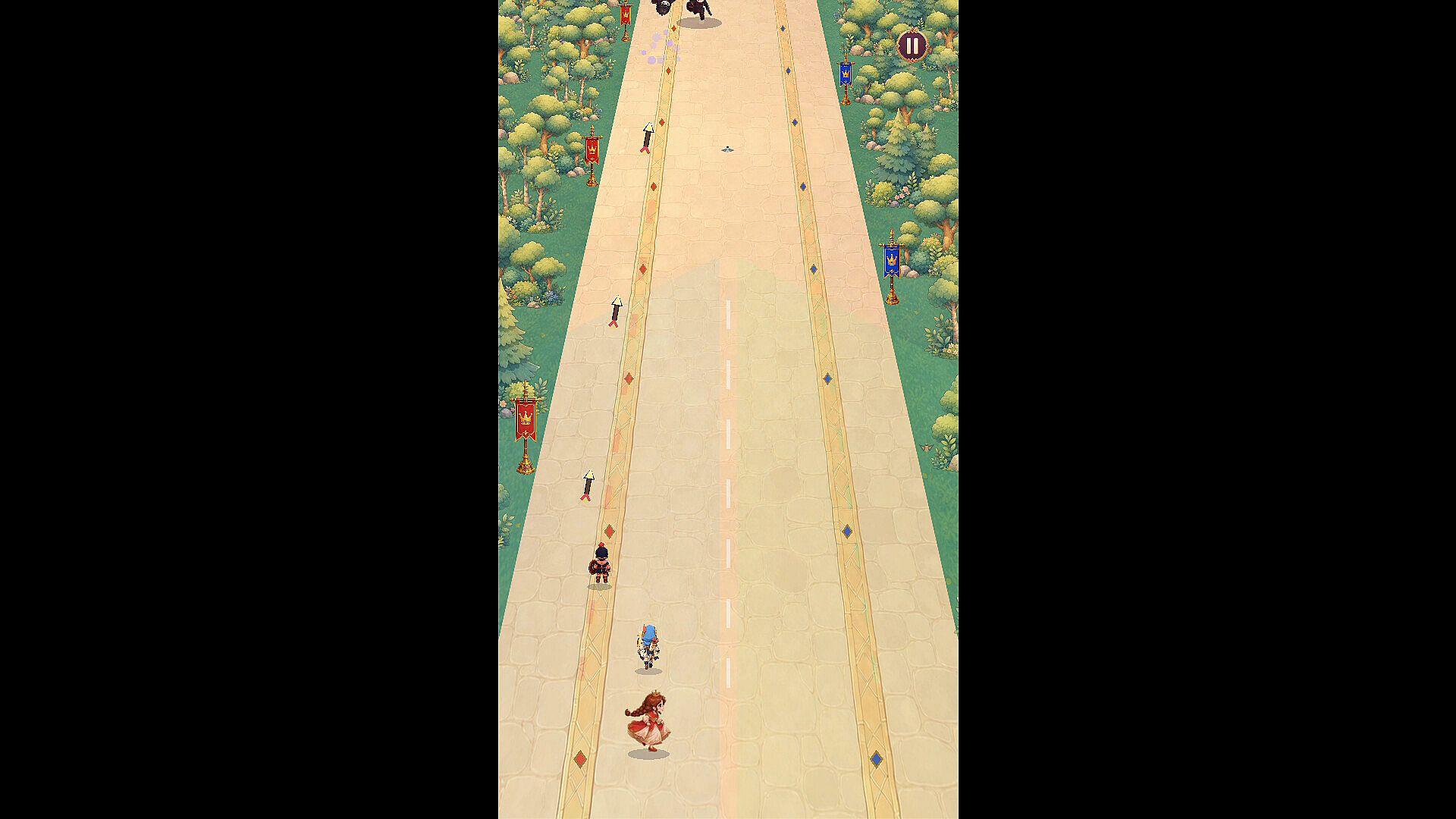
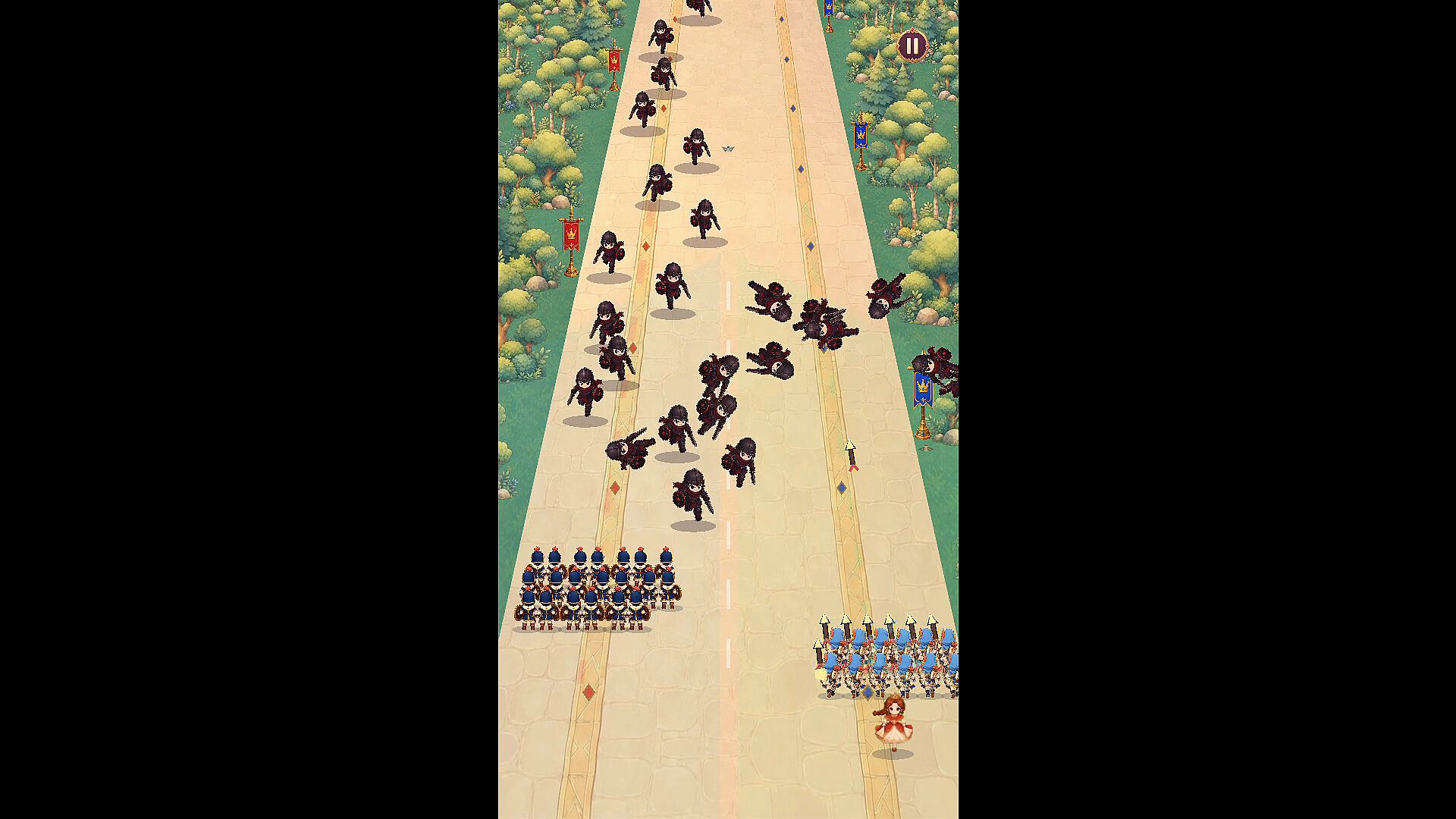
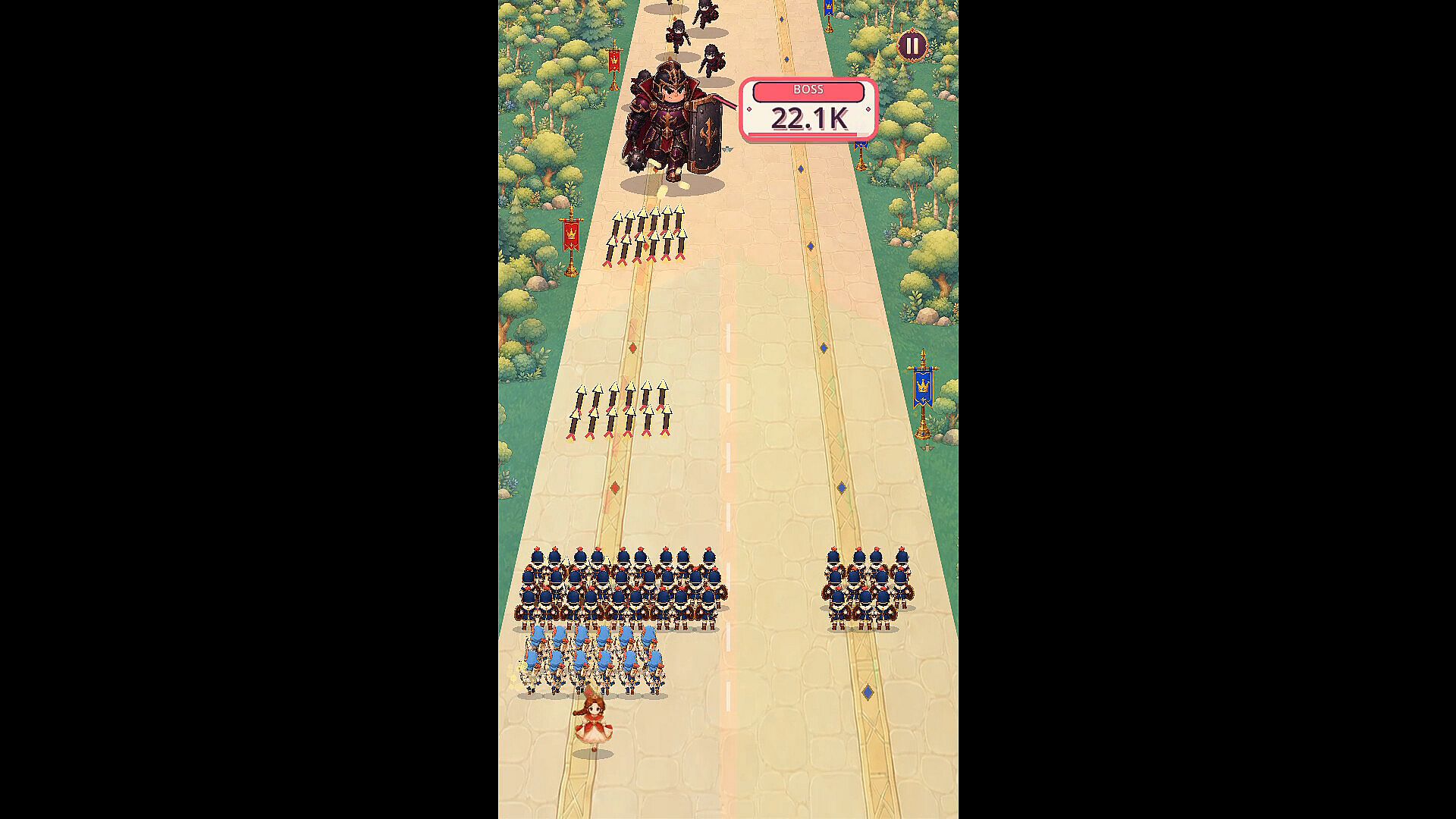
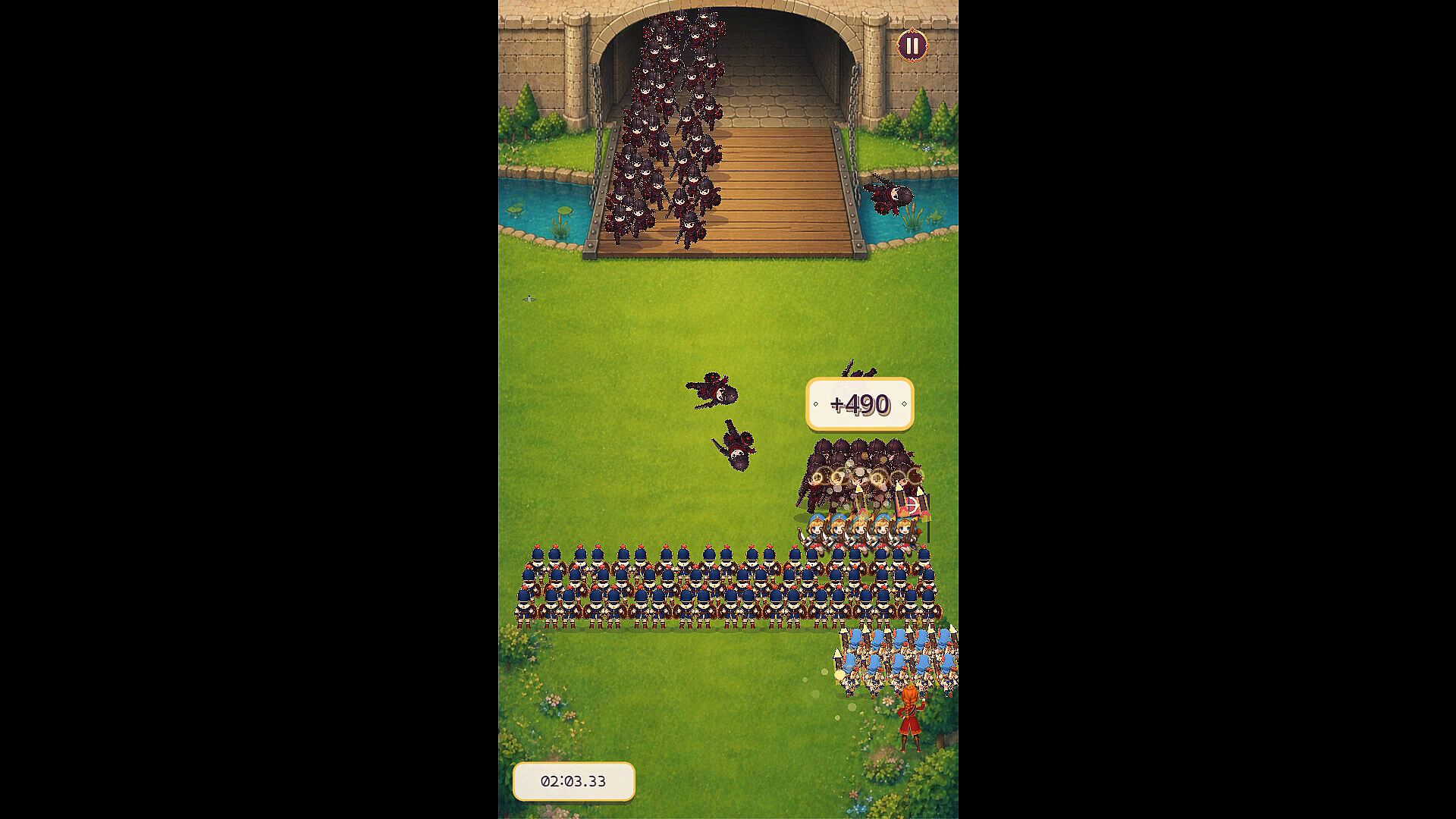
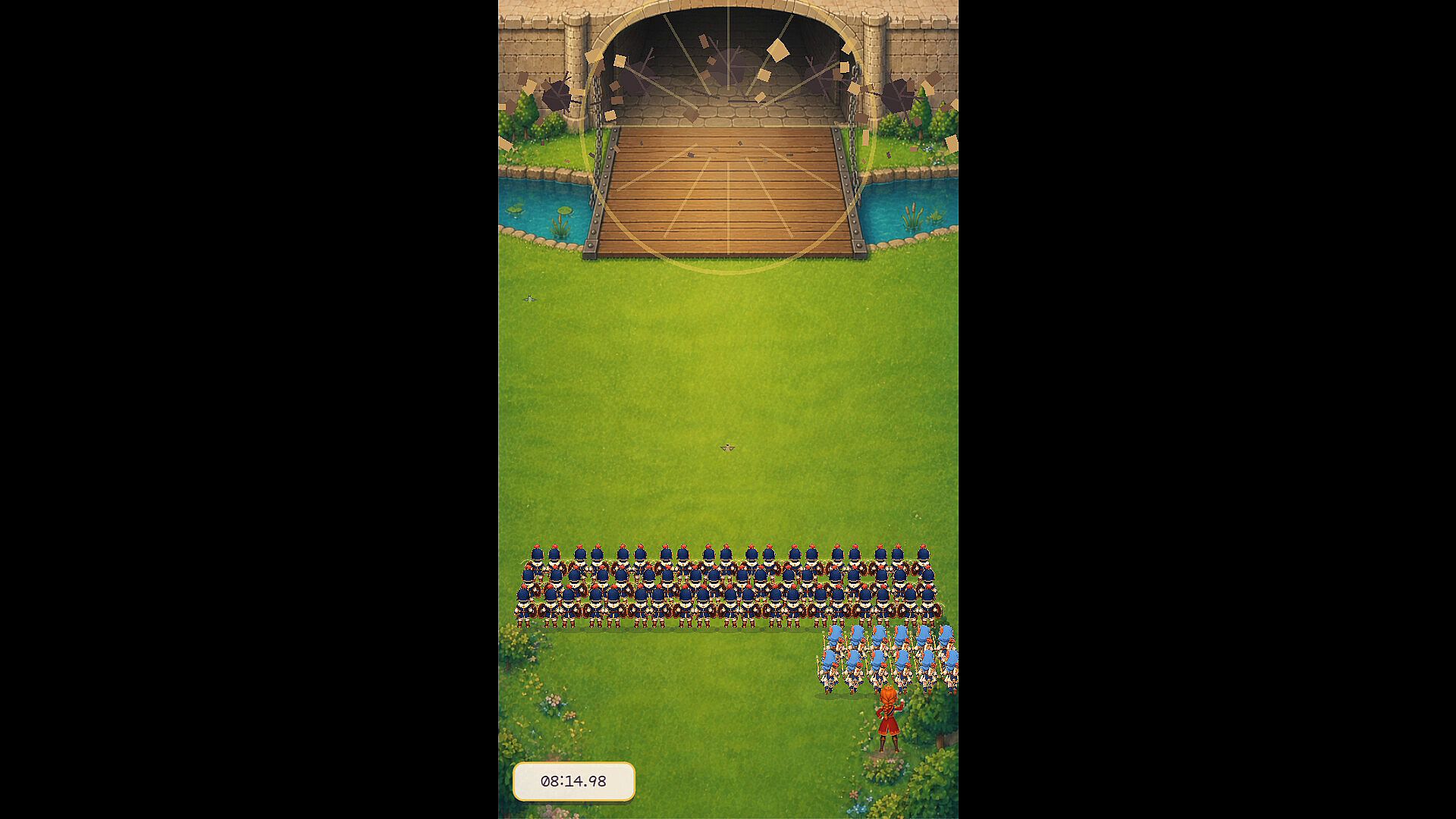
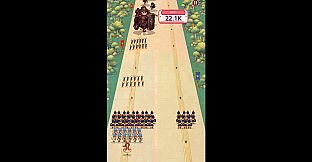
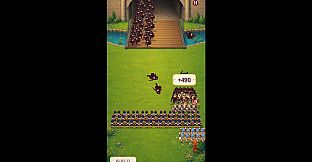
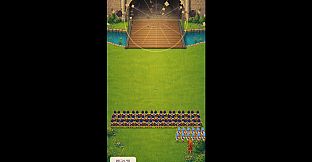
Ember Crown is a vertical 2D arcade action game built around left-right movement and automatic volleys. Players guide a formation that includes the princess, a shield wall, and a bow line across two lanes while archers handle attacks on their own. The focus stays on intercepting threats, keeping the group intact, and bringing reinforcements into the ranks as pressure builds from above.
Gameplay
The core loop centers on positioning and timing rather than direct aiming or complex controls. Movement happens only left or right, which keeps every decision tied to lane management and formation spacing. Enemies descend steadily, so players must decide when to shift the entire line forward or hold position to block paths. Automatic volleys from the archers create a steady rhythm of fire that rewards steady formation upkeep over frantic button presses. As reinforcements arrive, the army grows from a small royal guard into a larger mass, which changes how lanes feel and how much ground the group can cover without gaps.
Preserving the formation remains the constant priority. Losing key elements like the shield wall leaves the princess exposed, while scattered archers reduce overall firepower. Short runs encourage repeated attempts, with each session lasting just long enough to test new positioning ideas without long commitments. The two-lane layout adds a layer of spatial awareness, as players must balance coverage on both sides while guiding the whole group forward.
Game Modes
Endless Escape puts the emphasis on survival and distance. Players protect the princess and shield wall while gathering reinforcements under steadily increasing enemy pressure. The goal is to push a personal distance record as far as possible before the formation breaks. Difficulty scales naturally with time, turning early calm stretches into later intense waves that demand tighter lane discipline and quicker reactions to incoming threats.
Siege shifts the focus to offense and progression. Players command a growing army and push toward a gate defended by waves of enemies and bosses. Each successful volley strengthens the formation further, allowing the group to advance and eventually breach the target. Clear time becomes the main metric, so efficient positioning and reinforcement timing directly improve results. The mode offers a more structured path to victory compared with the open-ended pressure of Endless Escape.
Core Mechanics and Features
The formation itself evolves during play. A small starting group expands as reinforcements join, which alters movement feel and defensive coverage without requiring separate upgrades. Easter eggs scattered throughout the levels reward careful observation and trial runs, aligning with the developer's intent to create moments of personal discovery. Achievements track various performance milestones across both modes, giving players additional reasons to refine their approach over multiple attempts.
Text support covers Simplified Chinese, English, and Japanese, which broadens accessibility for different audiences. The overall design keeps sessions brief and repeatable, suiting players who prefer focused arcade sessions over extended campaigns. No complex skill trees or branching narratives appear, which keeps attention on the immediate demands of lane control and formation integrity.
Is It Worth Playing?
Ember Crown suits players who enjoy precise, minimalist arcade action where positioning and timing matter more than reflexes or resource management. Endless Escape delivers a deliberately challenging experience shaped by repeated testing, rewarding those who appreciate learning through observation and small adjustments. Siege provides a more relaxed alternative that still builds satisfaction through steady army growth and clear-time improvements.
The inclusion of Easter eggs adds a layer of personal discovery that many arcade titles overlook. Short run lengths make it easy to fit sessions into busy schedules while still offering depth through formation scaling and lane decisions. Those who value straightforward mechanics paired with room for personal experimentation will find the game aligns well with that preference. The two modes cover different play styles without overlap, giving a clear choice between endurance pressure and structured advancement.