




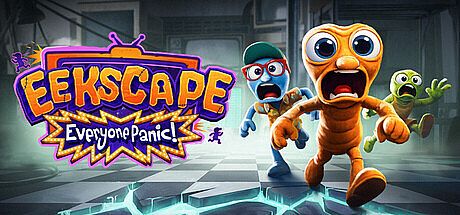


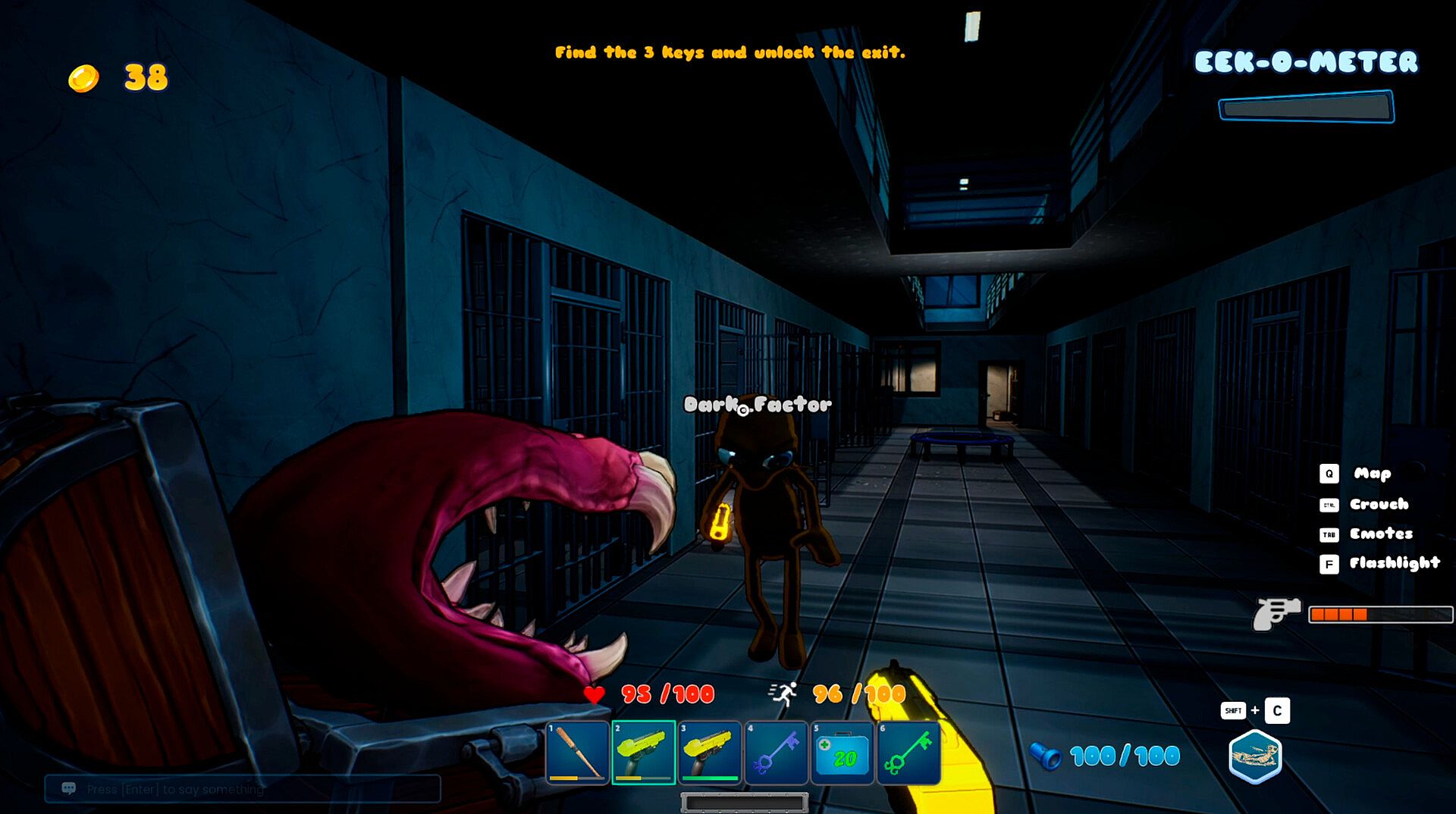
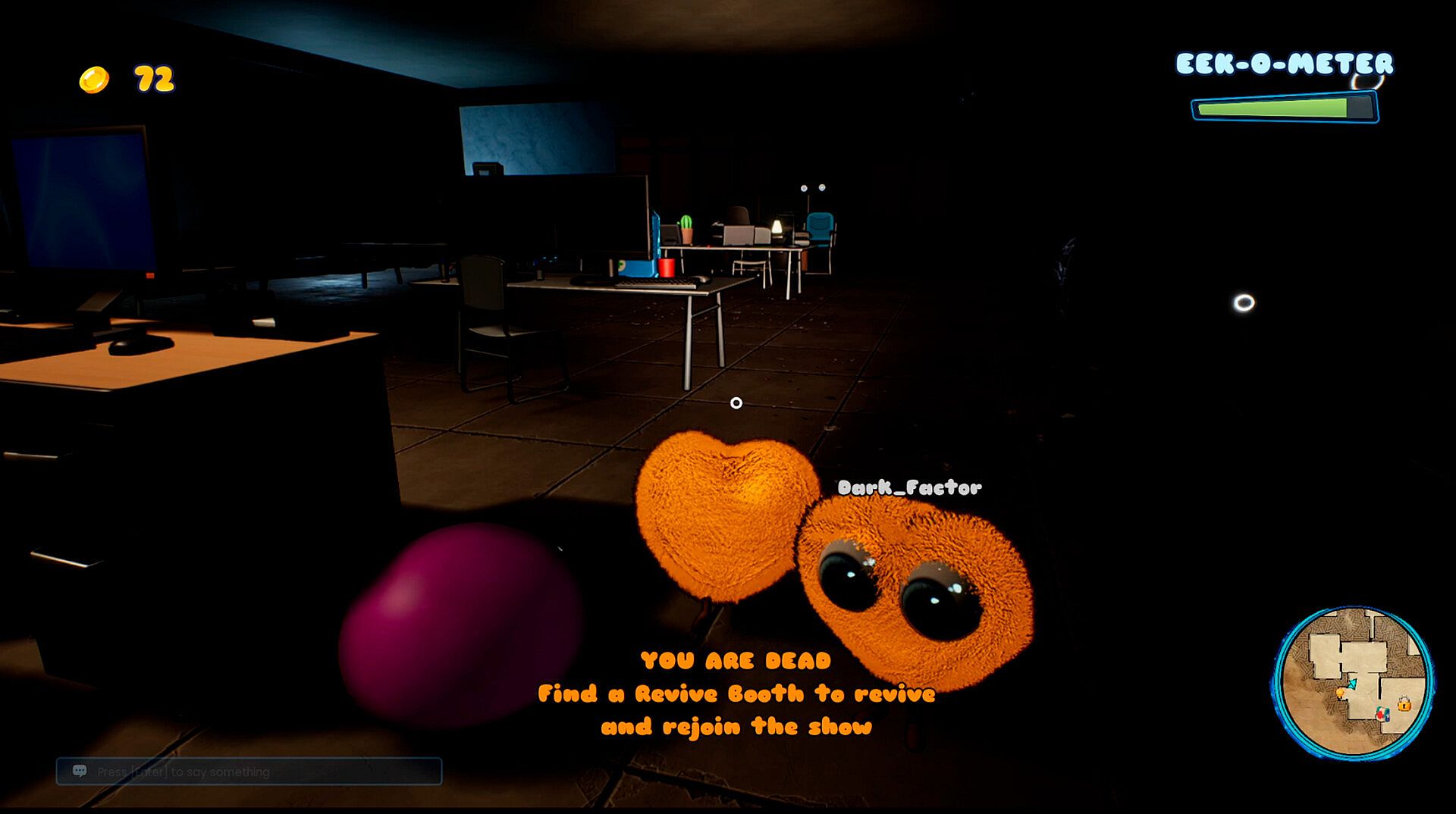
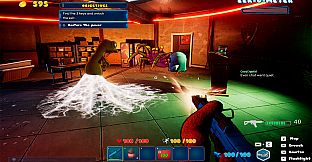
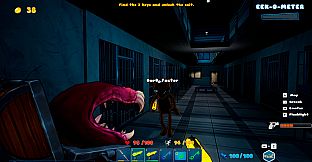
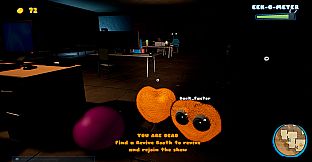
Eekscape: Everyone Panic! is a first-person action-horror game set on PC where players become unwilling participants in a chaotic television broadcast. The core loop revolves around navigating procedurally assembled deadly locations, gathering resources, securing three specific keys, and reaching the exit before a countdown expires, all while managing an audience approval system that influences end-of-run rewards.
Gameplay
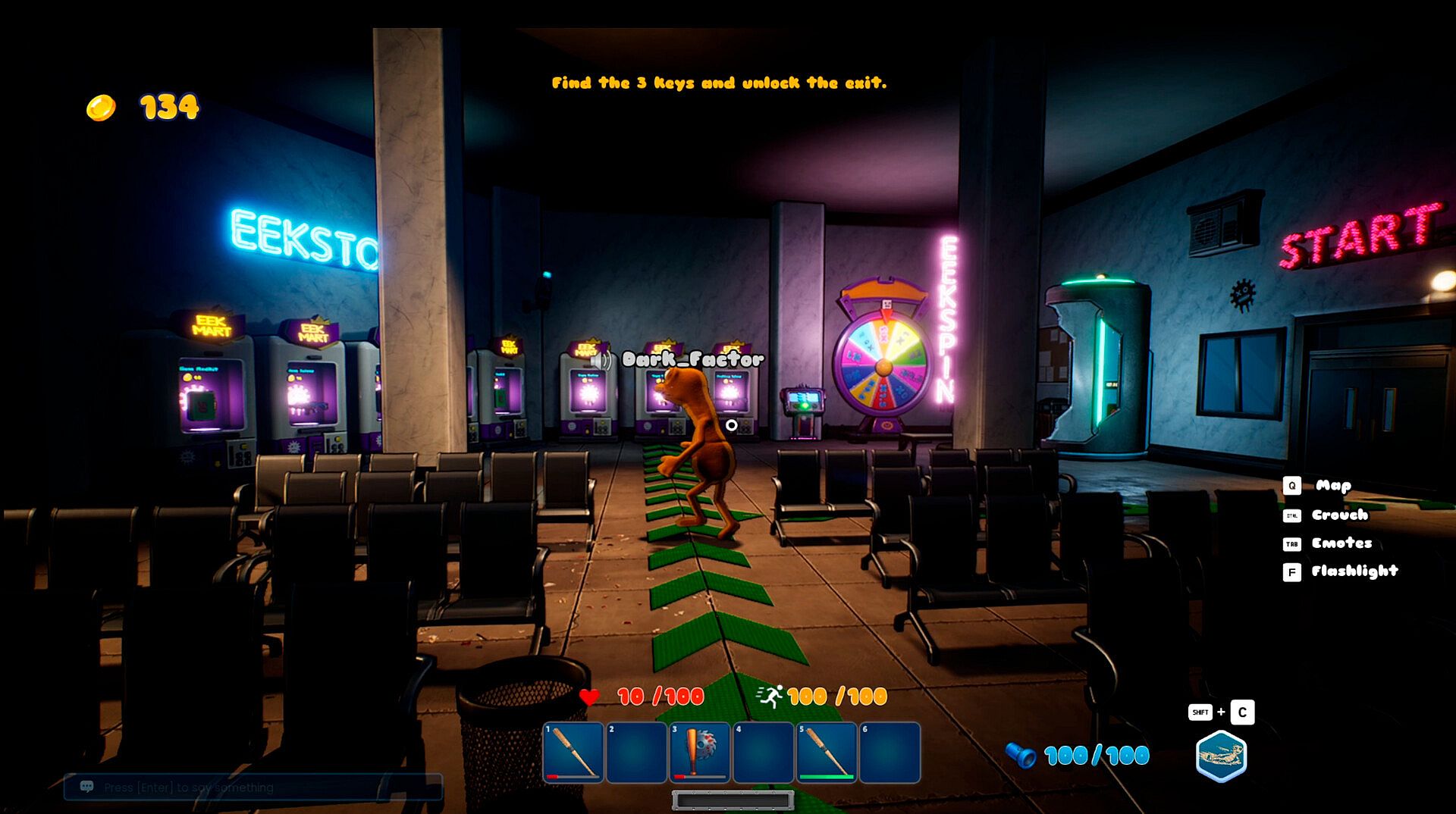
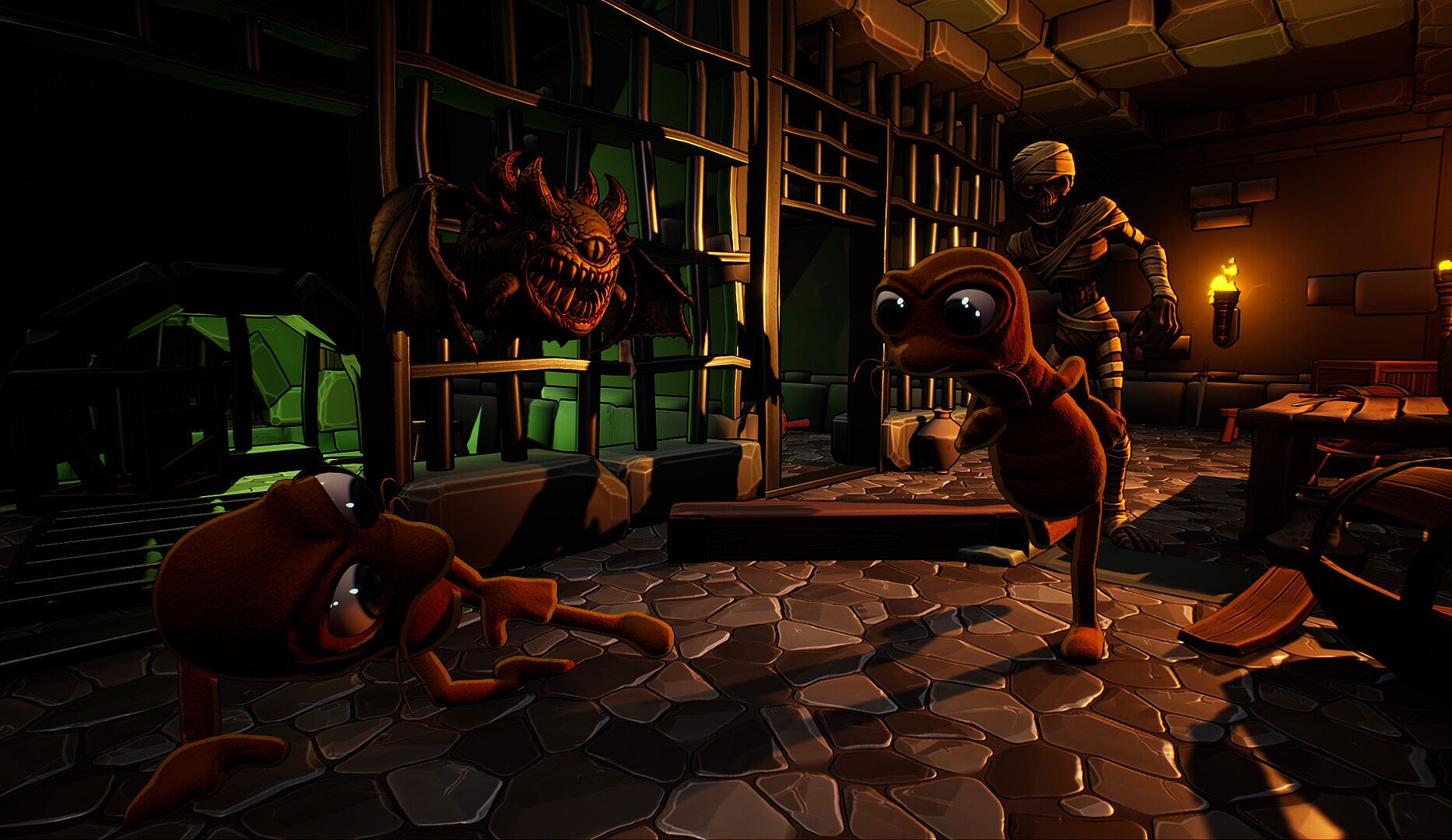
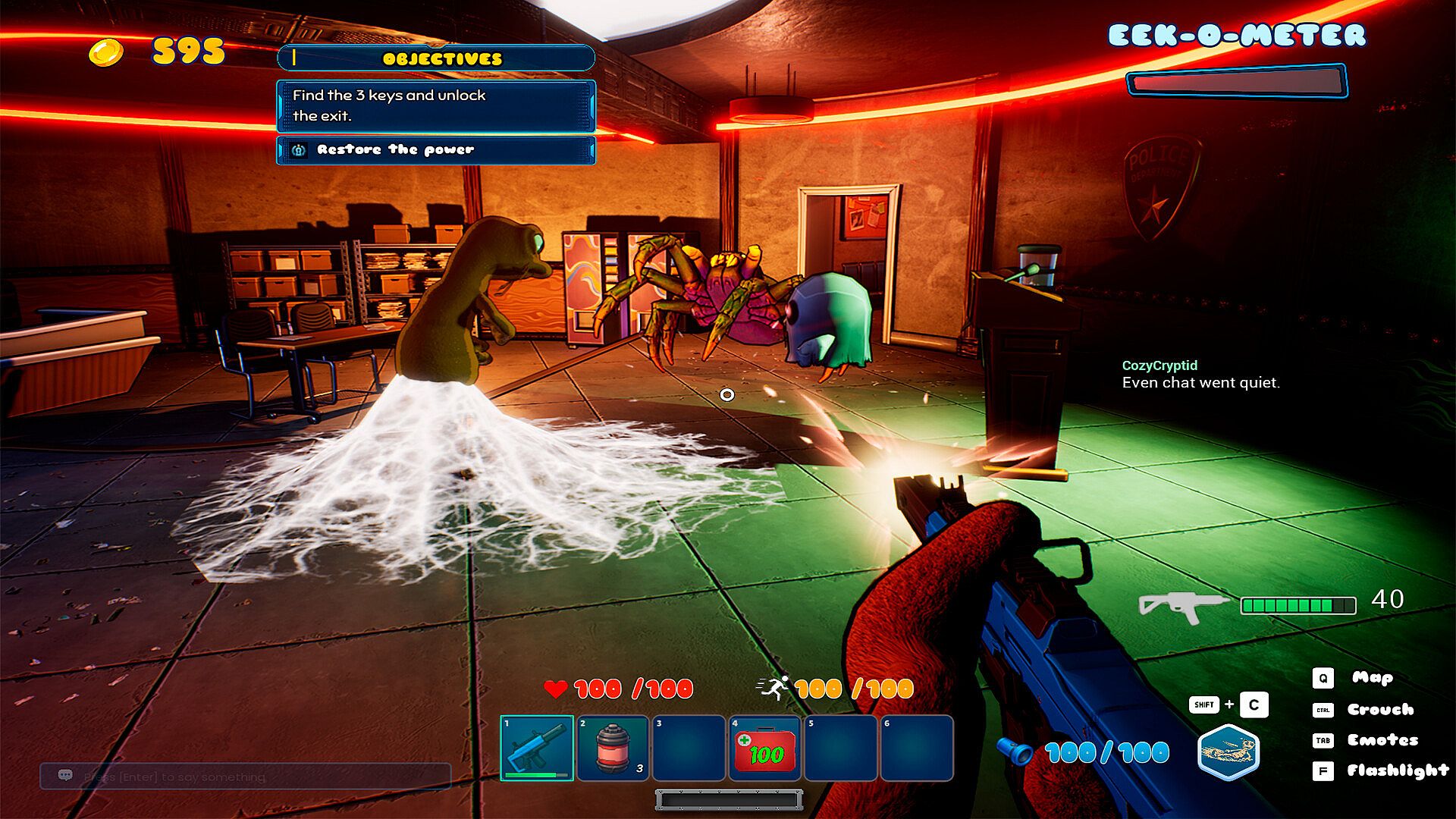
The experience centers on exploration within varied, procedurally generated environments filled with monsters, traps, weapons, medical supplies, money, and equipment. Players must search rooms thoroughly to locate the red, green, and blue keys, then deliver them to a final mechanism that unlocks the exit. A final escape countdown adds pressure once the keys are in place. Combat options include fighting creatures directly, evading them, or using the environment and items to outsmart threats. Resources collected during a run carry forward between attempts, allowing purchases at shops or preparation in special rooms for tougher subsequent locations. Each new run generates a fresh layout and set of challenges, emphasizing replayability through personal records tracked locally.
An on-screen audience feed and in-level presenter commentary react to player actions in real time. Prolonged inactivity or low-engagement behavior lowers approval, which directly reduces the payout received upon successful escape. Strong performance, including survival with high ratings, yields better rewards. The physics-driven elements contribute to unpredictable moments, especially when handling loot or interacting with traps and monsters.
Game Modes
The full gameplay loop supports both solo play and online co-op for up to four players. In solo mode, every decision falls solely on the individual, requiring careful resource management and pathfinding without assistance. Co-op sessions allow teams to divide search efforts, share information about key locations or threats, and assist one another during escapes. However, additional players also increase noise levels and potential for coordination failures, such as misplaced throws or conflicting movements that alert monsters or waste time.
No other distinct modes exist beyond these two options, which share identical objectives and progression systems. The co-op experience heightens both efficiency in larger spaces and the risk of catastrophic errors from group dynamics.
Progression and Audience System
Run-based structure forms the backbone of advancement. Resources like money and equipment persist across successful escapes, enabling incremental preparation for more dangerous procedural layouts. Shops and special rooms serve as hubs for upgrades and strategy adjustments before entering the next location. Personal bests remain saved locally, providing benchmarks for solo players and points of discussion for co-op groups.
The audience approval mechanic integrates directly into the reward economy. The Eek-O-Meter tracks engagement through visible spectator reactions and presenter announcements. Maintaining high ratings requires active play that entertains the virtual crowd, while boredom from slow pacing or repetitive actions diminishes payouts. This system ties survival quality to financial outcomes, encouraging varied approaches to monster encounters and exploration.
Is It Worth Playing?
Eekscape: Everyone Panic! remains unreleased with no user reviews or completed updates available at this time. Its appeal lies in the combination of first-person action-horror tension, procedural variety, and the performance-based reward layer that rewards engaging play over pure efficiency. Players who enjoy solo survival runs with persistent progression or chaotic co-op sessions up to four participants may find the key-hunting objective and audience feedback loop engaging. Those seeking straightforward extraction without the ratings pressure or group coordination risks might prefer alternatives. The game suits fans of replayable runs where decisions compound across attempts and where entertaining an in-game crowd adds a distinct layer to standard escape mechanics.