




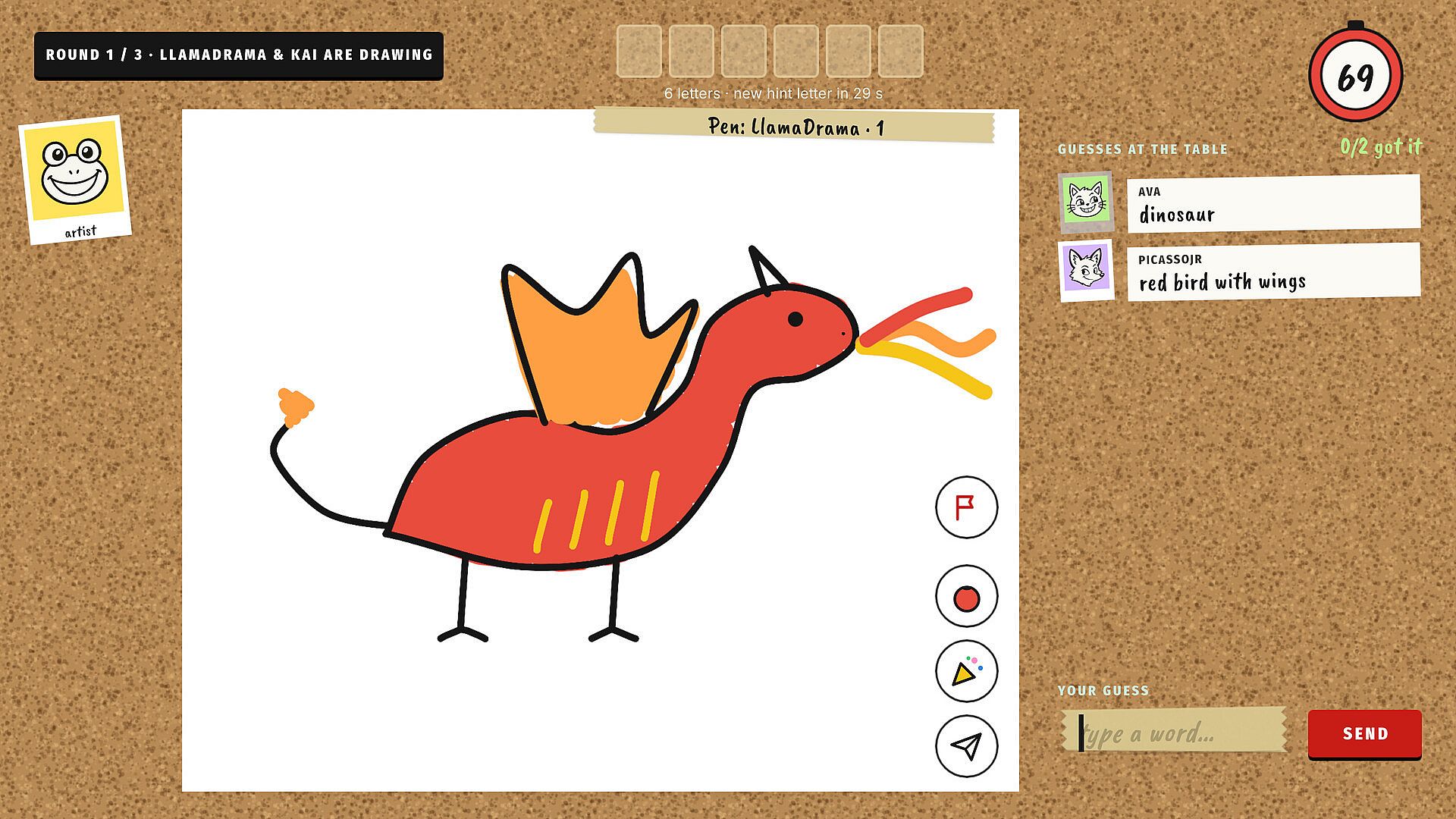
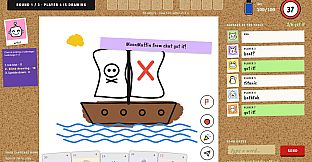
Drawbacks: Draw, Guess, Sabotage is an indie casual party game for PC that builds on the classic draw-and-guess formula with added layers of competition and interference. Players take turns drawing words while others attempt to identify them, but the twist comes from sabotage mechanics that let guessers disrupt the artist mid-round. The result is a fast-paced social experience centered on quick thinking, creative drawing, and strategic use of limited resources.
Gameplay
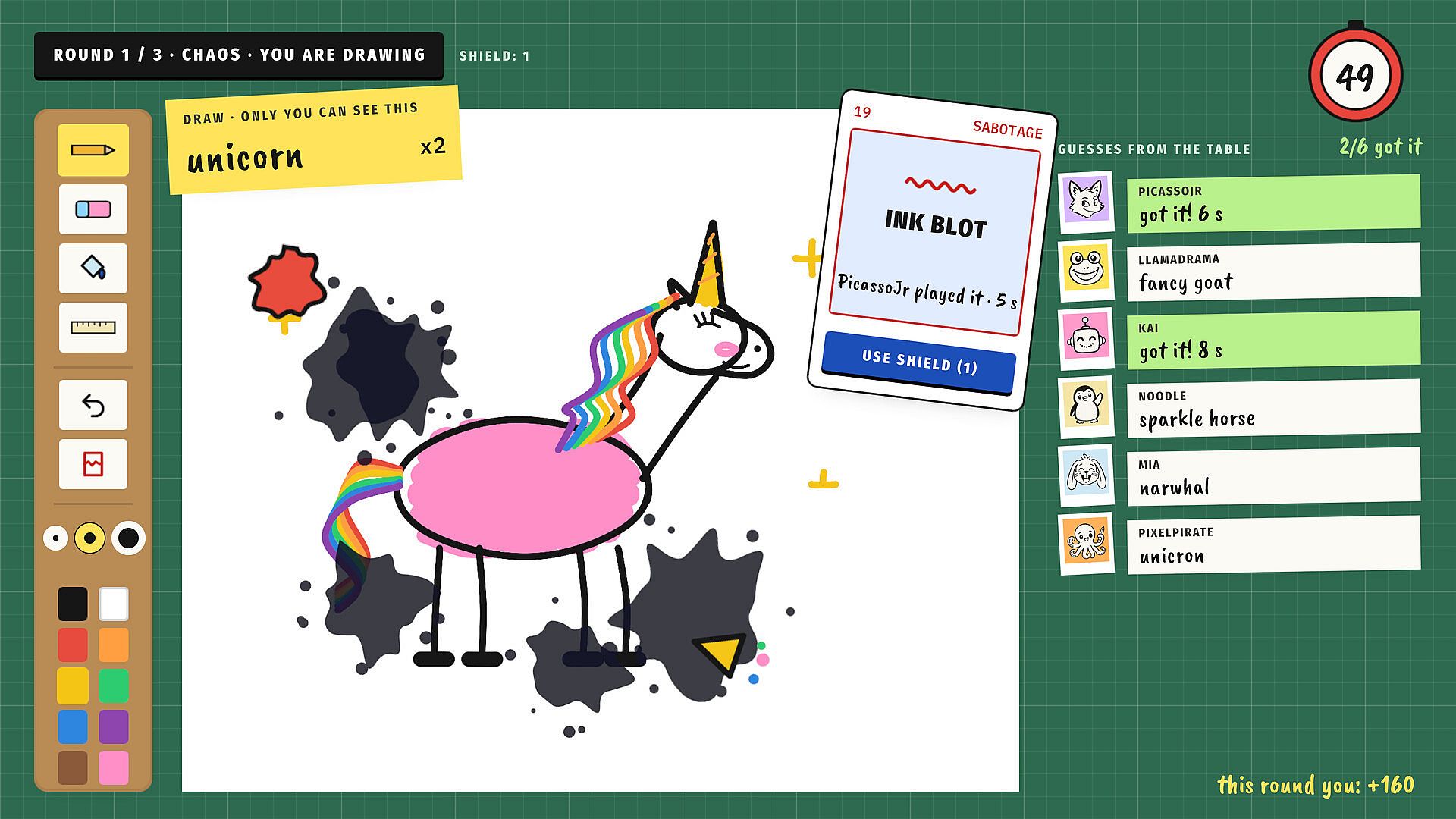
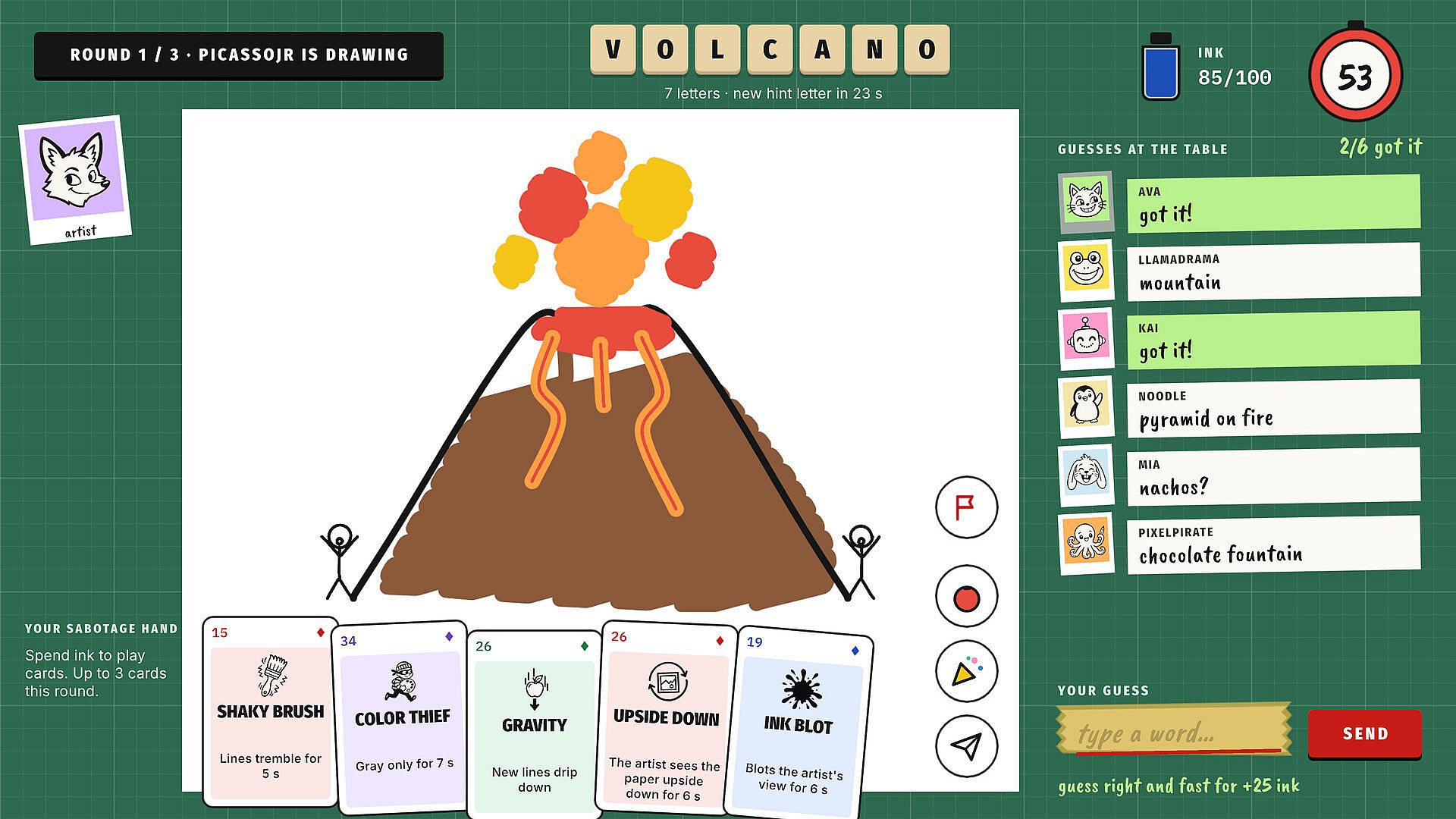
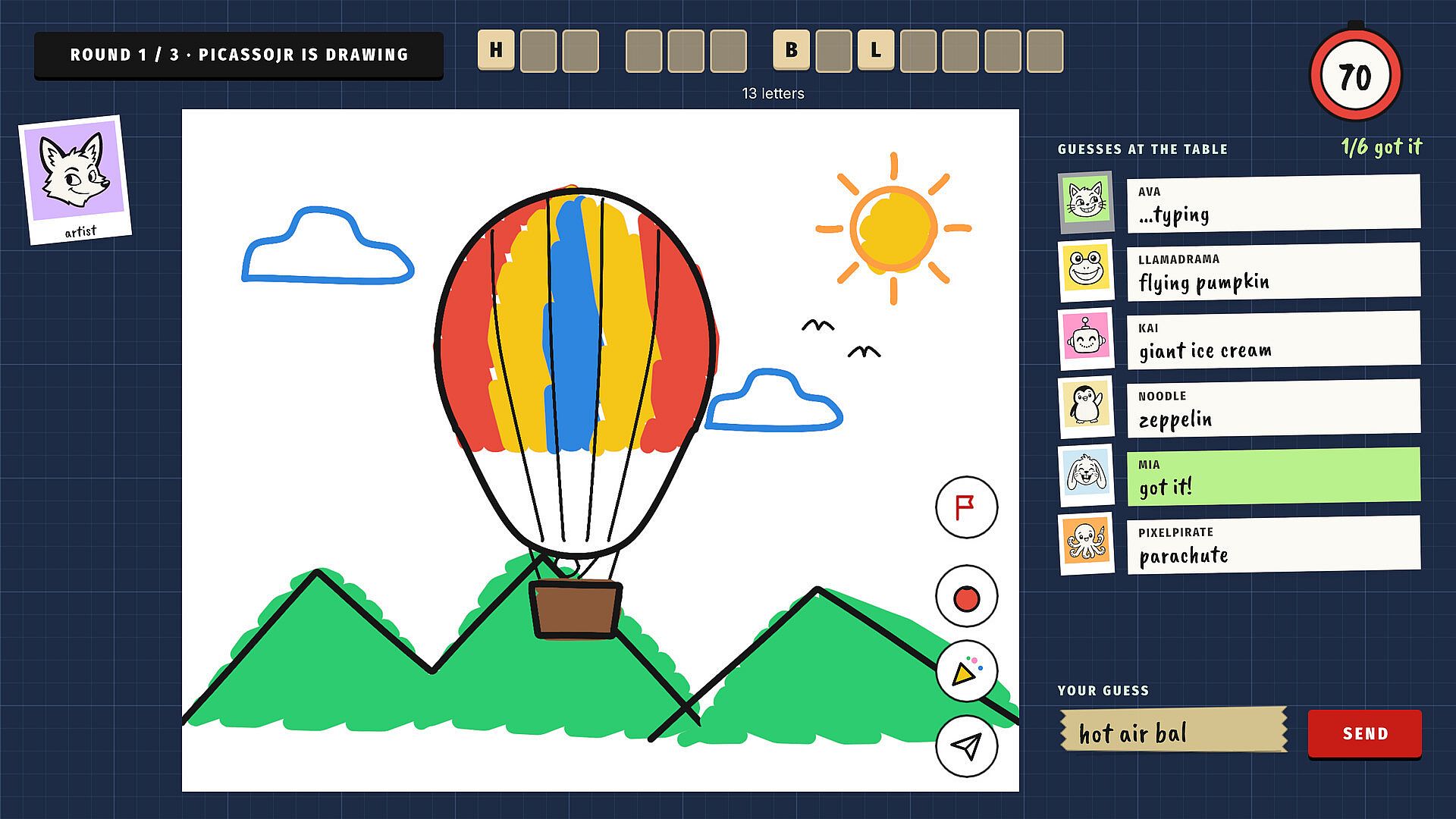
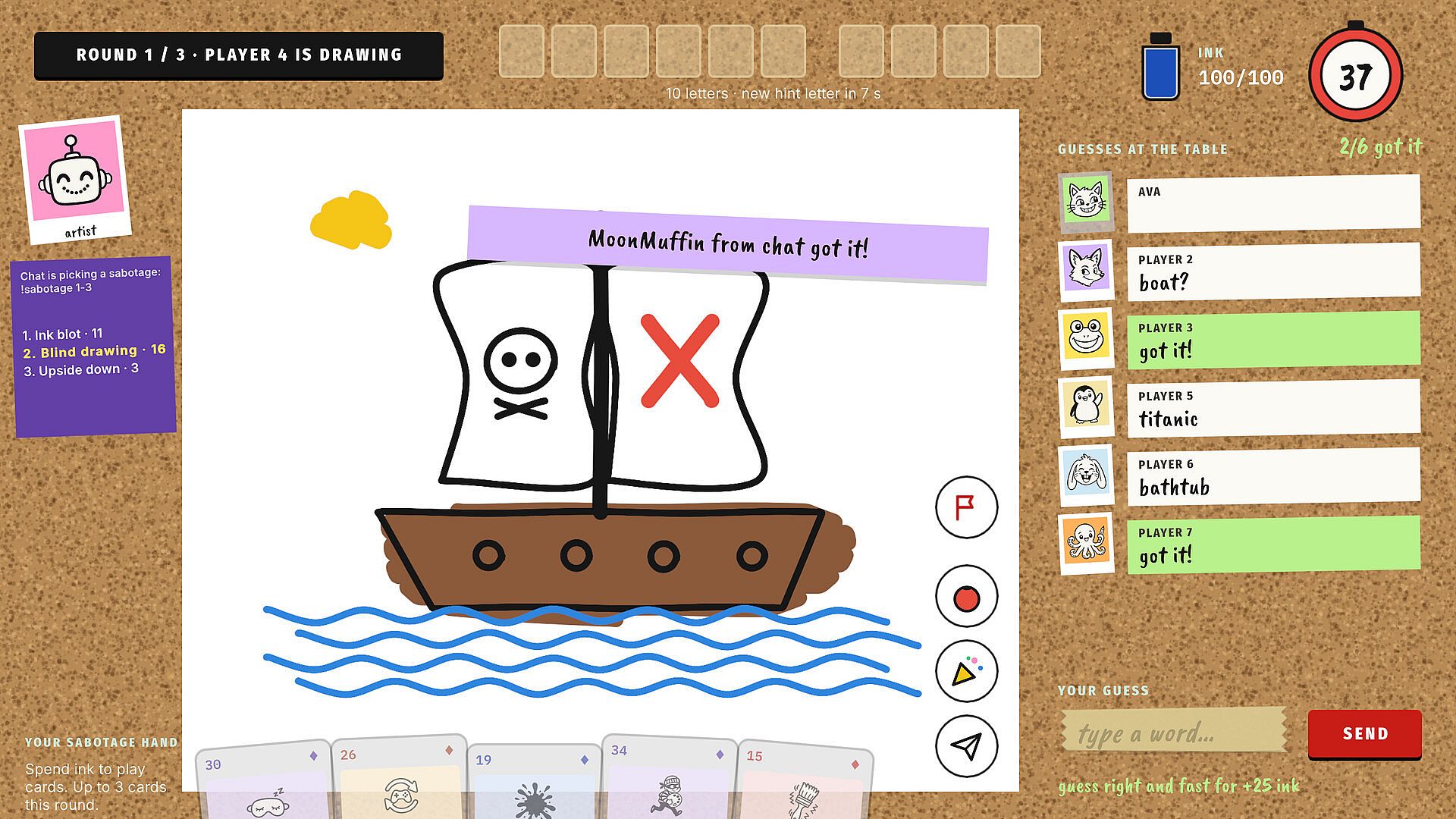
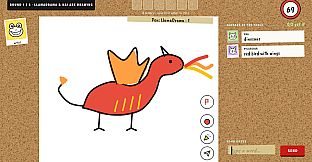
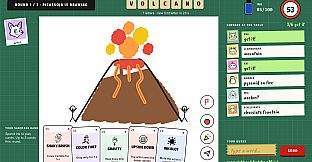
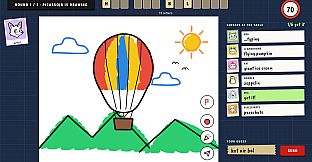
The core loop revolves around an ink economy. Correct guesses earn ink that players can spend on sabotage cards during another artist's turn. This creates constant back-and-forth tension at the table, where the same group both supports and undermines each other's efforts. Artists select from word cards with varying risk levels. Easy words deliver safe points but invite more sabotage opportunities, medium words offer bonuses for broad recognition, and hard words grant a defensive shield at the cost of heavy penalties if no one guesses correctly.
Eleven sabotage cards provide specific ways to interfere, including shaky brush effects, mirrored paper, ink blots, blind drawing requirements, upside-down views, reversed controls, gravity shifts, wind interference, pixel mode, color theft, and a shrinking tip. The artist counters with a single shield option earned by choosing the hard word. Drawing supports mouse or pen tablet input with pressure sensitivity, while guessing uses the keyboard. Accessibility features cover text size adjustments, colorblind palettes, high contrast modes, reduced motion, and independent volume controls.
Game Modes
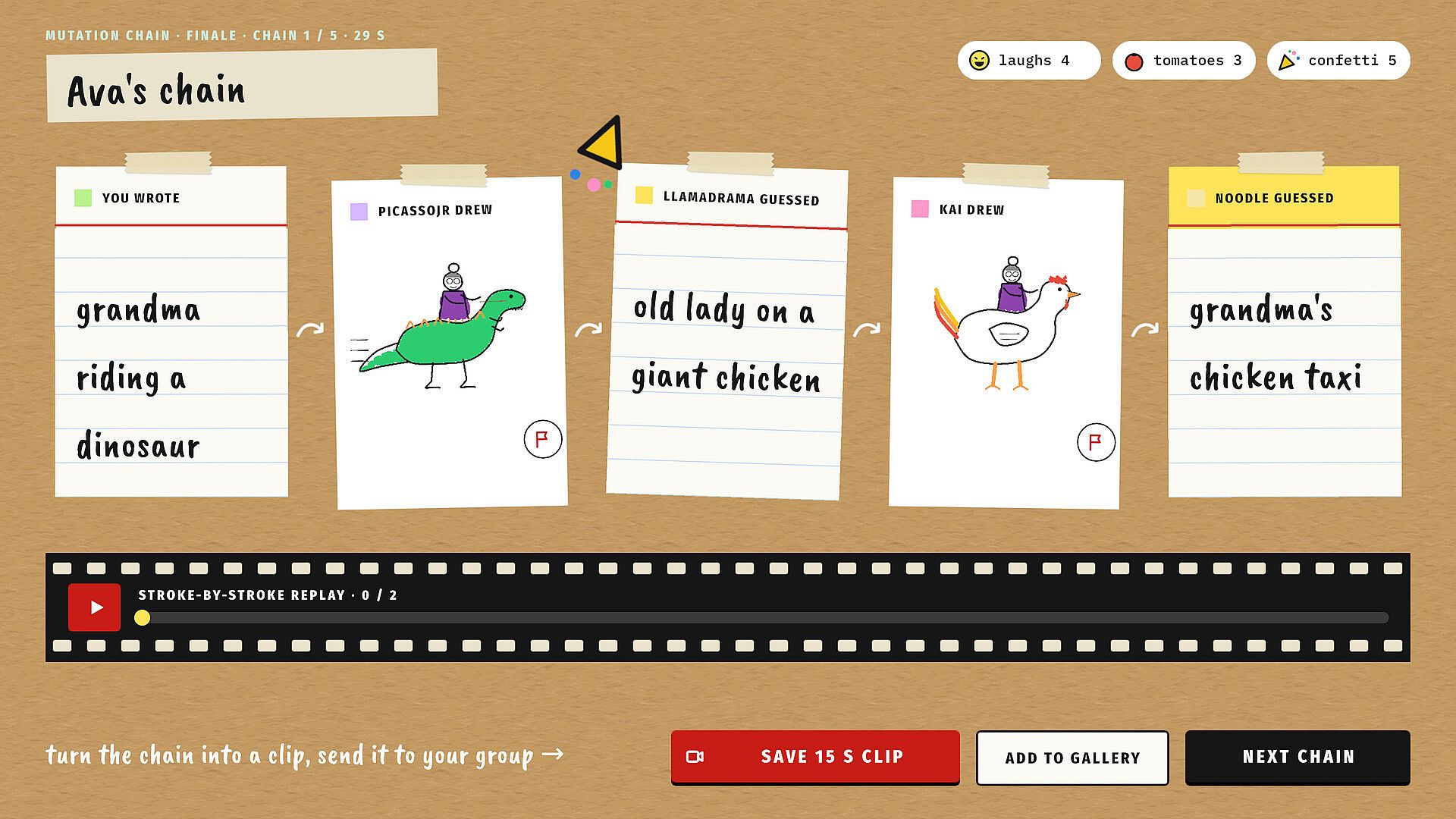
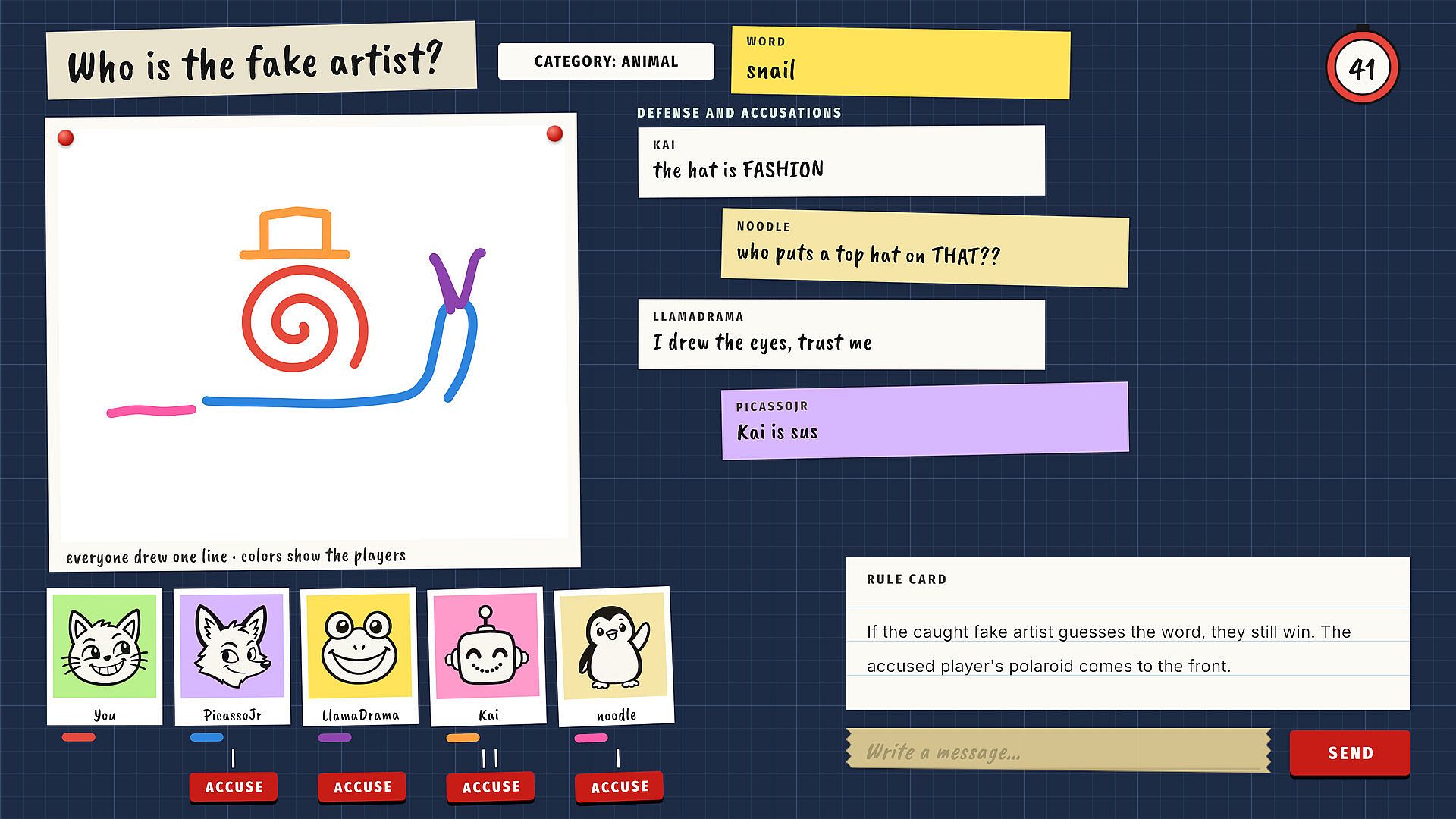
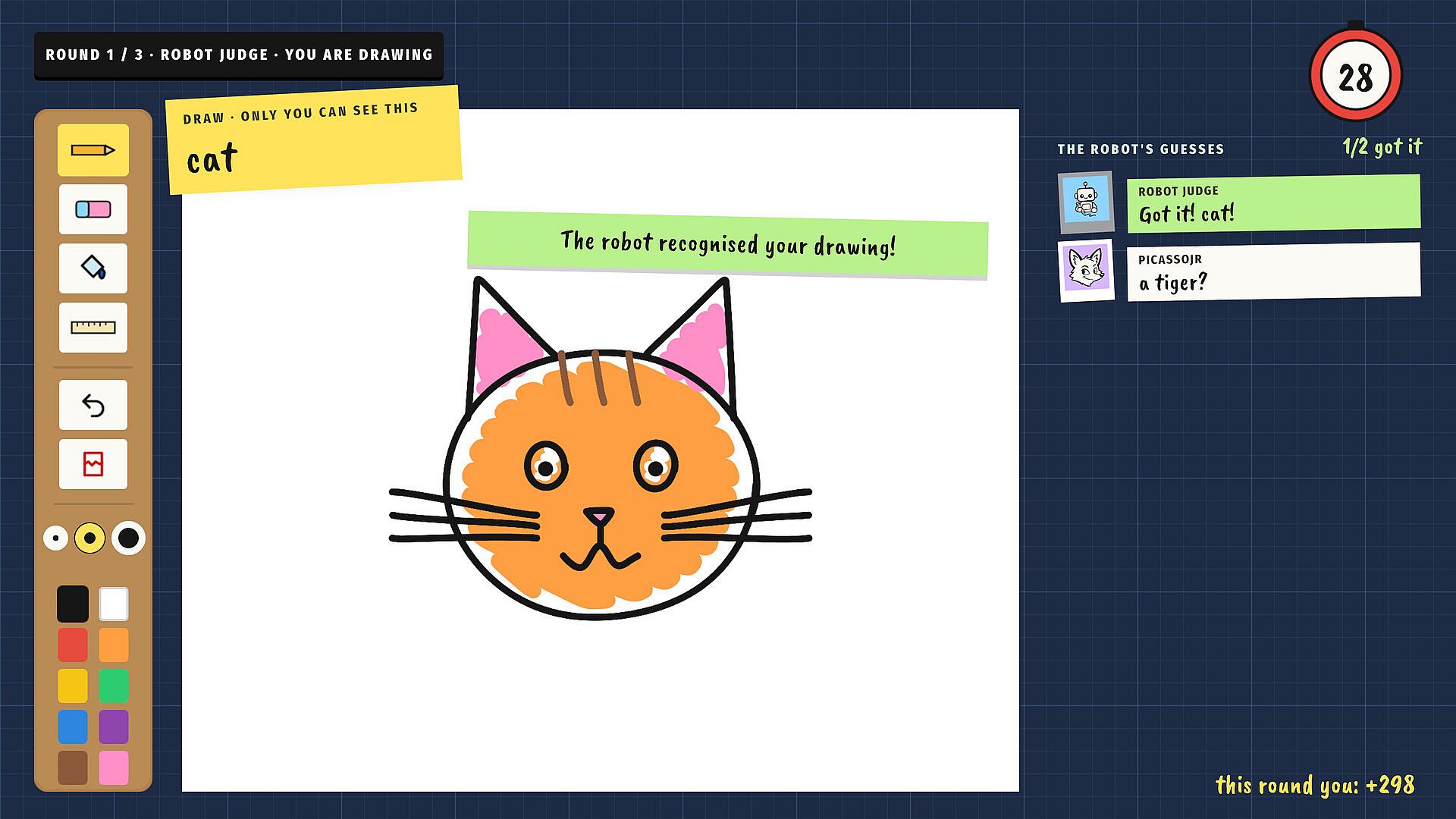
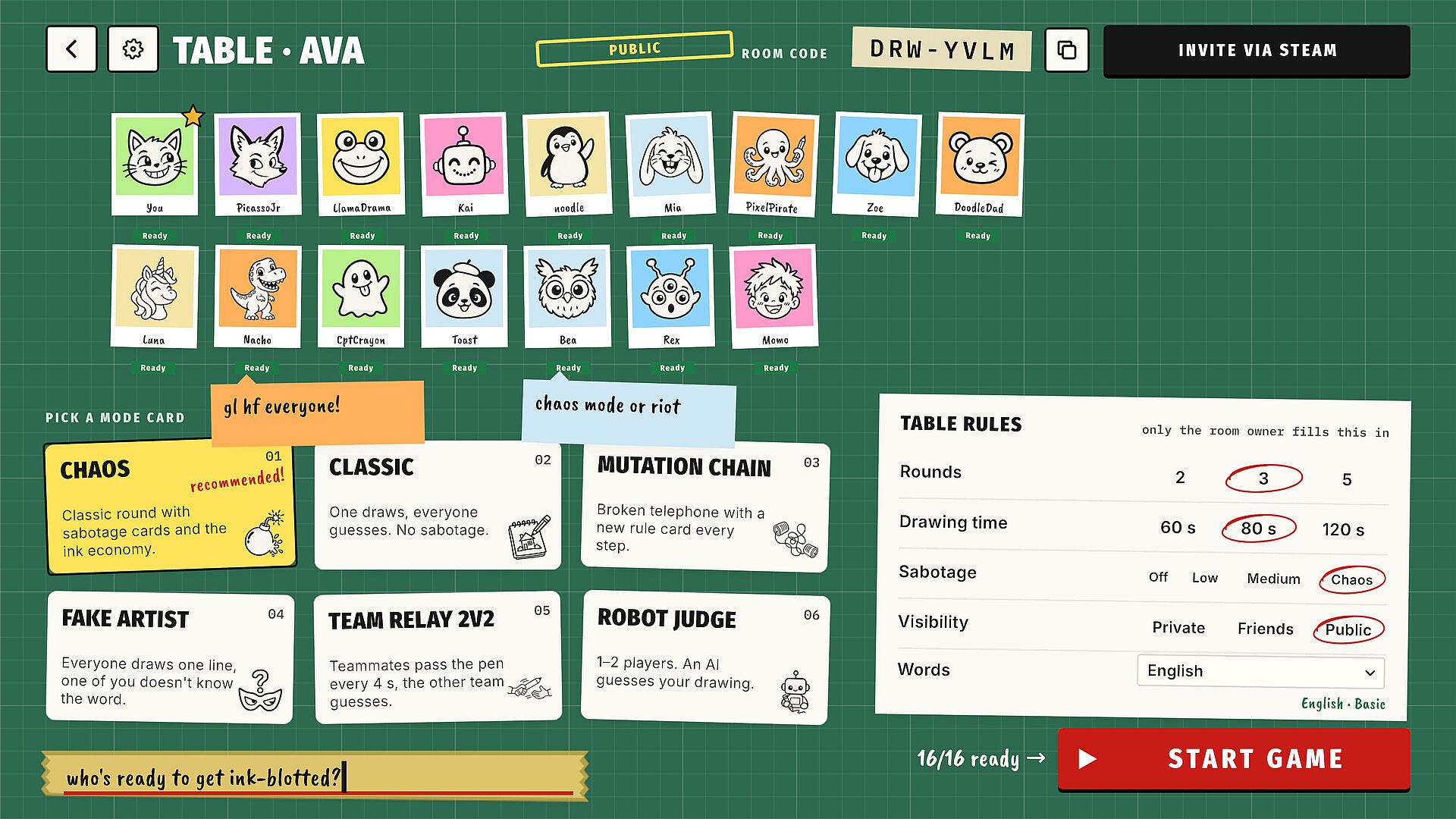
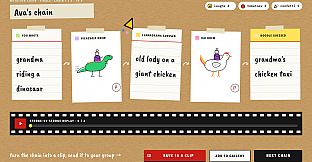
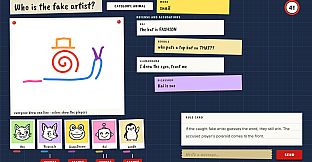
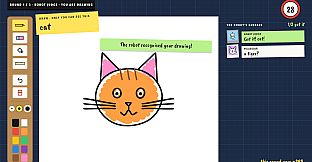
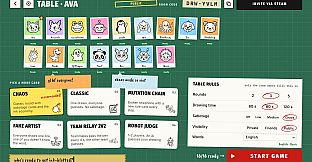
Six distinct modes expand the experience beyond standard rounds. Chaos serves as the full version with sabotage cards and the ink system active. Classic strips away sabotage for pure drawing and guessing skill. Mutation Chain functions like a broken telephone chain where each step adds a new rule card, such as eyes closed, circles only, or limited lines. Fake Artist has everyone contribute one line to a shared drawing while one player lacks the word and must be identified through voting. Team Relay supports 2v2 matches with teammates swapping the pen every few seconds as the opposing team guesses. Robot Judge pits one or two players against an AI doodle-recognition system, with scoring based on recognition speed.
Rooms support 2 to 16 players through friend invites, room codes, or quick play. Hosts customize round count, draw time, and sabotage intensity from off to full chaos. Streamer mode allows Twitch chat to participate in guessing and vote on sabotage cards without revealing the word on stream. Public rooms include family-friendly word pools, profanity filters, vote-kick tools, and reporting options. Support spans 26 languages with dedicated word packs for each.
Progression and Features
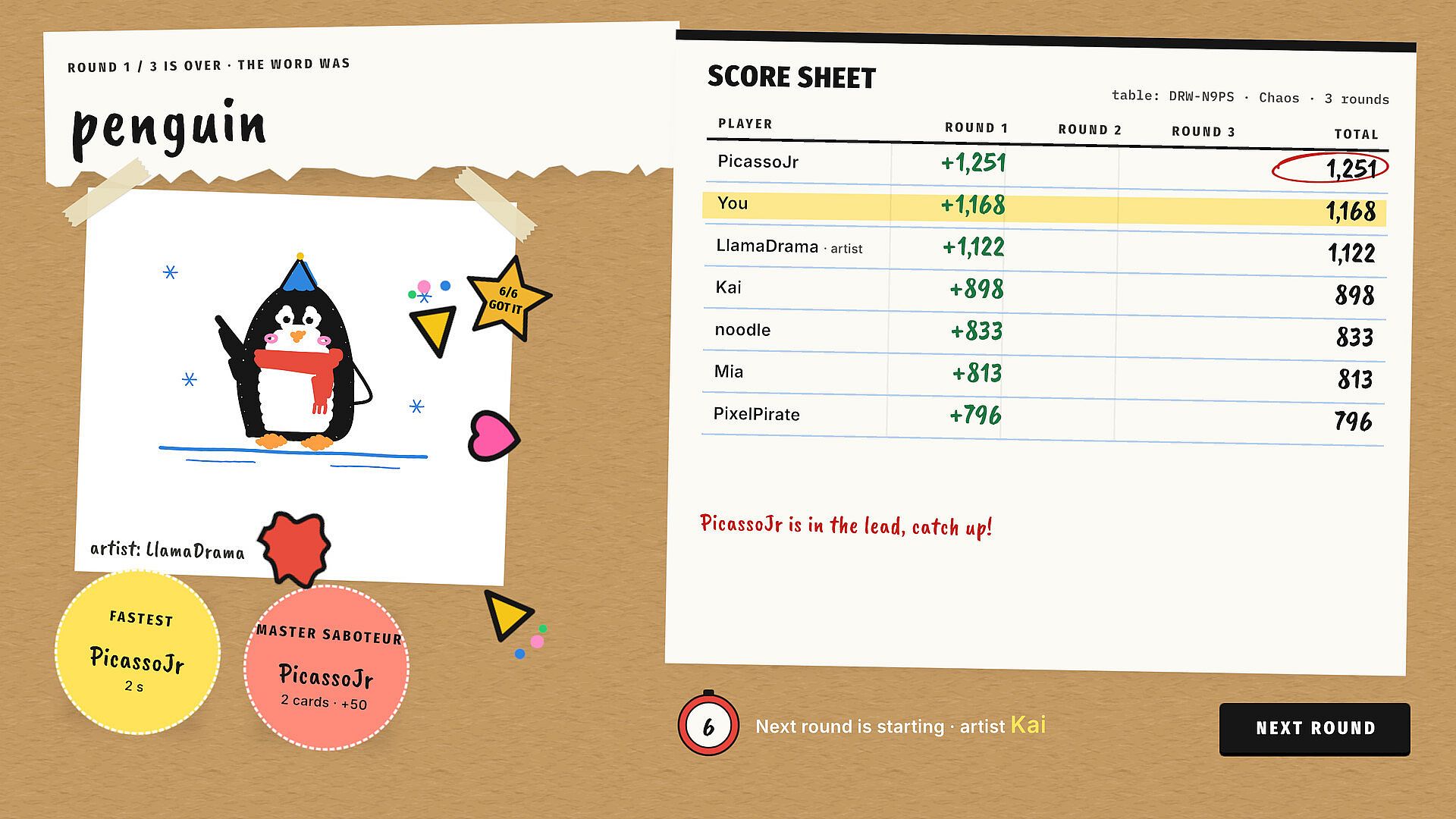
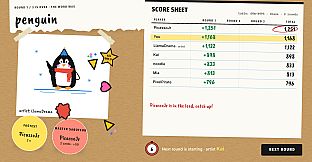
Players level up through matches to unlock avatars, brushes, reactions, and table themes stored in a personal locker. Everything unlocks through play with no microtransactions or shops present. Additional interactions include throwing tomatoes, confetti, or paper planes at the artist. Seventeen achievements track various accomplishments, and leaderboards allow competition with friends. Completed drawings save automatically to a personal gallery and Steam screenshots.
Every mode requires an active internet connection, including solo options against the robot judge. The game emphasizes group play and works best with consistent groups or engaged public lobbies rather than isolated sessions.
Is It Worth Playing?
Drawbacks suits players who enjoy social party games built around drawing and quick interpretation, especially those who appreciate added sabotage and resource management that keep sessions unpredictable. It shines in groups of friends willing to embrace chaotic interference and laugh at imperfect drawings. The variety of modes provides replay value for different group sizes and preferences, from cooperative chains to competitive team formats and AI challenges. Online-only requirements and the focus on live interaction mean it delivers most when participants stay engaged rather than treating it as a background activity. For casual PC users seeking a fresh take on draw-and-guess mechanics without additional purchases, the game offers a complete package centered on its core systems and player-driven moments.