








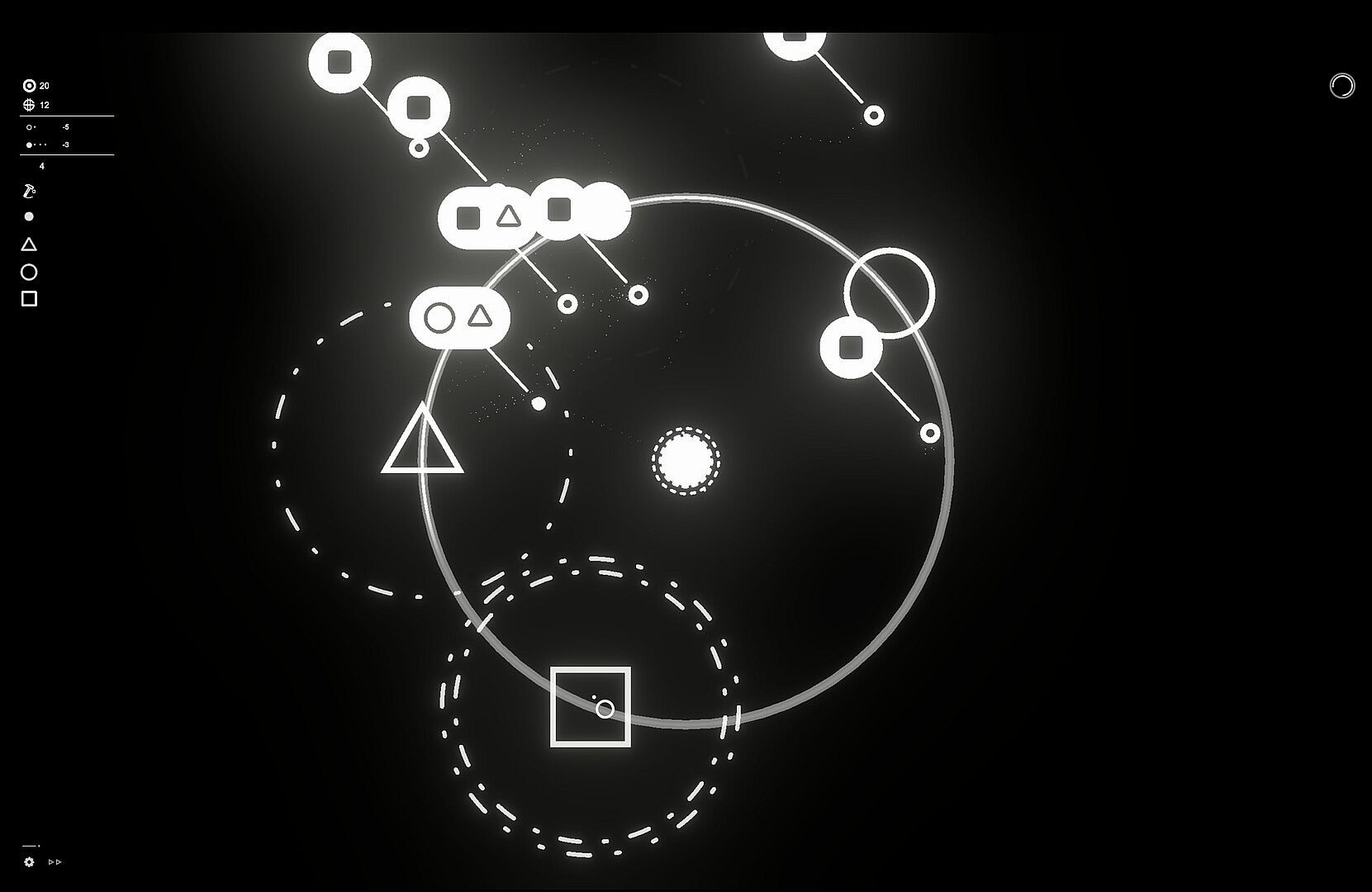
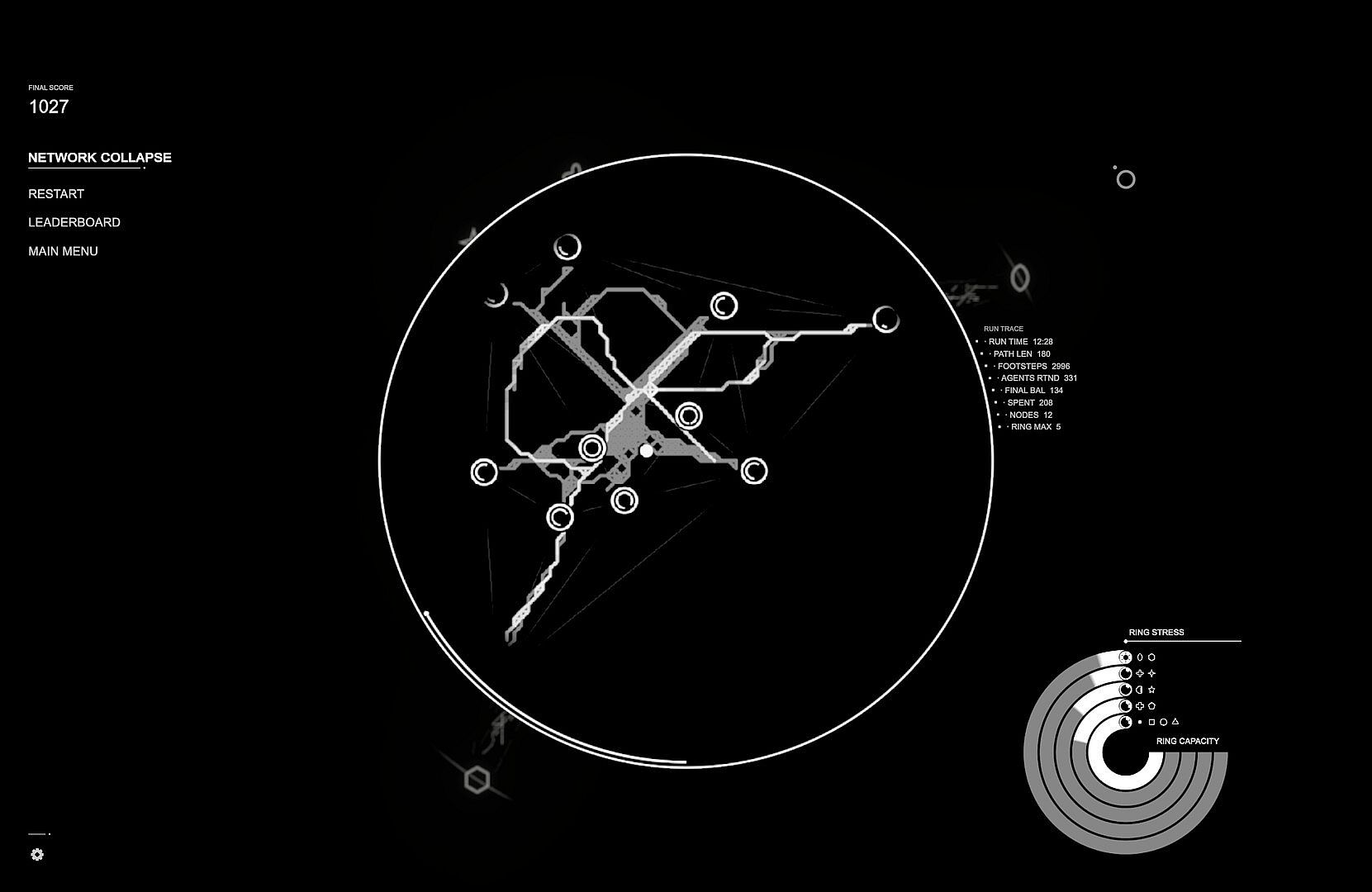


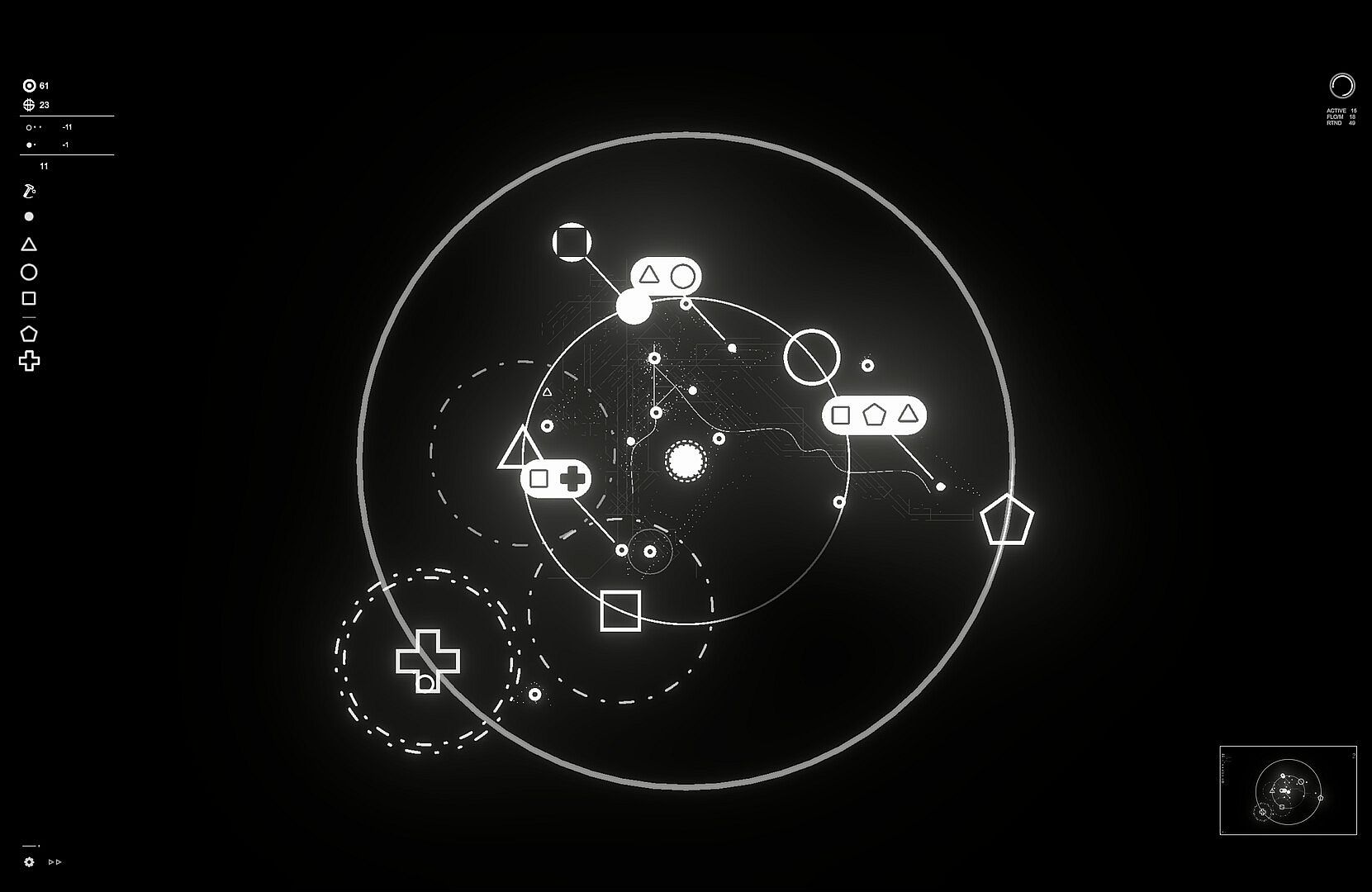






DESIRO is a strategy and simulation game focused on building and managing networks in a relaxed, observational style. Players construct pathways for tiny commuters who move through the system, gradually shaping the infrastructure through repeated use. The experience blends casual gameplay with thoughtful mechanics around movement, repetition, and adaptation, all set against a backdrop of chill tunes and ambient sounds.
Gameplay
The core loop centers on constructing a network that supports ongoing movement. Agents travel along the routes players create, and their repeated journeys form desire paths that strengthen busy connections while quieter ones fade over time. This process turns initial designs into evolving structures that players did not fully plan in advance. Expansion happens across five rings, where careful spending becomes essential to maintain flow. Adding redundancy helps handle demand, yet it can also create new bottlenecks that require attention. The system rewards observation and incremental adjustments rather than rigid planning, as the network responds dynamically to usage patterns.
Players watch the small commuters navigate the layout, noticing how their choices influence infrastructure strength. Busy routes gain prominence through repetition, while underused paths diminish. This feedback loop encourages experimentation with different configurations to keep everything moving smoothly for as long as possible. The emphasis stays on adaptation rather than perfection, allowing the network to develop its own character based on real usage.
Game Modes
DESIRO operates as a single continuous simulation experience without separate named modes. The gameplay revolves around iterative sessions of building, observing commuter behavior, and refining the network across the five rings. Each attempt focuses on sustaining movement amid emerging desire paths and shifting demands. Players can restart or adjust their approach freely, treating the process as an ongoing experiment in network design and response to organic growth.
The structure supports relaxed play sessions where the goal is simply to maintain functionality while watching the system evolve. There are no competitive or timed variants, keeping the focus on personal exploration of how repetition and agent movement reshape the layout over time.
Key Mechanics and Features
Network construction forms the foundation, with players placing connections that agents then utilize. Desire paths emerge naturally from repeated travel, altering the relative strength of routes without direct player input. This creates a layer of indirect control, where observation of commuter habits guides future decisions. Redundancy and bottleneck management add strategic depth, as players balance expansion with stability across the rings.
Sound design plays a supporting role through chill tunes and subtle noises that enhance the relaxed atmosphere. The overall presentation stays minimal and focused, directing attention toward the interplay between design choices and emergent behavior in the network.
Is It Worth Playing?
DESIRO suits players who enjoy thoughtful simulation and strategy games centered on systems and observation rather than fast action or complex narratives. Its early access status means the experience centers on the core network-building loop described in the source material, with room for further refinement. Those drawn to casual yet engaging mechanics around movement, repetition, and adaptation will find value in experimenting with different layouts and watching desire paths develop. The absence of a perfect solution encourages repeated attempts, making it appealing for anyone interested in organic system growth and relaxed problem-solving. If the idea of shaping infrastructure through agent behavior resonates, the game offers a distinctive take on simulation that rewards patience and curiosity.