




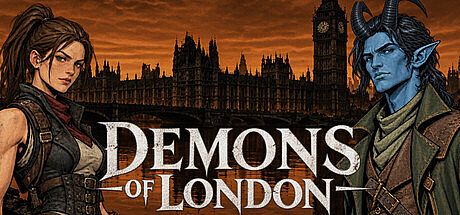


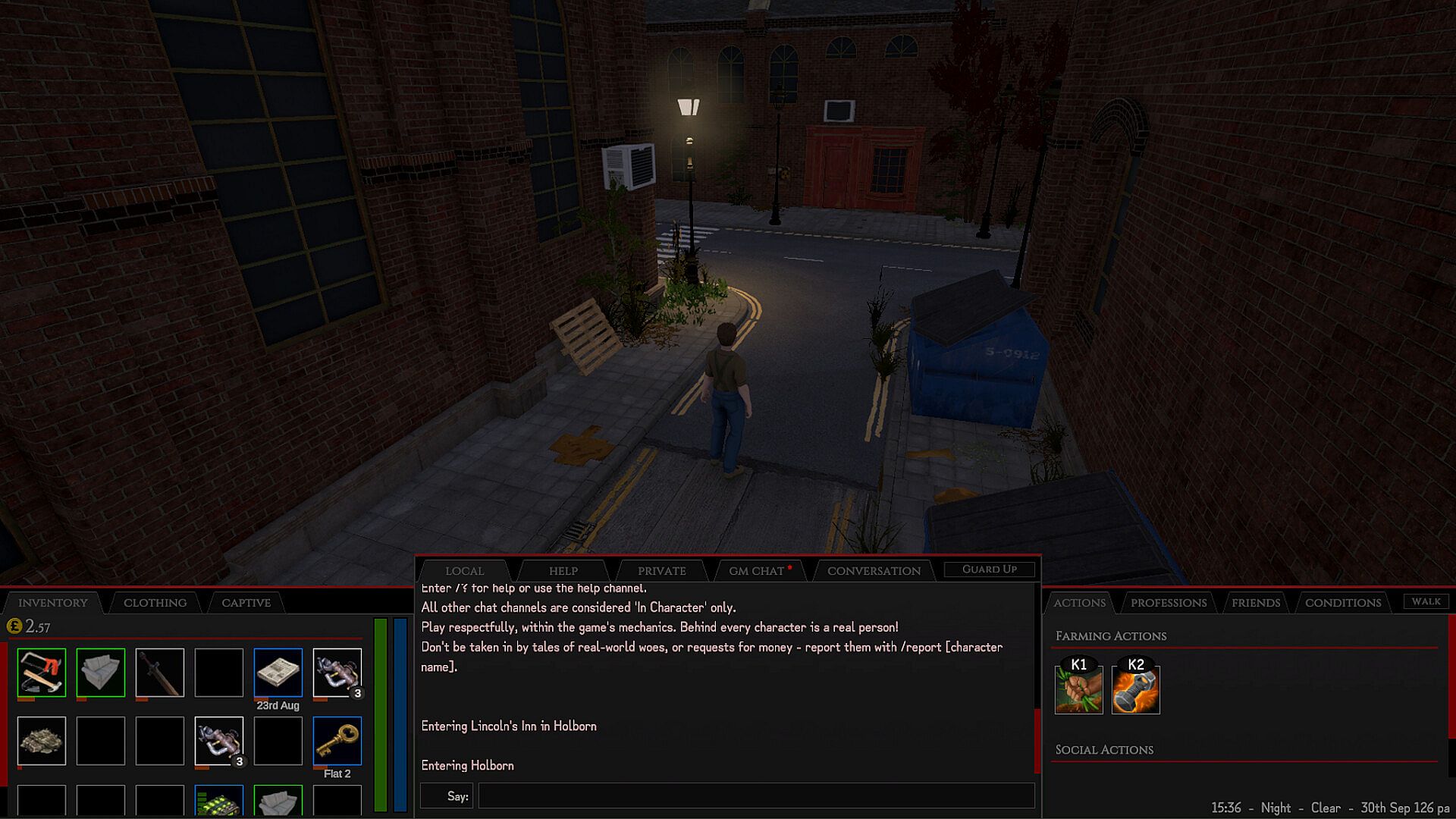
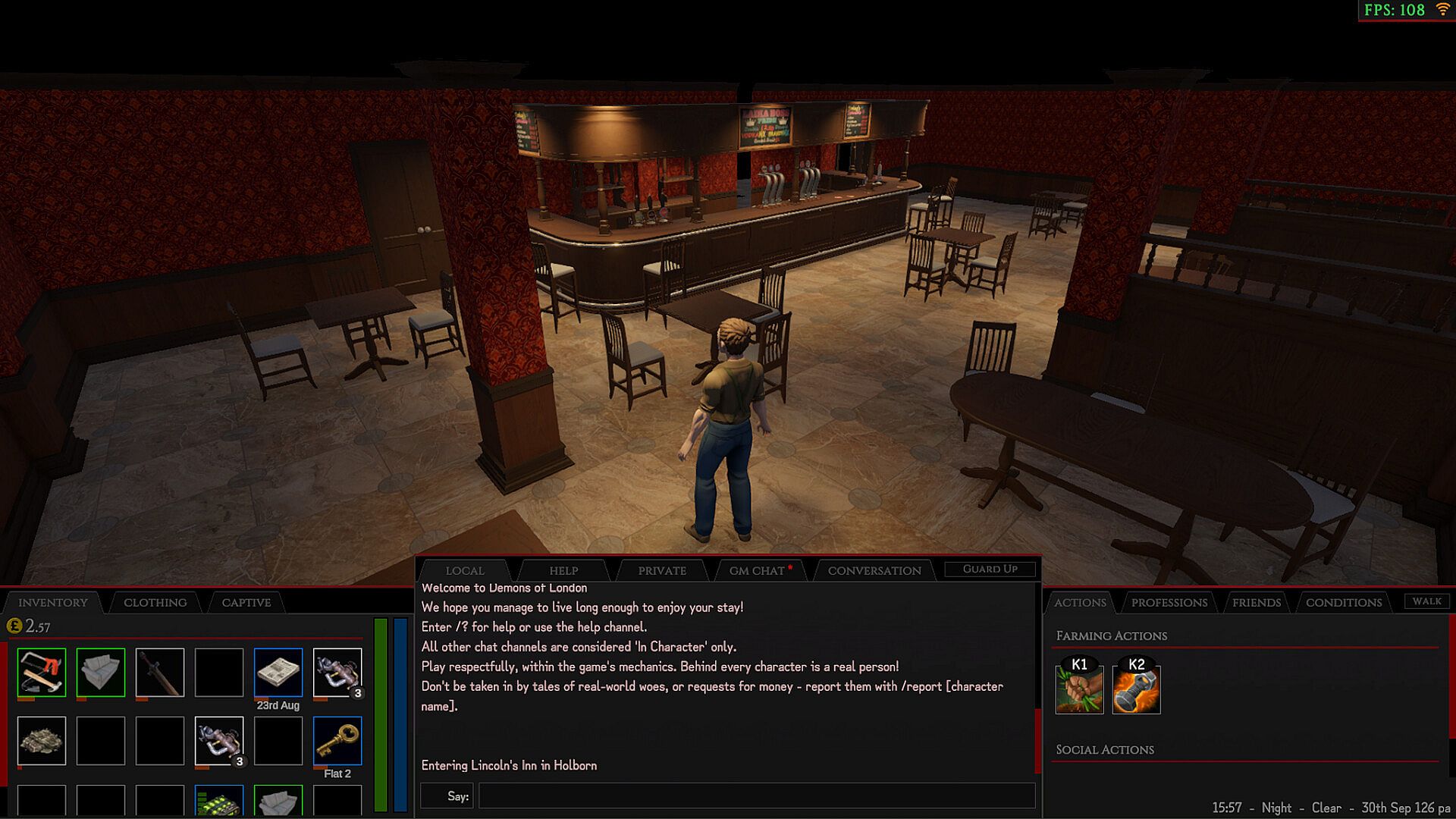
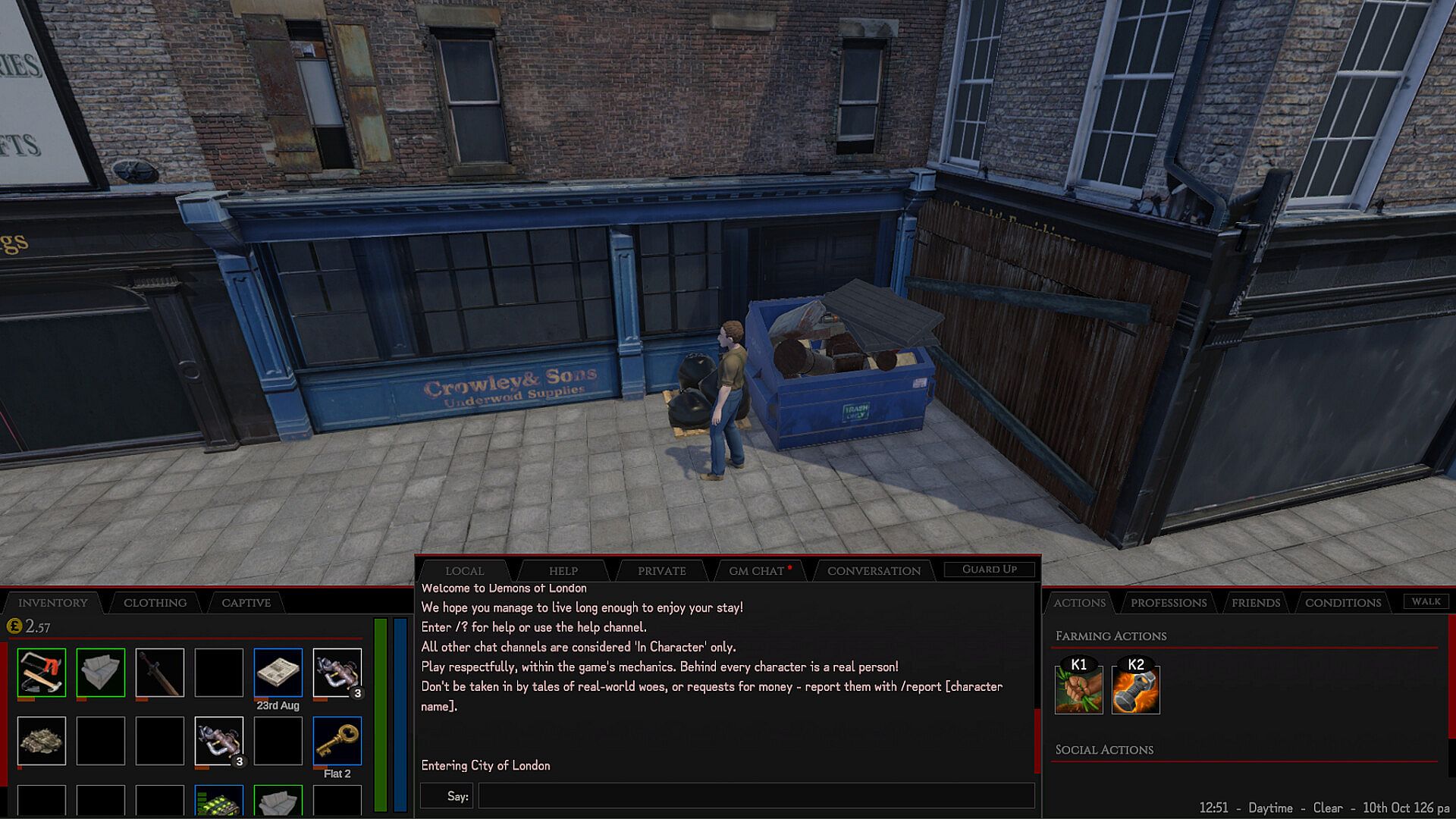
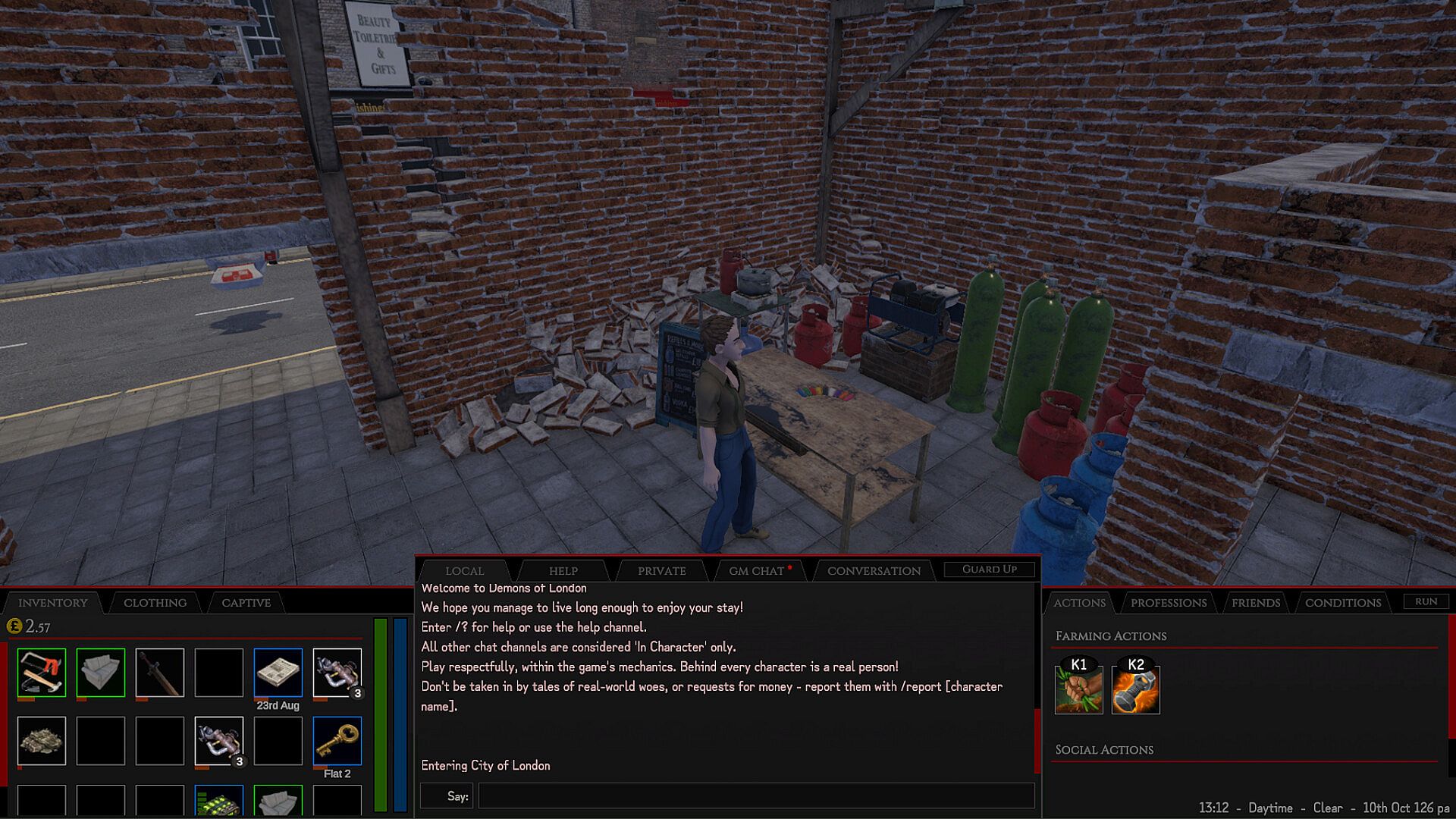
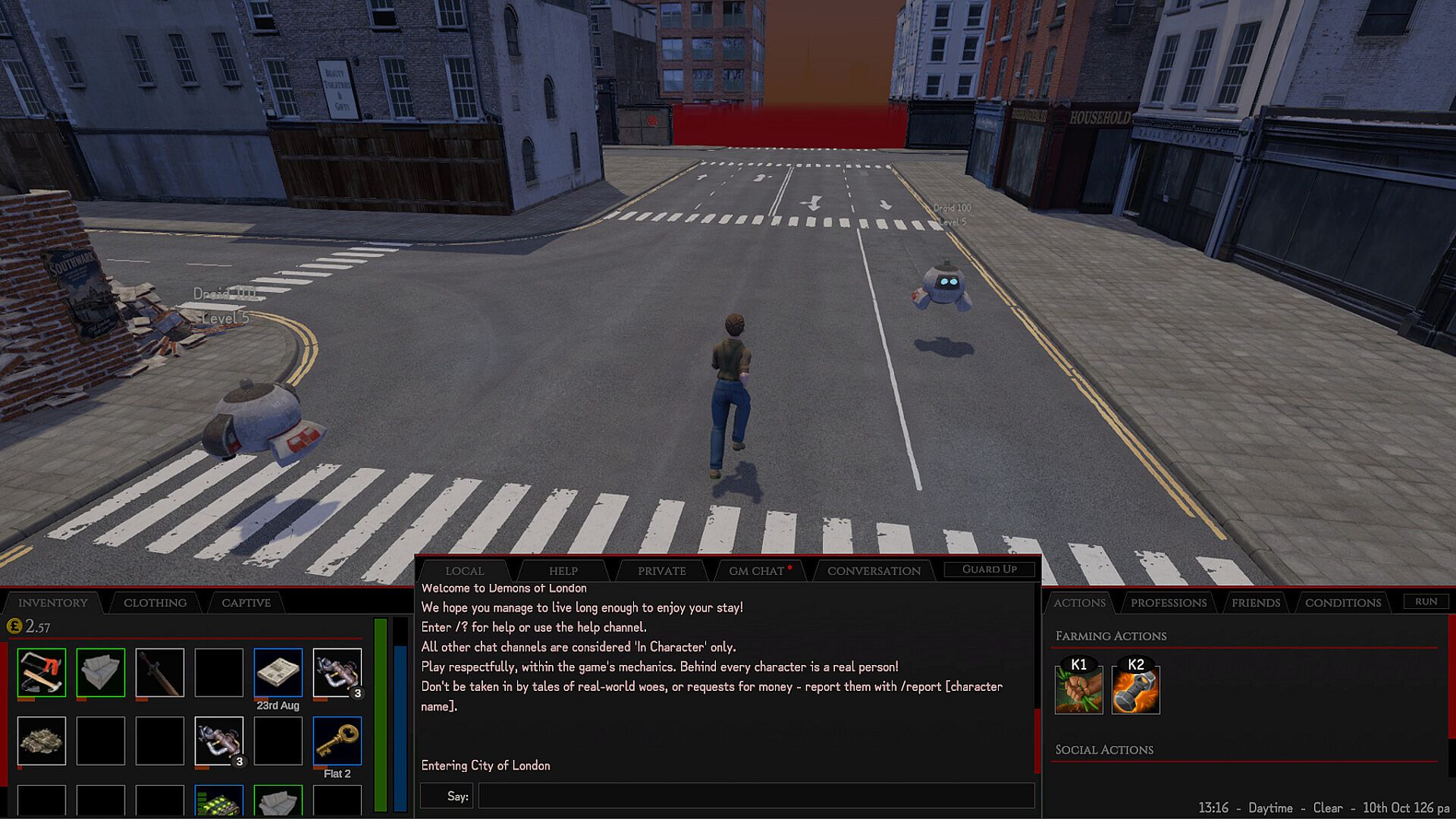
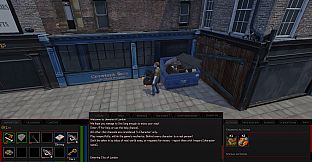
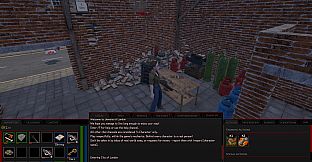
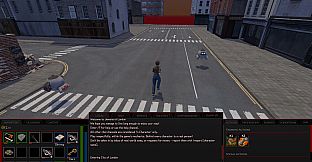
Demons of London is a 3D isometric RPG and adventure title built for massively multiplayer play on PC. Set in a post-apocalypse version of the city that endured the Blitz and the Plague only to face The Destruction, the game places players in a world where Hell's gates stand open and borough councils continue their arguments. The focus rests on carving out a personal reputation amid survival demands and social interactions.
Gameplay
Core progression centers on learning skills and training professions that range from combat roles like warrior to creative and influential paths such as artisan, politician, journalist, slaver, or bounty hunter. Players salvage scrap from the ruined environment, refine it into usable materials, and decide whether to keep those resources for personal crafting or sell them through the marketplace. Crafted items can become legendary pieces that persist in the world even after their creator departs.
Additional layers include starting a family line so a next generation can carry the name forward, forming clans for collective strength, and securing player housing as a relatively safe personal space. Live DJ sets in clubs provide moments of relaxation, while world PvP carries direct consequences including potential jail terms for crimes committed. Elections occur every other month, allowing participants to shape local governance through chosen styles of honesty or corruption. Journalism or satire appears in a fortnightly newspaper and magazine for those who prefer observation and commentary over direct action.
Game Modes
The experience blends open-world social activities with structured player-driven events. World PvP forms one pillar, where conflicts arise naturally and carry lasting repercussions rather than resetting with each session. Political participation through regular elections creates another avenue for influence, letting groups or individuals steer council decisions. Creative outlets such as contributing to the newspaper or hosting club events offer non-combat engagement. Clan formation and housing systems support group coordination and personal investment without mandating constant fighting.
These elements operate together in a persistent setting where daily routines of crafting, trading, and socializing sit alongside occasional dramatic encounters. The design prioritizes role-play and community building over rigid objectives, allowing sessions to shift between quiet gatherings and larger conflicts as players choose.
Social and Economic Systems
Marketplace trading and material refinement encourage ongoing economic participation, with crafted goods potentially outlasting individual characters. Clan structures reward coordinated efforts, while family lines add generational depth to character stories. Housing provides a stable base for these activities, and club events create recurring social hubs. The absence of pay-to-win mechanics keeps progression tied to time invested and choices made rather than external purchases.
Professions extend beyond combat to include political maneuvering and media influence, giving multiple routes to prominence. Salvage and crafting loops feed directly into these systems, letting players support allies or profit from demand. Elections and the newspaper add periodic layers of public interaction that can alter the broader environment.
Is It Worth Playing?
Demons of London suits players who value social role-play and community dynamics in a massively multiplayer setting over traditional end-game loops or gear-focused combat. The design explicitly avoids pay-to-win elements and combat centrality, instead emphasizing professions, crafting, housing, clans, and player-driven events like elections and journalism. Those drawn to persistent worlds where reputation, alliances, and creative contributions matter more than leveling alone will find the most alignment. The game presents itself as an SMORPG with no fixed goal beyond participation in society, making it a fit for individuals seeking ongoing, open-ended interactions in a post-apocalyptic London backdrop.