


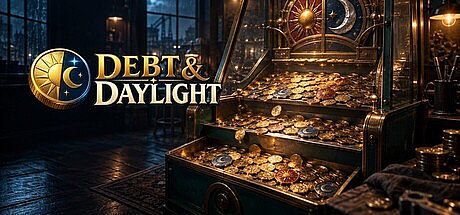












Debt & Daylight is an indie casual simulation game on PC built around a 3D coin-pusher roguelike experience. Players manage mounting bills over six days while operating a physical coin-pushing machine to generate cash before each midnight deadline. The core tension comes from deciding how aggressively to pursue payouts while upgrades and random events alter the machine's behavior and the financial stakes.
Gameplay
The central loop centers on manual coin drops into a machine with visible bumpers, a raised drop shelf, and a lower collection tray. Coins roll, collide, stack, and spill into the tray, where players collect them along with hidden colorful powerup tokens. Workshop upgrades fit into the run and modify payout rates, timing windows, silver coin frequency, shields, or risk odds. Players choose between safer gold coins and higher-stakes risk coins, and they can borrow from a credit desk when cash falls short, accepting repayment obligations for the next day. The HUD displays only the remaining time until the next bill cycle, while daylight and night shifts change machine odds and overall atmosphere. Random events during a run may generate cash surpluses, add silver coins, provide debt shields, alter luck, jam the pusher, or trigger rush hours.
Game Modes
A single run consists of six bills that must be paid on time. Completing a run cleanly unlocks harder contracts for subsequent attempts. The structure emphasizes repeated runs with accumulating upgrades and risk management rather than separate named modes. Local save and continue support allows interrupted sessions to resume without loss of progress. All activity stays within the coin-pusher framework, with no real-world currency elements or wagering involved.
Core Mechanics and Tension
Every drop requires deliberate timing through mouse click or spacebar press. The physical simulation produces readable collisions and stacking behavior across 26 visible bumpers. Powerup tokens collected from the tray feed into workshop choices that reshape future payouts and risk profiles. Borrowing introduces tomorrow's repayment pressure, forcing players to weigh immediate survival against long-term machine performance. Day and night cycles, combined with random events, ensure each cycle presents shifting conditions that affect both earnings potential and debt accumulation.
Is It Worth Playing?
Debt & Daylight suits players who enjoy precise, tactile control over a physics-driven system paired with short-term financial decision making. The six-day run length keeps sessions focused while the roguelike upgrade and risk layers encourage multiple attempts. Those drawn to casual simulation titles that emphasize manual timing, visible machine interactions, and escalating pressure from deadlines will find the mechanics align closely with that preference. The absence of microtransactions or real-money elements keeps the focus on the core coin-pushing and debt-management loop.