







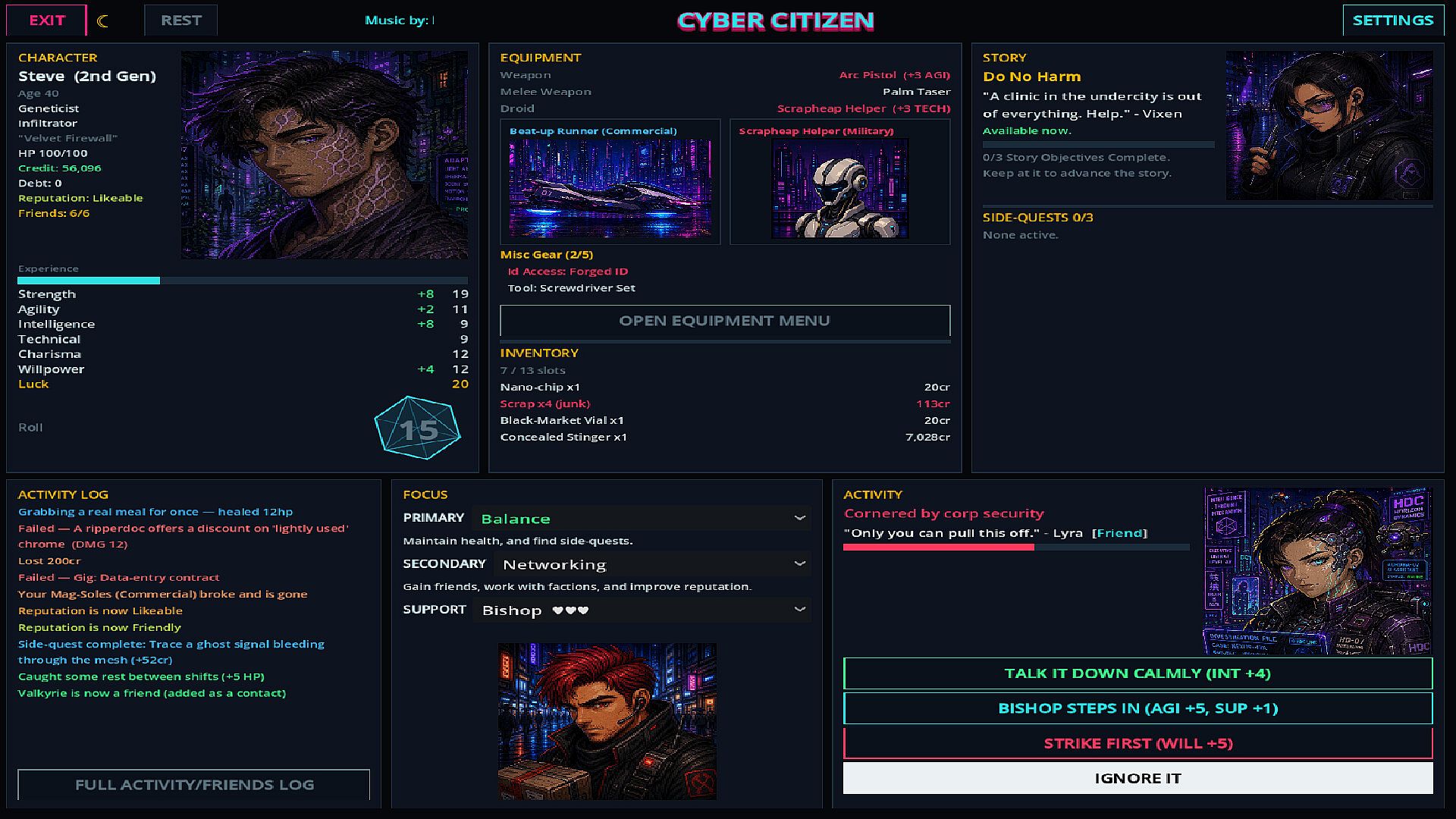
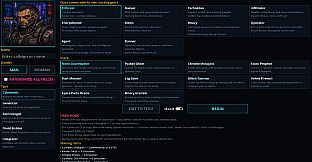
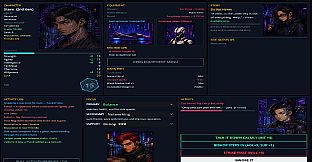
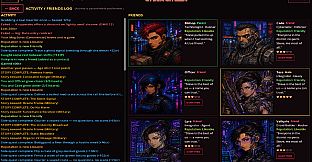
Cyber Citizen é um RPG indie de simulação que gira em torno da progressão em idle dentro de uma cidade neon que segue seu próprio ritmo. Em vez de controlar cada ação diretamente, o jogador molda o personagem por meio de escolhas de foco e rolagens de d20, criando uma experiência do berço ao túmulo em que os empregos continuam mesmo sem supervisão.
Gameplay
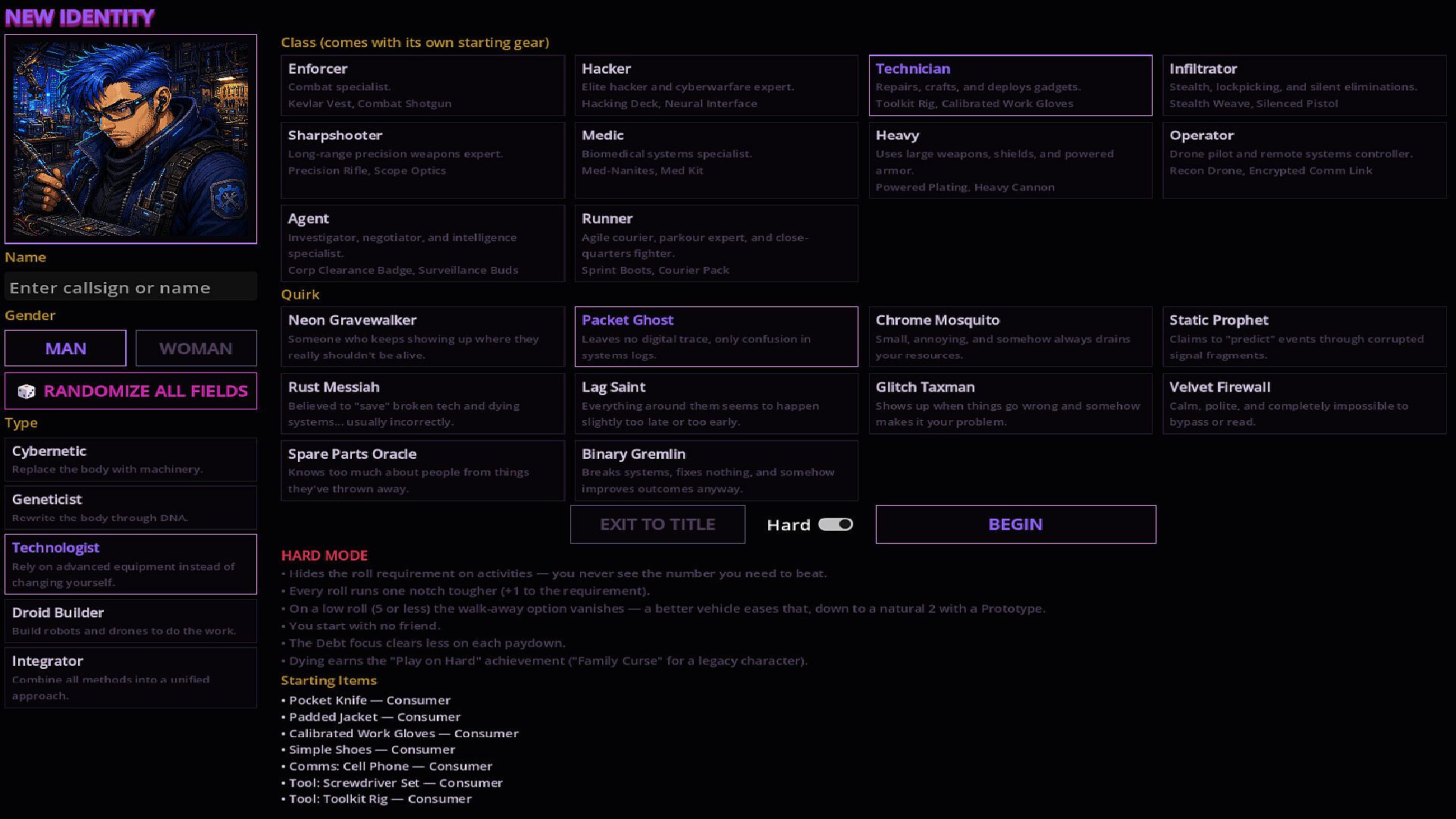
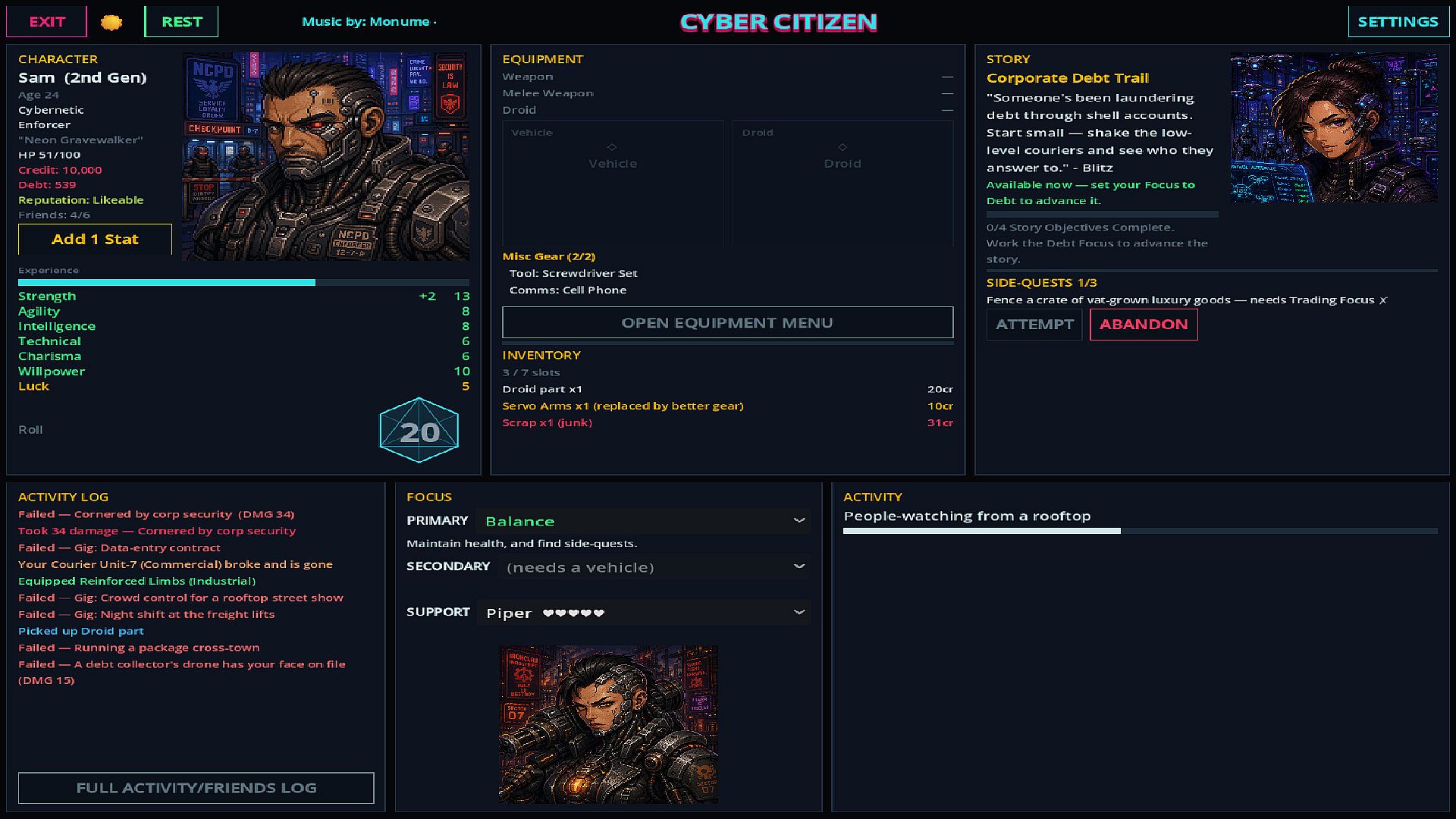
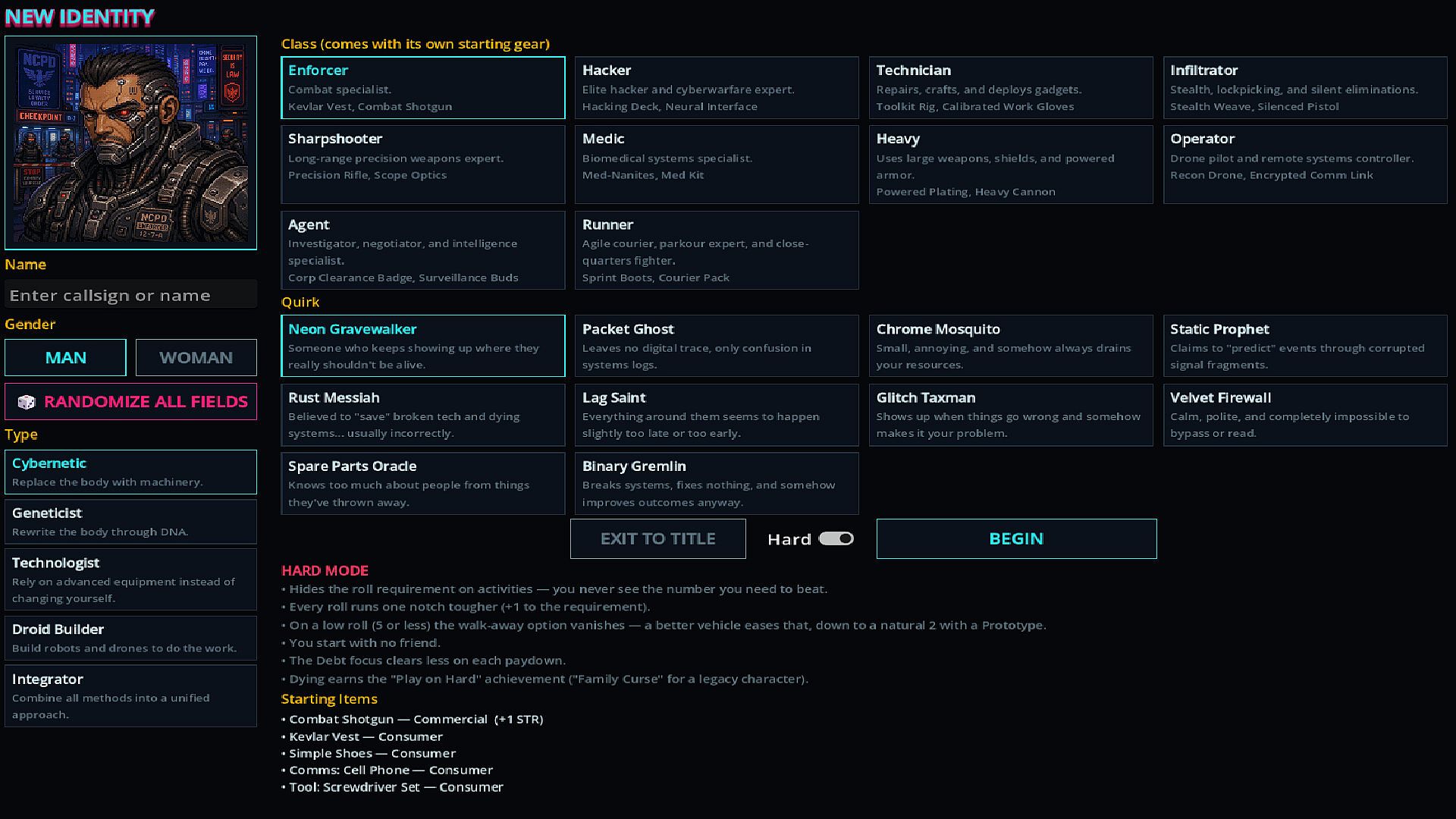
O ciclo principal gira em torno de três slots de foco: Primário, Secundário e Suporte. O jogador combina essas opções para direcionar o personagem rumo ao trabalho honesto, à quitação de dívidas ou à construção de contatos, ou para o roubo, arrombamento, mercado negro e caos. Cada combinação gera resultados que um único foco não alcançaria sozinho. Dez classes distribuídas em cinco tipos - entre elas Hacker, Infiltrator, Droid Builder e Geneticist - modificam a forma como o mundo reage ao personagem.
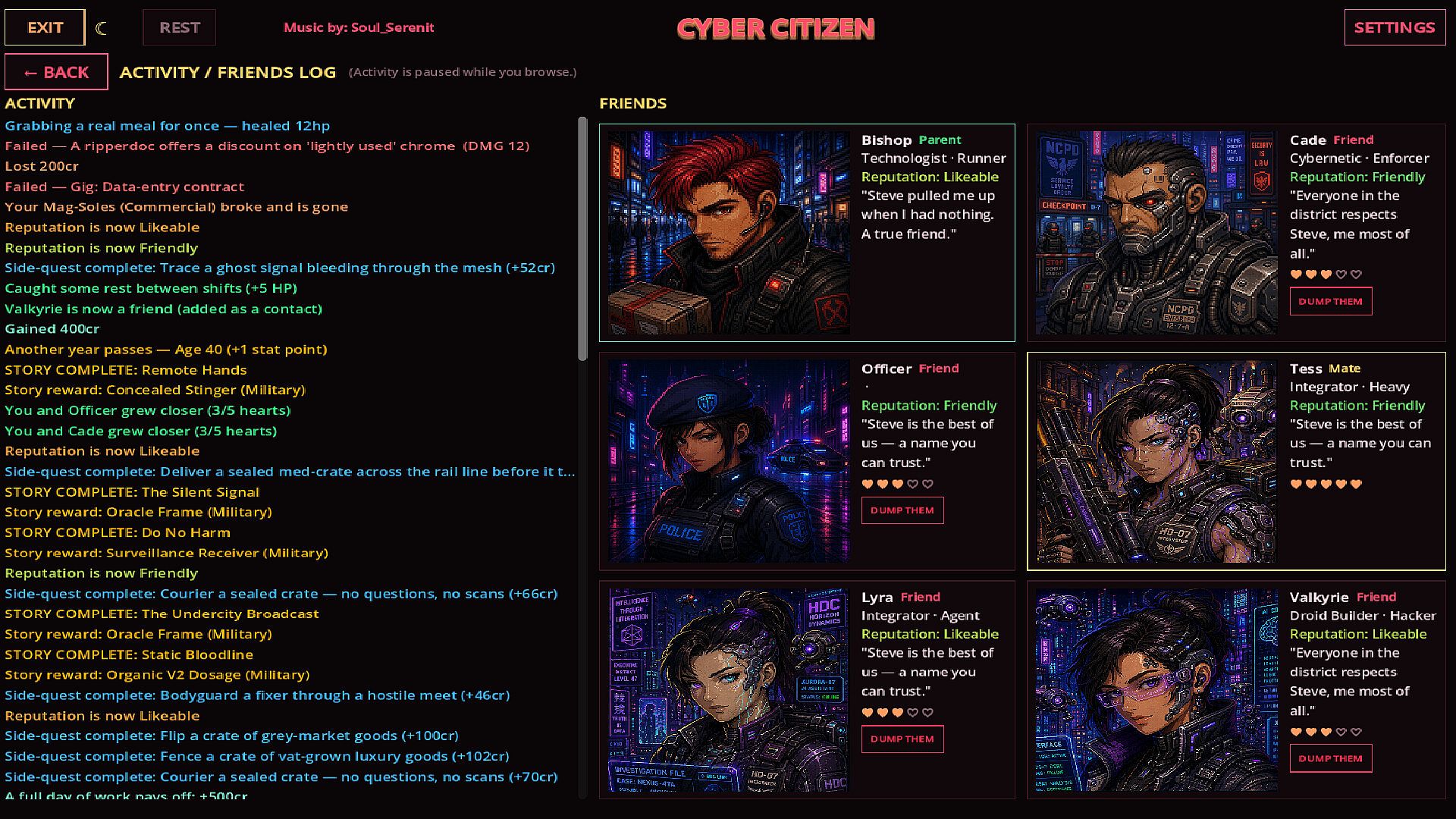
A progressão depende de rolagens de d20 com acertos e falhas críticas reais. As tarefas são resolvidas automaticamente com o tempo, mas podem ser aceleradas. O equipamento se desgasta, o personagem envelhece a cada atividade concluída e uma única rolagem ruim em situação crítica pode encerrar a partida. Reputação, amizades, relacionamentos e a possibilidade de deixar um herdeiro permitem que créditos e o sobrenome da família sejam transferidos para a próxima geração, desde que a linhagem continue.
O crime deixa marcas permanentes. Cada ação ilegal marca o personagem como criminoso e aumenta o risco de perseguição. Ser capturado pode resultar em fiança, sentenças ou tentativas de fuga que elevam as penalidades futuras. Assassinato concede o status vitalício de assassino e uma pena de vinte e cinco anos caso seja preso. Companheiros do slot de Suporte oferecem bônus profissionais, como redução de dano pela metade com um Medic ou menor chance de captura com um Infiltrator, embora levar um criminoso conhecido possa aumentar a sentença.
Game Modes
O jogo permite percorrer caminhos de carreira contrastantes, simultaneamente ou em sequência. As rotas legais priorizam trabalho estável e gerenciamento de dívidas, enquanto as rotas criminosas envolvem furtos, venda de mercadorias e mecânicas de perseguição. Histórias ocultas são desbloqueadas por combinações específicas de foco, como tentar roubar o Cofre Central de Crédito ou furtar uma nave de um hangar de um senhor da guerra.
O legado geracional adiciona outra camada. Um personagem que gera um herdeiro transfere créditos e reputação acumulados, permitindo que o jogo continue por várias vidas. Sem herdeiro, a partida termina de forma definitiva. Um editor integrado permite adicionar atividades, itens e personagens personalizados, enquanto o suporte a mods e músicas adicionais amplia as opções sem alterar os sistemas base baseados em dados.
Key Mechanics and Systems
Reputação e relacionamentos influenciam as oportunidades disponíveis e a qualidade dos companheiros. Companheiros droides podem ser comprados, roubados ou hackeados. Existem cinco níveis de equipamento, desde itens básicos de consumo até protótipos únicos. O ciclo de dia e noite afeta a cidade, com temas e trilhas sonoras desbloqueáveis que alteram a atmosfera. O sistema prisional inclui fiança, cumprimento de pena, fugas e perseguições contínuas que impactam partidas futuras.
Toda a progressão é single-player e projetada para funcionar sem intervenção constante. As atividades se resolvem de forma independente, mas as decisões do jogador em momentos-chave determinam os resultados a longo prazo. A combinação de resolução em idle e rolagens ocasionais de alto risco mantém a cidade em movimento mesmo durante longas ausências.
Is It Worth Playing?
Cyber Citizen agrada jogadores que gostam de simulações de vida com elementos leves de RPG e aleatoriedade baseada em dados. A estrutura em idle permite avanço constante sem necessidade de atenção permanente, enquanto as combinações de foco e as escolhas de classe criam caminhos ramificados significativos. Quem valoriza progressão geracional e consequências permanentes decorrentes de crimes ou rolagens ruins encontrará os sistemas recompensadores.
O editor integrado e o suporte a mods aumentam a rejogabilidade para quem deseja personalizar a experiência. Como o jogo depende de direções definidas pelo jogador em vez de controle momento a momento, ele atrai principalmente fãs de grinding no estilo Progress Quest combinado com árvores de decisão semelhantes às de BitLife. Quem busca ação direta ou combate em tempo real deve procurar outro título, pois o foco está no planejamento de longo prazo e na aceitação dos resultados dos dados, em vez de habilidade manual.
