




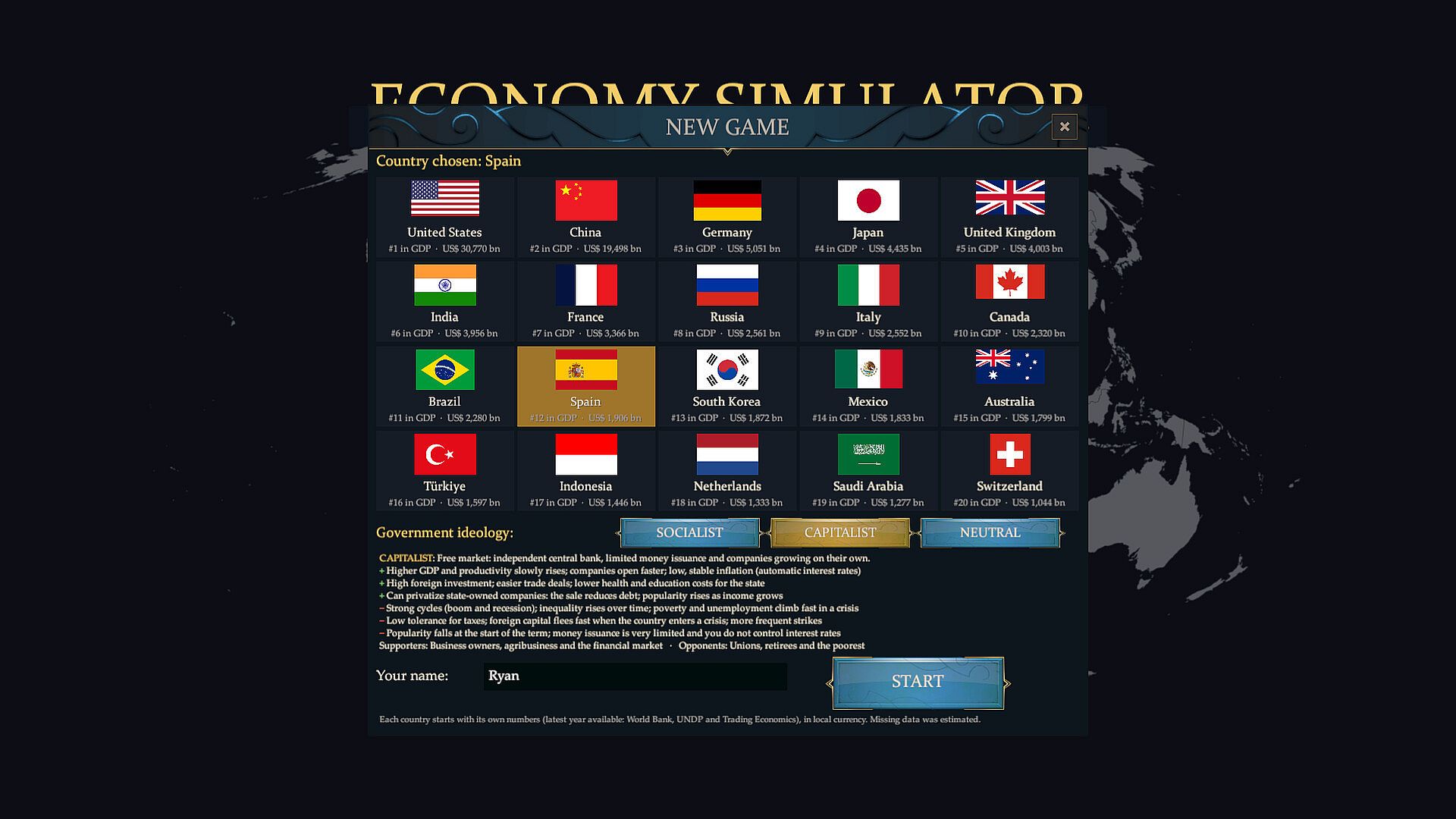
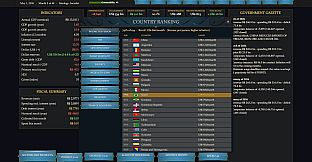
Country Economy Simulator is a strategy and simulation game for PC that places players in charge of one of the world's twenty largest economies. As president, the task involves shaping national policy through a series of interconnected economic and political decisions that determine long-term outcomes for growth, stability, and public support.
Gameplay
The core loop centers on managing fiscal and monetary levers while balancing competing priorities. Players begin by selecting an ideology that influences starting conditions and available options. Socialist, Capitalist, or Neutral paths each carry distinct advantages and limitations that affect how policies perform over time.
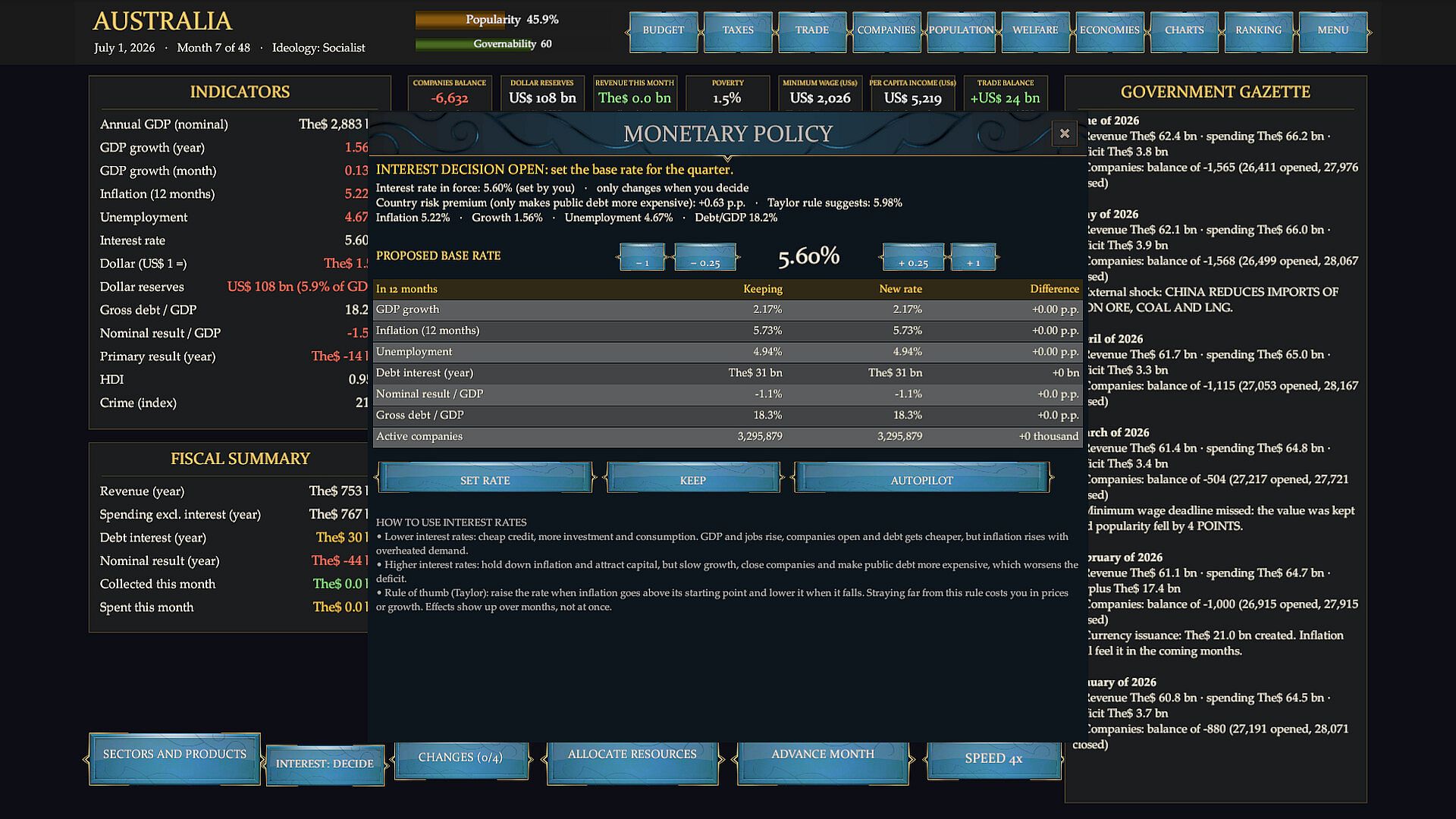
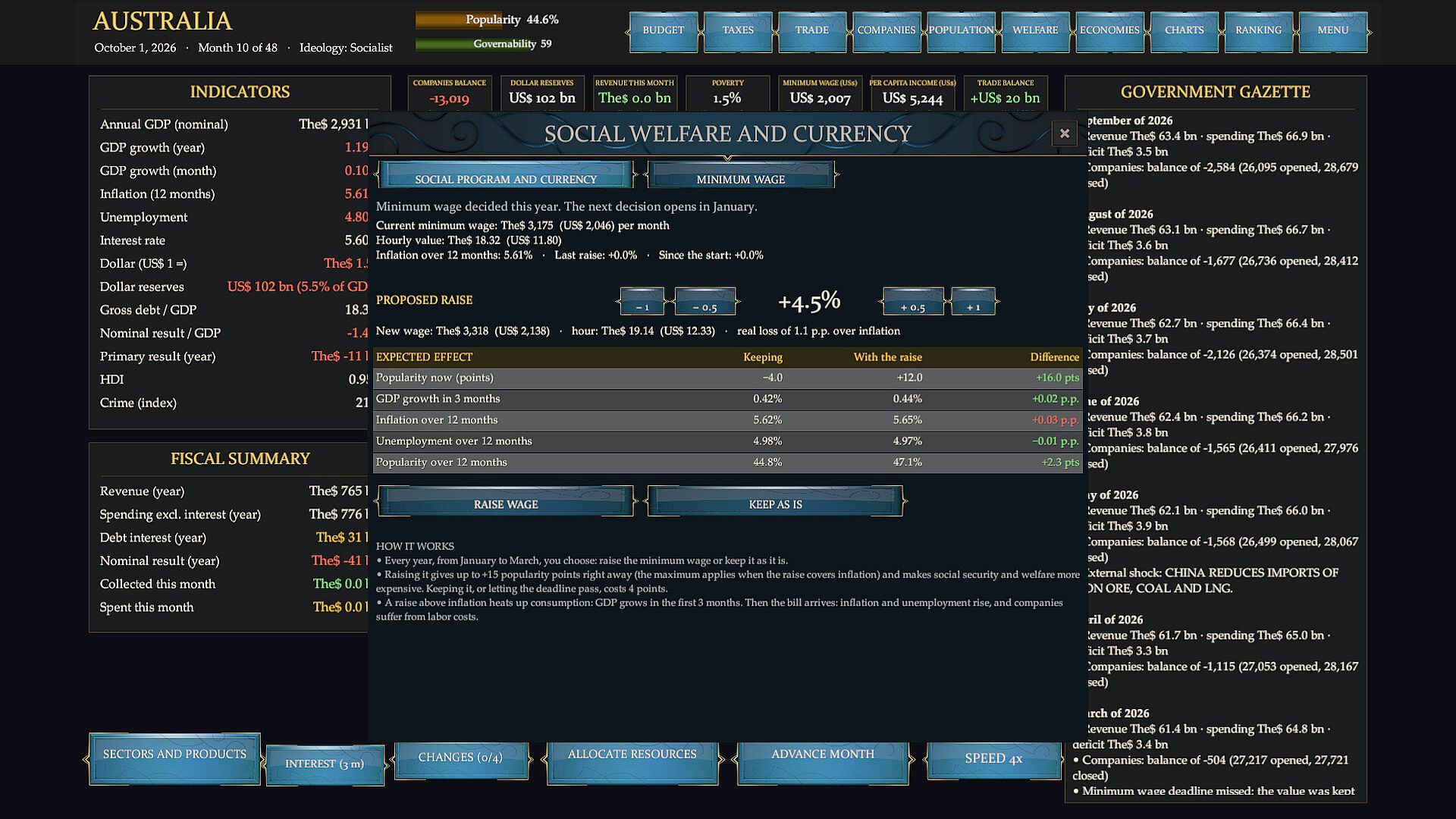
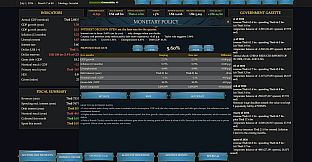
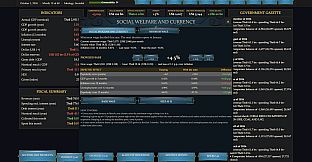
Tax rates can be adjusted across brackets, with revenue allocated to categories such as health, education, and infrastructure. Minimum wage levels and social benefit programs are tuned to influence employment and living standards. Interest rates are set to control inflation, while debt levels and foreign currency reserves require ongoing attention to prevent crises.
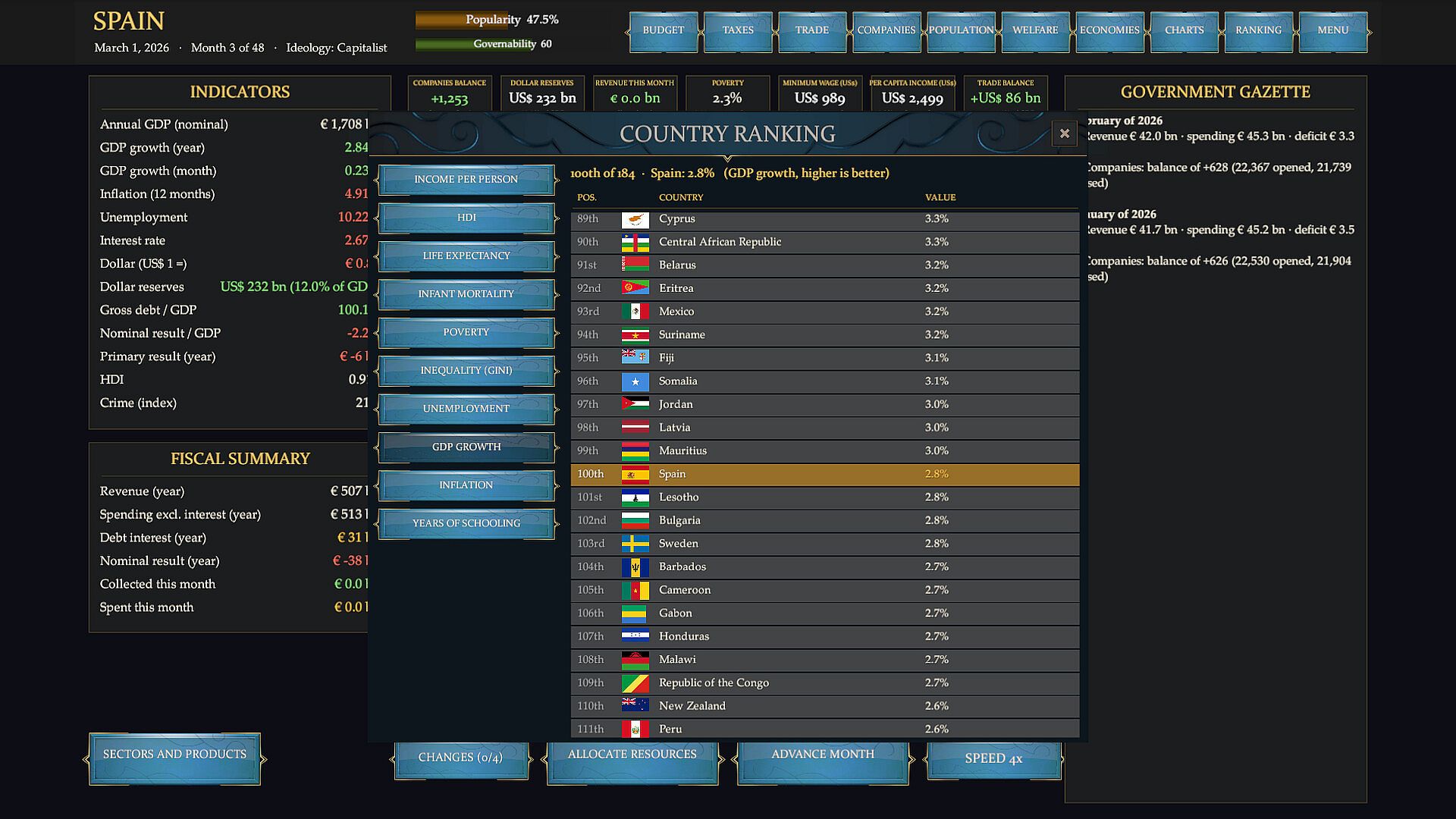
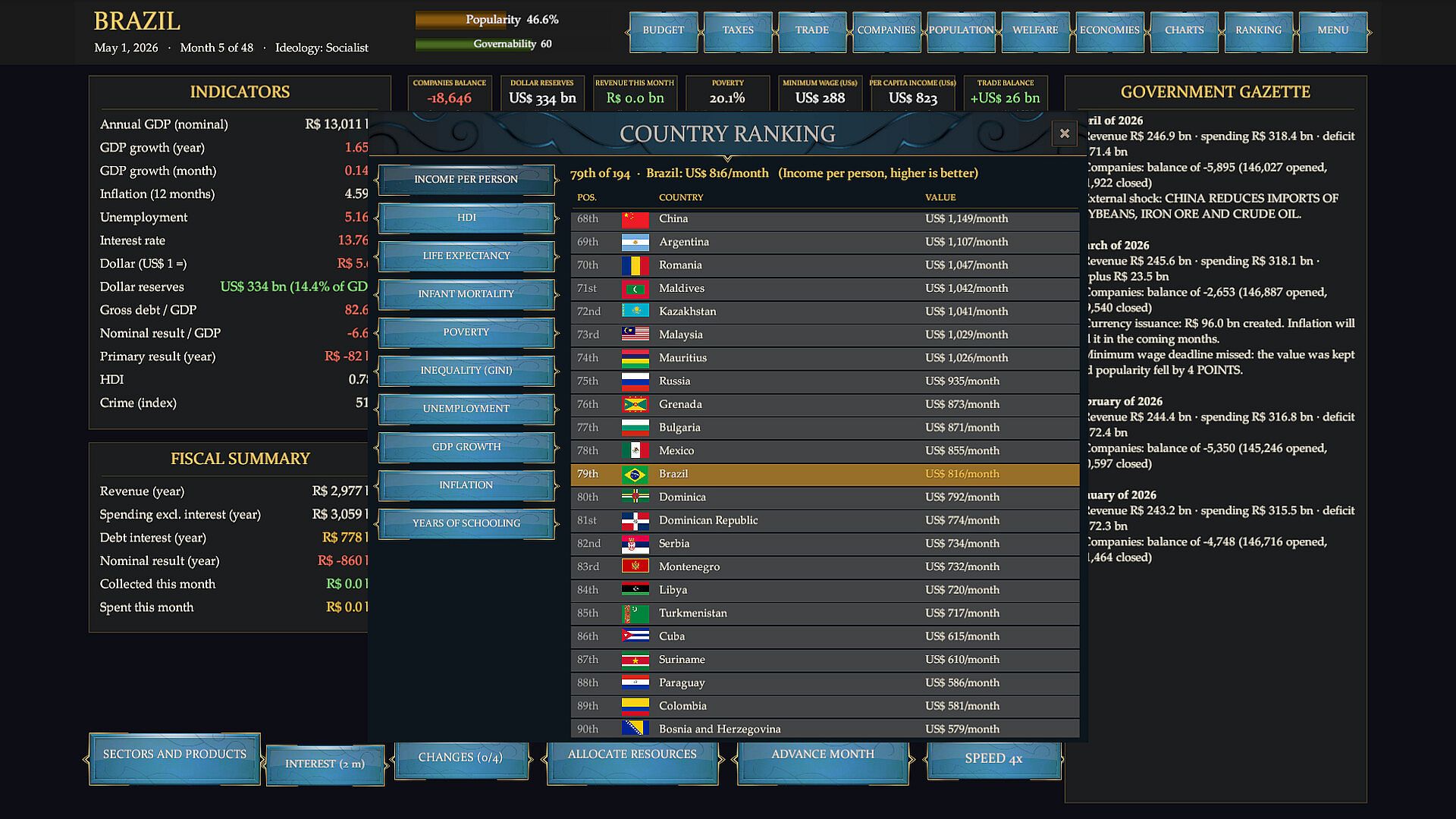
International trade forms another layer, with decisions on exports, imports, and tariffs shaping relations with partner nations and affecting domestic industries. Investment decisions allow funding for specific sectors, the creation of state-owned enterprises, or incentives to draw private businesses that create jobs and generate income. Popularity serves as the key metric for electoral success, rising or falling based on the visible results of these choices.
Every adjustment carries trade-offs. Raising taxes to expand public services may boost support in some groups while slowing business activity, and lowering rates to encourage growth can increase debt or inflation. The simulation tracks these ripple effects across the economy, requiring players to monitor multiple indicators simultaneously.
Game Modes
The experience unfolds as a continuous single-player simulation without separate named modes. Players guide the economy through successive terms, responding to emerging conditions and preparing for the next election cycle. The same underlying systems support repeated playthroughs by allowing different ideological starting points and policy combinations that produce varied results.
Progression depends on maintaining enough popularity to remain in office while steering the country toward the economic vision the player prefers. Short-term gains must be weighed against longer-term sustainability, as unchecked debt or inflation can erode support and lead to electoral defeat.
Key Mechanics and Systems
Budget allocation stands at the center of domestic policy. Funds directed toward infrastructure can improve productivity, while spending on education and health affects workforce quality and social stability. Minimum wage and benefit settings directly influence consumer spending power and labor market dynamics.
Monetary policy tools allow fine-tuning of interest rates to manage inflation and encourage or restrain borrowing. Dollar reserves provide a buffer against external shocks, and debt management prevents interest payments from crowding out other priorities. Trade policy decisions determine which goods flow in and out of the country and at what cost, creating opportunities or vulnerabilities depending on global conditions.
Sector investment and business creation add a development dimension. State-owned companies can be established in strategic areas, while policies that attract private investment help diversify the economy and expand employment. These choices interact with the broader fiscal and monetary framework, producing outcomes that reflect the cumulative effect of all decisions.
Who the Game Appeals To
Country Economy Simulator suits players interested in strategy and simulation genres who enjoy experimenting with policy combinations and observing their consequences. The emphasis on trade-offs and popularity tracking rewards careful planning and adaptation rather than quick wins. Those who prefer open-ended management experiences with clear cause-and-effect feedback will find the systems engaging.
The game runs on PC and focuses entirely on single-player economic and political management. No multiplayer elements are present, keeping the focus on individual decision-making and long-term national development.
Is It Worth Playing?
The simulation delivers a detailed policy sandbox built around real economic concepts such as taxation, budgeting, interest rates, trade, and electoral accountability. Players who value depth in these areas can spend many hours testing different approaches and refining strategies across multiple terms.
Reception depends on tolerance for spreadsheet-style management and the absence of action or visual spectacle. Those drawn to thoughtful strategy and simulation titles that emphasize consequences over spectacle are likely to appreciate the experience. The game remains available on PC for anyone seeking this specific style of economic decision-making.