




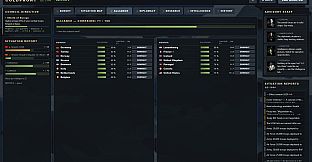
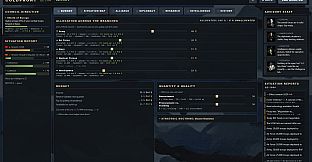
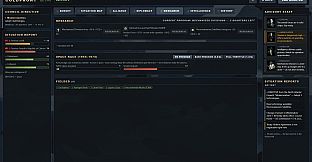
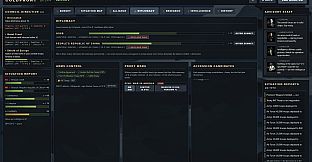
Coldfront The Escalation Corridor is a turn-based grand strategy simulation game in which players assume the role of NATO High Command. Set against the backdrop of the Cold War and its aftermath, the title challenges users to maintain alliance stability through careful management of military spending, diplomatic relations, and intelligence operations without triggering outright conflict with rival powers.
Gameplay
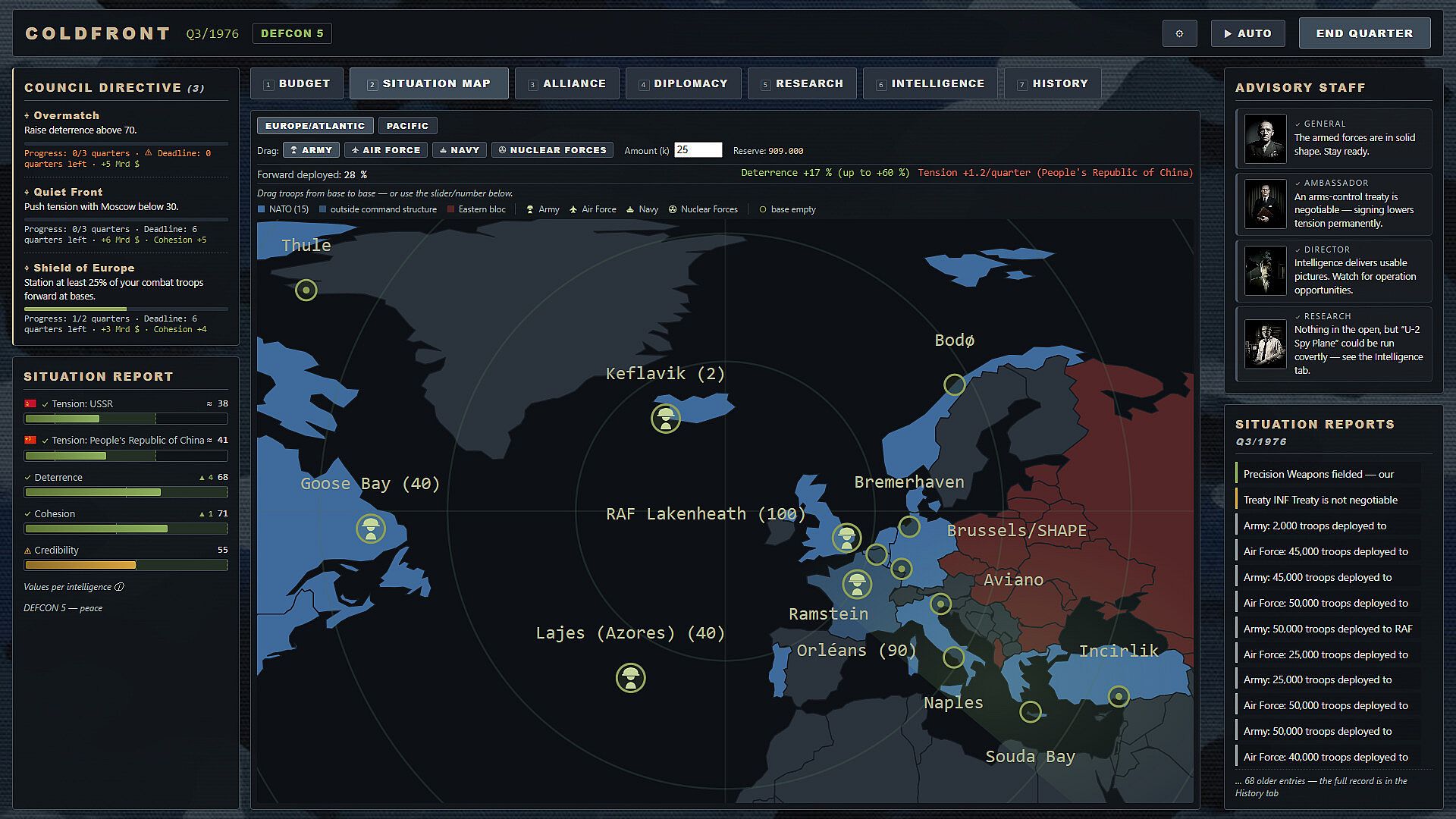
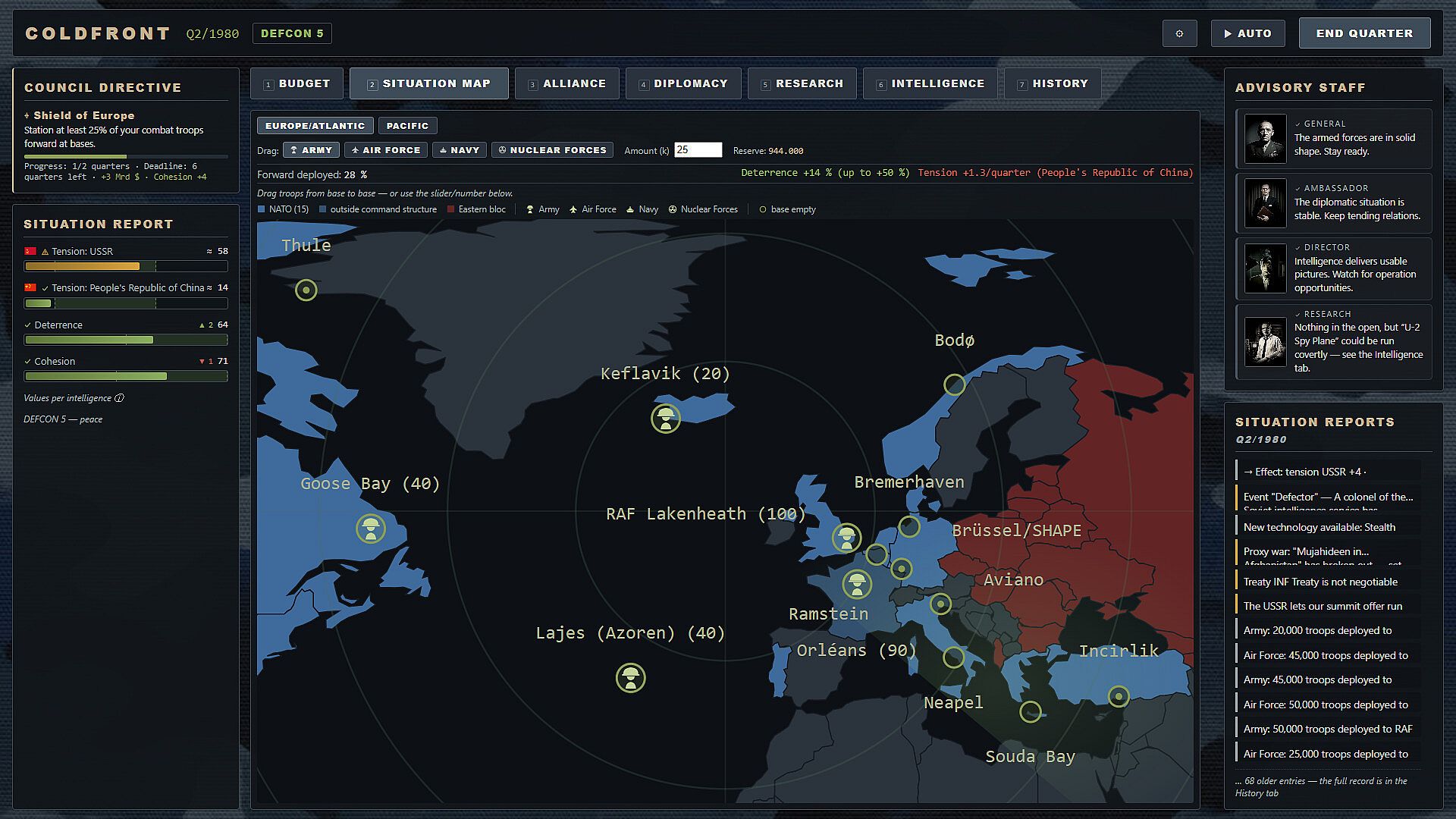
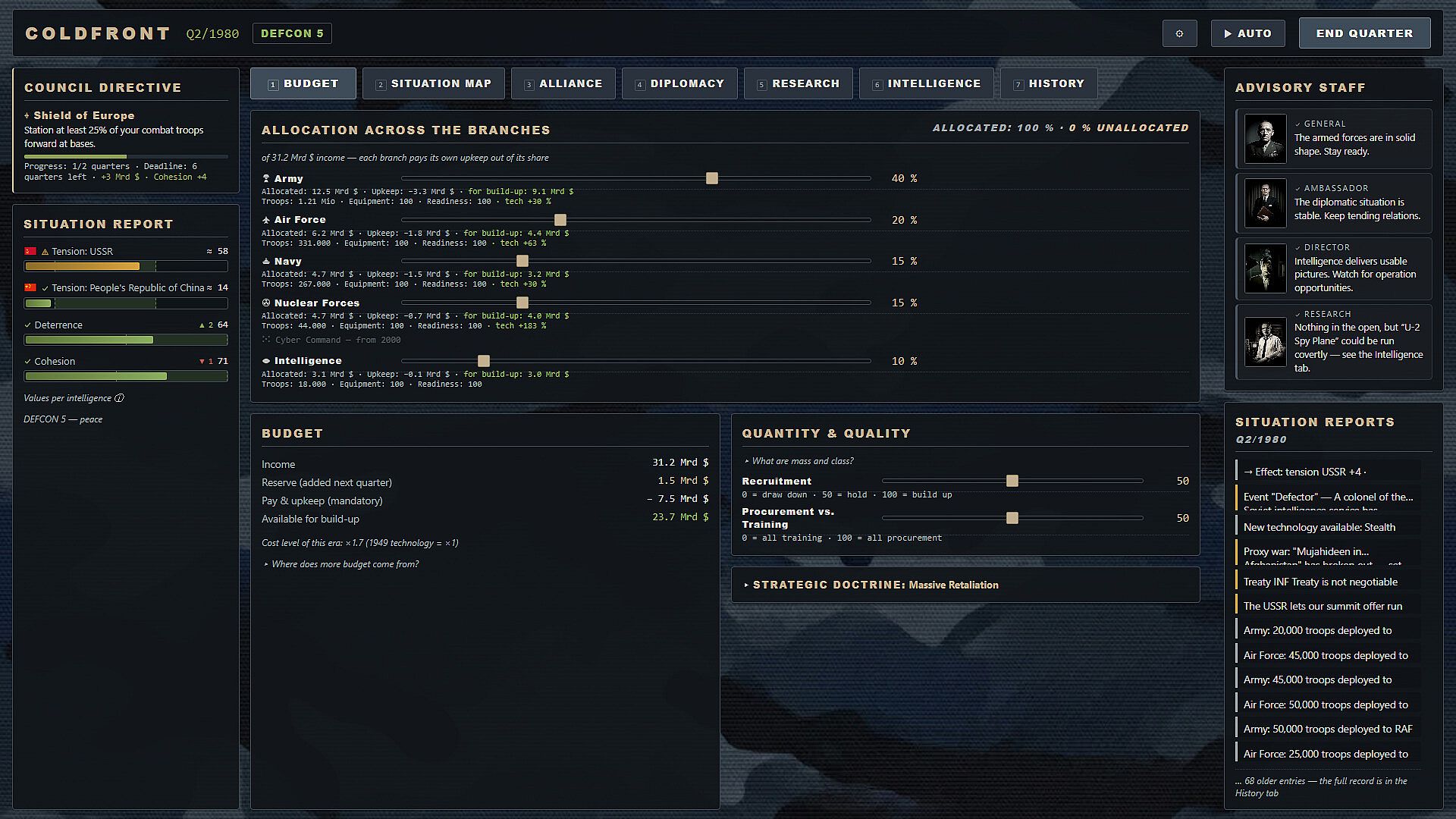
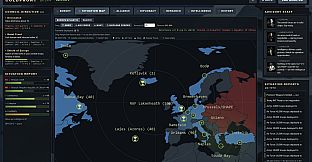
Core gameplay revolves around quarterly decisions that affect two primary tension barometers tracking the perceived threat levels of the USSR and later China. Over-spending on defense risks escalation toward war, while under-investment invites opportunistic strikes. Players allocate budgets across five military branches, with cyber capabilities unlocking in 2000, balancing massed forces against elite units on a world map that includes historic bases such as Ramstein and Guam. Forward deployments bolster deterrence but heighten rival suspicions.
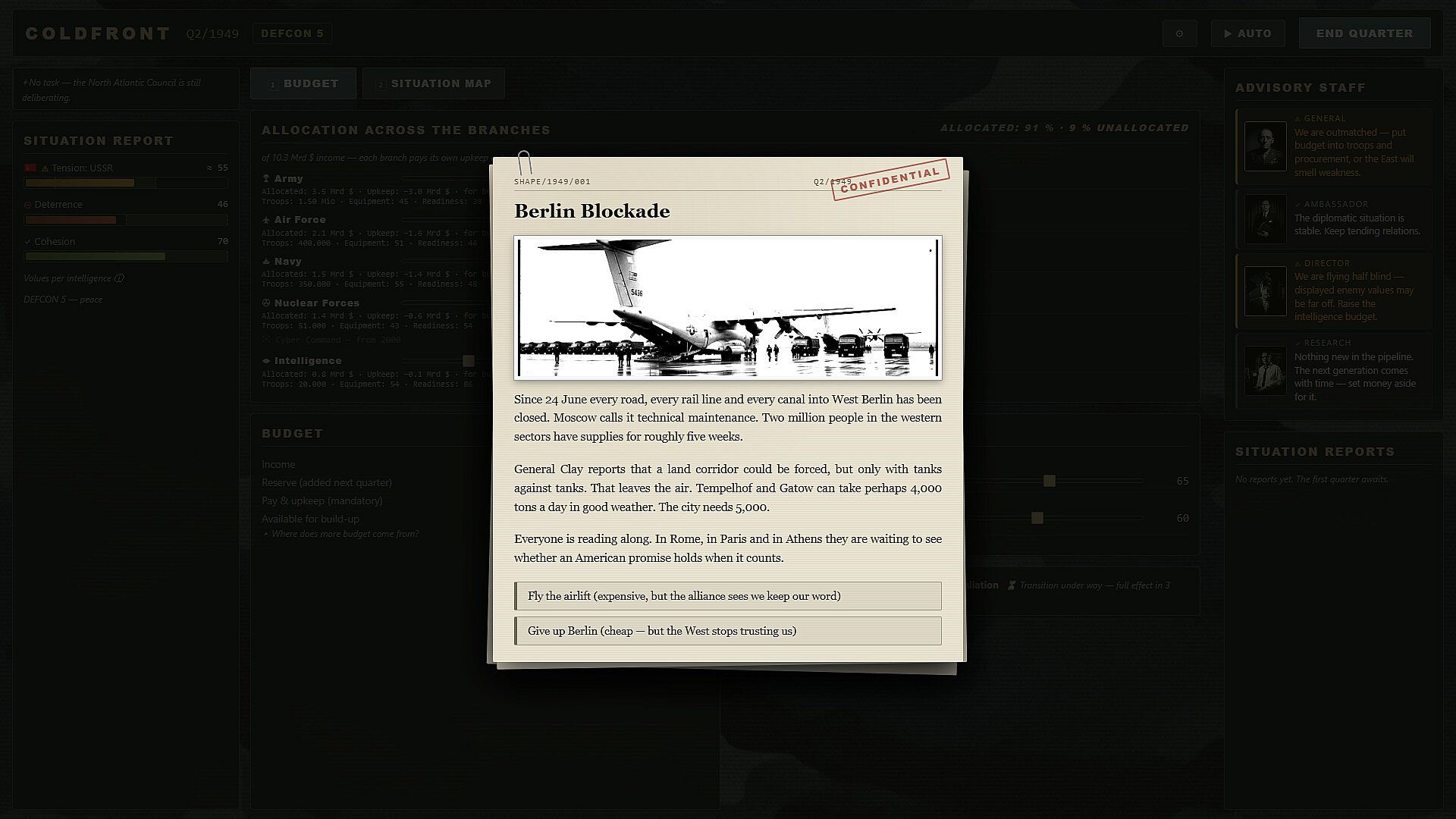
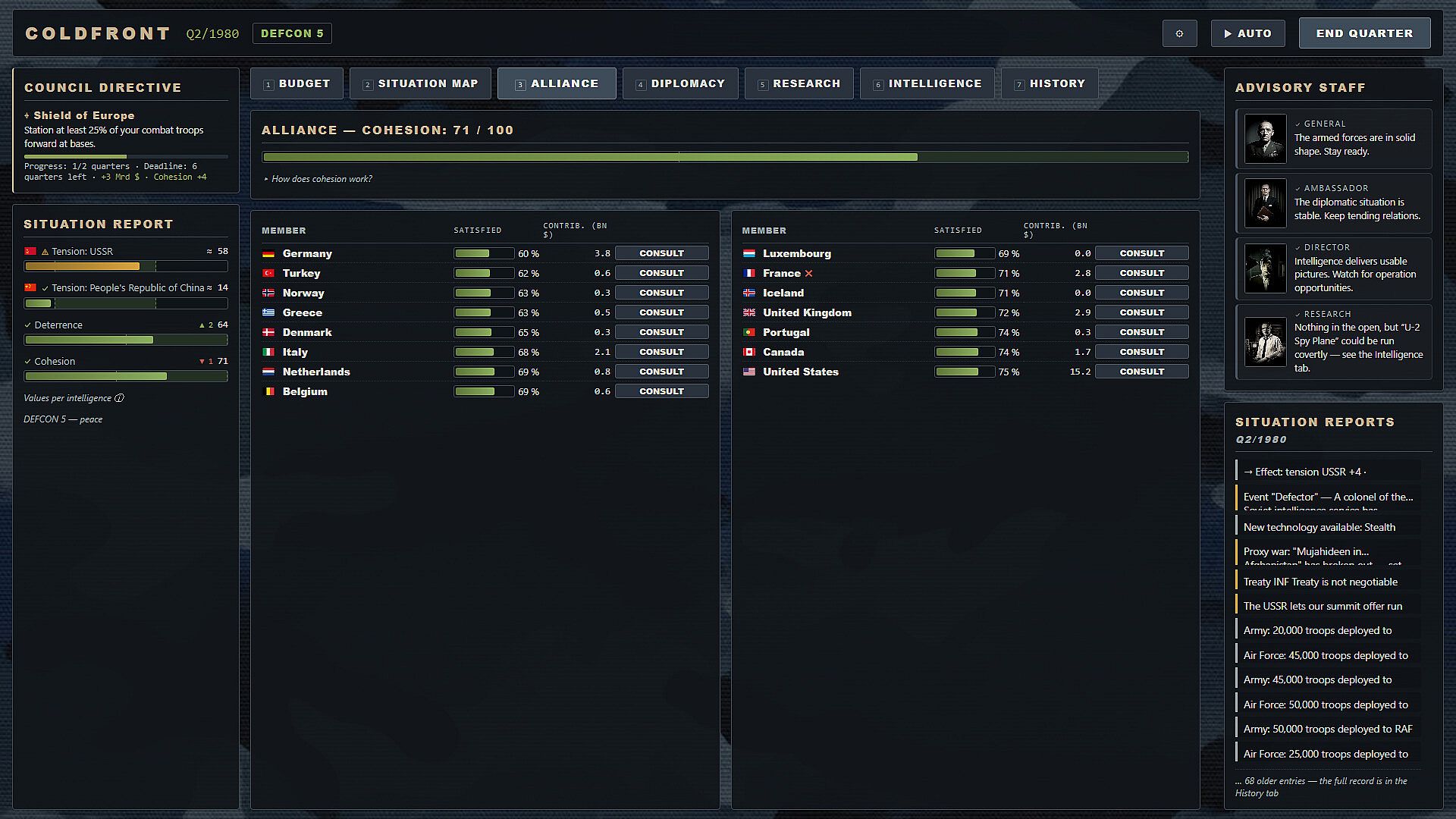
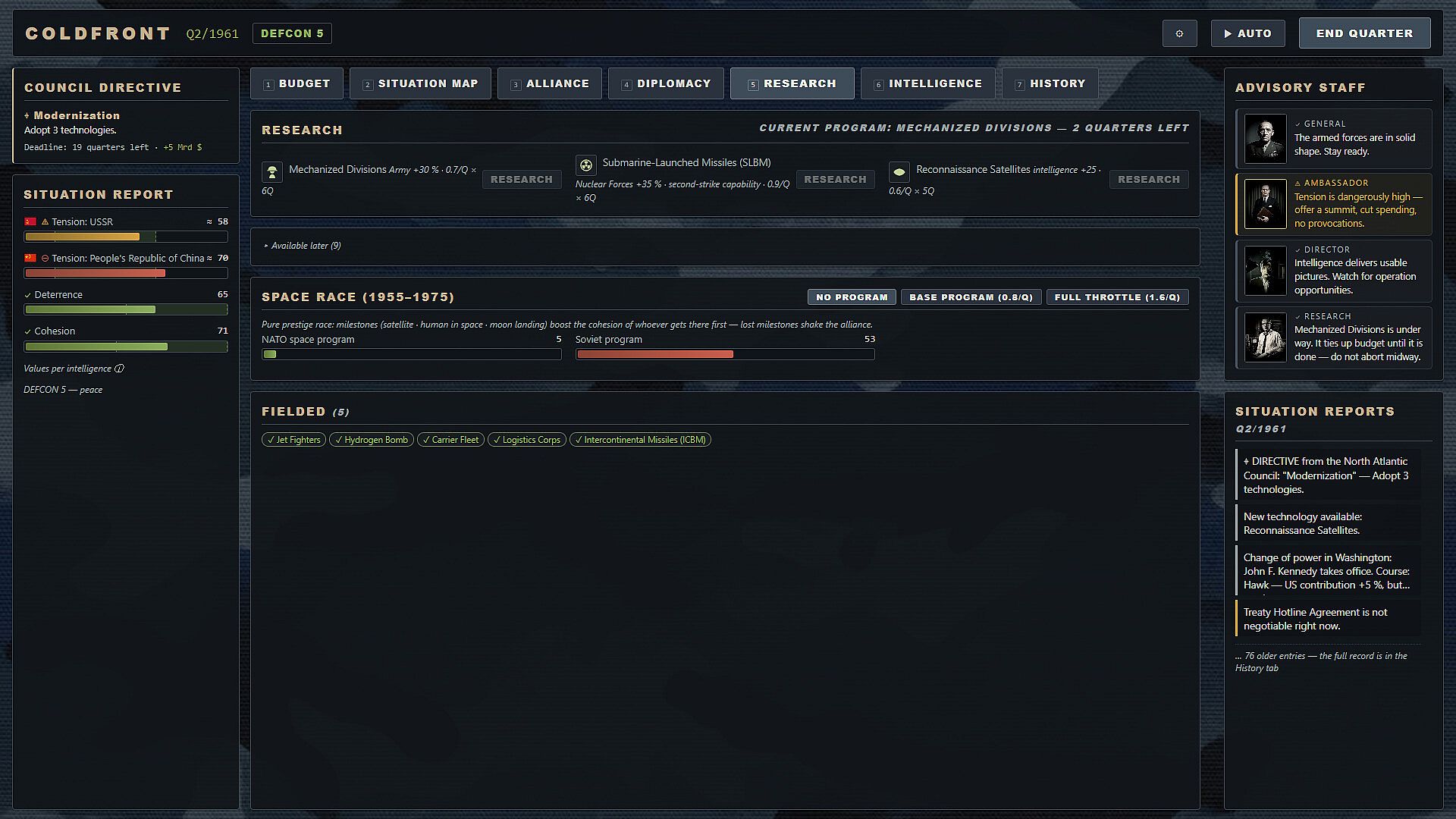
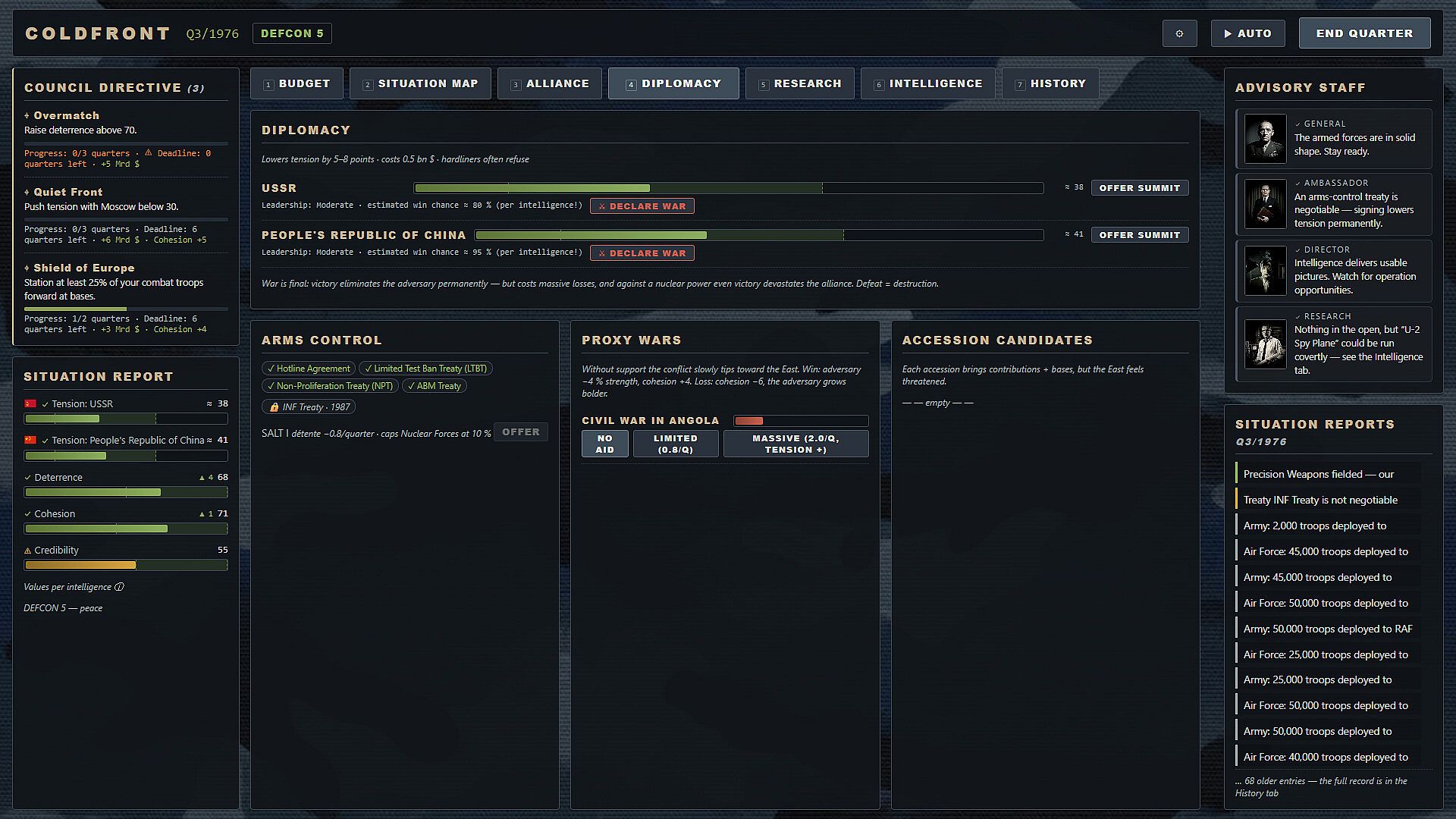
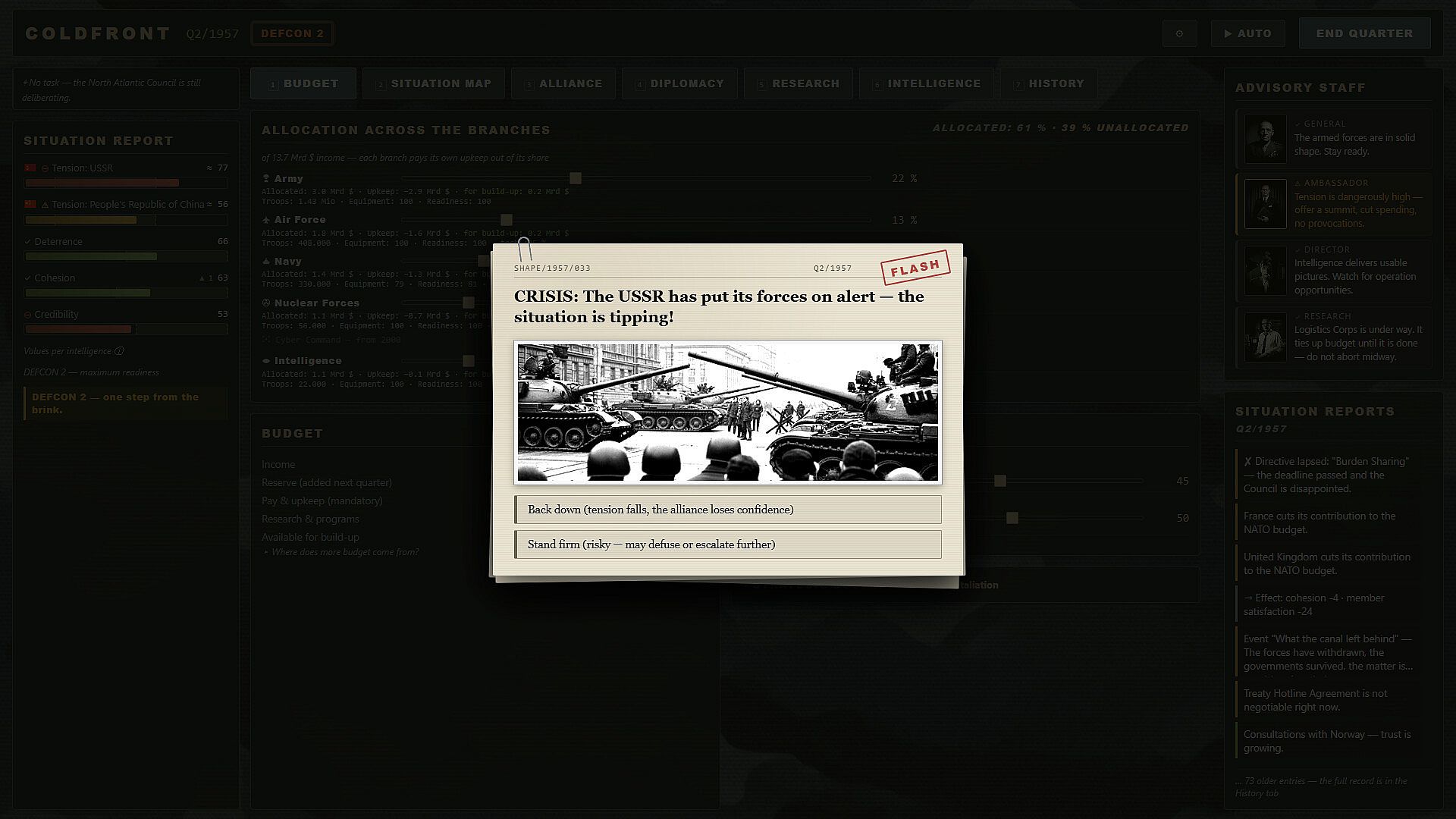
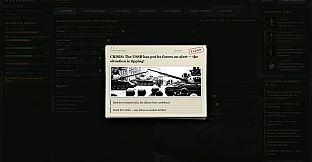
Diplomacy forms a central pillar through summits and six arms-control treaties, alongside NATO enlargement decisions that each carry fresh risks of provocation. Intelligence operations require adequate spy funding to ensure accurate enemy assessments, while covert actions carry the danger of exposure. Proxy conflicts, the space race, and interactions with successive US presidents introduce historical pressures that shape long-term strategy. Sixty specific events, ranging from the Berlin Blockade to the Cuban Missile Crisis and later developments such as Crimea, appear as newspaper crises that demand immediate responses.
Departments unlock progressively to avoid overwhelming interfaces, and rotating directives from the North Atlantic Council provide timed objectives with associated rewards. The presentation emphasizes a war-room atmosphere complete with camouflage elements, a situation map, and front-page headlines from the Atlantic Courier.
Game Modes
The game features two distinct historical acts covering 1949 through 1991, allowing players to guide NATO through the collapse of the USSR. An endless mode extends play beyond that point, with Russia inheriting the former Soviet arsenal and China emerging as a new superpower amid evolving technologies such as drones and advanced cyber capabilities. Three difficulty levels adjust the overall challenge, and eight achievements track specific accomplishments across sessions. Full language support includes English, German, French, and Spanish.
Strategic Systems and Historical Integration
Every major system interconnects tightly. Budget choices influence force composition and deployment options on the map, while diplomacy and intelligence feed into decisions about when and how to engage in sabotage or open conflict. Victory over a rival removes it permanently, yet nuclear-era consequences can still damage the alliance even in success. Historical events do not merely flavor the background; each one alters available options and long-term trajectories in ways that reward careful planning over multiple quarters.
Players station and reposition troops at real-world locations, weighing the deterrence benefits of forward presence against the escalation risks it creates. Mass-versus-quality trade-offs appear throughout force management, and poor intelligence can render visible enemy data unreliable until budgets improve.
Is It Worth Playing?
This title suits players who enjoy deliberate, systems-driven grand strategy with a strong emphasis on historical constraints and risk management. The combination of tension tracking, layered diplomacy, and progressive department unlocks creates a focused experience that rewards repeated playthroughs across the two acts and endless mode. Those seeking fast-paced action or open-ended sandbox freedom may find the quarterly structure and specific mission directives too restrictive. The game runs on PC and supports the listed languages with no additional modes or features confirmed beyond the core campaign structure and difficulty options.