




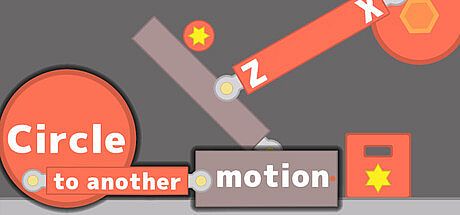


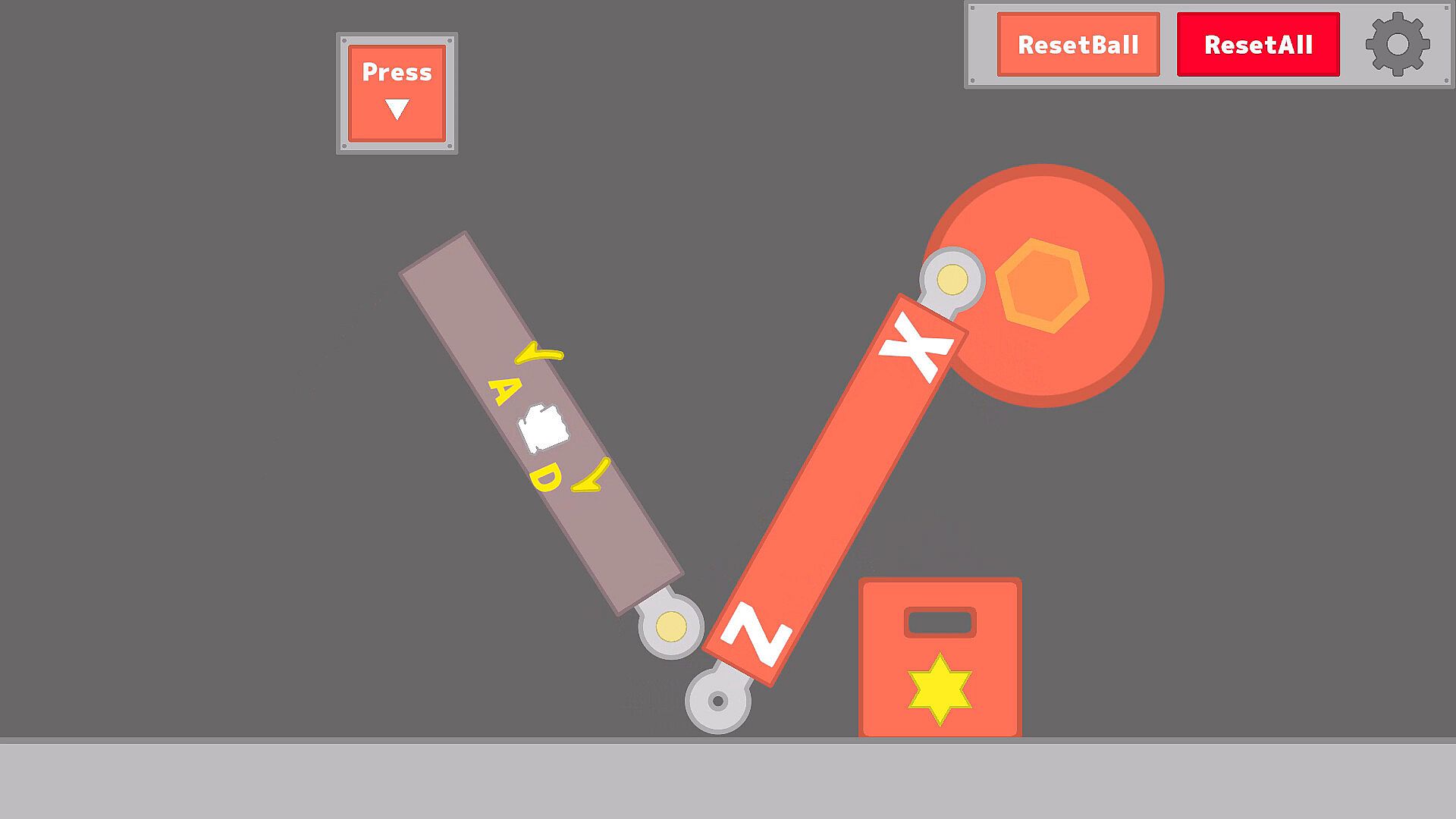
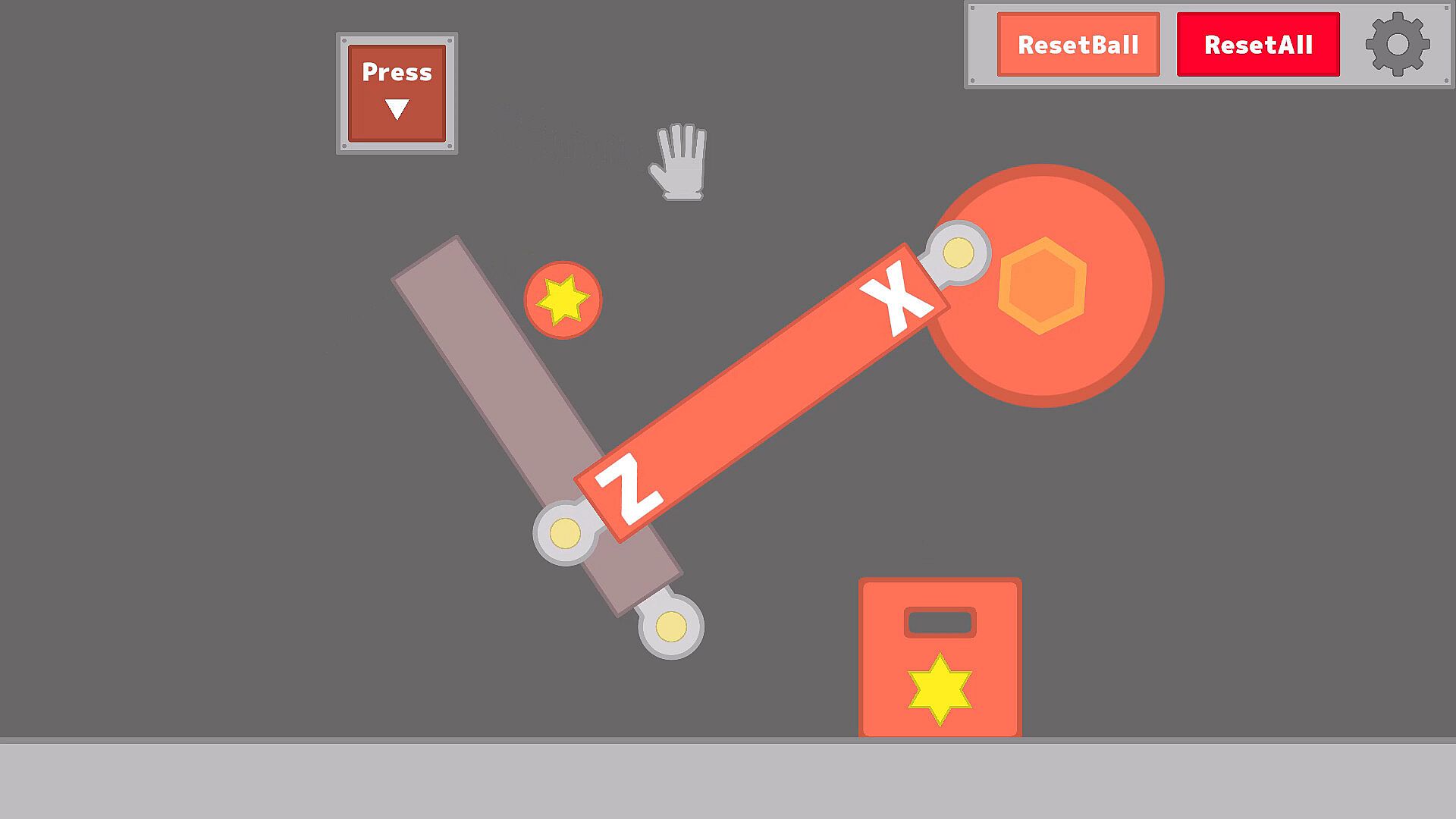
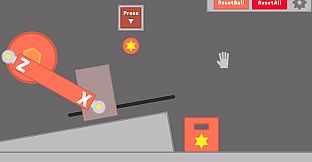
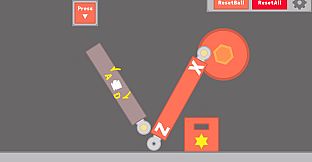
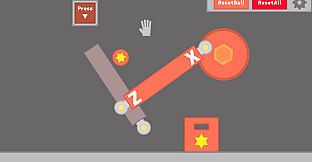
Circle to another motion is an indie puzzle game for PC that centers on precise control of motion through mechanical connections. Players manipulate objects in a workspace to direct a spawned target toward a designated box, relying on links that convert the rotation of a disc into linear or other forms of movement. The core challenge lies in positioning these connections effectively before the target appears, after which direct interaction with objects ends.
Gameplay
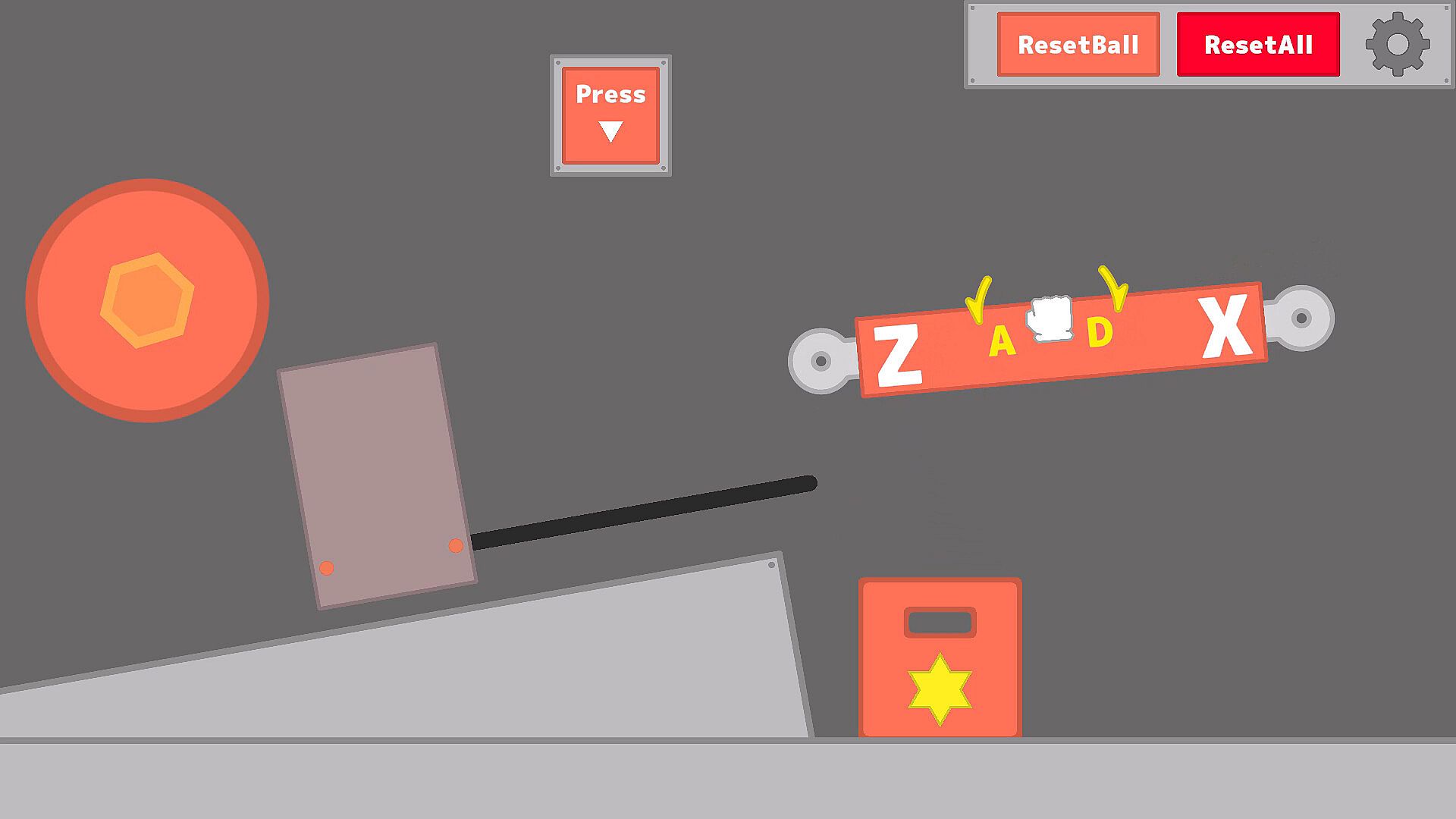
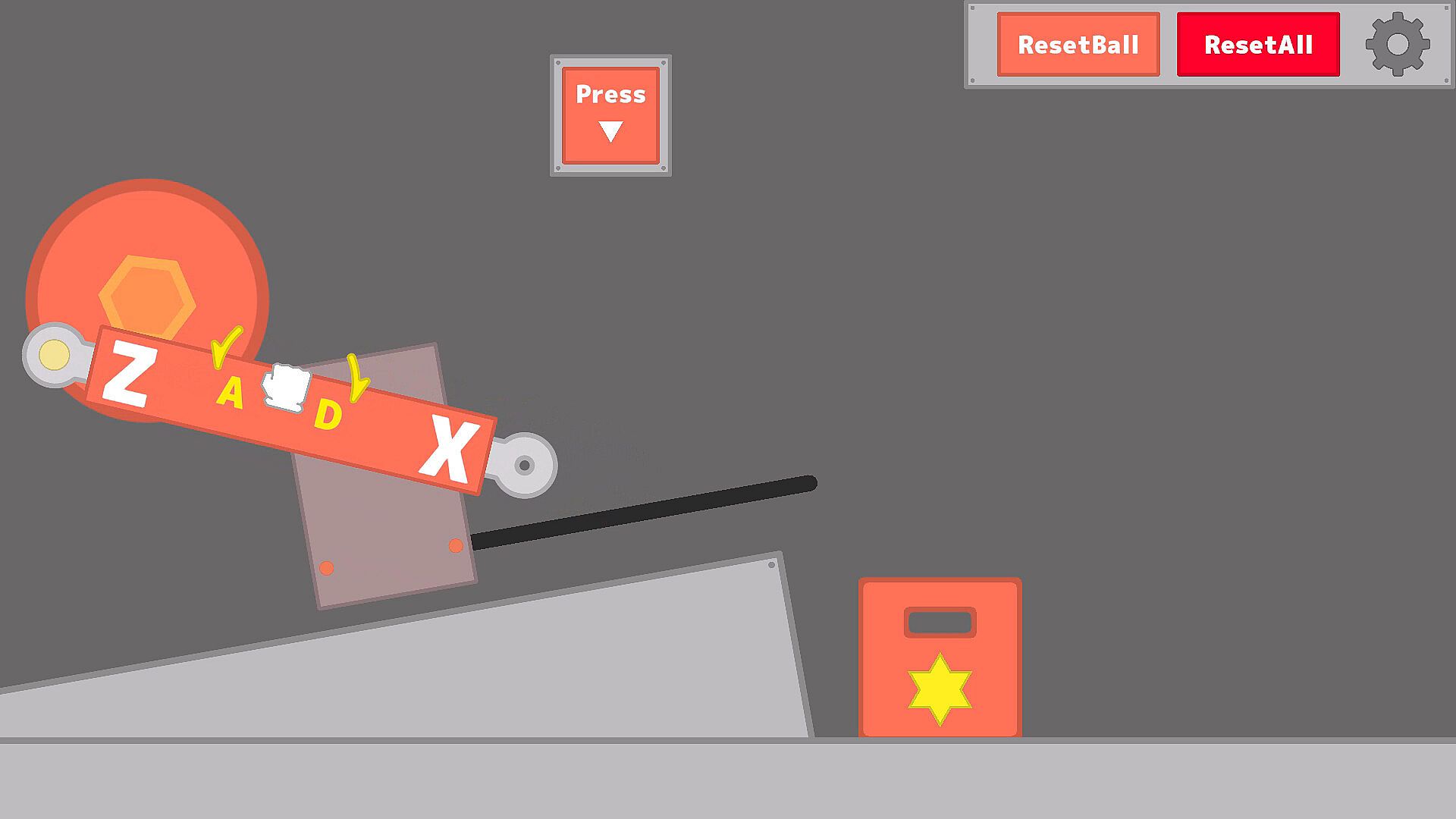
The central loop involves arranging draggable components on the play area to create functional pathways. A rotating disc serves as the power source, and players attach links to transfer its energy to other elements. This setup allows the target to follow a controlled path once released. Multiple connection configurations can achieve the same result, encouraging experimentation with placement and timing rather than a single fixed solution. The mechanic emphasizes foresight, as adjustments stop once the target spawns, forcing players to anticipate the full sequence of motion transfer.
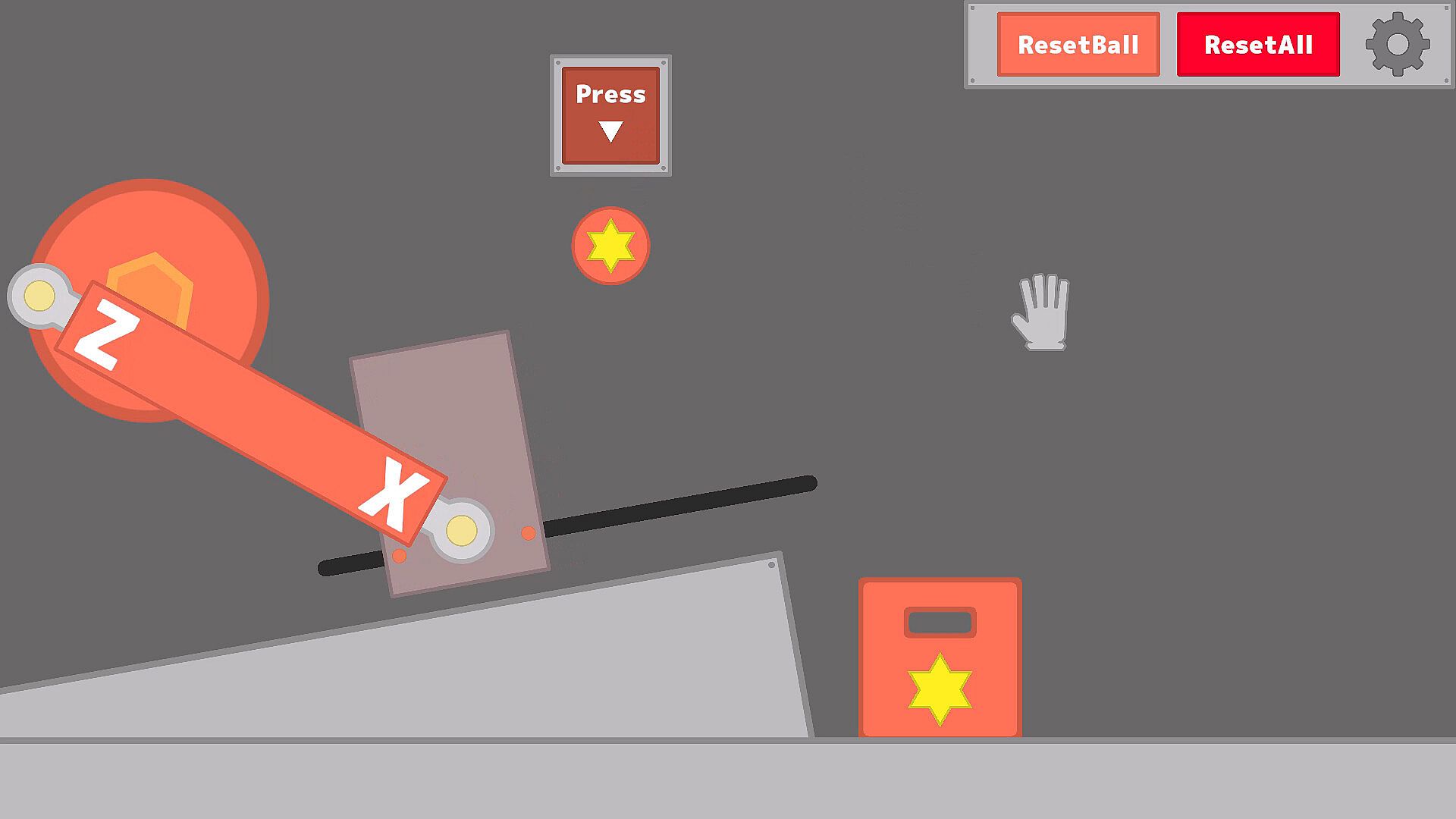
Objects remain static after the spawn button activates, shifting focus entirely to the chain of linked movements. This restriction creates tension between initial setup freedom and the irreversible commitment to a chosen arrangement. The process rewards careful observation of how rotation propagates through each link and object, turning abstract physics concepts into tangible problem-solving steps.
Game Modes
The experience consists entirely of sequential puzzle challenges without separate named modes or variations such as timed trials or competitive elements. Each puzzle builds on the same foundational rules of motion transfer and target guidance, varying primarily through the complexity of object layouts and required connection paths. Progression comes from solving successive arrangements rather than switching between distinct gameplay styles or rule sets.
Core Mechanics and Design
Dragging serves as the primary interaction for positioning objects and links before activation. The rotating disc provides consistent input energy, while links act as intermediaries that redirect that energy according to their placement. This system supports creative solutions because the same target destination can result from different link configurations. The design avoids prescriptive instructions, instead presenting the environment and letting players derive functional setups through trial and observation.
Single-player focus keeps attention on individual logical deduction without external variables like opponents or shared resources. The indie scale allows the mechanics to remain streamlined, highlighting the interplay between circular input and resulting directional output across varied puzzle configurations.
Is It Worth Playing?
Circle to another motion suits players who enjoy methodical puzzle solving built around mechanical cause and effect. Its upcoming release in 2026 means it currently lacks player reviews or completed feedback, leaving reception unknown until launch. The single-player structure and emphasis on deriving workable solutions from open-ended connections appeal to those who prefer logic-based challenges over action or narrative-driven experiences. Availability will be limited to PC at launch, with no confirmed additional features or post-release support details at this stage. Those drawn to precise setup and motion-based reasoning may find the core loop engaging once the game becomes playable.