






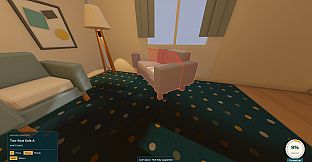
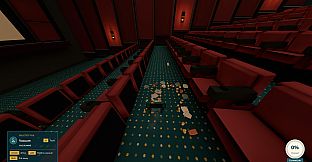

Carpet Daddy is a first-person simulation game that puts players in the role of a professional carpet cleaner tackling filthy jobs across a variety of spaces. Developed as an indie title in the casual and simulation genres for PC, it focuses on the methodical process of restoring dirty carpets through careful tool use and attention to detail rather than any overarching narrative or competitive elements.
Gameplay
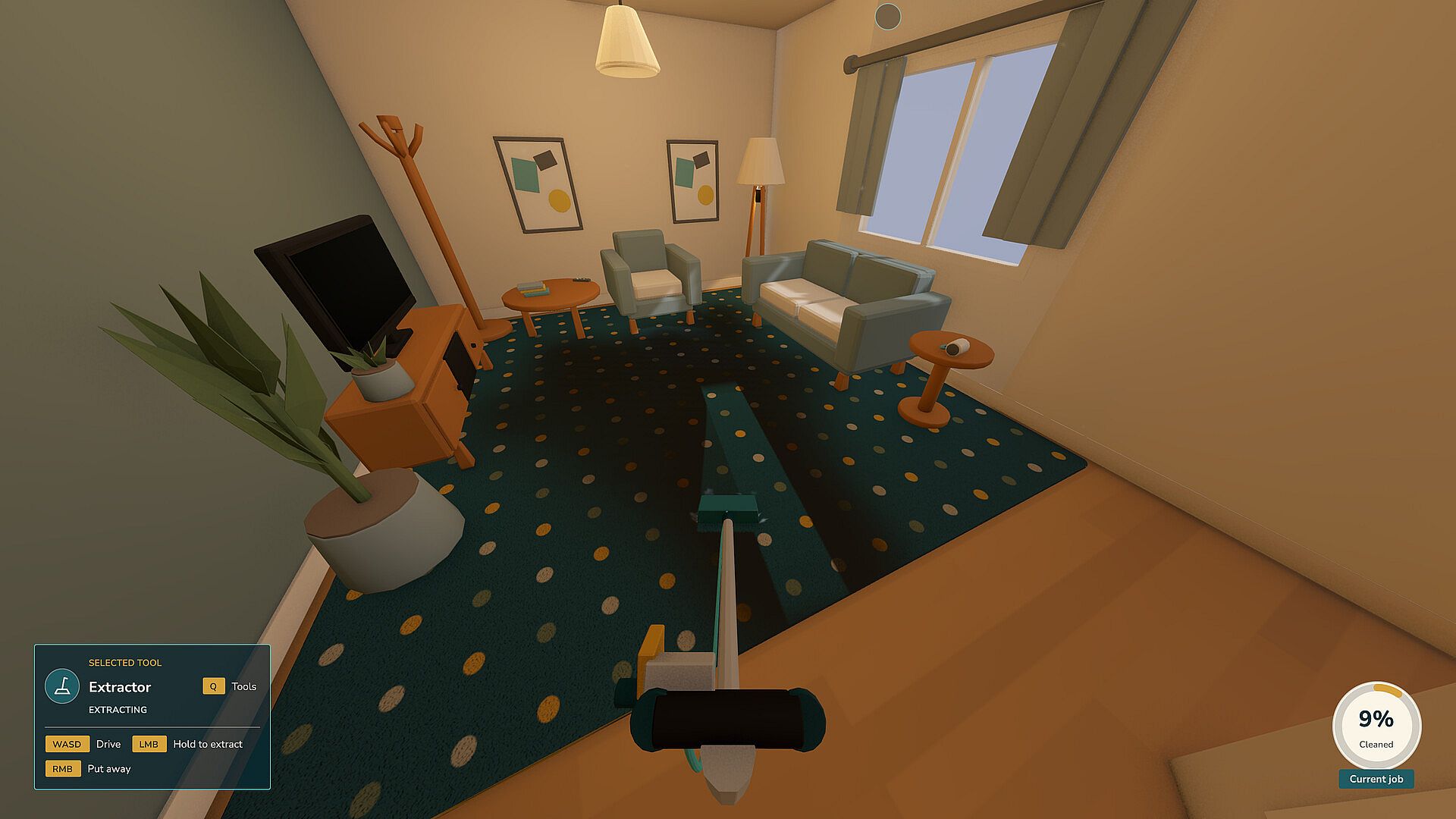
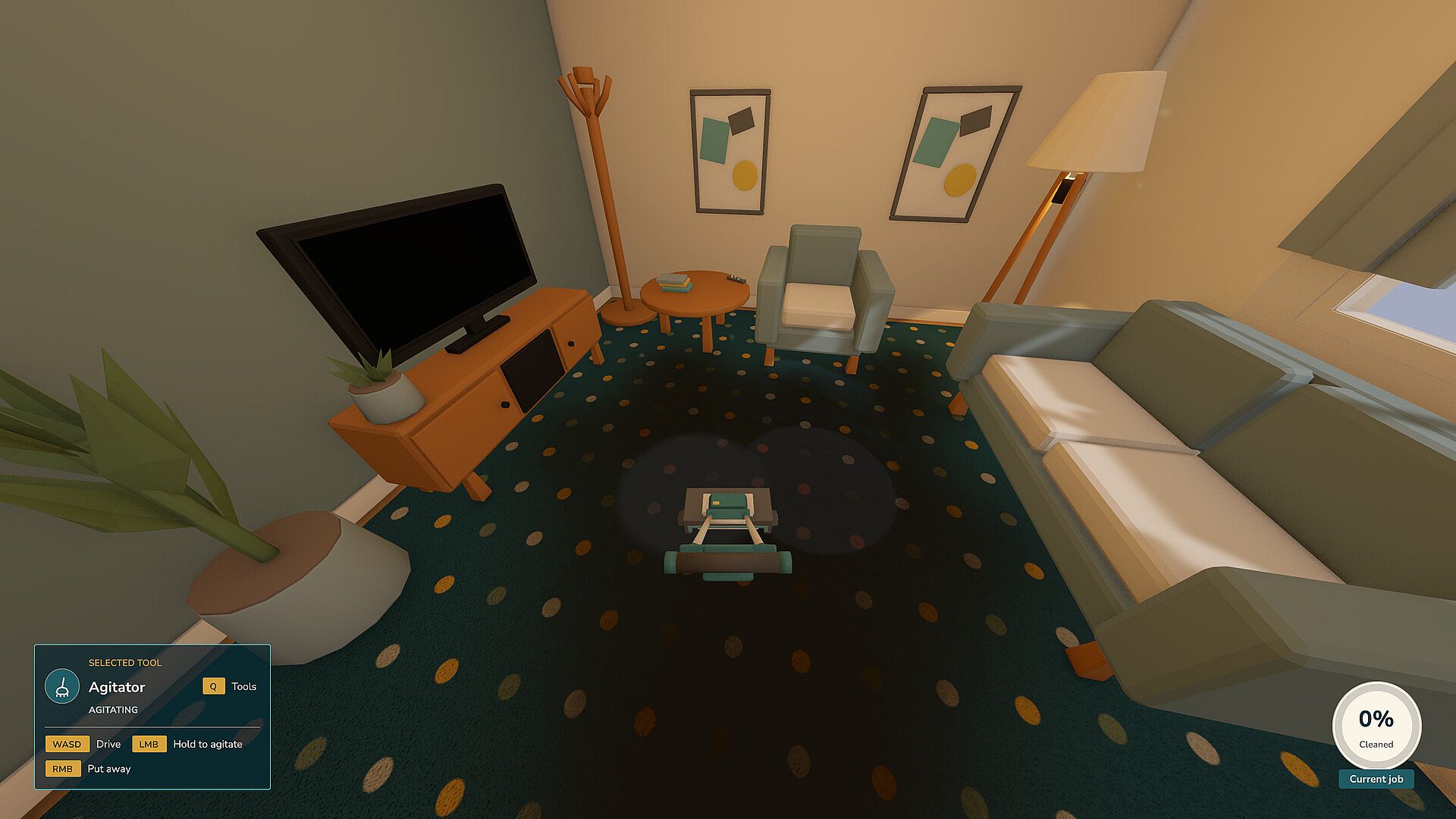
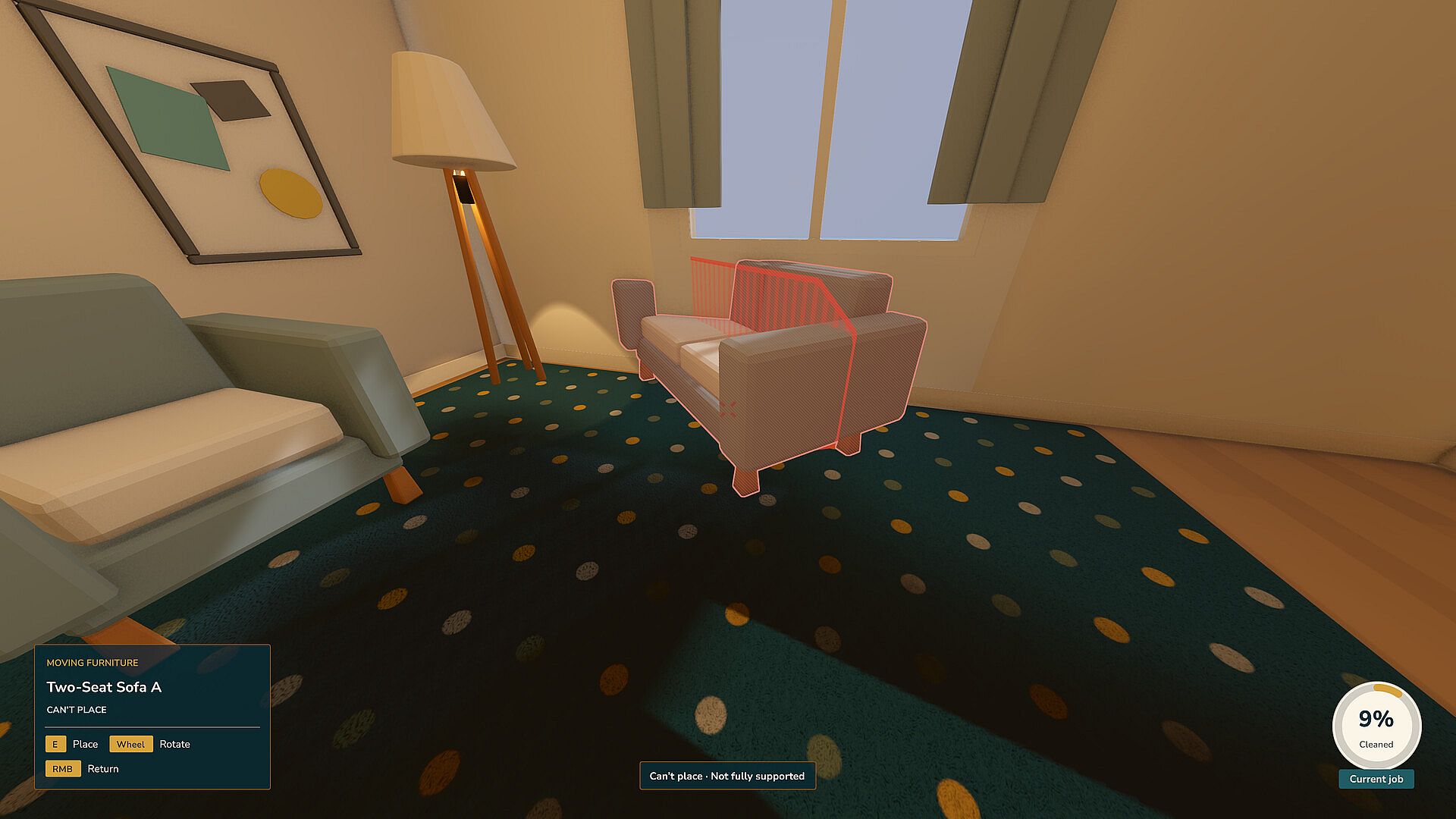
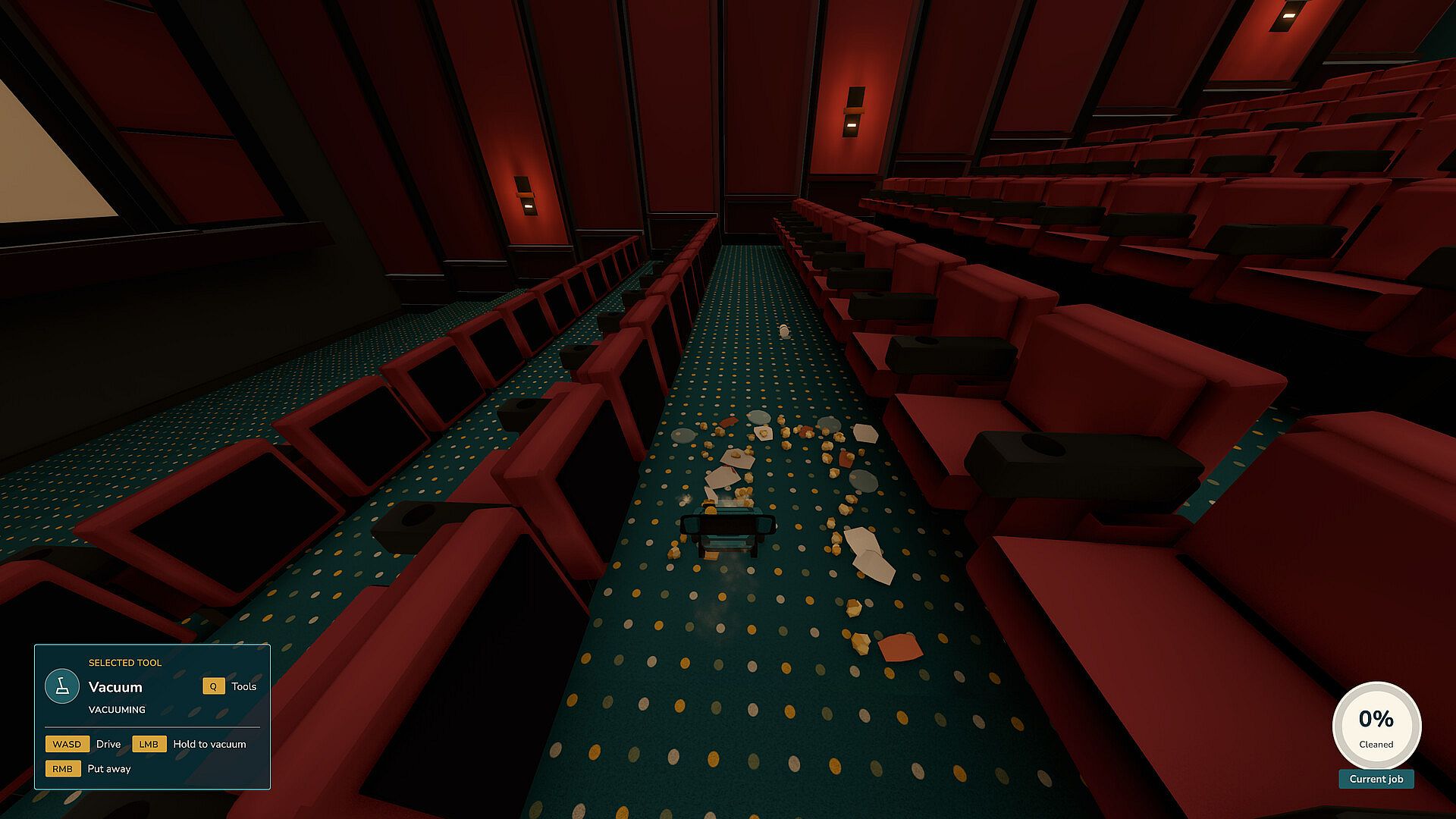
The core loop centers on arriving at a job site, evaluating the condition of the carpet, and systematically addressing different types of dirt and stains. Players must move furniture aside to access every area of the room, then apply a sequence of professional tools in the correct order for effective results. Vacuuming removes loose debris first, followed by pre-spraying to loosen embedded grime. Agitation works the treatment deeper into the fibers, while spot treatment handles localized issues. Extraction then pulls out the dirt and solution to reveal the cleaned surface underneath. Each stage produces visible progress, and skipping steps or using tools out of sequence leaves unsatisfactory results on tougher messes.
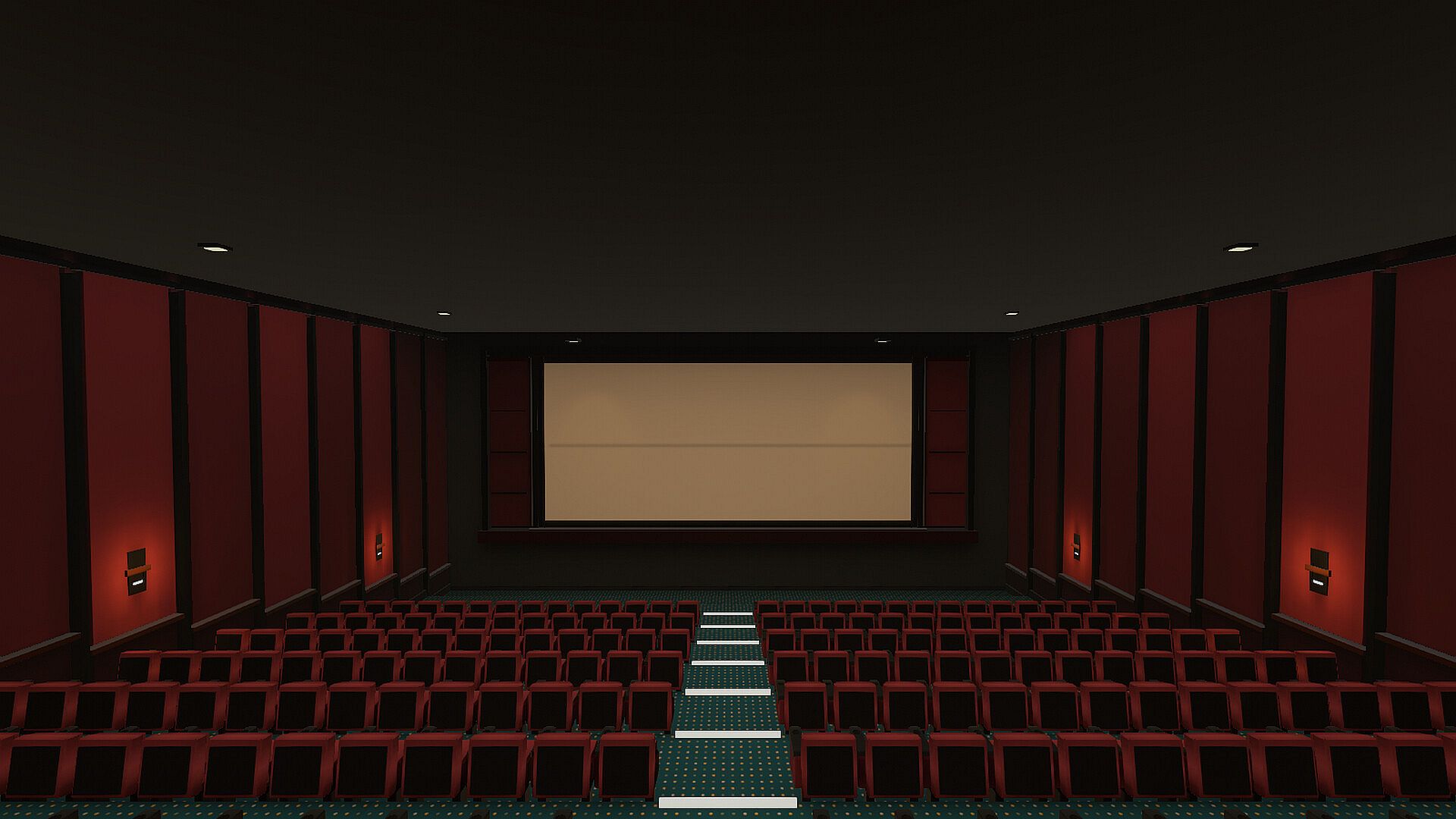
Rooms vary in layout and challenge, requiring players to navigate around obstacles and reach awkward corners without leaving any section untouched. The satisfaction comes from the incremental transformation, where each pass visibly reduces stains and restores the carpet's appearance. Sound design emphasizes the operation of each tool, reinforcing the hands-on nature of the work. No complex progression systems or external objectives distract from this focused cleaning experience.
Game Modes
Carpet Daddy operates entirely through a contract-based structure where players accept individual cleaning jobs. These range from standard residential rooms with everyday wear to larger or more heavily soiled areas that demand extra time and precision. Completing a contract yields payment and performance feedback, which players use to prepare for subsequent assignments back at the workshop. There are no separate named modes or multiplayer components, keeping the emphasis on single-player progression through successive contracts of increasing scope.
Each job presents unique layouts and mess patterns, encouraging players to adapt their tool sequence and approach rather than relying on a single routine. The absence of time limits or failure states allows for thorough exploration of each space until the carpet meets the expected standard.
Core Mechanics and Progression
Tool selection forms the foundation of success, as different stains respond to specific treatments in a particular order. Players learn through direct feedback when a carpet requires extra agitation or targeted spot work before extraction. Furniture relocation adds a layer of spatial awareness, turning every room into a puzzle of access and coverage. The workshop serves as a hub for reviewing completed work and gearing up for the next contract, creating a steady rhythm of assessment, execution, and preparation.
Visual and auditory cues highlight the effectiveness of each action, with dirt and grime fading in real time as tools are applied correctly. This design rewards observation and patience over speed, aligning with the game's emphasis on the cleaning process itself.
Is It Worth Playing?
Carpet Daddy appeals directly to fans of simulation experiences that reward methodical, repetitive tasks with tangible visual payoffs. Its single-player focus and contract structure provide a straightforward loop suitable for short sessions or extended play without requiring ongoing updates or seasonal content. Since the game remains in development with a planned demo for Steam Next Fest and a target release in mid-December, interested players can monitor official channels for the latest status. Those who enjoy the satisfaction of transforming messy environments through precise tool application will likely find the described mechanics engaging, particularly if they appreciate other casual simulation titles centered on process and result. Availability will be limited to PC upon launch, with no additional modes or features confirmed beyond the core contract system.