


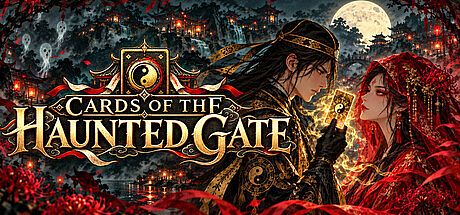



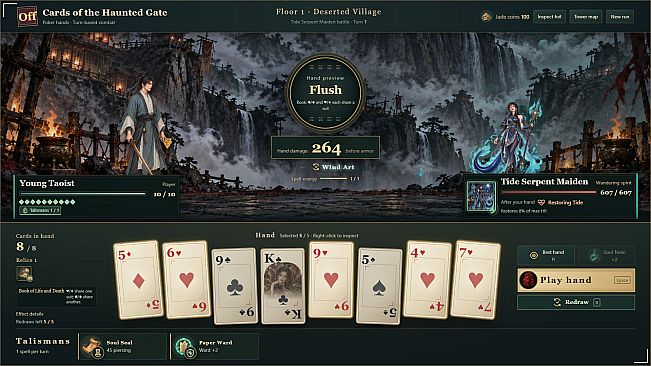


Cards of the Haunted Gate is a single-player strategy card game that blends turn-based combat with East Asian supernatural folklore. Players take on the role of a young Taoist who enters a forgotten graveyard after a construction site disturbance awakens resentful spirits. The core loop revolves around drawing cards, forming poker-style combinations, and managing resources across branching routes to banish the unrested souls.
Gameplay
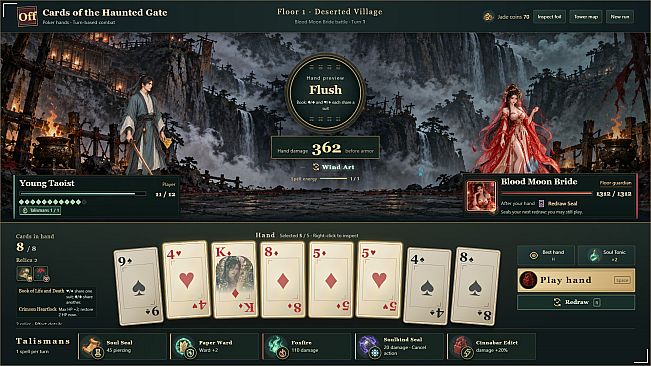
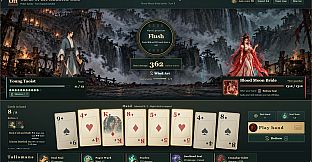
Each turn begins with a hand of eight cards. Players select between one and five cards to form a valid combination such as a single card, pair, three of a kind, four of a kind, full house, flush, or straight flush. Damage output depends on the hand type, the ranks of the scoring cards, and any applicable bonuses. Previewing the projected damage allows for informed decisions before committing the play. Every selected card is spent after the turn, but only the highest-damage valid combination within the selection counts toward the attack.
Enemy intent appears on screen each turn, showing whether the spirit plans to charge an attack or prepare a defense. Surviving enemies that are not prevented from acting then execute their announced move. After resolution, the hand refills for the next round. Redraws let players replace unwanted cards at the cost of a limited resource, without triggering an enemy response. This system encourages weighing immediate smaller combinations against the chance of drawing stronger cards later.
Suit effects add another layer when three or more scoring cards share the same suit. Hearts restore health, diamonds provide protection, spades pierce armor, and clubs apply damage over time. Up to one special card can be played per turn for additional effects including direct damage, protection, cleansing, or canceling an enemy action. Healing items offer further recovery options during fights.
Game Modes
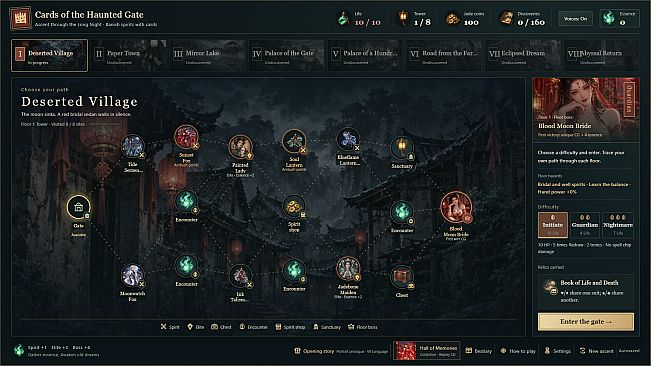
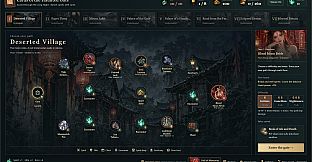
The game operates entirely in single-player mode with no multiplayer components. Progression follows a branching map of connected nodes across eight stages. Ordinary spirits, elite enemies, and stage bosses appear along the routes, while chests, encounters, shops, and lantern rest stops provide opportunities for rewards or recovery. Defeating a stage boss advances the journey, and clearing all eight stages completes the main experience.
Three difficulty settings adjust the challenge around card selection, redraw management, and resource decisions. Reaching zero health ends the current attempt. Relics and upgrades remain tied to that run, while spirit energy and unlocked memories carry over between attempts for persistent progression. Players can revisit collected memories at any time and experiment with different routes or strategies on subsequent runs.
Progression and Strategy
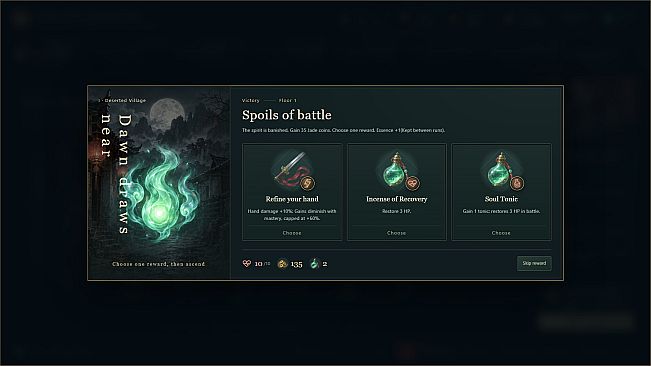
Winning encounters grants jade coins and a choice of one reward from several options. Rewards can restore health, increase hand damage, or grant special cards and relics. Certain relics alter core rules, such as treating all red suits as identical or all black suits as identical. Balancing immediate needs against long-term growth becomes essential, as stronger enemies appear on riskier paths.
The game features nine relics and nine basic special cards that combine into varied strategies. Eight distinct bosses each bring unique supernatural abilities and behavior patterns. Autosave supports mouse and keyboard controls throughout the experience.
Is It Worth Playing?
Cards of the Haunted Gate suits players who enjoy deliberate, turn-based card combat mixed with light roguelike elements and folklore themes. The poker-inspired hand building and suit effects create meaningful choices each turn, while the branching map and persistent upgrades encourage multiple attempts. Those seeking a focused single-player strategy experience on PC will find a self-contained journey that rewards careful reading of enemy intent and smart resource use. The three difficulty options and memory collection system provide replay value without requiring external content or updates.