






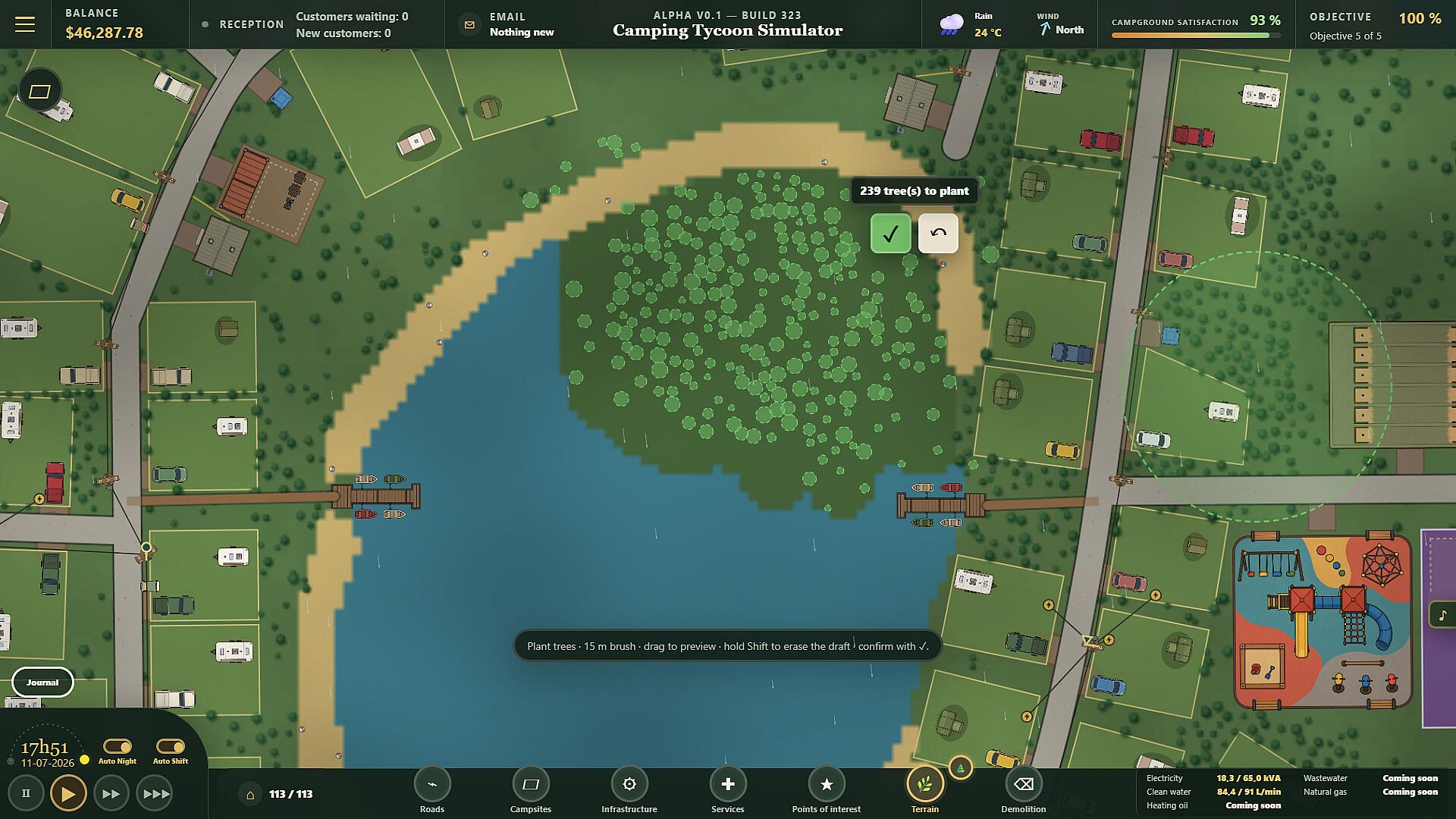
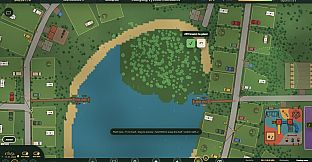
Camping Tycoon Simulator is a casual simulation game focused on building and running a campground in a top-down 2D view. Players start each session by generating a unique natural area that can include plains, forests, mountains, rivers, lakes, or coastline. From there the core loop centers on turning raw land into a working, profitable site that attracts visitors while keeping the surrounding environment intact.
Gameplay
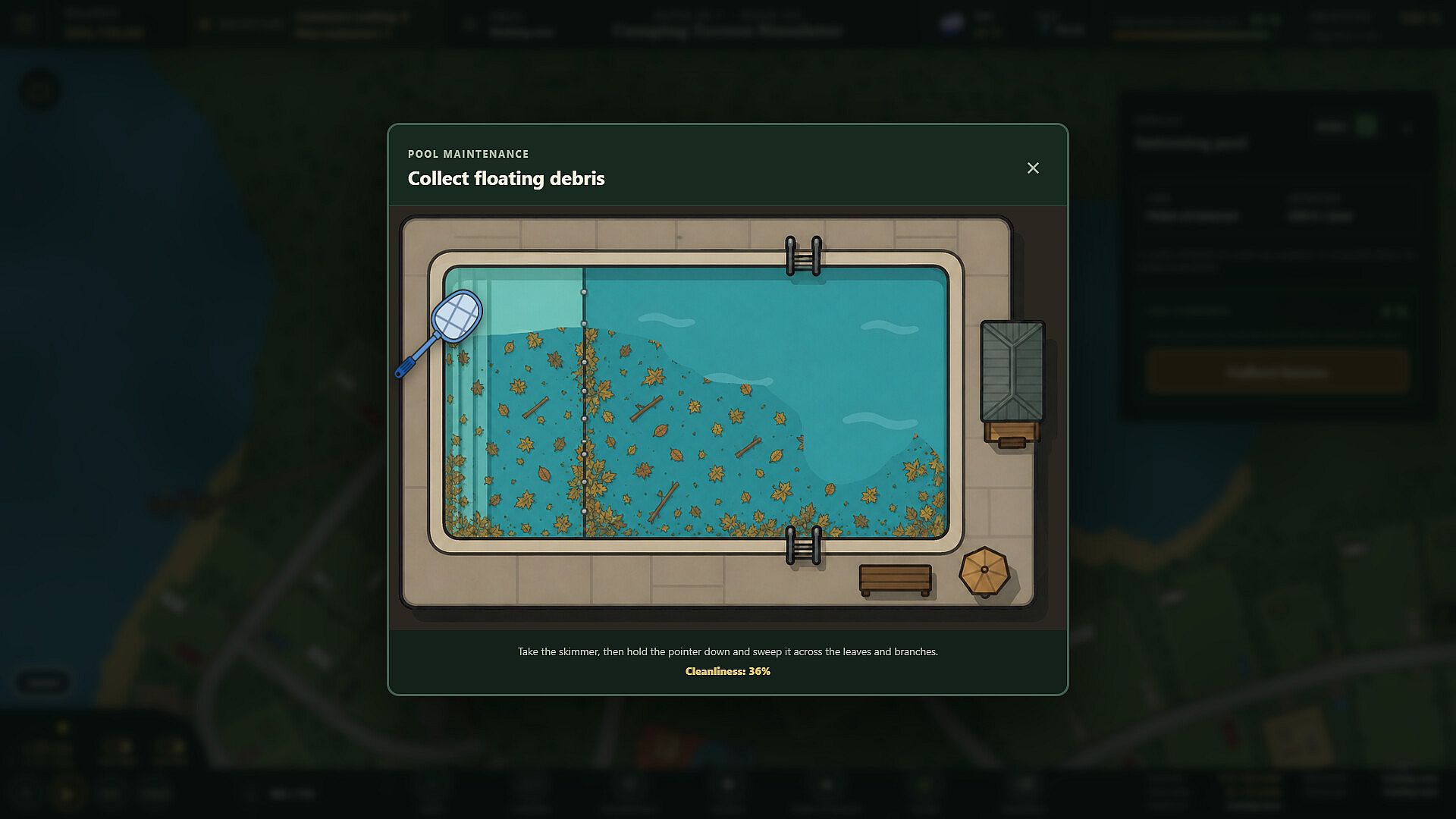
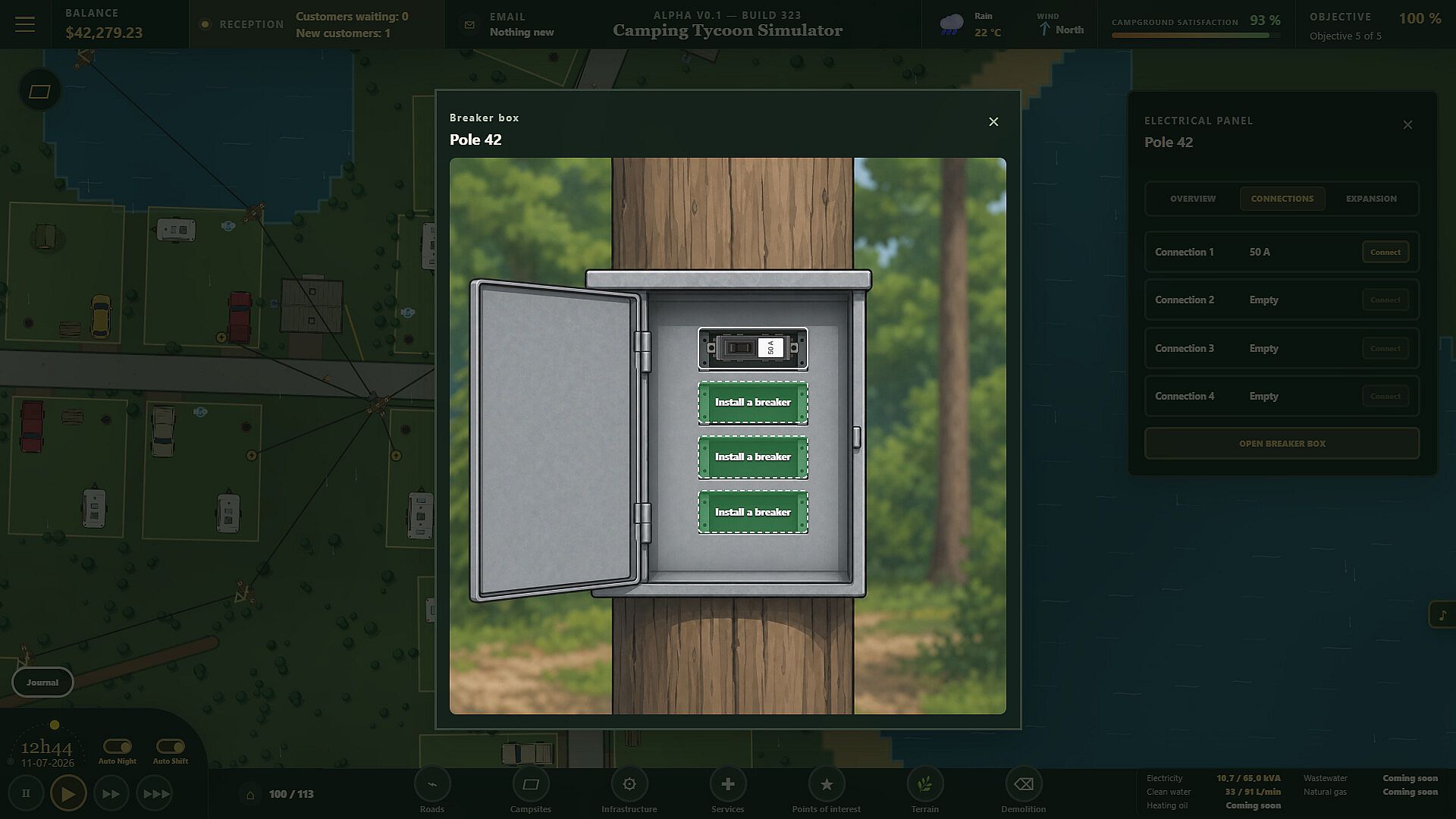
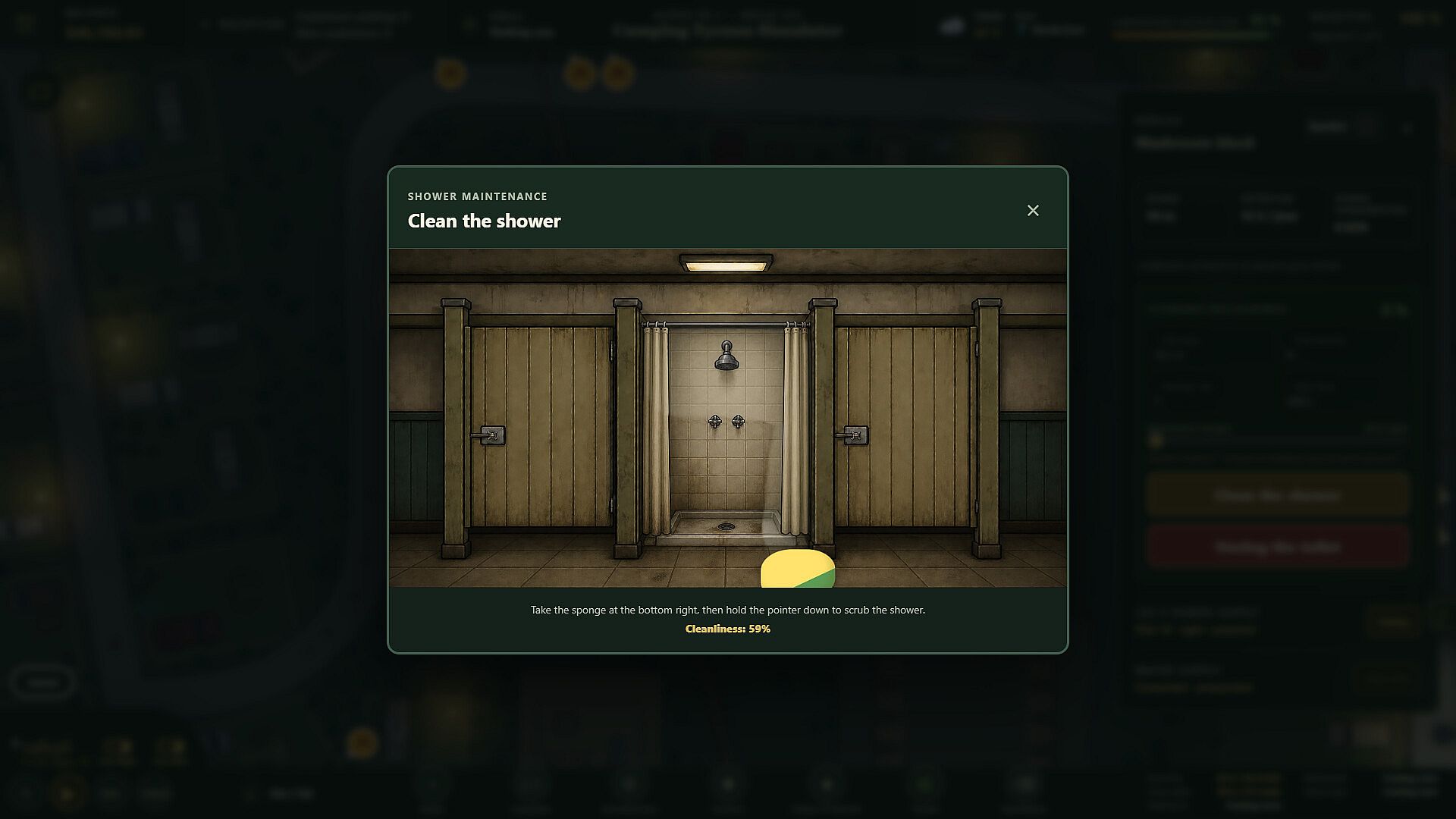
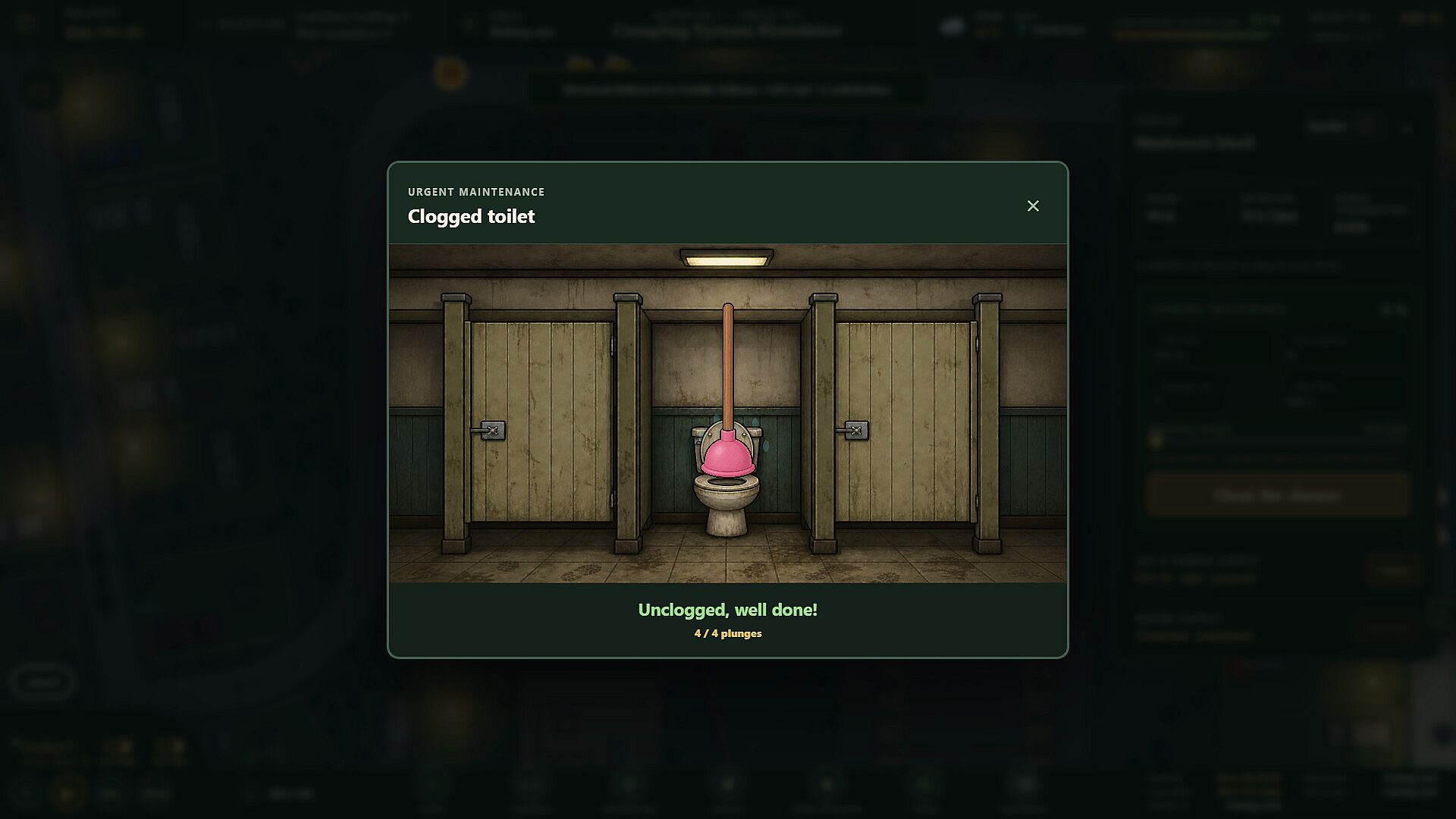
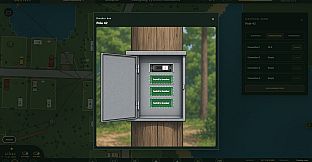
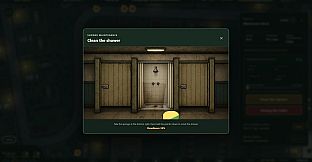
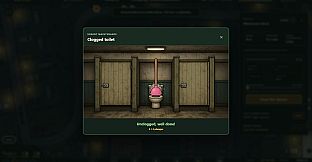
The experience revolves around construction and ongoing management. Players lay out gravel roads and paths, divide the land into camping sites of different sizes, and place facilities suited to tents, tent trailers, trailers, and RVs. Utilities such as electricity, drinking water, and Wi-Fi networks must be installed and maintained. Restroom and shower blocks require regular attention to stay functional.
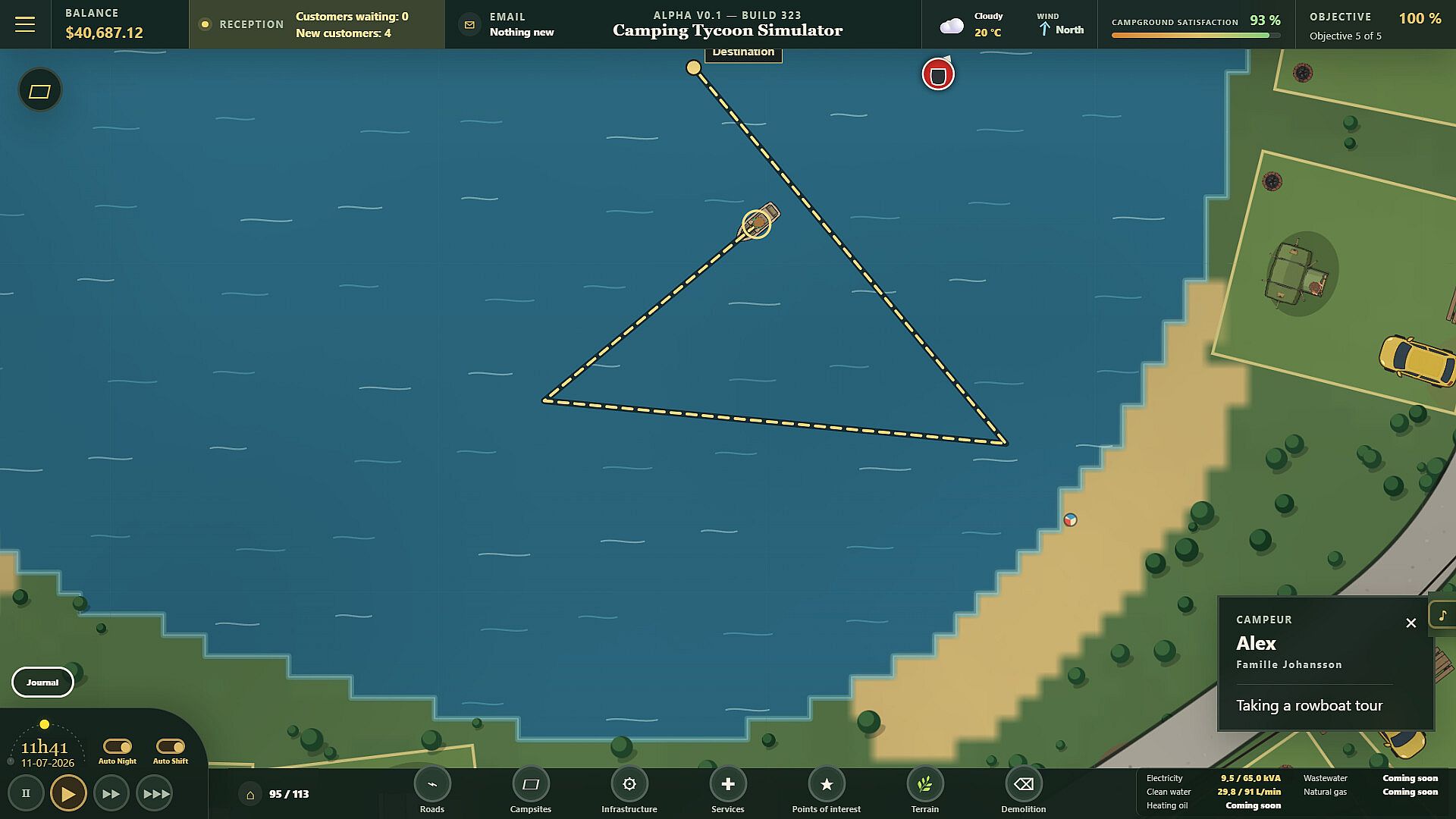
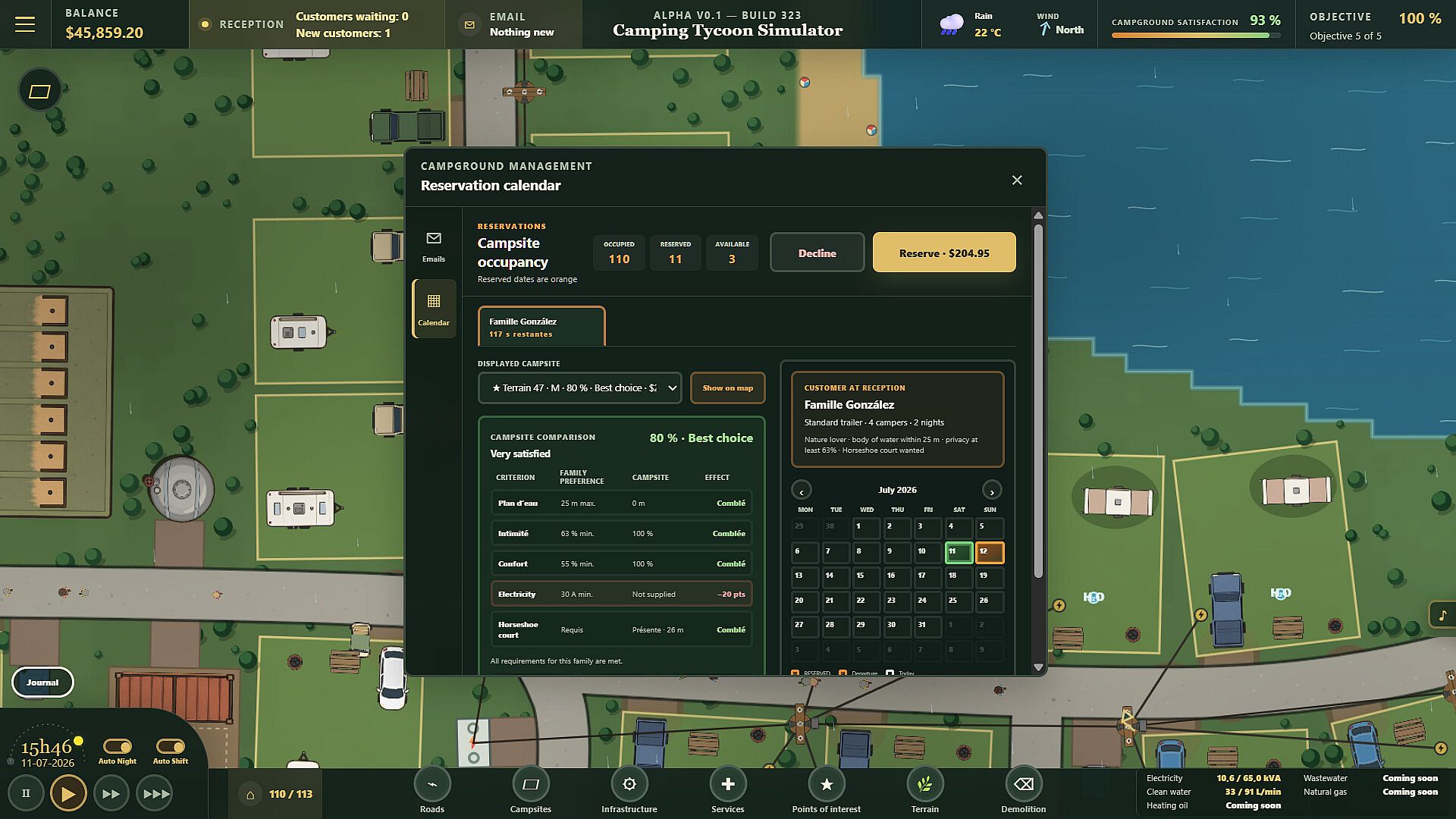
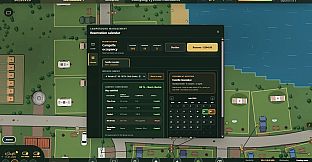
Additional structures and activity areas expand what the site offers. These can include a swimming pool, playground, volleyball court, horseshoe pit, dock, or golf cart rental. Campers arrive with cars, trailers, and RVs, and their movement across the grounds must be accommodated through careful layout planning. Reservations and site assignments help control occupancy, while family satisfaction depends on matching preferences for services, natural surroundings, and privacy levels.
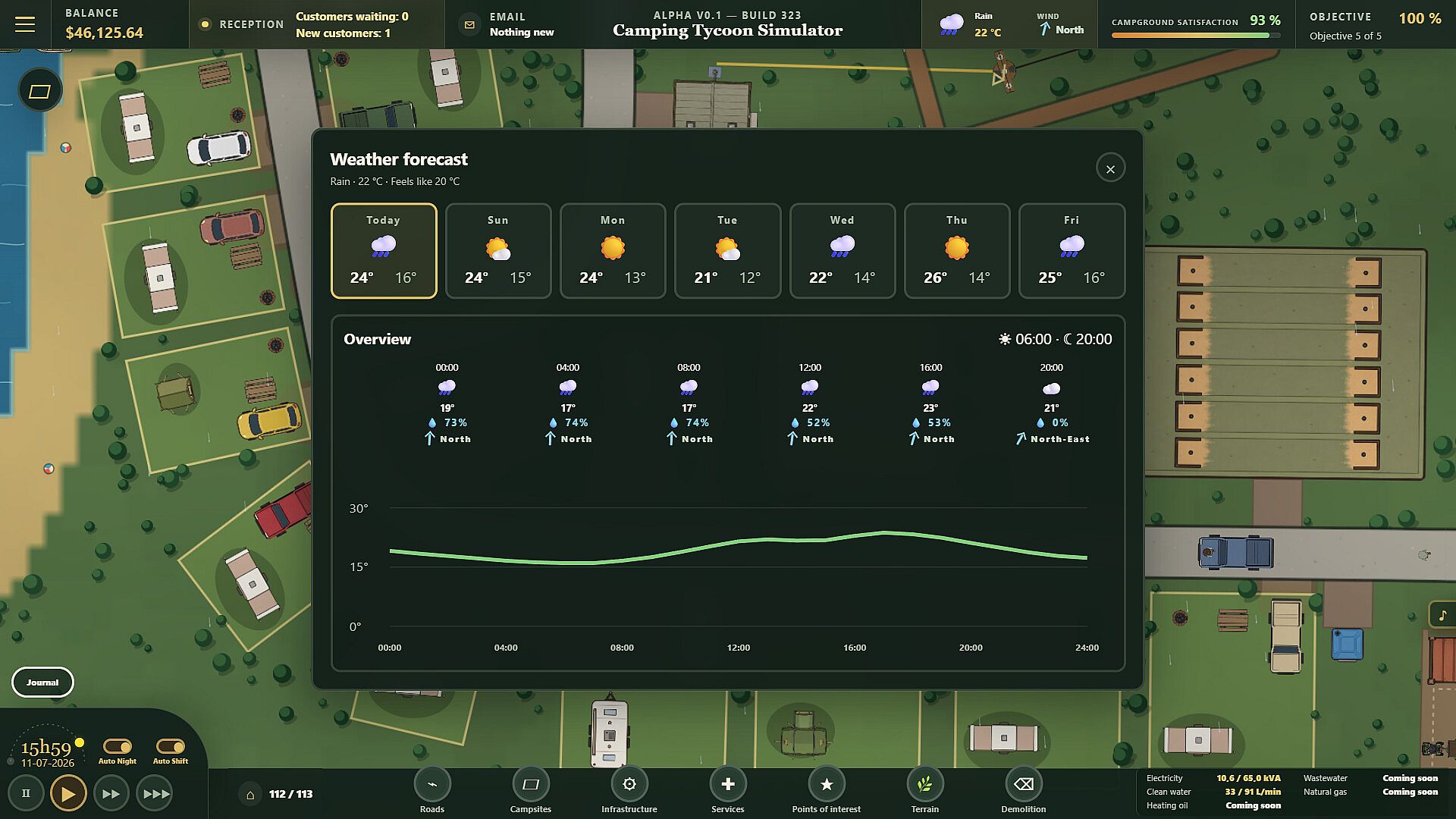
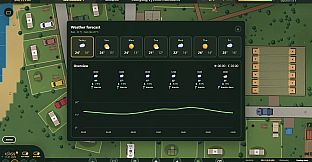
Finances form a constant consideration. Pricing decisions influence income, while expenses cover construction, maintenance, and occasional refunds or compensations. Progression unlocks new facilities over time. A day-night cycle runs at adjustable simulation speeds, allowing players to observe operations during different times or accelerate periods of slower activity. The interface supports multiple languages, and progress can be saved at any point.
Game Modes
The game operates as a single continuous management simulation without separate named modes. Every session follows the same structure of land generation followed by building, operating, and expanding the campground. Players balance short-term needs like camper arrivals and utility upkeep with longer-term goals of profitability and site improvement. The procedural environment ensures each new area presents different layout challenges, encouraging repeated playthroughs focused on optimization rather than scripted scenarios.
Key Mechanics and Progression
Site customization drives much of the depth. Individual camping spots can be renovated, and the overall territory divided to suit different visitor types. Networks for power, water, and internet connect the various zones, while service buildings handle daily camper needs. Activity areas add variety and can increase satisfaction when placed thoughtfully relative to privacy and natural features.
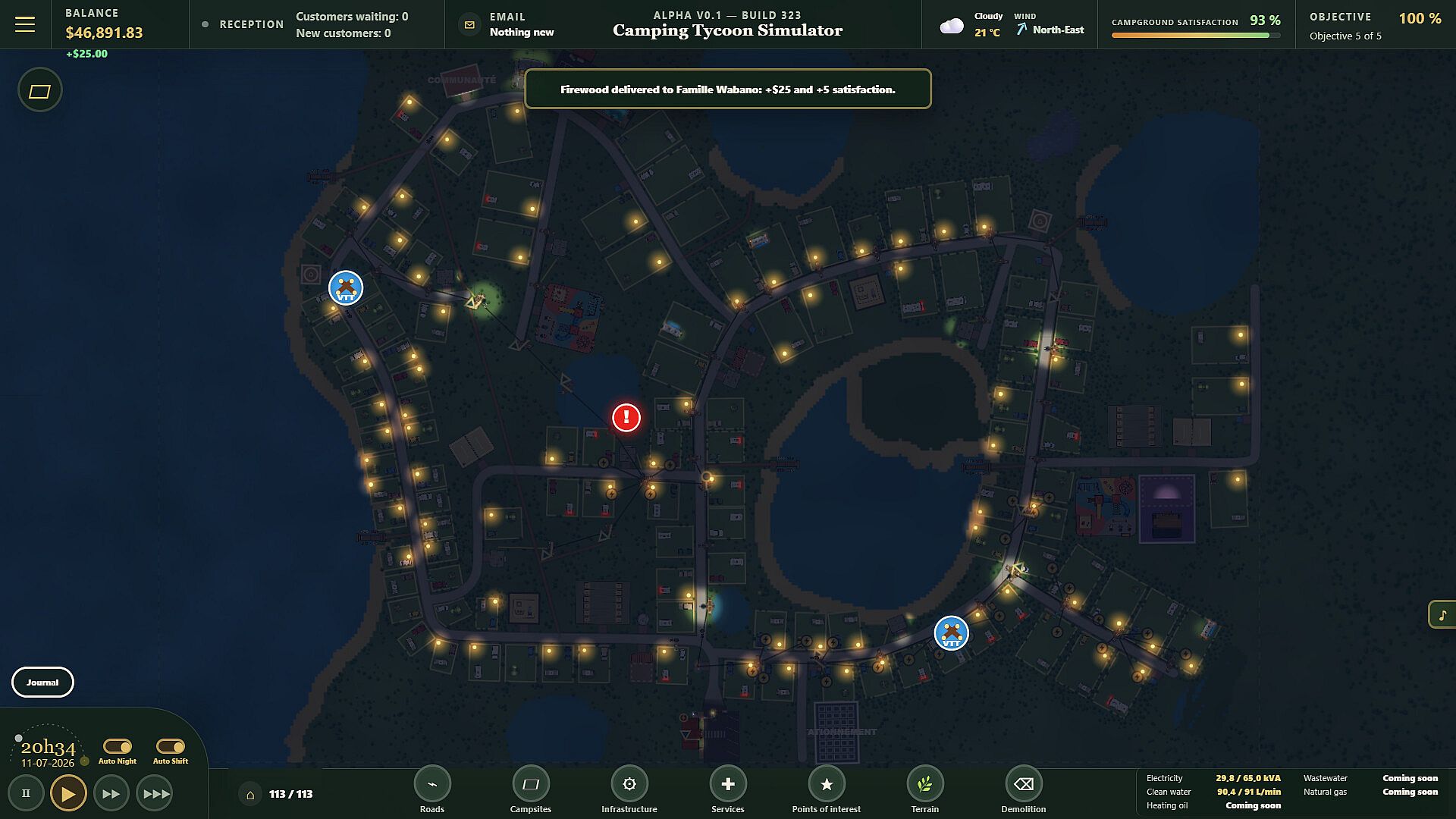
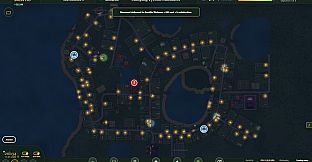
Camper behavior adds realism to the simulation. Families arrive according to reservations, occupy assigned sites, and respond to the quality of facilities and surroundings. Maintaining high satisfaction supports steady income, while poor organization or neglected maintenance can lead to complaints and lost revenue. The day-night cycle affects visibility and activity patterns, requiring players to plan lighting and staffing around these changes.
Is It Worth Playing?
Camping Tycoon Simulator suits players who enjoy deliberate, systems-driven management games. The combination of construction, utility networks, camper logistics, and financial tracking creates a steady loop of planning and adjustment. Those drawn to casual simulations that emphasize layout creativity and steady growth will find the procedural environments and progression system rewarding. The absence of competitive or story-driven elements keeps the focus squarely on campground design and operation, making it a good fit for relaxed sessions where the goal is building an efficient and appealing site over multiple playthroughs.