






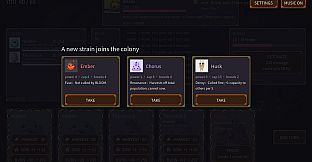
BROODHOUSE is a strategy card game for PC that centers on managing colonies of creatures through a unique breeding and population system. Players build and control strains of cards where power comes from the total count of a strain across the entire deck rather than individual card values. Runs last between twenty five and forty minutes across five layers and end with a detailed summary of the colony created.
Gameplay
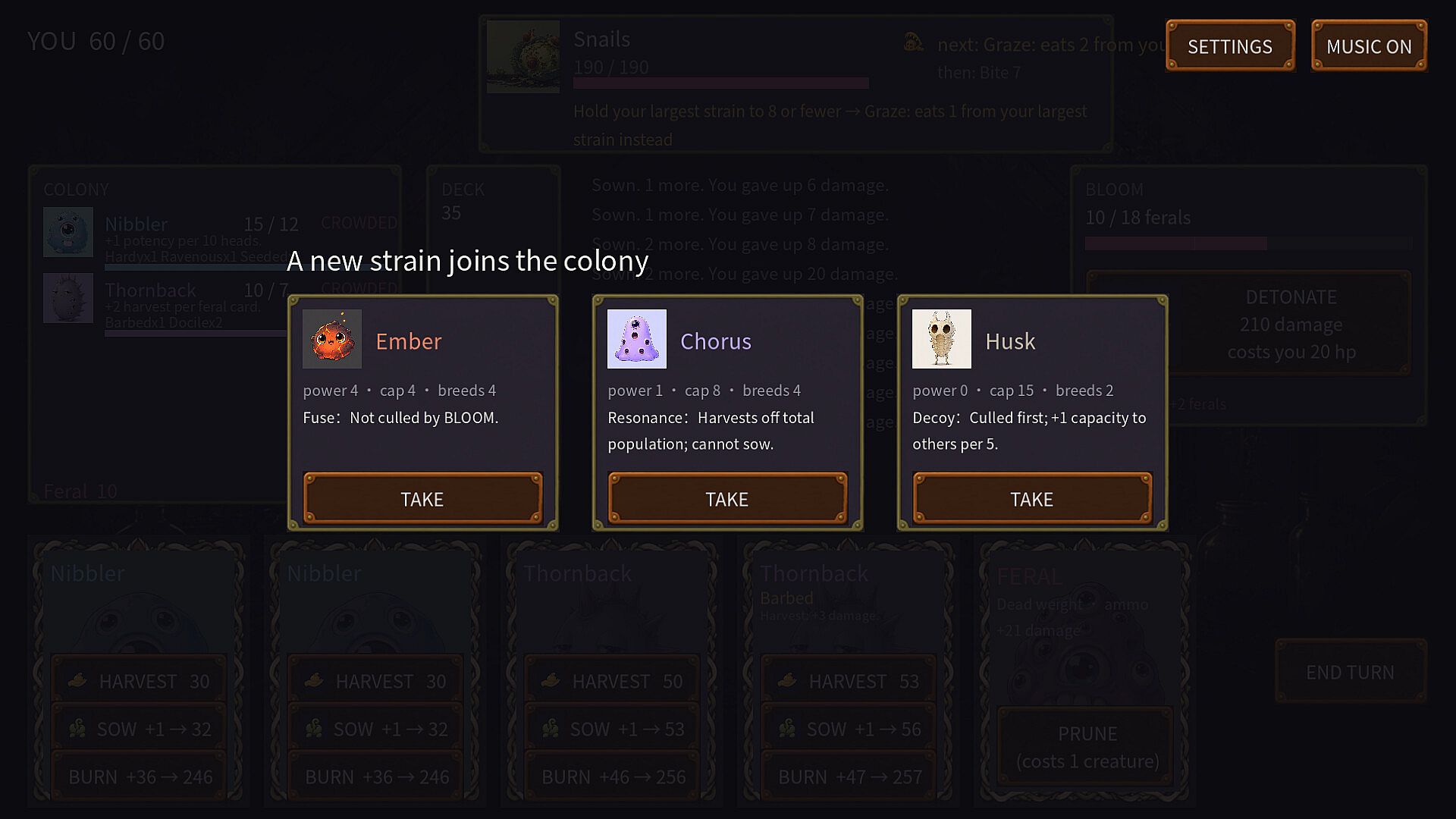
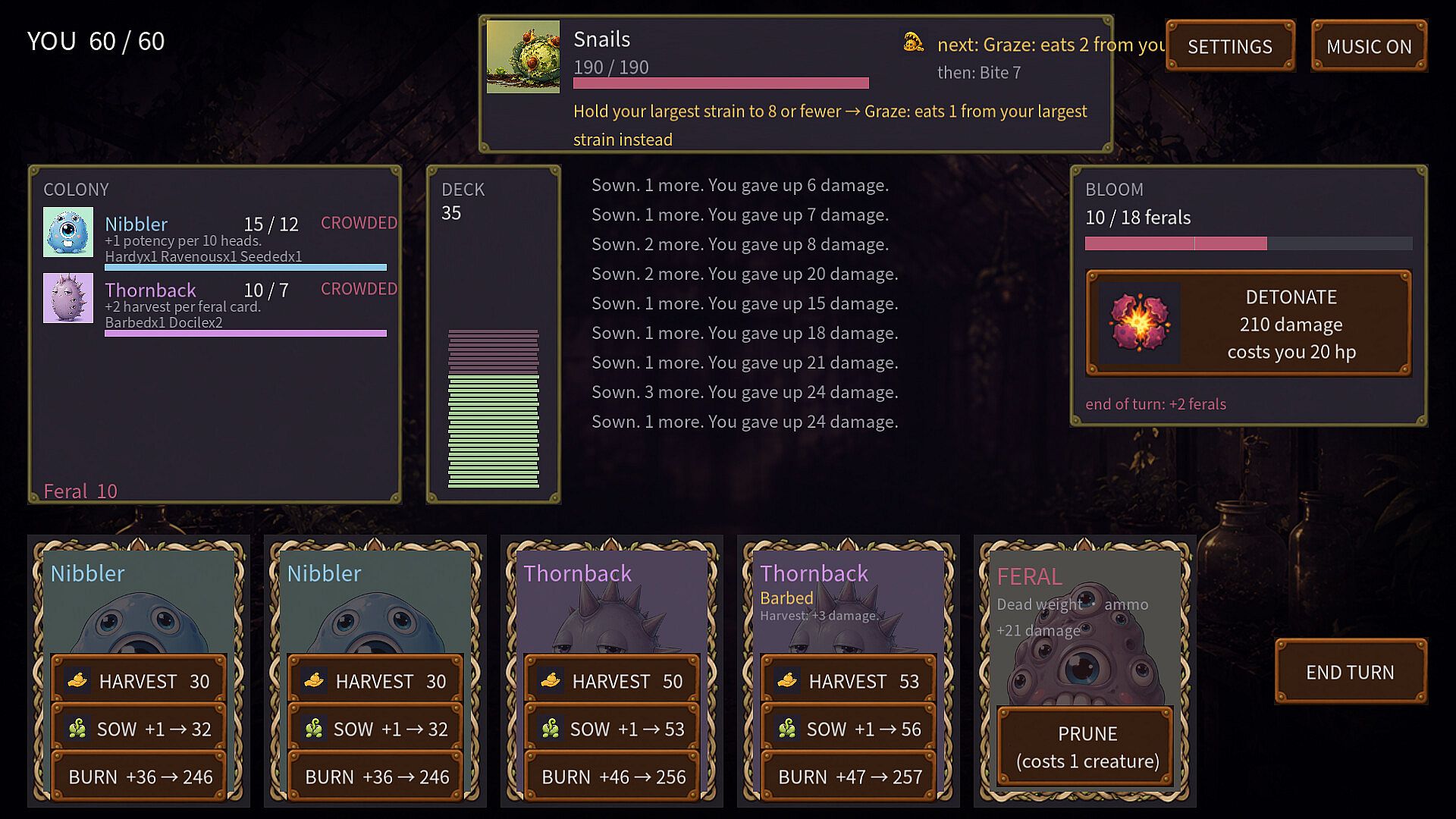
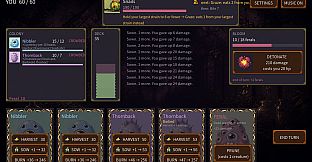
The core loop revolves around five actions: Harvest, Sow, Burn, Prune, and Detonate. Every turn the hand refills to five cards with no energy system in place. Harvesting a card deals damage equal to the full population of its strain wherever those cards sit in the deck, hand, or discard. Sowing instead adds to the population for greater future damage but forgoes the immediate hit. This creates a direct trade off between short term output and long term growth.
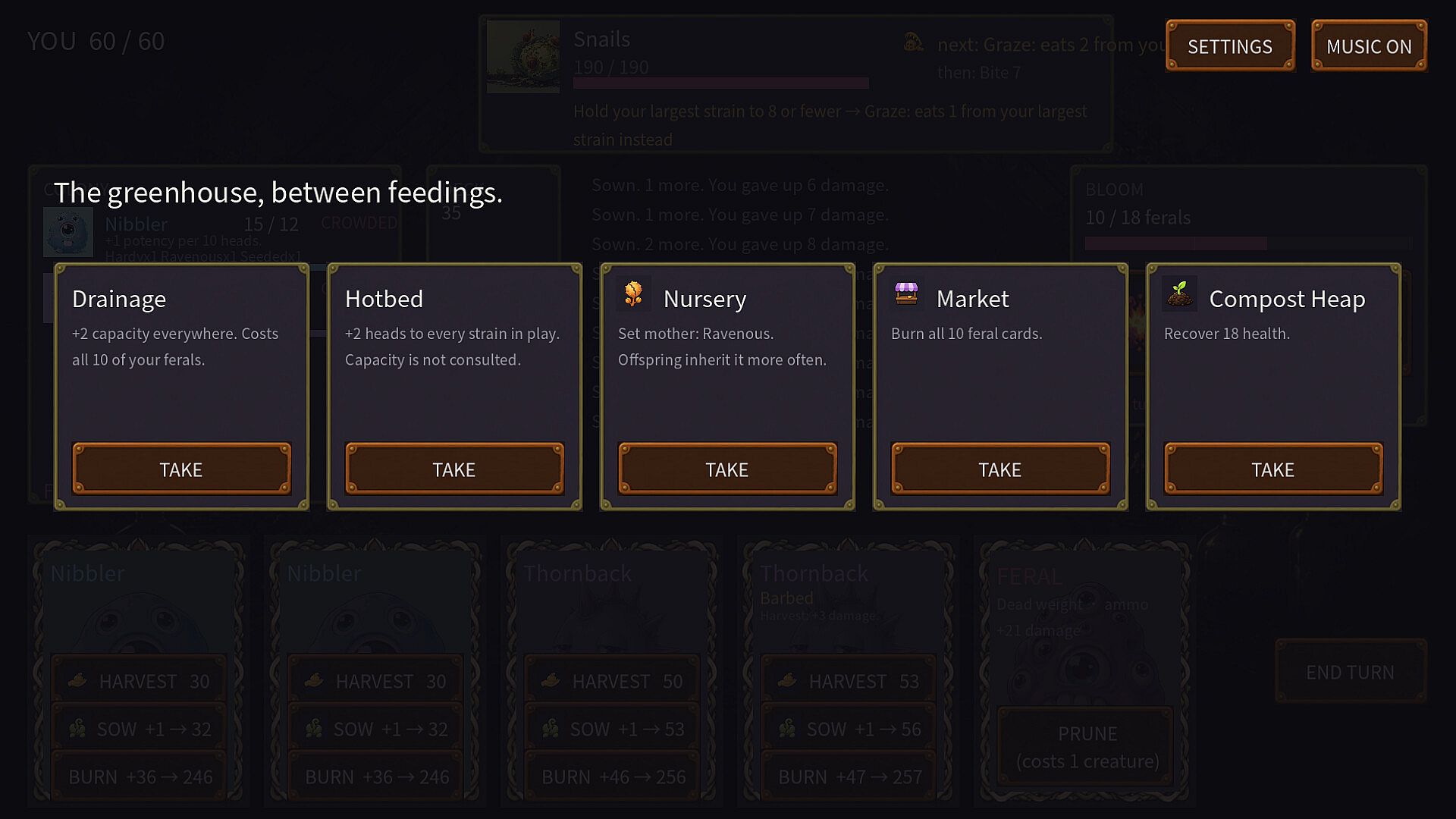
Each strain has a carrying capacity. Exceeding the cap triggers overflow that produces Feral cards, which cannot be played but serve as fuel for Bloom. Bloom builds when six Feral cards accumulate and can be detonated manually or automatically at eighteen. Detonating resets strains to their caps while dealing area damage that scales with the bomb size, though it also imposes recoil that weakens the hand. Players decide how aggressively to push populations or when to trigger the reset to rebuild.
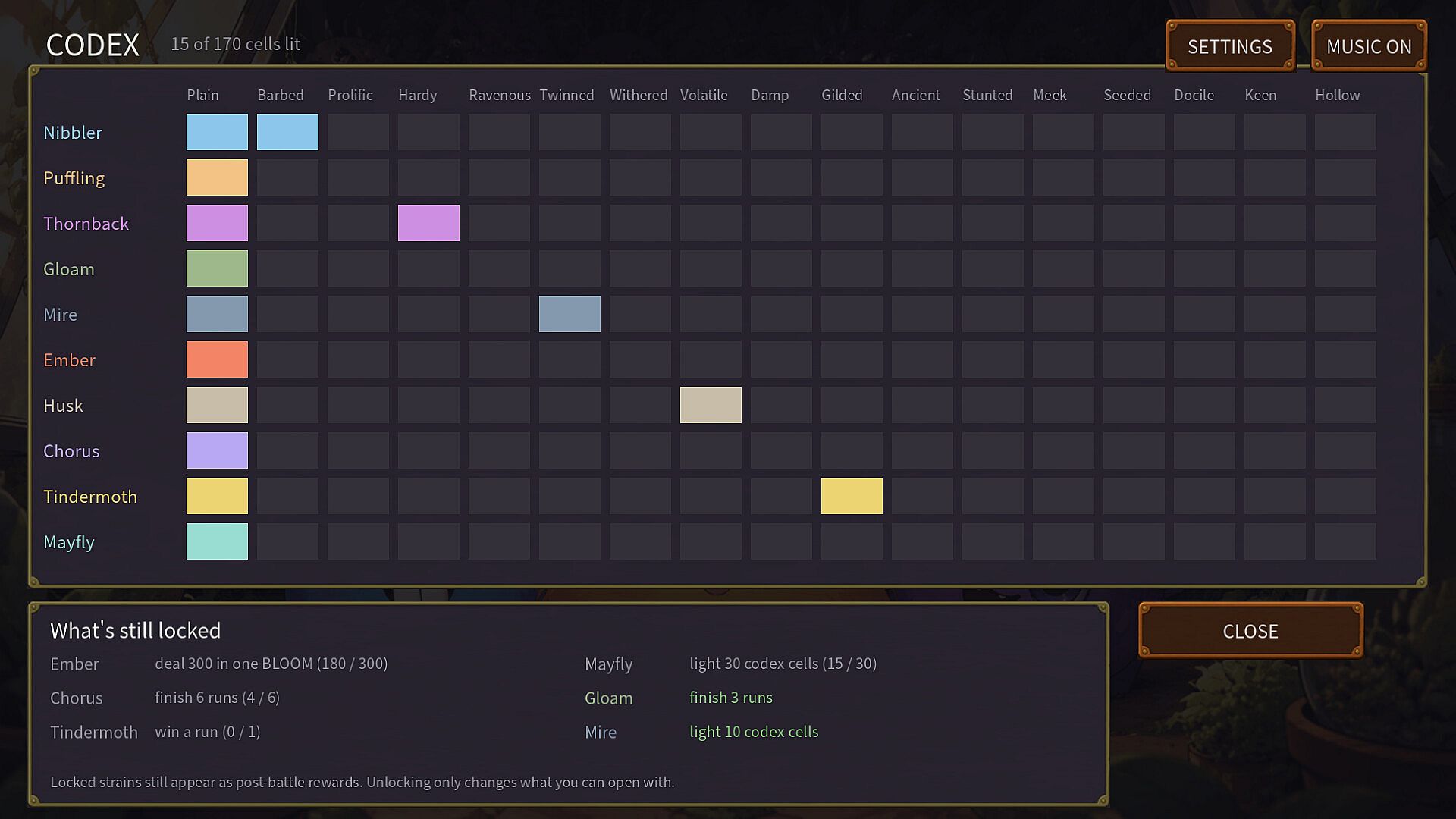
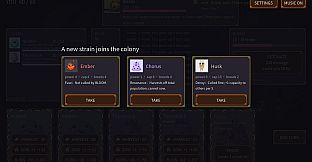
Enemies appear as nineteen distinct types, each with attacks telegraphed two turns ahead. Meeting a listed condition before ending the turn reduces the incoming damage. The check evaluates the current colony state, turning defense into an active part of planning rather than simple reaction. Ten strains exist, each with three visible growth stages and six possible heritable mutations that appear during breeding.
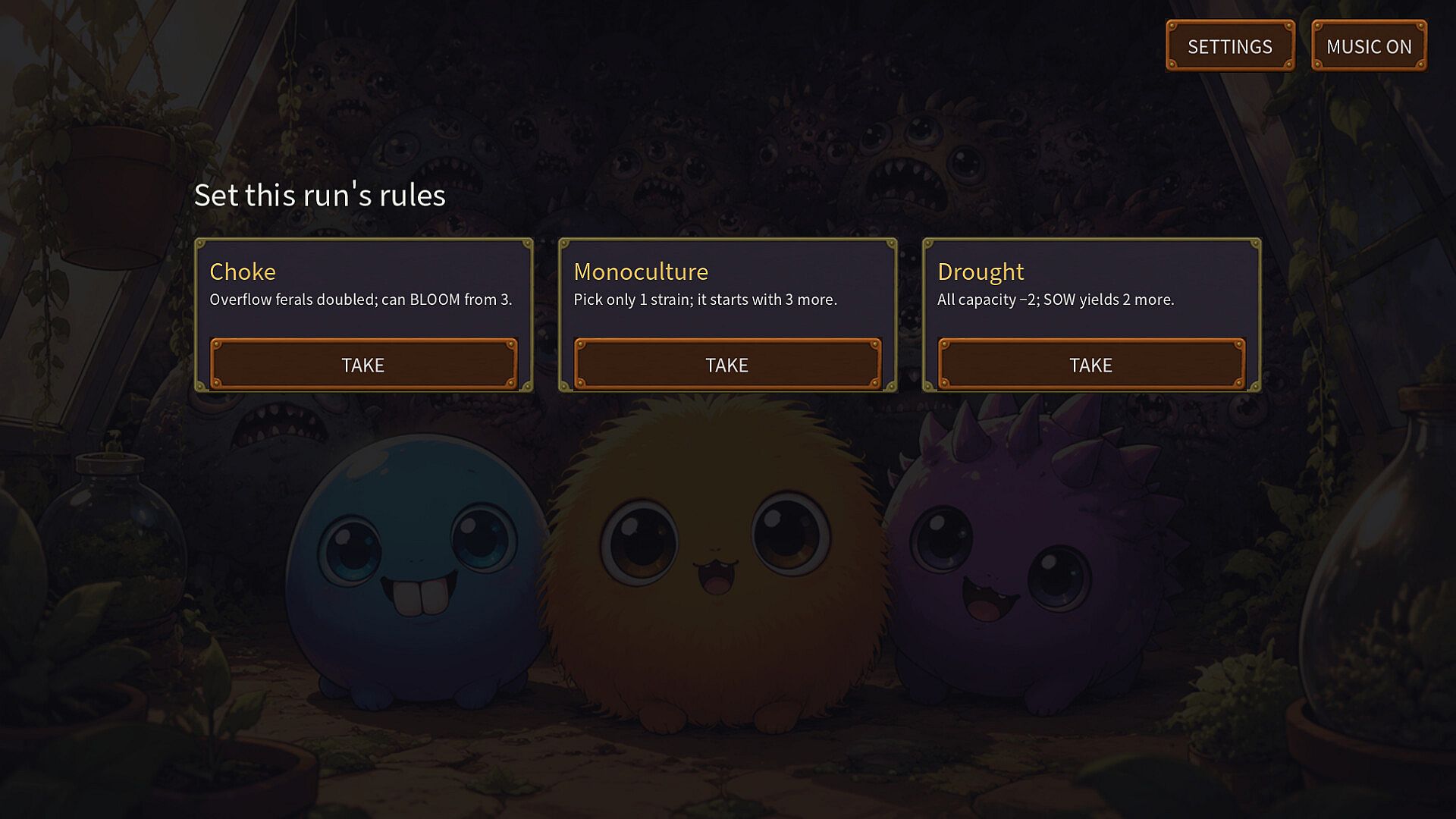
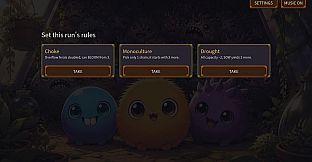
Contracts alter the rules for an entire run through one restriction paired with one compensation. Examples include Drought, which lowers caps but grants extra breeding, or Monoculture, which limits players to a single strain while boosting its size. These changes affect overflow, Bloom timing, and pruning options without simply increasing difficulty.
Game Modes
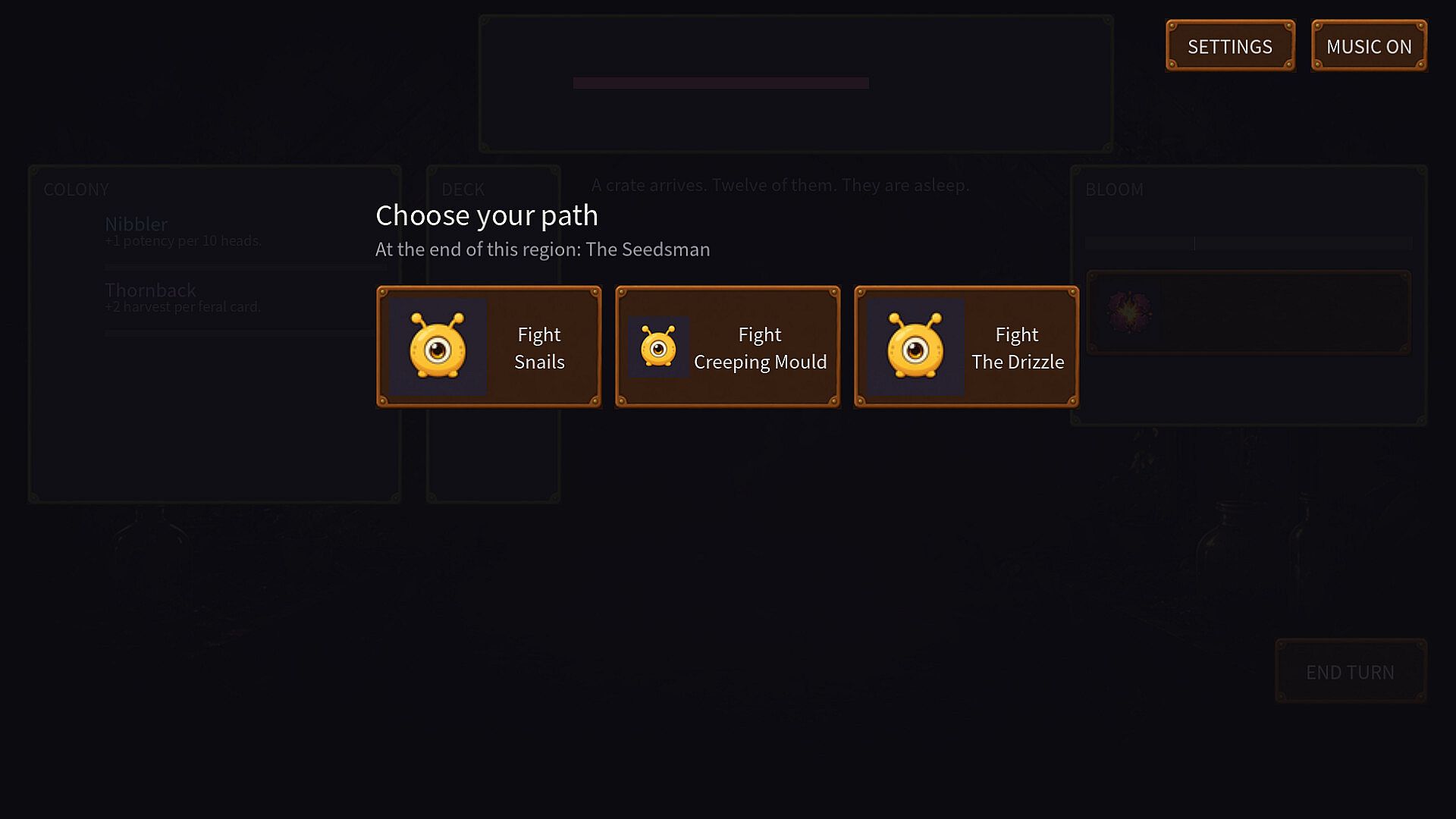
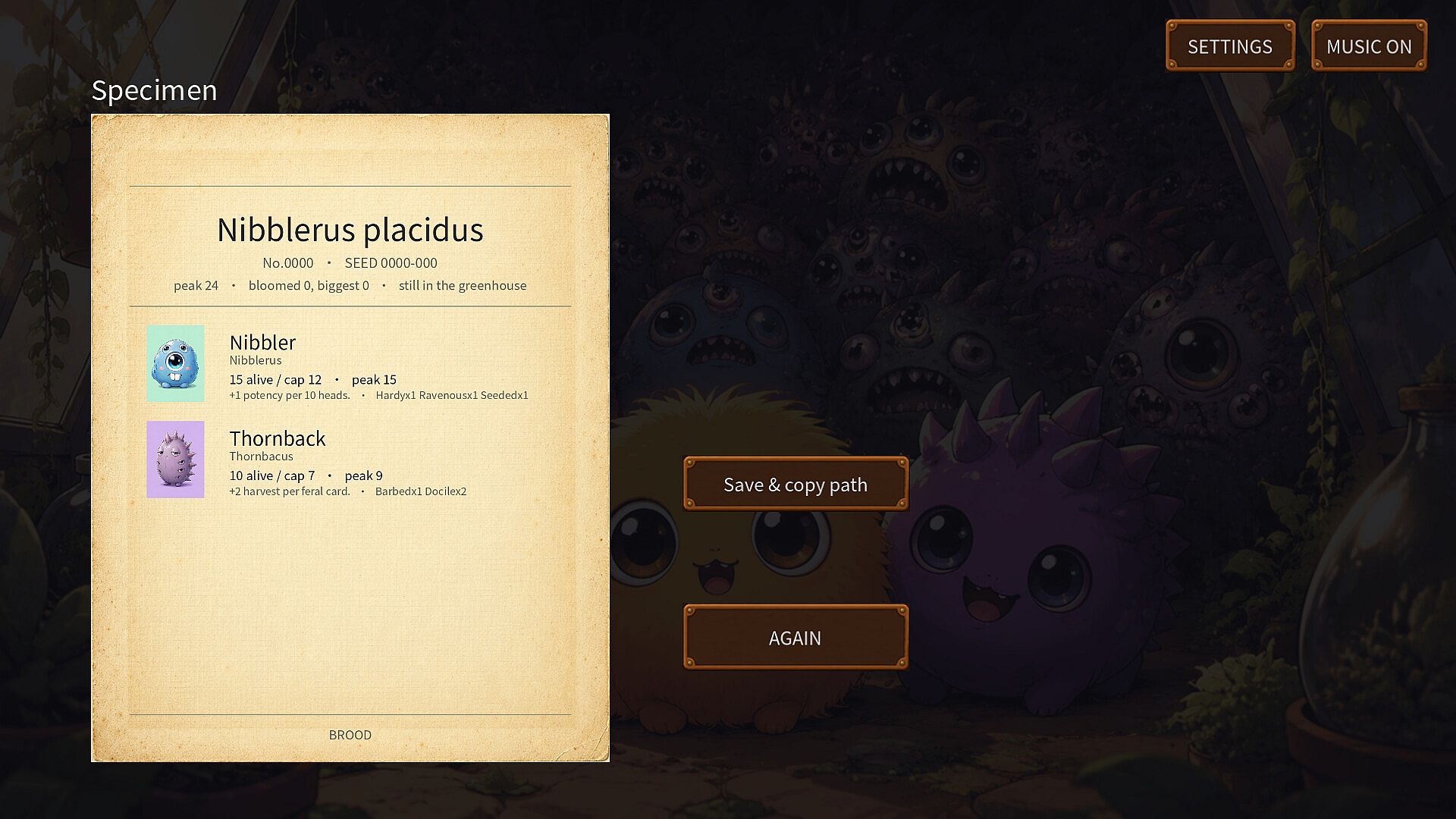
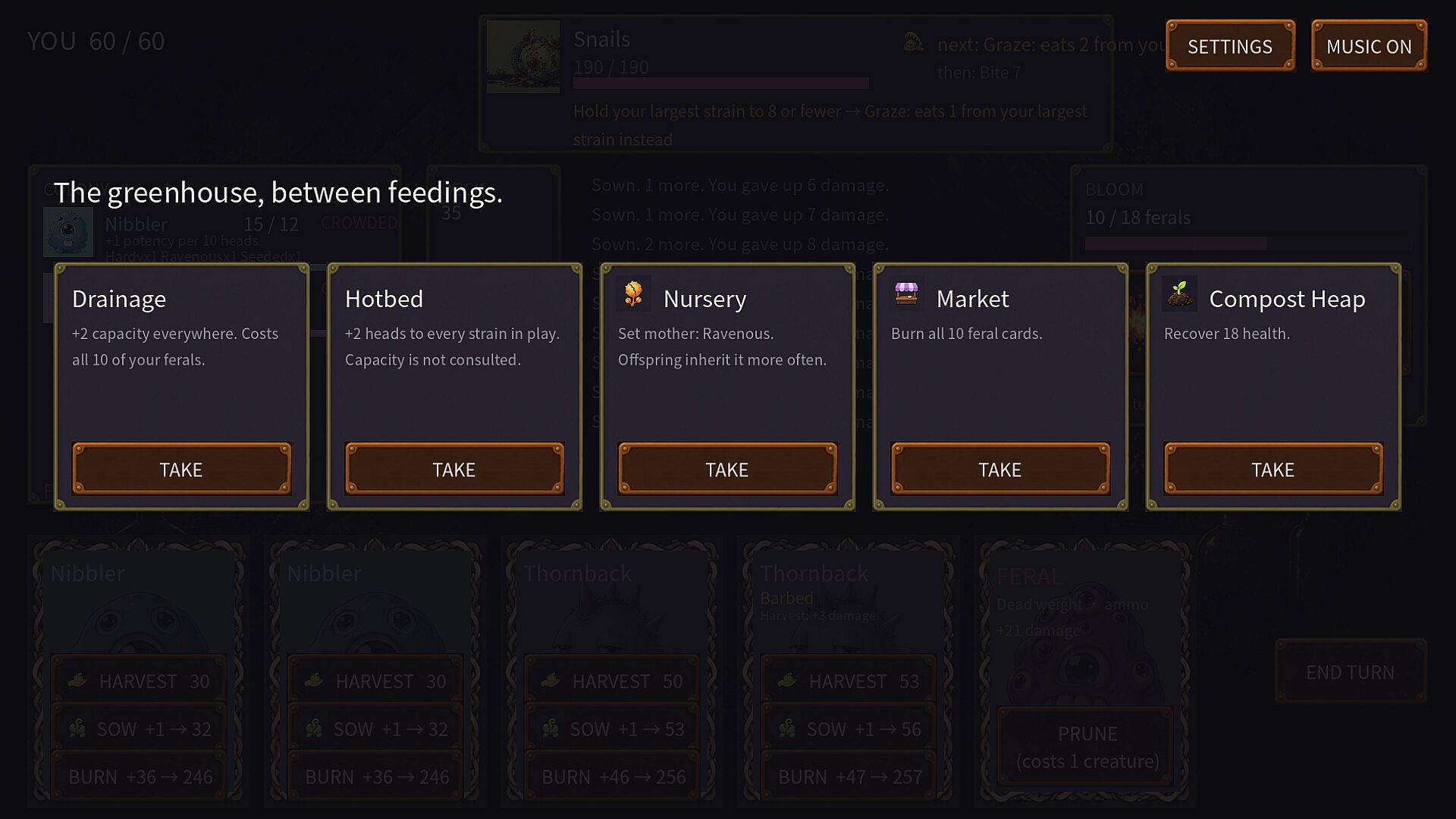
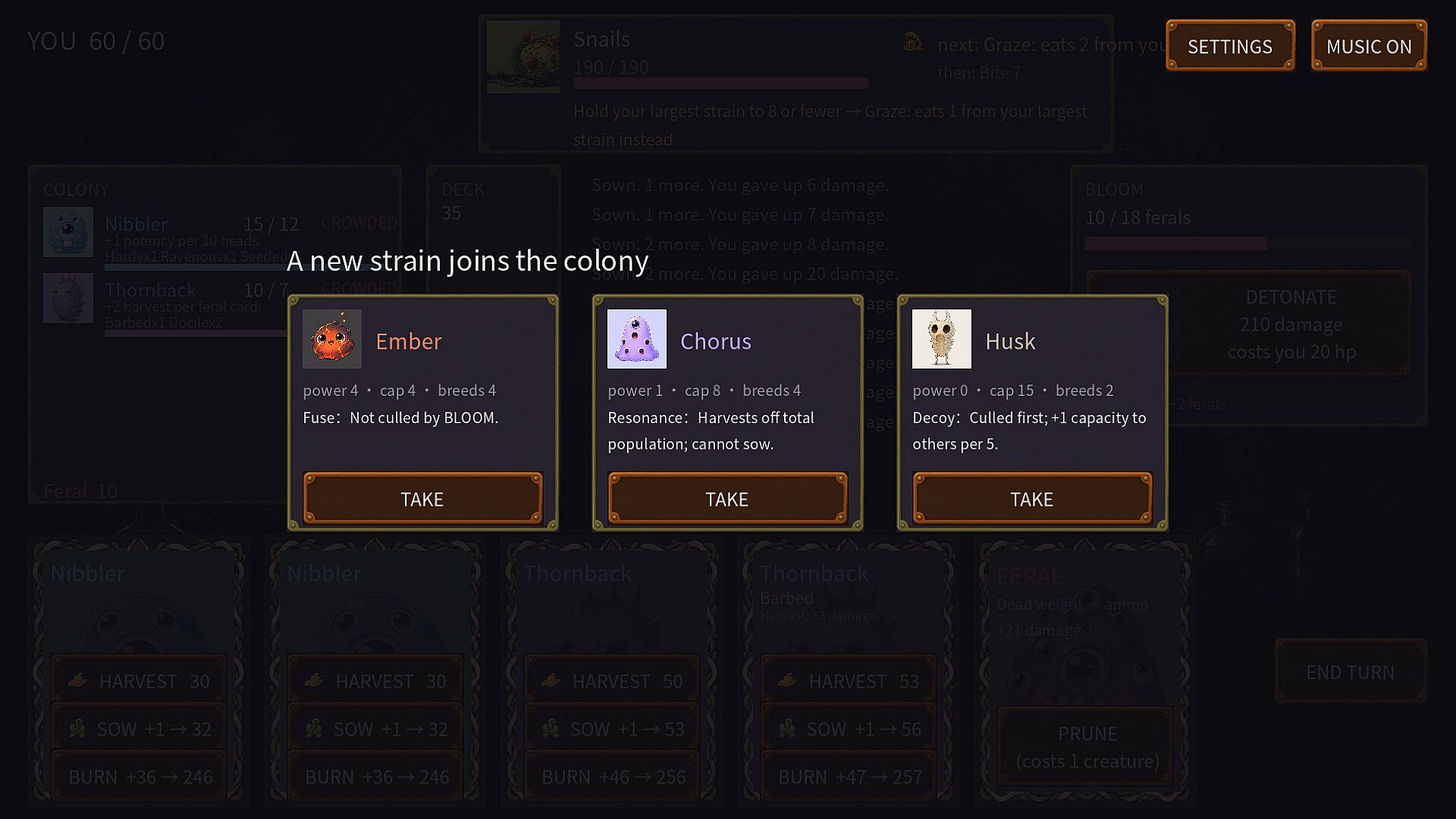
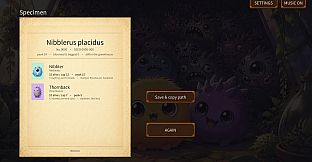
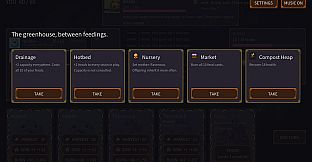
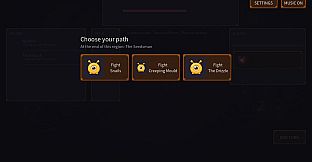
BROODHOUSE features a single core experience built around roguelike runs. Each attempt begins with Contract selection followed by strain choices and proceeds through node based progression with eleven post battle nodes offering five options each time. The run concludes regardless of outcome with a Herbarium specimen page that records the strains raised, mutations acquired, peak populations, Blooms triggered, and the Contract used.
No separate multiplayer or endless modes exist. All play occurs in these self contained runs that emphasize different colony compositions and Contract combinations. The structure supports repeated attempts focused on experimenting with strain synergies and overflow management.
Key Mechanics and Features
Population based damage means players never need to draw specific cards. Any instance of a strain contributes to the total output when Harvested. Greed appears along an axis of depth versus width: concentrating on one strain can produce massive spikes, while spreading across multiple strains yields steadier results. The preview on hover for every card shows the exact outcome before commitment, removing hidden math.
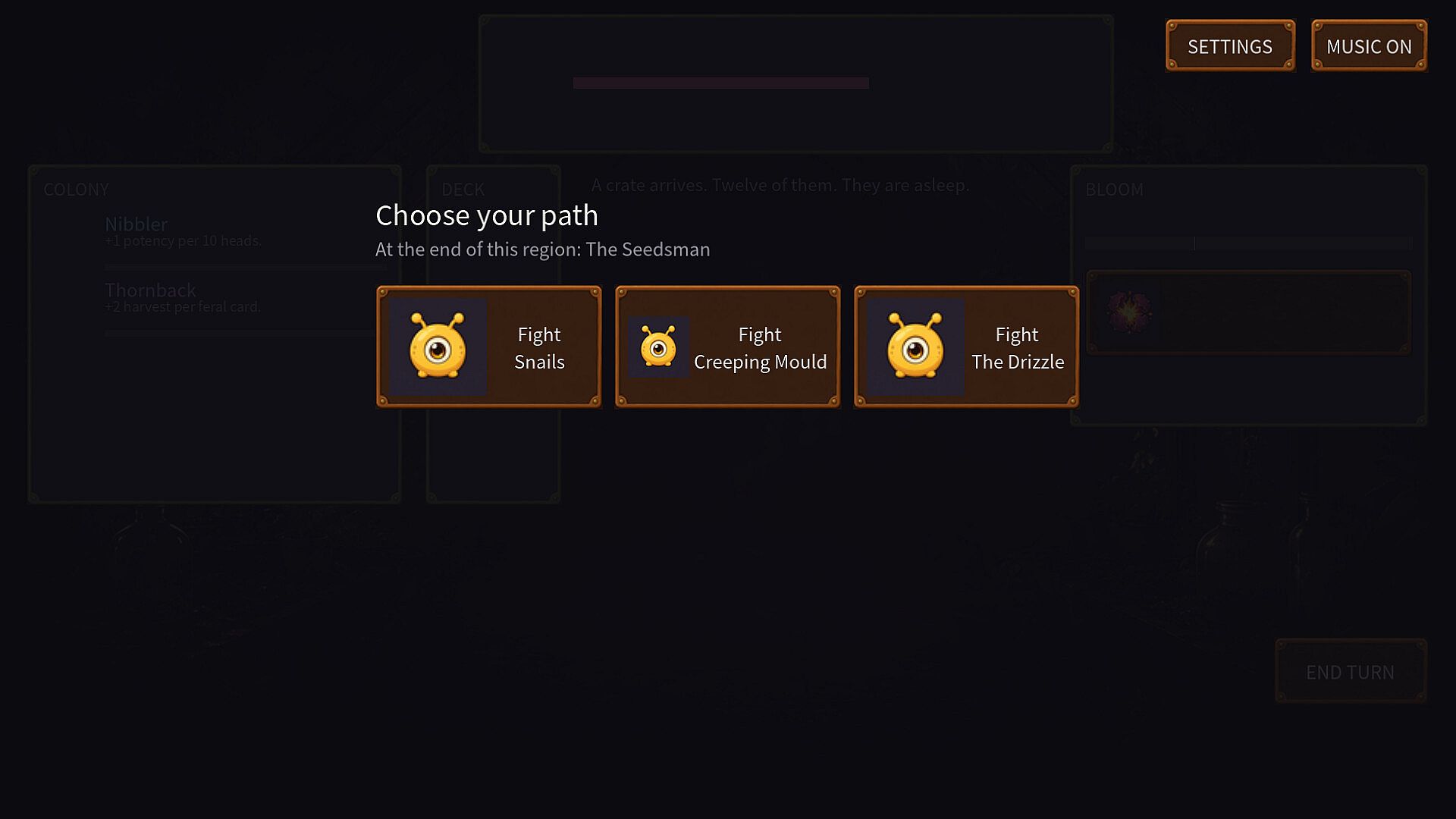
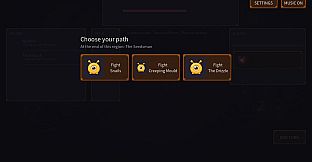
Feral cards function as both penalty and resource. They fill the deck when caps are exceeded and enable Bloom, the only way to reset colonies after overextension. The permanent Bloom gauge displays exact damage and recoil values, allowing informed decisions about timing the detonation. Five layers lead to one of three bosses announced at the start of each run: The Gardener, The Glasshouse, or The Seedsman.
The end of run Herbarium serves as a record of progress. It displays ten strains with their growth stages, the six mutations that drifted into the colony, peak population figures, Bloom count, and the signed Contract. This output encourages comparison across attempts without requiring external tracking.
Is It Worth Playing?
BROODHOUSE suits players who enjoy deliberate strategy card games with roguelike progression and population management systems. The absence of an energy bar and the emphasis on colony wide effects create a distinct pace focused on planning several turns ahead. Runs provide clear feedback through the Herbarium sheet and allow experimentation with different Contract and strain combinations in sessions of twenty five to forty minutes.
The game rewards attention to carrying capacities, Bloom timing, and enemy conditions rather than rapid reflexes. Those who appreciate systems where every decision carries visible long term consequences will find the mechanics engaging. Availability on PC makes it accessible for those interested in this specific blend of casual strategy and run based variety.