










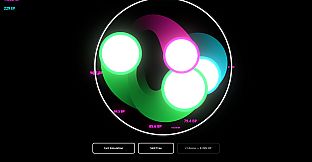
Bouncemetry is a single-player incremental strategy and simulation game for PC that blends idle progression systems with deterministic physics simulations. Players manage geometric scenarios to produce ongoing income, then reinvest that income into upgrades that alter physical behaviors and economic output. The experience centers on unlocking new simulation types, scaling their parameters without upper limits, and running multiple scenarios at once for combined passive gains.
Gameplay
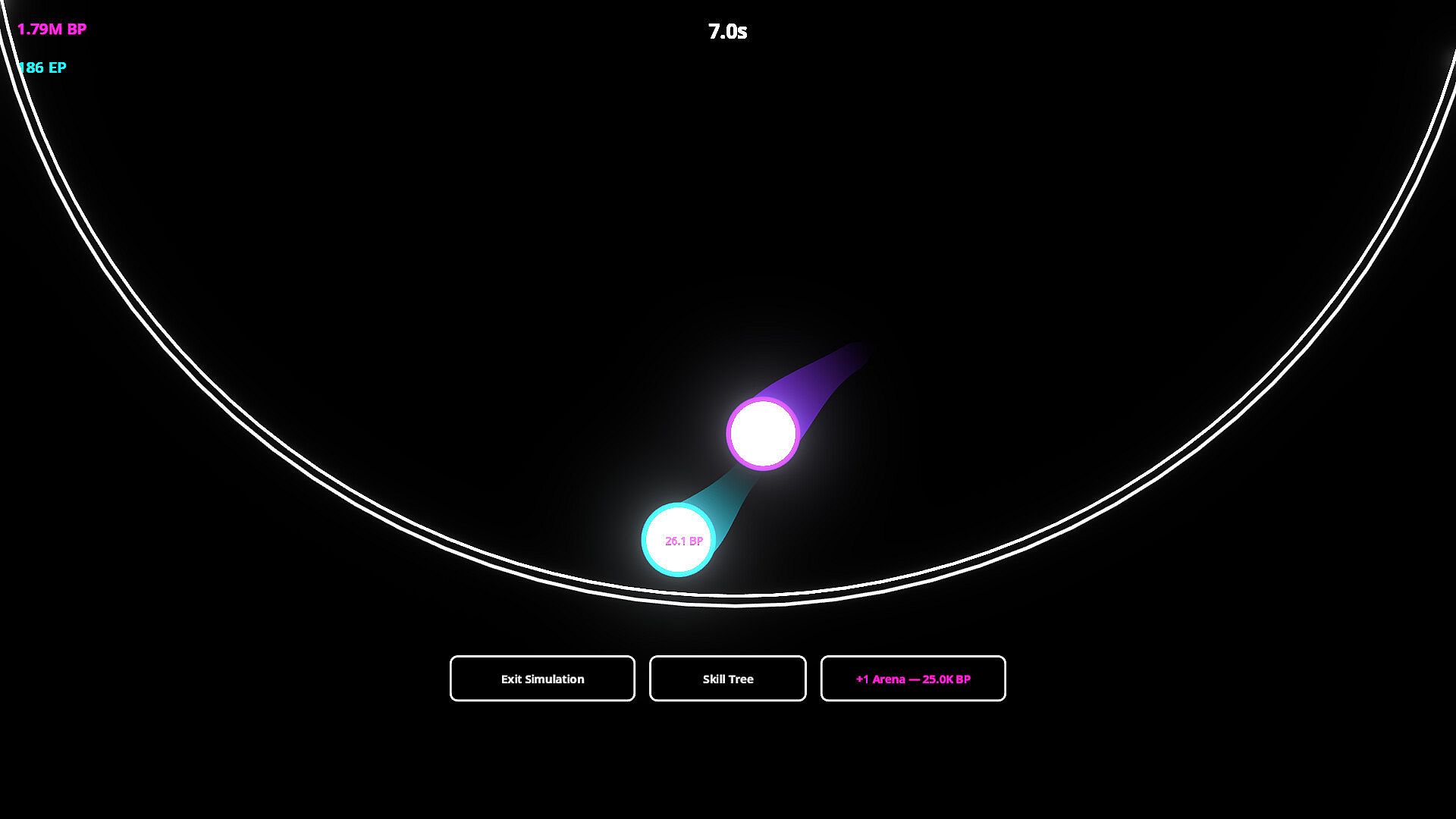
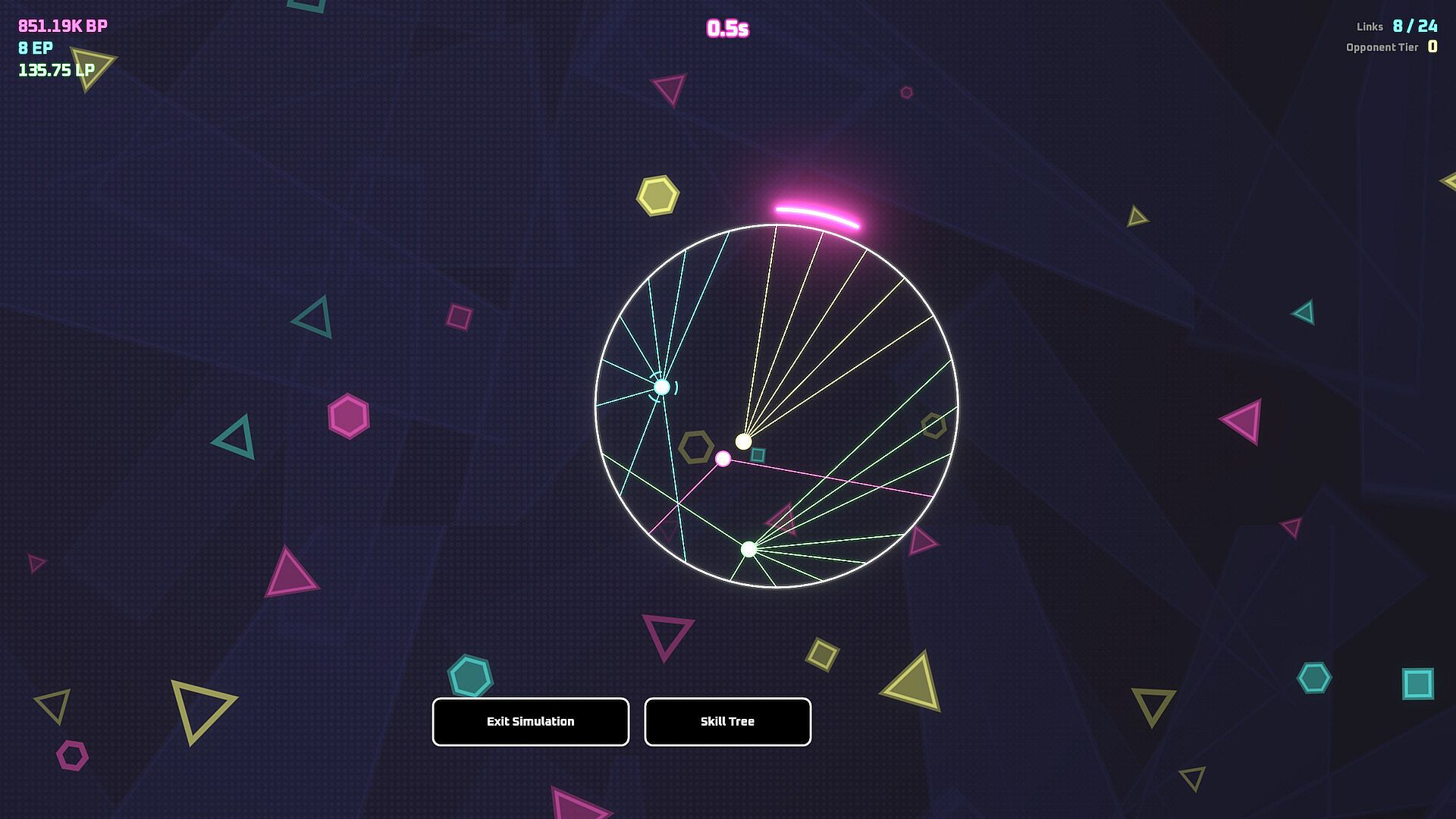
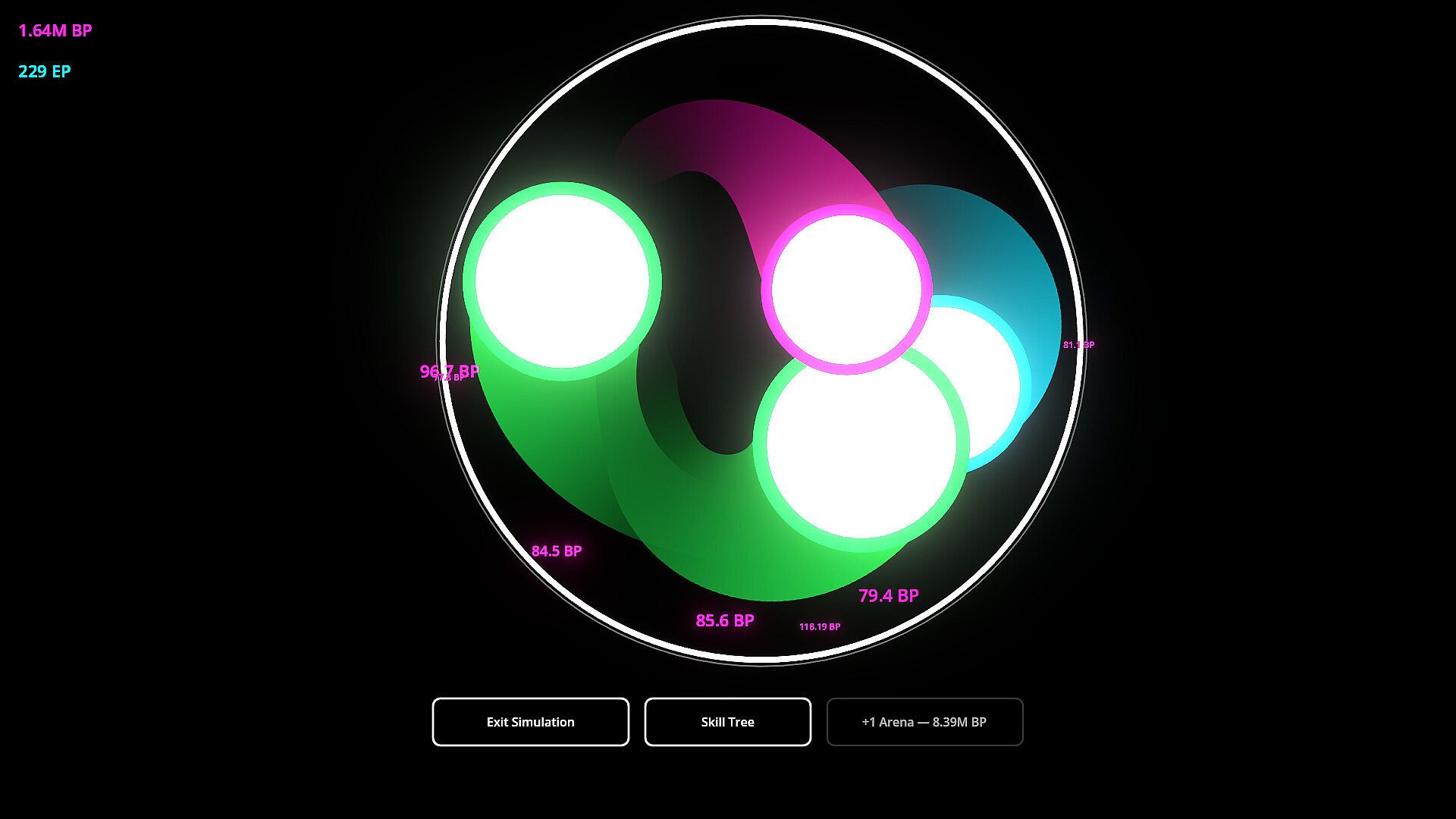
The core loop begins with basic simulations that generate income through ongoing physical interactions. Each scenario operates on a fixed physics engine that responds visibly to upgrades. Income flows continuously once a simulation is active, supporting an idle playstyle where progress continues even when the player steps away. Upgrades purchased from the skill tree adjust variables such as object speed, bounce restitution, growth rates, and multiplier effects on earnings. These changes produce immediate visual differences in how objects move, collide, or fill space within their boundaries.
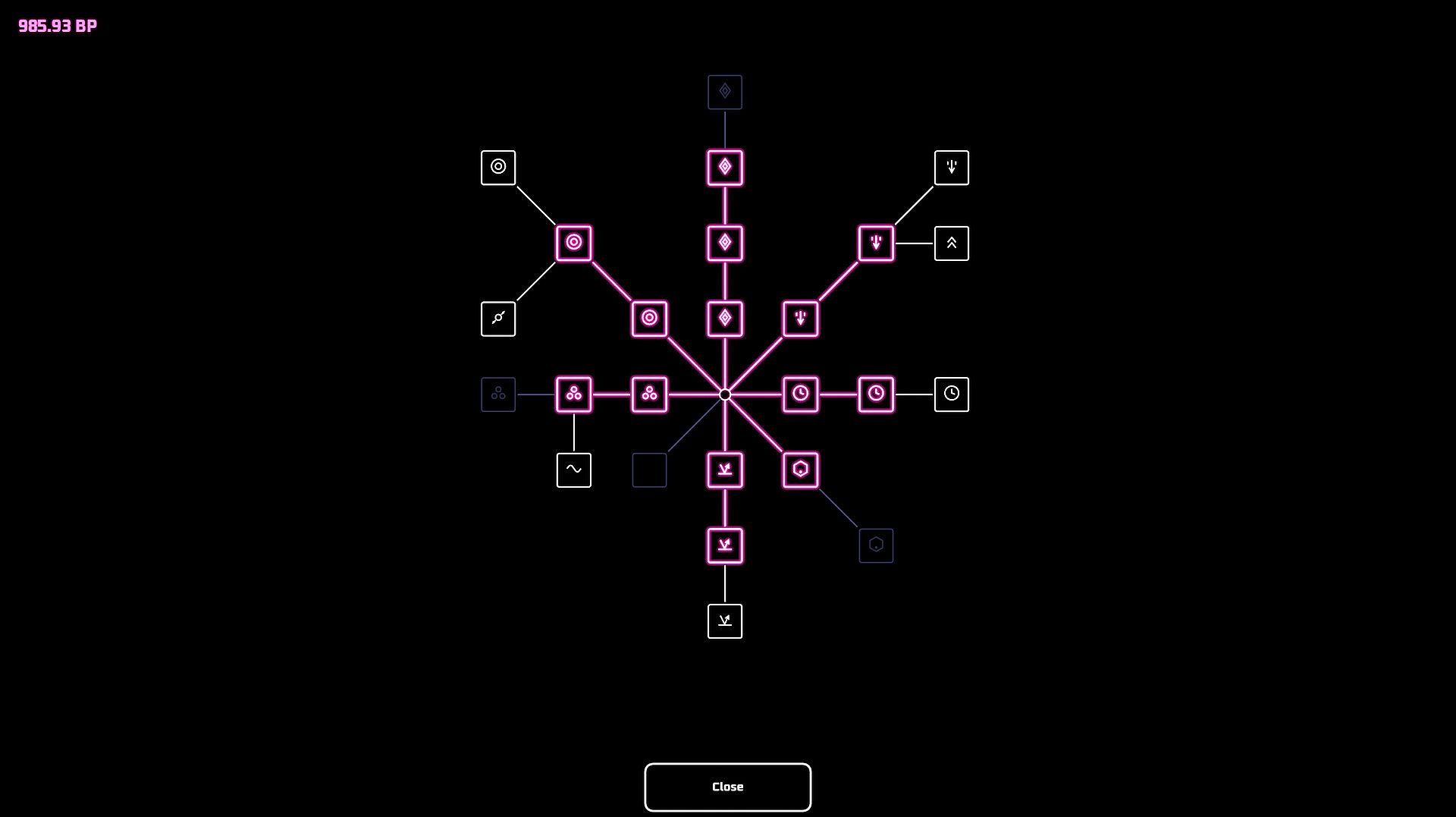
Progression remains open-ended. Every interaction across active simulations contributes to a shared pool of resources that funds further improvements. The skill tree branches into categories that affect either simulation physics or broader income multipliers, allowing players to tailor the rate and style of advancement. Because the system imposes no hard caps, simulations can expand in complexity and output indefinitely as more upgrades are applied.
Additional simulation types become available through continued investment. Once unlocked, these run independently in the background and add their own income streams without interrupting existing ones. Players switch between views to adjust specific upgrades while the full set of scenarios continues generating resources in parallel.
Game Modes
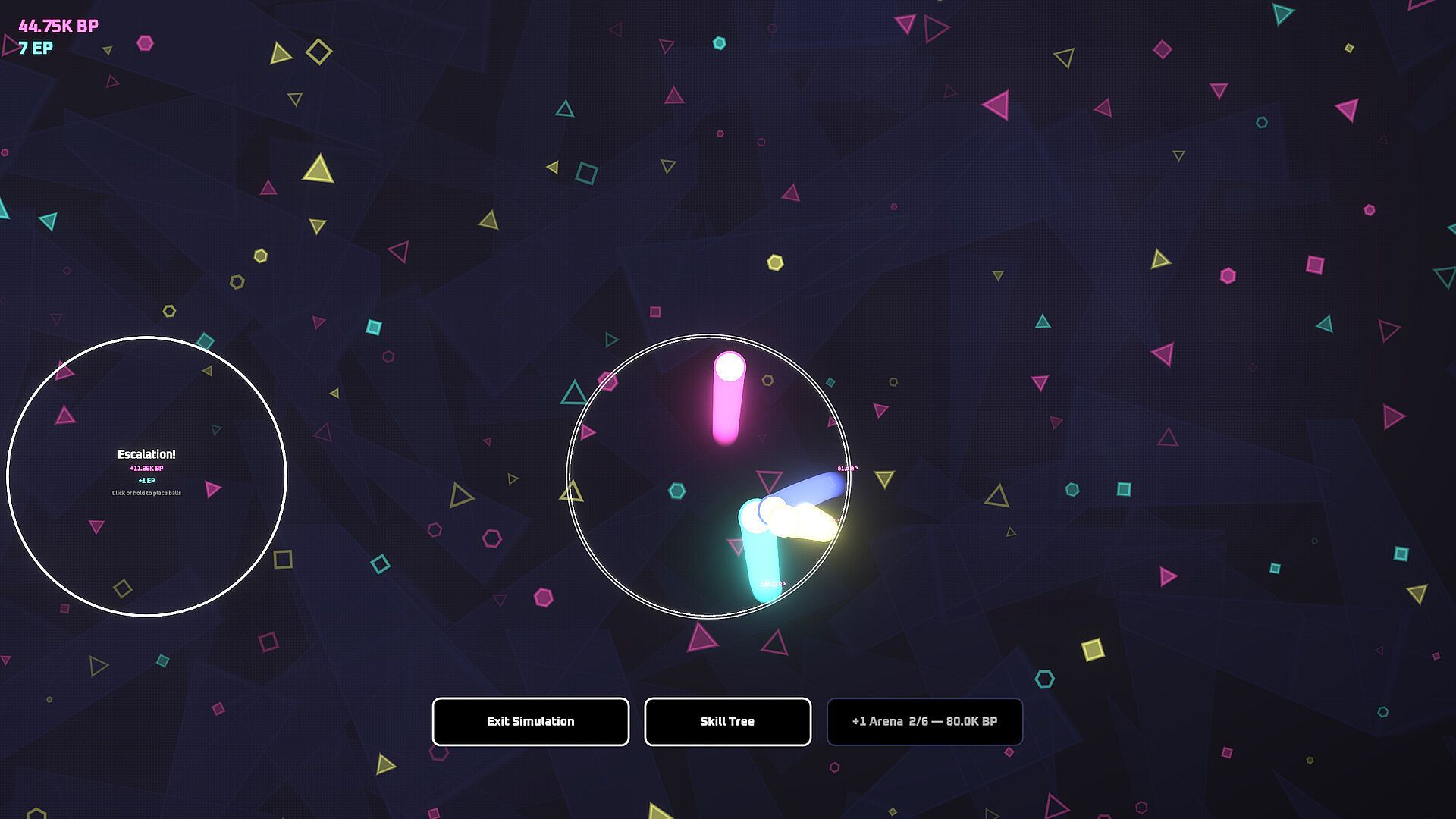
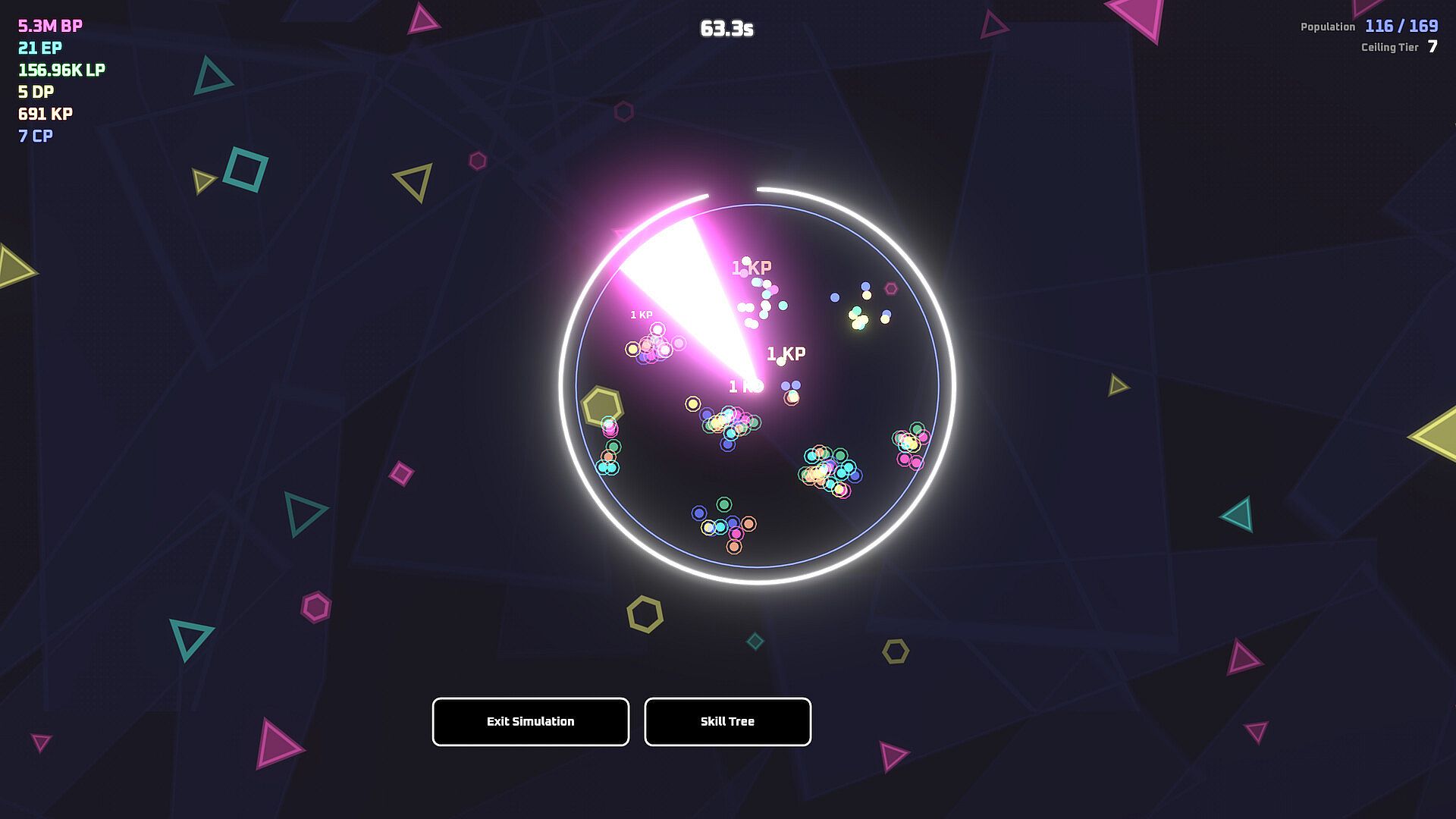
Bouncemetry structures its content around distinct simulation scenarios rather than traditional game modes. The available scenarios feature objects bouncing within confined geometric shapes, structural glass panels that shatter under kinetic forces, and mechanics that fill outlined shapes with growing elements. Each type uses the same underlying deterministic physics rules but presents different visual and interaction patterns.
These scenarios function simultaneously once unlocked. Players allocate upgrades across all active types to optimize total income. Switching focus between scenarios allows targeted improvements while the others maintain steady contributions. The design encourages balancing attention across multiple running simulations to maximize overall progression speed.
Progression and Upgrades
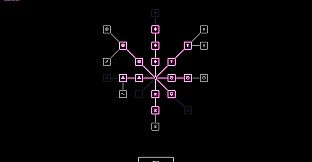
The skill tree serves as the central progression hub. Upgrades fall into two broad groups: those that modify physical properties inside individual simulations and those that apply global economic multipliers. Physical upgrades change how simulations behave in real time, such as increasing base movement speed or altering collision responses. Economic upgrades raise the income generated per interaction or per unit of time across every active scenario.
Because upgrades stack without limits, the visual scale and income rate of simulations grow steadily. Players observe direct feedback as objects move faster, shatter more dramatically, or fill shapes at accelerated rates. This feedback loop reinforces the incremental nature of the game, where small improvements compound into larger changes over extended play sessions.
Is It Worth Playing?
Bouncemetry suits players who enjoy incremental and idle simulation titles that emphasize steady resource growth and visual feedback from upgrades. The single-player format focuses entirely on personal progression through physics-driven scenarios and a flexible skill tree. With no release date yet confirmed and no user reviews available, the game remains in a pre-launch state. Those drawn to strategy and casual simulation experiences centered on managing parallel systems and scaling parameters without ceilings will find the described mechanics align closely with that preference. The combination of idle income generation and observable physics changes provides a consistent loop for extended sessions.