




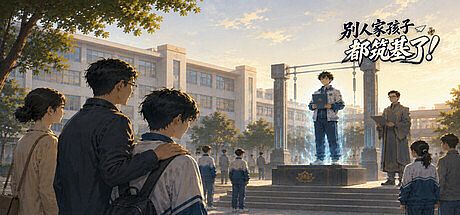





别人家孩子都筑基了! is a single-player strategy, indie, RPG, and simulation game set in a modern China where spiritual energy has revived for decades. Cultivation has become as routine as schooling or employment, complete with professional titles, official positions, and independent practitioners who take on freelance work. Players experience one full lifetime from birth to death, with decisions shaping what the next generation inherits and continues.
Gameplay
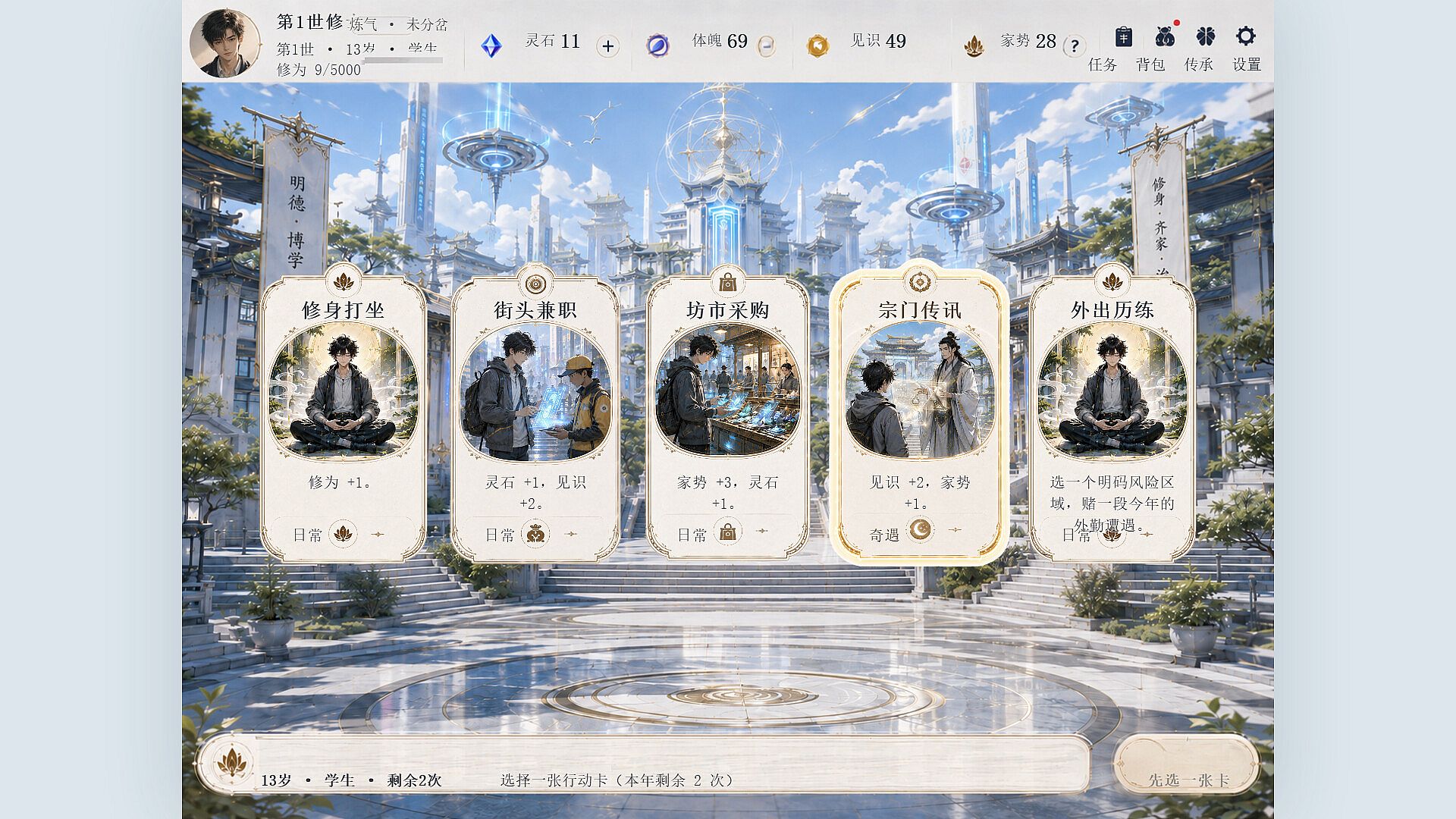
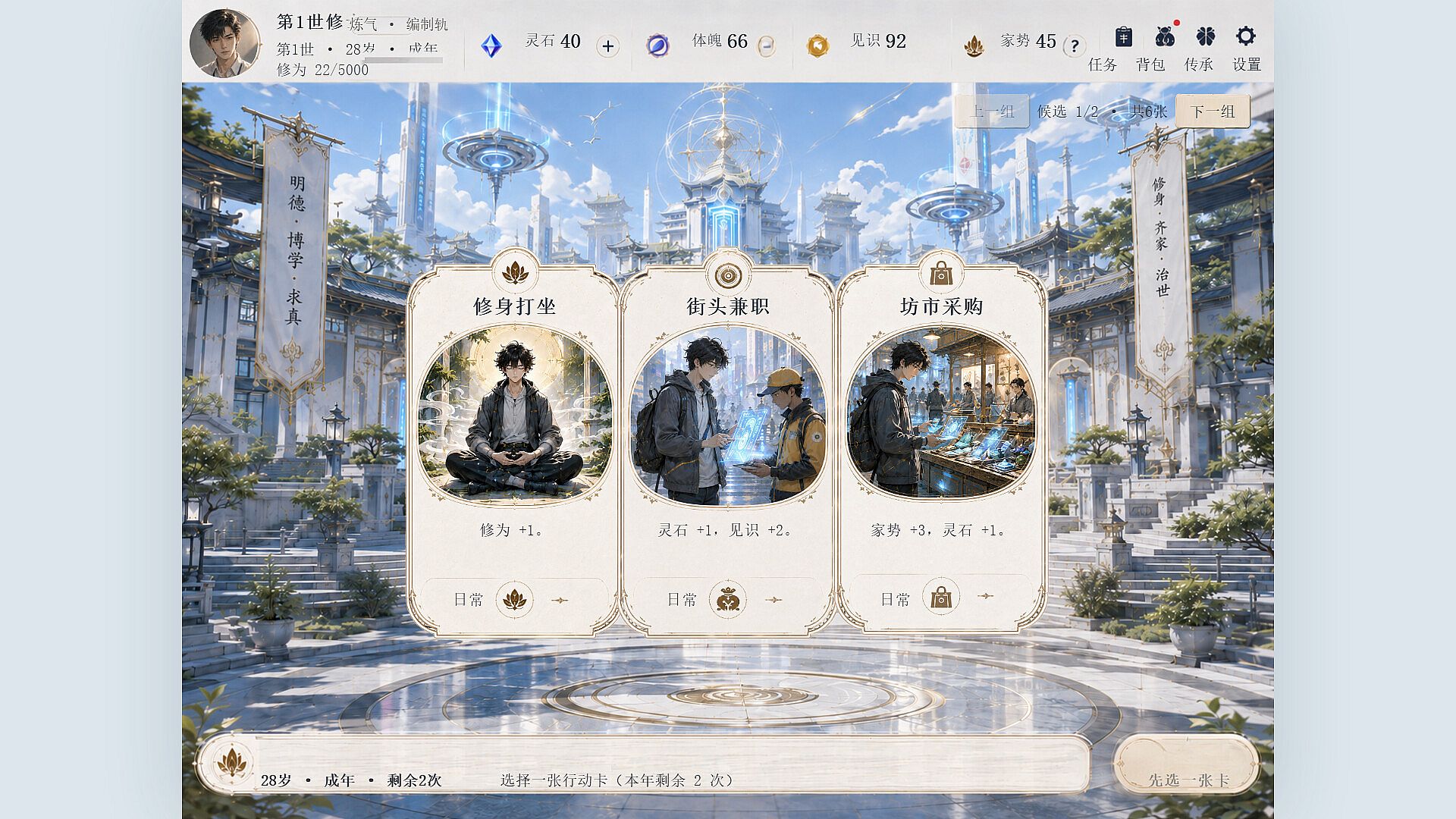
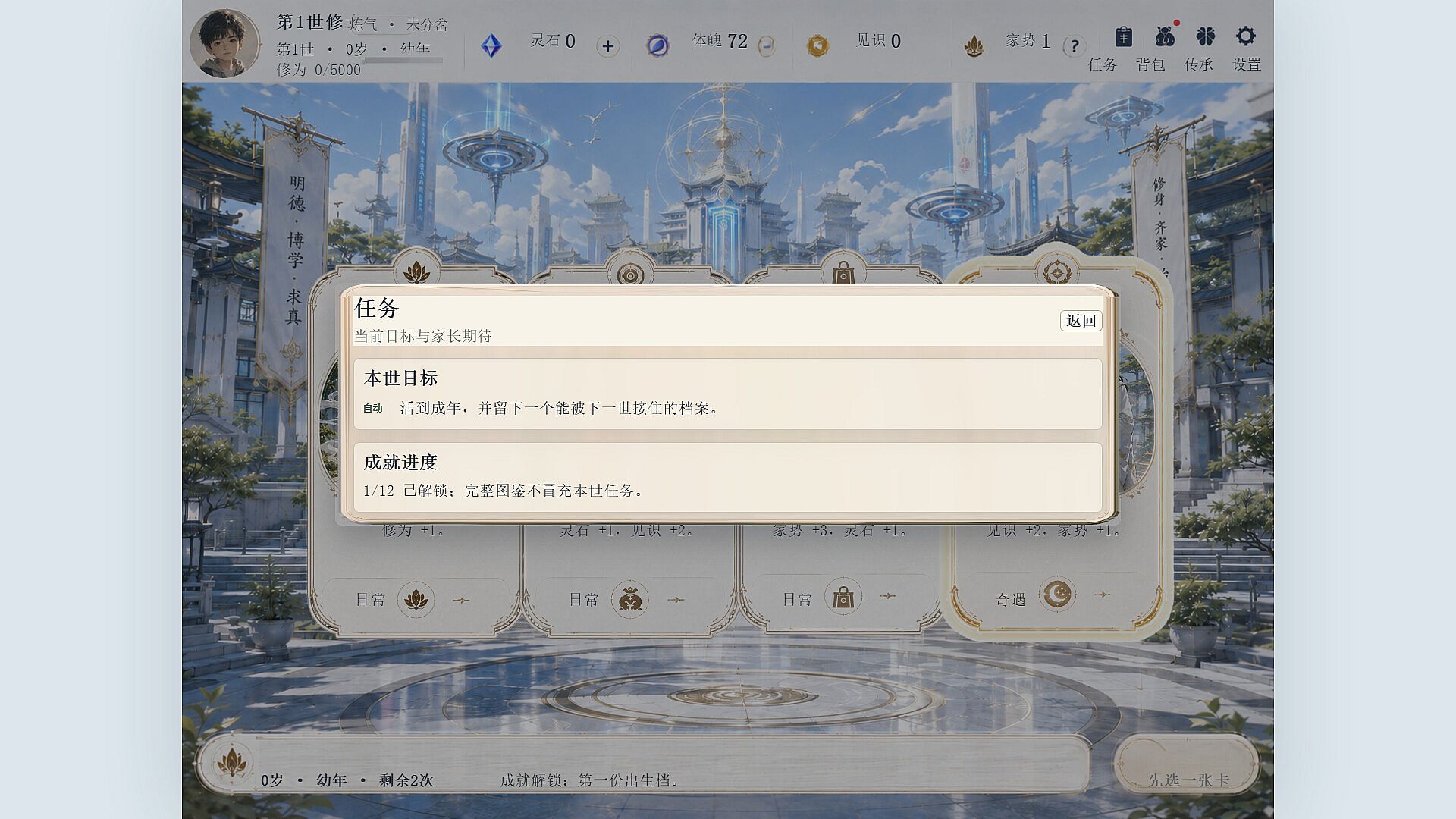
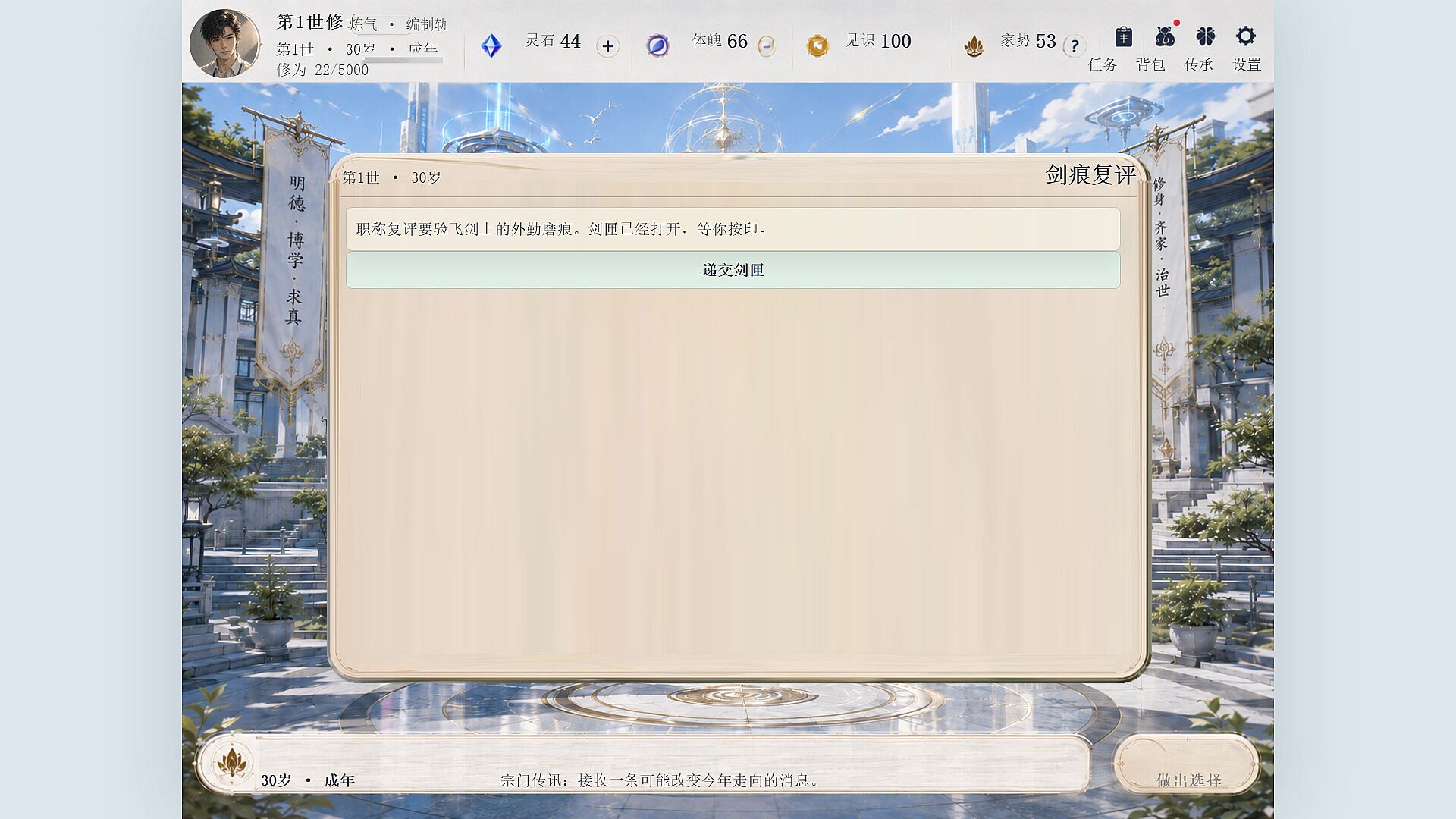
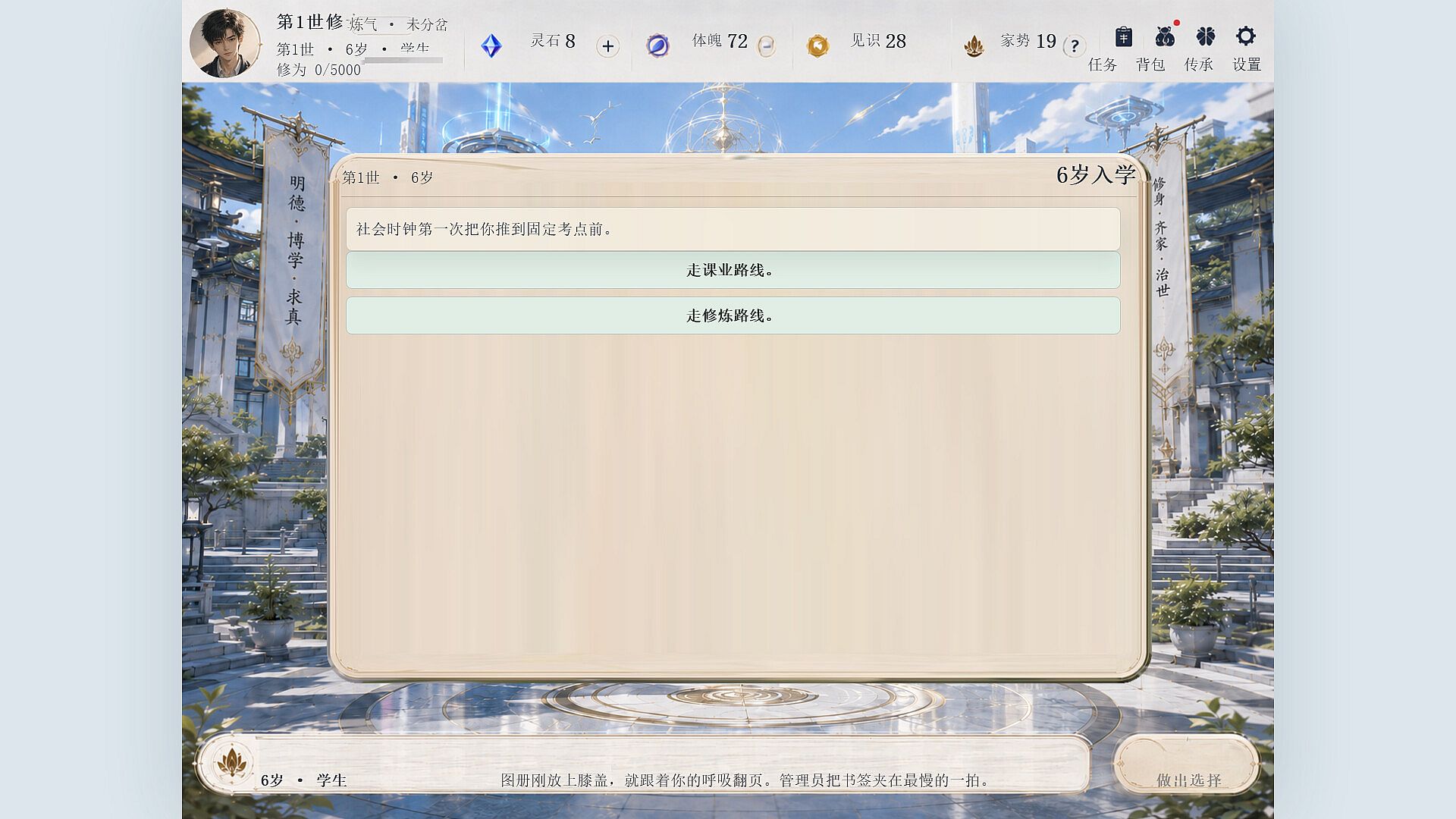
The core loop revolves around managing a cultivator's life through yearly choices. Each year presents two cards that allocate effort toward cultivation, livelihood, or relationships. These decisions accumulate over a maximum lifespan of 82 years, resulting in 164 total choices that cannot be undone once made. Fixed age milestones dictate key branching points, including school enrollment at age 6, an initial spiritual check at 12, root bone assessment and path divergence at 17, title evaluations at 20, 30, and 40, and the onset of aging at 62. The societal and cultivation timelines advance relentlessly, creating pressure around milestones such as reaching foundation establishment by age 30.
At age 17, after root bone testing, players decide between joining an official cultivator establishment or operating as an independent散修. Each path alters available tasks, opponents, and the resources or techniques passed to descendants. Combat occurs in a turn-based format where preparation happens beforehand through pill consumption, skill sequencing, and target selection. Encounters that repeat can be skipped with a single command to avoid repetitive grinding. The experience emphasizes high-level life direction rather than micromanaging daily needs.
Gender selection occurs at the start, or players may allow random reincarnation. A single lifetime ends by setting wishes and legacies that directly influence the next generation's starting conditions, including family knowledge, assets, connections, and techniques. Prior generations remain accessible through archives that record each individual's path and outcomes.
Game Modes
The game operates as a continuous generational simulation without separate named modes. Play proceeds through sequential lifetimes, where each completed life feeds directly into the next via inherited elements. This structure supports extended play across multiple generations while preserving the record of every ancestor's choices and results. No multiplayer or online components exist, keeping the focus on solitary progression through the card-driven system and milestone events.
Core Mechanics and Progression
Progression ties tightly to the card system and milestone decisions. Allocating resources to cultivation advances personal power, while livelihood choices secure stability and relationships open opportunities or obligations. The 17-year choice between structured employment and freelance work creates meaningful divergence in later events and inheritance. Combat serves as a supporting system rather than the central focus, with pre-battle optimization determining outcomes and skips handling routine fights. Generational inheritance ensures that accumulated knowledge and assets from one life open new possibilities in subsequent ones, encouraging long-term planning across eras.
Is It Worth Playing?
This title suits players who enjoy deliberate, choice-heavy life simulations within a cultivation framework. The emphasis on irreversible yearly decisions, fixed societal timelines, and multi-generational consequences delivers a focused experience centered on big-picture strategy rather than open exploration or constant action. Availability is limited to a one-time purchase on PC with no additional transactions or online requirements. Those drawn to text-driven RPG elements, generational inheritance systems, and the tension of balancing cultivation against practical life demands will find the structure rewarding. The game remains in a completed state as described, with all content finalized by the developer.