








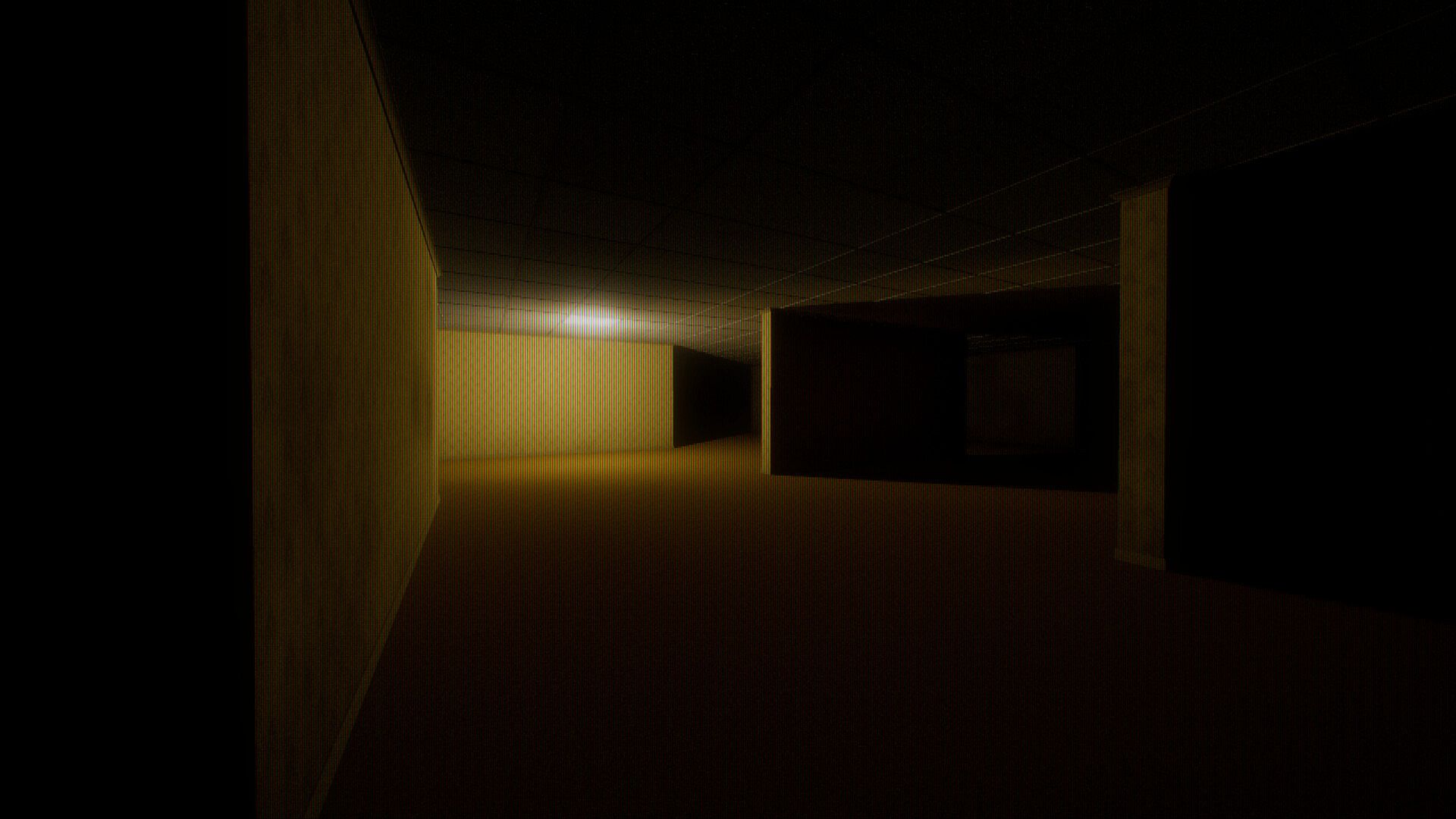


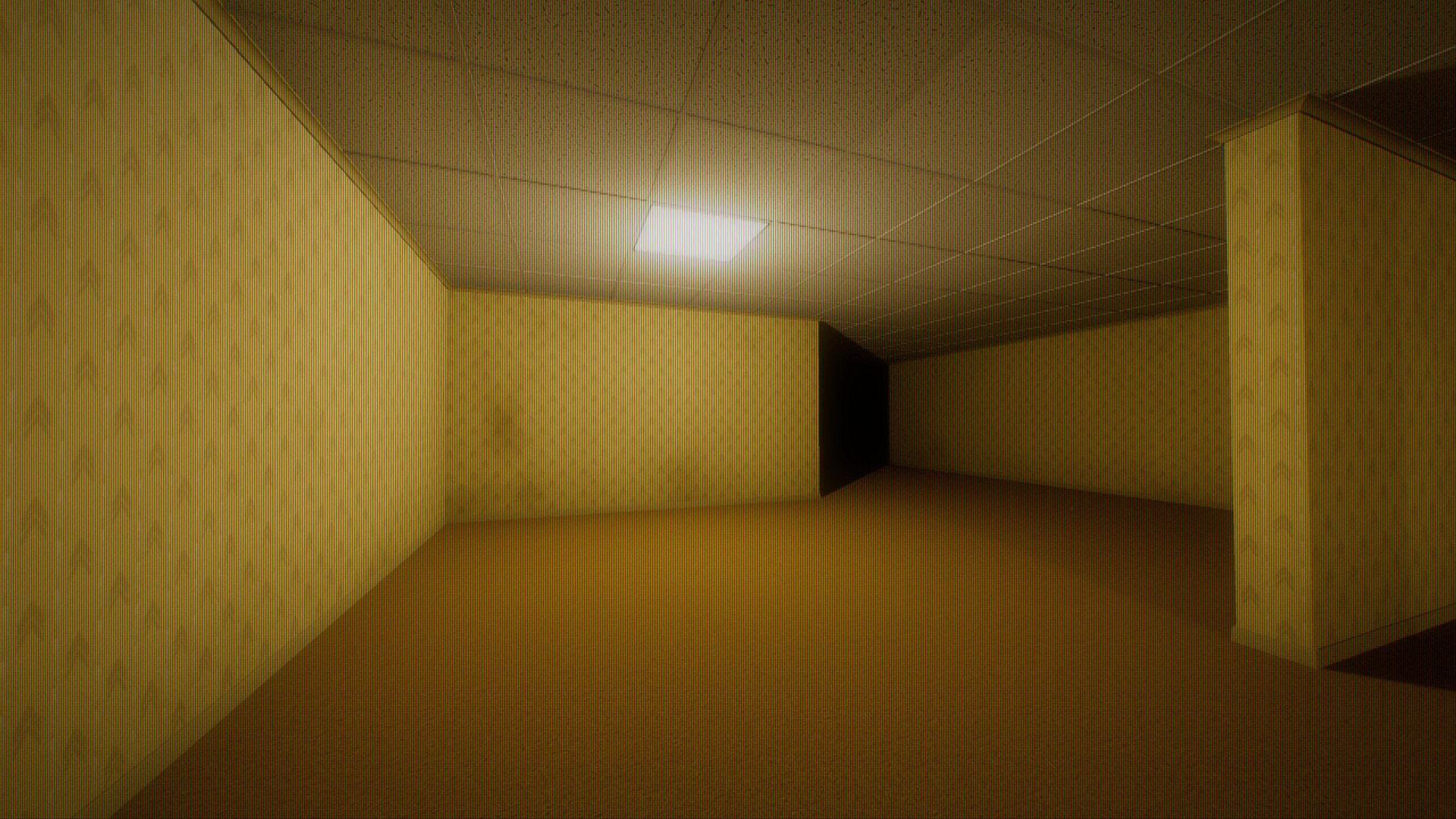
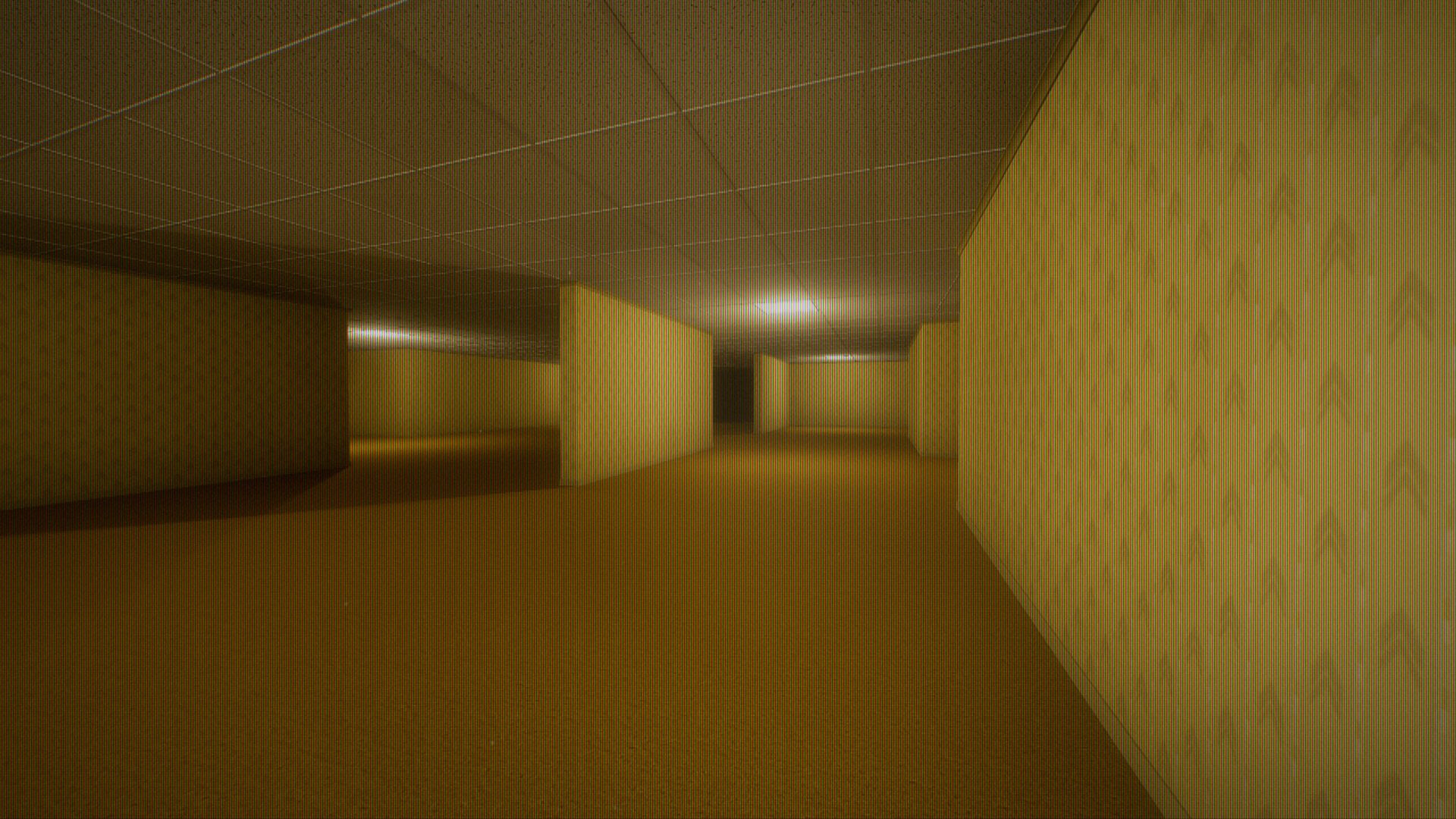






Backrooms: Forget Me Not is an action indie adventure co-op horror game set in the unsettling environments of the Backrooms. Players explore procedurally generated levels, complete objectives, and search for an exit while managing threats that shift with each attempt. The experience supports solo play or sessions with friends on PC, emphasizing careful movement and awareness in spaces where sound travels unpredictably.
Gameplay
The core loop revolves around navigating different Backrooms levels, each with distinct objectives and hazards. Procedural generation alters layouts, item placements, and certain encounters on every run, ensuring fresh challenges even after multiple attempts. Players must locate key items, solve environmental problems, and progress toward an exit while avoiding detection.
Sound plays a central role in survival. Footsteps, running, equipment use, and interactions generate noise that can alert threats. Certain areas amplify these sounds, turning routine actions into risks. Players learn to move deliberately, using the environment to their advantage or staying quiet in open spaces.
Variability keeps sessions engaging. While patterns emerge across runs, enemy behavior and event triggers remain unpredictable. This setup rewards repeated play as players refine strategies without relying on fixed solutions.
Game Modes
The game offers flexible options for different group sizes. Solo play focuses on individual exploration and objective completion in the generated levels. Multiplayer sessions allow friends to coordinate efforts, dividing tasks like scouting ahead or managing noise levels together.
Each level presents its own set of problems, ranging from straightforward searches to more complex sequences that may require several attempts to fully understand. Objectives tie directly into the level design, blending navigation with problem-solving under pressure from changing conditions.
Sound and Environmental Awareness
Audio design drives much of the tension. Every action produces audible cues that interact with the surroundings, making stealth and timing essential. Players must consider how surfaces and room acoustics affect noise propagation, turning basic movement into a calculated decision.
This system encourages communication in multiplayer, where one person's misstep can impact the entire group. The emphasis on listening creates moments of heightened alertness, especially in levels with open or echoing spaces.
Procedural Elements and Replayability
Layouts, item locations, and encounters change between runs due to procedural systems. This prevents repetition while allowing players to build familiarity with level themes and core mechanics. Over time, patterns in objectives become clearer, but the randomness in events maintains uncertainty.
The design supports both short sessions and longer campaigns. Players improve at handling specific threats without ever experiencing identical sequences, which sustains interest across multiple playthroughs.
Is It Worth Playing?
Backrooms: Forget Me Not suits players who enjoy co-op horror focused on exploration, objective-driven progression, and sound-based tension rather than direct combat. The procedural structure and variable encounters provide consistent replay value for those comfortable with trial-and-error learning in atmospheric settings.
Solo adventurers will find a self-contained challenge that rewards patience and observation. Groups benefit from coordination around noise management and shared objectives. The game appeals to fans of indie horror experiences that prioritize environmental interaction and adaptability over linear storytelling.
Its current state emphasizes core systems like level generation and audio mechanics without additional layers, making it a focused option for targeted play sessions. Those seeking unpredictable co-op horror with emphasis on awareness and problem-solving will find the mechanics align well with that preference.